Our readers keep the lights on and my smoothie glass nicely filled. As an Amazon Associate, I earn from qualifying purchases.
A puzzle book that collects dust after a week isn’t a tool—it’s clutter. The difference between a forgettable activity book and a genuine mental workout comes down to puzzle variety, progression difficulty, and paper that survives eraser marks without tearing. Your brain craves novelty just like your muscles need varied rep schemes.
I’m Mohammad Maruf — the founder and writer behind WellFizz. I’ve spent years analyzing puzzle and game market data, mapping customer satisfaction against construction quality and cognitive diversity across thousands of puzzle books.
This guide cuts through the noise by comparing puzzle density, logic variety, and production value to help you find the perfect daily companion. Whether you’re shopping for yourself or a loved one, understanding these specifics makes picking the right best brain puzzles straightforward and rewarding.
How To Choose The Best Brain Puzzles
Not all puzzle books are created equal. The wrong one leads to boredom, frustration, or a spine that cracks after three uses. Focus on these three areas to make the right call.
Puzzle Type Diversity
Grid-based logic puzzles strengthen deductive reasoning. Crosswords pull from long-term memory and vocabulary. Sudoku builds pattern recognition. Cryptograms and wordplay stretch linguistic flexibility. A book with only one puzzle type trains one cognitive muscle—variety builds full-brain fitness. Look for at least three distinct puzzle genres in the table of contents.
Difficulty Progression System
Books with star ratings, flame icons, or numbered difficulty levels let you warm up before tackling the tough ones. Flat collections where every puzzle feels the same lead to quick abandonment. Progressive difficulty extends the book’s useful life and keeps your brain adapting instead of coasting.
Physical Construction Quality
Spiral binding lets the book lie flat for travel and tabletop use. Thick, high-grammage paper survives pencil erasing without tearing or ghosting through to the next page. Font size matters for seniors and extended sessions—8-point type in a cramped grid frustrates faster than any puzzle clue.
Quick Comparison
On smaller screens, swipe sideways to see the full table.
| Model | Category | Best For | Key Spec | Amazon |
|---|---|---|---|---|
| The Master Theorem | Premium | Eclectic & Progressive Challenge | 212 pages, full color, coded hints | Amazon |
| Brain Games – A Puzzle a Day | Mid-Range | Daily Routine & Consistency | 365 puzzles, spiral-bound, 192 pages | Amazon |
| Puzzle Baron’s Logic Puzzles, Vol. 3 | Mid-Range | Logic Grid Enthusiasts | 200 puzzles, 224 pages, small format | Amazon |
| Ultimate Logic Grid Puzzle Book | Value | Progressive Difficulty & Variety | 100 puzzles, four difficulty flames | Amazon |
| Remember That?! Crossword Book | Themed | Seniors & Nostalgia Seekers | 123 pages, 1950s-1990s themes | Amazon |
In‑Depth Reviews
1. The Master Theorem – A Book of Puzzles, Intrigue and Wit
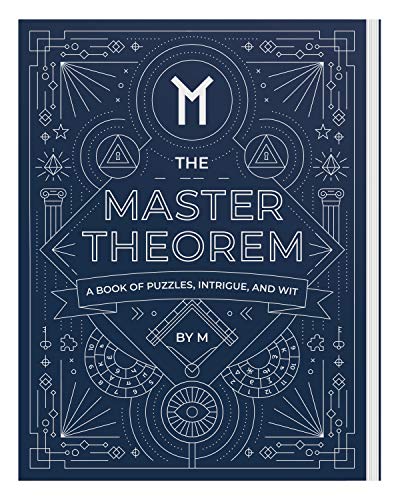
The Master Theorem is not your standard grid-puzzle collection—it’s an eclectic, narrative-driven experience that mixes rebuses, riddles, trivia, and interactive puzzles. The full-color pages and embedded story framework turn each puzzle into a discovery, not just an exercise. A coded progressive hint system lets you decide how much help you need, which keeps frustration low and satisfaction high.
Puzzle difficulty spans from approachable to genuinely humbling, and many clues require real-world research (Google is your friend here), turning each session into a mini learning event. At 212 pages, it has a respectable shelf life, and the variety ensures you never fall into a mechanical routine. The reading age is listed at 13 and up, but the content appeals to adults who enjoy wordplay and lateral thinking.
The main drawback is that all answers are printed in the back without a sealed section, meaning accidental spoilers are possible if you aren’t careful. Some users have reported needing to band the last section shut. The paperback price point is premium, but the production value—thick paper, vibrant colors, unique puzzle architecture—justifies the investment for serious puzzle fans.
Why it’s great
- Extraordinary puzzle diversity—rebus, riddles, wordplay, trivia
- Coded hints allow self-directed difficulty adjustment
- Full-color, high-quality paper that resists wear
Good to know
- Answers are visible in the back without a sealed flap
- Premium price point for a paperback book
- Requires internet access for some clues
2. Brain Games – A Puzzle a Day

Brain Games turns daily mental exercise into a low-pressure habit. With 365 puzzles—one per day—the spiral-bound format lies completely flat on a desk or kitchen table, and the durable paper holds up to repeated pencil erasing. The puzzle types rotate between sudoku, crosswords, cryptograms, and word searches, which keeps the routine from going stale.
Most puzzles take under ten minutes to solve, making this ideal for morning coffee sessions or wind-down time before bed. The difficulty stays in the moderate range—challenging enough to engage but never so hard that you hit a wall. Users report that the book effectively replaces phone scrolling during breaks, which is a clear win for anyone trying to cut screen time.
The main critique is a heavier-than-average concentration of sudoku puzzles (about 23 across the year). If you actively dislike sudoku, this may feel unbalanced. Paper quality is solid, and the spiral binding prevents spine cracking. At 192 pages, it offers excellent value for a full year of structured variety.
Why it’s great
- Spiral binding lies perfectly flat for easy use
- 365 puzzles provide a full year of daily variety
- Quick 5-10 minute sessions fit busy schedules
Good to know
- Heavily weighted toward sudoku puzzles
- Difficulty is moderate—not for experts seeking extreme challenge
- Only one puzzle type per day, so variety is spread across the year
4. The Ultimate Logic Grid Puzzle Book for Adults
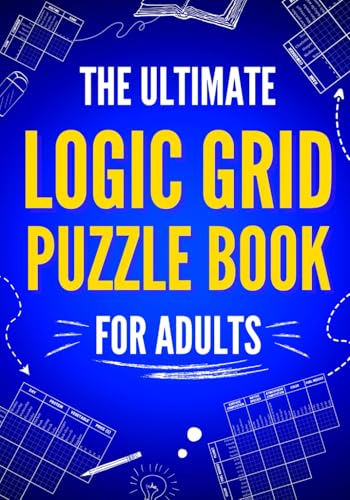
This book delivers exactly what the title promises: 100 logic grid puzzles organized into four flame-rated difficulty levels, from one-flame warm-ups to four-flame mental marathons that take hours to crack. The progression system is a standout feature—it carefully avoids pattern fatigue by rotating category themes, so you can’t rely on guesswork from the previous puzzle.
Paper quality is high enough to erase cleanly with a standard pencil, and the font size is comfortable for extended sessions. A QR code links to a strategy handbook, which is helpful for newcomers learning the elimination chart method. The puzzle themes are current and varied, adding a layer of interest that generic “animal grid” puzzles lack.
The main downside is the perfect-bound paperback format—it does not lie flat, and some clues printed near the spine are difficult to read without pressing the page open. The print is also slightly squished on certain pages. A few typographical errors have been reported, though they don’t prevent solving. For pure logic-grid density at this price point, the value is hard to beat.
Why it’s great
- Four distinct difficulty flames for gradual progression
- High-quality paper that erases without ghosting
- Varied themes avoid repetitive patterns
Good to know
- Perfect binding doesn’t stay open flat
- Some spine-adjacent clues are hard to read
- Occasional typographical errors in puzzles
5. Remember That?! Crossword Puzzle Book For Adults & Seniors
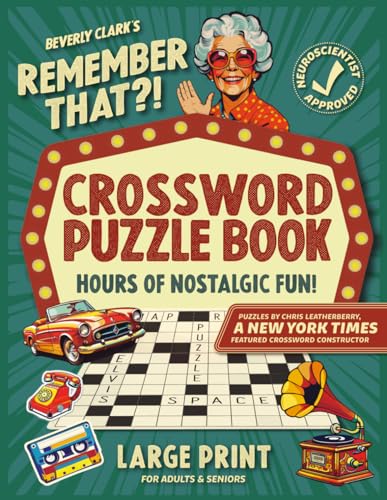
This crossword book breaks from the standard dictionary-clue model by focusing entirely on nostalgic references from the 1950s through the 1990s. Clues draw from classic TV shows, sports legends, vintage advertising, and cultural milestones, which simultaneously tests memory retrieval and provides a pleasant walk down memory lane. For seniors, this dual cognitive-emotional engagement can be more motivating than abstract wordplay.
The large 8.5 x 11 inch format keeps the grid and clue text readable without squinting, and the 123-page length offers a solid runtime without feeling overwhelming. The puzzles skew toward the easy-to-moderate side, which makes this an excellent choice for people who find modern crosswords too cryptic or for family members who haven’t solved a puzzle in years.
One puzzle in the collection has a numbering error where clues don’t align with grid positions, which is frustrating when it interrupts the flow. The binding is standard paperback—it won’t lie flat on its own. If you want a memory-stimulation tool wrapped in positive nostalgia rather than a pure-vocabulary challenge, this themed approach delivers reliably.
Why it’s great
- Nostalgia themes enhance memory recall and engagement
- Large, easy-to-read grid layout
- Accessible difficulty suitable for seniors and beginners
Good to know
- At least one puzzle has clue-numbering errors
- Standard paperback binding won’t stay open flat
- Not challenging enough for veteran crossword solvers
3. Puzzle Baron’s Logic Puzzles, Volume 3
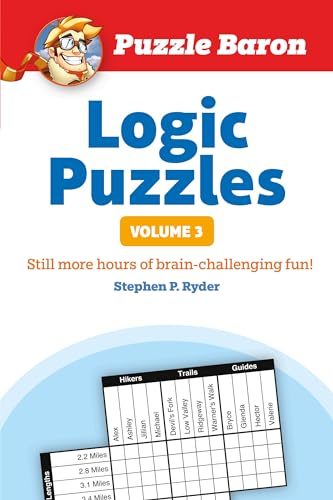
Puzzle Baron has a cult following in the logic-grid community for a reason: the puzzles are consistently challenging without veering into impossible territory. This third volume delivers 200 pure logic-grid puzzles (no crosswords, no sudoku, no word searches) with escalating complexity that keeps even experienced solvers engaged for hours. The paper stock is durable and the text is crisp and clear.
The puzzles are compact in a 6 x 9 inch trim size, making this extremely portable for commuting or travel. Average solve times are roughly double the stated estimates, so expect to invest real mental energy on the harder entries. The “fiendish” difficulty label on the companion volume is not just marketing—those puzzles genuinely require sustained concentration and careful note-taking.
The trade-off for packing 200 puzzles into a small book is that the logic-grid tables are smaller than ideal—some users wish for larger marking spaces. Solutions are provided but without explanations, so if you get stuck, there is no walkthrough to help you understand your mistake. If you love pure logic deduction and want a book that lasts through long trips, Puzzle Baron delivers dependable quality.
Why it’s great
- 200 puzzles of pure logic-grid content
- Compact size fits in a coat pocket or bag
- Consistently challenging, avoids boredom
Good to know
- Small grid tables make marking cramped
- Solutions lack step-by-step explanations
- Only logic grids — no puzzle type variety
FAQ
What is the ideal number of puzzle types in a brain puzzle book?
How important is difficulty progression in a puzzle book?
Why does paper quality matter for logic grid puzzles?
Final Thoughts: The Verdict
For most users, the best brain puzzles winner is the The Master Theorem because it blends supreme puzzle variety with a narrative, full-color experience that challenges multiple cognitive domains. If you want a structured daily routine without decision fatigue, grab the Brain Games – A Puzzle a Day. And for pure logic-grid fanatics who want 200 challenges in a travel-friendly format, nothing beats the Puzzle Baron’s Logic Puzzles, Volume 3.

Mo Maruf
I created WellFizz to bridge the gap between vague wellness advice and actionable solutions. My mission is simple: to decode the research and give you practical tools you can actually use.
Beyond the data, I am a passionate traveler. I believe that stepping away from the screen to explore new environments is essential for mental clarity and physical vitality.