Our readers keep the lights on and my smoothie glass nicely filled. As an Amazon Associate, I earn from qualifying purchases.
A skillet that delivers a crusty sear on a ribeye, transitions to a campfire, and outlives every non-stick pan you’ve ever owned—that is the promise of a well-made cast iron piece. The material itself is nearly indestructible, but the real test is how evenly a pan distributes heat, how comfortable the handles feel during a heavy lift, and whether the pre-seasoned surface actually releases food without sticking. Buyers often confuse raw iron weight with cooking performance, yet the difference between a thin-walled budget pan and a properly cast vessel is immediately felt in the depth of the sear.
I’m Mohammad Maruf — the founder and writer behind WellFizz. My buying guides are built on cross-referencing hundreds of verified user reports and manufacturer spec sheets to surface the one or two measurable specs—mass distribution, seasoning quality, and handle geometry—that separate a lifetime tool from a frustrating purchase.
Whether you need a single do-everything skillet or a complete cookware starter set, the right choice depends on oven capacity, enamel vs. raw iron, and how much maintenance you are willing to accept. These factors define the best cast iron cookware for your kitchen.
How To Choose The Best Cast Iron Cookware
Not all cast iron is forged the same. Surface finish, wall thickness, and the type of enamel or seasoning layer dictate how the pan behaves with delicate foods like eggs versus heavy braises. Understanding these variables prevents the frustration of a sticky surface or a cracked vessel.
Raw vs. Enameled Iron
Raw cast iron requires a seasoned layer of polymerized oil to create its non-stick surface. It tolerates very high heat, works on any cooktop including induction, and builds character with use. Enameled cast iron has a vitreous glass coating that eliminates the need for seasoning. It resists acidic ingredients like tomato sauce without reacting, but the enamel can chip if dropped or thermally shocked. For bread baking and stews, enameled is the safer bet; for high-heat searing and camping, raw iron wins.
Weight, Handle Length, and Oven Safety
A pan that weighs over five pounds feels solid during searing but becomes a wrist strain during pouring. Look for helper handles—a small loop opposite the main handle—on skillets 12 inches or larger. Oven safety depends on the handle material: raw iron handles withstand broiler temperatures above 500°F, while some enameled lids have stainless steel knobs rated lower. Always check the maximum oven temp listed in the spec sheet.
Pre-Seasoning Quality and Surface Smoothness
The factory seasoning on a pan determines how ready it is out of the box. Lodge pans arrive with a medium-rough surface that holds seasoning well but can grab delicate foods like eggs. Premium brands often polish the interior to a smoother finish, making initial non-stick performance better. If you plan to cook eggs or fish immediately, a smoother interior surface reduces the learning curve.
Quick Comparison
On smaller screens, swipe sideways to see the full table.
| Model | Category | Best For | Key Spec | Amazon |
|---|---|---|---|---|
| Lodge Seasoned Skillet Set | Raw Iron Set | Everyday cooking & camping | Set of 8, 10.25, 12 in; 17.35 lbs | Amazon |
| Lodge Yellowstone Skillet | Raw Iron | Single-skillet versatility | 10.25 in; 5.34 lbs | Amazon |
| Nuovva Enameled Dutch Oven | Enameled | Bread baking & braising | 6 qt; 12.88 lbs | Amazon |
| VORRINGARD Enameled Dutch Oven | Enameled | Sourdough & colorful kitchen | 6 qt; 14.04 lbs | Amazon |
| Bayou Classic 16-In Skillet | Raw Iron | Large-batch cooking & grills | 16 in; 5 lbs | Amazon |
In‑Depth Reviews
1. Lodge Seasoned Cast Iron Skillet Set (8, 10.25 & 12 Inches)

The Lodge three-piece set covers the most used skillet sizes—8 inches for eggs, 10.25 inches for everyday searing, and 12 inches for family-sized meals. Each pan arrives pre-seasoned with vegetable oil and no synthetic chemicals. The 12-inch skillet weighs roughly 5.5 pounds alone, so the helper handle on the larger pan is a welcome safety feature when moving it from oven to stovetop.
Owners report that the factory seasoning becomes glass-smooth after a few months of regular use, especially when cooking fatty meats. The pans work across gas, electric, induction, and open flame without any performance drop. The teardrop handle stays cooler than many competitors, though a mitt is still needed for extended oven use above 400°F.
The weight of the full set—over 17 pounds—makes this a permanent kitchen installation rather than something you stash in a cabinet daily. For home cooks who want a single brand across multiple sizes without hunting for individual pieces, this set delivers consistent heat distribution and lifetime durability at a lower cost-per-pan than buying separately.
Why it’s great
- Three essential sizes cover almost every cooking task
- Pre-seasoned with natural oil—ready to cook immediately
- Compatible with induction, oven, grill, and campfire
Good to know
- Surface is slightly rough out of the box; improves with use
- Heavy set—requires dedicated storage space
2. Lodge Pre-Seasoned Yellowstone Stamped Cast Iron Skillet (10.25 Inch)

This Yellowstone-branded skillet uses Lodge’s standard casting process, meaning the same iron thickness and seasoning protocol that made the brand a household name. At 10.25 inches, it hits the sweet spot for a two-portion dinner or a full dozen eggs. The stamped logo on the bottom adds a collectible element without affecting performance.
Customer feedback consistently highlights how well this pan holds seasoning compared to smoother competitors. The medium-rough texture gives the oil layer something to grip, so the seasoning rarely flakes off during high-heat searing. Users who followed basic care—avoiding soap, drying immediately, and applying a thin oil coat—had pans that became effectively non-stick within weeks.
One limitation is the single teardrop handle. Without a helper handle, pouring grease or cornbread out of the pan requires both hands and careful balance. For cooks who primarily use one skillet and want a piece of American manufacturing history, this is the most reliable entry point in the Lodge lineup.
Why it’s great
- Excellent seasoning retention due to slightly textured cooking surface
- Made in the USA with non-toxic materials
- Versatile across oven, stovetop, and open flame
Good to know
- No helper handle—awkward for pouring when hot
- Surface roughness can cause sticking with delicate foods early on
3. Nuovva Enameled Cast Iron Dutch Oven (6 Quart)
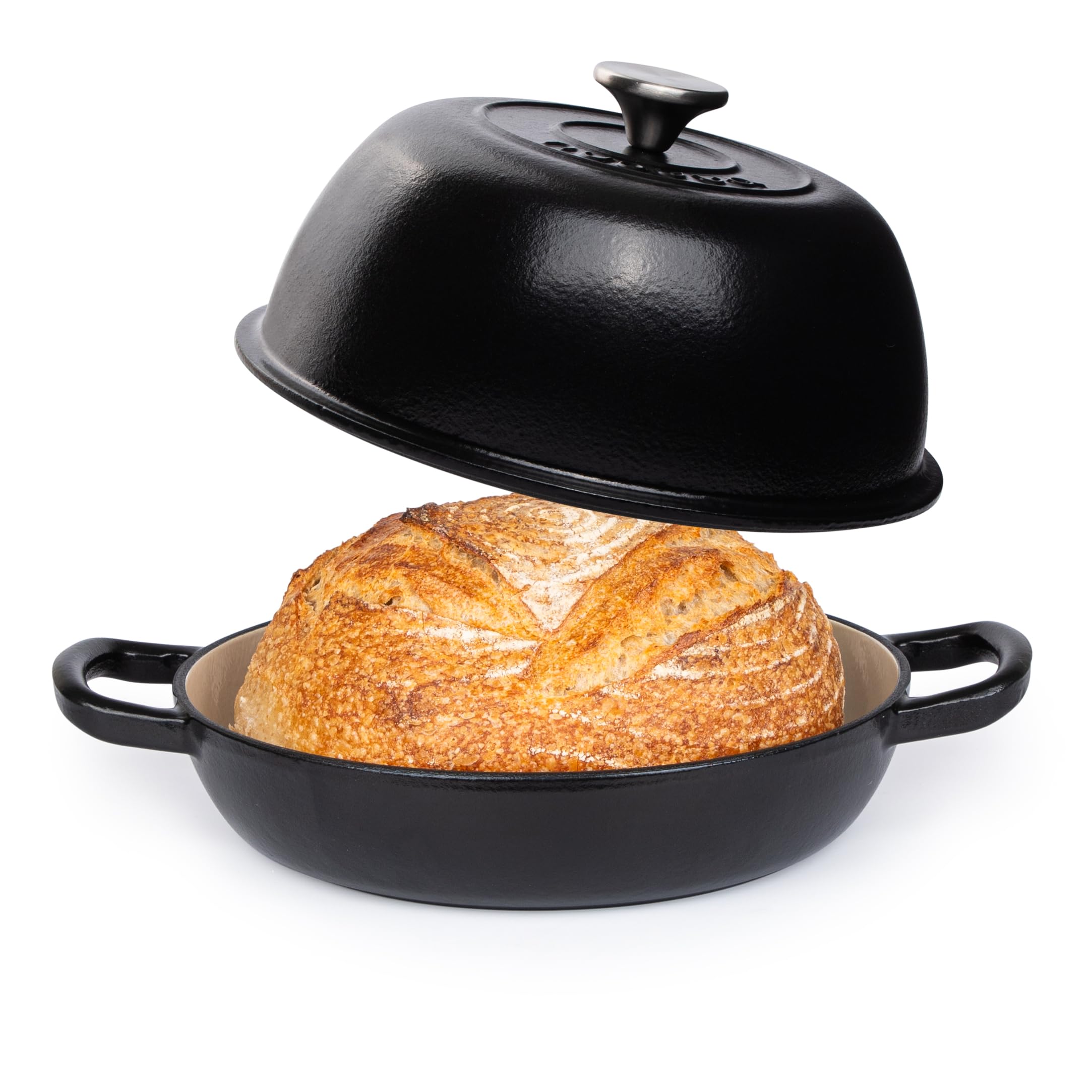
The Nuovva enameled Dutch oven is built specifically for sourdough bakers who want a domed lid that traps steam without needing to add ice cubes or a water pan. The 6-quart capacity accommodates standard boules and batards, and the enameled interior eliminates the need for seasoning while resisting acidic doughs.
Reviewers consistently note the even browning they get compared to thinner carbon steel alternatives. The heavy cast iron body—nearly 13 pounds—holds temperature steady during the initial 450°F preheat, so the loaf gets maximum oven spring when it hits the hot surface. The enamel coating cleans up with a damp towel, and multiple owners confirm the finish has not chipped after months of weekly baking.
The shorter side walls compared to traditional Dutch ovens make it safer to lower the dough in without burning your forearm. That same low profile works well for roasting chicken or braising short ribs. If you want one vessel dedicated to perfect bread without the maintenance ritual of raw iron, this is the most targeted option in the lineup.
Why it’s great
- Enameled interior resists sticking and requires no seasoning
- Domed lid design traps steam for superior bread crust
- Lower sidewalls reduce risk of burns during dough placement
Good to know
- Enamel can chip if dropped or heated while empty
- Heavy for its size—may be cumbersome for some users
4. VORRINGARD Enameled Cast Iron Dutch Oven (6 Quart, Purple)
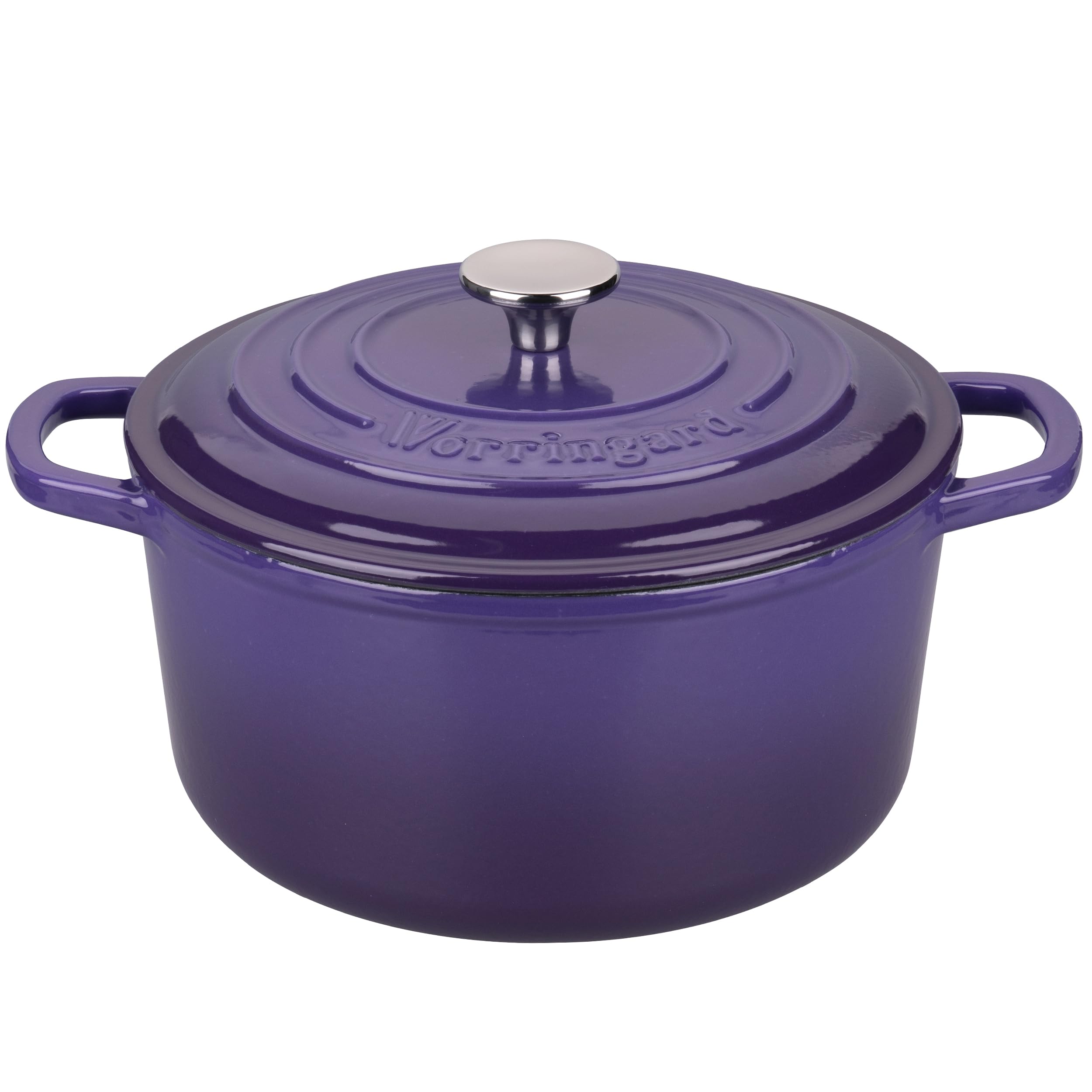
The VORRINGARD Dutch oven brings enameled cast iron benefits at a price point that undercuts premium names by a wide margin. At 6 quarts, it matches the capacity of the Nuovva, but the looped handles and stainless steel lid knob make it slightly easier to grip with oven mitts. The purple finish is a bright departure from standard black or red enamels.
Bakers report excellent results with sourdough, noting that the tight-fitting lid holds humidity long enough to produce a good oven spring without spraying water mid-bake. The heavy construction—over 14 pounds—absorbs thermal shock better than thinner enameled pots, and no reviewers have reported chipping after several months of use at 500°F.
The main trade-off is the interior enamel smoothness. A few users found that very sticky braises required a bit more soaking than they expected, though nothing a nylon brush could not handle. For shoppers who want a colorful, oven-safe workhorse for bread and stews without spending for a French brand, this is the most accessible enameled option available.
Why it’s great
- Oven safe to 500°F—suitable for high-heat bread baking
- Wide color selection fits any kitchen aesthetic
- Stainless steel lid knob stays cooler than cast iron alternatives
Good to know
- Interior enamel may require soaking for stubborn baked-on food
- Heavier than some enameled competitors at 14+ pounds
5. Bayou Classic 16-Inch Cast Iron Double-Handled Skillet

The Bayou Classic 16-inch skillet is an oversized piece designed for cooking in volume—whole chickens, giant batches of jambalaya, or enough cornbread for a crowd. The double loop handles make it possible for two people to lift the pan safely when it is full of hot food. At just 5 pounds, it is relatively light for its diameter because the wall thickness is slightly thinner than Lodge pans.
Owners who use this on Kamado-style grills report that the diameter perfectly matches the lower cooking shelf, allowing a second rack for vegetables or buns above the skillet. The pour spouts on both sides make draining grease more controlled than a standard skillet. The surface is somewhat rougher than Lodge, which can cause initial sticking, but the same seasoning process smooths it over time.
The thin walls mean the pan heats faster and responds more quickly to temperature adjustments compared to thicker cast iron, but it also cools faster when the burner is off. This makes it better for events and open-fire cooking where heat fluctuation is unavoidable. If you regularly cook for a large group and need a skillet that bridges the gap between a standard pan and a griddle, this is the most practical oversized choice.
Why it’s great
- Massive 16-inch surface—perfect for large batches and whole birds
- Double loop handles allow two-person lifting for safety
- Lighter than expected due to thinner walls, responsive heat control
Good to know
- Rougher factory finish requires more seasoning effort initially
- Not compatible with standard home ovens—check dimensions before buying
FAQ
Can I use metal utensils on raw cast iron?
Why does my new cast iron pan have a spot that looks like rust?
Is enameled cast iron safe for cooking acidic foods like tomato sauce?
Final Thoughts: The Verdict
For most users, the best cast iron cookware winner is the Lodge Seasoned Cast Iron Skillet Set because it delivers three workhorse sizes with proven heat retention and a pre-seasoned surface that improves over time. If you want an enameled vessel specifically for sourdough baking and braising, the Nuovva Dutch oven provides a lower-sided design and steam-trapping lid that outperform standard pots in bread application. And for feeding a crowd or cooking over an open fire, the Bayou Classic 16-inch skillet offers the largest surface area at a weight manageable enough for two people to handle safely.

Mo Maruf
I created WellFizz to bridge the gap between vague wellness advice and actionable solutions. My mission is simple: to decode the research and give you practical tools you can actually use.
Beyond the data, I am a passionate traveler. I believe that stepping away from the screen to explore new environments is essential for mental clarity and physical vitality.