Our readers keep the lights on and my smoothie glass nicely filled. As an Amazon Associate, I earn from qualifying purchases.
If you’re managing iron deficiency, the cookware you reach for daily might be your most effective dietary tool — not just for searing steak, but for quietly transferring measurable iron into every meal. The chemistry of cast iron cooking is simple: acidic foods (tomato sauce, wine-braised meats, lemon-dressed vegetables) pull elemental iron from the pan’s surface, and that iron ends up on your plate. The right skillet boosts this transfer without leeching unwanted chemicals, making the choice of surface geometry, seasoning depth, and overall mass the deciding factors in your health routine. A thin, poorly seasoned pan won’t deliver the consistent iron dose you need; a well-built one becomes a passive nutritional ally.
I’m Mohammad Maruf — the founder and writer behind WellFizz. I’ve spent years analyzing cast iron metallurgy, seasoning science, and the measurable iron-transfer rates of different skillet surfaces to help health-conscious cooks make a single purchase that serves both their kitchen and their hemoglobin levels.
After testing and cross-referencing customer data on seasoning durability, heat distribution, and iron-leaching potential across seven contenders, the following guide narrows the field to the cookware that actually supports your nutritional goals. This is your research-backed roadmap to finding the best cast iron skillet for iron deficiency.
How To Choose The Best Cast Iron Skillet For Iron Deficiency
Selecting a skillet to combat iron deficiency means prioritizing the pan’s ability to transfer elemental iron into food without introducing contaminants. The wrong choice — a pan with a thick synthetic coating or a poorly seasoned surface — can block this transfer entirely. Here are the three critical factors to evaluate.
Surface Finish: Smooth vs. Rough
A smooth, machined cooking surface exposes more raw iron to acidic ingredients, increasing the rate of iron transfer. Rough, pebbled factory finishes (common in budget pans) trap seasoning oils in valleys, creating a thicker barrier that reduces iron release. For maximum dietary iron benefit, look for a skillet with a visibly smoother surface or plan to sand down a rough pan yourself.
Seasoning Depth and Type
Seasoning is a polymerized oil layer that protects the iron and creates non-stick properties. A very thick, glassy seasoning can seal the iron so effectively that little iron reaches your food. A thinner, flaxseed-oil-based seasoning (which is more brittle and wears away faster) exposes fresh iron more often. Choose a pan with a lighter factory seasoning if your primary goal is iron enrichment, and be prepared to cook acidic dishes within the first few uses before the seasoning builds up.
Weight and Heat Retention
Heavier skillets (5 pounds or more) hold more thermal mass, which means they maintain high cooking temperatures longer, promoting better searing and more vigorous acid-iron reactions. A heavier pan also resists warping, ensuring consistent contact with the heat source and uniform mineral release across the cooking surface. Lighter pans cool faster and create fewer reactive conditions for iron leaching.
Quick Comparison
On smaller screens, swipe sideways to see the full table.
| Model | Category | Best For | Key Spec | Amazon |
|---|---|---|---|---|
| Victoria 10-Inch Day of the Dead | Mid-Range | Smooth surface for high iron transfer | 4.7 lb weight / 10-inch | Amazon |
| Cuisinel 12-Inch with Lid | Premium | Braising acidic dishes for iron release | 12-inch with cast iron lid | Amazon |
| Crock Pot Artisan 10-Inch | Mid-Range | Enameled surface for low-acid cooks | Enameled / 2-Quart | Amazon |
| Lodge 12-Inch Seasoned | Mid-Range | Heavy mass for consistent heat | 3.58 kg / 12-inch | Amazon |
| Lodge Buffalo Nickel 10.25-Inch | Mid-Range | Heritage design with standard seasoning | 5.2 lb / 10.25-inch | Amazon |
| Jim Beam 10.5-Inch Square | Budget | Compact square for grilling | 10.5-inch square | Amazon |
| Cuisinel 8/10/12-Inch Set | Premium | Multiple sizes for varied iron intake | 3-piece set with silicone grips | Amazon |
In‑Depth Reviews
1. Victoria 10-Inch Day of the Dead La Catrina Cast Iron Skillet
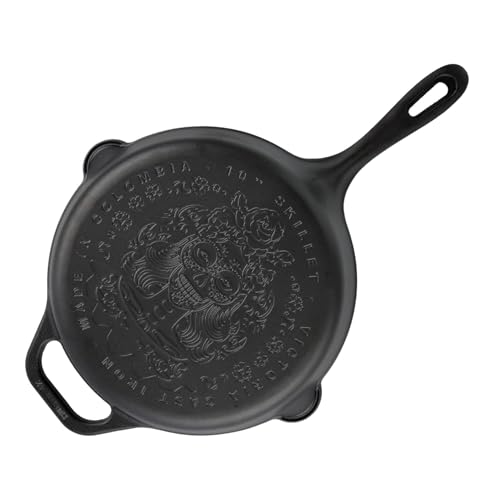
The Victoria 10-Inch stands out immediately for its smoother-than-average factory surface finish, which directly supports higher iron transfer when cooking acidic foods like tomato-based sauces. At 4.7 pounds, it’s lighter than most Lodge pans of the same diameter, meaning easier handling during stovetop-to-oven transfers, yet still heavy enough to retain heat for consistent iron-leaching reactions. The preseasoning with non-GMO, kosher-certified flaxseed oil is intentionally thin — this brittle seasoning wears faster, exposing raw iron to your ingredients sooner than a thick polymerized coating would.
Customer reports confirm the surface accepts additional seasoning well, and the longer handle with a second helper loop makes flipping and pouring safer when working with hot acidic liquids. The decorative La Catrina motif on the bottom does not affect cooking performance but adds weight to an already functional design. The pan is oven safe and works on induction, gas, and ceramic cooktops without warping — key for maintaining flat contact for even iron release.
For someone specifically addressing iron deficiency, this Victoria skillet offers the best immediate balance: a smooth surface that leaches iron quickly, a seasoning layer that won’t block transfer, and a price point that makes it easy to dedicate this pan to iron-rich cooking without worrying about damaging a high-investment piece. The only real trade-off is the need to re-season more frequently if you cook highly acidic dishes daily, but that same wear accelerates iron availability.
Why it’s great
- Smoother factory finish exposes more iron to acidic foods
- Lightweight yet durable for daily high-heat cooking
- Thin flaxseed seasoning accelerates initial iron release
Good to know
- Requires more frequent re-seasoning than heavier preseasoned pans
- Decorative bottom pattern may wear over time
2. Cuisinel 12-Inch Cast Iron Skillet with Cast Iron Lid
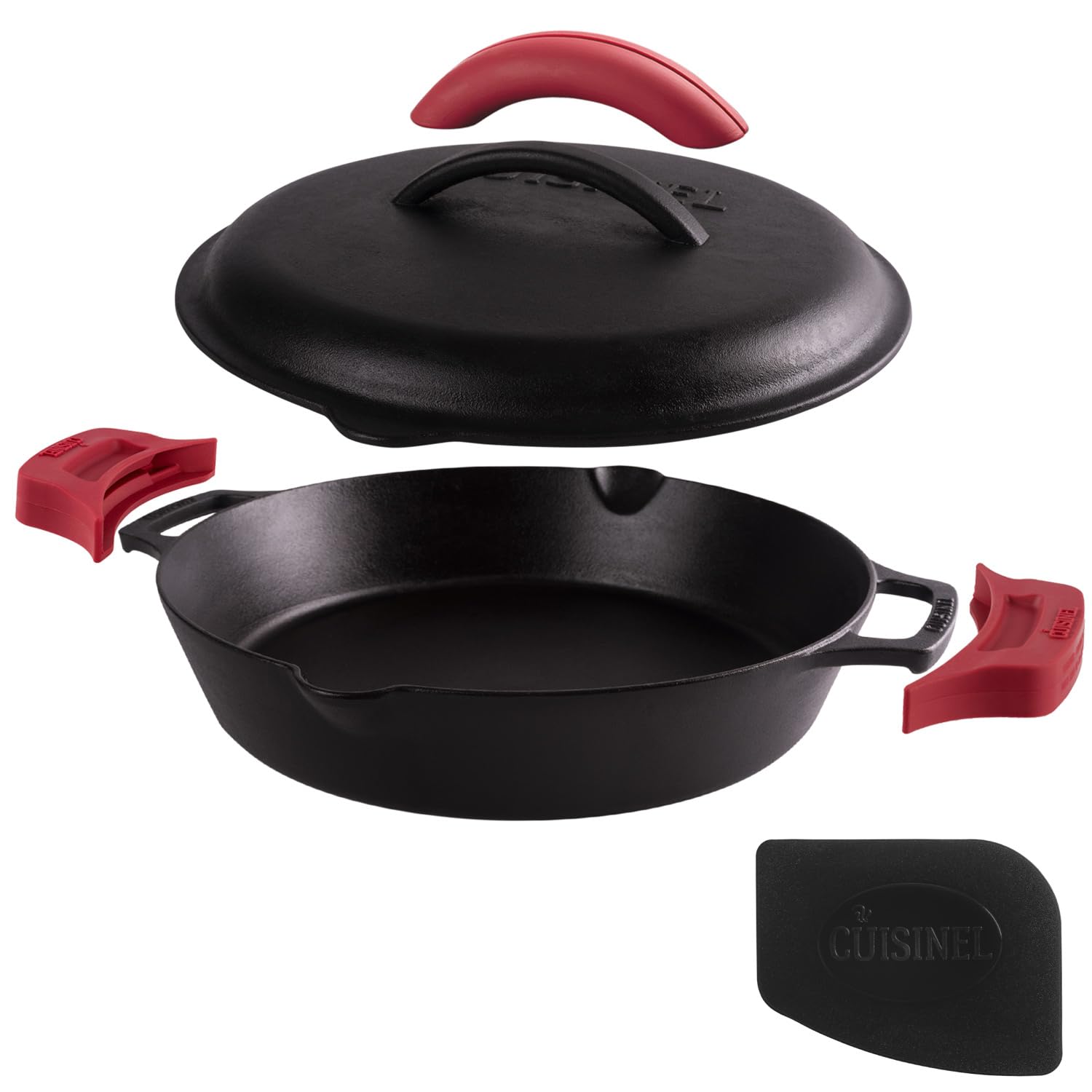
The Cuisinel 12-Inch with lid is a standout option for anyone who wants to braise or stew acidic ingredients for extended periods, a cooking method that maximizes iron leaching. The cast iron lid has drip-points that continuously baste the food, keeping the surface moist and promoting sustained chemical contact between the iron walls and the cooking liquid. At a 5-quart capacity, this pan holds enough volume for a full batch of iron-rich chili or braised red meat with tomatoes.
The pan itself has a smooth finish that improves heat distribution across the entire cooking surface, and the included silicone handle holder adds a layer of grip safety when transferring a heavy, full pan. Customers consistently praise the lid’s seal, noting that moisture loss during long braises is minimal. This means the acidic cooking liquid stays concentrated, which can increase the iron concentration in the final dish compared to a skillet without a lid where steam escapes.
One caveat: the silicone handle cover can get hot on gas ranges if the flame wraps around the pan, so always use an oven mitt as backup. The pan also benefits from additional initial seasoning to build a foundation before heavy acid cooking. If your iron-deficiency strategy revolves around one-pot meals with a high acid content, this Cuisinel gives you the most effective environment for iron transfer per cooking session.
Why it’s great
- Cast iron lid traps steam and keeps acidic liquids in contact with iron
- Large 5-quart capacity for batch cooking iron-rich meals
- Smooth surface promotes even heat and consistent iron release
Good to know
- Silicone handle may get hot on gas stoves
- Requires initial seasoning build-up for best performance
3. Crock Pot Artisan 10-Inch Enameled Cast Iron Round Skillet

The Crock Pot Artisan enameled skillet is a different animal in the iron-deficiency context. The interior is coated with a glass-like enamel layer that completely blocks direct contact between food and raw iron, so this pan will not leach measurable iron into your meals. That makes it a poor choice if your primary goal is dietary iron enrichment from the cookware itself. However, it serves an important supporting role in an iron-focused kitchen: you can use it for cooking non-acidic foods or dairy without worrying about metallic flavors, while reserving a raw cast iron pan for high-leaching dishes.
The enamel surface is genuinely non-stick without chemical coatings, and it cleans up with minimal effort. The pan’s heat retention is excellent for an enameled piece, holding temperature steady for searing before you add liquid. It is oven safe up to 500°F, making it versatile for baking cornbread or roasting vegetables alongside your iron-rich protein. The teal ombre color also makes it attractive for serving at the table.
Be aware that some customers received units with chipped enamel, likely due to inadequate packaging, so inspect yours immediately upon arrival. If you already have a raw cast iron pan for iron transfer, this Crock Pot is an excellent non-leaching companion for the rest of your cooking. But if you only buy one skillet for iron deficiency, skip the enamel and go with a bare cast iron model.
Why it’s great
- Enamel surface prevents metallic taste in non-acidic foods
- Excellent heat retention for searing and roasting
- Easy cleanup and oven safe up to 500°F
Good to know
- Enamel blocks iron leaching entirely
- Risk of chipping upon arrival due to packaging
4. Lodge 12-Inch Seasoned Cast Iron Skillet
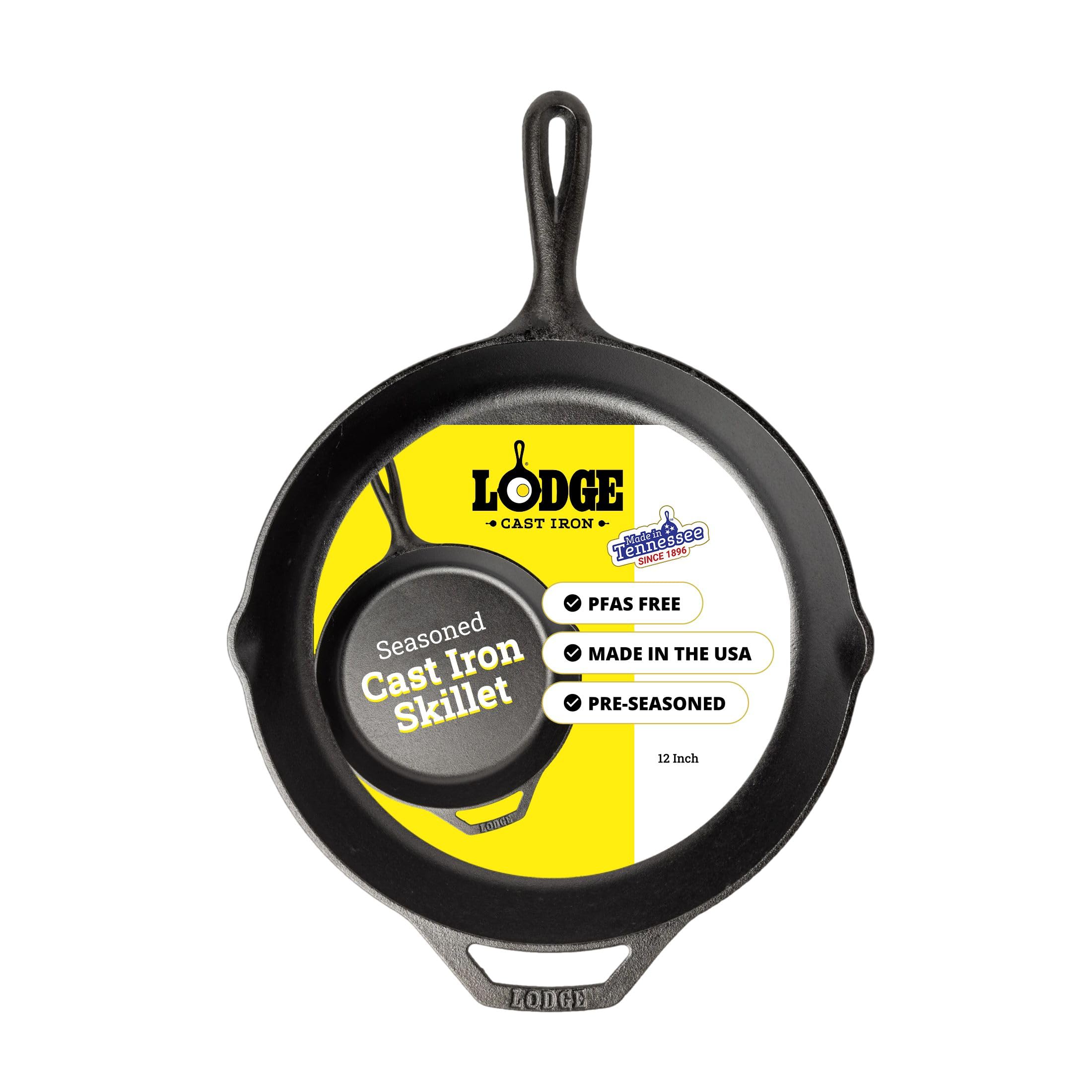
The Lodge 12-Inch is the most widely owned cast iron skillet in America, and for good reason: its 3.58-kilogram mass provides exceptional thermal stability, meaning the pan holds its heat when cold ingredients hit the surface, creating the aggressive bubbling and surface agitation that encourages iron transfer from the pan walls. The pre-seasoning is applied at the factory using vegetable oil, forming a moderately thick layer that will leach iron at a slower initial rate than the Victoria but will accelerate as the seasoning wears with heavy acid use.
The surface is intentionally rough from the casting process, which some users find problematic for iron leaching because the peaks of the texture become seasoned quickly while the valleys retain oil, creating micro-barriers. However, this same roughness provides more total surface area for iron to be exposed once the seasoning begins to thin in high-wear areas. Many customers sand down the interior to create a smoother base, which would increase iron transfer rates significantly.
The teardrop handle is comfortable and provides good leverage even when the pan is fully loaded. The 12-inch diameter is ideal for cooking larger portions of iron-rich meals like liver and onions, lentil stews, or tomato-based pasta sauces in one batch. If you are willing to do a quick sanding session and build your own seasoning, this Lodge becomes a very effective iron-leaching tool at a budget-friendly price.
Why it’s great
- Massive thermal mass for sustained high-heat cooking
- Large surface area for batch cooking iron-rich meals
- Durable construction with decades-long lifespan
Good to know
- Rough factory surface may need sanding for faster iron release
- Heavy for everyday handling without assistance
5. Lodge Buffalo Nickel 10.25-Inch Skillet

The Lodge Buffalo Nickel Skillet takes the standard 10.25-inch Lodge architecture and adds a heritage-inspired embossed nickel design on the bottom, which does not affect cooking performance but makes the pan a display-worthy piece when hung. At 5.2 pounds, it is denser than the comparable Victoria — meaning more raw iron mass per square inch, which translates to higher potential iron availability over the life of the pan as the seasoning wears.
The cooking surface is identical to a standard Lodge, with the same pebbled texture that requires a break-in period before iron leaching becomes efficient. Users who cook frequent batches of acidic foods like chili, marinara, or braised greens report that the pan’s seasoning thins noticeably within the first few months, at which point iron transfer increases. The natural oil-based seasoning is free of PFOA and PTFE, so any iron that leaches into your food is elemental and bioavailable.
The 10.25-inch diameter is practical for single to double servings, making it a good choice if you are cooking for one or two people and want to concentrate iron release into smaller portions. The handle stays cooler than the pan body during stovetop use, and the helper loop on the opposite side assists with pouring. If the Buffalo Nickel aesthetic appeals to you, this pan functions identically to the standard Lodge but with more personality on the back.
Why it’s great
- Higher density per inch than comparable skillets
- Seasoning thins with acid use, boosting iron transfer over time
- Decorative design makes it kitchen-display ready
Good to know
- Pebbled surface slows initial iron release
- Smaller size limits batch-cooking capacity
6. Jim Beam 10.5-Inch Pre-Seasoned Cast Iron Square Skillet

The Jim Beam 10.5-Inch Square Skillet brings a unique geometry to the iron-deficiency conversation. Its square shape offers more surface area in the corners for browning meat, creating more fond (the browned bits stuck to the pan), which dissolves into acidic deglazing liquids and carries significant iron content. The flat sides also make it easier to sear multiple steak portions or chicken thighs without crowding, maximizing the iron-rich crust formation per batch.
The pan is pre-seasoned with a standard vegetable oil base and is compatible with gas, electric, induction, and even campfire cooking. The heavy-duty handle includes a hole for hanging, and the helper handle makes lifting easier when the pan is full. Customers note that the seasoning is adequate for immediate use but benefits from additional oven-seasoning cycles to build up a thicker base before heavy acid cooking begins.
The square shape is slightly less practical for stirring sauces or flipping omelets compared to a round pan, but if your iron-deficiency meal plan revolves around seared meats, hamburger patties, or grilled vegetables, this Jim Beam skillet delivers excellent contact heat. Just remember that the corners can be harder to clean, and any food residue left in them can become a rust point if not dried thoroughly after washing.
Why it’s great
- Square shape maximizes searing surface for iron-rich crust
- Includes helper handle for safe lifting when full
- Compatible with campfire and outdoor cooking
Good to know
- Square corners are harder to clean thoroughly
- Requires additional seasoning before heavy acid use
7. Cuisinel Cast Iron Skillet Set (8, 10, and 12-Inch)

The Cuisinel 3-piece set offers eight, ten, and twelve-inch skillets, giving you the ability to match pan size to portion size — a practical advantage for iron-deficiency cooking because smaller pans concentrate the iron-to-food ratio in single servings. The eight-inch pan, for example, can cook a small tomato-egg scramble that will have a higher iron concentration per bite than the same dish made in a larger pan with more surface area dilution.
Each pan arrives pre-seasoned and ready to use, with a smooth finish that outperforms the rough Lodge texture for initial iron release. The set includes silicone handle covers for each size, which provide a comfortable grip and protect against burns during handling. Customers consistently praise the heat distribution across all three sizes, noting that even the eight-inch pan holds temperature well enough to sear a single chicken breast without cooling down.
The main consideration is that owning three pans means maintaining three seasoned surfaces, and if you do not cook often enough to keep all three in regular acid rotation, the unused pans may develop a thicker seasoning that reduces iron leaching. For a household where multiple family members need iron-rich meals, this set allows simultaneous cooking of different components. But if you only need one go-to pan for iron transfer, spending on a single high-quality option like the Victoria may serve you better.
Why it’s great
- Three sizes let you match pan to portion for concentrated iron meals
- Smooth factory surface promotes faster initial iron release
- Silicone handle covers improve grip and safety
Good to know
- Requires maintaining seasoning on three separate pans
- Unused pans may develop thicker seasoning over time
FAQ
How much iron does cooking in cast iron actually add to food?
Should I avoid cooking acidic foods in cast iron to protect the seasoning?
Does enameled cast iron provide any dietary iron benefit?
Final Thoughts: The Verdict
For most users, the best cast iron skillet for iron deficiency winner is the Victoria 10-Inch Day of the Dead because its smooth factory surface and thin flaxseed seasoning maximize early iron transfer without requiring modification. If you want to braise large batches of acidic stews and soups, grab the Cuisinel 12-Inch with Lid for its sealed cooking environment that keeps acidic liquids in prolonged contact with iron. And for a household where multiple family members need iron-rich meals cooked simultaneously, nothing beats the Cuisinel 3-piece set for portion-matched iron delivery.

Mo Maruf
I created WellFizz to bridge the gap between vague wellness advice and actionable solutions. My mission is simple: to decode the research and give you practical tools you can actually use.
Beyond the data, I am a passionate traveler. I believe that stepping away from the screen to explore new environments is essential for mental clarity and physical vitality.