Our readers keep the lights on and my smoothie glass nicely filled. As an Amazon Associate, I earn from qualifying purchases.
The hardest part of starting photography isn’t mastering aperture or shutter speed — it’s cutting through the noise of conflicting advice and picking a camera that won’t hold you back the moment you learn the basics. Too many beginners buy based on megapixel myths or tiny sensors that look great on a spec sheet but deliver noisy, flat images the second you shoot indoors or at dusk. The right first camera removes that friction, letting you focus on composition and light instead of fighting the hardware.
I’m Mohammad Maruf — the founder and writer behind WellFizz. I’ve spent years analyzing camera specifications, market data, and real user feedback across every major brand to understand which entry-level bodies and kits deliver genuine photographic growth without requiring an immediate upgrade.
This guide cuts through the marketing to compare eleven bodies ranging from budget-friendly DSLRs to premium mirrorless systems, each evaluated for their ability to teach, perform, and grow with you. Finding the right camera for starting photography is the single most important gear decision you will make — here is the straight data you need.
How To Choose The Best Camera For Starting Photography
The barrier to entry in photography has never been lower, but the sheer volume of body types, lens mounts, and kit configurations can paralyze a new buyer. The key is to prioritize three non-negotiable pillars: sensor class, autofocus reliability, and system longevity. A camera that scores well on all three will keep you shooting confidently for years.
Sensor Size Matters More Than Megapixels
APS-C sensors dominate the beginner market for a reason — they offer a dramatic step up in light-gathering ability from smartphone sensors and full-frame cameras without the price penalty. A 24-megapixel APS-C sensor like the one in the Nikon D3500 will produce cleaner shadows and better low-light images than a 24-megapixel smartphone camera because each individual pixel is physically larger. Ignore the megapixel race; focus on sensor class and pixel pitch instead.
Autofocus Points and Tracking Capability
A camera with 9 autofocus points clustered in the center of the frame, like the Canon Rebel T7, will force you to focus-and-recompose for off-center subjects — a workflow that costs time and misses shots. Models with wider coverage, such as the Sony ZV-E10 with 425 phase-detection points, let you place your subject anywhere in the frame and track it reliably. Look for at least 100 AF points for general use; hybrid phase-detection systems are strongly preferred over older contrast-detect-only setups.
Lens Ecosystem and Upgrade Path
The body is temporary; the lenses last a lifetime. Canon’s EF/EF-S mount (Rebel T7, 2000D) has decades of affordable used glass. Nikon’s F-mount (D3500) offers similar depth. Mirrorless mounts like Sony E (ZV-E10), Nikon Z (Z 30), and Fujifilm X (X-T30 III) represent the future — fewer affordable native lenses today, but active development and adapter compatibility. Beginners planning to upgrade bodies within three years should lean into a mirrorless system from day one.
Quick Comparison
On smaller screens, swipe sideways to see the full table.
| Model | Category | Best For | Key Spec | Amazon |
|---|---|---|---|---|
| Canon EOS Rebel T7 Bundle | DSLR Kit | All-around beginners needing accessories | 24.1MP APS-C, 9 AF Points | Amazon |
| Nikon Z 30 | Mirrorless | Vloggers and hybrid photo/video | 20.9MP DX, 209 AF Points | Amazon |
| Sony ZV-E10 | Mirrorless | Video-first content creators | 24.2MP APS-C, 425 AF Points | Amazon |
| Canon EOS 4000D Bundle | DSLR Bundle | Budget-minded beginners | 18MP APS-C, 19 AF Points | Amazon |
| Nikon D3500 | DSLR | Pure photography learners | 24.2MP DX, 11 AF Points | Amazon |
| Canon EOS 2000D (T7) Twin Lens | DSLR Twin | Telephoto reach on a budget | 24.1MP APS-C, 1 AF Point | Amazon |
| Fujifilm X-T30 III | Mirrorless | Stylish stills and film simulations | 26.1MP APS-C, 425 AF Points | Amazon |
| Canon EOS R8 | Mirrorless FF | Entry to full-frame performance | 24.2MP Full-Frame, 1053 Zones | Amazon |
| OM SYSTEM OM-1 Mark II | MFT Flagship | Weather-sealed outdoor shooting | 20MP MFT, 1053 AF Points | Amazon |
| Panasonic LUMIX S5IIX | Mirrorless FF | Hybrid video/stills unlimited | 24.2MP FF, 779 AF Points | Amazon |
| Sony Alpha 7 V | Mirrorless FF | Professional hybrid performance | 33MP FF, 759 AF Points | Amazon |
In‑Depth Reviews
1. Canon EOS Rebel T7 Bundle (18-55mm + 500mm + Accessories)
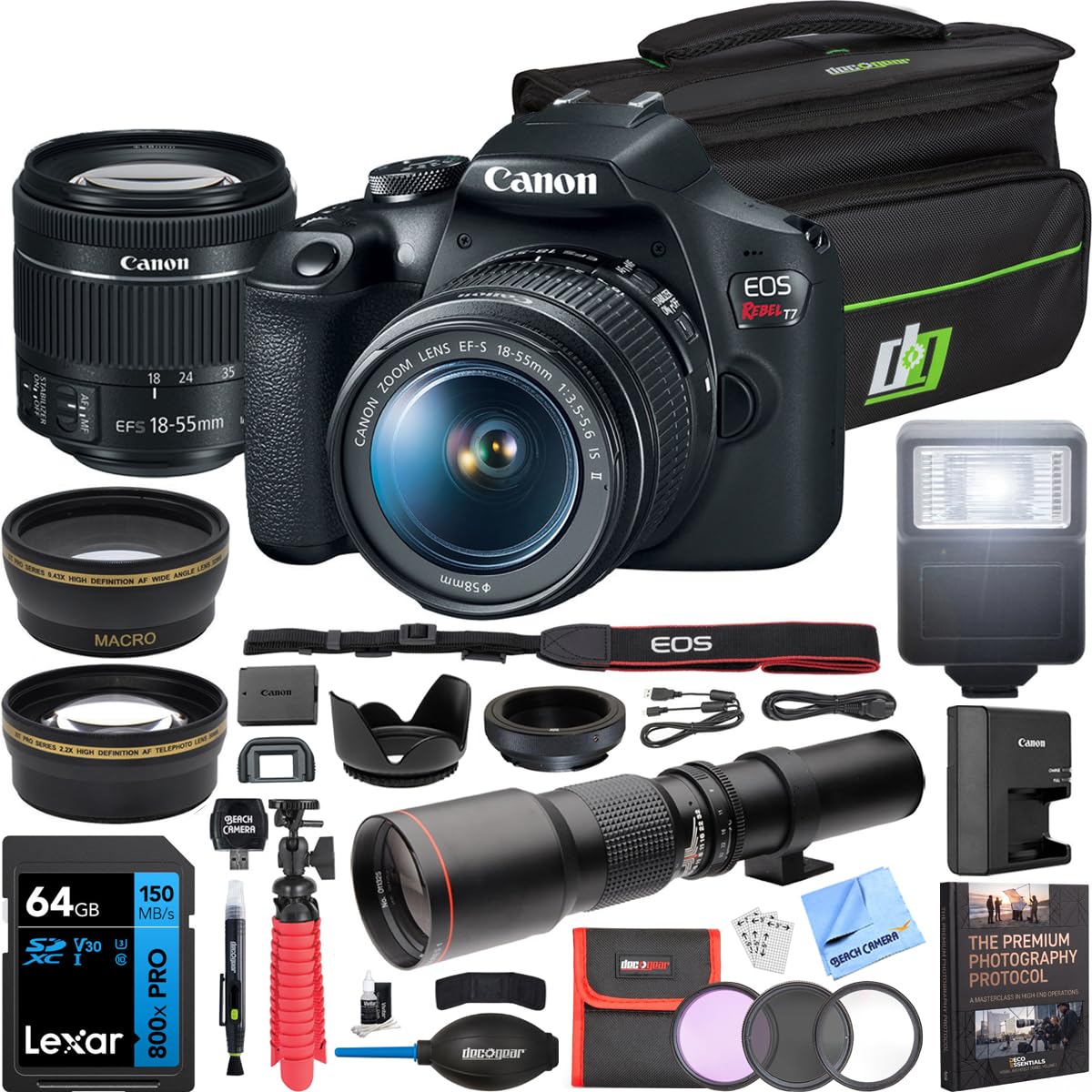
This bundle represents the most complete all-in-one starter package on the market, pairing Canon’s tried-and-true 24.1-megapixel APS-C sensor with a staggering assortment of accessories including a 500mm preset telephoto lens, a wide-angle adapter, a tripod, a flash, and a 64GB memory card. The DIGIC 4+ image processor is older but proven, delivering clean JPEGs up to ISO 1600 and a 3-frames-per-second burst that covers basic action. The 9-point phase-detection autofocus system is center-weighted, meaning you will need to learn the focus-and-recompose technique, which is actually a valuable skill for a student of photography.
The 18-55mm f/3.5-5.6 IS II kit lens includes optical image stabilization, a genuine help for handheld shooting in marginal light. The bundled 500mm f/8 preset telephoto requires good daylight and patience — it is a fun introduction to wildlife and moon photography, but the manual preset focus teaches you the relationship between distance and sharpness. The included Deco Gear bag is snug once you load all the accessories, but it protects the core kit during transport. Built-in Wi-Fi and NFC let you transfer images to a phone for quick sharing, though the Canon app experience is basic compared to modern mirrorless apps.
Several buyers noted that the battery drains faster than expected — the LP-E10 pack is small at 860mAh, and you should budget for a spare. The 3-inch 920k-dot LCD is adequate for composition but not for precise manual focus review; you will want to zoom in playback. The optical viewfinder offers 95 percent frame coverage, which means you get a slight margin of extra image around what you framed — a quirk that bothers some and teaches others to compose consciously. For a beginner who wants everything in one box and intends to shoot a wide variety of subjects from portraits to distant wildlife, this bundle is the most value-dense entry point available.
Why it’s great
- Comprehensive bundle includes telephoto, wide-angle, flash, tripod, and memory card
- Image stabilization in the kit lens helps handheld low-light shots
- Built-in Wi-Fi and NFC for easy image sharing
Good to know
- 9-point AF system is center-concentrated; requires focus-and-recompose
- Battery drains quickly — buy a spare LP-E10 immediately
- Included bag is too small for all bundled accessories comfortably
2. Nikon Z 30 with 16-50mm Lens

Nikon designed the Z 30 specifically for the creator who wants one camera for both photography and vlogging, ditching the optical viewfinder to keep the body exceptionally compact and affordable. The 20.9-megapixel DX-format sensor pairs with the EXPEED 6 engine to deliver sharp 4K video oversampled from the full sensor width, with eye-detect autofocus that works for people and pets. The 16-50mm f/3.5-6.3 VR kit lens collapses to a pancake size when powered off, making the whole setup small enough to slip into a daily bag without a dedicated camera compartment.
The flip-out touchscreen faces forward for self-recording, and the built-in stereo microphone system includes adjustable sensitivity settings and a red REC tally light on the front — small details that matter when you are filming alone. USB-C connectivity enables plug-and-play webcam operation at Full HD 60p and provides constant power during long streaming sessions. The 209-point hybrid autofocus system covers most of the frame, and subject-tracking is sticky enough to keep a face in focus while walking toward the camera. Battery life is rated at roughly 300 shots per charge, which is average for a mirrorless camera of this size, but USB charging means you can top up from a power bank.
The trade-off for the compact design is the absence of a viewfinder; you compose entirely on the 3-inch 1.04 million-dot LCD, which can be hard to see in bright sunlight. The kit lens aperture range is slow — f/6.3 at the long end — which limits low-light performance without raising ISO. The Z mount ecosystem is still young compared to Canon and Sony, so native lens options are fewer and often more expensive, though the FTZ adapter lets you use older F-mount lenses with full autofocus. This camera excels for the beginner who shoots video daily and wants stills as a secondary capability.
Why it’s great
- Ultra-compact body ideal for everyday carry and vlogging
- Excellent 4K video quality with eye-tracking autofocus
- USB-C with continuous power for streaming and long shoots
Good to know
- No viewfinder — rely entirely on the LCD screen
- Kit lens is slow at the telephoto end (f/6.3)
- Limited native Z DX lens selection; adapter needed for older glass
3. Fujifilm X-T30 III Mirrorless Camera with XC 13-33mm Lens
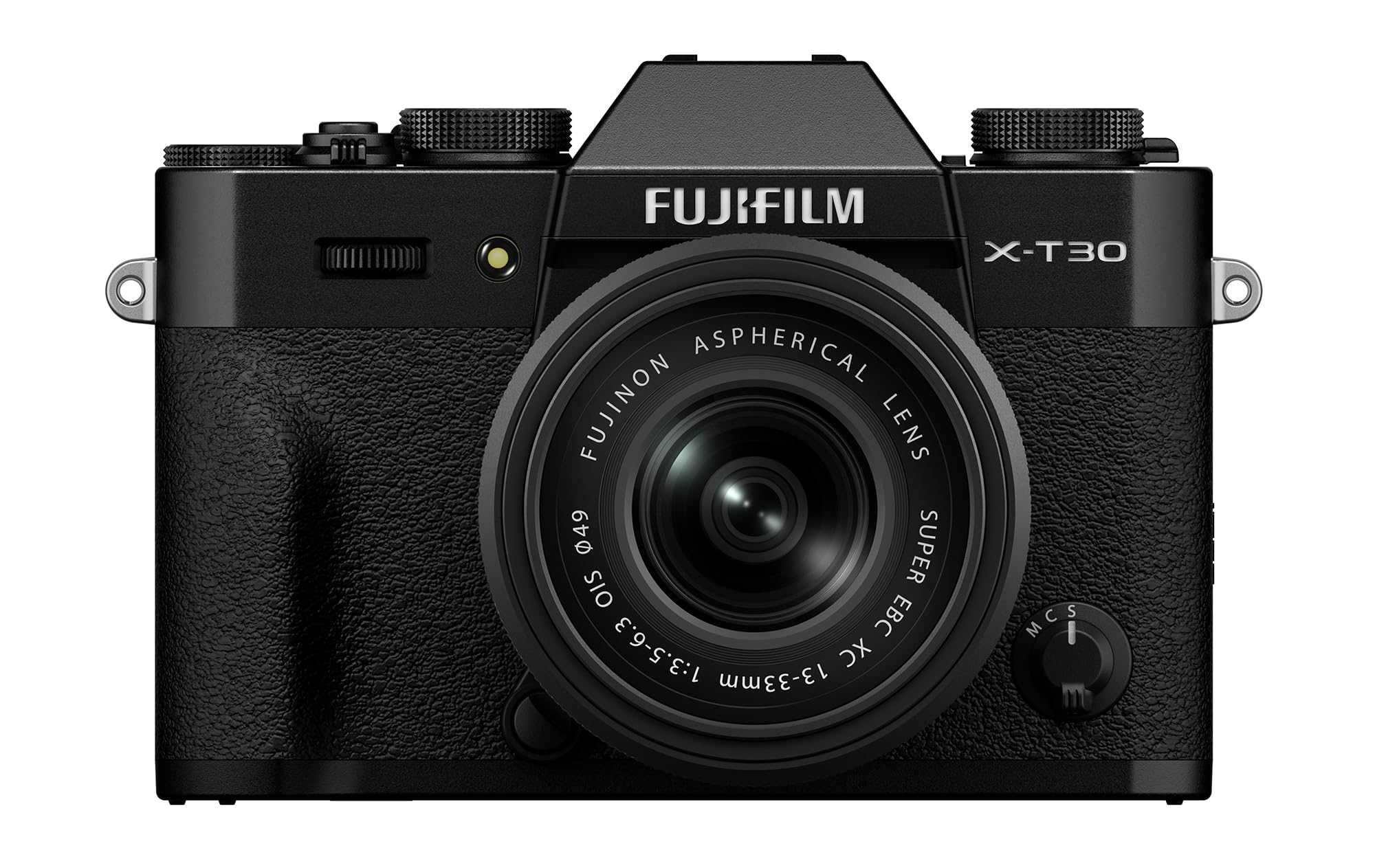
The Fujifilm X-T30 III delivers some of the most beautiful out-of-camera JPEGs in the mirrorless world thanks to its 26.1-megapixel X-Trans CMOS 4 sensor and the latest X-Processor 5 engine with 20 built-in Film Simulations. Recipes like Classic Chrome, Velvia, and Acros produce color and tone curves that normally require post-processing, which is a spectacular learning tool for beginners — you see the effect of your exposure and composition decisions immediately in a finished-looking image. The 425-point phase-detection autofocus system includes AI-powered subject detection that recognizes animals, birds, cars, and trains, making action shots significantly easier to capture than with older entry-level DSLRs.
The body design is a tactile experience: dedicated shutter speed, ISO, and exposure compensation dials on the top plate teach the exposure triangle through physical interaction rather than menu diving. The included XC 13-33mm f/3.5-6.3 OIS lens covers a useful wide-to-short-telephoto range with optical stabilization, though the variable aperture gets slow in the middle of the zoom. The 2.36 million-dot electronic viewfinder is bright and lag-free, and the 3-inch tilting touchscreen is sharp at 1.04 million dots. The X-T30 III is compact enough to be a daily companion and substantial enough that it does not feel like a toy.
The notable omission is an in-body battery charger; Fujifilm does not include one in the box, so you need a separate USB charger or a third-party option. Battery life is moderate — expect around 350 shots per charge — and the autofocus, while excellent for its class, occasionally hunts in very low contrast scenes. The XC kit lens is plasticky compared to the premium XF lenses, and users who fall in love with the system will likely upgrade glass faster than the body. The X-T30 III is the best choice for a beginner who values image character and tactile control over raw video specs or a massive lens ecosystem.
Why it’s great
- Film Simulations produce finished-looking JPEGs without editing
- Physical dials teach exposure settings intuitively
- AI subject-detection AF works on animals and vehicles
Good to know
- No battery charger included in the box
- Kit lens is plasticky and slow at f/6.3 telephoto
- Moderate battery life; carry a spare
4. Sony ZV-E10 Mirrorless Vlog Camera

The Sony ZV-E10 is fundamentally a video creator’s camera that happens to take excellent stills, built around the same 24.2-megapixel APS-C sensor found in the acclaimed a6400 and paired with the BIONZ X processor. The headline feature is Real-Time Eye AF, which locks onto a subject’s eye and tracks with freakish reliability — even when the subject turns their head or moves erratically. The Product Showcase setting transitions focus from a face to an object held up to the lens, then back when the object is lowered, which is a killer feature for review and tutorial content. 4K video is oversampled from 6K with full pixel readout, producing noticeably sharper footage than cameras that bin or skip pixels.
The Background Defocus button is a one-touch toggle that instantly opens or closes the aperture to blur or sharpen the background, a clever training tool for understanding depth of field. The side-flip 3-inch LCD is fully articulated and touch-sensitive, and the built-in three-capsule microphone captures directional audio with decent clarity. The body is remarkably light at 343 grams with battery and card, making it easy to mount on a gimbal or selfie stick. The 425 phase-detection points cover virtually the entire frame, and tracking remains reliable even at f/16 if you are using adapted lenses with step-down rings.
The downsides are real for serious stills use: the ZV-E10 lacks a viewfinder, forcing composition on the LCD, which is only 921k dots and washes out in direct sunlight. The electronic stabilizer introduces a crop and does not replace a gimbal for walking shots. Battery life is the biggest complaint — the NP-FW50 pack is small, and you will get roughly 25 minutes of 4K recording or around 440 stills per charge. Overheating can occur in hot ambient conditions when recording 4K continuously. This camera suits a beginner who wants to learn videography, livestream, and shoot vlogs with minimal editing friction, and who does not mind carrying spare batteries.
Why it’s great
- Real-Time Eye AF locks onto subjects with exceptional reliability
- Product Showcase mode automates focus transitions for tutorials
- Sharp 4K video from 6K oversampling with no pixel binning
Good to know
- No viewfinder — composing in bright sunlight is difficult
- Battery life is short, especially in 4K video mode
- Electronic stabilization adds crop; walking footage needs a gimbal
5. Canon EOS 4000D DSLR Pixi Advanced Bundle (Renewed)

The EOS 4000D is the most entry-level DSLR Canon makes, and in this Pixi Advanced Bundle, it comes packed with a wide-angle lens, a telephoto adapter, a tripod, a bag, and cleaning accessories — everything a true beginner needs to start shooting immediately. The 18-megapixel APS-C sensor is significantly larger than any smartphone sensor, providing real shallow-depth-of-field capability and cleaner high-ISO images than the 4000D’s price suggests. The 19-point autofocus system is contrast-detect, which is slower than phase-detect but adequate for stationary subjects like portraits, products, and landscapes. The DIGIC 4+ processor handles the basics without lag on single-shot operation.
The 18-55mm f/3.5-5.6 III kit lens is the same basic optic Canon has shipped for years — optically modest but mechanically robust and cheap to replace. The bundle includes a 2.2x telephoto and a 0.43x wide-angle screw-on adapter that attach to the front of the kit lens, extending your creative range without requiring a second lens purchase. The included tripod is a lightweight tabletop model suitable for vlogging and low-light self-portraits. The bag is small but protects the body and lenses during storage. Several buyers noted that the package did not include a memory card, so budget for that separately.
The trade-offs are significant: the 2.7-inch 230k-dot LCD is low-resolution and hard to review images on critically, and the optical viewfinder shows only 95 percent coverage with a small magnification. Continuous shooting is a sluggish 3 frames per second, so this is not a camera for sports or fast-moving pets. The DIGIC 4+ processor lacks the more sophisticated metering modes of newer Canon cameras. As a renewed unit, cosmetic condition varies, and the kit may ship in non-retail packaging. This is the sensible pick for the absolute beginner who wants the cheapest possible entry into an interchangeable-lens system and who plans to upgrade the body once the basics are mastered.
Why it’s great
- Extremely affordable bundle includes wide-angle, telephoto, tripod, bag
- 18MP APS-C sensor offers real DSLR depth of field and low-light advantage
- Full Canon EF/EF-S lens compatibility for cheap used glass
Good to know
- Low-resolution 230k-dot LCD makes image review difficult
- Contrast-detect AF is slow, not suitable for action
- No memory card included; add one to your order
6. Nikon D3500 with 18-55mm VR Lens (Renewed)

The Nikon D3500 is the most recommended beginner DSLR of the last decade for good reason: its 24.2-megapixel DX-format sensor uses no optical low-pass filter, which translates to sharper, more detailed stills than many cameras at twice its price point. The Guide Mode is genuinely useful — an interactive menu system that walks you through how aperture, shutter speed, and ISO affect the final image in real time. The optical viewfinder is bright and clear, and the 3-inch 921k-dot LCD is sharp and colorful. The body is comfortable in hand with a deep grip that suits larger hands, and battery life is exceptional at roughly 1,200 shots per charge.
The AF-P 18-55mm f/3.5-5.6G VR kit lens includes Nikon’s Vibration Reduction, which allows sharp handheld shots at shutter speeds three stops slower than without stabilization. The lens focuses silently and quickly. The 11-point autofocus system is contrast-detect rather than phase-detect, but in practice it is accurate for portraits and general shooting; the limitation is coverage, as all 11 points cluster near the center. The D3500 lacks a microphone input, a tilting screen, and 4K video — it records only 1080p at 60 fps — so it is a stills-first camera that happens to shoot video as a secondary function.
As a renewed unit, the buyer receives a 90-day warranty from Nikon, which is limited but provides a basic safety net. Several buyers noted that the Snapbridge app for wireless image transfer is unreliable, with app crashes and failed connections, particularly in bulb mode for long exposures. There is no shutter release remote port or IR sensor, so night photography requires a third-party intervalometer attached to the hotshoe or a manual bulb-hold technique. This camera is ideal for the beginner who wants to learn photography as a pure stills discipline and values battery stamina and optical viewfinder clarity over video-centric features.
Why it’s great
- Exceptional battery life — approximately 1,200 shots per charge
- Guide Mode teaches exposure fundamentals interactively
- No optical low-pass filter yields extra-sharp detail
Good to know
- No 4K video — limited to 1080p 60fps
- Snapbridge app connectivity is unreliable for image transfer
- No microphone input or tilting screen for vlogging
7. Canon EOS 2000D (Rebel T7) Twin Lens Kit (18-55mm + 75-300mm) (Renewed)

This offering bundles the Canon Rebel T7 (marketed as the EOS 2000D outside North America) with both the EF-S 18-55mm f/3.5-5.6 III kit zoom and the EF 75-300mm f/4-5.6 III telephoto zoom, giving the beginner immediate access to a 75-300mm range that covers wildlife, sports, and distant subjects. The 24.1-megapixel APS-C sensor is the same unit that powers many higher-tier Canon DSLRs, delivering clean files up to ISO 6400 with the DIGIC 4+ processor. The optical viewfinder shows a clear, real-time image of the scene with no lag, which is a genuine advantage over entry-level mirrorless cameras for tracking flying birds or running children.
The 75-300mm lens is an older optical design with a DC micro-motor autofocus that is noticeably audible and slower than modern stepping-motor lenses, but it is optically competent in good light and provides reach that would cost significantly more in a native zoom. The 18-55mm kit lens covers the standard range for everyday snapshots and landscape work. The camera includes a built-in flash, scene intelligent auto mode, and creative filters like Fisheye and Miniature that make experimentation playful. The 3-inch 920k-dot LCD is functional but not touch-sensitive.
The critical limitation is the 1-point autofocus system — a single cross-type center point. This is the most restrictive AF system on any current interchangeable-lens camera, and it forces the user to lock focus with the center point and then recompose, which is slow, prone to focus shift, and frustrating in dynamic situations. The camera lacks Wi-Fi, so image transfer requires a card reader or USB cable. The DC micro-motor in the 75-300mm is loud enough to be heard across a quiet room, which may startle wildlife. This twin-lens kit is for the budget-conscious beginner who wants telephoto reach right out of the box and does not mind working around a primitive autofocus system.
Why it’s great
- Includes both 18-55mm and 75-300mm lenses for wide-to-tele coverage
- Bright optical viewfinder with zero lag is excellent for tracking subjects
- Classic Canon color science produces pleasing JPEGs
Good to know
- Single cross-type AF point is restrictive and requires focus-and-recompose
- No Wi-Fi — only wired image transfer or card reader required
- Telephoto lens autofocus motor is audible and slow
8. Canon EOS R8 Mirrorless Camera Body (RF 24-50mm Lens Kit)

The Canon EOS R8 is the lightest full-frame RF-mount camera Canon has ever built, weighing only 461 grams with battery and card, and it delivers the same 24.2-megapixel sensor and DIGIC X processor that power the enthusiast-grade R6 Mark II in a more accessible body. The Dual Pixel CMOS AF II system covers nearly 100 percent of the frame with 1,053 AF zones and uses deep-learning subject detection for people, animals, and vehicles — including jet planes, trains, and horses. Uncropped 4K 60p video is oversampled from 6K, and the camera records 10-bit Canon Log 3 for professional color grading workflows. The rolling shutter is significantly improved over the earlier EOS RP, making it usable for fast motion.
The 0.39-inch 2.36 million-dot OLED electronic viewfinder refreshes at up to 120 fps, providing a smooth, lag-free preview even in dim light. The 3-inch 1.62 million-dot vari-angle LCD is sharp and touch-responsive. The bundled RF 24-50mm f/4.5-6.3 IS STM lens is delightfully compact but optically slow — f/6.3 at the long end — which limits its utility in low light without raising ISO. However, the full-frame sensor handles high ISO exceptionally well, with usable images up to ISO 12800 that would look noisy on an APS-C sensor. The R8 also includes focus peaking, zebra warnings for exposure, and an overexposure blinkies mode that helps beginners nail exposure on the first shot.
The compromises are notable: the R8 uses the smaller LP-E17 battery, which delivers around 500 shots or roughly one hour of 4K video per charge. There is only one SD card slot, and the body lacks in-body image stabilization, so you rely on lens-based IS and steady handholding. The mechanical shutter is limited to 6 frames per second, though the electronic shutter can hit 40 fps with continuous AF. Some users have reported overheating after approximately 30 minutes of continuous 4K 60p recording in warm ambient conditions. The R8 is the smartest entry point into the Canon RF system for a beginner who knows they want full-frame image quality and is willing to invest in faster RF glass over time.
Why it’s great
- Lightest full-frame RF body at 461g — truly portable
- Dual Pixel CMOS AF II with deep-learning subject detection is class-leading
- Uncropped 4K 60p from 6K oversampling with 10-bit Log
Good to know
- No in-body stabilization — relies on lens stabilization
- Small LP-E17 battery — carry at least two spares for a day out
- Single SD card slot limits professional workflow backup
9. OM SYSTEM OM-1 Mark II with M.Zuiko 12-40mm F2.8 PRO

The OM SYSTEM OM-1 Mark II is the most rugged and computationally advanced camera in this guide, built for the beginner who intends to shoot outdoors in rain, snow, dust, and freezing temperatures without worrying about their gear. The IP53-rated dustproof and splashproof magnesium-alloy body is sealed against the elements and designed to operate down to -10 degrees Celsius. The 20-stacked BSI Live MOS Micro Four Thirds sensor paired with the TruePic X engine enables features like Handheld High Res Shot, which composites multiple images into a 50-megapixel equivalent JPEG without a tripod, and Live ND, which simulates neutral density filters up to ND64. The Cross Quad Pixel AF system provides 1,053 all cross-type phase-detection points that cover the frame with exceptional precision.
The included M.Zuiko Digital ED 12-40mm f/2.8 PRO II lens is optically superb — sharp corner to corner at f/2.8 across the entire zoom range, which is equivalent to a 24-80mm full-frame field of view. The f/2.8 constant aperture lets you shoot in light that would force an f/3.5-5.6 kit lens to its maximum ISO, and the manual clutch mechanism allows instant switching between autofocus and manual focus. The 5-axis in-body image stabilization is the best in any camera system, rated at up to 7 stops, allowing sharp handheld shots at shutter speeds that would be impossible on unstabilized systems. The electronic viewfinder is a 5.76 million-dot OLED panel with blackout-free shooting at up to 120 frames per second.
The Micro Four Thirds sensor has a 2x crop factor, which means depth of field is deeper at equivalent apertures than APS-C or full-frame — you will not get extreme background blur without specialized lenses, but you gain massive telephoto reach in a small package. The 20-megapixel resolution is lower than many competitors, but the stacked sensor design delivers readout speeds fast enough for near-zero rolling shutter, making this one of the best cameras for photographing fast-moving subjects. The battery is rated at roughly 500 shots. The price is significant, but the lens is a professional-grade tool that will outlast several body upgrades. The OM-1 Mark II is the best camera for a beginner who wants to learn photography in challenging environments and values computational features and weather resistance over raw megapixel counts.
Why it’s great
- IP53 weather sealing withstands rain, dust, and freezing conditions
- Handheld High Res Shot and Live ND eliminate need for tripod/filters
- In-body stabilization is class-leading at up to 7 stops
Good to know
- 20MP resolution is lower than APS-C competitors
- Deep depth of field makes extreme background blur harder to achieve
- Premium price — the lens alone justifies much of the cost
10. Panasonic LUMIX S5IIX with 20-60mm + 50mm f/1.8 Lenses
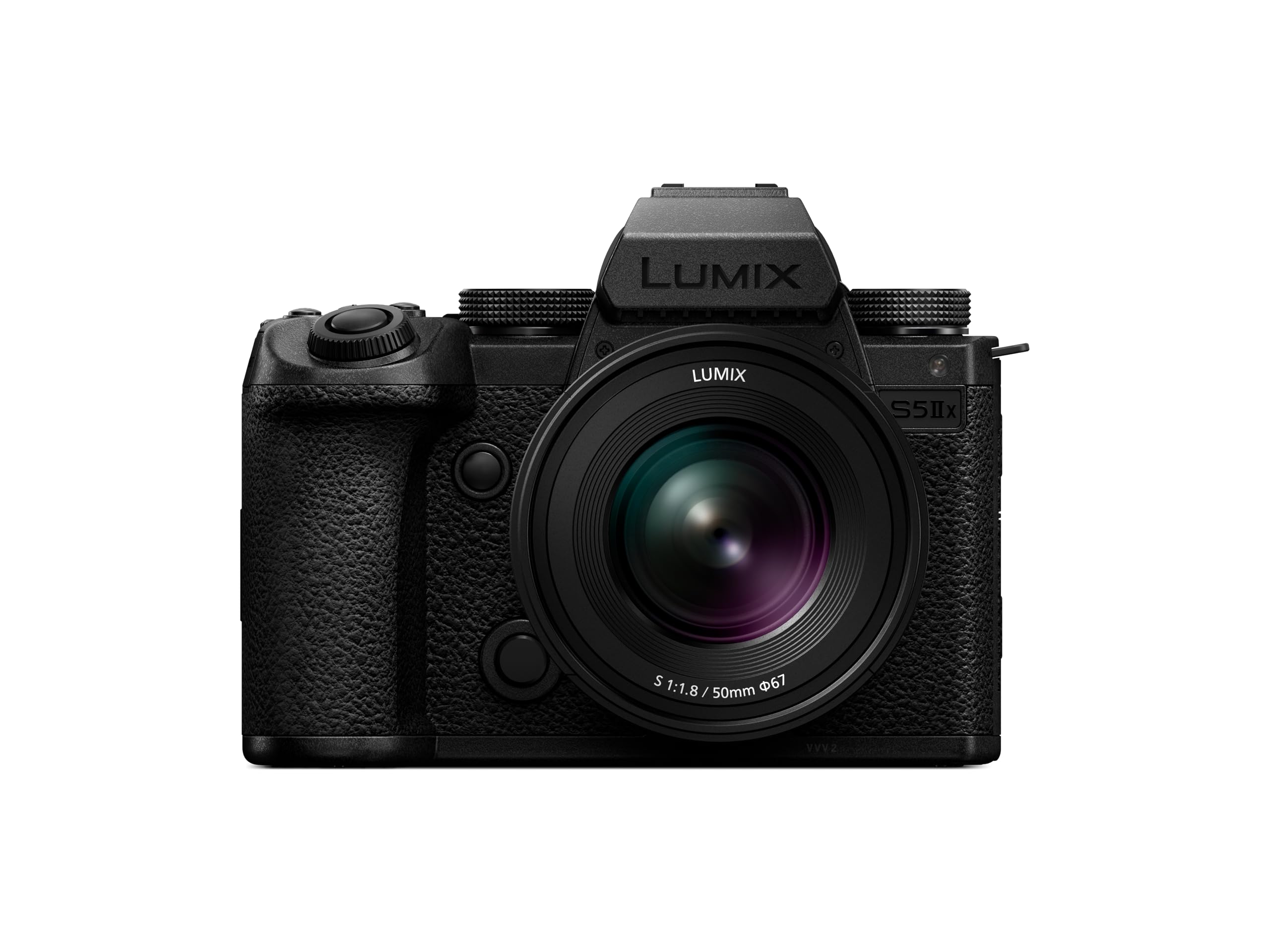
The Panasonic LUMIX S5IIX is the most video-capable full-frame camera in this roundup, specifically designed for the beginner who wants to learn cinematography alongside photography. The 24.2-megapixel 35mm full-frame sensor works with the new phase-hybrid autofocus system — Panasonic’s first that uses on-sensor phase-detection pixels — delivering reliable subject tracking that previous Lumix cameras lacked. The camera records 5.8K ProRes internally, 4K 60p with 10-bit color depth, and features a built-in fan for unlimited recording time with no overheating. The Active I.S. stabilization system smooths walking footage effectively for a full-frame body, reducing the need for a gimbal in casual use. The bundle includes both the Lumix S 20-60mm f/3.5-5.6 and the Lumix S 50mm f/1.8, giving you a versatile wide-to-standard zoom and a fast prime for low-light and portrait work.
The 20-60mm lens is unusual and excellent for a kit zoom — starting at 20mm gives a noticeably wider field of view than the typical 24mm or 28mm start, which matters real estate, architecture, and landscape photography. The 50mm f/1.8 is optically excellent, with fast, quiet autofocus and beautiful rendering at f/1.8, producing shallow depth of field that entry-level zoom lenses cannot match. The body offers 14+ stops of dynamic range with V-Log/V-Gamut capture, enabling serious color grading out of the box. The 3-inch fully articulating touchscreen is 1.84 million dots, among the sharpest in its class, and the 3.68 million-dot OLED viewfinder is bright and color-accurate. The grip is deep and comfortable even for larger hands, and the body is dust- and splash-resistant.
The lens selection for the L-Mount system is growing but still smaller than Sony E or Canon RF, though Panasonic, Leica, and Sigma all produce L-Mount glass. The USB-C port supports charging and power delivery, but the camera only includes one SD card slot, which limits professional redundancy. The 50mm f/1.8 lens ships without a lens hood, so you will need to purchase one separately. Some buyers reported that the camera arrived in non-retail packaging, so verify the listing conditions carefully. The S5IIX is the camera for the beginner who sees photography and video as equal priorities and wants a single system that can grow into professional cinema use without requiring a body swap.
Why it’s great
- Unlimited 4K/5.8K recording with no overheating thanks to internal fan
- 20-60mm kit zoom offers wider FoV than typical starter lenses
- Included 50mm f/1.8 prime is fast, sharp, and capable of beautiful bokeh
Good to know
- Single SD card slot limits backup for paid shoots
- L-Mount lens ecosystem smaller than Sony E or Canon RF
- 50mm lens ships without a hood — budget for a third-party one
11. Sony Alpha 7 V Full-Frame Mirrorless (Body Only)
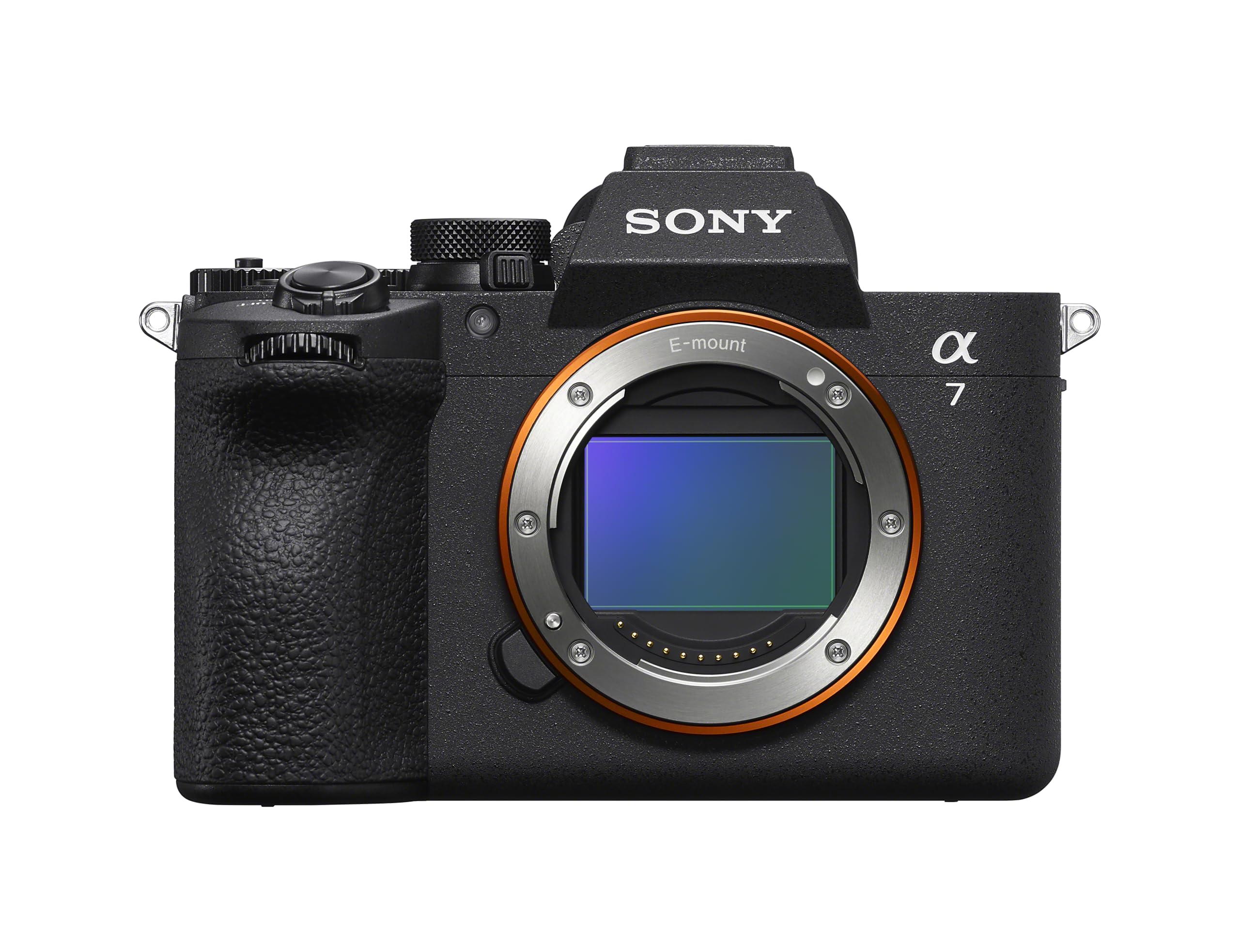
The Sony Alpha 7 V is the most technically advanced camera in this guide, incorporating a partially stacked 33-megapixel Exmor RS CMOS sensor that delivers approximately 4.5 times faster readout than the A7 IV it replaces. The sensor enables blackout-free continuous shooting at 30 frames per second with full autofocus and auto-exposure tracking — a burst rate that was exclusive to sports flagship cameras just a few years ago. The new BIONZ XR2 processing engine includes dedicated AI circuitry that improves subject recognition by about 30 percent over the A7 IV, using human pose estimation technology that tracks body and head position even when the subject’s face is partially obscured. The 759-point phase-detection AF system covers 94 percent of the frame and recognizes people, animals, birds, insects, vehicles, and aircraft.
The 5-axis in-body image stabilization is rated at up to 7.5 stops at the center and 6.5 stops at the periphery, enabling handheld shooting in near-darkness. The electronic shutter reaches 1/16000 second, allowing wide-aperture use in bright daylight without ND filters. Video features include 4K 120p recording with a 1.1x crop, a refined heat-dissipation system for extended recording, and 16 stops of claimed dynamic range. The 3.68 million-dot OLED electronic viewfinder is bright and detailed, and the 3-inch 1.03 million-dot vari-angle LCD is clear and responsive. The body is well-sealed against dust and moisture, and the dual USB-C ports allow simultaneous charging and external storage.
The Alpha 7 V is a body-only purchase, meaning no lens is included — you must budget for at least one native E-mount lens, which adds significant cost. The menu system, while improved, still has a learning curve for first-time Sony users. The NP-FZ100 battery provides approximately 550 shots per charge, which is good for a full-frame mirrorless but not exceptional. 4K 120p uses a 1.1x crop, and some users have noted rolling shutter during fast panning at this mode. The camera is also physically larger and heavier than many APS-C mirrorless options. This is the camera for the beginner who is serious enough to invest in a professional-grade system from day one and who wants the best autofocus, stabilization, and hybrid photo-video capability available.
Why it’s great
- Partially stacked 33MP sensor with 30fps blackout-free burst
- AI-based subject recognition with human pose estimation is best-in-class
- 7.5-stop IBIS enables sharp handheld shots in very low light
Good to know
- Body-only — you must purchase a separate lens
- Sony menu system has a learning curve for new users
- 4K 120p introduces a 1.1x crop and noticeable rolling shutter
FAQ
Should a beginner start with a DSLR or a mirrorless camera in 2024?
How many megapixels do I really need to start learning photography?
Is the kit lens included with these cameras good enough to learn with?
What is the most important feature for a beginner to prioritize?
Should I buy a renewed or refurbished camera as my first camera?
Final Thoughts: The Verdict
For most users, the camera for starting photography winner is the Canon EOS Rebel T7 Bundle because it packs a proven 24.1MP sensor, a telephoto lens, a flash, a tripod, and a memory card into one box — everything a beginner needs to explore portraits, landscapes, wildlife, and macro without further spending. If you want a compact mirrorless system that handles vlogging and stills equally well, grab the Nikon Z 30. And for full-frame image quality with a clear upgrade path into the Canon RF ecosystem, nothing beats the Canon EOS R8.

Mo Maruf
I created WellFizz to bridge the gap between vague wellness advice and actionable solutions. My mission is simple: to decode the research and give you practical tools you can actually use.
Beyond the data, I am a passionate traveler. I believe that stepping away from the screen to explore new environments is essential for mental clarity and physical vitality.