Our readers keep the lights on and my smoothie glass nicely filled. As an Amazon Associate, I earn from qualifying purchases.
A backpack for hiking and camping isn’t just a bag—it’s your mobile base camp, the structure that determines whether a 15-mile day ends with a smile or a wince. The difference between a pack that works with your body and one that fights it comes down to the frame system, torso fit, and load transfer design, not just the liter capacity printed on the tag.
I’m Mohammad Maruf — the founder and writer behind WellFizz. I’ve spent years analyzing outdoor gear specifications, comparing aluminum stay gauges, foam densities, and suspension architectures to separate genuine performance from marketing fluff.
This guide breaks down the seven most compelling internal-frame packs on the market, from budget-friendly weekend haulers to premium multi-day systems, so you can confidently choose your next backpacks for hiking and camping.
How To Choose The Best Backpack For Hiking And Camping
Three factors separate a pack you’ll love from one you’ll ditch mid-trail: torso fit, frame stiffness, and suspension adjustability. Ignore brand hype—focus on how the pack transfers weight to your hips and whether the backpanel keeps you cool on warm ascents.
Torso Length and Hip Belt Fit
Measure your torso from the C7 vertebra (the bony bump at the base of your neck) to the iliac crest (the top of your hip bones). A pack that matches this measurement places 80% of the load on your hips, not your shoulders. Adjustable torso systems, like the Kelty Fit-Pro or Osprey AirSpeed, let you fine-tune this fit across seasonal layers or share the pack between hikers of different heights.
Capacity vs. Trip Length
A 48-liter pack works for 1-to-3-night trips if you pack compactly and use a lightweight sleeping bag and tent. A 65-to-75-liter pack accommodates 4-to-6-night expeditions, bulkier winter gear, or extra water carries in arid zones. More volume tempts you to overpack, so match capacity to your actual packing style, not your aspirational gear list.
Frame Construction and Load Management
Internal frames use either a single aluminum stay (lightweight, moderate load capacity) or a full perimeter frame with a wire hoop (heavier, excellent torsional stability for loads over 35 pounds). Check whether the frame can be removed for travel or replaced if damaged—an important detail for long-term durability.
Quick Comparison
On smaller screens, swipe sideways to see the full table.
| Model | Category | Best For | Key Spec | Amazon |
|---|---|---|---|---|
| Osprey Kestrel 48L | Premium | Technical day hikes and ultralight overnights | 48L / 4.4 lb / Adjustable torso | Amazon |
| Osprey Rook 50L | Premium | Versatile 2-4 day trips with ventilation | 50L / 3.6 lb / AirSpeed suspension | Amazon |
| Kelty Asher 65L | Premium | Multi-day trips needing adjustable torso fit | 65L / 3 lb 5 oz / Fit-Pro torso | Amazon |
| TETON 75L Explorer | Mid-Range | Extended expeditions with heavy loads | 75L / Open-cell foam lumbar pad | Amazon |
| Mardingtop 60L Military | Mid-Range | Tactical camping and ruck training | 60L / 4.49 lb / YKK zippers | Amazon |
| Mardingtop 50L | Mid-Range | Rucking, hunting, and 3-day survival kits | 50L / 3.9 lb / 600D Polyester | Amazon |
| Ubon 60L Internal Frame | Budget | Entry-level 3-5 day section hikes | 60L / 2.65 lb / Mesh back panel | Amazon |
In‑Depth Reviews
1. Osprey Kestrel 48L Men’s Backpacking Backpack

The Osprey Kestrel 48L earns the top spot because it walks the tightrope between ultralight efficiency and rugged trail durability better than any pack in this lineup. Its injection-molded AirScape backpanel provides a stable, close-to-body carry that keeps the load from swaying on technical terrain, while the adjustable torso length lets you dial in fit across seasonal clothing layers. The fixed hipbelt transmits weight cleanly to your hips without slipping, even when the trail angle changes abruptly.
At 4.4 pounds, the Kestrel isn’t the lightest 48-liter pack, but the trade-off shows in the fabric toughness—the outer material resists abrasion from rock slabs and brush better than lighter-weight alternatives. Side elastic pockets are easy to reach without removing the pack, and the integrated bright-green rain cover stows neatly in its own pocket. A dedicated side zipper gives quick access to the main compartment without opening the top lid, a feature that becomes indispensable on multi-hour rest stops.
Reviewers consistently praise the Kestrel for its versatility: it compresses flat enough for day hikes yet carries enough volume for a four-day Glacier National Park trip. The daisy chains on the front panel remain useful even when the pack is fully compressed, and trekking pole attachments are thoughtfully positioned. One caveat: some users report a formaldehyde-like odor on initial unpacking, which dissipates after a wash. For hikers who want one pack that excels across short technical outings and lightweight overnights, the Kestrel delivers.
Why it’s great
- AirScape backpanel provides excellent stability and ventilation on uneven trails
- Side-access zipper to main compartment speeds up gear retrieval
- Integrated rain cover with dedicated storage pocket
Good to know
- Fixed hipbelt limits adjustability for very narrow or wide waist measurements
- Some users note a chemical smell that requires an initial wash
2. Osprey Rook 50L Men’s Backpacking Backpack
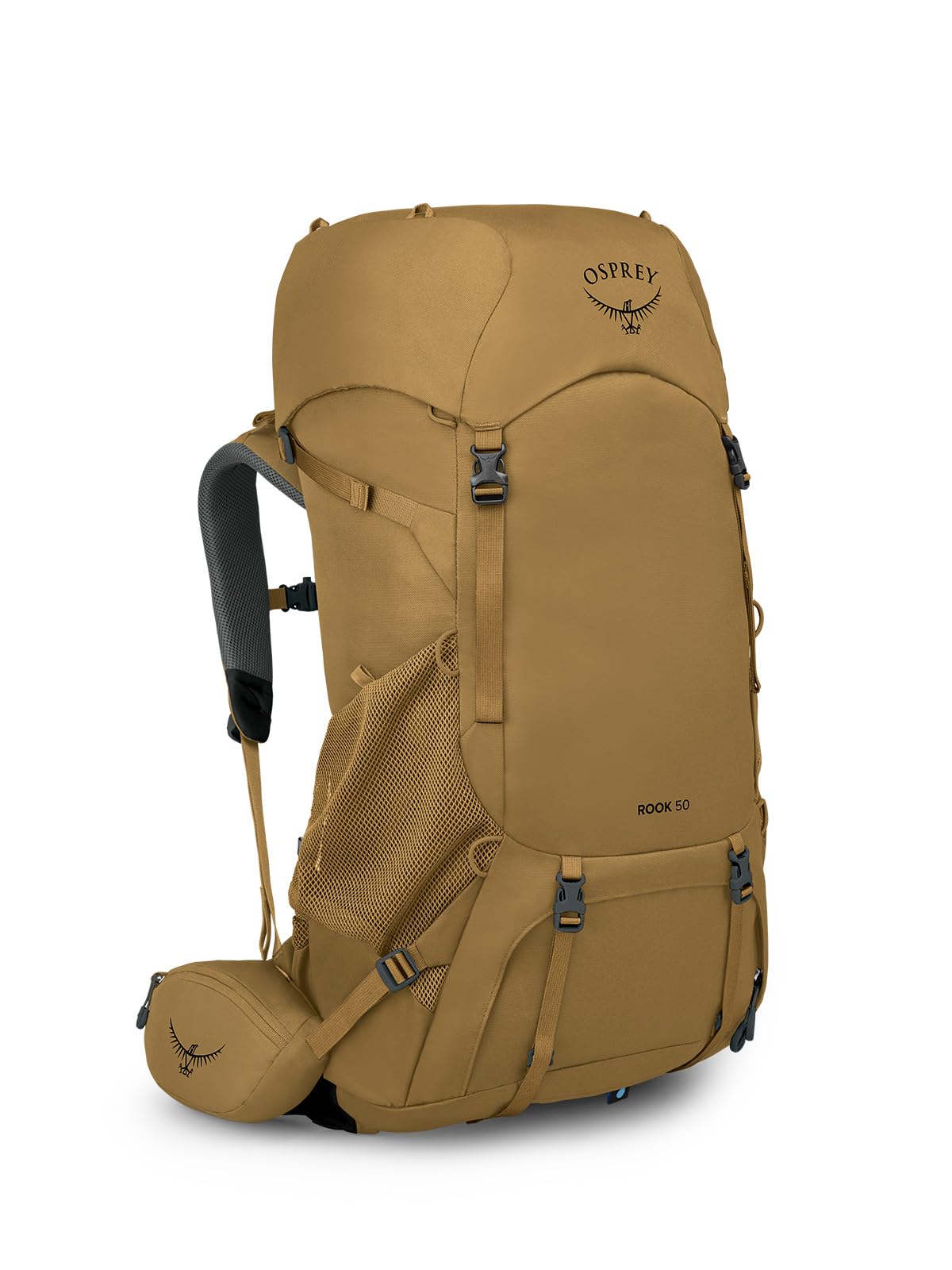
The Osprey Rook 50L uses the AirSpeed tensioned backpanel system, which creates an air gap between your back and the pack frame—a blessing on humid summer hikes where sweat accumulation can ruin morale by mile eight. A LightWire frame transfers the load efficiently to the hip belt, taking pressure off the shoulders even when you’re carrying near the 35-pound recommended max. The integrated rain cover is both tool-free to deploy and removable, so you don’t carry extra weight on dry days.
Weighing only 3.6 pounds, the Rook is the lightest premium option in this review, making it a strong candidate for hikers who prioritize pack weight reduction without sacrificing structure. The angled water bottle pockets let you retrieve a bottle while walking—a small ergonomic win that saves dozens of stops over a multi-day trip. Reviewers note that the pack is comfortable at loads up to 25 pounds, ideal for 1-to-5-day treks with lightweight gear, and that the shoulder straps and hip pads feel well-contoured straight out of the box.
One design difference from other Osprey packs: the Rook lacks an external mesh pocket and rear panel access, so organization relies on internal packing cubes. The hip belt works well for average builds but can cut into narrow hipbones on slender frames. For hikers who value breathability, low pack weight, and the security of an integrated rain cover, the Rook 50L is a polished, well-thought-out choice.
Why it’s great
- AirSpeed ventilated backpanel reduces sweat buildup on warm hikes
- Lightest premium option at 3.6 pounds for efficient load carry
- Integrated rain cover is stowable and tool-free to use
Good to know
- No external mesh pocket or rear panel access for quick packing
- Hip belt may dig into narrow hip bones on smaller frames
3. Kelty Asher 65L Backpacking Backpack
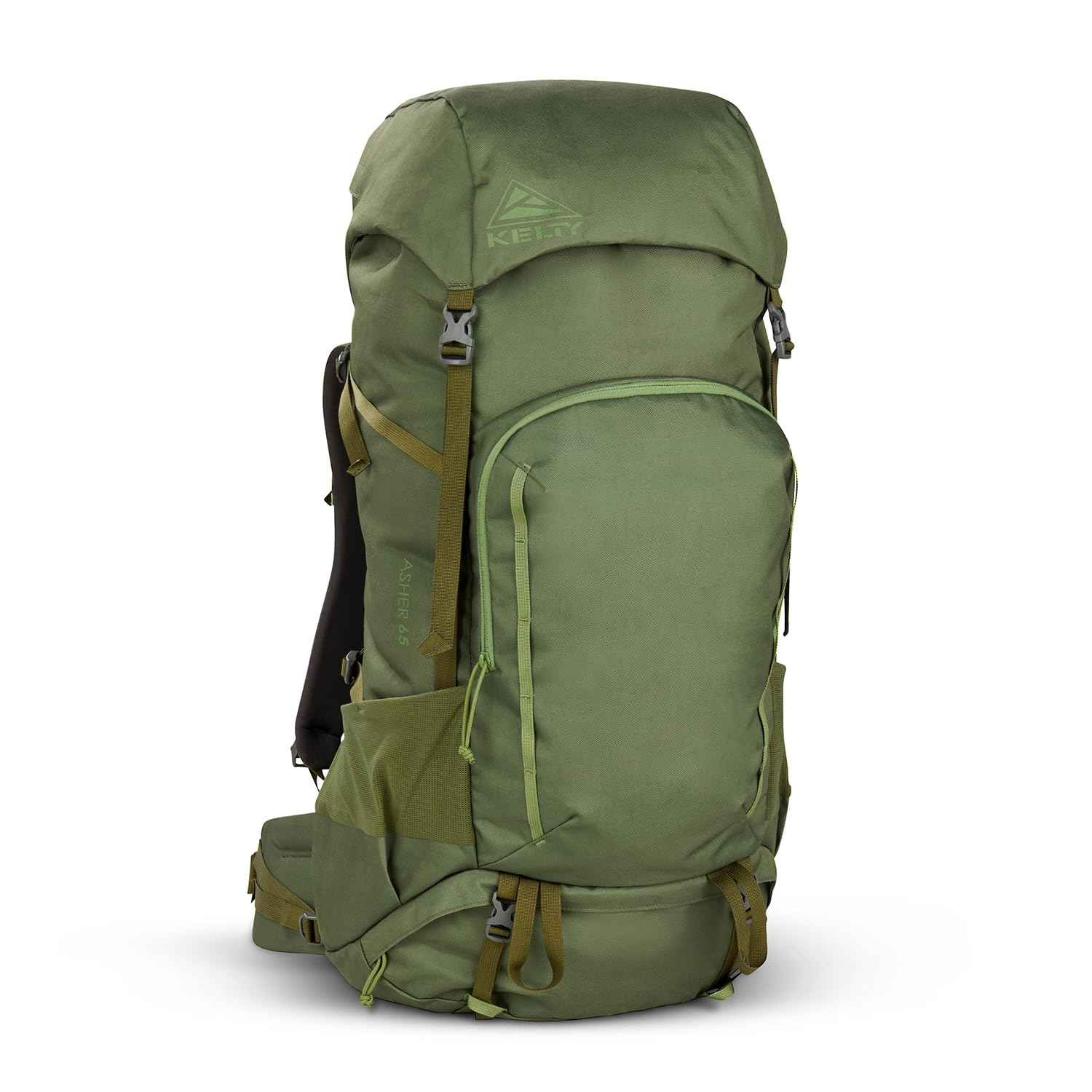
Kelty named this pack after its founder, Dick Asher, and it carries that legacy with a perimeter aluminum stay frame that provides exceptional torsional stability for a pack at this price tier. The Fit-Pro torso adjustment system lets you change your effective torso length on the fly—a rare feature on mid-priced packs—so you can hand the pack to a hiking partner or adjust for a puffy jacket without tools. The Amp Flow ventilated backpanel uses open-channel foam to move air, keeping your back noticeably drier than solid-foam designs.
At 3 pounds 5 ounces, the Asher 65L is lighter than you’d expect for its capacity, and the optimal carry weight range of 30 to 50 pounds means it’s built for serious multi-day loads. The sleeping bag compartment has a floating divider that lets you adjust volume distribution between your food and shelter, and the hydration sleeve accommodates most bladders. Reviewers who have used the pack for two to three years report no structural degradation, with the C0 and PFC-free DWR fabric repelling water effectively even without the included rain cover.
The main downsides are some users dislike the Velcro-based shoulder strap adjustment, which can feel less secure than a ladder-lock system, and the lid compression straps originate inside the side pockets, occasionally interfering with pocket volume. Still, for hikers who want a do-it-all 65-liter pack with adjustable torso fit and ventilated comfort at a price well below big-name competitors, the Asher is hard to beat.
Why it’s great
- On-the-fly Fit-Pro torso adjustment for quick fit changes mid-trail
- Perimeter aluminum stay frame handles heavy loads without twisting
- Excellent ventilation from Amp Flow backpanel for warm-weather comfort
Good to know
- Velcro shoulder strap adjusters feel less secure than ladder-lock systems
- Lid compression straps originate inside side pockets, reducing usable volume
4. TETON 75L Explorer Internal Frame Backpack

The TETON 75L Explorer is the pack you reach for when your trip extends beyond four nights and your gear list includes a bear canister, winter sleeping bag, and extra fuel canisters. The multi-position torso adjustment accommodates medium to tall adventurers, and the open-cell foam lumbar pad with molded air channels keeps load-bearing contact areas ventilated—a thermal comfort win when you’re carrying 47 pounds up an AT grade. The sleeping bag compartment is generously sized and fits bulky synthetic bags without fighting the zipper.
Reviewers consistently note that this pack carries heavy loads—up to 57 pounds in some field tests—with impressive stability, thanks to the internal frame’s compression system that keeps the load balanced. The external mesh side pockets are a weak point: they are too small for standard 32-ounce Nalgene bottles, which is a genuine inconvenience on long water hauls. The rain cover included in the box proved reliable in a full-day downpour, keeping the main compartment bone-dry.
One design oversight: there are no hip belt pockets, so small items like sunscreen, lip balm, or a phone require stopping to access the top lid. The zippers can feel stiff when new, though they loosen with use. For the hiker who prioritizes raw volume, load-stability, and an adjustable torso at a mid-range price, the TETON 75L Explorer delivers disproportionate value—especially compared to packs that cost twice as much for similar capacity and frame quality.
Why it’s great
- Massive 75-liter capacity handles 4-6 day gear lists without compression struggles
- Multi-position torso adjustment fits a wide range of body sizes
- Carries heavy loads (45+ pounds) with stable weight distribution
Good to know
- Side mesh pockets are too small for standard 32oz water bottles
- No hip belt pockets for on-the-move small item access
5. Mardingtop 60L Military Internal Frame Backpack
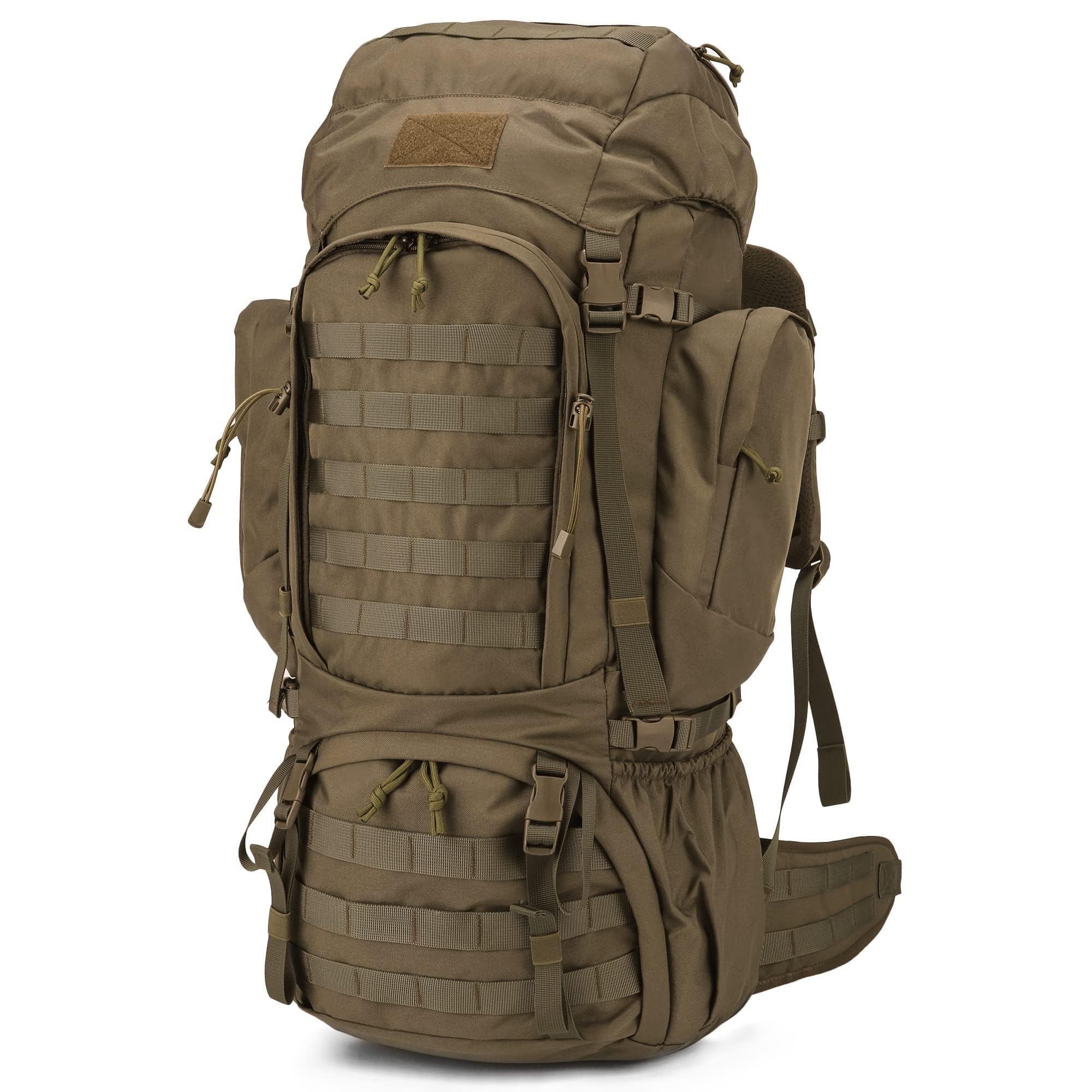
The Mardingtop 60L Military pack bridges the gap between a camping backpack and a tactical ruck, with a MOLLE webbing platform that lets you attach pouches, a hatchet, or a bed roll without drilling holes in the fabric. YKK zippers—an industry standard for weather resistance—run the full length of the main compartment, and the 600D polyester body has survived 150-mile trail tests with no structural failure. The pack expands to roughly 75 liters via add-on pouches, giving you modular capacity without buying a second bag.
Reviewers who use this pack for ruck training report it can handle loads up to 90 pounds for short runs, though the hip belt padding is thin enough to cause chafing when the pack is loaded past 50 pounds over long distances. For typical 3-day camping trips with 30-to-40-pound loads, the pack carries comfortably and the adjustable sternum strap and hip belt do an adequate job of redistributing weight. The included rain cover is HiVis yellow—great for safety in hunting scenarios but not ideal for hunters who prefer low-visibility gear.
One repeated critique: the narrow shoulder straps can dig in on broader-shouldered users, and the strap cinch system loses tension under sustained heavy load, requiring occasional re-tightening. The pack also lacks dedicated sleeping bag compression straps on the bottom, relying instead on daisy chains for external gear attachment. For the budget-conscious hiker who wants a rugged, expandable pack that pulls double duty as a camping ruck, the Mardingtop 60L delivers the most modular value in its class.
Why it’s great
- MOLLE webbing platform allows extensive external gear customization
- YKK zippers provide reliable weather resistance on the trail
- Expandable capacity via pouches reaches approximately 75 liters
Good to know
- Hip belt padding is thin and causes chafing with loads over 50 pounds
- Shoulder straps are narrow and may dig in on broader frames
6. Mardingtop 50L Hiking Backpack
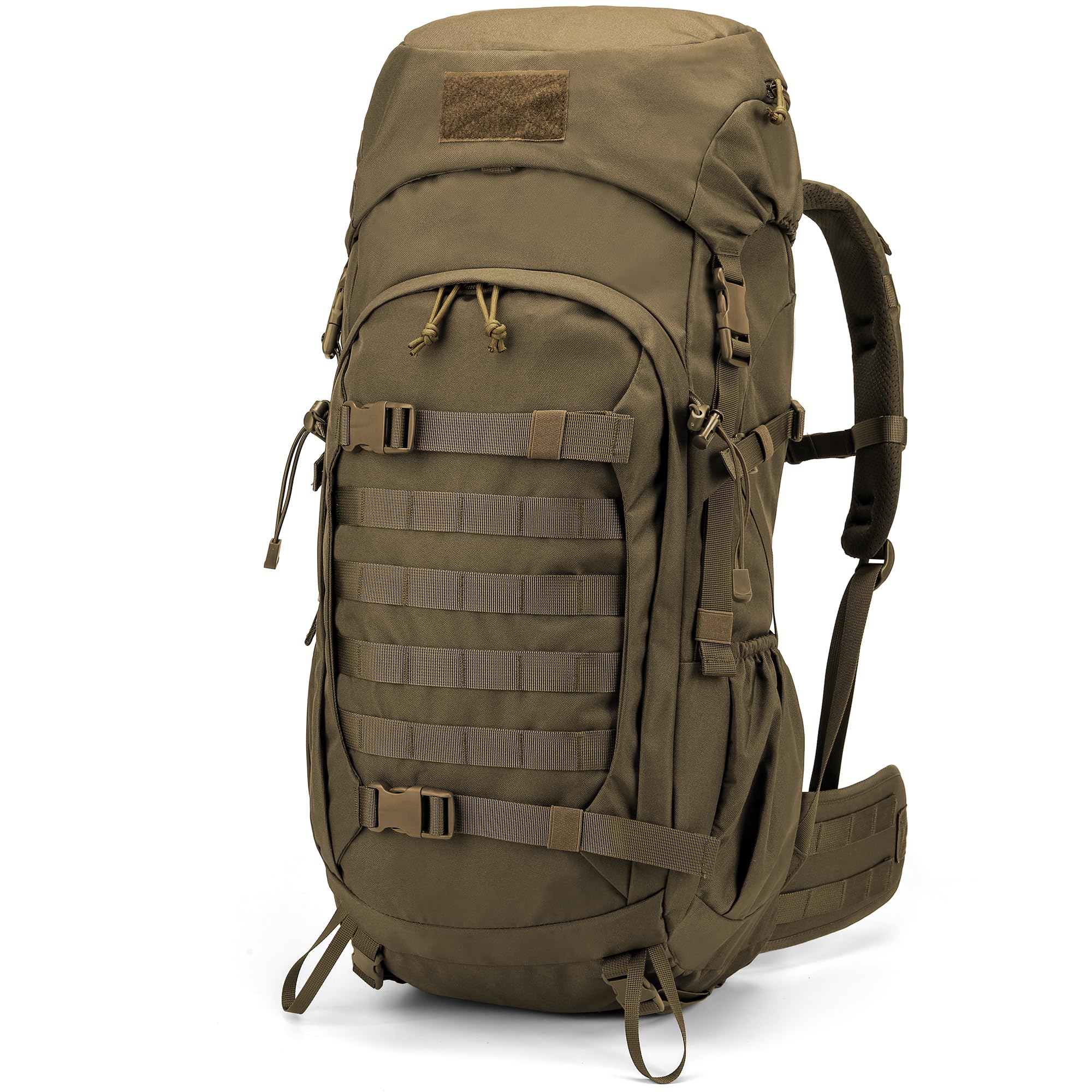
The Mardingtop 50L backcountry pack strips away complexity to deliver a clean, functional internal-frame design at a price that leaves room in your budget for trekking poles or better boots. Made from 600D polyester with a included rain cover, the pack handles typical abuse from trailside brambles and rock slabs without showing wear. The hydration compartment accepts up to a 5-liter bladder, and the laptop sleeve doubles as a padded hydration reservoir pocket—a clever dual-use feature for travelers who want one bag for trail and hostel.
Hunters and SAR personnel particularly appreciate the MOLLE webbing on the front, which allows attaching pouches for radios, GPS units, or ammunition. The main compartment opens like a clamshell via large front zipper access, making it easy to pack and unpack without rummaging through the top. Reviewers note the pack runs warm because the backpanel is not ventilated—a genuine issue on 90-degree summer afternoons—and the waist strap pockets sit too far rearward for larger users, making them hard to reach without removing the pack.
At 3.9 pounds, the pack is mid-weight for a 50-liter bag, and the adjustable padded sternum strap and hip belt accommodate different body types reasonably well. The lack of internal compartmentalization beyond a single top pocket means you’ll rely on packing cubes or stuff sacks to stay organized. For hikers who want a military-inspired, high-durability pack for 3-day trips, hunting excursions, or as a bug-out bag, the Mardingtop 50L offers solid construction with a no-frills approach.
Why it’s great
- Clamshell front zipper access makes packing and unpacking fast and organized
- MOLLE webbing attachments adapt the pack for hunting, SAR, or tactical use
- Hydration sleeve accommodates large 5-liter bladders
Good to know
- Lack of ventilated backpanel leads to significant sweat buildup in warm weather
- Waist strap pockets are positioned too far back for larger users to access
7. Ubon 60L Internal Frame Hiking Backpack
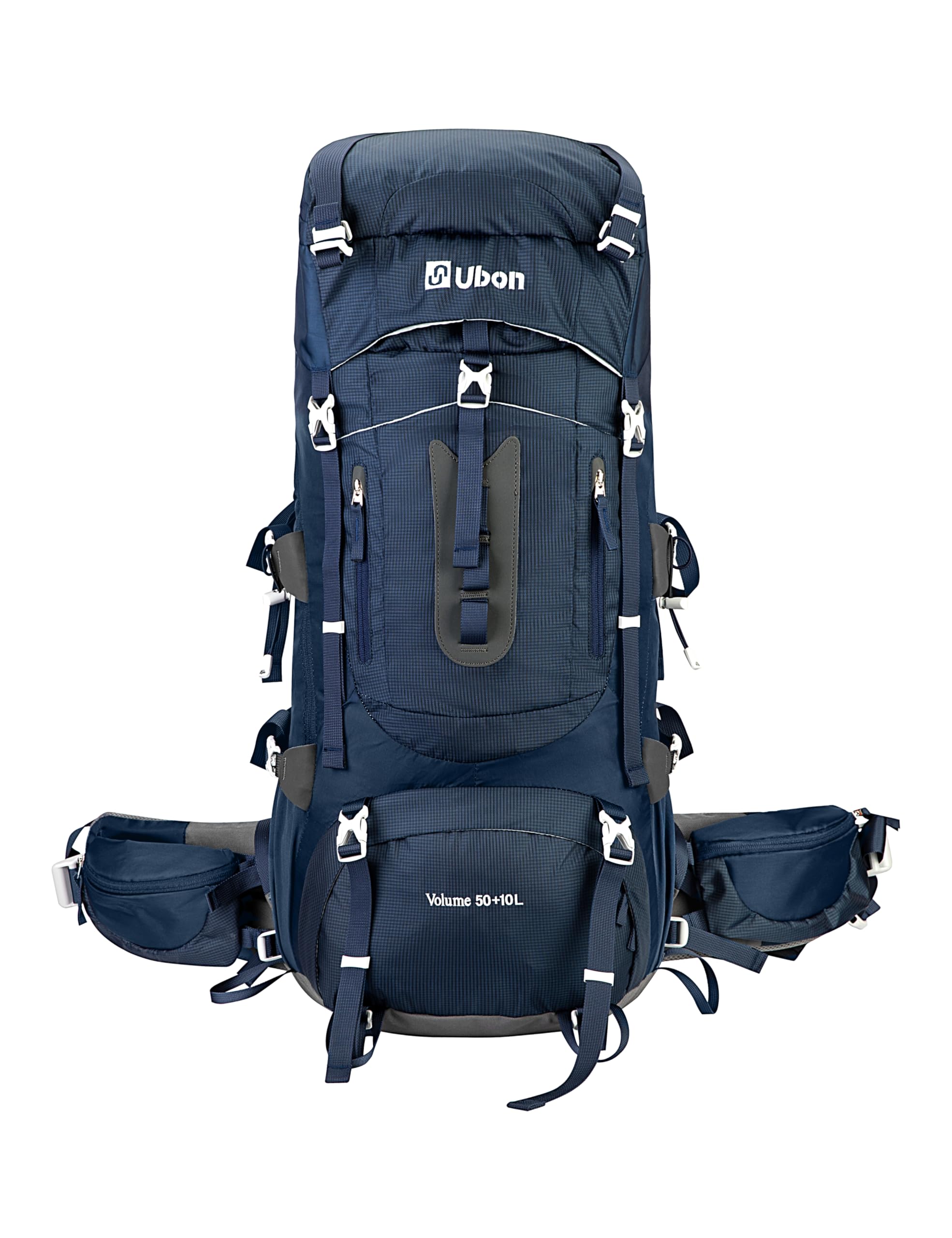
The Ubon 60L is the lightest pack in this lineup at just 2.65 pounds, making it an attractive entry-level option for hikers who want to minimize base weight without spending premium money. The mesh back panel provides airflow similar to more expensive Osprey packs, and the adjustable frame and straps allow you to dial in fit for torso lengths ranging from 5’2″ to well over 6 feet. The sleeping bag compartment uses a separate bottom zipper, and exterior straps accommodate a tent or sleeping pad securely.
Reviewers who completed 4-night Appalachian Trail sections with 25-to-28-pound loads report high comfort after adjusting the frame and straps, though a few plastic buckles broke without affecting functionality. The pack feels smaller than its advertised 60 liters—several users estimate it closer to 50 liters—so if you tend to pack loosely, this may feel tighter than expected. The hip belt pockets are positioned too far rearward for some larger users, making it hard to reach them without taking the pack off.
The zippers feel less robust than YKK units, so gentle handling is recommended, especially when the pack is loaded. The included rain fly is functional but basic, and the pack does not include a hydration bladder. For the new hiker or SAR volunteer who wants a lightweight, low-cost entry into multi-day backpacking, the Ubon 60L offers surprising value in a 2.65-pound frame—just be willing to accept some compromises in hardware durability and stated capacity accuracy.
Why it’s great
- Remarkably light at 2.65 pounds for a 60-liter framed pack
- Mesh back panel provides ventilation comparable to much pricier packs
- Adjustable frame fits a wide torso range from short to tall hikers
Good to know
- Zippers and buckles feel less durable than industry-standard hardware
- Real-world capacity is closer to 50 liters than the advertised 60 liters
FAQ
What torso length adjustment do I need for a multi-day backpacking pack?
Should I choose a 50-liter or 65-liter pack for 3-day hiking trips?
Does a rain cover guarantee my pack stays dry in a downpour?
Final Thoughts: The Verdict
For most hikers, the backpacks for hiking and camping winner is the Osprey Kestrel 48L because it combines rugged fabric, a stable AirScape backpanel, and thoughtful access features in a compact 48-liter package that works for quick overnights and technical day hikes alike. If you want superior ventilation and a lighter overall carry, grab the Osprey Rook 50L. And for extended multi-day expeditions where every extra liter counts, the TETON 75L Explorer offers the most capacity and load-bearing stability at a mid-range price.

Mo Maruf
I created WellFizz to bridge the gap between vague wellness advice and actionable solutions. My mission is simple: to decode the research and give you practical tools you can actually use.
Beyond the data, I am a passionate traveler. I believe that stepping away from the screen to explore new environments is essential for mental clarity and physical vitality.