Our readers keep the lights on and my smoothie glass nicely filled. As an Amazon Associate, I earn from qualifying purchases.
A budget DAC is a trap when the chip inside can’t deliver a noise floor low enough for sensitive IEMs. The real question isn’t whether you need a DAC—it’s finding the one that offers transparent signal conversion without draining your wallet on features you’ll never use.
I’m Mohammad Maruf — the founder and writer behind WellFizz. I’ve spent hundreds of hours cross-referencing DAC chip specifications, output impedance measurements, and real-world noise floor reports to separate the genuinely capable converters from the overhyped dongles.
This guide cuts through the marketing jargon to identify the converters that actually deliver measurable improvements in stereo separation and dynamic range. Finding the right best affordable dac means prioritizing the chipset architecture and output stage design over flashy casing or inflating power numbers.
How To Choose The Best Affordable DAC
An affordable DAC should prioritize a clean signal path and sufficient output voltage for your headphone impedance range. Ignore inflated wattage claims and focus on the DAC chip, output stage design, and physical connectivity you actually need.
DAC Chip Architecture
The digital-to-analog conversion stage defines the ceiling of your audio fidelity. ESS Sabre chips (ES9038Q2M, ES9039Q2M) deliver exceptional dynamic range and low distortion, while AKM chips (AK4493SEQ) offer a warmer, more organic tonality. Cirrus Logic CS43198 provides a balanced middle ground with excellent power efficiency. Choose based on your preference for analytical detail versus musical texture.
Output Stage and Headphone Impedance
A DAC’s headphone amplifier section must match your headphones. Sensitive IEMs (below 32 ohms) require a low output impedance to avoid frequency response coloration, while high-impedance headphones (150-300 ohms) need ample voltage swing—typically above 2 Vrms. Balanced 4.4mm outputs double the voltage swing and halve crosstalk, making them essential for demanding planar magnetic headphones.
Connectivity and Preamp Function
USB input is standard, but optical and coaxial inputs expand compatibility with TV and game consoles. If you plan to connect active speakers, seek a DAC with line-level RCA or XLR outputs that bypass the headphone circuit. HDMI ARC support is a premium bonus that allows TV integration without optical cable limitations.
Quick Comparison
On smaller screens, swipe sideways to see the full table.
| Model | Category | Best For | Key Spec | Amazon |
|---|---|---|---|---|
| Fosi Audio ZD3 | Desktop DAC/Preamp | TV & Speaker Systems | ES9039Q2M / DSD512 | Amazon |
| FiiO K11 | Desktop DAC/Amp | High-Impedance Headphones | 1400mW / 350 Ohm | Amazon |
| iFi Zen Air DAC | Budget DAC/Amp | Sensitive IEMs & Casual Listening | DSD256 / MQA Renderer | Amazon |
| TOPPING D10s | Pure DAC | Desktop PC Audio | ES9038Q2M / PCM384 | Amazon |
| S.M.S.L DS100 | Compact DAC/Amp | Desktop & Mobile Use | CS43131 / 7Vrms | Amazon |
| Focusrite Scarlett Solo 3rd Gen | Audio Interface | Recording & Podcasting | 24-bit / 192kHz | Amazon |
| Universal Audio Volt 2 | Audio Interface | Professional Recording | 24-bit / 192kHz / Vintage | Amazon |
| Fosi Audio ZH3 | Desktop DAC/Amp/Preamp | Full Desktop System | AKM4493SEQ / 2570mW | Amazon |
| FiiO M21 | Portable Music Player | On-the-Go High Fidelity | Quad CS43198 / 950mW | Amazon |
In‑Depth Reviews
1. Fosi Audio ZD3 Desktop DAC Preamp

The Fosi Audio ZD3 is a fully balanced desktop DAC preamp that brings flagship performance to a mid-range price. Its ES9039Q2M DAC chip, paired with the XMOS XU316 processor, supports PCM 32-bit/768kHz and native DSD512—pulling every micro-detail from lossless files. The 1.5-inch OLED display and included remote make system control intuitive, while the 12V trigger input allows synchronized power-on with other audio gear.
Connectivity is exceptional for the tier: Bluetooth 5.0 (QCC3031), USB, optical, coaxial, and HDMI ARC inputs feed into balanced XLR and single-ended RCA outputs. The preamp bypass switch lets the ZD3 function as a pure DAC when paired with an external amplifier, preserving signal integrity. Users report that the separate power supply eliminates USB noise that plagues bus-powered units, delivering a black background even with sensitive speakers.
Burn-in of roughly 50 hours reveals a wide soundstage with airy treble extension and controlled bass. The stock LME49720 op-amps are clean and neutral; swapping to Sparkos SS3602s tightens the low end further. For a home audio system that needs HDMI ARC integration and balanced outputs, the ZD3 offers absurd value per dollar.
Why it’s great
- HDMI ARC input for TV audio integration
- Fully balanced XLR and RCA outputs
- Removable op-amps for sound customization
- External power supply eliminates USB noise
Good to know
- HDMI is not eARC compatible
- No standby mode; consumes ~1W idle
- Bypass function not accessible via remote
2. FiiO K11 DAC and Headphone Amplifier

The FiiO K11 is a compact desktop DAC/amp that punches well above its weight class. With 1400mW of output power and support for headphones up to 350 ohms, it easily drives demanding planars like the Sundara and dynamic classics like the HD 600. The balanced 4.4mm output provides cleaner signal delivery than the single-ended 6.35mm jack, doubling the voltage swing for high-impedance cans.
The AKM DAC implementation inside the K11 delivers a neutral, detailed tuning with minimal coloration. Six digital filters allow fine-tuning of the sound signature, with Filter 4 offering the most natural impulse response for daily listening. The high-definition VA display clearly shows sampling rate, volume level, gain setting, and output mode—making system monitoring effortless.
Connectivity options include USB, coaxial, and optical inputs, plus RCA line-out and coaxial outputs. The all-aluminum alloy build feels solid on the desktop, and the USB-C power input keeps cable management tidy. For listeners who need one device to drive both IEMs and high-impedance headphones cleanly, the K11 is exceptionally well-balanced.
Why it’s great
- 1400mW drives high-impedance headphones easily
- Balanced 4.4mm output reduces crosstalk
- Six digital filters for sound tuning
- Sturdy aluminum build with intuitive display
Good to know
- Some USB-C cables may cause power errors on Linux
- Filter selection can dramatically alter tonality
- No XLR output for professional studio use
3. iFi Zen Air DAC

The iFi Zen Air DAC brings a warm, natural sound signature to the budget tier, driven by a Burr Brown DAC chipset. It supports PCM up to 32-bit/384kHz, native DSD256, and full MQA decoding—making it a strong companion for Tidal Master subscribers. The chassis is lightweight aluminum, and the compact footprint fits easily on crowded desks.
Two signature iFi features elevate its versatility: PowerMatch adjusts the gain to match headphone sensitivity, while XBass+ adds a bass shelf that compensates for lean headphones without distorting the mids. RCA outputs feed powered speakers or a separate amplifier, turning the Zen Air into a hub for a full desktop system. The USB input accepts data from computers, smartphones, and tablets.
Where the Zen Air compromises is in build density and output power. The plastic rear panel and slightly loose RCA jacks reflect cost-cutting, and the headphone amp lacks the current to drive high-impedance headphones like the HD 600 to satisfying levels. For sensitive IEMs and efficient headphones on a strict budget, however, the Tonality is genuinely musical.
Why it’s great
- Full MQA decoding for Tidal streaming
- XBass+ and PowerMatch for sound tailoring
- Warm, natural Burr Brown tonality
- Compact size fits any desk setup
Good to know
- Headphone amp weak for high-impedance cans
- RCA jacks feel slightly loose
- Plastic rear construction
4. TOPPING D10s USB DAC
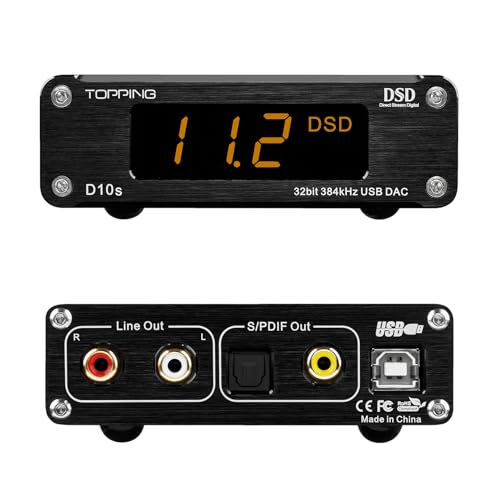
The TOPPING D10s is a no-frills USB DAC that focuses entirely on signal purity. Its ESS ES9038Q2M chip supports PCM up to 32-bit/384kHz and native DSD256, delivering the resolution needed for critical listening. The XMOS XU208 USB interface paired with Thesycon drivers ensures bit-perfect playback on Windows and macOS without driver headaches.
The output options are straightforward: USB input converts to optical and coaxial digital outputs plus RCA line-level analog output. This makes the D10s ideal for upgrading the sound of desktop PC speakers or feeding a dedicated headphone amplifier. The front-panel LED shows the incoming sampling rate, confirming your source is outputting native resolution—a handy verification tool.
Some users report a high-pitched tone from the unit when no audio signal is present, which disappears during playback. The lack of a dedicated headphone jack means you’ll always need a separate amplifier, and the plastic casing feels light compared to aluminum competitors. For pure digital-to-analog conversion feeding external amplification, the D10s remains a reference.
Why it’s great
- ES9038Q2M for excellent dynamic range
- Optical and coaxial digital outputs included
- Sampling rate LED confirms bit-perfect playback
- Simple plug-and-play setup on all systems
Good to know
- No headphone amplifier built in
- Plastic casing feels budget
- Some units produce noise with no input
5. S.M.S.L DS100 USB MQA DAC

The S.M.S.L DS100 packs serious hardware into a tiny aluminum chassis. The Cirrus Logic CS43131 DAC chip delivers distortion figures of just 0.00017%, while the XMOS XU-316 processor handles PCM up to 32-bit/768kHz and DSD256. MQA and MQA-CD decoding are supported, pulling every layer of detail from Tidal Masters and high-res local files.
The dual headphone jacks—6.35mm single-ended and 4.4mm balanced—offer flexibility for different headphone types. The balanced output delivers up to 7 Vrms for 600-ohm headphones, enough power for even the most demanding studio cans. A four-LED volume indicator on the front panel shows the current level, though it lacks a numeric display. CK-03 clock processing reduces jitter, and low-noise LDO regulators keep the power supply clean.
Windows users need to install a driver from the SMSL website, but Mac and Linux systems work natively. The 3.5-inch square footprint occupies almost no desk space, and the CNC-machined aluminum body with gold-plated terminals feels premium. For a compact desktop DAC that drives high-impedance headphones directly, the DS100 is a space-saving powerhouse.
Why it’s great
- 7 Vrms via 4.4mm for 600-ohm headphones
- Ultra-low 0.00017% THD+N from CS43131
- MQA and MQA-CD decoding
- CNC aluminum build with gold-plated terminals
Good to know
- Windows driver installation required
- No volume number display, only LED bar
- Adapter needed for 3.5mm headphones
6. Focusrite Scarlett Solo 3rd Gen

The Focusrite Scarlett Solo 3rd Gen is primarily an audio interface, but its DAC stage delivers clean 24-bit/192kHz playback that rivals many dedicated converters in this price range. The high-performance converters preserve recording detail during monitoring, and the two low-noise balanced outputs provide a noise floor low enough for critical mixing tasks.
The microphone preamp with switchable Air mode adds clarity to vocals and acoustic instruments, while the high-headroom instrument input accepts guitar and bass without clipping. Gain Halos provide visual feedback to set optimal recording levels. The USB-C connection offers low latency for both recording and playback.
The Scarlett Solo is built around a durable metal chassis that withstands travel and home studio use. Included software—Pro Tools Intro, Ableton Live Lite, and the Hitmaker Expansion bundle—makes it a complete starter studio package. Just note that it lacks a balanced headphone output and MIDI ports, and the DAC performance is interface-grade rather than audiophile-grade.
Why it’s great
- Studio-grade preamps with Air mode
- Industrial metal build lasts for years
- Bundled DAW software saves hundreds
- Low latency USB-C connection
Good to know
- No balanced headphone output
- No MIDI input for keyboard controllers
- DAC is functional but not audiophile grade
7. Universal Audio Volt 2 USB Audio Interface

The Universal Audio Volt 2 brings UA’s legendary microphone preamp technology to a compact interface, with a Vintage mode that emulates the classic 610 tube preamp for warm, harmonically rich recordings. The DAC stage uses high-quality converters with support for 24-bit/192kHz, delivering transparent monitoring that reveals subtle mix details.
The Vintage mode switch adds a tube-like saturation to vocals and acoustic instruments, giving recordings a polished, album-ready character straight into the DAW. The VU meter provides analog-style level visualization, and the USB-C connection ensures low-latency performance on Mac, Windows, iPad, and iPhone. The bundled LUNA DAW and UAD plugins extend the studio capabilities significantly.
The metal chassis feels premium and road-ready, and the included software bundle justifies the premium over basic interfaces. The primary limitation is the two-input design, which restricts simultaneous recording to one microphone and one instrument. For solo producers and singer-songwriters seeking professional vocal quality, the Volt 2’s preamp quality justifies the investment.
Why it’s great
- Vintage preamp mode for instant character
- Premium metal build with analog VU meter
- Included UAD plugins and LUNA DAW
- Crystal-clear 24-bit/192kHz converters
Good to know
- Only two inputs limit multi-mic recording
- Requires external power supply for full performance
- Higher price than basic interfaces
8. Fosi Audio ZH3 DAC Headphone Amp

The Fosi Audio ZH3 is the most feature-rich device in this list, functioning as a DAC, headphone amplifier, and preamp in a single chassis. Its AKM4493SEQ DAC chip is paired with the XMOS XU316 processor and four OPA1612 op-amps for a noise floor as low as 1.9µV. The balanced 4.4mm output delivers a staggering 2570mW into 32 ohms, enough to drive even the most power-hungry planars.
Connectivity is comprehensive: USB, optical, coaxial, and RCA inputs feed into balanced XLR and RCA preamp outputs plus 6.35mm and 4.4mm headphone jacks. A 3-level gain switch accommodates everything from sensitive IEMs to 300-ohm headphones. The ZH3 also includes bass and treble EQ adjustments with six filter types, plus swappable op-amps for DIY sound customization.
Note that the RCA and XLR outputs are fixed line-level, not variable preamp outputs, which limits integration with passive speakers. The remote control adds convenience for volume and input selection. For a desktop system requiring a DAC, headphone amp, and preamp in one box, the ZH3 delivers unmatched value.
Why it’s great
- 2570mW balanced output drives any headphone
- AKM4493SEQ for warm, detailed sound
- Bass/treble EQ and six digital filters
- Swappable op-amps for sound customization
Good to know
- XLR outputs are fixed level, not variable preamp
- EQ only works with headphone output
- External power supply required
9. FiiO M21 Android 13 Portable Music Player
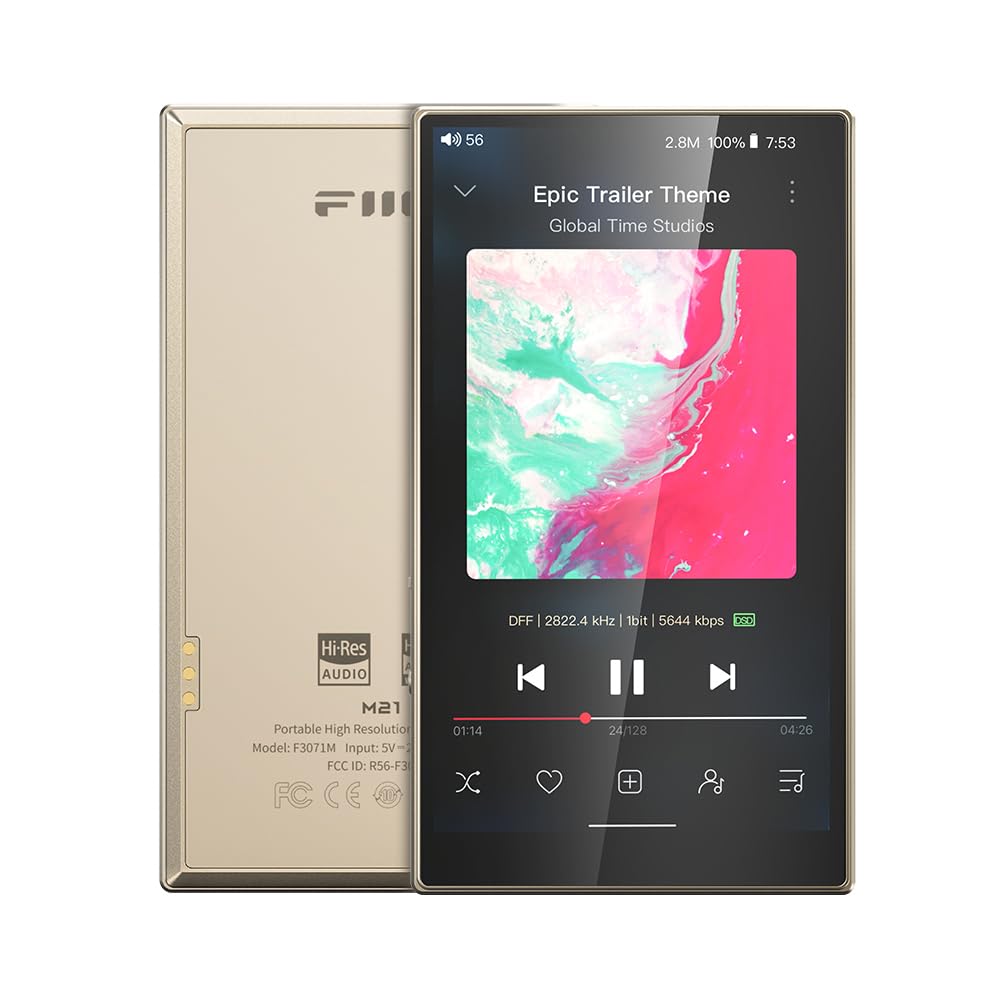
The FiiO M21 is a portable digital audio player that doubles as a high-end USB DAC when connected to a computer. Four CS43198 DAC chips operate in a fully balanced 4-channel, 8-path differential output design, delivering exceptional dynamic range and crosstalk rejection. The Snapdragon 680 processor running Android 13 provides smooth navigation through streaming apps like Apple Music and Tidal.
Desktop Mode is a standout feature: when connected to external power, the M21 runs entirely on the power supply without cycling the battery, preserving long-term battery health and delivering up to 950mW of output power. The dual 3.5mm single-ended and 4.4mm balanced headphone jacks accommodate any headphone type, and the SPDIF output reduces jitter by 70% compared to typical digital transports.
The 4.7-inch IPS display and intuitive Fiio Music app provide an excellent user interface, and the 64GB internal storage plus microSD expansion handles massive local libraries. The titanium gold finish and included case add to the premium feel. For listeners who demand high-fidelity playback on the go, the M21 is a complete solution—though its price point places it firmly in the enthusiast tier.
Why it’s great
- Quad CS43198 chips for ultra-low distortion
- Desktop Mode preserves battery lifespan
- 950mW balanced output drives any headphone
- Android 13 supports all streaming apps
Good to know
- Higher price than desktop-only alternatives
- Some users report Wi-Fi antenna failure over time
- Fiio Music app has limited shuffle functionality
FAQ
Does a DAC really improve sound quality over my motherboard audio?
What is the difference between single-ended and balanced output?
Do I need MQA support for my DAC?
Can I use a separate amplifier with a DAC that has a headphone jack?
Final Thoughts: The Verdict
For most users, the best affordable dac winner is the Fosi Audio ZD3 because its ES9039Q2M chip, HDMI ARC input, and balanced XLR outputs deliver genuine audiophile performance without crossing into luxury pricing. If you need raw headphone power for demanding planars, grab the FiiO K11. And for a portable high-fidelity solution that works both on the go and as a desktop DAC, nothing beats the FiiO M21.

Mo Maruf
I created WellFizz to bridge the gap between vague wellness advice and actionable solutions. My mission is simple: to decode the research and give you practical tools you can actually use.
Beyond the data, I am a passionate traveler. I believe that stepping away from the screen to explore new environments is essential for mental clarity and physical vitality.