Our readers keep the lights on and my smoothie glass nicely filled. As an Amazon Associate, I earn from qualifying purchases.
Basements are naturally the coldest zone in any home—concrete slabs suck warmth from the floor, and insulation is often an afterthought. You need a heater that moves air effectively, cycles reliably, and doesn’t trip the breaker the moment the washing machine kicks on.
I’m Mohammad Maruf — the founder and writer behind WellFizz. I’ve spent months comparing forced-air wattage, oscillation arcs, thermostat accuracy, and real-world BTU output specifically for unconditioned and semi-conditioned below-grade spaces.
Whether you’re topping off a finished rec room or fighting damp chill in an unfinished storage area, the right unit depends on coverage, mounting preference, and noise tolerance. This guide breaks down seven of the market’s most capable options to help you zero in on the best basement electric heater for your space and budget.
How To Choose The Best Basement Electric Heater
Basements are not like living rooms. The heat loss rate through a concrete wall is higher, air circulation is often stagnant, and many spaces lack a dedicated heating circuit. Before you click “add to cart,” understand three factors that separate a basement-capable heater from a bedroom space heater.
Match BTU Output to Basement Volume
A 1500-watt heater delivers roughly 5,100 BTUs—enough to warm about 200–250 square feet of a normally insulated room. In a basement with exposed concrete and low ceiling height, recalculate for the total cubic footage. If your space is 25 x 30 feet with an 8-foot ceiling (6,000 cubic feet), you’ll need a unit that can run continuously without overheating, or you’ll need to supplement with a second heater for balanced coverage.
Oscillation and Airflow Pattern
Stationary heaters create hot spots. A unit with at least 70 degrees of horizontal oscillation (or better, a 3D oscillating design that moves both horizontally and vertically) distributes warm air more evenly. Basements also benefit from units with a fan-only mode to circulate air during the shoulder seasons, reducing the musty stillness that often collects in below-grade rooms.
Mounting and Floor-Space Reality
Finished basements with furniture and area rugs may not have a clear floor spot for a tower heater. Wall-mounted units save square footage and keep cords off the ground, reducing trip hazards. Unfinished basements often have exposed studs, making it easy to mount a heater flush against the wall. For large open areas, a freestanding pedestal or tower with a wide base offers portability but check that the footprint is stable enough to resist tipping on uneven concrete.
Quick Comparison
On smaller screens, swipe sideways to see the full table.
| Model | Category | Best For | Key Spec | Amazon |
|---|---|---|---|---|
| DREO 3D Whole Room Heater 714 | Pedestal | Even heat in mid-size basements | 60° vert. & 90° horiz. oscillation | Amazon |
| Stiebel Eltron CK Trend | Wall-Mounted | Permanent, low-noise basement heat | 49 dB(A) noise level | Amazon |
| Cadet Com-Pak CSC151TW | Built-In Cabinet | Recessed install in small rooms | 5,120 BTU / 1500W forced air | Amazon |
| ZAFRO Electric Fireplace Stove | Freestanding | Ambient heat with flame effect | 600 sq. ft. coverage claim | Amazon |
| DREO Tower Heater | Tower | Quiet operation in finished basements | 34 dB noise level | Amazon |
| JNDRO Wall-Mounted 24-Inch | Wall-Mounted | Flexible oscillation in open basements | 120° max oscillation angle | Amazon |
| JNDRO Wall-Mounted with ECO | Wall-Mounted | Budget-friendly wall install | 24-hour programmable timer | Amazon |
In‑Depth Reviews
1. DREO 3D Whole Room Heater 714
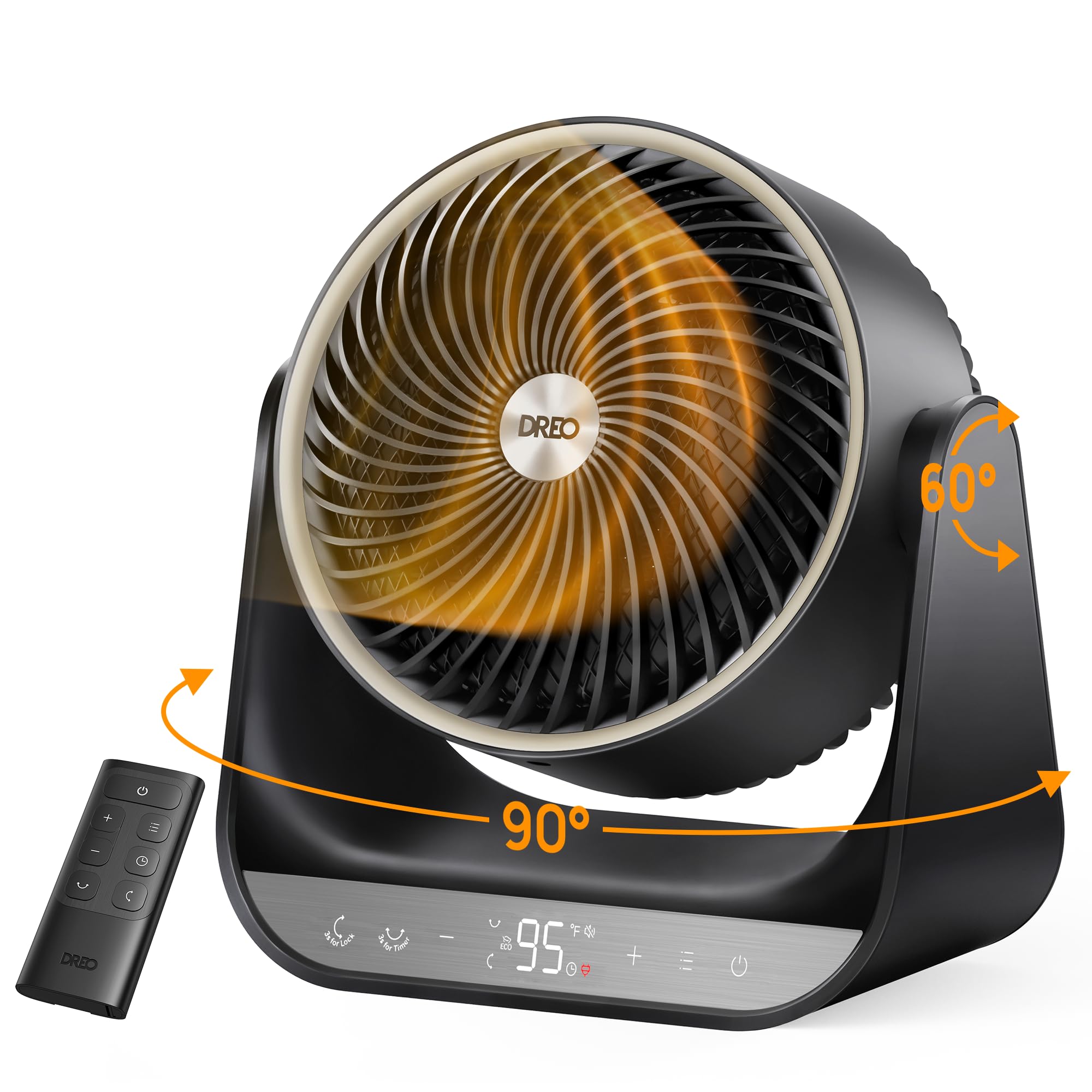
This pedestal-style heater from DREO is the only unit in this lineup that oscillates both vertically (60 degrees) and horizontally (90 degrees), creating a 3D airflow pattern that pushes warm air into every corner of a finished or semi-finished basement. The 12 ft/s long-range circulation means heat actually reaches the far wall instead of pooling around the unit. For a 600–800 cubic foot basement room, this is the closest you’ll get to forced-air ductwork without cutting into drywall.
The brushless DC motor keeps noise at a whisper-quiet 34 dB—quiet enough to run during a movie or while someone sleeps in a basement guest room. The thermostat adjusts in 1-degree Fahrenheit increments between 41 and 95 degrees, and the ECO mode cycles the heater on and off to hold the set temperature without wasting energy. The remote control lets you adjust settings from across the room, though the base touch controls are intuitive enough that you won’t always need it.
One caveat: the footprint is low to the ground at 12.4 inches tall, which means it works best on a level floor. On an uneven concrete basement slab, the tip-over sensor could trigger if bumped. Owners report that the oscillation motor is smooth and the build quality feels substantial for a unit in this tier. If you want even heat distribution in a mid-size basement without a permanent install, this is the pick.
Why it’s great
- True 3D oscillation (vertical + horizontal) prevents cold spots
- Nearly silent 34 dB operation for finished spaces
- ECO mode with precise 1°F thermostat control
Good to know
- Low profile may tip on uneven concrete without careful placement
- Remote control range is adequate but not exceptional
2. Stiebel Eltron CK Trend Wall-Mounted Fan Heater
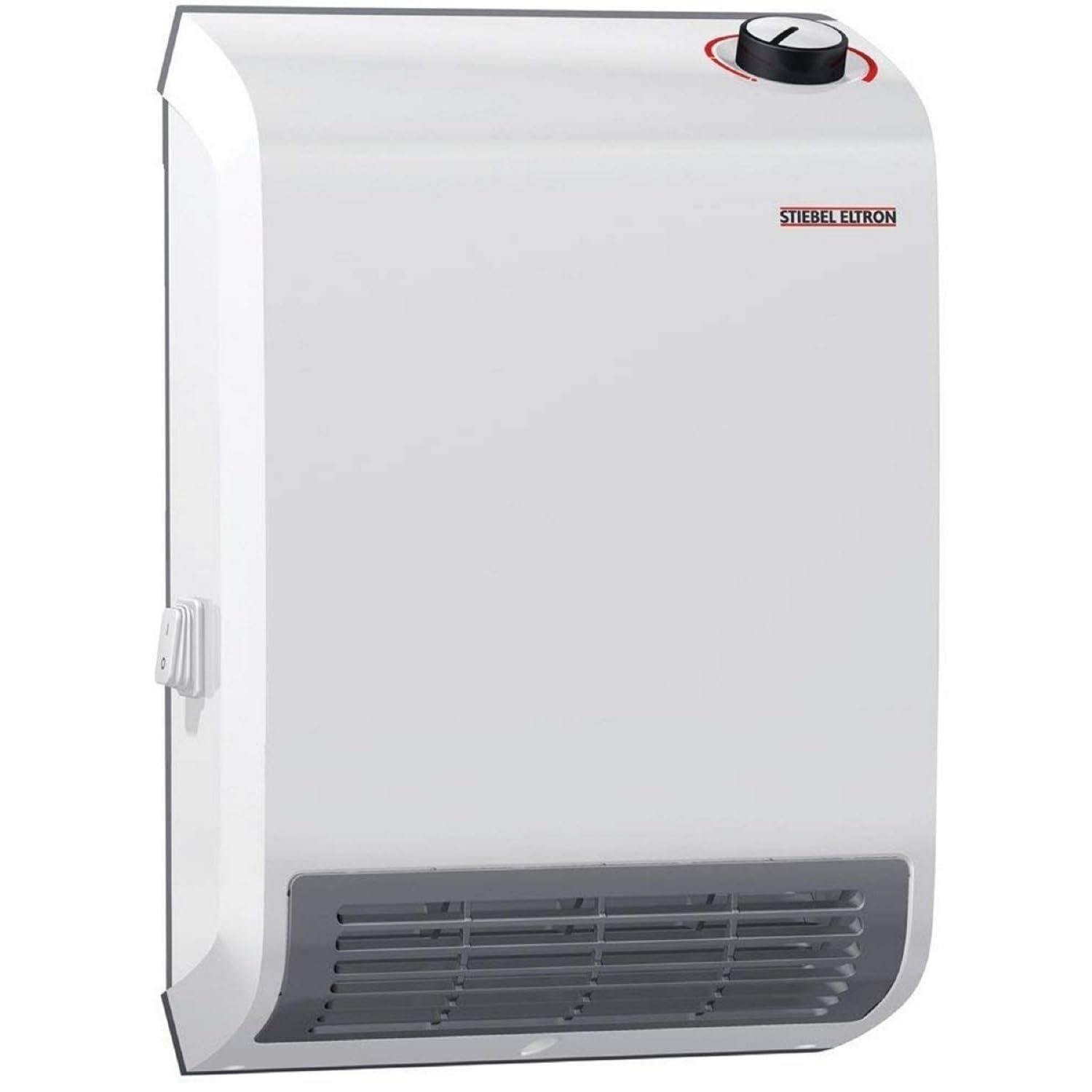
German engineering shows in the Stiebel Eltron CK Trend. This wall-mounted unit uses a glass-reinforced polycarbonate radial fan and a PTC ceramic heating element to deliver 5,118 BTUs at a noise level of only 49 dB(A)—quieter than most bathroom exhaust fans. It’s designed for permanent installation, meaning it stays out of the way and keeps the floor clear, which is a major advantage in a cluttered basement workshop or utility room.
The mechanical thermostat and simple on/off switch are refreshingly straightforward compared to digital models. Set the dial, and the heater cycles itself to maintain the temperature. One owner reported heating a 25×40-foot finished basement from 58°F to 67°F in about two hours, then holding 65°F with a 15-minute on, 45-minute off cycle. That kind of duty cycle efficiency is exactly what you want in a space that’s below grade and prone to steady heat loss.
Installation requires a dedicated 15-amp circuit, and some buyers in North America note that the 120V model may struggle in larger spaces. The 240V 2000W variant is better suited for big basements, but you’ll need an electrician to run the proper wiring. The build quality is exceptional, with reinforced internal safety circuits that justify the higher upfront cost. If you want a set-it-and-forget-it solution that disappears into the wall, this is the unit.
Why it’s great
- Wall-mounted design saves floor space permanently
- Mechanical thermostat cycles reliably without digital glitches
- German build quality with 3-year warranty
Good to know
- 120V model may not fully heat large basements; 240V version recommended
- Installation requires an electrician and a dedicated circuit
3. Cadet Com-Pak Electric Wall Heater CSC151TW

The Cadet Com-Pak is the industry standard for recessed wall heaters, and it remains a top choice for basement bathrooms, laundry rooms, and small finished spaces. The cabinet dimensions are just 4 inches deep by 9 inches wide by 12 inches tall, sliding between standard 16-inch on-center studs with minimal framing modification. The integrated thermostat is built directly into the unit, so you don’t need a separate wall control.
Heat output is 5,120 BTUs at 1500 watts—enough to warm a 200-square-foot room quickly. Owners report using it to prevent frozen pipes in a powder room above an uninsulated crawlspace, and another user noted it heats a bathroom from cold to comfortable within seconds. The forced-air fan pushes heat downward, which is ideal for a basement where cold air settles near the floor.
The trade-off is installation complexity. Multiple buyers stress that this is not a DIY project: the unit requires a dedicated 15-amp circuit, and the wall cavity must have heat-proof insulation per code. One owner spent over on electrician labor alone. Also, the 120V version is the only option at this price point, so if your basement exceeds 250 square feet, you’ll likely need two units. Still, for a small, permanent heat source that blends into the wall, the Cadet is hard to beat.
Why it’s great
- Fits between standard wall studs for a flush finish
- Integrated thermostat simplifies control
- Reliable forced-air heat for small basement rooms
Good to know
- Professional installation is strongly recommended by most owners
- Best suited for rooms under 200 square feet
4. ZAFRO Electric Fireplace Stove
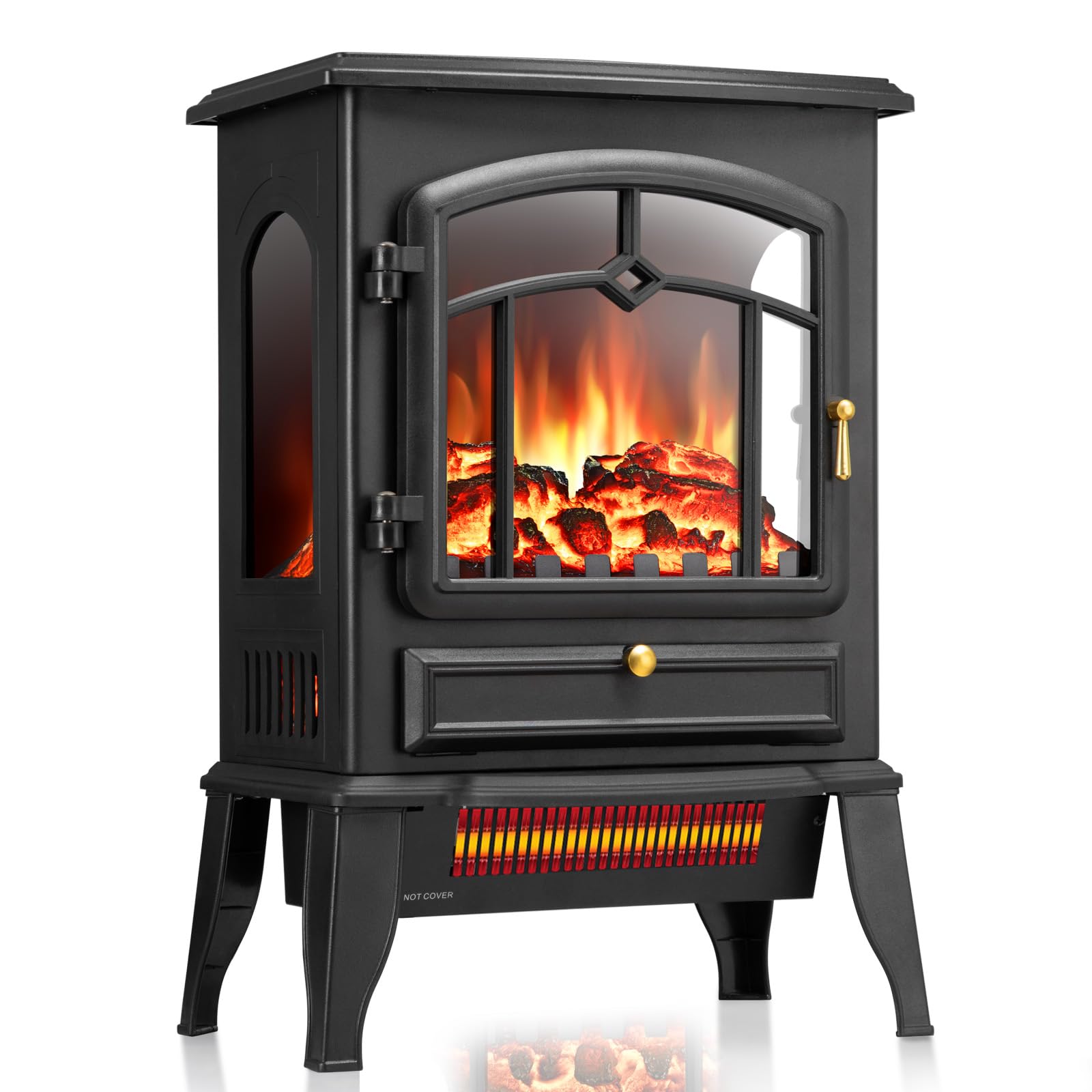
If your finished basement doubles as a family room or den, the ZAFRO brings visual warmth along with actual heat. The vintage stove body, ebony finish, and 3D dancing flame effect create a focal point that a plain tower heater simply cannot match. The flame brightness is adjustable, and you can run the flame effect without the heater on—a nice feature for year-round ambiance in a below-grade media room.
On the heating side, the unit produces 5,100 BTUs with two power modes: 1000W for mild chill and 1500W for deep winter cold. ZAFRO claims a 600 sq. ft. coverage area, though real-world owners report effective heating in rooms closer to 400–500 square feet. The freestanding design is compact at 22 inches tall and 15.35 inches wide, making it easy to place on a hearth or side table without dominating the space.
Noise is the main compromise. The internal fan is noticeable—multiple reviews describe it as audible enough to be a mild distraction in a quiet room. There’s also no remote control, which means you have to walk over to adjust the thermostat or toggle the flame. For buyers who prioritize atmosphere and don’t mind a little fan hum, this stove brings character that other heaters in this lineup simply don’t offer.
Why it’s great
- Realistic 3D flame effect adds cozy basement ambiance
- Flame can run independently of heater for year-round use
- Sturdy freestanding design with a small footprint
Good to know
- Fan noise is noticeable when the heater is running
- No remote control included; manual adjustment only
5. DREO Tower Space Heater
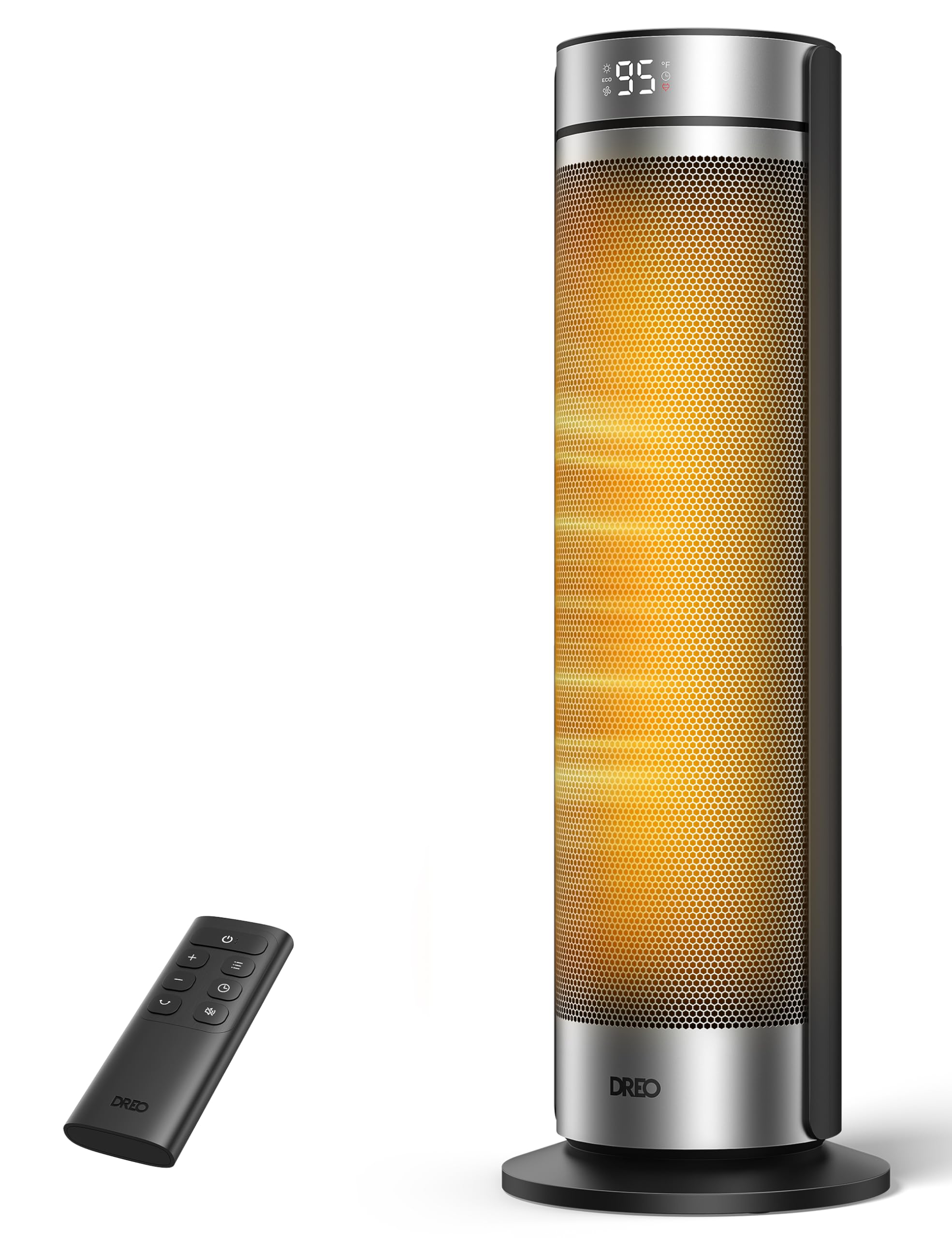
The DREO tower is a strong contender for anyone who wants a quiet, effective heater that blends into a finished basement without dominating the décor. The 23-inch tower uses a dual-DC motor design that pushes airflow at 10 feet per second, paired with a 25% larger PTC ceramic heating plate than earlier DREO models. The 70-degree wide oscillation spreads heat evenly across a 250 sq. ft. room, and the ECO mode claims up to 40% energy savings by cycling the heater based on ambient temperature.
At 34 dB, this is one of the quietest forced-air heaters available. You can run it in a basement bedroom or office without it interfering with conversation or sleep. The thermostat adjusts in 1-degree increments from 41 to 95°F, and the 12-hour timer lets you schedule the heater to run only during the hours you need it. The remote control is responsive, and the LED display is easy to read from across the room.
The main limitation is coverage. The 250 sq. ft. rating is realistic for a finished basement with drywall and insulation, but an unfinished concrete space with the same square footage will likely require the heater to run constantly. Some owners also note that the air intake grille collects dust and lint, requiring periodic cleaning to maintain airflow. For a dedicated space like a basement home office or guest room, this tower is a well-balanced choice.
Why it’s great
- Extremely quiet 34 dB operation
- Wide 70° oscillation prevents temperature stratification
- ECO mode reduces energy consumption during steady-state heating
Good to know
- Best suited for finished basements under 250 sq. ft.
- Air intake requires regular dust cleaning to maintain performance
6. JNDRO Wall-Mounted 24-Inch Heater
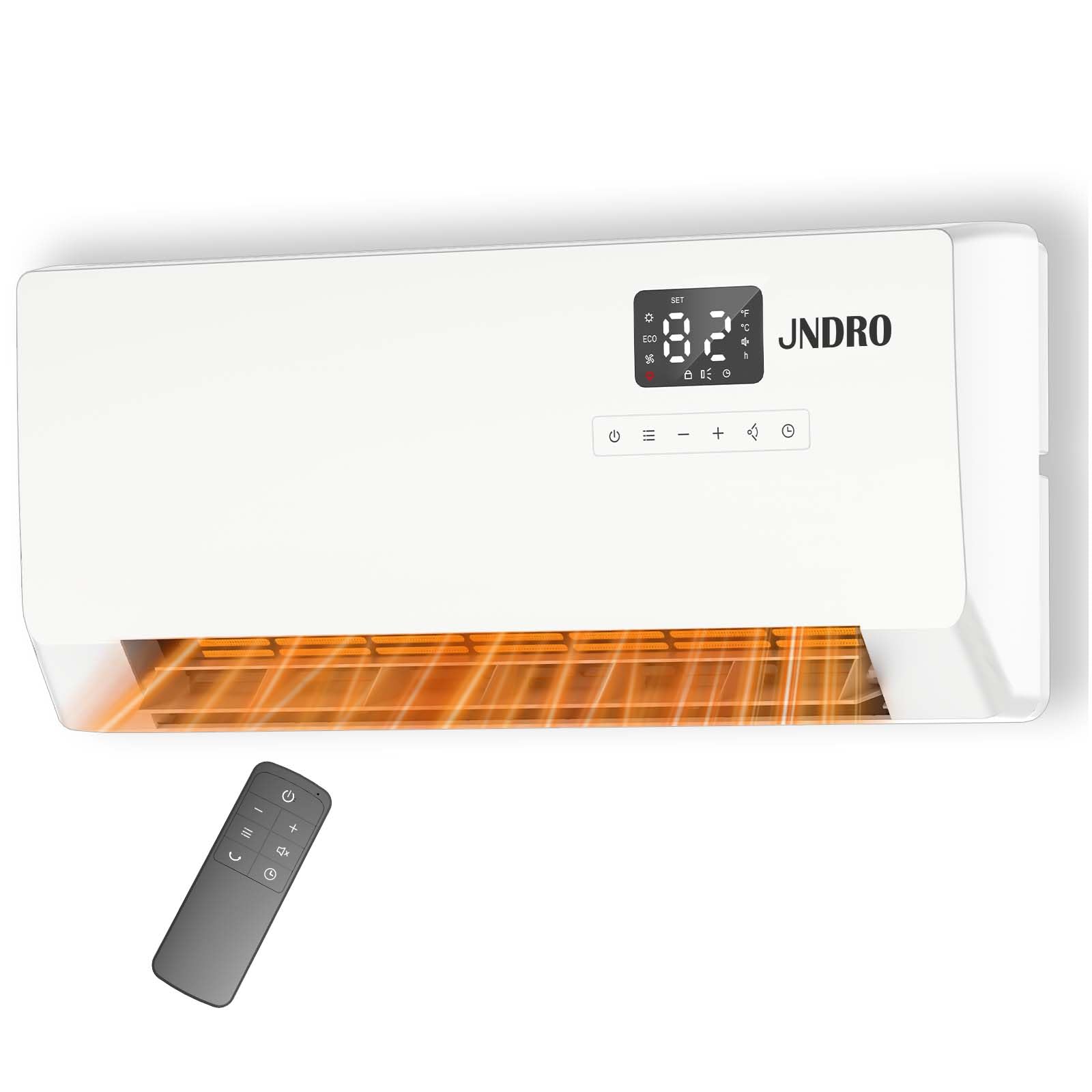
JNDRO’s 24-inch wall-mounted heater stands out for its three-stage oscillation—60°, 90°, and 120°—giving you control over how widely the heat spreads. In a long, narrow basement or a partitioned space, starting at 90° and widening to 120° lets you cover more linear footage without overheating one spot. The wall-mount design also keeps the unit at eye level or higher, which helps push warm air into the breathing zone rather than letting it pool at the floor.
Three power settings (900W, 1300W, 1500W) allow you to fine-tune energy use depending on whether the basement is simply cool or genuinely freezing. The ECO mode adjusts power automatically based on the built-in thermostat, and the LED display is clear without being blindingly bright. The child lock is a practical addition if the basement doubles as a playroom or guest area.
Real-world feedback is mixed on extreme cold. One owner in central Ohio reported that the unit ran continuously in an uninsulated cabin but couldn’t raise the temperature above freezing. In a properly insulated shop of similar volume, it maintained 54°F. This is not a deficiency of the heater itself—it’s a reminder that no 1500W unit can overcome a massive uninsulated space. For a typical finished basement that’s already semi-conditioned, the JNDRO performs admirably.
Why it’s great
- Adjustable 60°/90°/120° oscillation adapts to room shape
- Three power settings match output to basement temperature
- Wall-mount design saves floor space and keeps heat at breathing level
Good to know
- Struggles in uninsulated basements below 40°F ambient
- Installation requires secure mounting; wall anchors not included
7. JNDRO Wall-Mounted Heater with ECO Thermostat
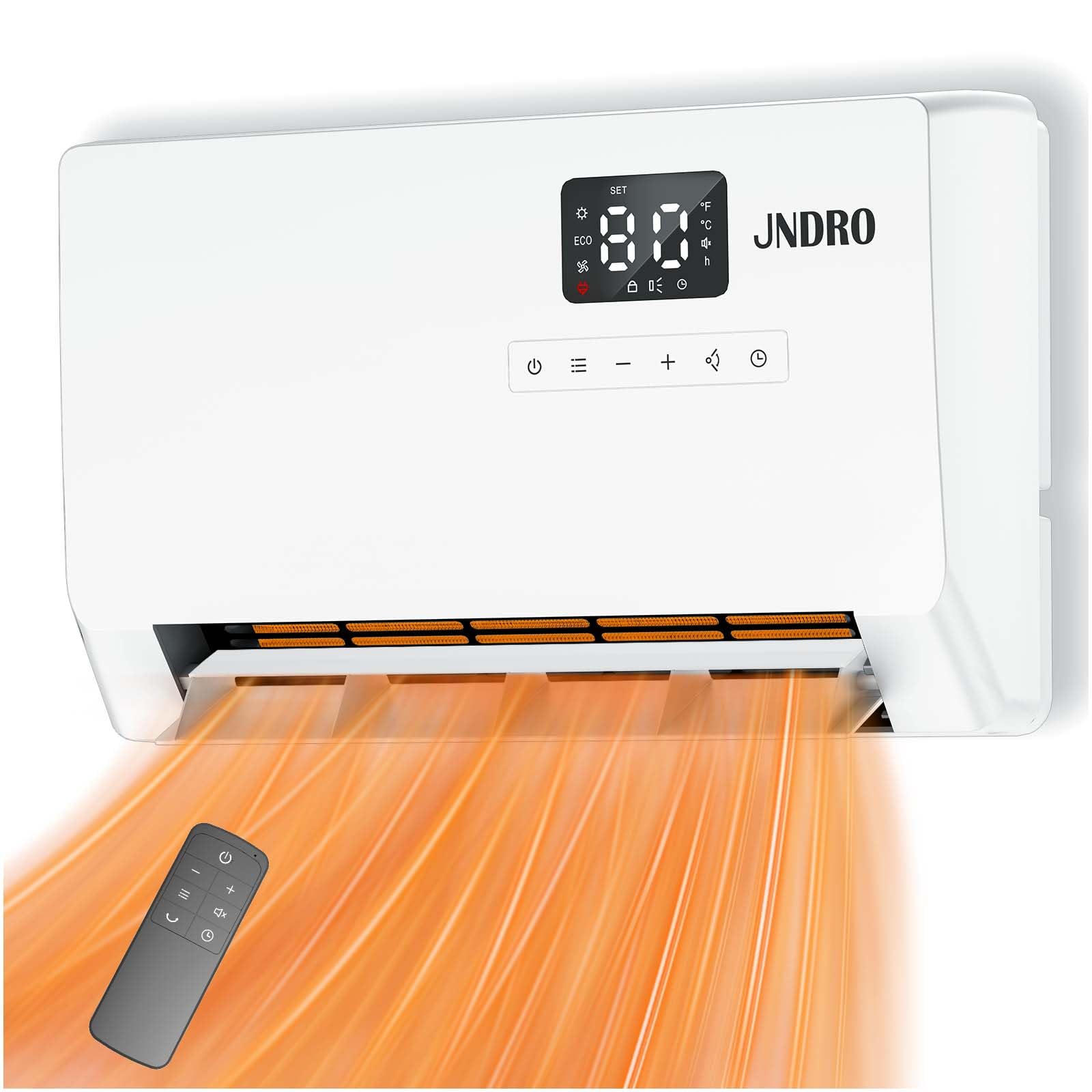
This entry-level JNDRO wall-mounted heater delivers the core features most basement owners need—ECO thermostat, multiple oscillation angles, and a 24-hour timer—at a budget-friendly price point. The 1500W radiant element covers up to 200 square feet, making it a good fit for a small basement room or a workshop corner. The three oscillation settings (60°, 90°, 120°) are identical to the premium JNDRO model, giving you the same coverage flexibility for less upfront investment.
The remote control is responsive, and the child lock provides peace of mind if kids or pets access the basement. The ECO mode works by monitoring ambient temperature and adjusting power draw to maintain the set point without wasteful full-blast cycles. Owners consistently describe the unit as quiet, efficient, and easy to install, with several buyers purchasing multiple units to cover different basement zones.
The acknowledged limitation is coverage. In a larger or uninsulated basement, this unit will run continuously without reaching a comfortable temperature—several reviews note that it’s best for “a little room or space,” not a full 600 sq. ft. open plan. The build quality is good for the tier, but the radiant heating method can feel slightly less immediate than the forced-air fan of a DREO or Stiebel. If your basement is already partially heated and you just need a boost in one area, this is a solid, affordable choice.
Why it’s great
- Budget-friendly entry point with essential ECO and timer features
- Wall-mount design clears floor space in small basements
- Quiet operation suitable for occupied rooms
Good to know
- Effective coverage is limited to about 200 sq. ft.
- Radiant heat element is less fast-acting than forced air
FAQ
Can I use a space heater as the primary heat source in an unfinished basement?
What type of heater is best for a damp or humid basement?
Is it safe to install a wall-mounted heater over a concrete slab?
Will a 1500W heater trip my basement circuit breaker?
How often should I clean the air intake on a basement space heater?
Final Thoughts: The Verdict
For most users, the basement electric heater winner is the DREO 3D Whole Room Heater 714 because its 3D oscillation design solves the core problem of cold spots in an open basement layout, and the quiet 34 dB operation makes it unobtrusive in finished spaces. If you want a permanent, wall-mounted solution with German build quality, grab the Stiebel Eltron CK Trend. And for a small basement room that needs a recessed heater that disappears into the wall, nothing beats the Cadet Com-Pak CSC151TW.

Mo Maruf
I created WellFizz to bridge the gap between vague wellness advice and actionable solutions. My mission is simple: to decode the research and give you practical tools you can actually use.
Beyond the data, I am a passionate traveler. I believe that stepping away from the screen to explore new environments is essential for mental clarity and physical vitality.