Our readers keep the lights on and my smoothie glass nicely filled. As an Amazon Associate, I earn from qualifying purchases.
The promise of a blood sugar monitor watch is one of the most compelling propositions in personal health tech: a single device on your wrist that could theoretically track your glucose levels, blood pressure, and heart rate 24/7 without a single skin prick. While optical sensor technology has advanced rapidly, understanding what these devices can and cannot actually measure is critical before you buy.
I’m Mohammad Maruf — the founder and writer behind WellFizz. My research into non-invasive health wearables focuses on separating proven sensor accuracy from marketing claims, especially regarding the regulatory distinctions between medical-grade monitoring and wellness-only reference data.
Whether you are managing a condition or simply want deeper insight into how your body responds to food and stress, choosing the right wearable means understanding key specs like oscillometric cuff technology, PPG sensor reliability, and companion app analytics — the exact focus of this guide to the best blood sugar monitor watch.
How To Choose The Best Blood Sugar Monitor Watch
Selecting the right health-focused smartwatch requires looking past the marketing and focusing on how the device collects data. The most important distinction is between watches that use optical sensors (PPG) to estimate trends and those that integrate an actual inflatable cuff for oscillometric blood pressure measurement (closely related to glucose trend tracking in some algorithms).
Sensor Accuracy and Measurement Method
Watches relying solely on green or red LED PPG sensors can track heart rate and SpO2, but they cannot measure blood glucose directly. A few higher-end models use an integrated air-pump cuff on the wrist strap to perform oscillometric blood pressure readings — a more reliable method that some brands then correlate with glucose trend data. For genuine medical insight, look for models with an inflatable cuff, not just optical sensors.
Display and Battery Life
A bright AMOLED display makes heart rate zones, SpO2 graphs, and blood pressure readouts easy to read outdoors. The trade-off is battery life: premium AMOLED health watches typically last 5 to 15 days depending on GPS and sensor usage, while basic LCD models can stretch beyond a week. Prioritize a watch that lasts at least 5 to 7 days on a single charge with continuous health monitoring enabled.
Health Data Ecosystem and App Quality
The companion app matters more than the watch face. Look for apps that provide trend charts over days and weeks, exportable data for your doctor, and features like family data sharing for remote care. Devices from Apple, Garmin, and Samsung offer deep app ecosystems, while third-party health watches from brands like BP Doctor or VOKOWOBO often use their own specialized apps with varying degrees of polish.
Quick Comparison
On smaller screens, swipe sideways to see the full table.
| Model | Category | Best For | Key Spec | Amazon |
|---|---|---|---|---|
| Garmin Venu X1 | Premium Health | Advanced wellness & sleep | 2″ AMOLED, 8mm thick, 8 days battery | Amazon |
| Samsung Galaxy Watch Ultra | Premium Smartwatch | Tough build & LTE connectivity | Titanium case, 590mAh, LTE | Amazon |
| Garmin Forerunner 265S | Running/Recovery | Training readiness & HRV | AMOLED, 14.5 days battery | Amazon |
| Apple Watch Series 9 | Ecosystem Health | ECG, blood oxygen, safety | S9 chip, 41mm, 50m water resist | Amazon |
| VOKOWOBO BP Smart Watch | Air Pump BP | Inflatable cuff BP tracking | 2.06″ AMOLED, 530mAh, air bag | Amazon |
| FITVII GT5 PRO MAX | All-Day Health | 24/7 monitoring & Bluetooth calls | 1.97″ AMOLED, 325mAh, IP67 | Amazon |
| BP Doctor Smart Watch | Cuff BP Monitor | Medical-style BP & data sharing | 1.95″ LCD, inflatable cuff, 7 days | Amazon |
| EarlySincere BP Watch | Value Health | Entry-level AMOLED & BP | 2.06″ AMOLED, 340mAh, IP68 | Amazon |
| Fitbit Charge 6 | Fitness Tracker | Daily activity & heart rate | 7 day battery, GPS, ECG | Amazon |
In‑Depth Reviews
1. Garmin Venu X1

The Venu X1 represents Garmin’s best balance of premium health features and all-day wearability. Its 2-inch AMOLED display is the largest in the lineup, yet the case measures just 8mm thick, making it comfortable under long sleeves. The scratch-resistant sapphire lens and titanium caseback add durability without extra weight — the whole unit is only 34g.
Health tracking is comprehensive: HRV status, advanced sleep staging, Body Battery energy monitoring, and Pulse Ox for blood oxygen saturation. The built-in LED flashlight is unexpectedly useful for nighttime checks. With up to 8 days of battery life in smartwatch mode, the Venu X1 outlasts every premium competitor while still delivering continuous health data syncing.
The companion app and Garmin Coach adaptive training plans add real utility for users who want to improve cardiovascular health. The nylon ComfortFit band breathes well during sleep tracking. Some reviewers note the heart rate sensor occasionally diverges from chest strap readings during interval workouts, but for 24/7 wellness monitoring, the Venu X1 is the most refined option available.
Why it’s great
- Thinnest premium health watch at 8mm — true all-day comfort
- Sapphire crystal and titanium build for scratch resistance
- 8-day battery life with continuous HRV and sleep tracking
Good to know
- Heart rate accuracy can drop during high-intensity intervals
- No FDA clearance for any medical diagnostic function
2. Samsung Galaxy Watch Ultra (2024)
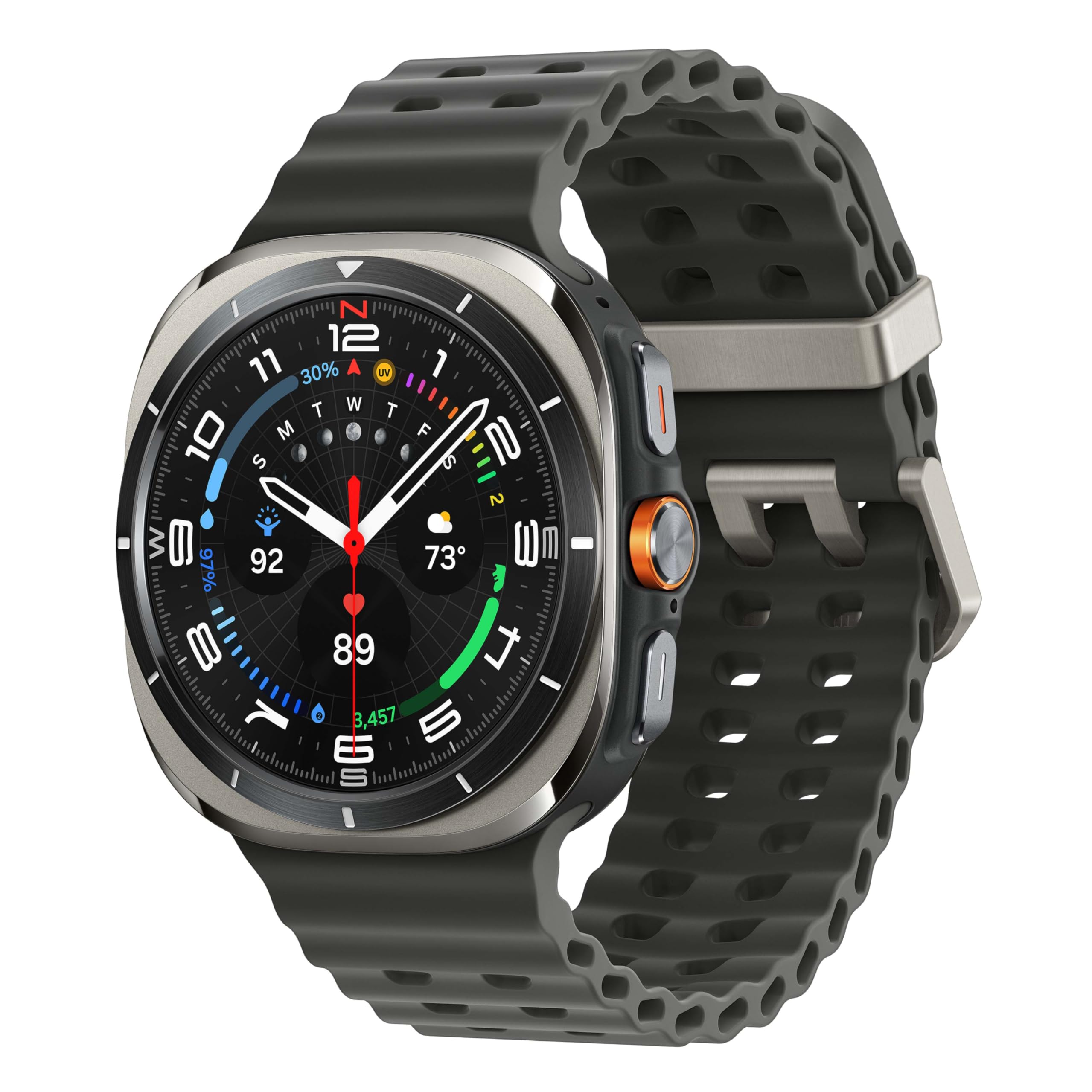
The Galaxy Watch Ultra is Samsung’s most rugged health wearable, featuring a titanium case, 10ATM water resistance, and a 590mAh battery that lasts about 60 hours in typical use. Its LTE model allows standalone calling, messaging, and emergency SOS without needing your phone nearby — a meaningful safety feature for outdoor workouts.
Health sensors include optical heart rate, ECG, blood oxygen, and stress tracking. The new Galaxy AI-powered Energy Score aggregates your sleep, heart rate, and activity data to give a daily readiness metric similar to Garmin’s Body Battery. The 47mm screen is crisp and bright even in direct sunlight, and the programmable quick button is handy for launching health checks.
Where the Ultra falls short is in dedicated fitness analytics — workout tracking is less nuanced than Garmin’s, and there is no native non-invasive blood pressure or glucose correlation tool. Samsung Health is a strong app, but users wanting deep physiological insights will find the Garmin ecosystem more specialized. For a tough daily smartwatch with LTE, however, the Ultra is unmatched.
Why it’s great
- Titanium build with LTE for standalone connectivity
- Galaxy AI Energy Score personalization
- 60-hour battery outlasts most LTE smartwatches
Good to know
- Bulkier than Garmin Venu X1 — less discreet for sleep
- Fitness metrics less granular than dedicated sports watches
3. Garmin Forerunner 265S

The Forerunner 265S is designed for runners and triathletes who want detailed recovery metrics alongside accurate heart rate tracking. Its 42mm case fits smaller wrists better than the standard Forerunner 265, and the AMOLED display is vivid enough for route mapping and glanceable workout data. Battery life is excellent at up to 14.5 days in smartwatch mode and 24 hours with GPS.
Key health features include HRV status, training readiness score, and personalized daily suggested workouts that adapt to your recovery. The Morning Report gives a consolidated view of sleep, recovery, and training outlook. For users managing blood sugar, the HRV and sleep insights can reveal how diet and exercise impact autonomic nervous system balance, which correlates with glucose regulation.
The main drawback is the lack of a dedicated blood pressure cuff or blood glucose sensor — the Forerunner 265S is a training computer first, a health tracker second. But its recovery analytics are the best in this price tier, and the Garmin Connect app provides exportable trend data that clinicians can interpret alongside lab results.
Why it’s great
- Industry-leading battery life at 14.5 days with AMOLED
- Adaptive training plans based on HRV and recovery
- Morning Report consolidates key health metrics daily
Good to know
- No blood pressure cuff or glucose correlation sensor
- Screen size (42mm) may feel small for some users
4. Apple Watch Series 9

The Apple Watch Series 9 remains the gold standard for user-friendly health monitoring, with FDA-cleared ECG, blood oxygen saturation measurement, and irregular rhythm notifications. The S9 chip enables on-device Siri processing for quick health data queries, and the 41mm aluminum case is lightweight enough for 24/7 wear without sleep disturbance.
Temperature sensing for cycle tracking, sleep stage analysis (REM, Core, Deep), and state-of-mind logging provide a broad health picture. Fall and crash detection with automatic emergency calling add a safety net that other devices rarely match. The watchOS app ecosystem is the most mature, with third-party glucose monitor integrations for users who wear a separate CGM sensor.
Battery life is the limiting factor — daily charging is required if you enable always-on display and workout tracking. The Series 9 also lacks an integrated blood pressure cuff. For users already in the Apple ecosystem who want the best smartwatch experience with robust health data, the Series 9 is the obvious pick, even if you need to charge it every night.
Why it’s great
- FDA-cleared ECG and blood oxygen sensor with clinical validation
- Life-saving Fall and Crash Detection with automatic emergency calls
- Largest health app ecosystem with CGM sensor integrations
Good to know
- Daily charging required — 18-hour typical battery life
- No blood pressure cuff or dedicated glucose sensor
5. VOKOWOBO Blood Pressure Smart Watch
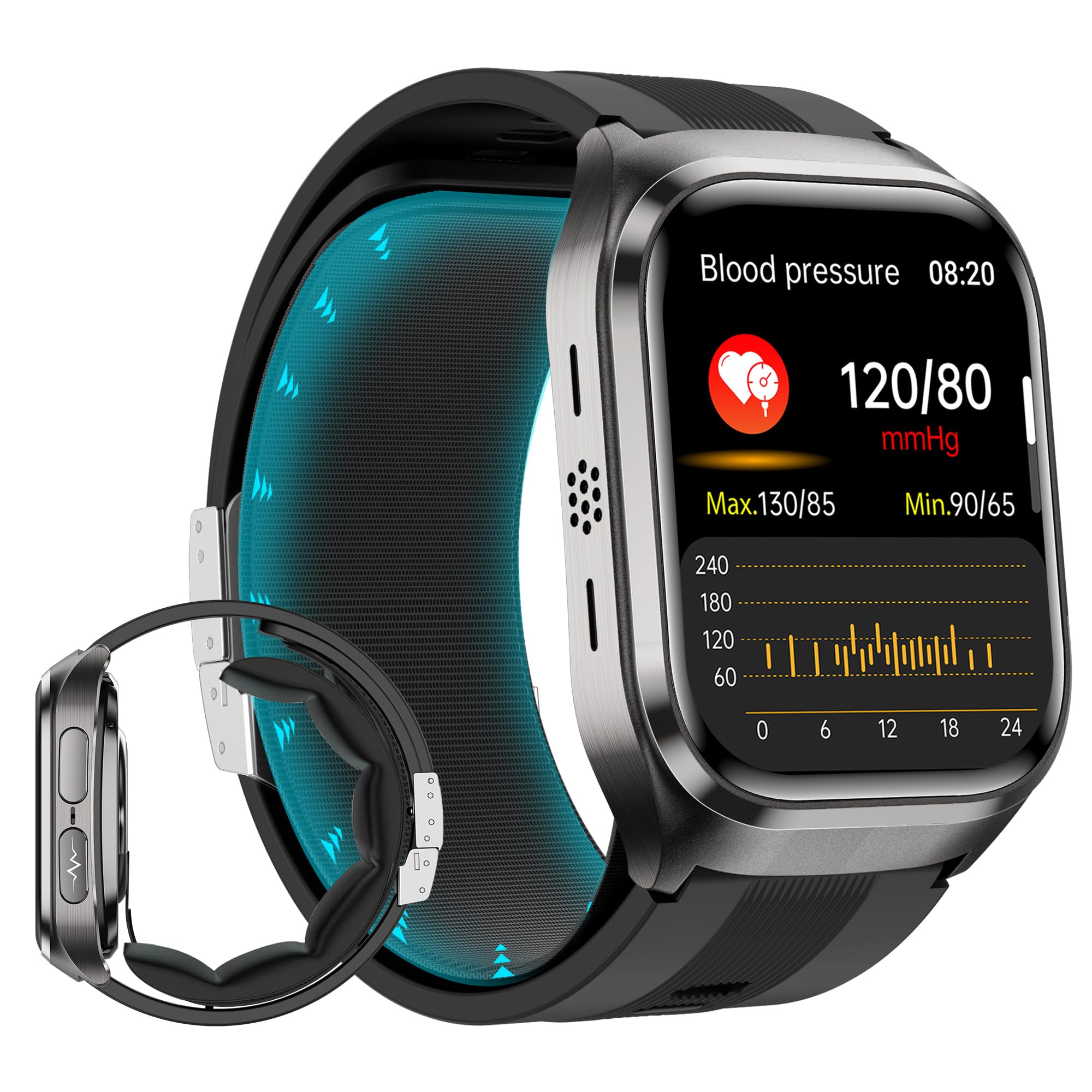
The VOKOWOBO watch is one of the few devices on this list that includes an actual inflatable airbag cuff for oscillometric blood pressure measurement, elevating its potential for glucose trend correlation. The 2.06-inch AMOLED screen is sharp and bright, and the 530mAh battery delivers 5 to 10 days of use depending on how often you run the cuff measurement.
It tracks heart rate, blood oxygen, body temperature, respiratory rate, and sleep stages. The companion HealthWear app supports remote family data sharing, which is useful for caregivers. Voice broadcast of measurement results is a thoughtful accessibility feature, and Bluetooth 5.3 keeps the connection stable for notifications and call handling.
Reliability is a concern — several user reports note that the blood pressure monitoring feature stopped working after a few weeks, and the refund process was slow. The instructions are sparse, and the device lacks any clinical validation letters. For the price, the hardware is impressive, but long-term consistency is not guaranteed.
Why it’s great
- True air-pump cuff for oscillometric BP measurement
- Large 530mAh battery for extended use between charges
- Remote family data sharing in HealthWear app
Good to know
- Some units fail after a few weeks — reliability is inconsistent
- No medical certification; measurement for reference only
6. FITVII GT5 PRO MAX
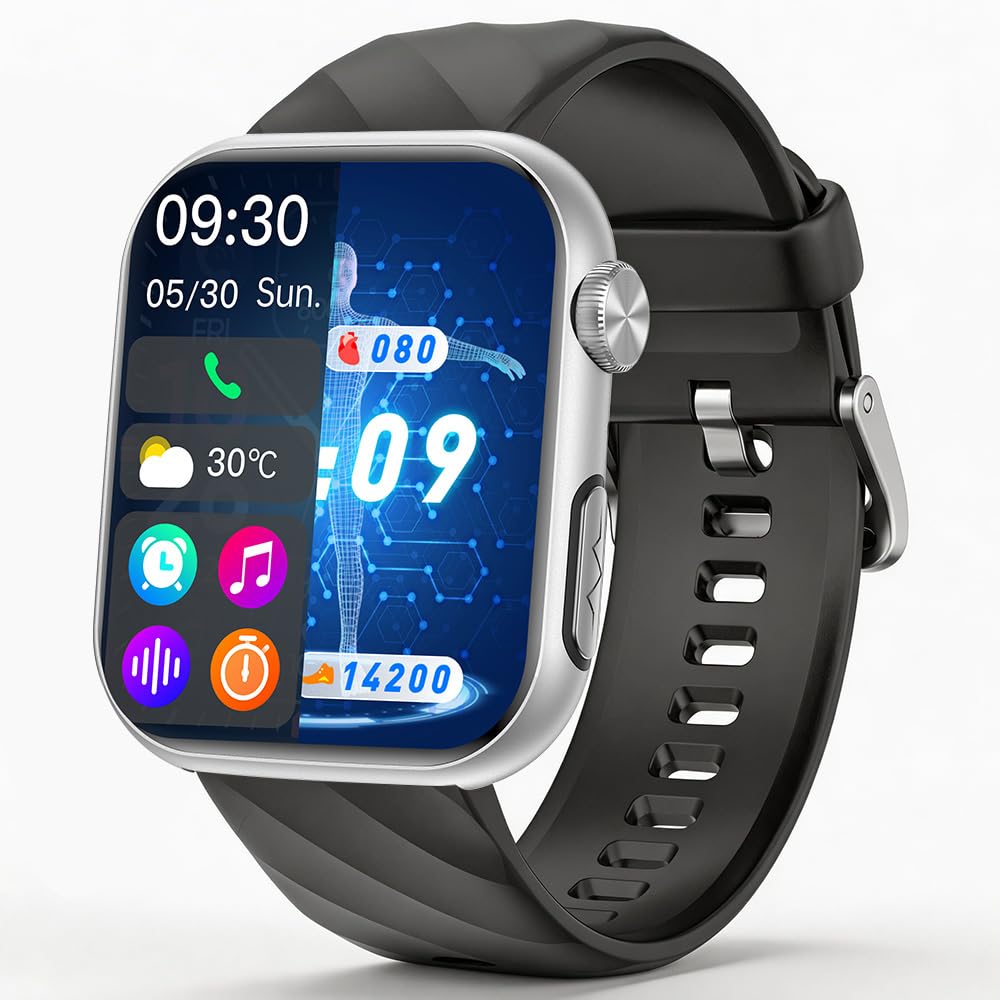
The FITVII GT5 PRO MAX packs continuous monitoring of heart rate, blood pressure, blood oxygen, body temperature, and stress into a 53g metal-alloy body with a vibrant 1.97-inch AMOLED display. Bluetooth 5.3 enables stable call handling and notification sync, and the IP67 rating means it handles rain and sweat without issue.
Health tracking is comprehensive for the price — it records MET (Metabolic Equivalent of Task) data during workouts, offers 100-plus sport modes, and includes menstrual cycle tracking for women’s health. The raised-hand-to-wake display works well during sleep tracking, and the 325mAh battery lasts roughly 7 days with standard monitoring profiles.
The trade-off is in sensor precision: blood pressure readings are trend-only, not medical-grade, and some users report occasional inconsistencies in SpO2 measurements. The companion app is functional but not as polished as Fitbit or Garmin. For budget-conscious buyers who want a wide health data dashboard, the GT5 PRO MAX delivers impressive breadth.
Why it’s great
- Broad health tracking (BP, SpO2, temp, stress) in one device
- Bright 1.97-inch AMOLED screen visible outdoors
- Excellent battery life — 7 days with continuous monitoring
Good to know
- Blood pressure readings are trend estimates only, not clinical
- SpO2 sensor accuracy varies between users
7. BP Doctor Smart Watch
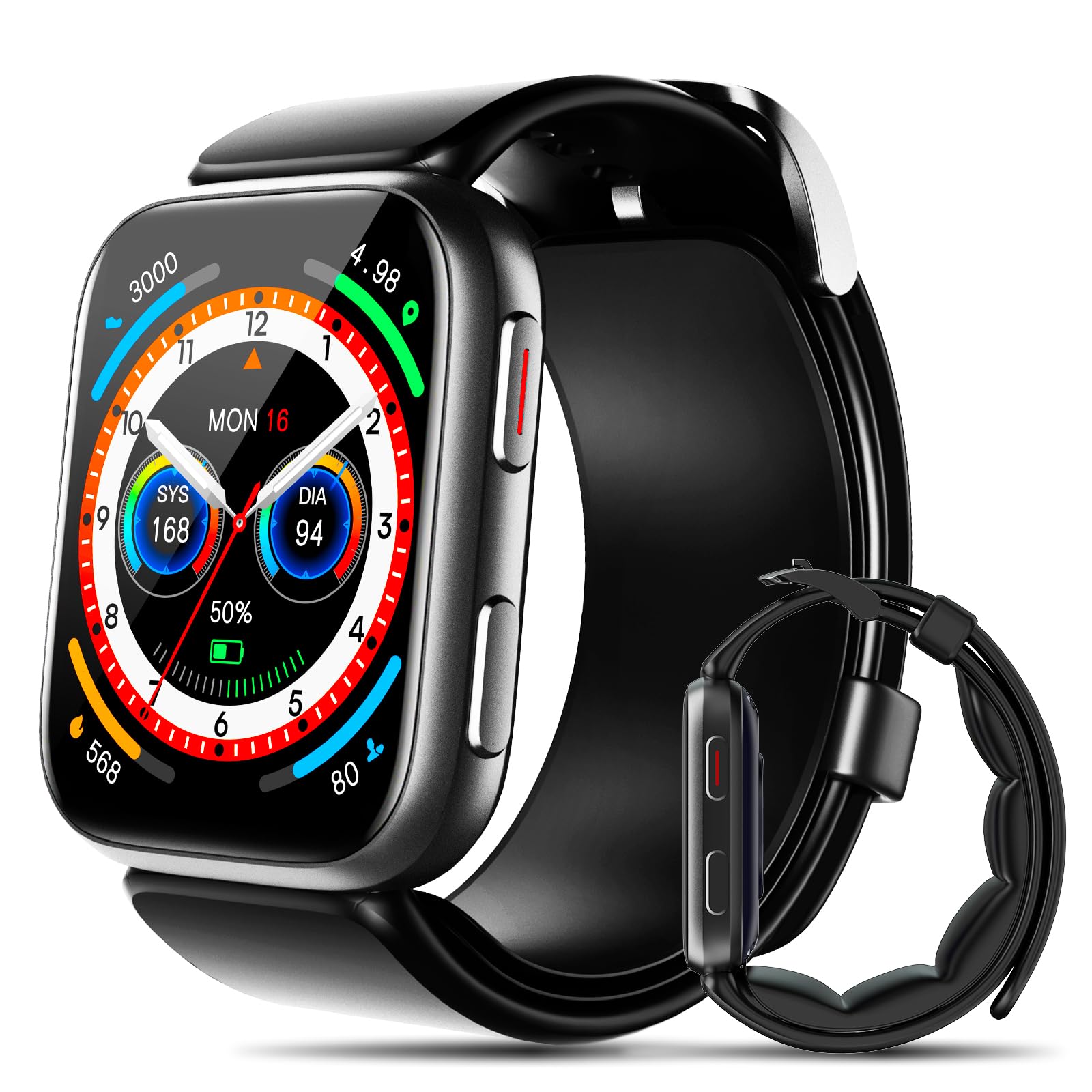
The BP Doctor watch uses a physical inflatable airbag strap combined with a PPG sensor to measure blood pressure via the oscillometric method — the same principle as a traditional arm cuff. This design, paired with a proprietary algorithm, provides readings that several users report matching their doctor’s equipment within 2 to 5 points.
It tracks sleep stages, daily steps, calories, and 50-plus sport modes. The 1.95-inch full-touch LCD is clear outdoors with adjustable brightness. The companion BP Doctor app supports family data sharing and will send remote alerts if wearer readings go abnormal — a feature designed for caregivers of elderly or chronically ill users.
Build quality is decent, though the side button feels crunchy on some units. Battery life is good at 7 days of normal use with a 1-hour recharge time. The biggest issue is that some units produce blood pressure readings 20 points off from arm cuffs, indicating quality control inconsistencies. Buy with the expectation of testing accuracy against a standard cuff.
Why it’s great
- Physical air pump cuff for true oscillometric BP readings
- Remote family alerts for abnormal heart rate or BP data
- Many users report accuracy within 2 points of medical cuff
Good to know
- Quality control varies — some units show large BP inaccuracy
- Side button feels loose on certain production batches
8. EarlySincere Smart Watch with BP Monitor

The EarlySincere watch stands out visually with its 2.06-inch AMOLED display and stainless steel magnetic band. The metal alloy case feels premium for its price tier, and the IP68 waterproof rating means it can be worn swimming in shallow water. The 340mAh battery delivers 5 to 7 days of use with the always-on display disabled.
Health features include 24/7 heart rate, stress, SpO2, and sleep monitoring, plus hydration and sedentary reminders. The DaFit app provides detailed trend charts, and Bluetooth calling works well with both iPhone and Android. The smart digital crown allows smooth menu scrolling, and the 30-day return policy adds purchase confidence.
Blood pressure tracking on this device is entirely PPG-based (no air cuff), meaning readings are estimated from pulse wave analysis rather than direct oscillometric measurement. This makes the BP data less reliable than dedicated cuff watches. For users who prioritize AMOLED display quality and style over absolute health data precision, the EarlySincere is a solid entry-level choice.
Why it’s great
- Large 2.06-inch AMOLED screen with high 410×502 resolution
- Premium stainless steel magnetic band and alloy case
- IP68 waterproof rating for swimming and showering
Good to know
- Blood pressure is PPG-estimated, not cuff-based oscillometric
- Battery life drops to 5 days with continuous health monitoring
9. Fitbit Charge 6

The Fitbit Charge 6 is a slim fitness tracker rather than a full smartwatch, but its health sensor accuracy is among the best at this price. It tracks heart rate on compatible gym equipment via Bluetooth, includes an ECG app, and provides Active Zone Minute scoring for exercise intensity. The 7-day battery life is reliable, and the 3-month Google Health Premium membership adds personalized coaching.
Health features include 24/7 heart rate, SpO2, skin temperature, sleep stages, and stress management. Built-in GPS and Google Maps turn-by-turn directions are useful for runners, and Google Wallet allows contactless payments. The Daily Readiness Score tells you when to push harder and when to recover, similar to Garmin’s system.
Where the Charge 6 falls short is its small screen — reading health stats requires scrolling, and the lack of a blood pressure sensor limits its use for glucose trend work. Some users also report significant distance inaccuracy (0.3 miles vs 1 actual mile) and calorie overestimation. It is a great daily activity tracker but not the right tool for medical-grade monitoring.
Why it’s great
- Clinically validated heart rate sensor with ECG capability
- 7-day battery life — one of the best in fitness trackers
- Google ecosystem integration (Maps, Wallet, YouTube Music)
Good to know
- Small screen requires scrolling for detailed health data
- GPS distance and calorie burn can be significantly inaccurate
FAQ
Can a smartwatch measure my blood glucose without a separate CGM sensor?
Is an air-pump cuff watch better than an optical sensor watch for blood pressure?
How often should a health tracking watch sample my heart rate at night?
Final Thoughts: The Verdict
For most users, the best blood sugar monitor watch winner is the Garmin Venu X1 because it combines the deepest health tracking sensor suite with a battery that lasts 8 days and a case thin enough for 24/7 wear. If you want the most accurate blood pressure readings from a wrist device, grab the VOKOWOBO BP Smart Watch with its true oscillometric air-pump cuff. And for runners who prioritize recovery metrics and HRV insights, nothing beats the Garmin Forerunner 265S with its adaptive training plans and industry-leading battery life.

Mo Maruf
I created WellFizz to bridge the gap between vague wellness advice and actionable solutions. My mission is simple: to decode the research and give you practical tools you can actually use.
Beyond the data, I am a passionate traveler. I believe that stepping away from the screen to explore new environments is essential for mental clarity and physical vitality.