Our readers keep the lights on and my smoothie glass nicely filled. As an Amazon Associate, I earn from qualifying purchases.
Lumbar lordosis is the inward curve of your lower spine, and when that curve flattens or over-arches, the resulting misalignment pulls on muscles, pinches nerves, and makes every sit, stand, or step a gamble with pain. The right external support does more than squeeze your waist — it repositions the pelvis, stabilizes the L1–S1 vertebrae, and offloads pressure so the paraspinal muscles can actually relax instead of locking up in a protective spasm. A brace designed for lordosis needs an internal arch profile that matches the normal 30–50 degree lumbar curve, not a flat belt that just compresses the belly.
I’m Mohammad Maruf — the founder and writer behind WellFizz. I’ve spent the last 15 years analyzing orthopedic support devices, cross-referencing clinical mechanics with real-user feedback, and filtering out the brace designs that merely squeeze versus those that actually restore pelvic alignment.
Every product reviewed here was selected for its ability to lift the lordotic curve, offload the facet joints, or provide adjustable posterior tension. After weeks of comparing arch depth, pulley tension ratios, stay rigidity, and wear-comfort across seven models, this is the definitive guide to finding the most effective brace for lumbar lordosis for your specific condition and daily routine.
How To Choose The Best Brace For Lumbar Lordosis
Not every back brace can correct a lordotic posture. Selecting the right one requires matching your specific spinal condition (flattened curve vs excessive swayback vs post-surgical instability) to a brace’s arch design, rigidity, and adjustability. Here are the three critical factors that separate a supportive brace from a useless belt.
Arch Profile & Pelvic Angle
A standard flat compression belt wraps around your waist and squeezes indiscriminately — it provides no lift for the lordotic curve. The best braces for lordosis incorporate a molded or adjustable arch plate that pushes posteriorly at the L3–L5 level, gently tilting the pelvis forward or backward to restore a neutral spin. Some braces offer a fixed 26-degree arch (designed for correction), while others provide a removable or adjustable insert that allows you to dial in the exact curve height your spine needs. If your lordosis involves a flattened curve from sitting all day, you need a brace with a deeper, more aggressive arch. If you have a swayback with excessive curvature, a brace with a rigid posterior stay and moderate lift is better.
Compression System & Tension Control
Simple hook-and-loop belts apply even pressure from all sides, which fails when you need targeted compression at the lumbar spine. A pulley system — whether 4:1 or 5:1 — lets you generate high localized tension behind the lower back without having to crank the entire belt tight enough to restrict breathing. This is critical because a lordotic brace must pull the lumbar segment posteriorly (backward) while allowing the abdomen to remain relatively free. Braces with dual independent tension tabs (top and bottom) let you fine-tune the compression at the spinal level vs the sacral level, an essential feature for conditions involving both lordosis and sacroiliac joint dysfunction.
Stay Rigidity: Semi-Rigid vs Rigid LSO
Lordosis braces typically fall into two categories based on the number and stiffness of the vertical stays. Semi-rigid braces (2–4 flexible or memory-aluminum stays) provide significant support for daily wear, light lifting, and office sitting — they keep the lumbar curve intact while allowing torso rotation. Rigid LSO (Lumbosacral Orthosis) braces feature 5+ reinforced stays or a molded plastic posterior panel that locks the entire L1–S1 segment into a fixed position. Rigid braces are the better choice for post-surgical fusion, severe herniated discs, or when you need complete immobilization for acute flare-ups. However, they are bulkier under clothing and can restrict mobility, so your selection should align with your activity threshold.
Quick Comparison
On smaller screens, swipe sideways to see the full table.
| Model | Category | Best For | Key Spec | Amazon |
|---|---|---|---|---|
| BaxMAX Adjustable Back Brace | Premium | Localized compression with minimal bulk | 5:1 pulley, 5 oz, Kevlar cable | Amazon |
| LSO Back Brace w/ Decompression Plate | Premium | Rigid immobilization & adjustable arch | 26° adjustable arch plate | Amazon |
| FEATOL Lower Back Brace w/ 5 Stays | Premium | 360° semi-rigid stability for work | 5 reinforced stays (3 Al + 2 plates) | Amazon |
| ASPEN Lumbar Support Back Brace | Mid-Range | Medical-grade, fine-tuned dual tension | 4:1 pulley system, inelastic body | Amazon |
| NEENCA Lower Back Brace Medical Grade | Mid-Range | Multi-point support for lordosis & sciatica | Multi-point plastic curvature plate | Amazon |
| Fit Geno Back Brace L/XL | Budget | Breathable, flexible support for daily tasks | Adjustable elastic with dual Velcro straps | Amazon |
| Sparthos Back Brace Medium | Budget | Lightweight relief under clothing | 0.15″ thin, vertical support stays | Amazon |
In‑Depth Reviews
1. BaxMAX Adjustable Back Brace with 5-to-1 Compression Pulley System
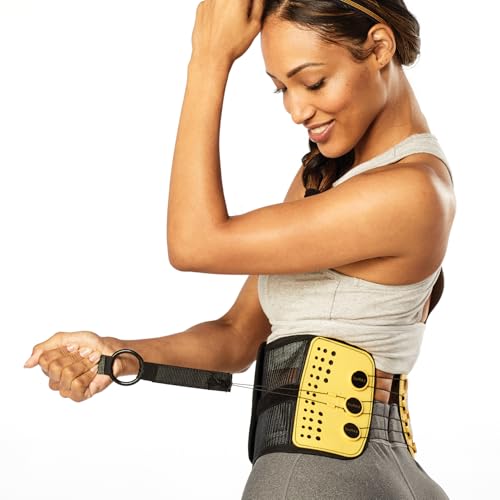
The BaxMAX redefines how a lumbar brace should deliver compression. Instead of a bulky neoprene wrap that squishes your abdomen, it uses a patented 5:1 pulley system and a lightweight nylon/Kevlar mesh that weighs only 5 ounces. The pulley allows you to generate five times the localized tension on the lumbar vertebrae with a single finger pull — a feature that is invaluable when you are mid-flare-up and need concentrated support at L3–L5 without tightening the belt everywhere else. The Kevlar-reinforced repelling line means the tension cable does not stretch out over months of use, maintaining a consistent pull ratio.
The BaxMAX is designed for users who need active support during standing and walking rather than static sitting. Its three-way wear adjustability lets you shift the compression pad higher or lower depending on whether your lordotic pain is central (L4–L5) or lower (L5–S1). Chiropractors recommend it because it does not encourage muscle atrophy — the targeted compression stabilizes the core without fully immobilizing it. Users with spondylolisthesis and herniated discs at L4/L5 consistently report instant pain reduction and the ability to resume walking after acute episodes that would otherwise keep them bedridden.
The trade-off is that the lightweight mesh material tends to roll up when you sit for long periods, making this brace suboptimal for all-day desk work unless you stand frequently. It is also less effective for pure sitting or sleeping support, where a full LSO brace with a rigid posterior plate performs better. Still, for active individuals who need powerful but low-bulk compression for standing, household chores, or walking, the BaxMAX is the most intelligent compression tool currently on the market for lordosis.
Why it’s great
- 5:1 pulley delivers 5x compression with minimal effort — ideal for limited grip strength or acute pain
- Ultra-light Kevlar/nylon mesh at 5 oz makes it the lowest-profile high-compression brace available
- Three wearing positions allow you to shift the compression pad to match your specific lordotic level
Good to know
- Mesh material rolls up when seated for extended periods, reducing support during prolonged sitting
- Not designed for sleep or full immobilization — best for active standing and walking scenarios
2. LSO Back Brace with Maximum Decompression Plate & Dual Pulley System

This LSO brace is built for the most severe lordotic conditions — post-surgical fusion, extreme spinal stenosis, and patients who need near-complete immobilization of the L1–S1 segment. The defining feature is the bionic decompression plate, which you can adjust to three arch configurations: a 26‑degree lift for active lordotic correction and extension, a moderate arch for general lumbar protection, and a zero-arch mode (plate removed) for minimal support during recovery. This is the only brace in this lineup that lets you literally dial in the lordotic curve angle rather than relying on a static padded insert.
The dual pulley system works differently from the BaxMAX — it uses cable finger tabs that tighten the brace from both sides simultaneously, creating even circumferential pressure as the posterior arch plate pushes forward against the lumbar spine. The abdominal side includes an adjustable extension Velcro pocket with a removable plastic plate, which is crucial for users with abdominal obesity who need extra anterior support to prevent the brace from rolling down. Users recovering from spinal surgery report this brace provides 80% immobilization of lower back movement, allowing them to walk and sit upright without triggering muscle spasms.
The primary downside is bulk — the built-in arch plate and dual pulley mechanisms make it significantly thicker than a standard elastic belt, so it will not disappear under tight clothing. Users also note that the arch plate can feel aggressive during the first few wears until the spine accommodates the 26‑degree lift. But for anyone who has been told by a neurosurgeon that their lordotic curvature needs mechanical correction alongside pain management, this LSO brace delivers a level of rigid, calibrated support that no simple belt can approach.
Why it’s great
- 26° adjustable arch plate allows three levels of lordotic lift — from correction to maintenance to removal
- Dual pulley system and removable abdominal plate provide LSO-grade rigid immobilization
- Effective for post-surgical recovery, spinal stenosis, and severe lordosis where flexion must be minimized
Good to know
- Bulky design is visible under most clothing and may feel overly aggressive during initial wear
- Requires careful sizing using belly circumference — not waist size — for the arch to sit correctly
3. FEATOL Lower Back Brace with 5 Reinforced Stays
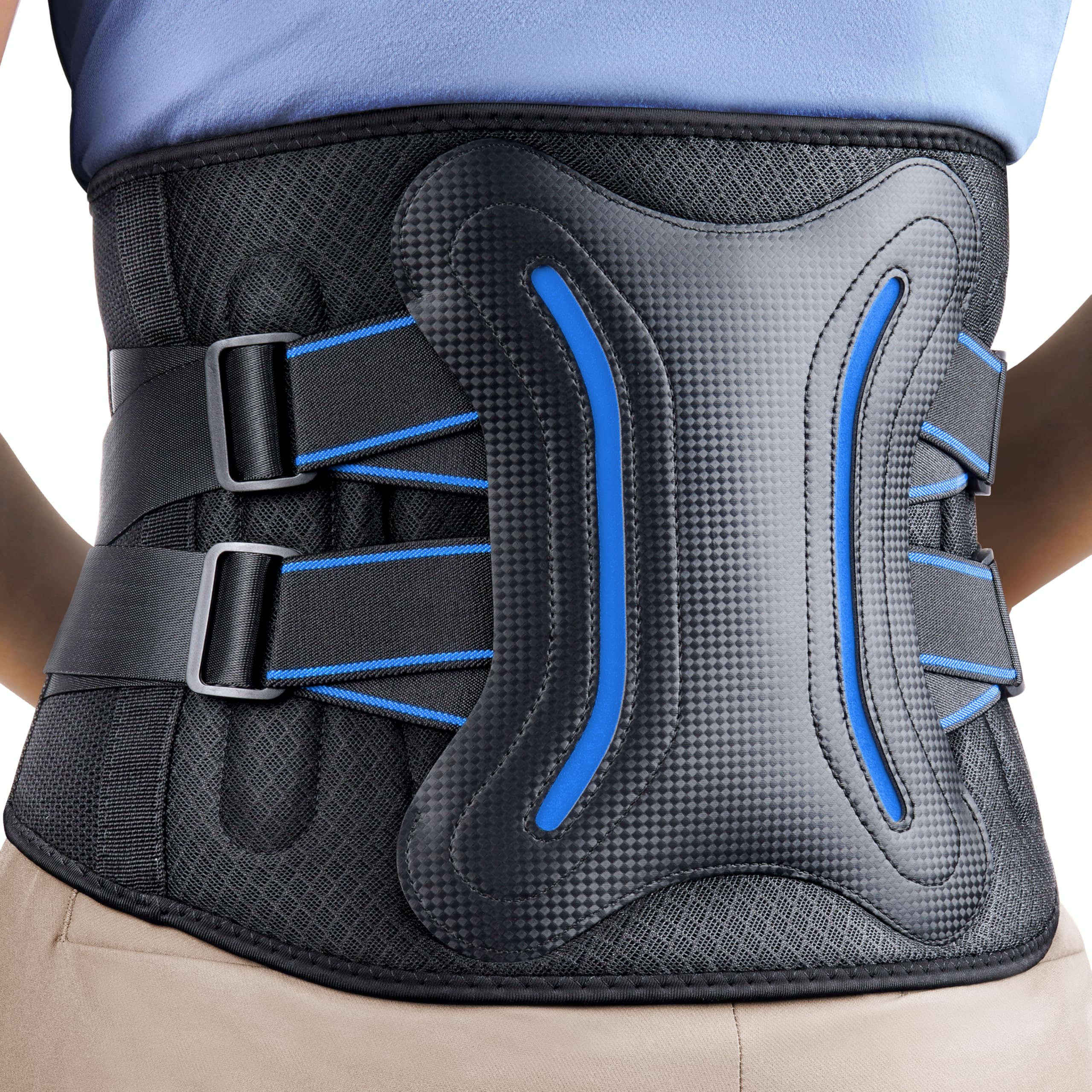
The FEATOL sits in the sweet spot between a simple elastic band and a full rigid LSO. Its secret is a 360° support frame built from three memory-aluminum stays and two rigid support plates that contour to the lumbar curve without digging into the hip bones. This 5-stay configuration provides semi-rigid stabilization that prevents the brace from rolling up (the single biggest complaint with cheaper elastic belts) while still allowing enough torso rotation for work tasks like lifting, carrying, and bending. The memory-aluminum stays are shapeable — you can bend them slightly to match your exact lordotic arch, then they hold that shape permanently.
The dual tension straps use elastic material and finger loops for easy application, which users with arthritic hands find accessible. The breathable mesh back panel prevents the heat buildup common with neoprene braces, making it suitable for all-day wear during yard work, construction, or long standing periods. Reviewers in their 70s report being able to stand for 2+ hours and perform bending/lifting chores that were impossible before. The brace applies targeted compression that reduces end-of-day ache and forces better posture by gently keeping the lumbar curve in a neutral position rather than letting it collapse into flexion.
Some users note that the brace feels slightly bulky under tight-fitting clothing compared to simpler wrap-style belts, and the lack of a pulley system means you cannot generate the hyper-focused spinal compression that the BaxMAX or Aspen can deliver. Additionally, the fabric Velcro covers must be removed before first use — a step not clearly mentioned in the packaging. However, for anyone who needs steadfast, no-roll lumbar support during physical labor or extended standing, the FEATOL offers a semi-rigid solution that balances mobility with stabilizing control better than any other brace in this price tier.
Why it’s great
- 5 reinforced stays (3 memory aluminum + 2 support plates) provide genuine no-roll stability during work
- Breathable mesh prevents overheating, suitable for all-day wear in active environments
- Shapeable aluminum stays can be custom-bent to match your personal lordotic curvature
Good to know
- Bulker under tight clothes than elastic-only braces, and no pulley system for micro-adjustments
- Remove the protective cloth covers from the tension strap Velcro before first use — not clearly indicated
4. ASPEN Lumbar Support Back Brace with Patented 4:1 Pulley System

The ASPEN brace is a medical-grade device that feels like an extension of your skeleton rather than a gym accessory. Its inelastic nylon/polyester body cannot stretch, which means that when you tighten the patented 4:1 pulley system, the brace acts as an external posterior ligament — holding the lumbar spine in neutral extension without any elastic rebound that could shift support. The dual independent tension tabs allow you to tighten the top portion (L2–L3 area) separately from the bottom (L4–S1), which is critical for lordosis because you may need more compression at the apex of the curve while leaving the sacrum relatively free.
Users who require biomechanical correction for acute flare-ups, muscle spasms, or severe low back instability find the ASPEN’s pulley system far more effective than Velcro-only braces. The ability to micro-adjust tension when moving from seated to standing positions — without removing the brace — means you can loosen it slightly while driving and retighten it to full compression before lifting. The brace is trusted by trauma centers and physical therapy clinics, which speaks to the quality of its hardware: the pulleys do not jam, the HDPE frame does not crack, and the Velcro panels (tested across years of use) maintain their grip well beyond typical consumer-grade standards.
The ASPEN runs small — customers consistently recommend ordering one size up from the size chart. The pulley cable system also means that using the restroom requires completely removing the brace, which users with mobility restrictions find tedious. Additionally, this is an entry-level Aspen product (not the prescription-grade TLSO), so it is not designed for heavy construction labor or post-surgical immobilization. But for clinical-quality daily back support that hugs the lumbar curve with individually adjustable top/bottom tension, few braces match the ASPEN’s precise engineering.
Why it’s great
- 4:1 pulley system enables independent top/bottom tension adjustment for precision lordotic support
- Inelastic nylon body acts as an external posterior ligament with zero stretch for reliable stabilization
- Low-profile and breathable, trusted by physical therapists and trauma centers for daily wear
Good to know
- Runs small — size up according to waist measurement, as the size guide tends to underestimate
- Must be completely removed for restroom use, which can be inconvenient during long work days
5. NEENCA Lower Back Brace Medical Grade Lumbar Support Belt

The NEENCA brace explicitly lists lordosis in its list of supported conditions, and its multi-point support system is designed to address posterior spinal curvature. The key hardware is a molded plastic curvature plate built into the back panel that pushes against the lordotic area, providing an immediate sense of spine straightening when the brace is cinched down. This is different from a simple padded cushion — the plastic plate has structural rigidity that resists bending, forcing the lumbar spine into extension rather than just padding the area. The brace is available in five sizes (S through XXL) with a waist range up to 65 inches, making it one of the most size-inclusive options for lordosis.
Users with herniated discs and bone-on-bone spinal degeneration report that the NEENCA provides exceptional stability during bed rest and light daily activity, with the curvature plate keeping the spine aligned even when lying on the back. The dual elastic Velcro straps allow you to increase or decrease the level of pull from the curvature plate, giving you a variable range of extension — from gentle posture reminder to firm structural correction. Registered nurses with suspected bulging discs find it effective enough that coworkers ask about buying their own, suggesting the multi-point design works for prolonged standing (typical in healthcare work) without losing tension over a shift.
Some users note that the plastic plate, while effective, can feel prominent when bending forward or sitting in a low-backed chair. The brace is also on the thicker side compared to slim elastic belts, though it is designed to fit under clothing if worn loosely. Spine surgeons recommend limiting continuous brace wear to about 2 hours per day to avoid muscle deconditioning, which applies to any rigid brace but is worth noting because the NEENCA’s support is substantial enough that users may be tempted to wear it longer than therapeutically advised. For those who need an affordable, inclusive-sized brace with a real structural curve plate rather than a padded belt, the NEENCA delivers effective lordotic support.
Why it’s great
- Molded plastic curvature plate provides true structural extension at the lumbar spine, not just padding
- Extensive size range (S–XXL) up to 65″ waist, accommodating a wide variety of body types
- Dual adjustable tension straps allow variable curvature lift from gentle to firm correction
Good to know
- Plastic plate can feel prominent when seated in low-back chairs or during deep forward bending
- Spine surgeons recommend limiting continuous use to about 2 hours to avoid muscle weakening
6. Fit Geno Back Brace for Lower Back Pain Men & Women L/XL
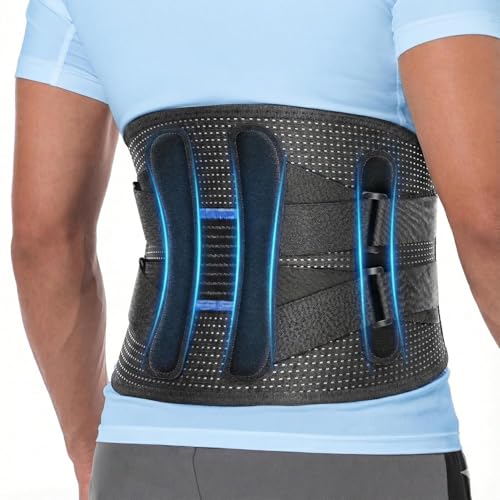
The Fit Geno is an entry-level brace that prioritizes breathable, all-day comfort over rigid structural correction, making it a good choice for users who need gentle lordotic support during housework or light chores rather than heavy lifting. The brace uses elastic materials with adjustable Velcro straps that let you dial in a comfortable level of compression, and the charcoal-colored fabric is skin-friendly and breathable, reducing sweat buildup during prolonged wear. It is best suited for conditions like mild spondylolisthesis or general lower back fatigue where you need a reminder to maintain proper posture rather than a rigid mechanical pull.
Users upgrading from cheaper drugstore braces notice a significant improvement in support, particularly during activities like dishes, mopping, and laundry that involve standing in one place. The dual-strap system allows you to control tension separately at the waist and lower back, though the elastic nature of the material means some of the compression gets absorbed by the fabric rather than being transmitted directly to the spine. For users with multiple back surgeries or broken rods (as one reviewer described), the Fit Geno provided enough support to remain mobile while wearing the brace 24/7, which suggests that even a relatively simple elastic brace can provide meaningful stability for moderate lordotic conditions.
The limitation is that the Fit Geno lacks any rigid stays, curvature plate, or pulley system, so it cannot generate the focused posterior extension needed for severe lordosis or acute disc herniation. It also runs true to size but the elastic material may stretch out over months of daily use, though the affordable price point makes replacement manageable. If your lordosis requires only mild postural reinforcement and you want a brace that disappears under clothing and breathes well, the Fit Geno is a practical, budget-friendly option.
Why it’s great
- Breathable, skin-friendly charcoal elastic minimizes sweating during long wear periods
- Dual adjustable straps allow independent tensioning at waist and lower back levels
- Lightweight and low-profile, fitting easily under standard clothing without significant bulk
Good to know
- No rigid stays or pulley system — cannot deliver focused lordotic extension for severe conditions
- Elastic material may lose tension over months of daily use, requiring replacement for continued support
7. Sparthos Back Brace for Lower Back Pain Medium

The Sparthos brace is designed for users who need basic lumbar support but prioritize invisibility under clothing above all else. At just 0.15 inches thick, it is the thinnest brace in this lineup, made from a polyester blend that wraps tightly around the lower back without creating noticeable ridges under a dress shirt or blouse. It incorporates two firm vertical support stays on either side of the spine that prevent the brace from bunching up and provide mild posterior resistance, though the stays are not strong enough to force a lordotic curve correction — they primarily stabilize against lateral rolling.
Users with spinal stenosis, osteoarthritis, and bone spurs report that the Sparthos provides enough compression and vertical stay support to alleviate pain during 8–10 hour work shifts, especially for standing or walking tasks. The hook-and-loop closure system is simple and the fabric has good stretchiness, allowing the brace to conform to individual waist shapes rather than forcing a rigid shape onto the body. One reviewer with levo scoliosis found that the brace successfully eliminated lower back pain when worn, suggesting that even thin support stays can offload paraspinal muscle tension by providing a stabilizing external shell.
The Sparthos does not have an adjustable arch, pulley system, or curvature plate, so its role is supportive compression rather than active lordotic correction. Users with flank hernias found the brace insufficient because the front panel width (about 11 inches) creates an exaggerated waist effect that fails to support the sides. Also, the polyester material may not breathe as well as the mesh panels on the FEATOL or NEENCA, especially during hot weather. The Sparthos is best positioned as a slim everyday brace for mild lordotic discomfort where discretion matters more than therapeutic arch lift.
Why it’s great
- Ultrathin 0.15″ profile makes it nearly invisible under fitted clothing like dress shirts
- Vertical support stays prevent bunching and provide mild stabilization against lateral spine roll
- Stretchy polyester fabric conforms to individual waist shape for a comfortable all-day fit
Good to know
- No adjustable arch or pulley system — provides compression but not active lordotic curve correction
- Front panel width (11″) may create an exaggerated waist effect, insufficient for side/hernia support
FAQ
Can a lordosis brace completely fix my spinal curvature?
Should I choose a brace with an adjustable arch or a fixed molded plate for lordosis?
How tight should a lordosis brace be during active wear?
Final Thoughts: The Verdict
For most users, the brace for lumbar lordosis winner is the BaxMAX Adjustable Back Brace because its 5:1 pulley system delivers precise, localized posterior compression at the L3–L5 level in an ultra-light 5-ounce package that active users can wear all day. If you need rigid immobilization with an adjustable lordotic arch, grab the LSO Back Brace with Decompression Plate for its 26-degree bionic arch plate that can be dialed from full correction down to maintenance support. And for small-scale postural reinforcement that disappears under clothing, nothing beats the Sparthos Back Brace with its 0.15-inch profile and secure vertical stays.

Mo Maruf
I created WellFizz to bridge the gap between vague wellness advice and actionable solutions. My mission is simple: to decode the research and give you practical tools you can actually use.
Beyond the data, I am a passionate traveler. I believe that stepping away from the screen to explore new environments is essential for mental clarity and physical vitality.