Our readers keep the lights on and my smoothie glass nicely filled. As an Amazon Associate, I earn from qualifying purchases.
A 50-liter hiking backpack is the sweet spot for multi-day trips where you need a tent, sleeping bag, cook kit, and layers without hauling a massive expedition pack. The challenge is finding a suspension system that transfers that weight to your hips, not your shoulders, while keeping the whole setup under four pounds.
I’m Mohammad Maruf — the founder and writer behind WellFizz. I’ve spent years analyzing load-transfer frames, hip belt designs, and fabric denier specs to separate genuine trail gear from airport roller wannabes.
After combing through hundreds of verified buyer reports and spec sheets, I’ve identified the seven models that actually earn a spot on the trail. This is the definitive guide to choosing the best 50l hiking backpack for your terrain, body type, and trip duration.
How To Choose The Best 50L Hiking Backpack
Selecting a 50-liter pack is a balancing act between capacity, weight, suspension quality, and durability. Unlike smaller daypacks, this size must reliably carry 25–35 pounds across uneven terrain without causing shoulder fatigue. Here are the three factors that matter most.
Suspension System and Load Transfer
A simple foam pad against your back will not cut it for multi-day distances. Look for a framed backpack with either an internal wire frame (LightWire, X-frame) or a tensioned mesh backpanel that creates ventilation space while locking the load close to your center of gravity. A proper suspension transfers 70–80% of the weight onto your hip belt, not your shoulders.
Adjustable Torso Length and Hip Belt Fit
A 50L backpack with a fixed torso length fits only a narrow range of body sizes. Models with a Vari-Quick or adjustable torso system allow you to dial in the fit for your specific spine length, which is critical for comfort over miles. The hip belt should wrap around your iliac crest, not ride above or below it. Look for ergonomically padded hip fins that you can pull forward for a snug, locked-in feel.
Volume Configuration and Access
Some 50-liter packs use a single main compartment with a top lid; others add a separate bottom zippered compartment for a sleeping bag, plus a full-length U-zip or front clamshell opening. Think about how you pack. A floating divider lets you separate wet gear from dry layers, and stretch mesh side pockets should be deep enough to hold a Nalgene or a tent pole without ejecting the bottle on a steep traverse.
Quick Comparison
On smaller screens, swipe sideways to see the full table.
| Model | Category | Best For | Key Spec | Amazon |
|---|---|---|---|---|
| Osprey Rook 50L | Premium | All-around multi-day comfort | 3.6 lb / AirSpeed suspension | Amazon |
| Deuter Aircontact Lite 50+10 | Premium | Long-distance load control | 3.6 lb / Vari-Quick torso | Amazon |
| Osprey Kestrel 48L | Premium | Technical terrain stability | 4.62 lb / AirScape backpanel | Amazon |
| The North Face Teen Terra 50 | Mid-Range | Youth and smaller frames | 3.94 lb / adjustable torso | Amazon |
| Mardingtop 50L | Mid-Range | Tactical / budget multi-day | 3.9 lb / MOLLE webbing | Amazon |
| LOVEVOOK 50L Travel Backpack | Budget | Airline carry-on / urban travel | 3.3 lb / suitcase-style opening | Amazon |
| Tolaccea 40-50L Travel Backpack | Budget | Expandable carry-on with laptop access | 3.64 lb / wet-dry compartment | Amazon |
In‑Depth Reviews
1. Osprey Rook 50L Men’s Backpacking Backpack

The Osprey Rook 50L uses a tensioned AirSpeed trampoline backpanel that keeps airflow between your back and the pack, which is a game-changer for warm-weather hikes where sweat buildup becomes a nuisance after mile six. The LightWire frame does an excellent job transferring the center of gravity down to the hip belt, so a 30-pound load feels more like a 20-pound carry on the shoulders. Multiple reviewers noted that even on 26-mile days with a bear canister sideways inside, the pack maintained its balance without shifting.
Integrated rain cover stows in its own pocket — no fumbling for a separate pack liner when a squall hits. The zippered sleeping bag compartment with a floating divider lets you segment wet gear from dry clothes, and the angled side pockets are deep enough to retrieve a water bottle without removing the pack. At 3.6 pounds, this is not an ultralight option, but the suspension comfort justifies every ounce.
Users consistently praise the sturdy YKK zippers and tough fabric after hundreds of trail miles. The only trade-off is the lack of a large outer mesh pocket, which some hikers use for quick-access layers or a wet tarp. For a do-it-all 50-liter pack that handles 2 to 5-day trips out of the box, this is the benchmark.
Why it’s great
- AirSpeed backpanel reduces back sweat on warm days
- Integrated rain cover is convenient and removable
- Comfortable hip belt handles 30-35 lb loads well
Good to know
- No large outer mesh pocket for wet gear or quick layers
- Not ultralight at 3.6 lb
- No back-access panel — top and front entry only
2. Deuter Unisex Aircontact Lite 50 + 10 L

The Deuter Aircontact Lite 50+10 is built for ambitious long-distance hikers who want an adjustable torso system (Vari-Quick) that lets three different people share the same pack without compromising load transfer. The hollow-chamber foam in the Aircontact cushions creates a pump-effect ventilation system that moves warm air out as you walk, which is noticeably more effective than passive mesh on humid trails. The lightweight X-frame keeps the pack stable even when you push the volume to 60 liters by raising the height-adjustable lid.
What sets this pack apart is the ergonomic hip fins with a pull-forward adjustment — you can cinch the belt tight without needing a second person to help. The separate bottom compartment with a zippered divider gives you instant access to your sleeping bag without unloading the main sack. At 3.6 pounds, it holds its own against lighter competitors while offering more load control features than most packs in this weight class.
A few buyers noted that the rain cover is sold separately, which is surprising at this price tier. However, the 140D RIPSTOP fabric with recycled content holds up well against abrasion, and two zippered hip belt pockets keep your phone and snacks within easy reach. For thru-hikers and world travelers who want a single pack for multiple seasons, this is a strong contender.
Why it’s great
- Vari-Quick torso adjustment fits a wide range of body sizes
- Hollow-chamber foam ventilation reduces back sweat
- Expandable 50+10L volume for extra gear flexibility
Good to know
- Rain cover is not included — must buy separately
- Stretch inner compartment is tight for large hydration bladders
- No U-zip back access — packed items require digging
3. Osprey Kestrel 48L Men’s Backpacking Backpack
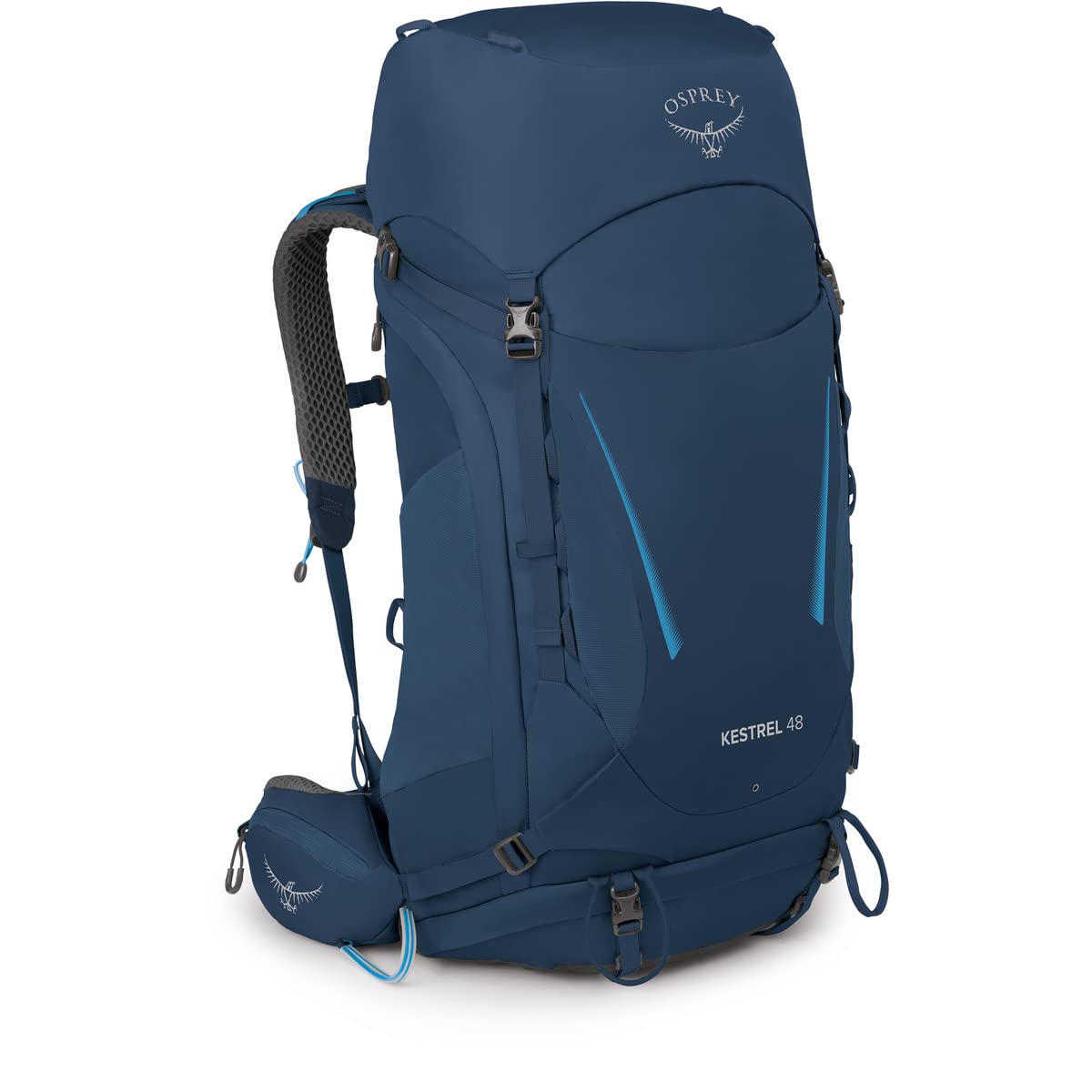
The Osprey Kestrel 48L is slightly under the 50-liter mark but earns its spot here because the organization and stability beat many larger packs on technical terrain. The injection-molded AirScape backpanel offers adjustable torso lengths with a close-to-body carry that keeps the load from swaying when you scramble over boulders or cross fallen logs. At 4.62 pounds, it is the heaviest pack on this list, but the thicker shoulder and waist pads provide a level of comfort that ultralight packs cannot match above 30 pounds.
Daisy chains on the front let you lash extra gear or compress the pack for day hikes, and the side elastic pockets are positioned so you can reach a water bottle without unclipping the hip belt. The integrated bright green rain cover is easy to deploy and stows in its own pocket. Testers at Glacier National Park used it as a full carry-on for a week of clothes, then as a rugged backpacking pack for four-day trips, then compressed it flat for summit day hikes — true versatility.
The fixed hip belt means you need to get the right size at purchase (S/M or L/XL). Some users noted a formaldehyde coating warning on early batches, which Osprey said washes off after the first rinse. For hikers who prioritize load stability and pocket organization over a few saved ounces, the Kestrel delivers confidence on steep, unpredictable trails.
Why it’s great
- Stable, close-to-body carry for technical terrain
- Thick shoulder and waist pads handle heavy loads comfortably
- Slim profile fits as a carry-on despite 48L volume
Good to know
- Heaviest option at 4.62 lb — not for weight weenies
- Fixed hip belt requires correct size selection upfront
- Side access pocket is small and tight for larger phones
4. The North Face Teen Terra 50
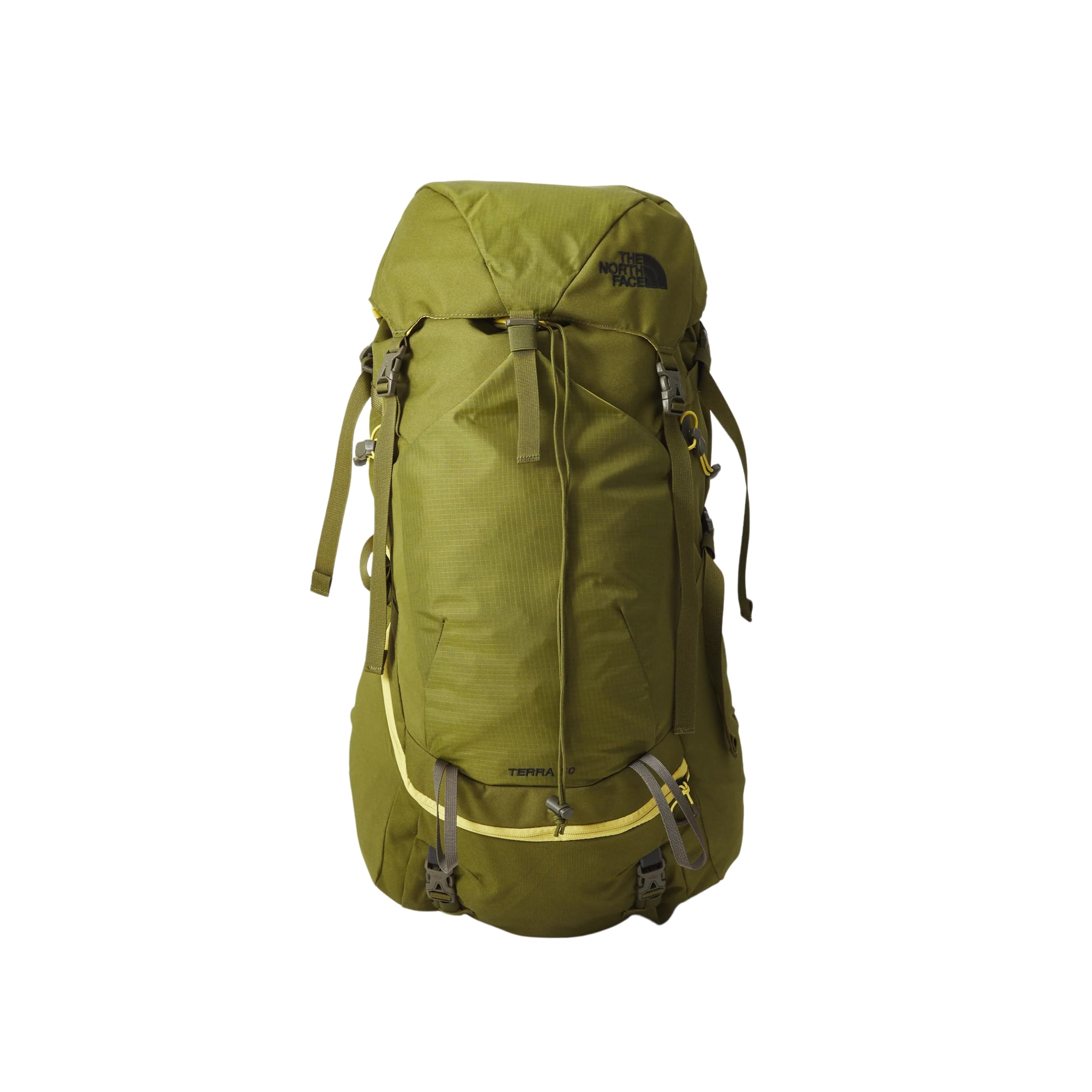
The North Face Teen Terra 50 is specifically designed for younger adventurers and smaller-framed adults who find standard 50-liter packs too long in the torso. The adjustable back panel lets you shorten the fit as the user grows, which means a single pack can serve a growing teen for multiple seasons. The breathable mesh back panel and shoulder straps provide decent ventilation, though the padding is less plush than premium Osprey or Deuter models.
Storage is well-thought-out for a pack at this tier: a removable lid with a zippered pocket and key clip, two hip belt pockets, mesh water bottle holsters, and a bladder sleeve. The full-length U-zip gives you access to the entire main compartment without having to dig from the top, which is a rare feature on youth-oriented packs. Side compression straps and bottom webbing let you lash a tent or sleeping pad externally.
A few buyers reported a stitching defect after a few hours of use, so inspect the seams upon arrival. The pack is rated for kids 3-12 years, but the 46-liter actual volume (labeled 50L) and adjustable fit make it a legitimate option for petite women or anyone with a torso length under 17 inches. For a youth-specific 50L with real trail features at a mid-range price, this is the clear leader.
Why it’s great
- Adjustable torso system grows with the user
- Full-length U-zip access to main compartment
- Hip belt pockets and bladder sleeve included
Good to know
- Some reports of stitching failure after light use
- Actual volume is 46L, slightly under the 50L claim
- Foam padding is less supportive for loads over 25 lb
5. Mardingtop 50L Hiking Backpack
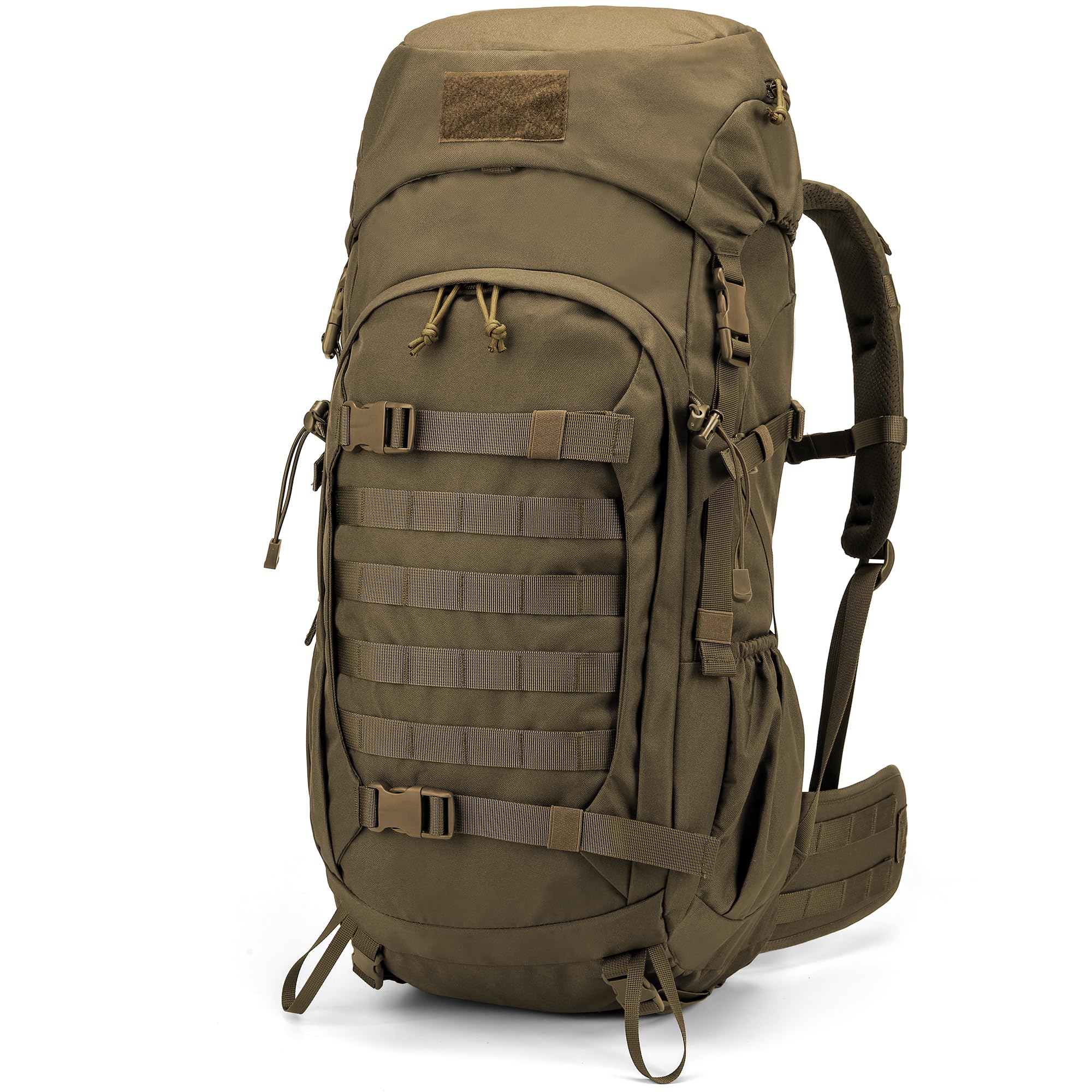
The Mardingtop 50L brings tactical styling and genuine trail utility at a price that undercuts most framed backpacks by a wide margin. The 600D polyester body with YKK zippers and buckles feels tougher than the price suggests, and the included rain cover fits snugly over the entire pack. MOLLE webbing on the front and sides lets you attach extra pouches, a tent, or an axe without drilling into the fabric.
The internal frame provides structure, but it is not a full rigid frame — the load transfer is less efficient than premium packs, meaning more weight lands on your shoulders over long distances. The hip belt is padded and adjustable, but some users reported that the buckles can slip under a heavy load and may need replacing. The hydration sleeve fits a 5-liter bladder (not included) and can double as a laptop compartment for 15.6-inch devices.
Buyers who used this pack for 150 miles of hiking and rucking praised its durability for the cost, though they noted the back panel gets warm despite the advertised breathability. The main compartment has no internal organization — just a top pocket and one large space — so you will need packing cubes or stuff sacks. For beginner backpackers or anyone wanting a beater pack for rugged use without the premium price tag, this is a solid choice.
Why it’s great
- MOLLE webbing offers external attachment flexibility
- Full-front clamshell zip access to main compartment
- Rain cover included — saves money on accessories
Good to know
- Internal frame is not rigid — load transfer is limited
- Buckles may slip under heavy load; replaceable
- No internal organization — pockets or cubes required
6. LOVEVOOK 50L Travel Backpack

The LOVEVOOK 50L is built for travelers who need a carry-on that fits under the seat on budget airlines like Spirit, Frontier, and JetBlue while still offering enough volume for 7-9 days of clothing. The suitcase-style opening makes airport security simple — unzip the clamshell and lay everything flat — and the included three packing cubes (two storage bags and a shoe bag) keep your gear organized without buying extra accessories. The built-in wet compartment pocket is useful for stashing damp clothes or toiletries separately.
At 3.3 pounds, this is one of the lightest 50-liter packs available, but the trade-off is a basic shoulder harness with a padded back panel rather than a true trampoline or frame suspension. It is comfortable for airport terminals and short walks to a hotel, but not designed for a 10-mile trail carry with a 30-pound load. The tear-resistant and water-resistant material is adequate for urban travel but not heavy bushwhacking.
Buyers consistently praise the value — the pack includes a padded laptop compartment for up to 17-inch devices, a luggage strap, and side pockets for a water bottle or umbrella. For anyone who primarily needs a 50-liter pack for travel and occasional light outdoor use, this delivers an impressive feature set at a budget-friendly price. Just do not expect it to replace a dedicated backpacking suspension on multi-day treks.
Why it’s great
- Suitcase-style opening for easy TSA access and packing
- Three packing cubes included — no extra purchases needed
- Fits under budget airline seats as a personal item
Good to know
- Basic shoulder harness — not built for heavy trail loads
- No frame or load-transfer suspension for multi-day hiking
- Water-resistant, not waterproof, in heavy rain
7. Tolaccea 40-50L Travel Backpack
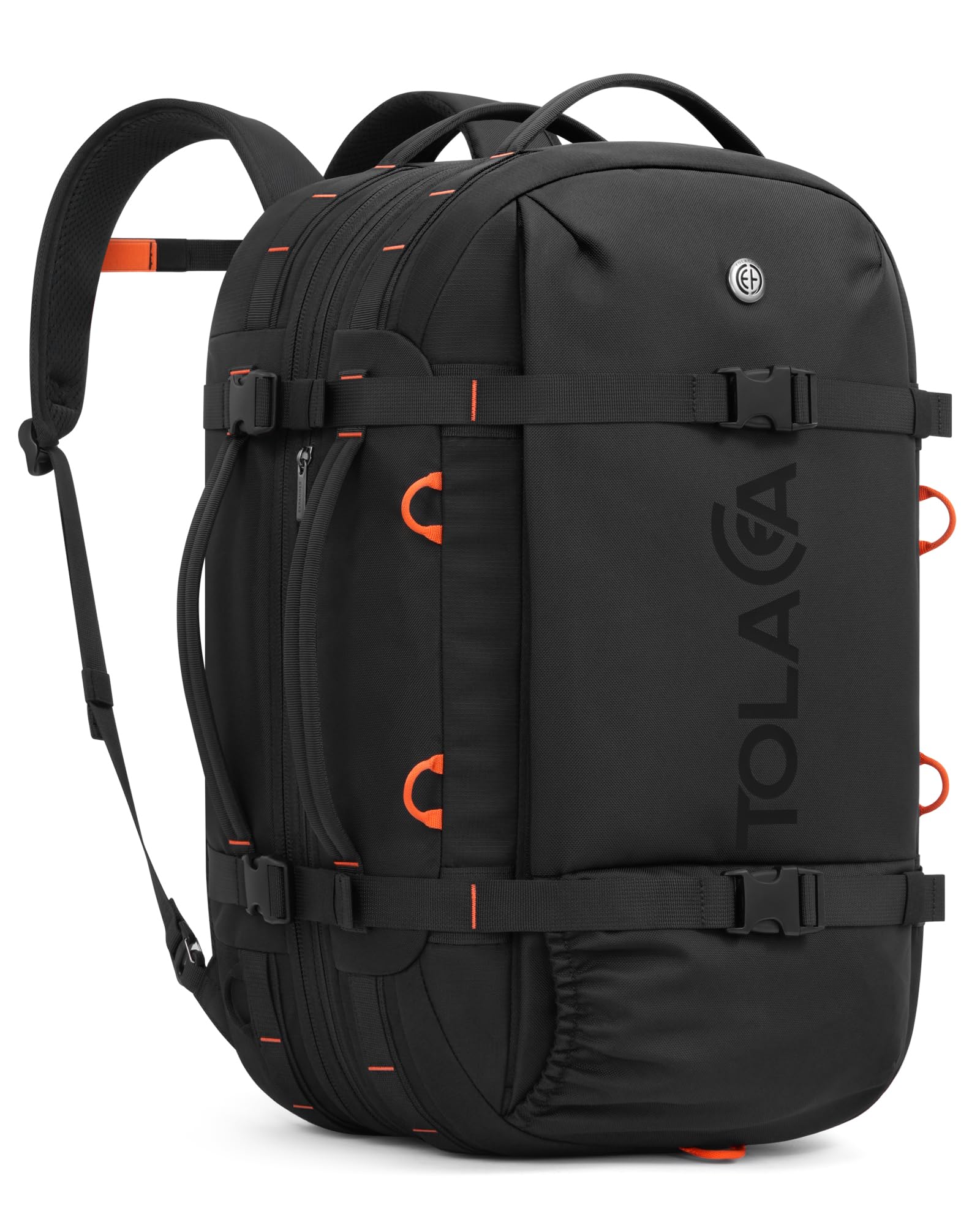
The Tolaccea 40-50L offers an expandable dual-compartment design that adapts from a 40-liter daily commuter to a 50-liter weekender. The standout feature is the separate wet-dry compartment, which isolates gym clothes, wet swimwear, or toiletries from your clean gear — a practical touch that few travel packs in this price range include. The suspended laptop compartment fits up to a 15.6-inch device and provides shock absorption when you set the bag down hard.
The 180-degree opening simplifies packing and airport screening, and the pack meets carry-on standards for Delta, Spirit, Frontier, and JetBlue. The tear-resistant and water-resistant polyester with reinforced stitching feels tough enough for frequent travel, and the SBS zippers are lockable for security. Three carrying modes — backpack, briefcase side handle, and crossbody sling — add versatility for different transit situations.
A few buyers noted that the crossbody strap is stored in the water bottle pocket and can be fiddly to attach, and the laptop compartment sits between the two main compartments rather than at the back, which changes the pack’s center of gravity. At 3.64 pounds, it is not ultralight, but it is lighter than many dedicated travel bags with similar features. For urban travelers who want a single bag for work commutes, gym visits, and weekend flights, this is a well-rounded option.
Why it’s great
- Separate wet-dry compartment isolates damp or dirty items
- Expandable from 40L to 50L for flexible packing
- Suspended laptop sleeve protects against drops and impacts
Good to know
- Laptop compartment is centrally located, shifting balance
- Crossbody strap attachment is fiddly to set up
- Not designed for rugged trail use or heavy loads
FAQ
Can a 50-liter hiking backpack be used as a carry-on for flights?
How do I know if my torso length is right for a 50L backpack?
Is an integrated rain cover essential for a 50L hiking backpack?
Final Thoughts: The Verdict
For most users, the best 50l hiking backpack winner is the Osprey Rook 50L because it combines a ventilated tensioned backpanel, an integrated rain cover, and a LightWire frame that handles 30-pound loads without shoulder fatigue — all at a weight that stays under 4 pounds. If you want an adjustable torso system with expandable volume for long-distance treks, grab the Deuter Aircontact Lite 50+10. And for technical terrain where load stability matters more than a few saved ounces, nothing beats the Osprey Kestrel 48L.

Mo Maruf
I created WellFizz to bridge the gap between vague wellness advice and actionable solutions. My mission is simple: to decode the research and give you practical tools you can actually use.
Beyond the data, I am a passionate traveler. I believe that stepping away from the screen to explore new environments is essential for mental clarity and physical vitality.