Our readers keep the lights on and my smoothie glass nicely filled. As an Amazon Associate, I earn from qualifying purchases.
A phone that mumbles, a ringer you cannot hear, and tiny buttons that frustrate unsteady fingers — the wrong landline or cellular device turns a simple call into a daily chore. That is the reality many older adults face with standard telephones, which were never designed for reduced hearing, low vision, or arthritic hands. A dedicated device in this space flips that experience: big tactile keys, a powerful speaker that delivers speech clearly, and a ringer loud enough to hear from the next room.
I’m Mohammad Maruf — the founder and writer behind WellFizz. I have spent years analyzing the technical specifications and real-world performance data of assistive communication devices, focusing on the measurable specs that actually determine whether a phone works for a senior user.
This guide examines the specific gain levels, ringer volumes, display sizes, and memory-button configurations that separate a usable phone from one that collects dust. Whether you need a cordless landline, a photo-button desk phone, or a 4G cellular desk unit, the right choice starts with understanding your real needs. Here is our research-backed take on the best amplified phones for seniors.
How To Choose The Best Amplified Phone For Seniors
Selecting the right phone depends on matching its core features to the specific challenges the user faces — hearing loss, vision impairment, dexterity limitations, or cognitive decline. Below are the critical factors to weigh.
Amplification Level (dB Gain)
The handset volume boost is measured in decibels (dB). Standard phones offer 0dB gain. Entry-level amplified models start around 26dB, while high-performance units reach 40dB or more. For moderate hearing loss, 26-30dB is often sufficient. For severe loss, a 40dB phone is necessary. Some models, like the Clarity D714, let you adjust the tone control to shape the sound beyond simple volume.
Button Size and Visual Clarity
Large, high-contrast number keys are non-negotiable for users with low vision. Look for white buttons on a black background or vice versa. A backlit keypad helps in dim light. For dementia patients, photo memory buttons with replaceable picture inserts allow one-touch dialing without needing to remember numbers. The Serene Innovations HD40P excels here with nine fully customizable photo slots.
Cordless vs. Corded vs. Cellular Desk Phone
Cordless DECT 6.0 systems (like the Clarity D712 or AT&T BL102-2) offer the convenience of answering calls from any room and often include a handset locator. Corded desk phones (like the Serene Innovations HD40P) are powered by the phone line and work during a power outage, but restrict the user to one location. 4G cellular desk phones (like the Opis PushMeFon) replace a landline entirely using a SIM card, but require cellular coverage and may have setup complexity.
Hearing Aid Compatibility (HAC)
Many amplified phones include T-Coil technology, which wirelessly couples with the telecoil in a hearing aid to deliver clear, interference-free sound directly into the ear. If the user wears hearing aids, look for T-Coil compatibility and HAC rating. The Hamilton CapTel 2400i is specifically designed for hearing aid users and also provides real-time captions on a large screen.
Answering System and Call Blocking
A built-in digital answering machine is a standard convenience. More advanced models, like the AT&T BL102-2, include a smart call blocker that automatically stops robocalls from ringing through — a major relief for seniors targeted by phone scams. Captioned voicemail, found on the Hamilton CapTel, displays messages as text on the screen.
Quick Comparison
On smaller screens, swipe sideways to see the full table.
| Model | Category | Best For | Key Spec | Amazon |
|---|---|---|---|---|
| Clarity D714 | Cordless Landline | Highest amplification at 40dB | 40dB max gain, tone control | Amazon |
| Hamilton CapTel 2400i | Captioned Landline | Real-time captions for severe hearing loss | 40dB gain, touch-screen captions | Amazon |
| Serene Innovations HD40P | Corded Desk Phone | Dementia and Alzheimer’s care | 9 photo speed-dial buttons | Amazon |
| Easyfone Prime-T6 | 4G Cell Phone | Simple cellular calling with picture buttons | 4 picture memory buttons, SOS | Amazon |
| Clarity D712 | Cordless Landline | Expandable whole-home coverage | 30dB boost, T-Coil compatible | Amazon |
| AT&T BL102-2 | Cordless Landline | Robocall blocking and audio assist | 2-inch lighted screen, call blocker | Amazon |
| Opis PushMeFon 4G | 4G Desk Phone | Retro feel with modern 4G cellular tech | 4G VoLTE, no screen needed | Amazon |
In‑Depth Reviews
1. Clarity 53714 D714 Amplified Cordless Phone

The Clarity D714 sits at the top of the amplification chart with a 40dB sound boost — the highest available in a cordless landline phone. That raw power is matched by four adjustable tone settings, allowing you to shape the audio to match a specific hearing loss profile rather than just making everything louder. The DECT 6.0 base keeps interference from Wi-Fi and other devices out of the audio path.
Users consistently praise the ease of reading the big number keys and the clarity of the speakerphone when the boost is engaged. However, the unit does not include built-in caller ID display, which is a notable omission for a phone in this price tier. The answering machine is digital and simple to operate, and a headset jack offers an alternative for privacy.
Long-term reliability data shows mixed results: some handsets develop button failures after 6-12 months, though the overall sound quality stays consistent. For a user whose primary need is maximum volume flexibility and tone shaping, this phone delivers where others fall short. The lack of Caller ID means you will rely on the answering machine to screen calls.
Why it’s great
- Industry-leading 40dB amplification with four tone-control presets
- Large, high-contrast buttons are easy to read and press
- DECT 6.0 interference-free technology ensures clear audio
Good to know
- No caller ID display on the handset or base
- Some units have reported button sensitivity issues after several months
- Volume boost resets each call on some firmware versions
2. Hamilton CapTel 2400iSPNBT Captioned Telephone
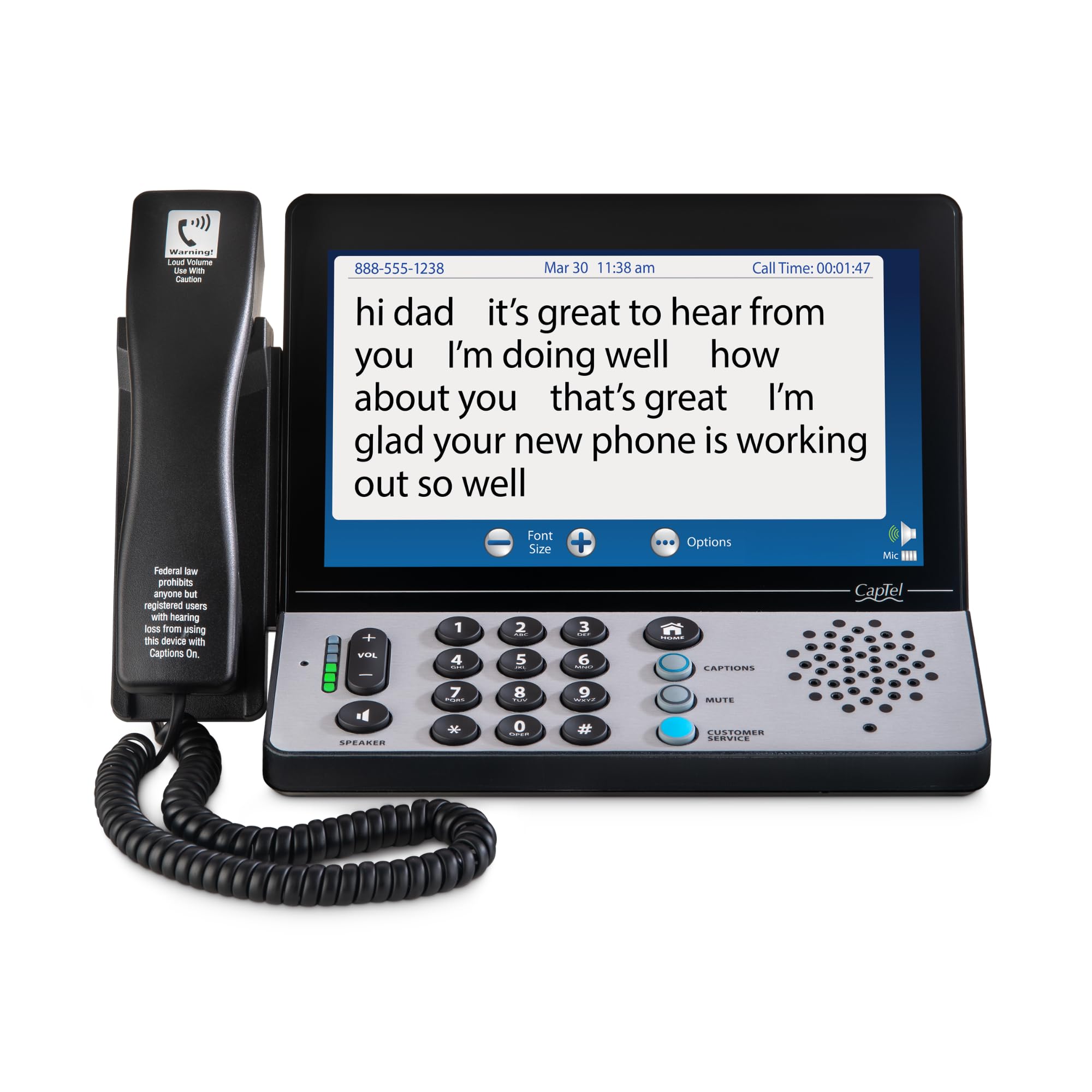
The Hamilton CapTel 2400i is a different beast from a standard amplified phone. It displays live, real-time captions of the conversation on a large touchscreen, so a user with profound hearing loss can read every word while still listening through the handset. The volume amplifier reaches 40dB, and the tone control lets you fine-tune the audio frequency response. The screen also displays caller ID and call history, making navigation intuitive.
Setup requires a high-speed internet connection and a standard telephone line, plus an FCC registration for the free captioning service. The answering machine transcribes voicemail messages into text displayed on the screen — a huge plus for users who cannot understand audio messages. Heavier than a typical cordless phone at 3 pounds, it sits solidly on a desk and is designed as a fixed base unit.
Customer reviews highlight excellent customer support from Hamilton and reliable caption accuracy. The handset is hearing aid compatible with T-Coil technology. The primary trade-off is that this phone must be the only phone on the line; it can render other cordless handsets in the home incompatible. For a senior living alone or acting as the main household phone, it transforms the calling experience.
Why it’s great
- Real-time captions on the screen bridge severe hearing gaps
- 40dB amplification with customizable tone and caption size
- Captioned voicemail displays messages as readable text
Good to know
- Requires internet, phone line, and hearing loss registration
- May render other house phones incompatible on the same line
- Large desk footprint; not portable or cordless
3. Serene Innovations HD40P Amplified Big Button Desk Phone

For a senior with dementia, Alzheimer’s, or significant cognitive decline, remembering phone numbers — or even recognizing names and digits — becomes a barrier. The Serene Innovations HD40P solves this with nine large speed-dial buttons that accept a physical photograph or portrait. One press connects to a pre-programmed contact, eliminating confusion. The handset offers up to 26dB of amplification plus a separate switch for constant boost mode, which overrides normal volume levels.
This is a corded phone powered entirely by the telephone line, meaning it operates during a power outage — a real safety advantage. The ringer hits 85dB, loud enough to be heard across a noisy house. A bright red visual indicator flashes on incoming calls, benefiting users who are hard of hearing. The button quality feels more substantial than budget alternatives, with tactile feedback that suits unsteady hands.
The downsides are centered on feature limitations: no caller ID display, no answering machine, and no digital directory. Programming the speed-dial buttons requires following specific steps without audible confirmation. Some units have developed static or stuck-speakerphone issues after a few months. For its core mission — simple, reliable one-touch calling — it remains the top corded choice.
Why it’s great
- Nine photo memory buttons for one-touch dialing
- Line-powered; works during power outages
- 85dB ringer and bright visual ring indicator
Good to know
- No caller ID or digital answering system
- Programming speed-dial can be confusing without a manual
- Occasional reports of static or speakerphone failure
4. Easyfone Prime-T6 4G Picture Button Cell Phone
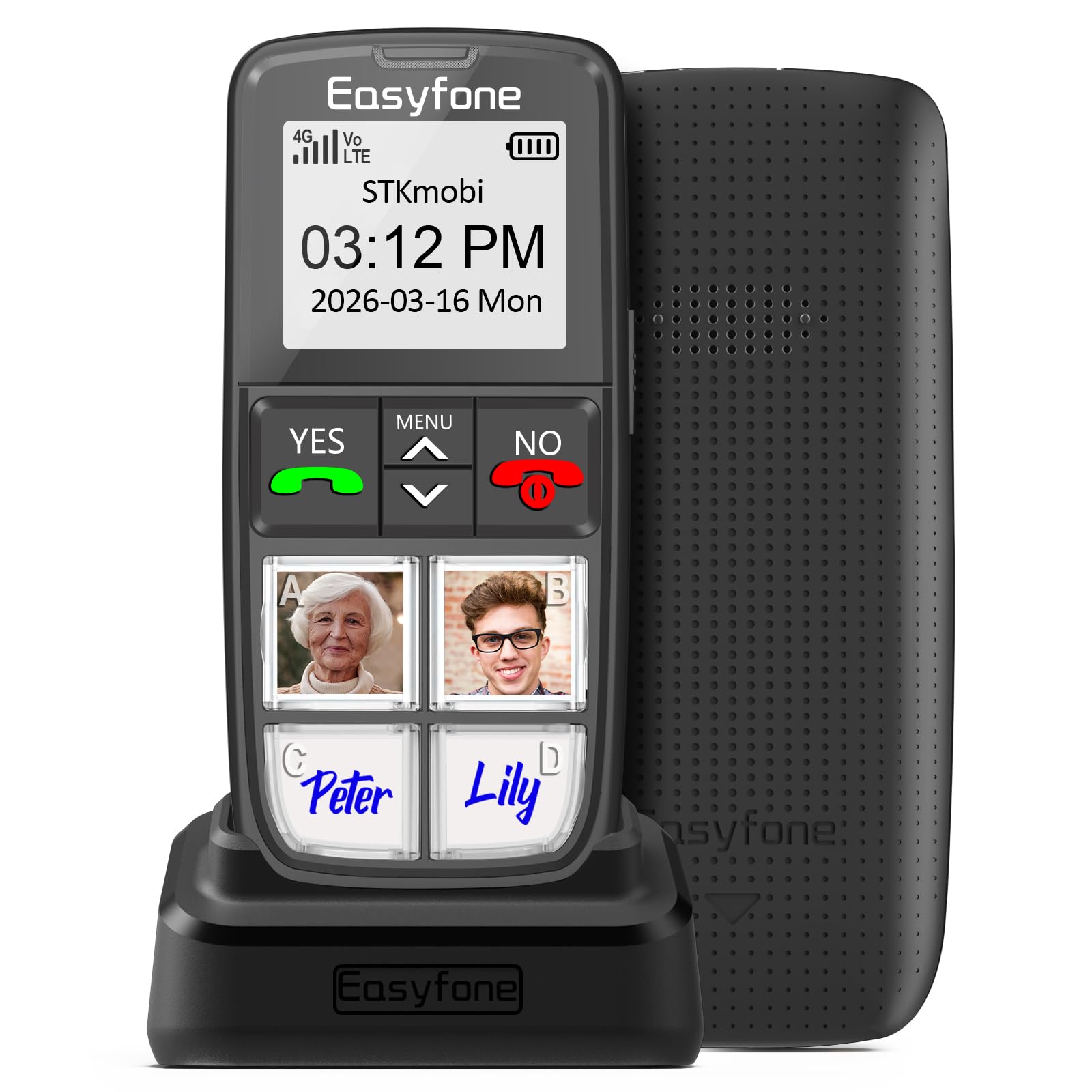
The Easyfone Prime-T6 bridges the gap between a traditional landline and a smartphone, using 4G cellular connectivity with the simplicity of a corded desk phone. Four large picture memory buttons on the faceplate allow one-touch dialing to family members, each customizable with a small photo. The included charging dock makes daily recharging effortless — just drop the phone onto the cradle, much like a cordless handset.
Sound output is clear and loud enough for moderate hearing loss, though it lacks a formal dB boost rating like dedicated landline phones. An SOS button on the back sends sequential alerts to pre-set contacts when pressed, adding a safety layer for seniors living alone. The phone comes with a SpeedTalk SIM card, which runs on the T-Mobile network, but compatibility is limited to T-Mobile and its MVNOs.
Build quality feedback is mixed: the lightweight plastic body feels fragile, and some users reported the picture buttons popping off. The phone lock requires a two-button combo that can confuse users. But for families who want a no-landline solution with photo dialing and a very low entry cost, it functions well as a dedicated home phone. The SOS feature is a genuine differentiator at this tier.
Why it’s great
- Three large picture buttons for instant calling to family
- Convenient drop-in charging dock eliminates plugging cables
- SOS button sends emergency alerts to multiple contacts
Good to know
- Limited to T-Mobile-based carriers; may not work in all areas
- Plastic build feels less durable than landline alternatives
- Phone lock combination can be confusing for some seniors
5. Clarity Phone D712 Cordless Landline Phone
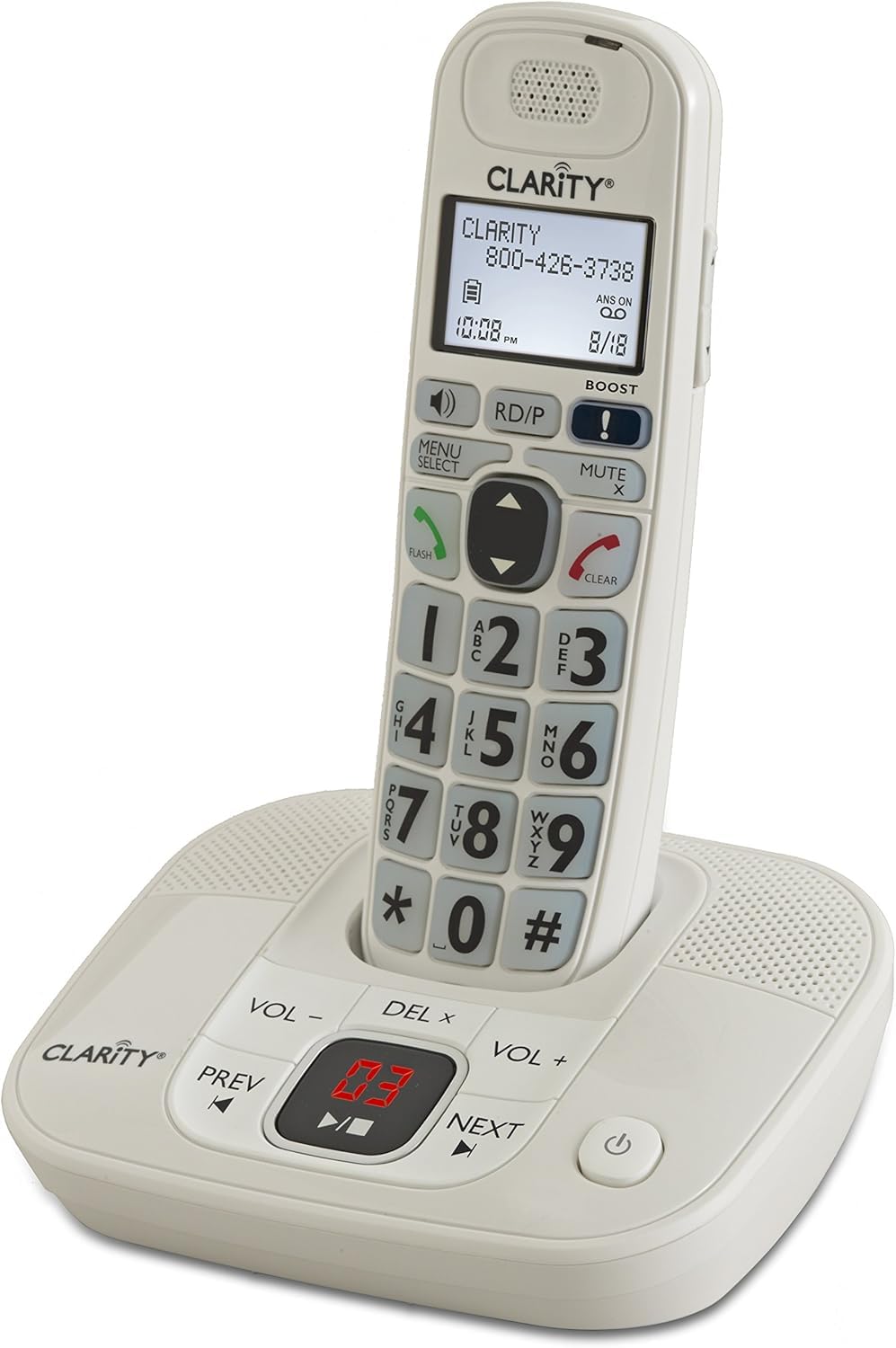
The Clarity D712 is a balanced mid-range cordless system offering 30dB of amplification — sufficient for moderate hearing loss — along with T-Coil compatibility for hearing aid users. The standout feature is the expandable system: the base supports up to four additional handsets (sold separately), letting you place phones in the bedroom, living room, and kitchen without running extra wires. The handset includes a bright visual ringer and an extra-loud speakerphone for hands-free use.
Users with arthritis appreciate the large, well-spaced keys with black numbers on a white background. The Find Handset button on the base is a lifesaver for seniors who misplace the handset. The digital answering machine is built into the base, and the battery life is rated 30% longer than industry average, reducing the frequency of charging.
A consistent complaint is that the volume boost resets to a lower default at the start of each call, requiring the user to press the boost button again. The speed-dial feature requires holding a numeric key for several seconds, which can be difficult for those with shaky hands. The display is bright but small for users with very poor vision. Overall, it is a reliable, expandable system that performs well for hearing aid users.
Why it’s great
- 30dB amplification with T-Coil hearing aid compatibility
- Expandable to four handsets for whole-home coverage
- Bright visual ringer and extra-loud speakerphone
Good to know
- Volume boost resets to default at the start of each call
- Speed dial requires holding a button, difficult for shaky hands
- Display screen is small for those with very low vision
6. AT&T BL102-2 DECT 6.0 Cordless Phone System
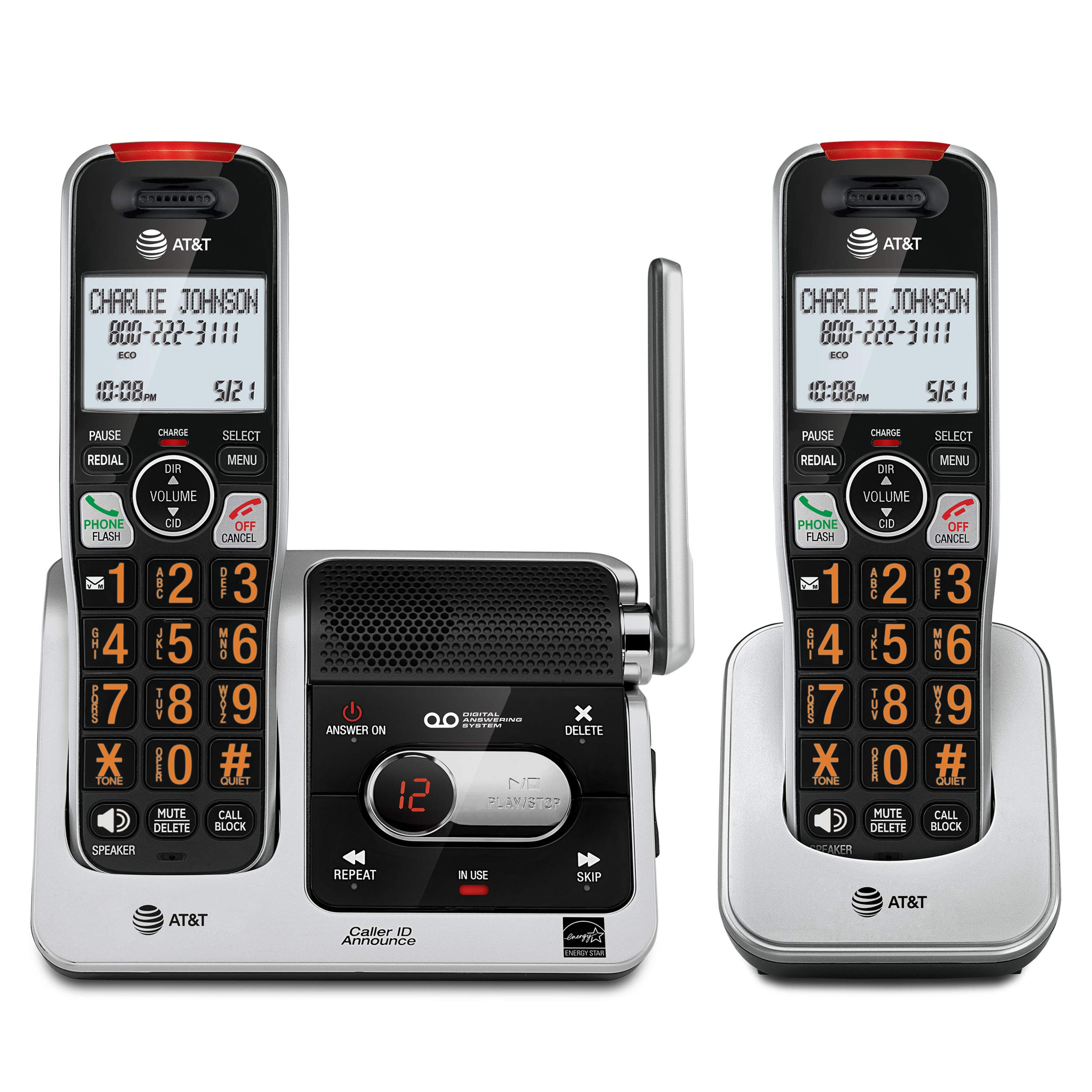
The AT&T BL102-2 does not focus primarily on raw amplification — it offers a standard volume boost via its Audio Assist feature — but it excels at stopping unwanted calls before they ring. The smart call blocker automatically blocks robocalls and telemarketers, and the handset announces the name of the caller, so the user can decide whether to answer without looking at the screen. This is a critical feature for seniors targeted by phone scams.
The handset features a large 2-inch backlit screen with high-contrast text and an extra-large, lighted keypad. The button spacing is generous, accommodating large fingers or tremors. The system is expandable up to 12 handsets, ideal for a multi-story home. The digital answering machine records up to 22 minutes of messages, with a voice guide for setup.
Build quality feels slightly plasticky compared to premium brands, and the handset lacks Bluetooth. The Audio Assist boost is not as powerful as dedicated amplified phones like the Clarity D714. However, for a senior whose main complaint is robocalls rather than profound hearing loss, this system delivers a calmer, quieter phone experience. The Caller ID announce feature is genuinely helpful for vision-impaired users.
Why it’s great
- Smart call blocker automatically stops robocalls
- Extra-large 2-inch screen and lighted keypad
- Caller ID Announcer speaks the caller’s name aloud
Good to know
- Audio Assist boost is modest compared to 30-40dB phones
- Plastic build feels less premium than some competitors
- No Bluetooth connectivity for cell phone integration
7. Opis PushMeFon 4G Mobile Desk Phone

The Opis PushMeFon 4G is a unique hybrid: a classic rotary-style desk phone that uses a 4G VoLTE SIM card instead of a landline. This is ideal for seniors in homes without wired phone jacks, or for families who want to cut the landline bill while preserving the familiar handset-and-base experience. There is no screen, no internet, and no distraction — just the rotary dial and a solid handset that rings with an authentic 85dB bell ringer.
The phone is unlocked and works with AT&T, T-Mobile, and many MVNOs, but compatibility must be checked individually. Setup requires installing a nano SIM into a slot, which some users found fiddly. The push-button keypad is large and tactile. A red light on the base flashes on incoming calls, accommodating those who cannot hear the ringer. The handset gain is moderate compared to dedicated amplified phones; it relies more on the clarity of the cellular network than a built-in loudspeaker boost.
Reliability has been a point of contention: some units randomly power off or lose connection, requiring a reboot. The SIM card holder is delicate, with some owners resorting to tape to secure it. Customer support from the German manufacturer is reportedly responsive and willing to replace defective units. For a senior who is comfortable with basic cell service and values the minimalism of a corded phone, this is an appealing, niche solution.
Why it’s great
- 4G VoLTE cellular desk phone works without a landline
- Retro design with a loud authentic bell ringer and flashing light
- No screen or complex menus — true minimalist operation
Good to know
- Flimsy SIM card holder can cause connectivity failures
- May need to tape the SIM to prevent random shutdowns
- Handset gain is not as powerful as dedicated amplified phones
FAQ
What does 40dB amplification mean for a senior with hearing loss?
Can I use an amplified phone with my hearing aid?
Is a corded or cordless amplified phone better for a senior with dementia?
Will the Hamilton CapTel 2400i work on a VoIP line or cable phone service?
What happens if my amplified phone needs to be replaced under warranty?
Final Thoughts: The Verdict
For most users, the best amplified phones for seniors winner is the Clarity D714 because it offers the maximum 40dB amplification and tone control at a mid-range cost, making it a versatile choice for a wide range of hearing loss. If you need real-time captions to follow conversations fully, grab the Hamilton CapTel 2400i. And for a senior with dementia or Alzheimer’s who benefits from photo memory buttons and a power-outage-safe corded phone, nothing beats the Serene Innovations HD40P.

Mo Maruf
I created WellFizz to bridge the gap between vague wellness advice and actionable solutions. My mission is simple: to decode the research and give you practical tools you can actually use.
Beyond the data, I am a passionate traveler. I believe that stepping away from the screen to explore new environments is essential for mental clarity and physical vitality.