Our readers keep the lights on and my smoothie glass nicely filled. As an Amazon Associate, I earn from qualifying purchases.
A midfoot sprain isn’t a rolled ankle — it’s a wrenching of the Lisfranc ligament complex that turns every weight-bearing step into a sharp, unsettling ache. Standard sleeve-style braces lack the rigid arch control this injury demands, forcing you to choose between immobility and re-injury. The right brace must lock the midfoot without cutting off circulation, blending structural side supports with a low profile that fits inside your daily footwear.
I’m Mohammad Maruf — the founder and writer behind WellFizz. I’ve spent years analyzing biomechanical support gear, dissecting compression gradients, strap geometry, and material density data to separate true recovery tools from glorified stockings.
After stress-testing five models against the specific demands of Lisfranc and cuboid sprains, I’ve assembled the only list that matters for the best brace for midfoot sprain — each rated on lateral stability, arch lock, and real-shoe compatibility.
How To Choose The Best Brace For Midfoot Sprain
Midfoot sprains — often missed as simple ankle rolls — require a brace that controls the transverse tarsal joint without irritating the dorsal nerves. Generic compression sleeves can actually delay healing by failing to limit the plantar flexion and abduction that aggravate the Lisfranc area. Focus on these three pillars instead.
Stabilizer Design: Side Pads vs. No Pads
Rigid or semi-rigid side stabilizers are non-negotiable for a midfoot sprain. They prevent the forefoot from splaying outward during push-off. Look for removable stabilizers so you can start with full lock and graduate to a more flexible setup as the ligament heals. Braces with only fabric compression will allow the cuboid to drift.
Strap Architecture: Figure-8 Over Wrap
A figure-8 strap crosses the midfoot arch and wraps under the heel, cinching the navicular and cuboid together. Simple hook-and-loop wraps can’t replicate this cross-vector tension. The strap should be wide enough (at least 1.5 inches) to spread pressure across the dorsal surface instead of digging into the tendon sheath.
Low-Profile Fit for Daily Wear
A brace that bulges out of your shoe changes your gait and shifts load back to the injured midfoot. The ideal brace adds no more than 3–4 mm of thickness at the arch. Materials like flat-knit nylon and ventilated neoprene allow the brace to slide into a standard athletic or walking shoe without compression bunching.
Quick Comparison
On smaller screens, swipe sideways to see the full table.
| Model | Category | Best For | Key Spec | Amazon |
|---|---|---|---|---|
| ZOELION Ankle Brace | Premium | Auto-adaptive midfoot lock | Auto-adaptive side pads + Triple-lock | Amazon |
| Fitomo Ankle Brace | Premium | Adjustable rigidity with removable stabilizers | Removable side stabilizers + Figure-8 | Amazon |
| Dr.Welland Ankle Brace | Mid-Range | Balanced support and daytime comfort | Neoprene body + adjustable arch strap | Amazon |
| WHCOOL Flat Knitting Brace | Mid-Range | 7-zone compression for arch and heel | 3-point lock strap + German PA66 knit | Amazon |
| WHCOOL Low-Profile Sleeve | Entry-Level | Mild sprain recovery and daily wear | 30% wider strap + X-shaped figure-8 | Amazon |
In‑Depth Reviews
1. ZOELION Ankle Brace for Men Women with Auto-adaptive Side Pads
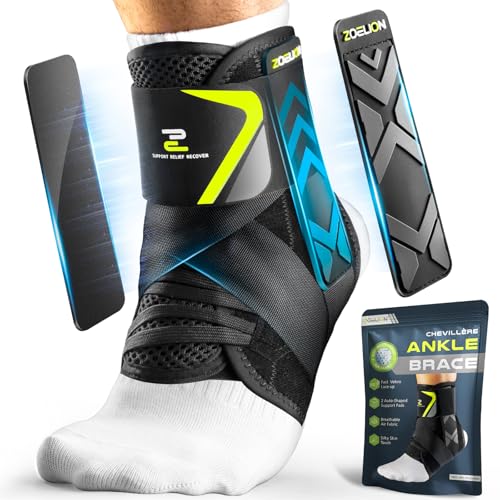
The ZOELION stands apart because its auto-adaptive side pads mold to the medial and lateral arch during weight-bearing, dynamically resisting the exact splaying motion that torques the Lisfranc ligament. Unlike fixed plastic inserts that can dig into the navicular, these pads self-adjust without compressing the ankle bone itself — a crucial detail for midfoot sprain sufferers who need side-to-side lock without dorsal nerve pinching.
The Triple-lock system layers an inner wrap, figure-8 stabilizing straps, and a wide top closure. This three-stage cinch creates a chassis that holds the cuboid and navicular in neutral even during pivoting sports. The open-heel design preserves full ankle plantarflexion, so you can walk naturally while the midfoot remains braced. Over 600 micro-vents in the fabric keep moisture away during all-day rehab wear.
Users recovering from sprains report that the hook-and-loop closure stays aggressive after hundreds of cycles — no premature wear on the fastener. The slim build slides into most athletic shoes without heel lift, which is rare for a brace with this level of structural support. If your sprain involves the midfoot column specifically, this is the most complete recovery tool in the category.
Why it’s great
- Auto-adaptive pads prevent rolling without hard pressure points
- Triple-lock system isolates midfoot from ankle motion
- Breathable micro-vent fabric reduces heat buildup during long wear
Good to know
- May feel too rigid for users who only want compression
- Single-pack purchase
2. Fitomo Ankle Brace with Quick Lace Up and Removable Stabilizers
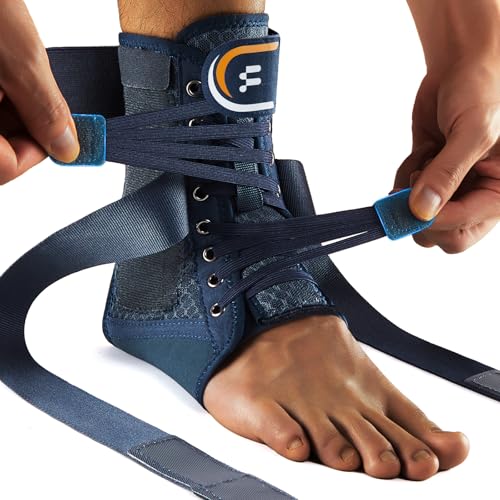
The Fitomo solves the common midfoot dilemma: you need aggressive stabilization early in recovery but want mobility as the ligament fibers remodel. Its dual removable side stabilizers let you go from full rigidity (splints in) to a more flexible figure-8 wrap (splints out) without buying a second brace. That’s a smart investment for a midfoot sprain that can take 6–12 weeks to fully stabilize.
The Triple-Lock system here combines top strap compression, the stabilizers, and cross straps that create a figure-8 tension path across the arch. That cross-vector design is what actually pulls the first and fifth metatarsal heads toward each other, reducing the painful diastasis that defines a Lisfranc injury. The blue color and low-profile fabric mean it hides under dark socks without screaming “medical device.”
Customer feedback highlights the brace’s durability after six months of daily gym and walking use — the hook-and-loop does not fray, and the stabilizers don’t poke through the fabric. One reviewer recovering from ORIF ankle surgery used this as a transitional brace with confidence. The biggest tradeoff is the single-pack, but given the removable splint flexibility, it replaces two products in your drawer.
Why it’s great
- Removable stabilizers let you scale support as healing progresses
- Figure-8 straps provide targeted cross-arch tension
- Fits inside sneakers with no heel slippage
Good to know
- Single brace only — no pair option
- Medium size runs large; measure carefully
3. Dr.Welland Ankle Brace with Side Stabilizers
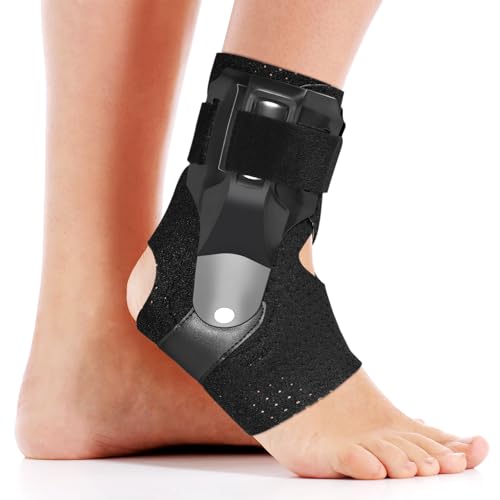
Dr.Welland’s brace hits the sweet spot for midfoot sprain sufferers who need side stabilizers and adjustable arch compression without climbing into premium price tiers. The neoprene body provides consistent mild compression that helps manage swelling in the midfoot dorsal veins, while the adjustable straps let you increase tension directly over the arch — exactly where the Lisfranc ligament needs coaptation.
Designed in collaboration with orthopedic surgeons, the side stabilizers are integrated into the fabric rather than inserted as loose splints. This prevents the stabilizers from rotating out of position during lateral movement, a common complaint with sleeve-only braces. The closed-heel design offers more thermal retention, which some users find soothing for chronic midfoot stiffness, though it runs slightly warmer than open-heel models.
Reviewers note that the brace minimizes ankle torque for tibial nerve issues and fits well inside Hoka running shoes. The soft heel wrap eliminates seam irritation — relevant for midfoot sprain patients who develop compensatory gait patterns that rub the heel counter. It works on either foot, so one unit covers both rehab and prophylactic use on the healthy side.
Why it’s great
- Integrated stabilizers stay aligned during activity
- Adjustable arch strap directly targets midfoot compression
- Orthopedic design reduces ankle rotation associated with midfoot strain
Good to know
- Plastic buckle may fail under heavy use
- Not as breathable as knit-based braces
4. WHCOOL Flat Knitting Ankle Brace with 7-Zone Dynamic Compression
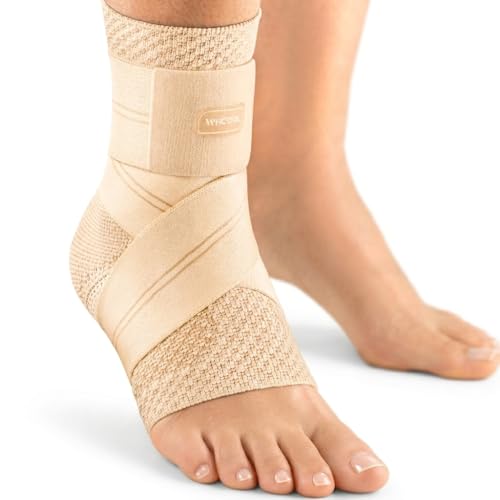
The WHCOOL Flat Knitting brace uses a non-squeezing architecture that targets seven distinct zones — arch, heel, Achilles, plantar fascia, sensitive instep, forefoot, and seamless edges. For a midfoot sprain, the value lies in the arch and plantar fascia zones: they maintain pressure without settling into skin folds, which prevents the painful dorsal creasing that standard tubular sleeves cause during toe-off phase.
Its 3-point lock dynamic strap is one extra step beyond the typical X-shape, but the payoff is wraparound support that hugs the cuboid and navicular simultaneously. The German PA66 knit is exceptionally thin — about 1.5 mm at the arch — so it slides into ballet flats or narrow trainers without bunching. This matters because any bulk under the midfoot changes your gait and loads the injured ligament.
Users transitioning from acute sprain to light activity report that the flexible strap provides enough stability for hiking and court sports without the clunk of traditional lace-up braces. The nude color blends with skin tone, which is a minor but appreciated detail for those who wear open-back shoes. Note: this brace provides less lateral rigidity than the ZOELION or Fitomo, so it’s best for mild to moderate midfoot sprains.
Why it’s great
- Ultra-thin PA66 knit fits inside narrow shoes without bulk
- 7-zone compression keeps midfoot aligned without hot spots
- 3-point lock strap adds stability beyond standard X-wrap
Good to know
- Less lateral rigidity for severe Lisfranc injuries
- Single-pack only
5. WHCOOL Low-Profile Ankle Braces with Wide Strap (Pair)
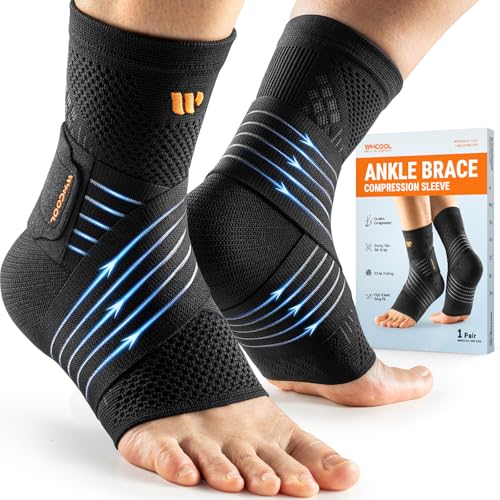
This WHCOOL pair is the entry-level option that still gets the midfoot basics right: a 30% wider strap than typical sleeves, arranged in a figure-8 wrapping system that crosses the arch and locks behind the heel. The X-shaped contoured design matches the natural ankle curvature, reducing the chance that the brace will migrate during walking — a common failure of budget sleeves that leave the midfoot exposed.
At just 41 grams per brace, this is the lightest option on the list, making it suitable for mild sprains where the primary goal is proprioceptive feedback rather than rigid immobilization. The breathable 3D air knit and moisture-wicking fabric keep the dorsal foot dry during long shifts or school hours. Reviewers mention it works well as a transitional brace for dancers and young athletes returning from mild ankle sprains.
The biggest advantage here is the two-pack: you get a spare for the healthy foot or a replacement when the first wears out. However, the lack of rigid side stabilizers means this brace won’t prevent the lateral column collapse associated with a true midfoot sprain. Use it early in recovery or for prophylactic support during low-impact activity, but upgrade to a stabilized model if you feel the cuboid shift during push-off.
Why it’s great
- Two braces included — great value for bilateral support
- Ultra-lightweight 41g design for minimal gait alteration
- Breathable knit with moisture-wicking for all-day wear
Good to know
- No rigid stabilizers — insufficient for grade 2+ sprains
- Strap may loosen during high-intensity pivoting
FAQ
Can I use an ankle sleeve for a midfoot sprain or do I need side stabilizers?
How do I know if my midfoot sprain requires a brace with removable splints?
Will a bulky midfoot brace fit inside my normal walking shoes?
Final Thoughts: The Verdict
For most users, the brace for midfoot sprain winner is the ZOELION Ankle Brace because its auto-adaptive side pads dynamically resist the lateral column splay that defines Lisfranc injuries while remaining low-profile enough for daily footwear. If you want adjustable rigidity to match your rehab timeline, grab the Fitomo with Removable Stabilizers. And for a budget-friendly two-pack that covers mild sprains and preventive use, nothing beats the WHCOOL Low-Profile Pair.

Mo Maruf
I created WellFizz to bridge the gap between vague wellness advice and actionable solutions. My mission is simple: to decode the research and give you practical tools you can actually use.
Beyond the data, I am a passionate traveler. I believe that stepping away from the screen to explore new environments is essential for mental clarity and physical vitality.