Our readers keep the lights on and my smoothie glass nicely filled. As an Amazon Associate, I earn from qualifying purchases.
When a loved one with dementia tries to get out of bed unsupervised, the few seconds it takes to stand and pivot are often the most dangerous moments of their day. A standard patient alarm that screams from a bedside box can startle, agitate, and even accelerate a fall, rather than prevent one. The goal of a modern system is to silently alert the caregiver the instant weight lifts off the mattress, buying critical time to intervene with calm and dignity.
I’m Mohammad Maruf — the founder and writer behind WellFizz. I’ve spent years analyzing caregiver equipment specifications, from sensor pad dimensions and wireless range to decibel levels and false-alarm engineering, to identify what actually works for dementia care at home and in facilities.
This guide compares seven systems built for this exact challenge, breaking down pad sizes, alert modes, range, and real-world reliability so you can confidently choose the right bed alarms for dementia patients without second-guessing.
How To Choose The Best Bed Alarm For Dementia Patients
Selecting a bed alarm for dementia care involves more than just picking the loudest option. The right system balances caregiver notification speed with patient dignity, minimizing the risk of agitation and falls. Here are the critical factors to weigh.
Wireless vs. Wired Systems
Wired systems connect the sensor pad directly to a bedside monitor. They are simple and affordable but produce a loud alarm in the patient’s room, which can startle someone with dementia and trigger a fall or agitation. Wireless systems send a signal to a pager the caregiver carries, keeping the patient’s room silent. Federal CMS guidelines phased out bedside alarms as potential restraints, making wireless pager systems the preferred choice for preserving dignity and reducing distress.
Sensor Pad Size and Placement
Standard pads are 10 x 30 inches, but larger options like 20 x 30 inches provide extra coverage for restless sleepers who shift around. Placement under the shoulders offers earlier detection as the patient begins to sit up, while placement under the hips triggers the alarm when weight fully lifts. Choose a pad size and placement that matches the patient’s sleep patterns and mobility level.
Alert Modes and Volume Control
Look for systems with multiple alert options: sound, vibration, and flashing light. Vibration mode is invaluable for nighttime caregiving when a loud tone could wake the household or agitate the patient. Adjustable volume ensures the alarm is loud enough to rouse a deep sleeper but can be turned down during daytime monitoring.
Build Quality and False Alarm Resistance
A shifting sensor pad is the leading cause of false alarms. Systems that include anti-slip stickers or use a slight engineered delay (2-3 seconds) before triggering are more reliable. Pad material matters too — incontinence-resistant, latex-free vinyl with a soft foam interior is easier to clean and more comfortable for the patient.
Quick Comparison
On smaller screens, swipe sideways to see the full table.
| Model | Category | Best For | Key Spec | Amazon |
|---|---|---|---|---|
| Lunderg Large Wireless | Wireless Pager | Restless sleepers needing extra pad coverage | 20 x 30 inch pad, 400 ft range | Amazon |
| Smart Caregiver Wireless (B0C1HSZR4N) | Wireless Pager | Monitoring multiple zones with expandable network | 300 ft range, supports 6 sensors | Amazon |
| Smart Caregiver Wireless (B01FRGJ3K4) | Wireless Monitor | Long battery life and mountable monitor | 10 x 30 in pad, 3 C batteries | Amazon |
| Lunderg Basic Wireless | Wireless Pager | Dignity-focused, silent pager with adjustable volume | 10 x 30 in pad, 400 ft range | Amazon |
| Secure Safety Solutions | Wired Bedside | Professional facility use, 35-year track record | 12 x 30 in pad, 80 dB alarm | Amazon |
| Patient Aid Bed Alarm | Wired Bedside | Budget-friendly with versatile mounting | 10 x 30 in pad, 90 dB max volume | Amazon |
| Nesthao Professional | Motion/Pager | Entry-level motion detection at floor level | 918 ft range, 113 dB alarm | Amazon |
In‑Depth Reviews
1. Lunderg Large Wireless Bed Alarm System

The Lunderg Large Wireless Bed Alarm System stands out for its generous 20 x 30 inch sensor pad, specifically designed for restless sleepers who shift around during the night. This extra surface area ensures the pad stays under the patient’s torso, reducing the risk of false alarms caused by the patient rolling off a smaller pad. The system sends a wireless alert to a portable pager with adjustable volume and vibration mode, keeping the patient’s room completely silent.
Setup is straightforward — simply place the pad under the fitted sheet at shoulder level, insert the included AA batteries into the pad and pager, and the system pairs automatically. The pager has a range of up to 400 feet, which is more than sufficient for most homes. The pad material is soft foam with an incontinence-resistant surface that wipes clean, a practical feature for long-term care.
Real-world users highlight the vibration mode as invaluable for nighttime caregiving, allowing the caregiver to be alerted without waking the household. The anti-slip stickers included in the box help keep the pad stable, addressing the most common cause of false alerts. Some users noted occasional pairing loss, which can be resolved by re-pairing rather than replacing batteries.
Why it’s great
- Largest pad size (20×30”) provides excellent coverage for restless sleepers
- Completely silent patient room with wireless pager
- Anti-slip stickers reduce false alarms effectively
- Incontinence-resistant surface wipes clean easily
Good to know
- May occasionally lose pairing between transmitter and pager
- Pager belt clip is narrow; may not fit all belt widths
2. Smart Caregiver Bed Exit Alarm with Wireless Pager
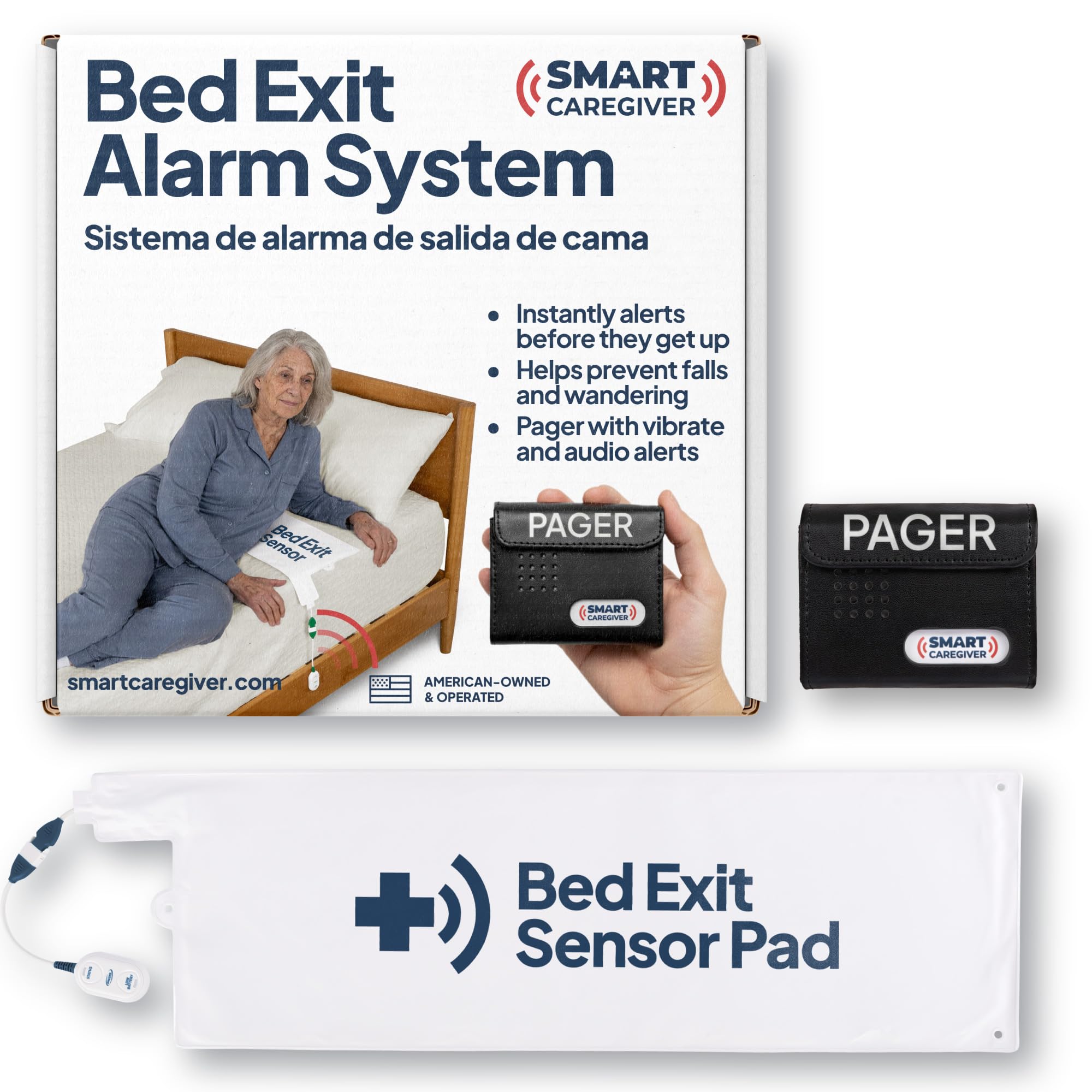
Smart Caregiver Corporation has been manufacturing fall prevention solutions for over three decades, and this wireless pager system reflects that institutional knowledge. The 10 x 30 inch weight-sensing pad uses an extra-large contact sensor that is engineered to reduce false alarms — a common pain point with competing pads. The system connects to a handheld pager that offers both vibrate and sound alerts, giving caregivers flexibility depending on the environment.
One of the most compelling features of this system is its expandability. The pager can support up to six different Smart Caregiver sensors simultaneously, allowing you to monitor a bed, a favorite chair, a doorway, and a floor mat from a single receiver. This modular approach makes it ideal for caregivers who need comprehensive coverage as the patient’s mobility changes over time.
The pad is placed under the shoulders for immediate alerts when the patient begins to sit up. The pager’s vibrate mode is widely praised by nighttime caregivers who need to be awakened without startling the patient with a loud bedside tone. The belt clip is reported as tight, which can make one-handed removal difficult, but the unit itself is reliable for daily use.
Why it’s great
- Expandable pager network supports up to 6 sensors
- Vibrate mode ideal for silent nighttime monitoring
- Extra-large contact sensor reduces false alerts
- USA-based customer support with 30-year company history
Good to know
- Pager belt clip is tight and hard to operate
- Directions could be clearer for initial setup
3. Smart Caregiver Wireless Bed Pad Alarm System
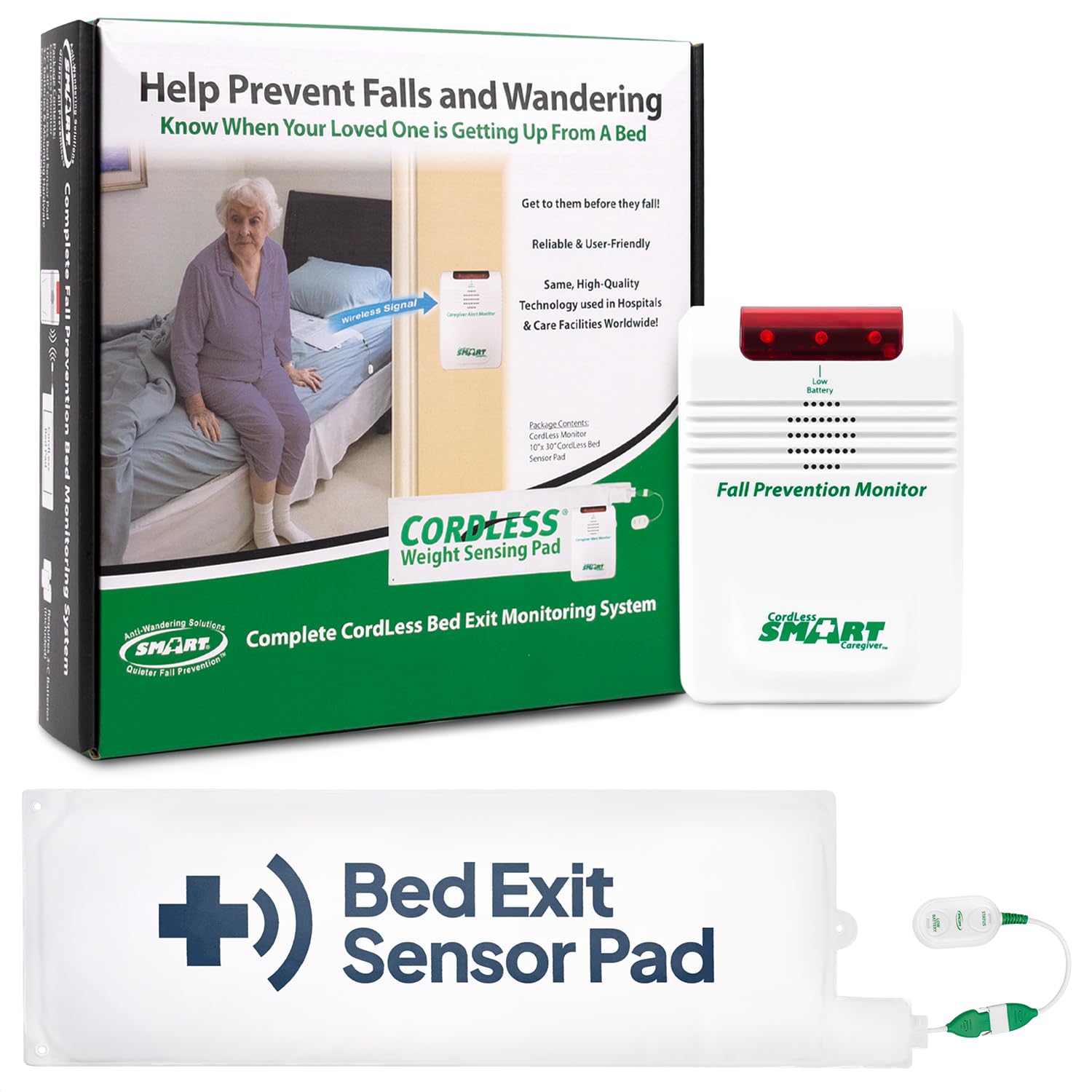
This wireless bed pad alarm from Smart Caregiver operates on three C batteries, giving it significantly longer battery life than AA-powered competitors. The 10 x 30 inch weight-sensing pad is made of soft, latex-free vinyl with a thin foam interior, designed to be comfortable under the fitted sheet for long-term use. The wireless monitor has a 300-foot range and can be wall-mounted or carried around the home.
The system includes a slight engineered delay of 2-3 seconds before the alarm sounds. This deliberate pause prevents false alerts from minor movements or repositioning, giving the caregiver a moment to check a video monitor before responding. The monitor also has adjustable volume control with three settings, from a soft chime to a loud tone sufficient for heavy sleepers.
Users consistently praise the ease of setup — most have it operational in under five minutes. The pad works best when placed under the patient’s shoulders, providing an extra 2-3 seconds of response time compared to hip placement. Some users reported the vinyl pad can crack or separate over time, but the 1-year manufacturer warranty covers defects.
Why it’s great
- Long battery life with 3 C batteries
- 2-3 second delay reduces false alarms
- Three volume settings accommodate different hearing levels
- Wall-mountable monitor for flexible placement
Good to know
- Vinyl pad may crack over extended use
- No AC adapter option; batteries only
4. Lunderg Wireless Bed Alarm System

Lunderg’s standard wireless bed alarm system takes a deliberate approach to patient dignity. The system explicitly avoids a bedside alarm unit, sending all alerts wirelessly to a caregiver pager. This design choice aligns with CMS guidance that classifies in-room audible alarms as a potential restraint that can cause agitation, fear, and loss of dignity in dementia patients. The pager offers high, low, and vibration-only alert modes.
The 10 x 30 inch sensor pad includes anti-slip stickers to keep it stable under the sheet, addressing the top cause of false alarms. The pad has a soft foam interior and an incontinence-resistant surface that wipes clean. Setup requires no Wi-Fi or app — just insert the included AA batteries, place the pad under the fitted sheet, and the pager pairs automatically.
Customer feedback consistently highlights the reliability of the alert system. Users report that the wireless signal transmits across large homes without issue and that the vibration mode is loud enough to wake a caregiver from a deep sleep without disturbing the patient. Some pairs may lose connection over time, but the troubleshooting process is straightforward.
Why it’s great
- No bedside alarm — preserves patient dignity
- Vibration mode effectively wakes caregiver without noise
- Anti-slip stickers minimize false alerts
- FSA/HSA eligible for eligible care expenses
Good to know
- Pairing can occasionally drop and needs re-sync
- Pager volume may not be sufficient for very large homes
5. Secure Safety Solutions Bed Exit Alarm
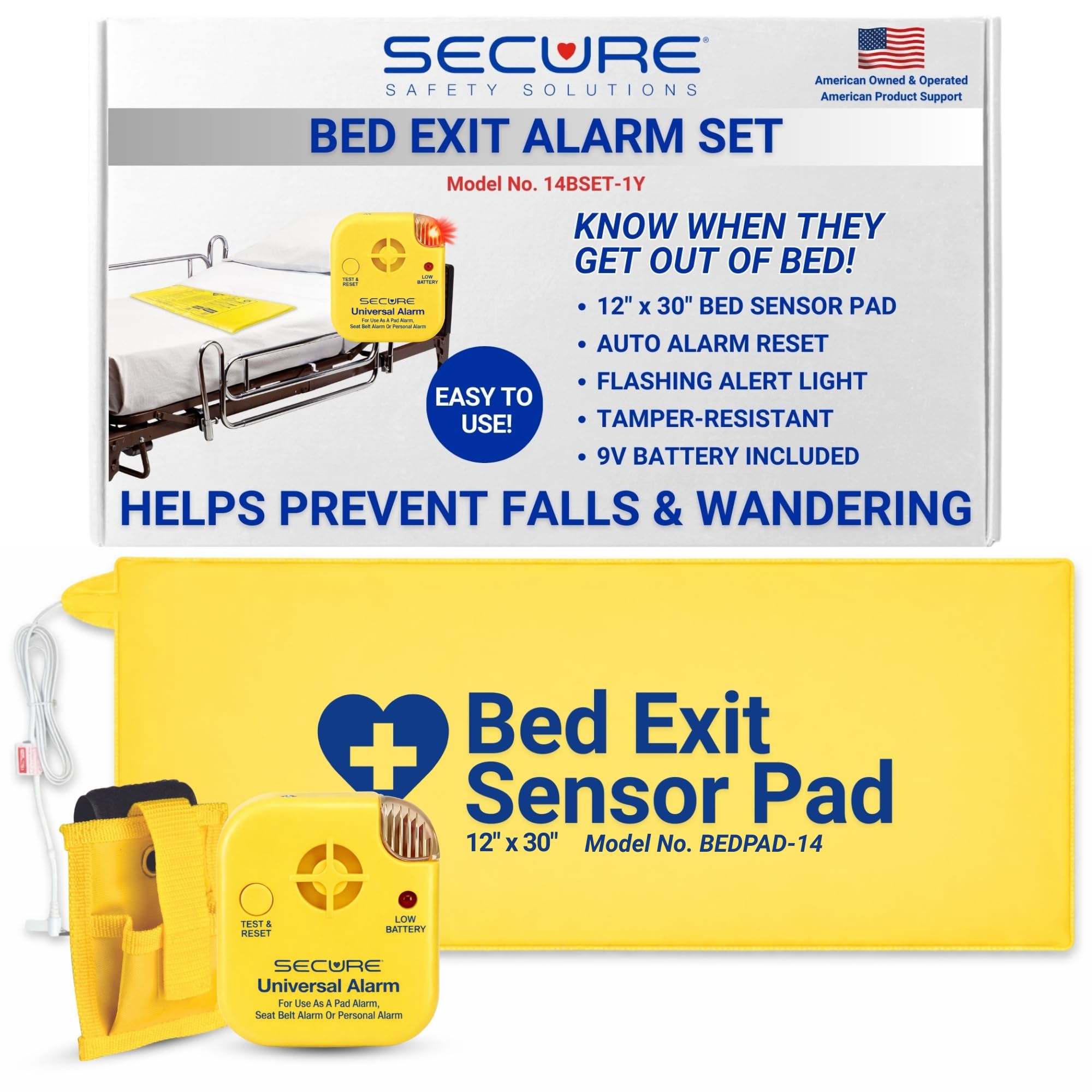
Personal Safety Corporation has been manufacturing fall prevention products for over 35 years, and the Secure Safety Solutions Bed Exit Alarm is a testament to that engineering history. The system uses a wired connection between the 12 x 30 inch pressure sensor pad and the bedside monitor, delivering an 80 dB audible alert with a flashing indicator light. The pad is slightly wider than standard, providing extra coverage at no extra cost.
The system is built for rigorous use in professional settings. The metal connection pin and tamper-resistant reset mechanism are designed to withstand frequent repositioning and cleaning in hospitals and nursing facilities. The pad is liquid-resistant and latex-free, making it suitable for incontinence-prone environments. The monitor can also be converted to a personal pull-pin alarm using an optional cord/clip set.
Users consistently report that the 80 dB alarm is loud enough to be heard two rooms away, even for heavy sleepers. The automatic reset feature — the alarm stops when weight returns to the pad — simplifies continuous monitoring. The trade-off is that the alarm sounds in the patient’s room, which may startle sensitive individuals with dementia.
Why it’s great
- Proven durability for over 35 years in facilities
- 12×30 inch pad offers wider coverage than standard
- Automatic reset when weight returns to pad
- Loud 80 dB alarm heard from multiple rooms
Good to know
- Alarm sounds in patient room, may cause agitation
- Controller feels outdated with basic interface
6. Patient Aid Bed Alarm

The Patient Aid Bed Alarm is a wired system built around a 10 x 30 inch slimline pad made of advanced vinyl that is tear-resistant and easy to wipe down. The system offers two alert tones — alarm and music — at two volume levels: 80 dB and 90 dB. The unit comes with a complete mounting kit including a U-bracket for bed rails, screws for wall mounting, and velcro strips for flat surfaces.
The pad is designed to be placed under the patient’s buttocks or shoulders, with the manufacturer recommending the shoulder area for maximum sensitivity. The alarm features a one-button reset after activation, making it convenient for repeated use during the night. Users report the alarm is loud enough to be heard from two rooms away, even at the lower volume setting.
The device does not include an AC adapter, so it relies entirely on the included 9V battery. Additionally, because the pad is wired, the cord can be a tripping hazard if not properly routed.
Why it’s great
- Two volume levels and alarm/music tone choice
- Complete mounting kit for bed rails, walls, or flat surfaces
- One-button reset is simple and fast
- Pad is thin and barely noticeable under sheets
Good to know
- Battery drains quickly; no AC adapter included
- Wired pad creates a tripping hazard
- Cannot be used with patients who have pacemakers
7. Nesthao Upgrade Professional Bed Sensor Alarm

The Nesthao Professional Bed Sensor Alarm uses an infrared motion sensor rather than a weight-sensing pad, offering an alternative approach to bed exit detection. The sensor can be placed on the floor under the bed to detect when the patient’s feet touch the ground, or it can be positioned in a doorway to monitor room exits. The system includes a caregiver pager with a maximum range of 918 feet in open areas.
The pager offers four alert modes: sound plus flashing light, light flashing only, steady LED light, and a 113 dB alarm tone. The volume is adjustable, and there are five volume levels to choose from. The motion sensor and receiver are factory-paired, so setup requires only inserting the included AAA batteries and selecting the desired alert mode.
This system is best suited for caregivers who want to monitor bed exits without placing a pad under the mattress. The motion detection approach means the alarm triggers when the patient’s feet touch the floor, which offers a later alert than weight-sensing pads that detect when the patient sits up. Some users noted that the sensor can be triggered by pets or objects moving nearby.
Why it’s great
- No pad needed — floor-level motion detection
- Exceptional 918 foot wireless range
- Multiple alert modes including 113 dB alarm
- Works for both bed and doorway monitoring
Good to know
- Triggers after feet touch floor — later alert than pad sensors
- May be triggered by pets or environmental movement
FAQ
Should I get a wireless pager system or a wired bedside alarm for a dementia patient?
Where should I place the sensor pad for the earliest possible alert?
How do I prevent false alarms from a shifting sensor pad?
Are bed alarms with vibration mode effective for nighttime caregiving?
Can I use the same bed alarm system for chair and doorway monitoring?
Final Thoughts: The Verdict
For most caregivers, the bed alarms for dementia patients winner is the Lunderg Large Wireless Bed Alarm because its 20×30 inch pad provides unmatched coverage for restless sleepers, and the silent pager preserves patient dignity. If you need an expandable network that can monitor a bed, chair, and doorway from one receiver, grab the Smart Caregiver Wireless Pager System. And for a budget-friendly wired solution that works reliably in facility settings, the Secure Safety Solutions Bed Exit Alarm remains a trusted choice with a 35-year track record.

Mo Maruf
I created WellFizz to bridge the gap between vague wellness advice and actionable solutions. My mission is simple: to decode the research and give you practical tools you can actually use.
Beyond the data, I am a passionate traveler. I believe that stepping away from the screen to explore new environments is essential for mental clarity and physical vitality.