Our readers keep the lights on and my smoothie glass nicely filled. As an Amazon Associate, I earn from qualifying purchases.
Shrinking down your camera gear without shrinking image quality is the central challenge for modern creators. The market is flooded with tiny cameras that promise 4K but deliver grainy, shaky footage the moment you step indoors. A true pocket-friendly camera needs a combination of a capable sensor, reliable stabilization, and competent autofocus — specs that are often the first casualties of miniaturization.
I’m Mohammad Maruf — the founder and writer behind WellFizz. I’ve spent the last decade analyzing the sensor wars between pocketable devices, focusing specifically on how tiny form factors handle low-light noise, gimbal stabilization, and lens sharpness across mid-range and premium price tiers.
If you want a dedicated shooter that fits in a jacket pocket without tying you to a smartphone platform, hitting that sweet spot between portability and real photographic control means evaluating the sensor size, stabilization type, and lens versatility of the best small camera phone alternatives available today.
How To Choose The Best Small Camera Phone
Not every compact camera is built the same. The difference between a grainy mess and a sharp, stable video comes down to three core components. Here is exactly what to look for when shopping in this ultra-competitive segment.
Sensor Size: The Light-Gathering King
A larger sensor captures more light, directly translating to cleaner low-light footage and better dynamic range. In the pocket camera world, 1-inch sensors (found in the DJI Osmo Pocket 3 and Sony ZV-1 series) are the baseline for decent low-light video. Stepping up to APS-C, like the Ricoh GR IIIx, gives you dramatically better noise performance but demands a fixed lens. The smaller 1/1.3-inch sensors in devices like the DJI Osmo Nano still perform well in bright conditions but will show grain earlier at dusk. Always check the sensor diagonal — 1-inch is your minimum for versatility.
Stabilization: Gimbal vs. Digital vs. IBIS
Nothing screams amateur like shaky footage. Three-axis mechanical gimbal stabilization (DJI Pocket 3, Xtra Muse) physically counteracts movement, delivering smooth walking shots that look like they were shot on rails. Digital stabilization, found on the Sony ZV-1F and Panasonic ZS99, crops into the frame and can produce a jittery “jello” effect during fast movements. In-Body Image Stabilization (IBIS) on the Ricoh GR IIIx helps with stills but is less effective for walking video. If vlogging while moving is your priority, a mechanical gimbal camera is non-negotiable.
Lens Versatility: Zoom Range vs. Prime Sharpness
A zoom lens lets you frame a subject from across a concert hall without moving your feet. The Panasonic ZS99 packs a Leica 24-720mm equivalent — massive reach from a pocket-friendly body. The trade-off is that zoom lenses are optically slower (narrower aperture) and softer than prime (fixed focal length) lenses. Prime lenses, like the 40mm equivalent on the Ricoh GR IIIx or the 20mm ultra-wide on the Sony ZV-1F, are sharper and gather more light, but require you to physically walk to frame your shot. Decide if you need reach or raw image quality.
Quick Comparison
On smaller screens, swipe sideways to see the full table.
| Model | Category | Best For | Key Spec | Amazon |
|---|---|---|---|---|
| DJI Osmo Pocket 3 | Vlogging Gimbal | Stabilized 4K/120fps action | 1-inch CMOS, 3-axis mech gimbal | Amazon |
| Sony ZV-1F | Vlogging Camera | Ultra-wide selfie video | 20mm f/2.0 wide lens, Eye AF | Amazon |
| Sony ZV-1 | Hybrid Camera | Quick bokeh & product showcases | 1-inch sensor, F1.8-2.8 zoom lens | Amazon |
| Canon PowerShot V1 | Hybrid Camera | Long recording with active cooling | 1.4-type sensor, built-in fan | Amazon |
| Panasonic ZS99 | Travel Zoom | Long zoom (concerts, safaris) | Leica 24-720mm zoom, 30x optical | Amazon |
| Ricoh GR IIIx | Prime Compact | APS-C pocket still photography | 24.2MP APS-C, 40mm f/2.8 prime | Amazon |
| Google Pixel 10 | Smartphone | AI-enhanced triple camera system | 5x telephoto, 50MP main sensor | Amazon |
| Google Pixel 10a | Smartphone | Compact budget shooter | 6.1-inch Actua display, 4300 mAh | Amazon |
| Samsung Z Flip7 | Foldable | Folding pocket camera phone | 50MP main, 5x digital zoom | Amazon |
| Xtra Muse | Vlogging Gimbal | Budget pocket gimbal video | 1-inch sensor, 3-axis gimbal | Amazon |
| DJI Osmo Nano | Action Camera | Ultra-light POV & outdoor | 1/1.3-inch sensor, 143° FOV | Amazon |
In‑Depth Reviews
1. DJI Osmo Pocket 3 Creator Combo
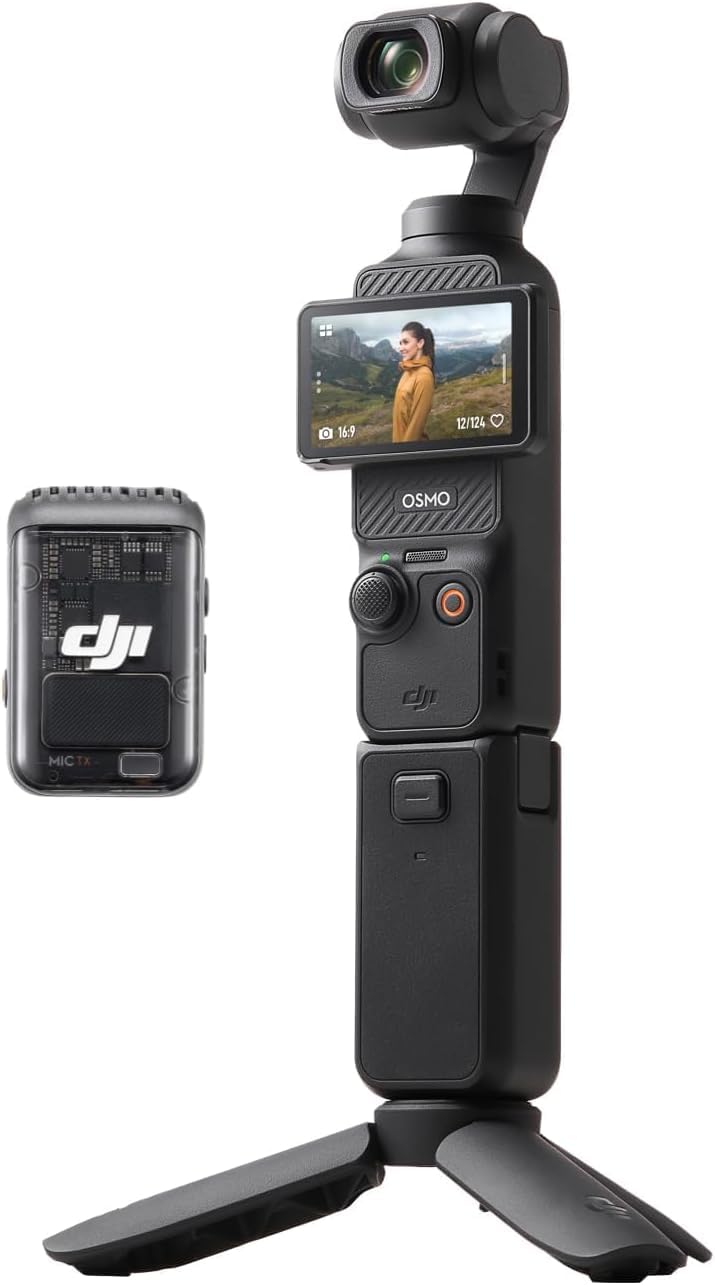
The DJI Osmo Pocket 3 remains the benchmark for pocket-sized video. Its 1-inch CMOS sensor paired with a three-axis mechanical gimbal produces footage that rivals cameras twice its size. The 2-inch rotatable touchscreen makes switching between horizontal and vertical framing instant, a workflow win for creators posting across platforms.
ActiveTrack 6.0 locks onto subjects reliably, even during rapid movement like dancing or running with pets. The 4K/120fps recording mode gives you smooth slow-motion options, while the 10-bit D-Log M color profile lets you grade footage without banding. With a 166-minute rated battery and the included DJI Mic 2 transmitter, this kit is a complete mobile studio.
The mechanical gimbal does introduce a fragility factor — you cannot drop this camera carelessly. The fixed wide-angle lens also means no optical zoom, so cropped-in shots will lose resolution. If stabilization and sensor size are your priorities, nothing in this class beats it.
Why it’s great
- Remarkable 3-axis mechanical stabilization eliminates walking shake entirely
- 1-inch sensor delivers clean low-light 4K footage
- Creator Combo includes wireless mic and heavy-duty battery handle
Good to know
- Mechanical gimbal is delicate — must be stored in the case
- No optical zoom; digital zoom only up to 2x
- Premium price for the full Creator Combo
2. Sony ZV-1F Vlog Camera

Sony designed the ZV-1F specifically for arm’s-length vlogging. The fixed 20mm ultra-wide lens captures your face plus a generous slice of background, making it perfect for walk-and-talk content. The 1-inch sensor paired with an f/2.0 aperture delivers defocused bokeh backgrounds even in modestly lit rooms.
Eye AF and subject tracking keep faces sharp without hunting, and the Product Showcase mode transitions focus seamlessly from your face to an object held up to the lens. The built-in three-capsule directional mic with the included windscreen delivers clear audio that often eliminates the need for an external mic in quiet environments.
The trade-off is all in the zoom — or lack thereof. With a fixed 20mm lens, you are locked into a wide perspective. There is no optical zoom for concerts or wildlife. The battery life is also tight at roughly 45 minutes of continuous recording, so carrying spares is essential.
Why it’s great
- Ultra-wide 20mm lens perfectly framed for handheld selfie video
- Fast f/2.0 lens and Eye AF deliver reliable bokeh and sharp focus
- Built-in mic with windscreen rivals many external options
Good to know
- No optical zoom limits framing options to wide only
- Battery life is short; buy at least one extra battery
- Digital stabilization is effective but crops the already wide frame
3. Sony ZV-1 Digital Camera

The original ZV-1 strikes a nearly perfect balance between pocket size and lens versatility. Its Zeiss 24-70mm f/1.8-2.8 zoom lens gives you a wide-angle selfie look and the ability to zoom in for tighter shots of products or subjects — something the fixed-lens ZV-1F cannot do. The stacked 1-inch sensor with DRAM allows for high-speed readout and fast autofocus.
Real-time Eye AF and Real-time Tracking work flawlessly for vlogging. The side flip-out screen makes framing easy, and the background defocus button gives instant bokeh with one tap. The built-in 3.5mm mic jack and MI shoe let you add proper wireless mics without adapters.
Image stabilization is digital and not as effective as a gimbal when walking. The camera also lacks an included battery charger — you must charge via USB-C in-camera. Pro video features like S-Log3 and HLG are available for color grading but require post-production knowledge.
Why it’s great
- True zoom lens (24-70mm) with bright f/1.8 aperture for bokeh
- Real-time Eye AF and subject tracking are fast and reliable
- MI shoe and 3.5mm jack allow professional-grade audio upgrades
Good to know
- Digital stabilization only — walking shots still show shake
- No battery charger included; relies on USB-C charging
- Small body can feel cramped for users with larger hands
4. Canon PowerShot V1

Canon solved a long-standing pocket camera problem with the PowerShot V1: overheating during long 4K recording sessions. A built-in cooling fan allows this compact to shoot 4K video for extended periods without throttling, a massive advantage for live streaming or interview capture. The 1.4-type, 22.3MP sensor is slightly larger than a standard 1-inch sensor, pulling in more light for cleaner footage.
The built-in 16-50mm f/2.8-4.5 wide-angle zoom lens covers a useful range for vlogging and street photography. Canon Log 3 provides a 10-bit log profile for professional color grading. The large 1.4-type sensor also helps achieve shallow depth of field even at the f/2.8 wide end.
The lens focal length range is relatively short compared to the Panasonic ZS99 — you will struggle to reach distant subjects. The camera body is also chunkier than a true pocket camera like the Ricoh GR IIIx, and there is no optical image stabilization, meaning digital stabilization crops your footage when walking.
Why it’s great
- Active cooling allows unlimited 4K recording without overheating
- Larger-than-1-inch sensor delivers great low-light video
- Canon Log 3 for advanced color grading in post
Good to know
- Zoom range is modest; no reach for distant subjects
- No included battery charger; USB-C charging only
- Body is larger than most true pocket cameras
5. Panasonic LUMIX TZ/ZS99

The Panasonic ZS99 is the undisputed champion of reach in a pocketable body. Its Leica 24-720mm equivalent lens with 30x optical zoom brings distant subjects — wildlife, concert stages, mountain peaks — into clear view without requiring you to carry a bulky interchangeable-lens camera. The 1,840k-dot tiltable touchscreen makes low-angle and high-angle composing easy.
4K video and 4K PHOTO burst mode at 30fps let you extract high-quality stills from moving moments. The built-in Bluetooth v5.0 and dedicated Send Image button make transferring photos to your phone effortless for social sharing. Universal USB-C charging means you can top up power with your laptop charger.
The trade-off for this extreme zoom range is sensor size and low-light performance. The ZS99 uses a smaller sensor than 1-inch cameras like the Sony ZV-1, so images get noisy quickly after dusk. The aperture narrows to f/6.4 at full zoom, requiring bright daylight or a tripod for sharp results at 720mm.
Why it’s great
- Leica 30x optical zoom covers 24mm wide to 720mm telephoto reach
- Compact pocket body for a zoom range that normally requires a DSLR
- Built-in Bluetooth and Send Image button for fast phone transfers
Good to know
- Small sensor struggles in low light; noise is visible after dusk
- Aperture at full zoom is f/6.4 — requires bright light or a tripod
- Digital stabilization only, not mechanical gimbal
6. Ricoh GR IIIx

The Ricoh GR IIIx is a photographer’s compact in the purest sense. It houses a 24.2MP APS-C sensor — the same size sensor found in many DSLR bodies — inside a shell barely larger than a deck of cards. The 40mm equivalent f/2.8 GR lens is legendarily sharp, delivering edge-to-edge detail that rivals professional primes.
Quick response is the GR IIIx’s superpower: it powers on in roughly 0.8 seconds, ready to fire a shot before most phones even unlock. The built-in IBIS (In-Body Image Stabilization) helps with sharp handheld stills in dim light. The snap focus system lets zone-focus on the street, making it a favorite among travel and documentary shooters.
Video is an afterthought here — no 4K, just basic 1080p. Battery life is poor, with roughly 200 shots per charge. The lack of weather sealing and the exposed lens (no lens cap, only a filter adapter) make it vulnerable to dust and moisture. The GR IIIx is a stills machine, not a hybrid.
Why it’s great
- APS-C sensor in a true pocket-sized body — best image quality per cubic inch
- Extremely sharp 40mm GR prime lens with minimal distortion
- IBIS supports sharp handheld stills in low-light conditions
Good to know
- No 4K video recording; limited to 1080p at best
- Battery life is short; carry multiple spares for a full day
- No weather sealing and the lens is dust-sensitive
7. Google Pixel 10

Google’s Pixel 10 represents the pinnacle of computational photography folded into a phone that never compromises on size. The triple rear camera system includes a new 5x telephoto lens with up to 20x Super Res Zoom, allowing you to capture distant subjects with surprising detail that matches many compact cameras in good light. The Camera Coach feature guides you to better framing and exposure.
The Tensor G5 chip powers Night Sight, which takes crisp, clear low-light shots without a flash. The 6.3-inch Actua display with 3,000-nit peak brightness stays visible even in harsh sunlight for framing your shot. The IP68 water and dust protection means you can take this phone anywhere without worrying about weather.
Because the Pixel 10 is first a phone, the camera lens is physically tiny compared to dedicated cameras, meaning real optical low-light performance still trails a 1-inch sensor. The telephoto lens also suffers from softness at maximum digital zoom. If you are buying primarily for photography, a dedicated camera will still produce sharper images.
Why it’s great
- Computational photography compensates for small sensor limitations
- 5x optical telephoto plus 20x Super Res Zoom expands reach
- Camera Coach helps novice photographers improve their shots
Good to know
- Small camera module limits true low-light physics vs. 1-inch sensors
- Digital zoom at max range introduces softness
- No physical SIM slot in US models; eSIM only
8. Google Pixel 10a

The Pixel 10a distills Google’s camera intelligence into a more budget-friendly package. While it lacks the dedicated telephoto lens of the Pixel 10, the main camera still benefits from Google’s computational photography software, producing vibrant, well-balanced shots in most conditions. The 30+ hour battery life ensures you will not be hunting for a charger mid-afternoon.
The 6.1-inch Actua display is a manageable size for one-handed use, making this a genuinely compact phone for pocket carry. The IP68 rating and Gorilla Glass 7i mean this phone survives drops and splashes better than some dedicated cameras. Seven years of software updates ensure long-term value.
The camera hardware is significantly simpler than the Pixel 10 — no telephoto lens, no ultra-wide when compared to the triple array. Low-light shots rely entirely on software processing, which can introduce softness in very dark scenes. For pure photography, a dedicated compact will still outshoot this phone in challenging light.
Why it’s great
- Excellent computational photography for vibrant everyday shots
- Compact 6.1-inch body for easy one-handed and pocket use
- Seven years of software and security updates
Good to know
- No telephoto lens; relies on digital zoom only
- Small sensor struggles in true low-light compared to dedicated cameras
- Heavy AI integration may feel intrusive to some users
9. Samsung Galaxy Z Flip7

The Galaxy Z Flip7 offers a unique form factor advantage: when folded, it is half the height of a standard phone, fitting into small pockets, wristlets, or even the small pocket of jeans. Unfolded, it is a full-size 6.7-inch phone with a 50MP main camera that captures crisp, vibrant shots with good dynamic range in well-lit scenes.
FlexCam is the standout feature: you can prop the phone half-open on a table for hands-free group photos or selfies, using the rear camera as the selfie camera for higher quality than the front lens. The expanded FlexWindow cover screen now supports quick replies and shortcuts without unfolding, adding genuine utility.
The camera array is less comprehensive than the Galaxy S-series — no dedicated telephoto lens, relying on 10x digital zoom that degrades quality quickly. The foldable screen is inherently more delicate than a traditional slab, and the crease is visible when the screen is off. Battery life, at 4,300 mAh, is adequate but not exceptional for heavy video use.
Why it’s great
- Folding design is genuinely compact for pocket carry when closed
- FlexCam mode enables high-quality hands-free selfies and group shots
- Expanded cover screen provides real utility without unfolding
Good to know
- No optical telephoto; digital zoom only up to 10x
- Foldable screen crease is visible and the screen is softer than glass
- Battery life is average; heavy video users may need midday top-up
10. Xtra Muse Pocket Camera
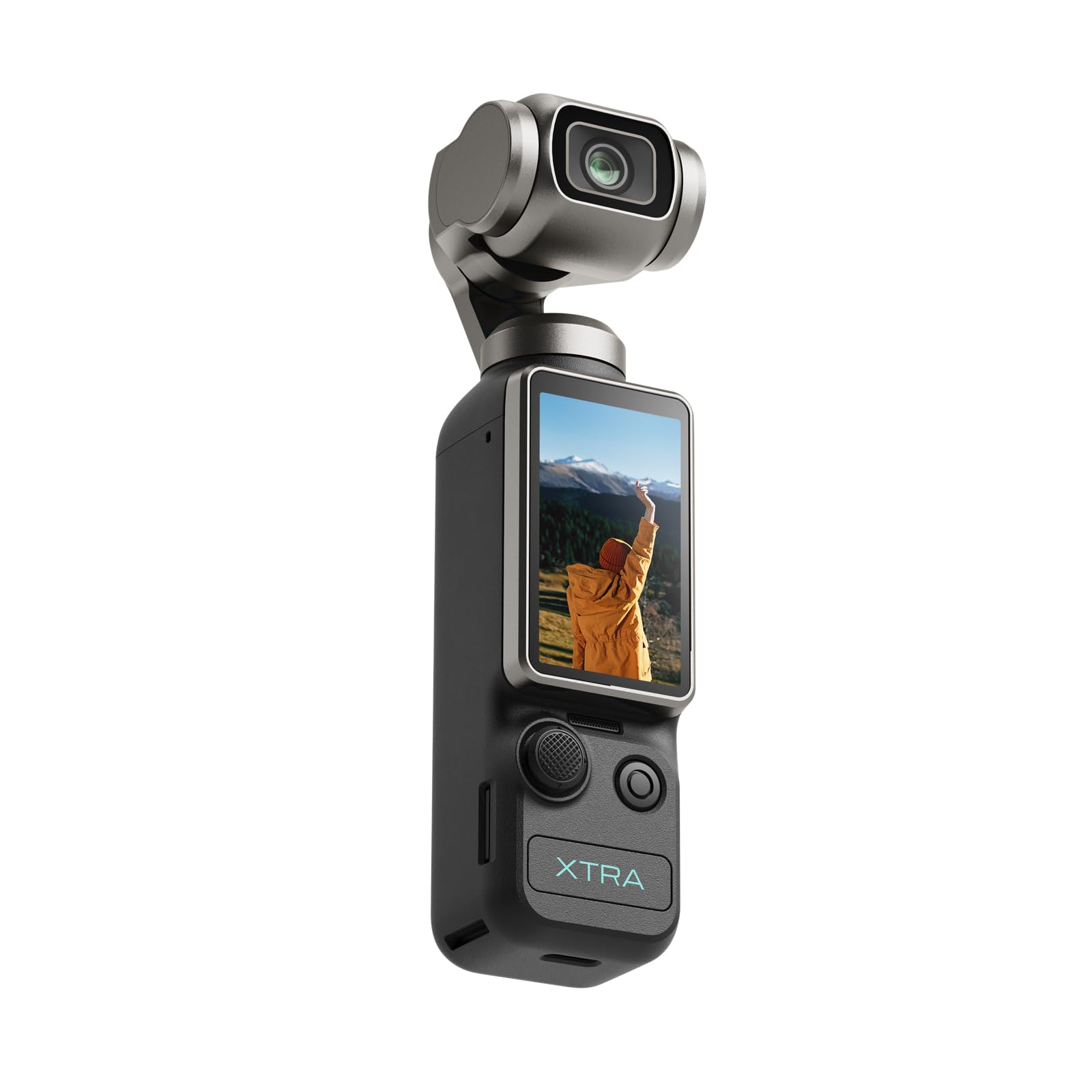
Xtra Muse enters the pocket gimbal space as a direct, more affordable alternative to the DJI Pocket 3. It packs the same core formula — a 1-inch CMOS sensor, 4K/120fps recording, and a three-axis mechanical gimbal — for a lower entry cost. The Master Follow feature keeps the subject center-framed even during active movement.
The 2-inch touchscreen supports both horizontal and vertical shooting, and the included bundle with a carrying bag, wrist strap, and threaded handle provides everything you need to start shooting immediately. The 10-bit X-Log color mode captures up to one billion colors for flexible post-production grading.
Brand is the primary risk — Xtra Edge is not DJI, so long-term support and accessory ecosystems are less established. Some users report that DJI Pocket 3 accessories are physically compatible, but DJI wireless mics do not connect automatically. The stabilization and sensor quality are impressive for the price, but firmware updates are less frequent.
Why it’s great
- 1-inch sensor and three-axis gimbal at a budget-friendly cost
- 4K/120fps recording for smooth slow-motion capture
- 10-bit X-Log color profile for professional video grading
Good to know
- Brand is less established than DJI; firmware support is limited
- No native support for DJI wireless microphones
- Accessory ecosystem is much smaller than DJI’s
11. DJI Osmo Nano Standard Combo
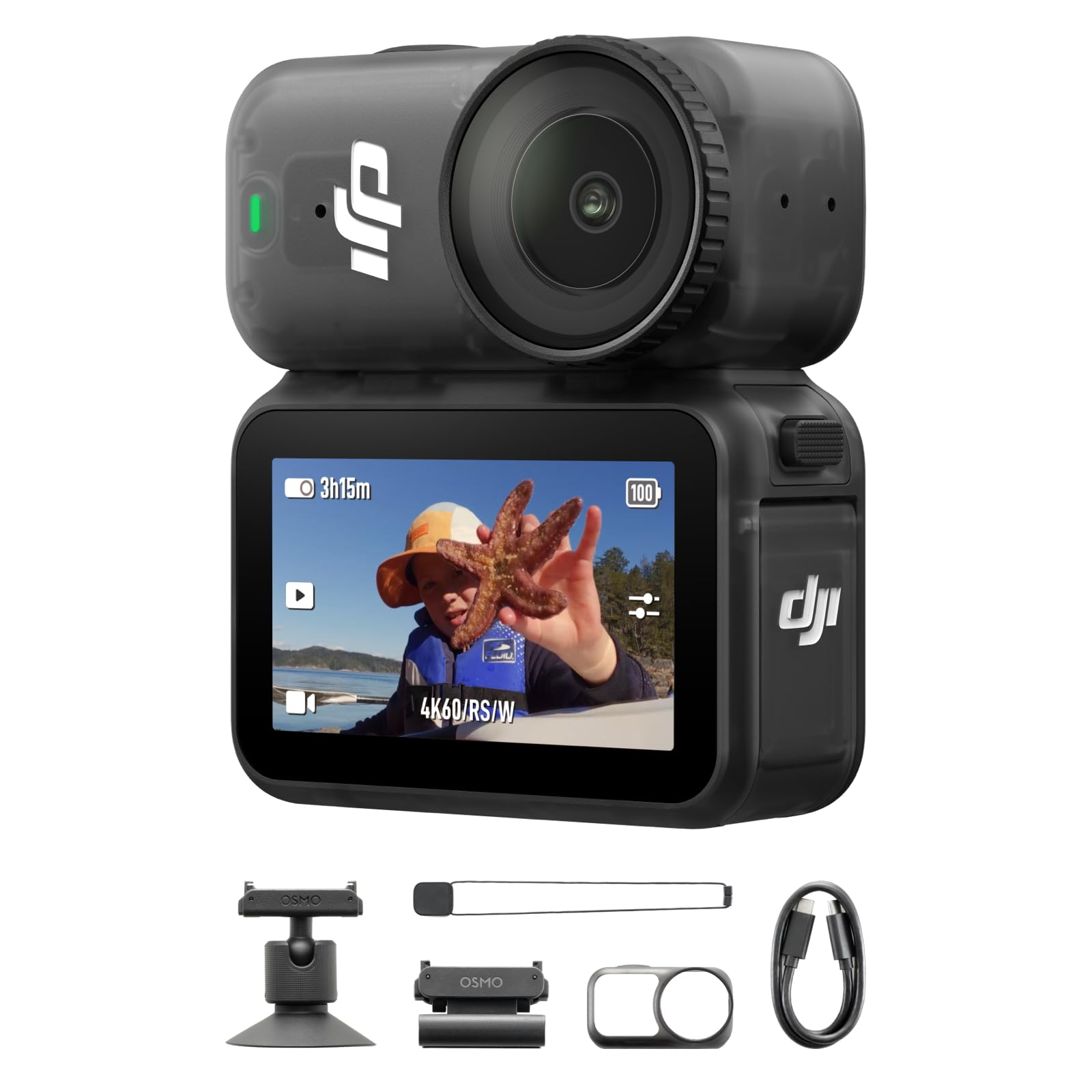
The DJI Osmo Nano is the lightest and most discreet camera in this roundup. Designed for hands-free POV capture, it weighs nearly nothing and attaches magnetically to hat clips, lanyards, or any metal surface for unique perspectives. The 1/1.3-inch sensor captures more light than typical action camera sensors, and the 143-degree ultra-wide field of view is ideal for immersive vlogs or pet POV shots.
With 128GB of internal storage, you can start recording immediately without hunting for a memory card. The 200-minute extended battery life in the Vision Dock means this camera can run all day on a single charge. Waterproofing down to 10 meters opens up underwater filming without a separate housing.
The small sensor means lower light performance is noticeably worse than 1-inch alternatives — footage gets noisy in dimly lit indoor settings. The lack of a mechanical gimbal means stabilization relies on DJI’s digital RockSteady technology, which crops the already wide frame. The magnetic attachment system, while convenient, means the camera can be knocked off more easily than a screwed-in mount.
Why it’s great
- Extremely light and discreet with magnetic mounting options
- 143-degree ultra-wide FOV captures immersive POV footage
- 128GB internal storage and 200-minute battery for all-day recording
Good to know
- Small 1/1.3-inch sensor struggles in low-light conditions
- Digital stabilization crops the already wide field of view
- Magnetic mount is convenient but less secure than screw-based systems
FAQ
Is a 1-inch sensor enough for professional video work?
Can a small camera phone replacement handle low-light concerts?
What is the difference between optical zoom and digital zoom?
Final Thoughts: The Verdict
For most users, the best small camera phone alternative winner is the DJI Osmo Pocket 3 because it combines the largest practical sensor (1-inch) with professional-grade three-axis mechanical stabilization in a truly pocketable form factor. If you want compressed reach for travel and concert photography, grab the Panasonic ZS99 — its Leica 30x zoom is unmatched in a jacket pocket. And for pure APS-C stills quality with minimal footprint, nothing beats the Ricoh GR IIIx.

Mo Maruf
I created WellFizz to bridge the gap between vague wellness advice and actionable solutions. My mission is simple: to decode the research and give you practical tools you can actually use.
Beyond the data, I am a passionate traveler. I believe that stepping away from the screen to explore new environments is essential for mental clarity and physical vitality.