Our readers keep the lights on and my smoothie glass nicely filled. As an Amazon Associate, I earn from qualifying purchases.
A 400-watt portable solar panel represents a significant investment in energy independence, but the market is flooded with products that overstate real-world output. The difference between a panel that delivers 350W consistently and one that struggles to hit 250W often comes down to cell technology, bypass diode configuration, and how well the panel handles partial shading.
I’m Mohammad Maruf — the founder and writer behind WellFizz. I’ve spent years analyzing photovoltaic hardware, comparing conversion efficiencies, connector standards, and build quality across dozens of foldable panel designs to separate marketing claims from measurable performance.
This research-driven guide breaks down the top contenders to help you find the right 400 watt portable solar panel for your off-grid setup, camping rig, or emergency backup system.
How To Choose The Best 400 Watt Portable Solar Panel
Selecting a 400W portable solar panel requires more than just matching watt numbers. You need to consider cell efficiency, voltage compatibility with your power station, physical weight for transport, and how the panel handles less-than-ideal sunlight.
Cell Type and Conversion Efficiency
Standard P-Type monocrystalline cells suffer from Light Induced Degradation (LID), losing a small percentage of efficiency in the first few hours of sunlight. N-Type cells, often paired with 16-busbar (16BB) design, resist LID and maintain higher output over years. Efficiency ratings from 23% to 25% translate directly into more power from the same surface area, especially during morning and late afternoon windows.
Open-Circuit Voltage (Voc) and Power Station Compatibility
Many 400W panels now operate at 45-48V Voc, which is excellent for high-voltage input power stations like the EcoFlow Delta series or Anker SOLIX C1000. These panels cannot be used with older 12V power stations that have a maximum input voltage below 30V. Always check your power station’s solar input voltage range before ordering.
Portability vs. Durability
The lightest panels on this list weigh just 16 pounds (Renogy blanket design), while rugged glass-and-aluminum bifacial panels can exceed 90 pounds for a pair. Fabric-backed panels pack smaller but offer less protection against punctures and hail, while glass panels survive decades of rooftop exposure but require a vehicle or fixed mount to transport.
Quick Comparison
On smaller screens, swipe sideways to see the full table.
| Model | Category | Best For | Key Spec | Amazon |
|---|---|---|---|---|
| E-POWO 400W | Foldable Suitcase | General camping & power station charging | 23.5% ETFE, 10.58 lbs | Amazon |
| Renogy 400W Blanket | Ultralight Blanket | Backpacking & overlanding | 25% N-Type, 16.09 lbs | Amazon |
| OptiSolex 440W Solarbag | Split Blanket | Dual-device charging & weight sensitivity | 25%, splits 2x220W, 17.2 lbs | Amazon |
| ZOUPW 450W | High-Voltage Folder | 40-60V input power stations | 25% N-Type, 45.9V Voc | Amazon |
| DOKIO 800W Set | Rigid Panel Pair | Fixed home or cabin arrays | 2x400W rigid, MC4 leads | Amazon |
| Renogy 400W Suitcase | Premium Suitcase | RV & off-grid durability | 23%, fiberglass, IP67 | Amazon |
| JJN Bifacial 2-Pack | Bifacial Rigid | Permanent rooftop or ground mount | 25% N-Type, 94.6 lbs pair | Amazon |
| EPOCH 800W Bifacial | Bifacial Rigid | High-output stationary setups | 25%, 16BB half-cut cells | Amazon |
| EF ECOFLOW 400W | Eco-Brand Folder | EcoFlow ecosystem owners | 22-23%, 35.3 lbs | Amazon |
| Anker SOLIX PS400 | Premium Folder | Anker ecosystem & adjustable angle | 23%, 4-angle kickstand | Amazon |
| AFERIY 2x400W Kit | Complete System | Whole-home or RV backup | 25% bifacial, 3840Wh station | Amazon |
In‑Depth Reviews
1. E-POWO 400W Portable Solar Panel

The E-POWO 400W hits a rare sweet spot: genuine 23.5% conversion efficiency from ETFE-coated monocrystalline cells in a 10.58-pound foldable frame. At just 1.3 inches thick when folded, it packs down like a carry-on suitcase, while the built-in kickstands offer three angle adjustments (40°, 50°, 60°) to optimize solar capture across different seasons.
Real-world testing shows consistent 325-365W output during winter sun, dropping predictably under cloud cover but maintaining usable charge. The included 7-in-1 adapter cable covers Anderson, XT60, DC7909, DC8020, DC5521, DC5525, and DC35135 connectors, making it compatible with nearly every modern power station on the market — Anker, EcoFlow, Bluetti, Jackery, and more.
The IP67 waterproof rating and fiberglass-reinforced Oxford fabric casing add genuine durability for rainy campouts. Some users report a drop in output after extended use, so verify your unit’s performance within the 18-month warranty period. The panel is heavy enough (nearly 35 lbs for the 400W) that an older user may need a dolly to maneuver it.
Why it’s great
- Highest efficiency-to-weight ratio in mid-range
- Universal connector set works without adapters
- Adjustable kickstands improve winter angle
Good to know
- Some units lose output after 2 months of use
- Lack of top carry handles makes repositioning awkward
2. Renogy 400W Solar Panel Blanket
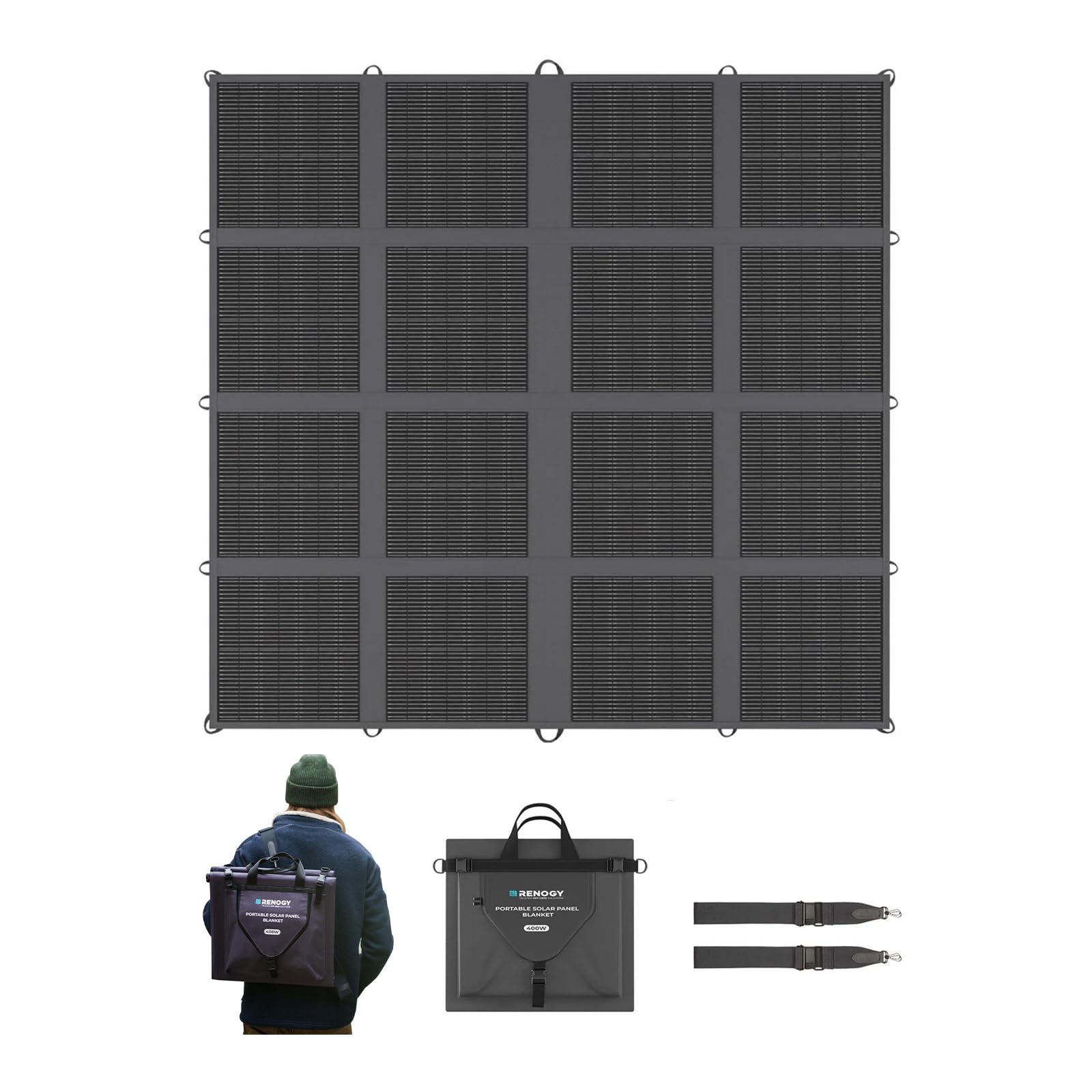
The Renogy blanket redefines portability at 16.09 pounds — 62% lighter than conventional 400W suitcases. Its 16-fold design collapses to 16.54 x 15.83 x 4.13 inches, roughly backpack size, which makes it the best option for overlanding or any situation where storage space is tighter than a car trunk. The 25% efficiency from N-Type 16BB cells outperforms standard 9BB designs by roughly 2.5%.
Field reports show a peak of 412W on a clear day and 280W under overcast conditions. The 10-foot cable connects easily to most power stations, and the IP65 rating handles light rain and dust. The blanket can be laid across a windshield to create shade while charging, hung vertically between trees, or deployed flat on the ground — the flexibility is a real advantage for campers who park in the shade.
Some users report a max of 250W in ideal Florida sun, suggesting unit-to-unit variability or that the panel really does need the best possible angle and airflow. The ETFE lamination and reinforced stitching feel military-grade, but the UL 61730 certification provides peace of mind. The padded carry handle and shoulder straps make transport genuinely easy.
Why it’s great
- Lightest 400W by a wide margin
- Backpack-size folded dimension
- Multiple mounting configurations
Good to know
- Some units output far below 400W rating
- No adjustable kickstands; must prop manually
3. OptiSolex 440W Solarbag
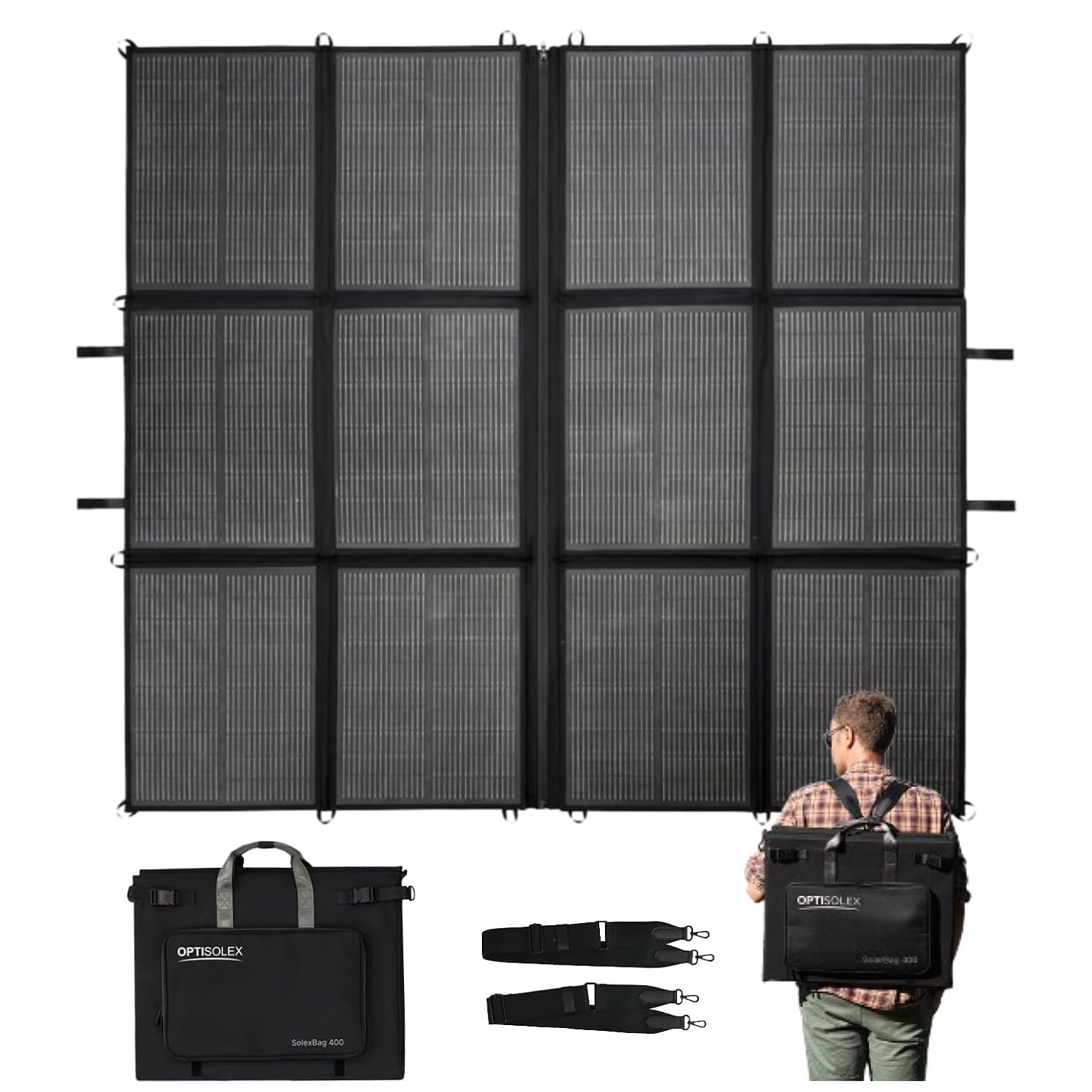
The OptiSolex 440W Solarbag uses a zipper-based split design that separates into two 220W panels, each capable of charging different devices simultaneously. This is uniquely useful for RV owners who want one panel charging the house battery while the other powers a portable station. The 17.2-pound weight and 25% N-Type efficiency put it in the same lightweight class as the Renogy blanket.
One verified customer recorded a peak of 478W from the rated 440W panel — exceeding spec by nearly 9% — in optimal conditions at 13°N latitude. Over three days with scattered showers, the panel generated 5.10 kWh. The 6-port output array includes USB-C 45W and dual USB-A ports, allowing direct device charging without a power station.
The ETFE laminate and IP65 rating provide adequate weather protection, and the 3-year warranty adds confidence. Some users note that partial shading on one cell drastically reduces output, which is typical for panels without robust bypass diode arrays. The canvas backing is heavy but durable, and the included shoulder straps make carrying manageable.
Why it’s great
- Unique split design for dual charging
- Exceeded rated output in real-world test
- Built-in USB ports for direct charging
Good to know
- Shade on any cell sharply drops voltage
- Connection wire area may not be fully waterproof
4. ZOUPW 450W Portable Solar Panel
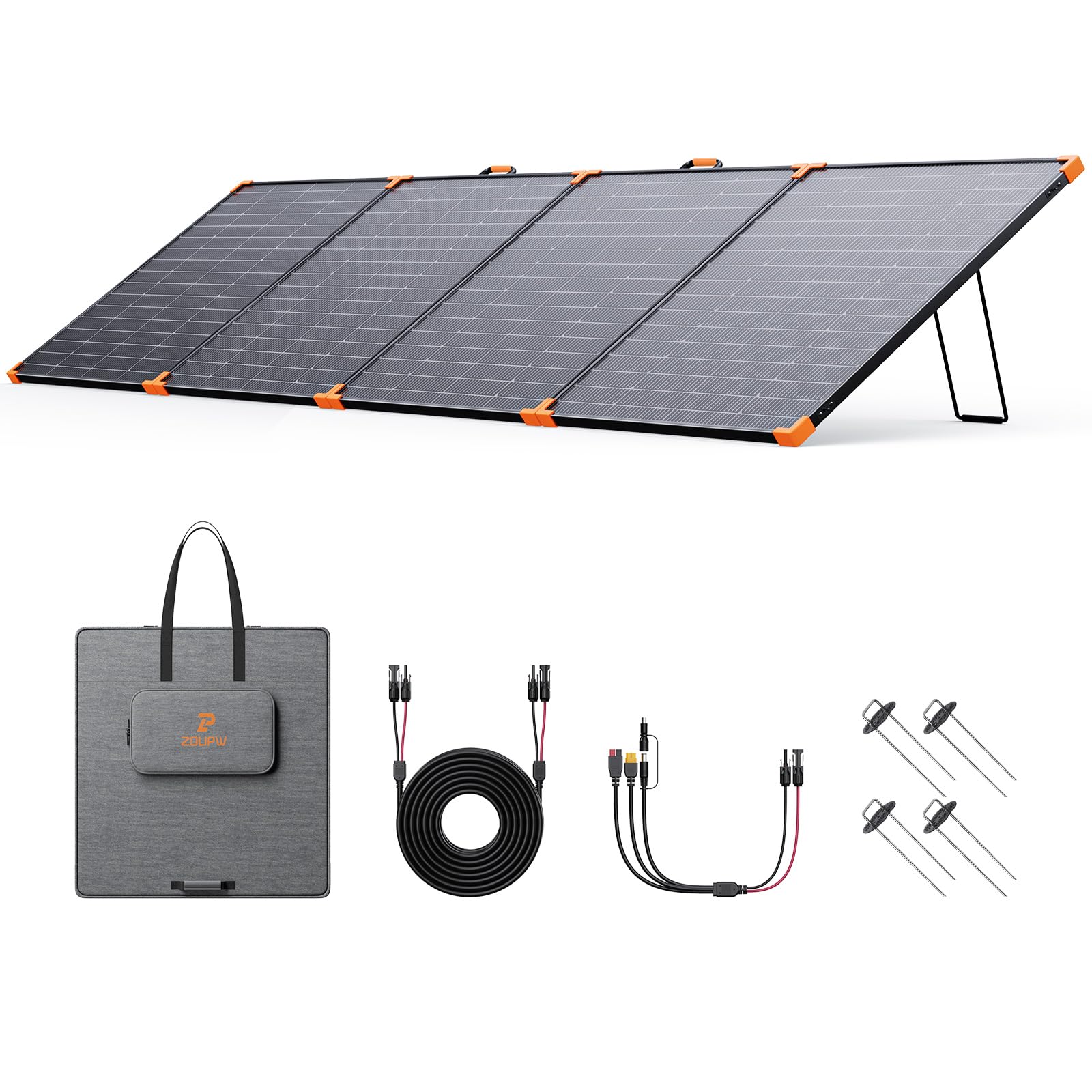
The ZOUPW 450W is engineered specifically for high-voltage power stations like the EcoFlow Delta series and Anker SOLIX C1000, with a 45.9V open-circuit voltage that delivers faster charging to 40-60V MPPT inputs. The 16-busbar N-Type cells achieve 25% efficiency and resist the LID that plagues older P-Type panels.
Real-world testing by multiple users shows output exceeding 500W in optimal conditions, with one user recording 500W+ on a Bluetti AC300 in Trinidad heat. Even flat orientation on a warm afternoon yielded 400W+ after 4pm, proving the bypass diode array and fiberglass construction manage heat effectively. The four reinforced kickstands adjust to 45° and are stable in wind.
At 29.5 pounds, it’s heavier than the blanket options but significantly lighter than glass bifacial panels. The aerospace-grade fiberglass frame is durable without adding weight. The major caveat: this panel is NOT compatible with low-voltage power stations (under 30V input) like the Jackery 1000 or Bluetti EB70S — always verify your station’s input range. The 36-month warranty is among the best in this tier.
Why it’s great
- Exceeds 450W rating in many conditions
- Optimal for high-voltage MPPT stations
- Long 36-month warranty
Good to know
- Not compatible with sub-30V power stations
- Tiny shade spot drops voltage over 50%
5. DOKIO 800W (2x400W) Panels

The DOKIO set ships as two 400W rigid panels with tempered glass and aluminum frames for permanent or semi-permanent installation. These are not portable in the suitcase sense — each panel measures 67.8 x 44.6 x 2.4 inches and weighs nearly 100 pounds total — but they are an exceptional value for building a ground-mount array or installing on an RV roof.
Each panel includes 9.84-foot MC4 leads, which reduces the number of extension joints needed when connecting to a combiner box or charge controller. The parallel-wired configuration keeps voltage at 12V safe levels for standard controllers, though an MPPT controller is recommended to capture the full 800W. Users report ~560W in partial shade conditions and full 800W in direct sun.
Build quality is solid, with corner protectors in the box and sealed junction boxes for outdoor use. The panels are compatible with AGM, Gel, and LiFePO4 batteries via PWM or MPPT controllers. This set is best for buyers who want permanent off-grid power without paying premium per-panel pricing. The weight makes them impractical for frequent moving.
Why it’s great
- Excellent price per watt for fixed installation
- Long MC4 leads reduce connection points
- Plug-and-play with most charge controllers
Good to know
- Extremely heavy; not truly portable
- Requires MPPT controller for best performance
6. Renogy 400W Portable Solar Panel Suitcase

Renogy’s suitcase-style 400W panel is built with fiberglass reinforcement, ETFE coating, and aluminum backsheet — materials designed for decades of rugged use. At 30.2 pounds and folding to 33.7 x 27.95 x 3.2 inches, it’s heavier than the blanket but far more durable, with IP67 waterproofing and hail-resistant construction.
Real-world output reaches 395W peak, with 200W+ under partial overcast. The parallel wiring design provides genuine partial-shade tolerance — shadows on one panel won’t cripple the other — a critical advantage over series-wired competitors. The integrated kickstands are sturdy rust-proof units that hold the panel steady in moderate wind, though they are not adjustable for angle.
The included carry case lacks padding, which some users compensate for with foam inserts. The 3-year material and workmanship warranty backs the build quality. This panel is ideal for RVers and preppers who want one reliable unit that will survive years of repeated setup and takedown without developing microcracks or delamination.
Why it’s great
- Exceptional build durability for long-term use
- Parallel wiring handles partial shading well
- Stable kickstands in windy conditions
Good to know
- Kickstands are non-adjustable; angle can’t be changed
- Carry case lacks foam padding
7. JJN Bifacial 2PCS 400W Solar Panels
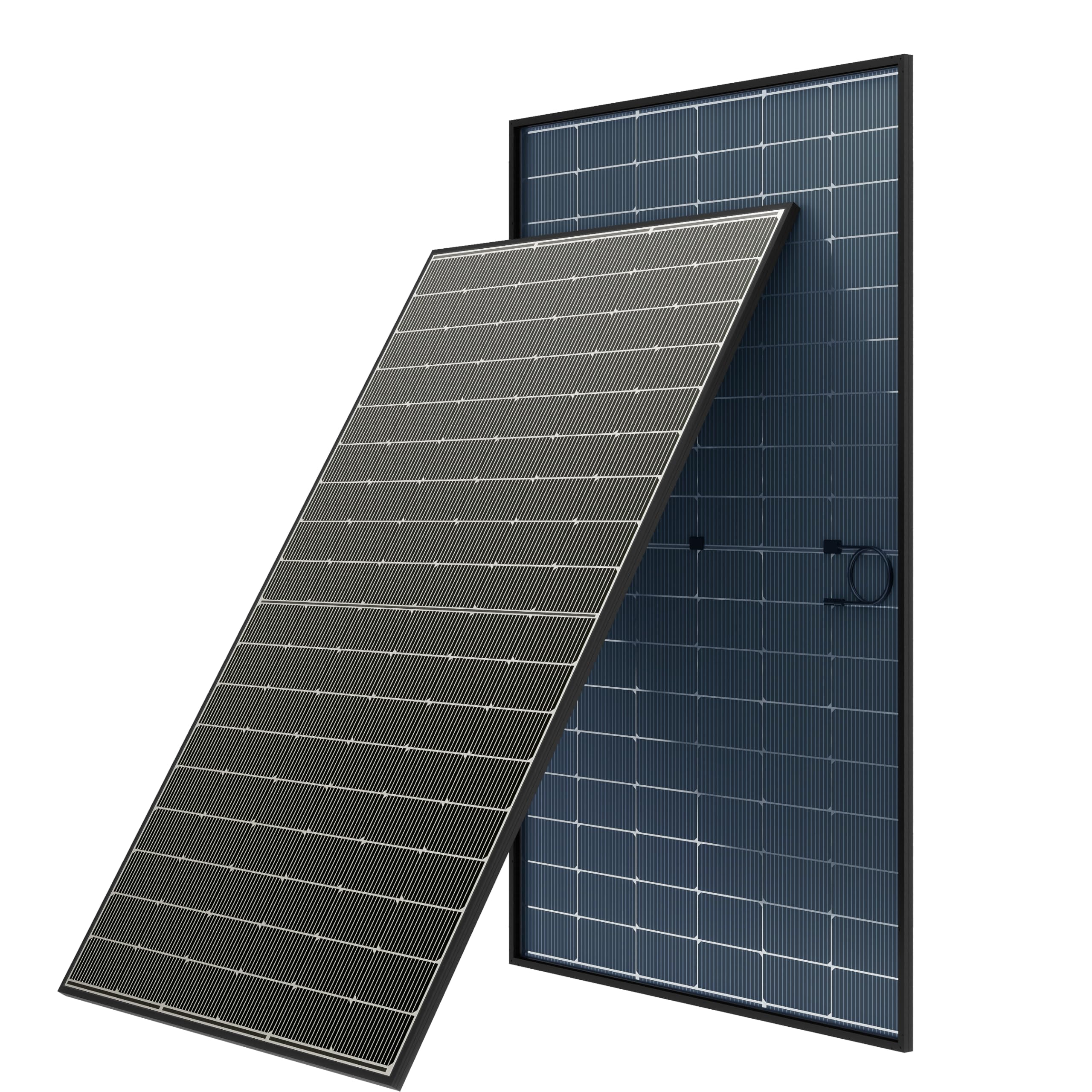
The JJN bifacial panels use a transparent backsheet that allows light capture from both sides, boosting total energy yield by up to 25% compared to conventional single-sided panels. The 16BB N-Type cells minimize shading impact, and the black anodized aluminum frame provides corrosion resistance with 2400Pa wind and 5400Pa snow load ratings.
Each panel weighs approximately 47 pounds and measures 67.8 x 44.7 x 1.2 inches — these are fixed-installation panels, not portable. Flat-mounted on a camper roof, users report 87W per panel initially, climbing to 90% of rated output later, and 106% with optimal angle. The angle dependence is stark: 70% output when flat vs 110% when tilted at the correct angle.
The 30-year transferable power output warranty is exceptional for a manufacturer at this price point. The panels are pre-drilled for Z brackets, corner brackets, pole mounts, and tilt mounts. Some units have shown minor cell imperfections (small dots) that don’t affect output but may bother perfectionists. Packaging has been hit-or-miss, with occasional shipping damage reported.
Why it’s great
- Bifacial design yields 25% more energy
- Industry-leading 30-year warranty
- Excellent performance when properly angled
Good to know
- Heavy; requires fixed mounting
- Some panels arrive with cosmetic cell defects
8. EPOCH 800W Bifacial Solar Panels
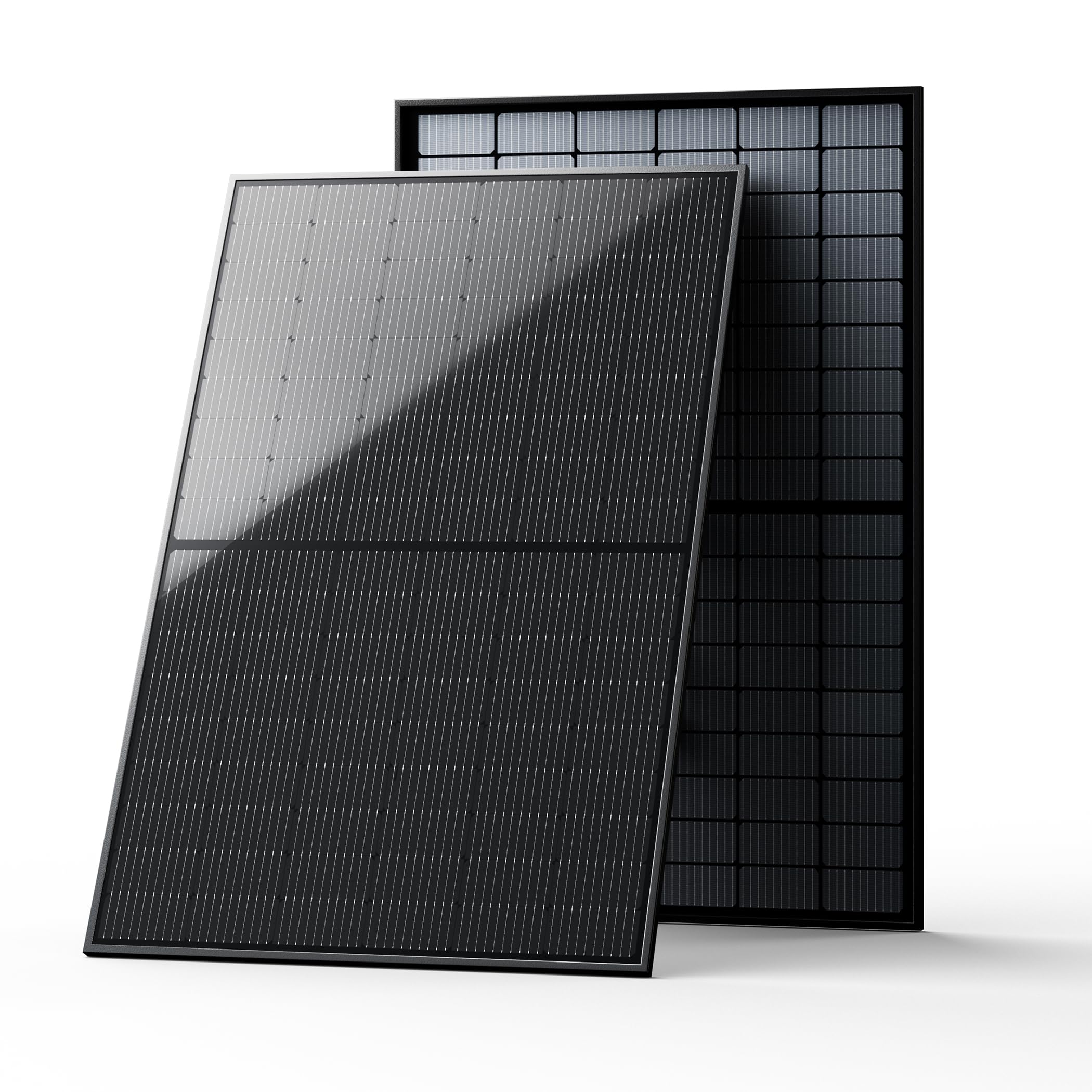
The EPOCH 800W set pairs two 400W bifacial panels with PERC half-cut cell technology, 16 busbars, and a black aluminum frame that looks clean on any roof. The transparent backsheet and 91.5% light transparency allow a meaningful rear-side energy boost, especially on ground mounts where reflected sunlight from gravel or snow is significant.
Users report that these panels outperform standard Renogy suitcases in cloudy conditions, with one reviewer noting 300W charging from a single panel on a Bluetti EB240 — resilient performance for overcast days. Mounted flat on an SUV roof, one panel still produced 350W in full sun and 60-150W on rainy days, which is excellent for flat-mounted panels that typically underperform.
The 12-year product quality warranty and 25-year linear power output warranty provide long-term confidence. However, packaging has been a recurring complaint: panels are shipped in boxes that are easily damaged during freight, with some units arriving with bent frames. Each panel is 100% EL-tested for microcracks before shipping, but the packaging protection needs improvement.
Why it’s great
- Excellent cloudy-day output vs. competitors
- Black frame looks premium on any installation
- Half-cut cells reduce internal resistance
Good to know
- Packaging is inadequate; shipping damage common
- Heavy at 53+ lbs per panel
9. EF ECOFLOW 400W Portable Solar Panel

The EcoFlow 400W panel is designed to pair directly with EcoFlow power stations using the MPPT algorithm for optimal efficiency. The foldable design uses flexible EVA and fiberglass layers for durability, with an IP68 waterproof rating on the main body. The 23% conversion rate is slightly below the N-Type competition, but the ecosystem integration is seamless.
Two panels combined with a Delta Pro deliver 695W peak (from 800W rated) in midday Texas sun, charging the 3600Wh station effectively. The included carry case doubles as an adjustable kickstand, though many users bypass the case hooks and lean panels against a wall for simpler setup. The 35.3-pound weight is manageable for wheeled transport when paired with the Delta Pro.
Winter performance is limited by low sun angle in northern latitudes. The panel is noticeably heavier than blanket-style alternatives, but the build quality feels substantial. The MC4 connectors are standard for EcoFlow’s ecosystem. This is the best choice for existing EcoFlow users who want plug-and-play compatibility without adapter cables.
Why it’s great
- Deep integration with EcoFlow MPPT algorithm
- IP68 main body waterproofing
- Carrying case doubles as adjustable stand
Good to know
- Heavier than competing foldable panels
- Conversion efficiency is average for the price
10. Anker SOLIX PS400 Solar Panel

Anker’s PS400 brings a four-angle kickstand (30°, 40°, 50°, 80°) that allows precise sunlight tracking throughout the day and across seasons — a practical feature that few competitors match. The monocrystalline cells achieve up to 23% efficiency, and the ETFE coating resists dust and scratches. The IP67 rating means rain won’t interrupt charging.
Users report peak output around 275W per panel in optimal conditions when paired with Anker’s C767 power station, which is below the 400W rating but consistent with the “1.5x faster” marketing claim for charging Anker batteries. Three panels in parallel produced 1030W after accounting for line loss over a 50-foot 10 AWG cable run, which is reasonable.
The panel weighs 35 pounds and the built-in MC4 connectors maintain low resistance compared to XT-60 alternatives. The included two 9.8-foot MC4 extension cables and one MC4-to-XT60 adapter provide flexibility for positioning panels away from the power station. The snap fasteners on the carrying case are stiff and difficult to undo with cold hands.
Why it’s great
- Best-in-class 4-angle adjustable kickstand
- MC4 connectors for high-conductivity connections
- ETFE coating for scratch resistance
Good to know
- Real-world output often below rated 400W
- Carrying case snaps are very stiff
11. AFERIY Solar Generator with 2x400W Panels
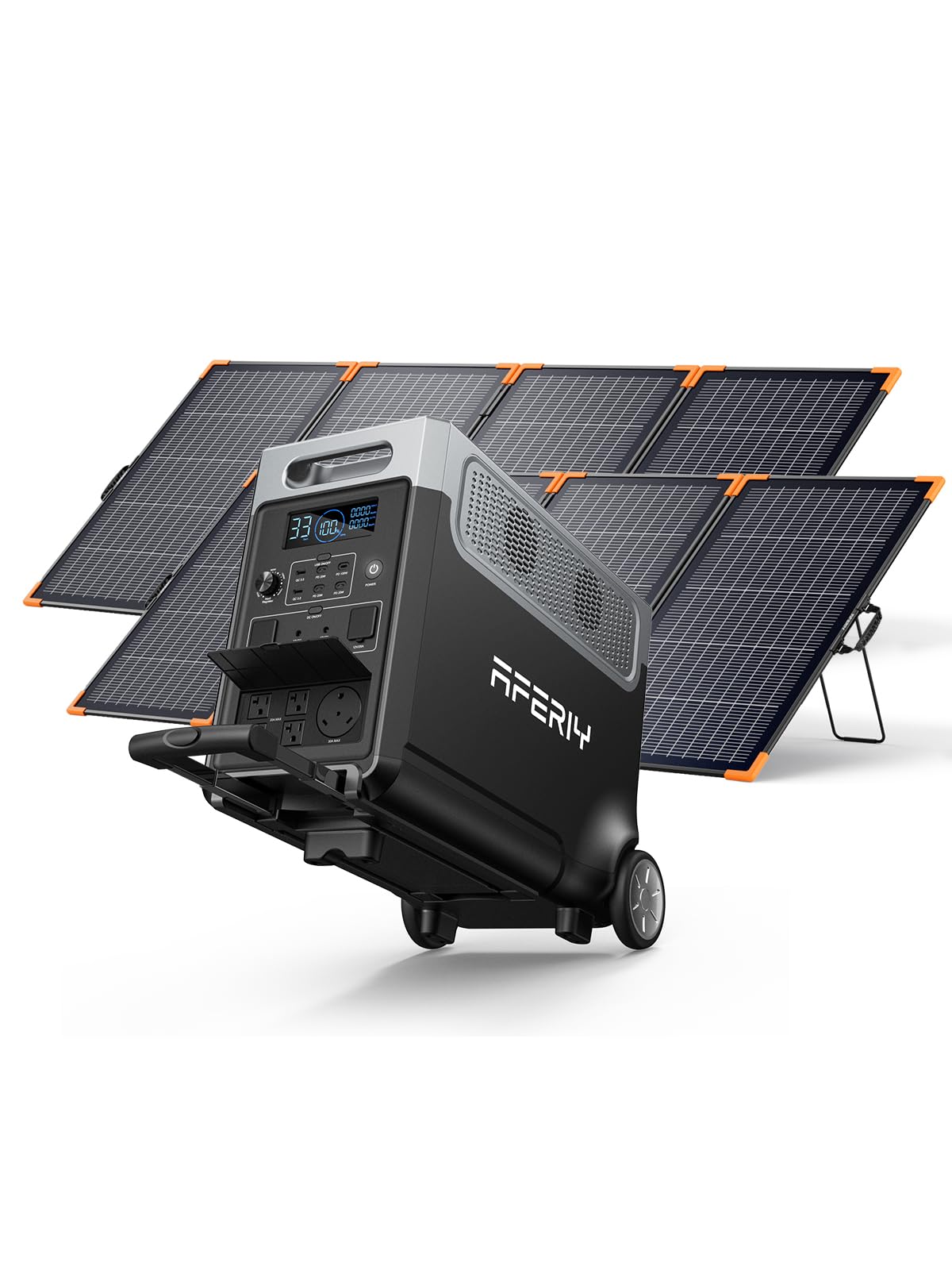
The AFERIY kit bundles two 400W bifacial solar panels with a 3840Wh LiFePO4 power station, creating a complete off-grid system. Each panel delivers 25% conversion efficiency with IP67 waterproofing, and the station’s 3600W continuous pure sine wave output (7200W surge) can run most home essentials. The 800W solar input can fully charge the station in about 1.5 hours under optimal conditions.
The station is expandable to 11.5kWh with extra batteries, and the UPS function switches over in under 10ms, making it viable for sensitive electronics. Users report reliable performance for short outages, with good build quality including sturdy wheels, dust covers, and robust cabling. The Bluetooth app allows remote monitoring and scheduling.
The 7-year support commitment is strong, though some users have reported display issues that were resolved through customer support. The panels and station ship separately, which can be inconvenient. This kit offers the best cost per kWh among premium competitors, but the total weight of 158 pounds makes it a stationary system rather than truly portable.
Why it’s great
- Complete plug-and-play solar generator system
- Expansion capability up to 11.5kWh
- UL certified with 7-year support
Good to know
- Panels and station ship in separate boxes
- Heavy system; not for frequent relocation
FAQ
Can I use a 45V Voc 400W panel with a 12V battery system?
Why does my 400W panel only output 250W in full sun?
What’s the difference between ETFE and PET coating on solar panels?
Final Thoughts: The Verdict
For most users, the 400 watt portable solar panel winner is the E-POWO 400W because it delivers 23.5% efficiency in a lightweight, universally compatible package with adjustable kickstands — the best balance of portability, output, and price. If you prioritize ultralight carry weight above all else, grab the Renogy 400W Blanket at 16.09 pounds with 25% N-Type cells. And for a complete off-grid power solution with dual bifacial panels and a 3840Wh station, nothing beats the AFERIY Solar Generator Kit.

Mo Maruf
I created WellFizz to bridge the gap between vague wellness advice and actionable solutions. My mission is simple: to decode the research and give you practical tools you can actually use.
Beyond the data, I am a passionate traveler. I believe that stepping away from the screen to explore new environments is essential for mental clarity and physical vitality.