Our readers keep the lights on and my smoothie glass nicely filled. As an Amazon Associate, I earn from qualifying purchases.
Eight to twelve hours standing, walking, or hauling loads on unforgiving concrete leaves your feet, knees, and lower back begging for a break by the end of the shift. The wrong boot turns every step into a small impact that accumulates into real joint pain over a work week. You need a sole that cushions, a tread that grips polished or dusty concrete, and a toe that protects without adding unnecessary weight.
I’m Mohammad Maruf — the founder and writer behind WellFizz. I’ve spent years analyzing work boot construction, outsole compounds, and midsole foam densities to understand which boots actually reduce fatigue on concrete versus which ones just look tough in a product photo.
After combing through real-world feedback and technical specs, I’ve narrowed the field to nine contenders that genuinely manage the demands of hard flooring. This guide delivers the honest breakdown you need to pick the right pair of boots for concrete floors.
How To Choose The Best Boots For Concrete Floors
Concrete is the most punishing subfloor for any work boot because it offers zero shock absorption. Every step sends vibration through your heel, arch, and knee unless the boot is engineered to dampen that energy. Focus on three performance pillars: midsole cushioning chemistry, outsole grip geometry, and toe material weight balance.
Cushioning Density and Rebound
EVA midsoles are lightweight and soften impact on initial contact, but they compress and lose resilience faster under repeated 8-hour loads. Polyurethane (PU) midsoles are denser and retain shape longer, making them better for concrete where you stand or walk the entire shift. Some premium boots use nitrogen-infused or rubberized foam that bridges both qualities — soft enough to absorb shock, firm enough not to bottom out by 3 PM.
Outsole Compound for Polished or Dusty Concrete
A deep-lugged tread designed for mud can actually reduce contact area on smooth concrete, making the boot less stable. Look for outsoles with a flat contact patch and rubber compounds rated for oil and slip resistance (ASTM F2913 or SATRA TM144). Chevron or siped tread patterns evacuate water and fine dust, maintaining grip when the floor is wet or dirty.
Toe Material Trade-Offs
Steel toes offer the highest impact protection but add noticeable weight per step, which compounds fatigue on concrete over a full shift. Alloy toes are lighter and thinner-walled but meet the same safety standards. Composite toes are non-metallic, lighter than steel, and do not conduct temperature — a real advantage when working on cold concrete floors in winter. Choose based on whether weight savings or absolute impact rating matters more for your daily tasks.
Quick Comparison
On smaller screens, swipe sideways to see the full table.
| Model | Category | Best For | Key Spec | Amazon |
|---|---|---|---|---|
| Timberland PRO Boondock | Premium | All-day heavy industrial concrete work | Anti-fatigue rubberized midsole | Amazon |
| Wolverine Durashock | Premium | Long-lasting comfort for standing shifts | Durashock PU outsole | Amazon |
| New Balance Calibre | Premium | Lightweight composite toe with easy on/off | Side zipper + composite toe | Amazon |
| Orthofeet Granite | Premium | Wide toe box for foot pain sufferers | Orthopedic design (wide toe box) | Amazon |
| Puma Safety Conquest | Mid-Range | Waterproof work with side zip convenience | Side zipper + composite toe | Amazon |
| Timberland PRO Powertrain | Mid-Range | Lightweight alloy toe for active warehouse work | Alloy toe (lightweight) | Amazon |
| MWORK MW9276 | Mid-Range | Budget-friendly comfort with no break-in | Composite toe + puncture resistant | Amazon |
| Reebok Shaqnosis | Mid-Range | Wide-foot friendly out-of-box comfort | Composite toe (lightweight) | Amazon |
| Cat Striver | Mid-Range | Durable steel toe at an entry-level price | Steel toe + rugged outsole | Amazon |
In‑Depth Reviews
1. Timberland PRO Boondock 6 Inch Composite Toe

The Boondock is built for the worst concrete conditions — wet, dirty, freezing, or debris-strewn — and it handles them all without needing a break-in period. The anti-fatigue midsole uses a rubberized foam that feels like a dense stress ball under your heel, absorbing shock with every step rather than transferring it up into your knees. Multiple reviewers report standing for full 12-hour shifts on concrete with zero foot numbness, a claim few boots at any price can consistently deliver.
Waterproofing is genuine: the leather and membrane combo kept feet bone dry after standing in three inches of standing water. The composite toe runs slightly warm but stays non-conductive in cold weather, and the triple-stitched lower plus glued-and-stitched sole indicate a construction that outlasts typical six-month boot lifespans in heavy industrial use. Laces may fray at the eyelets over time, but replacing them with paracord is a cheap, common fix that experienced Boondock owners anticipate.
For sheer all-day concrete resilience, the Boondock is the benchmark. The combination of no-break-in comfort, genuine waterproofing, and anti-fatigue foam that does not go flat by week ten makes it the top recommendation for anyone working on concrete floors eight hours or more.
Why it’s great
- Anti-fatigue midsole absorbs concrete shock all shift without bottoming out.
- Genuinely waterproof — tested in 3 inches of water with dry feet.
- Composite toe is warmer than steel on cold concrete floors.
Good to know
- Laces may fray at eyelets; easy replacement with paracord.
- Insole fabric can separate from foam over extended use.
2. Wolverine Durashock W03238

Wolverine’s Durashock line has a reputation for being comfortable straight out of the box, and the W03238 lives up to it. The proprietary Durashock outsole is a polyurethane blend designed to reduce impact on hard surfaces, and long-term owners report getting a year and a half of daily concrete wear before the boot shows serious signs of giving up. That longevity makes it a smart investment for anyone replacing budget boots every six months.
The full-grain leather upper is soft enough to mold to your foot without a brutal break-in period, yet tough enough to shrug off abrasion from concrete edges and steel toe scuffs. Some previous Wolverine buyers experienced stitching separation on older Durashock models, but the W03238 seems to have addressed that — reviewers who switched to Ariat and came back to this model noted improved upper durability.
On concrete, the outsole provides a stable platform that does not feel overly stiff or clunky. The boot is heavier than composite-toe alternatives, but the weight distribution and midsole rebound make it feel balanced during extended standing. If you want a traditional leather work boot that delivers concrete comfort without gimmicks, this is your pair.
Why it’s great
- Durashock PU outsole provides long-lasting impact absorption on concrete.
- Soft full-grain leather upper with minimal break-in required.
- Many owners report 18+ months of daily heavy use.
Good to know
- Heavier than composite or alloy toe alternatives.
- Some past models had upper stitching issues; this version appears improved.
3. New Balance Calibre Composite Toe
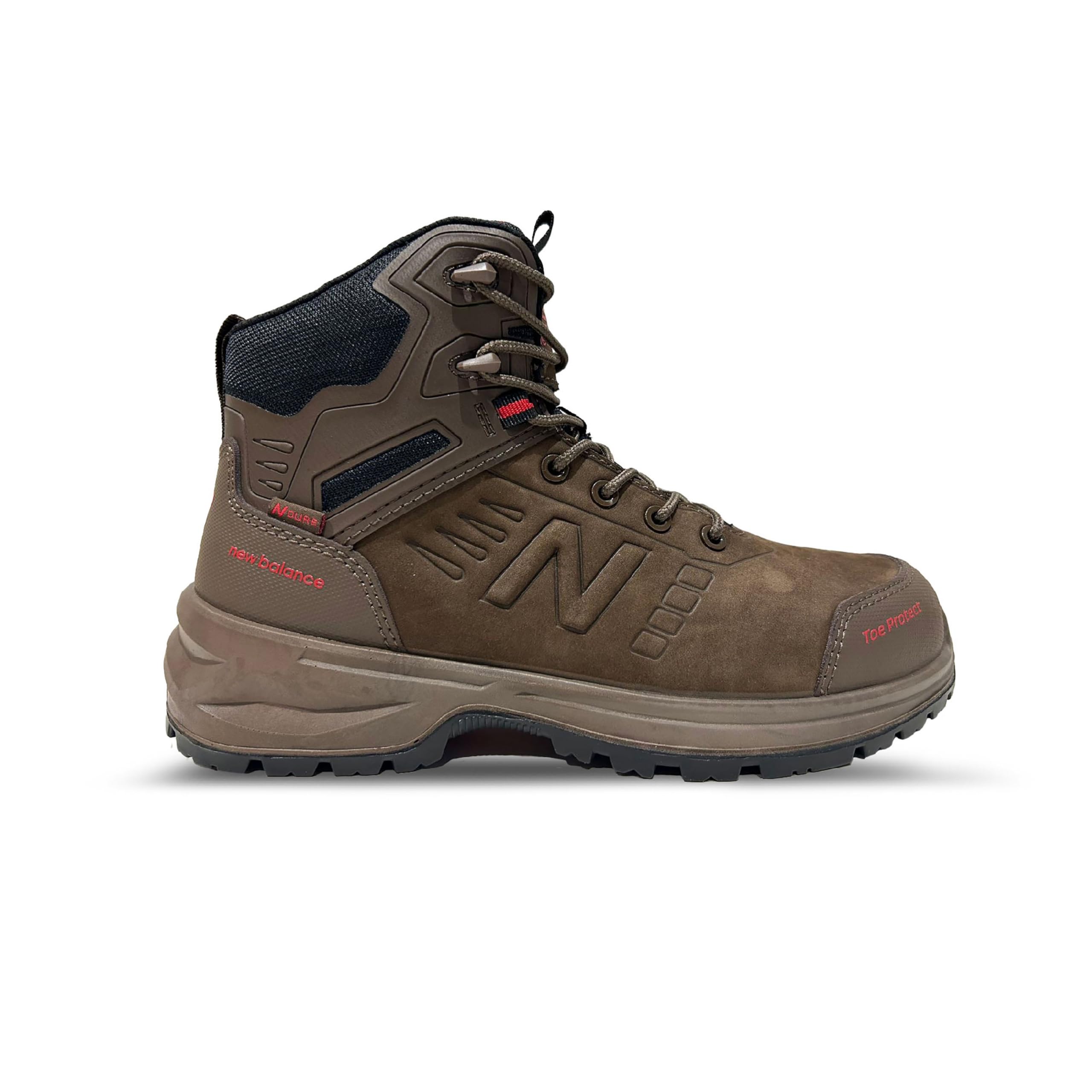
New Balance brought their athletic shoe design DNA into the work boot category with the Calibre, and it shows. The composite toe is surprisingly light — several reviewers noted it feels closer to a heavy-duty sneaker than a traditional work boot — which directly reduces the leg fatigue that accumulates over a 10-hour warehouse shift on concrete. The side zipper with a Velcro guard makes on-and-off fast, a daily convenience for anyone who needs to change footwear between driving and working.
The outsole offers good water repellency; one reviewer reported staying dry while power washing. The toe box is wider than average, which is a critical feature for concrete workers because tight toe boxes exacerbate foot pain after hours of standing. The leather upper is not the thickest on this list and scuffs more easily than full-grain hides, but the trade-off is a boot that weighs noticeably less per step.
Insulation is minimal — a few users needed heated insoles during winter months — so this boot is better suited for indoor concrete work in climate-controlled environments. For warehouse, light construction, and maintenance roles where you prioritize weight savings and convenience over maximum insulation, the Calibre is a strong choice.
Why it’s great
- Significantly lighter than steel toe boots, reducing concrete fatigue.
- Side zipper with Velcro guard allows easy on/off without re-lacing.
- Wide toe box accommodates thicker socks for all-day comfort.
Good to know
- Leather scuffs easier than premium full-grain alternatives.
- Not heavily insulated; consider heated insoles for cold environments.
4. Orthofeet Granite Waterproof Slip Resistant

If narrow toe boxes have forced you into buying shoes a full size up, the Orthofeet Granite is engineered specifically for you. The anatomical toe box allows your toes to splay naturally, which eliminates the pinching and cramping that leads to neuromas and arch pain after hours on concrete. One reviewer with chronic arthritis reported zero heel pain after 10–12 hour heavy labor shifts — a testament to how much toe box geometry affects whole-foot comfort on hard flooring.
The waterproofing holds up in wet conditions, and the slip-resistant outsole provides confident traction on oily or wet concrete. The leather is softer than heavy-duty work boots, but after six months of 55+ hour weeks in heavy equipment environments, the boots remained intact with no structural failure. That durability is impressive for a boot focused on orthopedic comfort rather than pure ruggedness.
The one consistent caveat is the insole: several users found it comfortable for the first two to three weeks but noticed it thinned out, making the concrete feel harder through the sole. Replacing the insole with a third-party orthotic is a simple fix, and the boot’s overall construction still beats most competitors in the wide-foot space.
Why it’s great
- Wide anatomical toe box eliminates pinching on concrete.
- Genuine waterproof construction handles wet industrial environments.
- Provides relief for arthritis and heel pain during long shifts.
Good to know
- Stock insoles may thin out after a few weeks; budget for replacements.
- Ankle height only; no higher-cut option for extra support.
5. Puma Safety Conquest Waterproof Composite Toe

The Conquest hits a sweet spot for concrete workers who need waterproofing without the bulk of a full leather logger boot. The side zipper is robust enough to handle daily use — one reviewer reported eight months of reliable zipper function with no signs of failure — which speeds up boot changes during split shifts or when moving between indoor and outdoor environments. The composite toe prevents cold transfer on refrigerated concrete floors, a detail steel toe wearers appreciate when temperatures drop.
The midsole provides noticeable cushioning: multiple reviewers compared the sensation to walking on supportive slippers rather than traditional work boots. The waterproof membrane works well in mud and snow, and the outsole tread grips wet concrete confidently. Weight is moderate — lighter than a steel toe logger but heavier than a sneaker-style composite boot — and the overall feel is stable without being clunky.
Two durability points need attention: the tread rubber can wear faster on rough concrete than premium competitors, and the inner Achilles padding may degrade after several months of daily use. Neither issue makes the boot a bad value at its price point, but heavy-duty users may need to plan for a replacement cycle sooner than the Boondock or Wolverine.
Why it’s great
- Side zipper simplifies daily on/off, especially during split shifts.
- Composite toe stays temperature-neutral on cold concrete floors.
- Waterproof membrane keeps feet dry in wet industrial conditions.
Good to know
- Tread rubber wears faster on abrasive concrete compared to premium boots.
- Inner Achilles padding may wear out before the rest of the boot.
6. Timberland PRO Powertrain Alloy Toe

The Powertrain is Timberland PRO’s answer to workers who want safety toe protection without the heavy footfall of steel. The alloy toe meets the same ASTM impact standards as steel but shaves noticeable weight off each step — a real advantage when you are walking miles of warehouse concrete per shift. Reviewers consistently describe the boot as light enough to forget you are wearing a safety toe, which is the highest compliment for this category.
The comfort level is high straight out of the box: the midsole uses Timberland’s anti-fatigue technology similar to the Boondock, though the overall cushioning is tuned slightly firmer. The boot is not fully waterproof, so it is best suited for dry indoor concrete environments like warehouses, distribution centers, and assembly lines. Breathability is moderate — some users noted feet felt warm after several hours — but the trade-off for the lightweight construction is worth it for many.
A small number of long-term reviewers reported sole separation after six to nine months of heavy use, which is worth monitoring. For light to moderate warehouse work where every ounce of weight savings translates to less fatigue by the end of the week, the Powertrain is an excellent performer.
Why it’s great
- Alloy toe is significantly lighter than steel, reducing step fatigue on concrete.
- Comfortable out of box with minimal break-in period needed.
- Anti-fatigue midsole technology works well for active warehouse shifts.
Good to know
- Not fully waterproof; best for dry indoor concrete use.
- Some reports of sole separation after 6-9 months of heavy use.
7. MWORK MW9276 Composite Toe

The MWORK MW9276 is the surprise performer that punches far above its entry-level price point. Multiple reviewers who have worn premium boots from Brunt and Wolverine stated that the MW9276 was more comfortable on concrete — specifically praising the out-of-box feel with zero break-in. The composite toe is puncture-resistant and meets ASTM F2413-18 standards, and the non-slip sole grips wet concrete and oil-covered surfaces as well as boots costing twice as much.
The midsole is plush without being mushy: one reviewer described the sensation as “walking on a cloud” even after eight to ten hours on concrete. The waterproofing is adequate for light moisture, and the overall construction feels solid with no immediate red flags in stitching or sole adhesion. The boots are heavier than sneaker-style work shoes, but the cushioning compensates well.
Two quirks: the right boot may develop a squeak on dry smooth concrete for some users, and the weight is noticeable if you are used to lightweight athletic work shoes. One reviewer added a secondary insole for extra cushioning, which resolved any comfort complaints. For the price, this boot delivers concrete-specific performance that rivals mid-range competitors.
Why it’s great
- No break-in needed — comfortable from the first wear on concrete.
- Excellent non-slip outsole on wet, oily, and dusty concrete floors.
- Exceptional value for the level of cushioning and safety features.
Good to know
- Right boot may develop a squeak on dry smooth concrete surfaces.
- Heavier than composite-toe sneaker-style work boots.
8. Reebok Shaqnosis Composite Toe
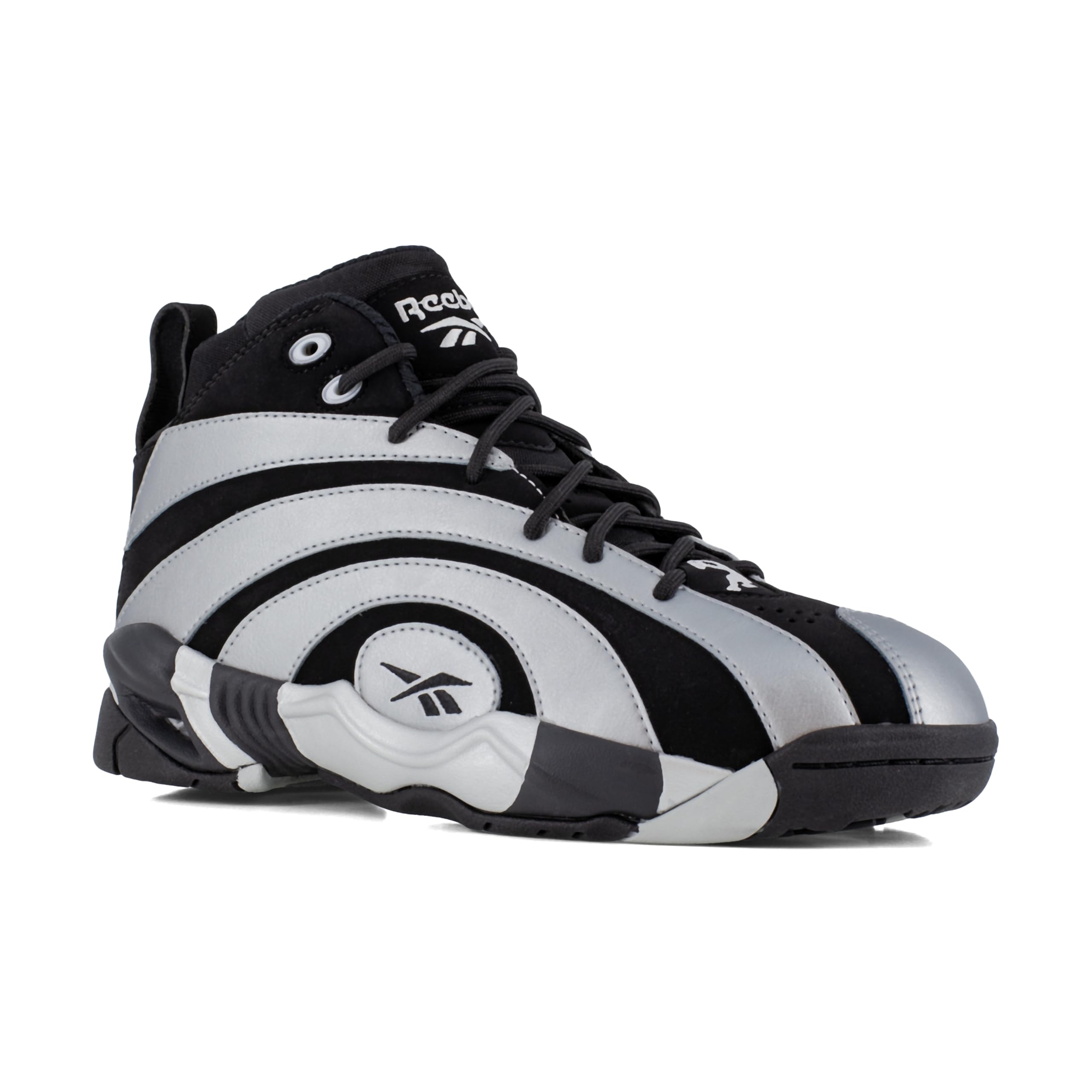
The Shaqnosis brings a sneaker-like aesthetic to the work boot aisle, but the real story is the fit for wide-footed workers. Reviewers with wide feet consistently report that these boots accommodate their foot shape without needing to size up, and the composite toe is nearly unnoticeable during the workday. The midsole uses generous cushioning that feels plush underfoot, and the ankle padding is substantial for a boot at this height.
Out-of-box comfort is high — several users wore them for full shifts with zero hot spots. The outsole provides reliable grip on smooth concrete and light dirt, and the overall weight is moderate rather than ultralight. One reviewer noted that the boots are warmer than expected, which is a plus for cold concrete warehouses but could cause sweating in warmer environments.
Build quality is solid for the price tier, though some units arrived with minor cosmetic blemishes or pattern misalignment that did not affect function. If you prioritize a roomy fit, sneaker-like comfort, and composite toe protection for indoor concrete work, the Shaqnosis delivers without breaking the bank.
Why it’s great
- Excellent fit for wide feet without needing to size up.
- Composite toe is nearly unnoticeable during all-day wear.
- Plush midsole cushioning provides good concrete shock absorption.
Good to know
- Runs warm; may cause sweating in hot warehouse conditions.
- Minor cosmetic QC issues reported on some units.
9. Cat Striver Steel Toe

The Cat Striver is a straightforward, no-frills steel toe boot that gets the job done on concrete without costing a premium. The steel toe offers maximum impact protection, and the rugged outsole provides reliable traction on rough or dusty concrete surfaces. Multiple repeat buyers confirm they are on their third pair, which speaks to consistent quality and durability for the price.
The break-in period is the main trade-off: expect about one week of stiffness before the leather softens and the boot molds to your foot. During that period, wearing two pairs of wool socks and applying mink oil can speed up the process significantly. After break-in, the boots are comfortable for a standard shift, though the steel toe adds noticeable weight compared to composite or alloy alternatives.
A few users wished for a pull tab on the heel to make the boots easier to put on — a simple modification a local shoemaker can add for a few dollars. The Striver is best suited for workers who need steel toe protection on a tighter budget and are willing to invest a week of break-in time for a boot that lasts through heavy use.
Why it’s great
- Steel toe offers maximum impact protection for tough environments.
- Rugged outsole provides reliable grip on dusty or rough concrete.
- Proven durability — multiple users are on their third pair.
Good to know
- Rough one-week break-in period requires thicker socks or leather treatment.
- Heavier than composite toe boots; weight is noticeable after 8+ hours.
FAQ
How much cushioning do I actually need for concrete floors?
Is a steel toe or composite toe better for all-day concrete work?
Do I need waterproof boots for indoor concrete work?
Can I add my own insoles to improve concrete comfort?
Final Thoughts: The Verdict
For most users, the boots for concrete floors winner is the Timberland PRO Boondock because the anti-fatigue midsole genuinely absorbs concrete shock for full 12-hour shifts without going flat, and the waterproof construction handles wet industrial environments reliably. If you want a wide toe box that eliminates toe pain and pressure, grab the Orthofeet Granite. And for a value choice that delivers no-break-in comfort and impressive non-slip grip on oil and water, nothing beats the MWORK MW9276.

Mo Maruf
I created WellFizz to bridge the gap between vague wellness advice and actionable solutions. My mission is simple: to decode the research and give you practical tools you can actually use.
Beyond the data, I am a passionate traveler. I believe that stepping away from the screen to explore new environments is essential for mental clarity and physical vitality.