Our readers keep the lights on and my smoothie glass nicely filled. As an Amazon Associate, I earn from qualifying purchases.
Nothing kills a camping trip faster than a dead phone at dusk when you need directions, a flashlight, or just music around the fire. Standard wall chargers are useless without an outlet, and relying on your car’s 12V port drains your starter battery. The solution is a purpose-built power station that stores enough juice to keep your devices alive for days.
I’m Mohammad Maruf — the founder and writer behind WellFizz. I’ve spent years analyzing portable power solutions, comparing battery chemistries, inverter efficiencies, and charge cycle ratings to separate the gear that lasts from the gear that fails when you need it most.
Whether you need to top off your phone, run a CPAP machine, or jump-start your truck at a remote trailhead, finding the right best battery charger for camping means looking beyond capacity numbers and matching the tech to your actual load.
How To Choose The Best Battery Charger For Camping
Camping chargers range from pocket-sized power banks to small power stations. The right choice depends on how much power you need, what devices you carry, and whether you plan to recharge while off-grid. Focus on battery chemistry, total watt-hours, output ports, and recharging options — not just the inflated milliamp-hour number on the box.
Battery Chemistry: LiFePO4 vs. Lithium-Ion
Lithium iron phosphate (LiFePO4) packs last 3,000+ charge cycles — roughly triple that of standard lithium-ion. They also handle extreme temperatures better and are chemically more stable, reducing fire risk inside a hot tent. For occasional weekend trips, a good lithium-ion power bank is fine. For frequent, multi-day use, LiFePO4 pays off in longevity and safety.
Capacity and Watt-Hours — The Real Numbers
Ignore the inflated milliamp-hour (mAh) labels on some power banks. Multiply the voltage (3.7V for most packs) by the mAh to get a rough watt-hour (Wh) figure. A 56,800mAh bank is roughly 210Wh — enough to charge a modern phone 10+ times. Small power stations start around 90Wh and go up; for camping with laptops, CPAP machines, or mini-fridges, aim for 200Wh minimum.
Output Ports: AC Outlets and USB-C PD
A standard USB-A port outputs 5-12W — fine for phones but useless for laptops. Look for USB-C Power Delivery (PD) ports rated 45W or higher. If you need to power a CPAP, small fan, or camera battery charger, an AC outlet (pure sine wave preferred) is essential. The number of simultaneous ports matters when a group shares one unit.
Recharging Options — Solar, Car, and Wall
Solar input is the most valuable feature for extended trips, but solar panels charge slowly (5-6 hours to full on a 100W panel in good sun). Car charging is faster and reliable if you drive daily. Wall charging is the fastest but depends on campground hookups. Pass-through charging — where the unit powers devices while recharging itself — is a huge convenience for base camps.
Quick Comparison
On smaller screens, swipe sideways to see the full table.
| Model | Category | Best For | Key Spec | Amazon |
|---|---|---|---|---|
| BLUETTI Elite 30 V2 | Power Station | High-power camping with appliances | 288Wh · 600W AC · 1500W surge | Amazon |
| Anker SOLIX C200 DC | Power Station | Compact backup for laptops and phones | 192Wh · 200W · 140W USB-C PD | Amazon |
| VTOMAN Jump 600X | Power Station / Jump Starter | Car camping and roadside emergencies | 299Wh · 600W AC · Jump start capable | Amazon |
| DARAN 89.6Wh Station | Mini Power Station | Ultra-portable quiet power | 89.6Wh · 100W AC · LiFePO4 | Amazon |
| SinKeu 24000mAh | Power Bank with AC | Laptop charging in a small footprint | 24000mAh · 65W AC · 4 ports | Amazon |
| MaiVoz 56800mAh | Large Power Bank | Multi-day phone charging on a budget | 56800mAh · 22.5W PD · 3 ports | Amazon |
| MINRISE Solar 40000mAh | Solar Power Bank | Emergencies and solar backup | 40000mAh · 20W PD · Built-in cables | Amazon |
In‑Depth Reviews
1. BLUETTI Elite 30 V2 Portable Power Station
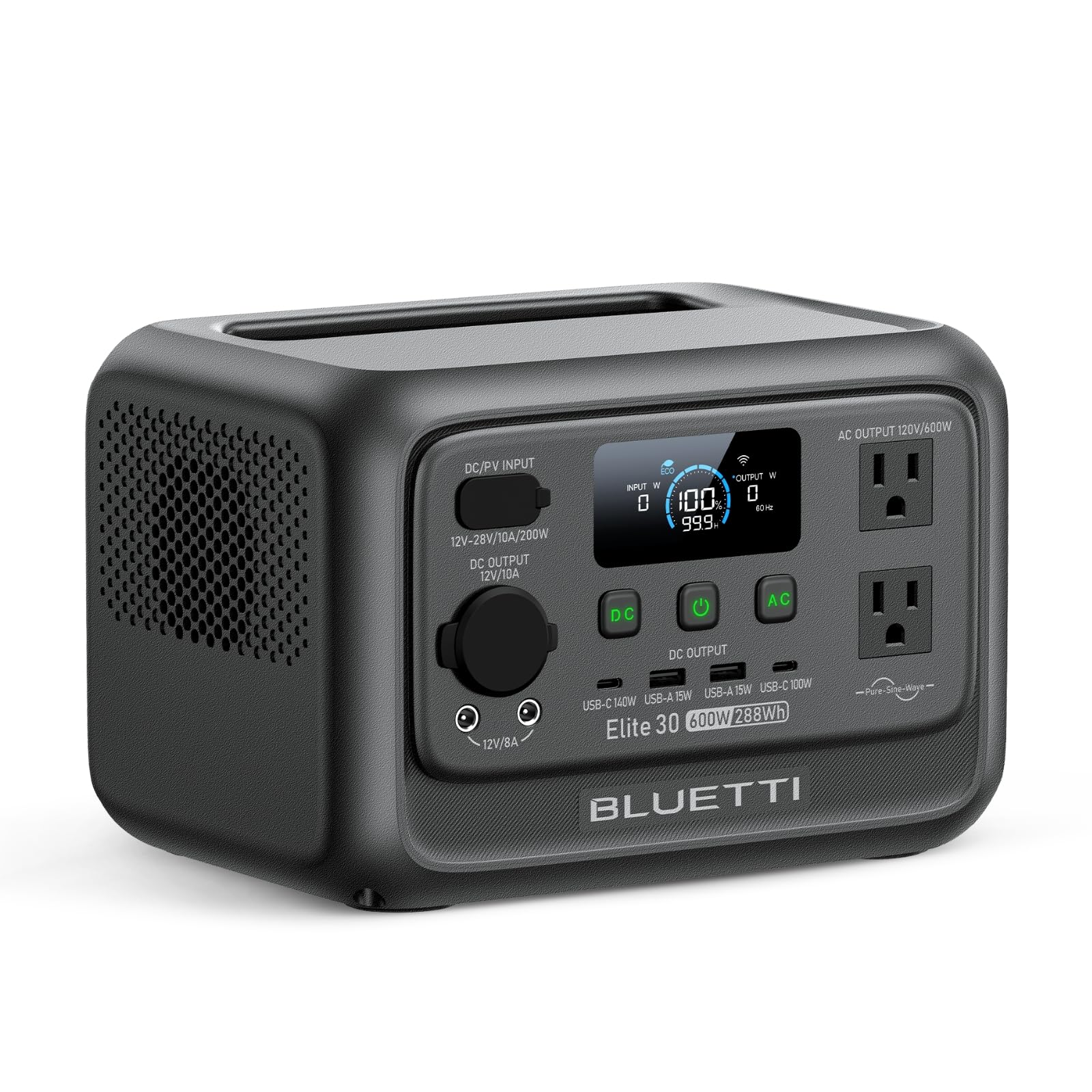
The BLUETTI Elite 30 V2 packs 288Wh of LiFePO4 storage with a 600W pure sine wave AC inverter — enough to run a CPAP machine through the night, power a small kettle in the morning, or keep a laptop and camera batteries charged for a long weekend. Its Power Lifting mode delivers 1500W surge, so it can handle resistive loads like a toaster or space heater without tripping. At 9.4 pounds, it’s light enough for car camping and short carries to the beach.
The 8 charging modes are where this unit really earns its price tag. The AC wall charger pushes 380W, hitting 80% in 45 minutes and full in 70 minutes. Solar input is supported, and the 10ms UPS switch automatically powers connected devices during a blackout — a feature most sub-300Wh units skip entirely. The built-in smart cooling system cuts standby power to just 4.5W, so the battery doesn’t drain itself while sitting in your gear bin.
Real-world users consistently report running a diesel heater on DC for hours, powering a TV at 80W for over 3 hours, and charging multiple phones simultaneously without voltage sag. The BLUETTI app adds remote monitoring and settings adjustment, which is rare at this capacity level. For mixed-use camping where you need AC power, laptop charging, and appliance support, this is the most balanced unit available.
Why it’s great
- 600W AC output with 1500W surge for resistive loads
- LiFePO4 battery rated for 3,000+ cycles
- Ultra-fast 380W wall charging — full in 70 minutes
- App connectivity for monitoring and control
Good to know
- Heavier than basic power banks at 9.4 lbs
- Solar panel sold separately; requires 60V max input
- Initial off-gassing smell reported by some users; vent before first use
2. Anker SOLIX C200 DC Power Bank Station

The Anker SOLIX C200 DC is 39% smaller than comparable power stations, making it one of the most packable units in the 200Wh class. It uses a LiFePO4 battery rated for 3,000 cycles, and its 200W continuous output can charge a MacBook Pro via the 140W USB-C PD 3.1 port at full speed — a feature usually reserved for much larger stations. The five-device array (three USB-C and two USB-A) lets you charge phones, tablets, and Bluetooth speakers simultaneously.
Recharging is equally fast: the 140W USB-C PD input reaches 80% in 1.3 hours using a compatible wall charger. Solar input tops out at 100W, so pairing it with a 60W or 100W Anker solar panel keeps it topped off on sunny days. The unit supports pass-through charging, so you can run devices off it while it recharges — perfect for base camps where you catch sun during the day and use power at night.
Users consistently praise its reliable USB-C PD output that doesn’t drop power when plugging or unplugging other devices, a common annoyance with cheaper power stations. Several reviewers report running a Starlink Mini off-grid for 6-8 hours via the 100W USB-C port. The main caveat: the wall charger is not included, so factor that into your kit if you plan to recharge from a wall outlet.
Why it’s great
- 140W USB-C PD 3.1 — fastest charging port in its class
- LiFePO4 battery with 3,000-cycle lifespan
- Compact footprint fits in most daypacks
- 100W solar input for off-grid recharging
Good to know
- No AC wall charger included — buy separately
- No AC outlet; USB-C only for high-power devices
- Not compatible with 5V USB-C solar panels
3. VTOMAN Jump 600X Portable Power Station

The VTOMAN Jump 600X is a hybrid that combines a 299Wh LiFePO4 power station with a car jump starter — a genuinely useful 2-in-1 for anyone who camps in remote areas. Its 600W AC inverter (1200W surge) can run a mini-fridge, CPAP, or small power tools, while the regulated 12V DC ports deliver consistent voltage for 12V devices like tire inflators and car refrigerators. The 60W USB-C PD port handles laptop charging at a reasonable pace.
What sets the Jump 600X apart is its expandable capacity: you can add an extra battery to reach 939Wh, turning it into a weekend-capable station without buying a whole new unit. The car jump start function works reliably — users report jumping a Dodge Ram instantly even when the station was at 9% battery. The AC-to-wall recharge takes about 3 hours, and it also supports solar input at up to 110W. Pass-through charging allows simultaneous use and recharging.
At 14.6 pounds, it’s the heaviest unit in this roundup, but the handle is spacious and well-placed for carrying. Owners rave about the built-in LED light with 5 modes (including SOS), the ability to power a CPAP for 10 hours plus charge phones, and the excellent customer service from VTOMAN. If you regularly drive to campsites and need both device power and emergency car backup, this is the most cost-effective solution.
Why it’s great
- 2-in-1 design: power station and car jump starter
- Expandable to 939Wh with add-on battery
- Regulated 12V DC ports for sensitive electronics
- 600W AC inverter handles CPAP, fridge, and tools
Good to know
- Heavier than dedicated power stations at 14.6 lbs
- Jump starter cables sold separately
- Wall recharge cord may need replacement over time
4. DARAN 89.6Wh Portable Power Station
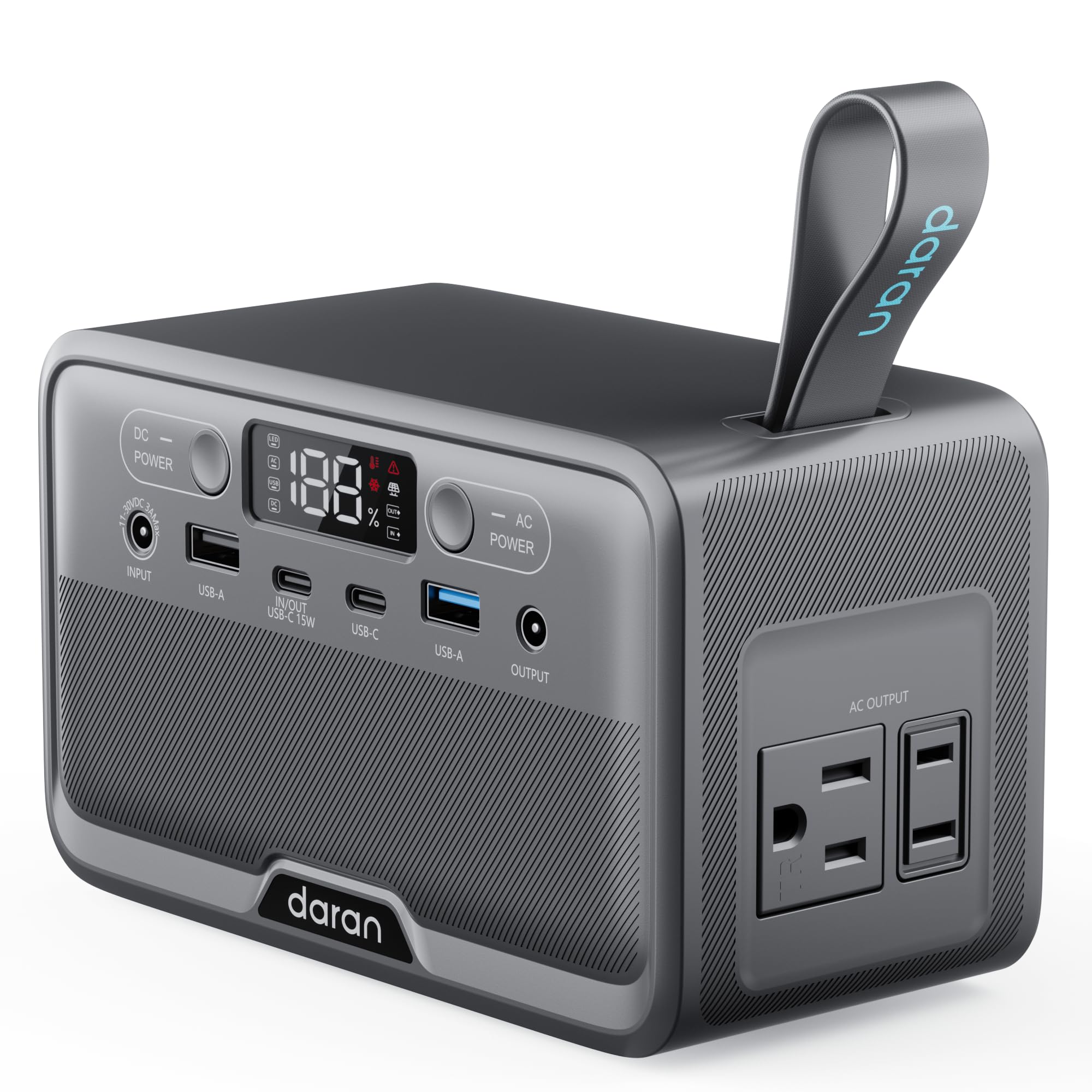
The DARAN 89.6Wh station is roughly the size of a water bottle at 6.5 x 3.3 x 4 inches and weighs just 2.5 pounds — the most portable AC-outlet power station in this guide. Its 100W pure sine wave inverter (200W surge) can power a small fan, a laptop, a mini projector, or charge camera batteries via the built-in AC outlet. The LiFePO4 battery is rated for 3,500+ cycles, meaning it will outlast most other gear in your kit.
Charging speed is impressive for such a small unit: it hits 80% in 1.5 hours via the AC wall charger or through USB-C PD at 45W. It supports solar input, car charging, and pass-through charging — so you can keep devices running while the station recharges. The 4-level LED flashlight with steady and SOS modes adds emergency utility, and the fanless operation means zero noise in the tent at night.
Users praise its ability to charge six phones from half-depleted battery, run an aquarium pump for 24 hours, and power a ham radio for moderate-use shifts. The 89.6Wh capacity is under the FAA limit for lithium batteries (100Wh), so it’s flight-safe — a rare feature for units with an AC outlet. The main trade-off: the 100W AC output limit means you can’t run high-draw appliances like a kettle or hair dryer. For lightweight base-camp power that fits in a jacket pocket, this is the winner.
Why it’s great
- Ultra-compact — 2.5 lbs and water-bottle size
- LiFePO4 with 3,500+ cycle lifespan
- Flight-safe under 100Wh FAA limit
- Zero fan noise; silent operation
Good to know
- 100W AC output limit — no high-power appliances
- USB-C PD limited to 45W, not 60W+
- Fan runs loudly during AC charging; quiet on USB
5. SinKeu 24000mAh Power Bank with AC Outlet

The SinKeu 24000mAh power bank bridges the gap between a standard power bank and a small power station by including a 65W AC outlet alongside standard USB ports. It can charge a 12-inch MacBook about twice, or an iPhone up to 8 times, making it a solid choice for campers who need laptop power without dragging a full-sized station. The AC outlet is a standard 2-prong 110V socket — enough for small electronics but not for high-wattage appliances.
The unit weighs just over 1.1 pounds and includes a carabiner for clipping to a backpack or tent loop. The lithium-ion battery supports over 1,000 recharge cycles and includes protection against overcharge, overcurrent, and short circuits. It charges via a dedicated 30W AC adapter (included) in about 4 hours, or via USB-C. The digital display shows remaining battery percentage clearly, so there’s no guesswork about how much power is left.
Users consistently report that it holds a charge for months without draining — one reviewer noted it still had 45% charge after powering an iPad for an hour and a cat cam overnight. Another reviewer preferred it over a major brand’s equivalent because it offers more port options and longer real-world runtime. The main downside: the 65W AC output is limited to low-draw devices, and some users experienced early battery drain after a few cycles, though customer service replaced units promptly.
Why it’s great
- AC outlet enables laptop charging at 65W
- Lightweight at 1.1 lbs with carabiner clip
- Excellent charge retention over months
- 4-port simultaneous charging (AC + USB + DC)
Good to know
- AC output limited to 65W — no high-power devices
- Lithium-ion, not LiFePO4 — shorter cycle life
- Some units reported early battery failure; check warranty
6. MaiVoz 56800mAh Portable Charger
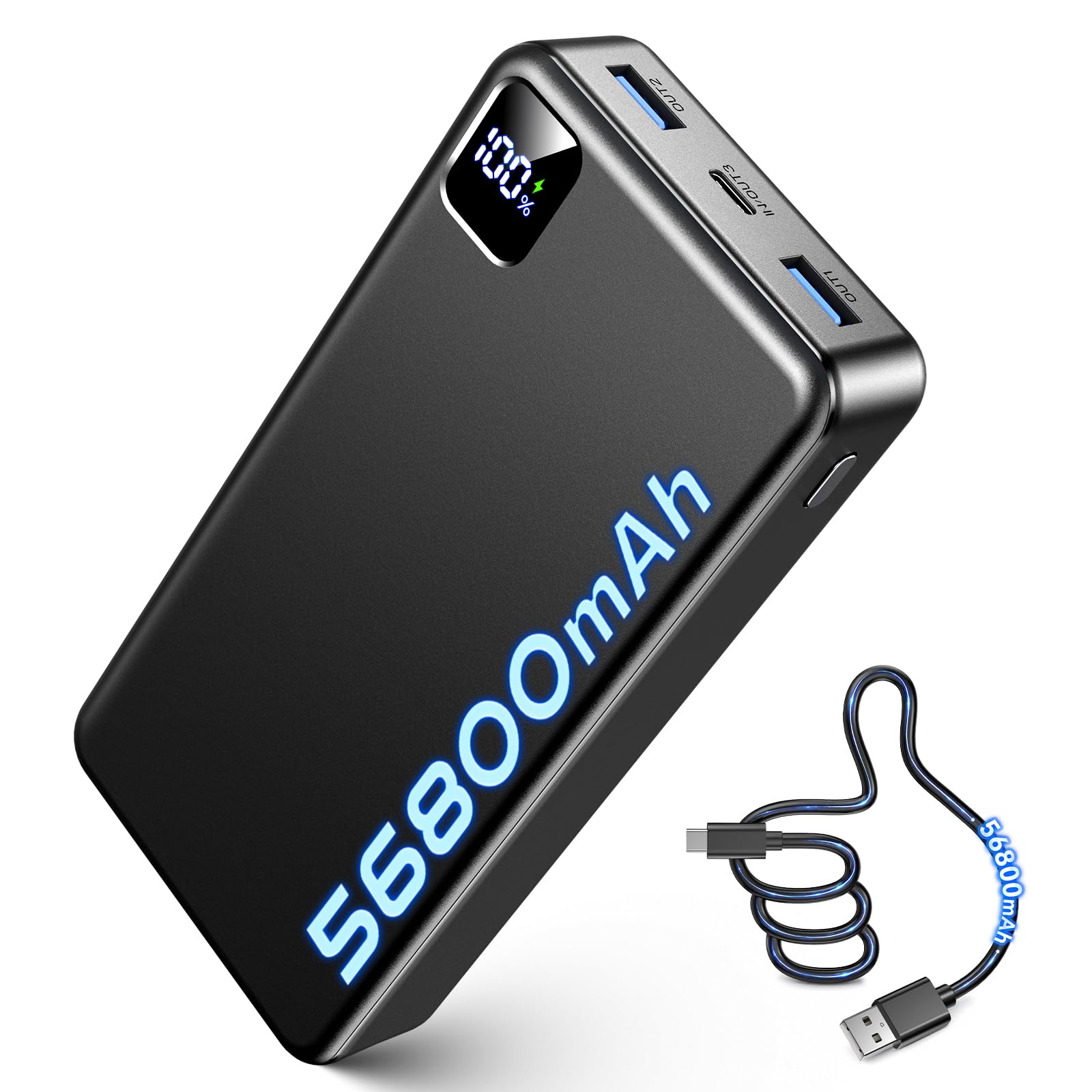
The MaiVoz 56800mAh power bank delivers the highest raw capacity of any unit in this guide — enough to charge an iPhone 17 or Galaxy S25 over 10 times. For group camping trips where everyone’s phone, earbuds, and tablet need daily top-ups, this bank eliminates the need to ration power. It supports 22.5W PD fast charging via USB-C, hitting about 60% on an iPhone in 40 minutes, and its three ports let you charge three devices simultaneously.
The LED digital display shows remaining battery percentage with enough precision to plan recharges. The battery is lithium-ion with multi-layer protection against overvoltage, overheating, short circuits, and overcurrent — standard safety for a unit this size. At 459 grams (just over 1 pound), it’s heavy for a power bank but reasonable for its capacity. The dimensions (7 x 1.3 x 3.4 inches) are similar to a thick smartphone, so it slides into a backpack pocket easily.
Users praise its ability to replace multiple smaller power banks — one reviewer said it replaces all their other chargers. Another noted it stays charged for weeks when not in use. The main trade-off is weight and charge time: the bank takes several hours to fully recharge from the included USB-A input, and it’s not allowed on airplanes due to capacity exceeding the 100Wh FAA limit. If you drive to your campsite and need multi-day phone power for a group, this is the most cost-effective choice.
Why it’s great
- 56800mAh — highest capacity in this guide
- 22.5W PD fast charging for iPhones and Androids
- Compact footprint for the capacity
- 3-year warranty for peace of mind
Good to know
- Heavier than smaller banks at just over 1 lb
- Not flight-safe — exceeds 100Wh FAA limit
- Slow recharge via micro-USB; prefers included adapter
7. MINRISE Solar Power Bank 40000mAh
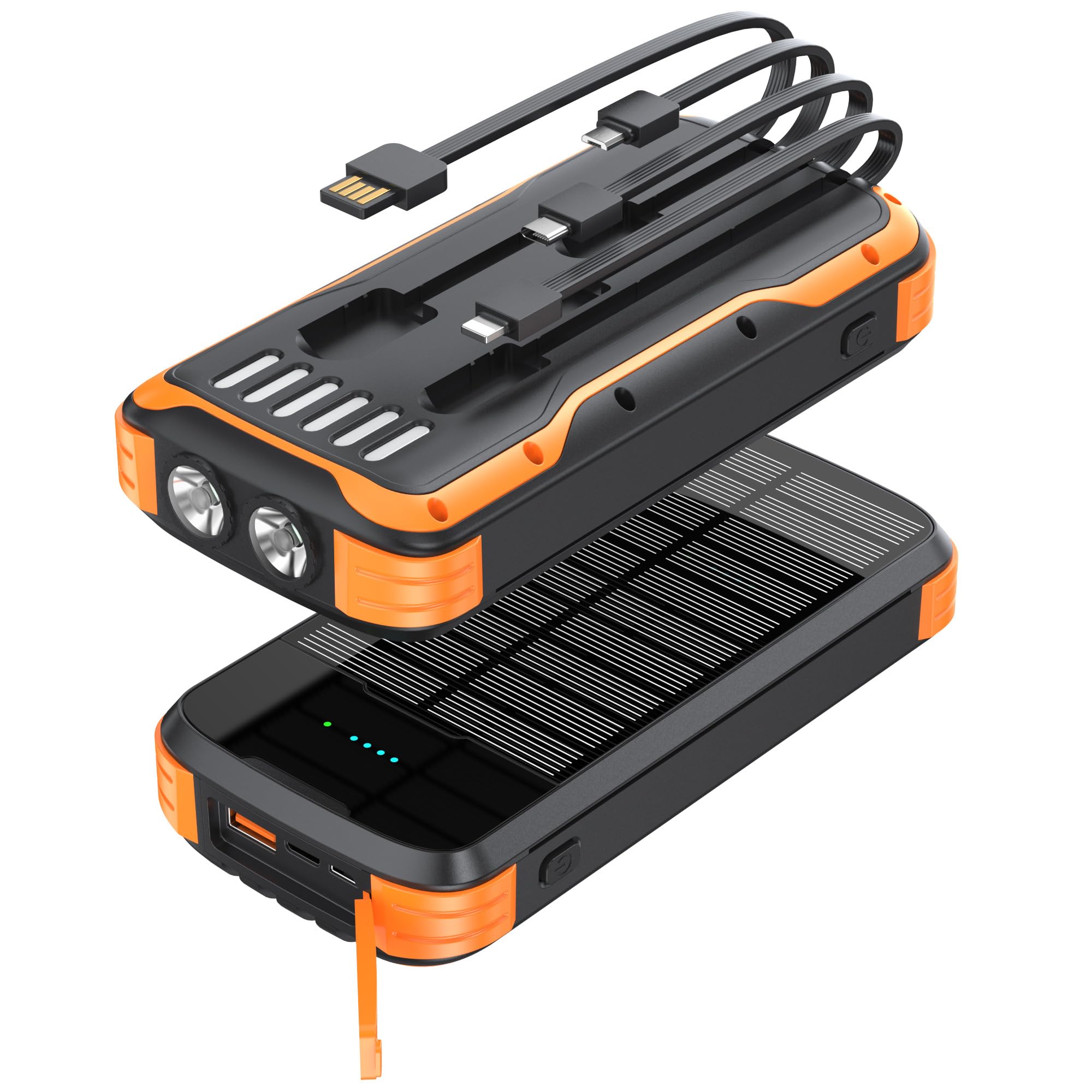
The MINRISE Solar Power Bank stands out for its all-in-one design: it includes 4 built-in cables (Type-C, iOS, Micro USB, and USB-A input), so you don’t need to carry separate charging cords. The 40000mAh lithium-polymer battery uses a solar panel on the face for emergency recharging — not fast enough for primary charging (expect very slow rates even in full sun), but useful as a backup when the grid isn’t available. The 20W USB-C PD output charges an iPhone 15 from 15% to 65% in 30 minutes.
The unit is built with a rugged ABS shell and thick silicone corner bumpers for drop protection. The port covers seal against dust and light splashes, making it suitable for dusty trails or damp tent floors. Two bright LED flashlights with 165-foot range and 25-hour runtime add emergency lighting — useful for finding gear in the dark or signaling. The digital display shows battery level, and the solar panel also charges slowly during daylight hours when left on a backpack.
Users appreciate the convenience of built-in cables — one less thing to lose or pack. Several reviewers note that the battery holds its charge for weeks and that the fast charging works reliably. The main complaints: the solar charging is slow (as expected), and some users found the battery depleted faster than expected when charging high-drain devices. For car campers who want a single unit with cables, flashlight, and solar backup built in, this is the most convenient option.
Why it’s great
- 4 built-in cables eliminate need for separate cords
- Solar panel provides emergency backup recharge
- Rugged ABS shell with silicone corner protection
- Dual LED flashlights with 165-ft range
Good to know
- Solar charging is slow; use wall adapter for primary charging
- Some units drain faster than expected during heavy use
- Heavy at 1.07 lbs for its capacity class
FAQ
Can I take a camping battery charger on a plane?
How long does a camping battery charger last on a single charge?
Do I need a power station with an AC outlet for camping?
What does LiFePO4 mean and why does it matter for camping?
Final Thoughts: The Verdict
For most users, the best battery charger for camping winner is the BLUETTI Elite 30 V2 because it balances 288Wh LiFePO4 capacity, 600W AC output, and ultra-fast 380W wall charging in a manageable 9.4-pound package — enough to run CPAPs, laptops, and small appliances without overcomplicating your kit. If you prioritize compact size and zero noise under 100W, grab the DARAN 89.6Wh Station. And for car campers who want jump-start capability plus expandable power, nothing beats the VTOMAN Jump 600X.

Mo Maruf
I created WellFizz to bridge the gap between vague wellness advice and actionable solutions. My mission is simple: to decode the research and give you practical tools you can actually use.
Beyond the data, I am a passionate traveler. I believe that stepping away from the screen to explore new environments is essential for mental clarity and physical vitality.