Our readers keep the lights on and my smoothie glass nicely filled. As an Amazon Associate, I earn from qualifying purchases.
Finding an adhesive for acrylic that bonds permanently without leaving a hazy, white residue is a specific challenge. Standard super glues often fog the surface, and basic craft glues lack the structural strength needed for load-bearing joints. The right product for your project depends entirely on whether you need a chemical weld for clear sheets or a flexible bond for decorative crafts.
I’m Mohammad Maruf — the founder and writer behind WellFizz. My research focuses on the chemical composition and real-world performance of adhesives, analyzing solvent strengths, cure times, and application methods to identify which formulas deliver on their promises for specific substrates like acrylic.
After analyzing the leading options, the definitive list for the adhesive for acrylic breaks down into two distinct camps: solvent cements that fuse plastics and precision craft glues that offer flexibility without clouding.
How To Choose The Best Adhesive For Acrylic
Choosing the wrong glue can ruin a project by leaving permanent fog marks or failing to hold under stress. Your selection hinges on the type of acrylic, the joint configuration, and the working time you need.
Solvent Cement vs. Craft Glue vs. CA Glue
Solvent cements (like Weld-On or LITKO Craftics #33) chemically fuse the plastic by melting the surface layers together, creating a bond that is often stronger than the material itself. These are mandatory for structural repairs, display cases, and joining acrylic sheets. Craft glues (like Bearly Art or Beacon 3-in-1) form a flexible, clear-drying surface bond—ideal for attaching acrylic to other materials like paper, wood, or fabric in hobby projects. Avoid cyanoacrylate (CA) glue for clear acrylic; the fumes react with the plastic and create an irreversible white haze.
Viscosity and Application Method
Thin-bodied cements (water-like consistency) rely on capillary action to wick into tight-fitting joints and are excellent for precision work like model assembly or fixing fine cracks. Medium-bodied formulas (syrup-like) fill small gaps and work well on vertical surfaces without dripping. Thick-bodied cements are designed for filling larger gaps or uneven edges. Your application tool matters—needle-tip bottles provide control for thin cements, while brush-on applicators or squeeze tubes suit thicker pastes.
Full Cure Time and Working Window
Most solvent cements set in under a minute but require a full 24 hours to reach maximum strength. The working time is the window you have to adjust parts before the bond is permanent. Fast-setting formulas offer a few seconds to a minute for repositioning, which is excellent for quick repairs but unforgiving for complex assemblies. If you need more time to align pieces, look for a medium-bodied cement with a longer setting time.
Quick Comparison
On smaller screens, swipe sideways to see the full table.
| Model | Category | Best For | Key Spec | Amazon |
|---|---|---|---|---|
| WELD-ON 16 | Solvent Cement | Structural bonding of acrylic sheets | 5-6 min working time | Amazon |
| LITKO Craftics #33 | Solvent Cement | Laser-cut hobby kits and model assembly | Medium-bodied, fills gaps | Amazon |
| Berkland Acrylic Cement | Solvent Cement | Precision capillary-action bonding | Water-thin formula | Amazon |
| Bearly Art Precision Glue | Craft Glue | Paper, cardstock, and mixed-media crafts | Wrinkle-resistant, PVA-based | Amazon |
| Beacon 3-in-1 Craft Glue | Craft Glue | Fabric, wood, and general crafts | Waterproof, instant grab | Amazon |
In‑Depth Reviews
1. WELD-ON 16 Acrylic Plastic Cement

WELD-ON 16 is a medium-bodied, low-VOC solvent cement that is the standard for professional acrylic fabrication. Its working time of 5 to 6 minutes gives you a reasonable window to align parts before the solvent weld cures—a significant advantage over ultra-fast options that leave zero margin for error. The bond chemically fuses the acrylic, meaning the joint becomes as strong as the parent material, not just a surface attachment.
This formula works well on vertical surfaces because its thicker consistency prevents messy drips. It bonds not only acrylic to itself but also rigid PVC, ABS, styrene, and polycarbonate, making it a versatile choice if you work with multiple plastics. The tube packaging is functional, though some users note the cap can allow the cement to pour out if not handled with care.
For structural repairs, display case construction, or any project requiring a load-bearing joint on clear acrylic, this is the adhesive that delivers professional-grade results. The final bond is crystal clear and non-yellowing, preserving the aesthetic of your transparent work. It is best suited for cast acrylic and Plexiglass.
Why it’s great
- Generous 5-6 minute working time for alignment
- Medium viscosity prevents drips on vertical surfaces
- Low-VOC formula reduces harsh fume exposure
- Creates an invisible, non-yellowing bond
Good to know
- Requires good ventilation despite being low-VOC
- Tube packaging can be messy if tipped over
2. LITKO Craftics #33 Thick Acrylic Cement
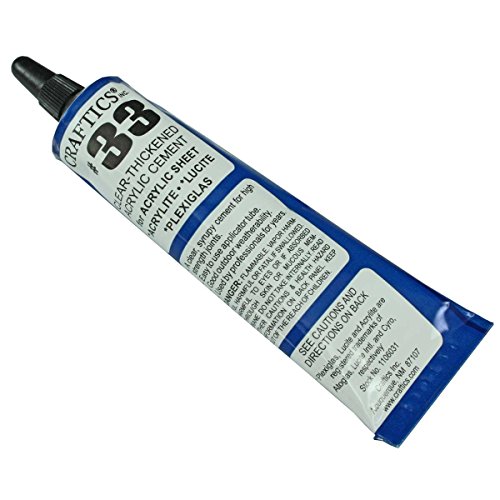
The LITKO Craftics #33 is a medium-bodied solvent cement specifically formulated to bond acrylic without the clouding associated with cyanoacrylate. It is a go-to for assembling laser-cut acrylic hobby kits, such as tokens, markers, and display stands. The thickened formula fills minor surface gaps and irregularities, providing a strong weld even on imperfectly cut edges.
Users consistently report that this cement dries completely clear and will not fog transparent acrylic, which is a common failure point with other adhesives. It bonds a range of plastics including rigid PVC, styrene, butyrate, and polycarbonate. The 1.5 oz tube is shelf-stable for up to 24 months, making it a practical addition to any workshop without worrying about waste.
Some users note the consistency can become stringy with age or after exposure to air, and the initial consistency is relatively watery which requires a steady hand for mess-free application. Once applied, the bond sets quickly with full cure achieved in 24 hours. It is an excellent mid-range choice for model builders and hobbyists who need a reliable, gap-filling weld.
Why it’s great
- Dries crystal clear with no fogging on acrylic
- Thickened formula fills small gaps in joints
- Long shelf life of up to 24 months
- Stronger initial bond than standard plastic cement
Good to know
- Can get stringy with age or air exposure
- Watery consistency demands precise application
3. Berkland Acrylic Bonding Cement
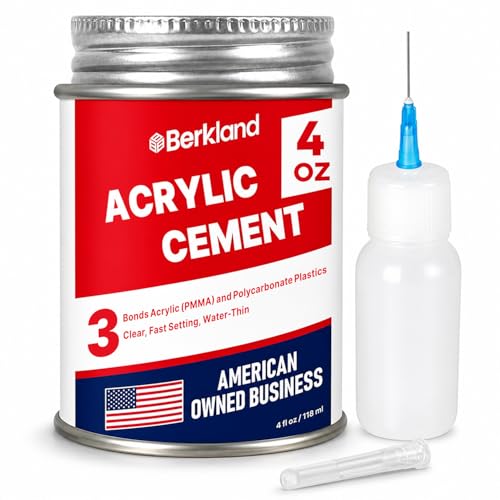
The Berkland Acrylic Cement features a water-thin formula that leverages capillary action to flow seamlessly into tight-fitting joints. This makes it the ideal choice for precision applications where you need a clean, invisible bond without visible glue lines. It comes with an applicator bottle and a needle tip, allowing for controlled, mess-free delivery, which is critical when working on display cases, signs, or detailed model pieces.
It sets in minutes, with an initial bond forming almost immediately, though full strength requires a 24-hour cure. Users report outstanding results bonding PLA for 3D prints, as well as thick plexiglass sheets. The bond strength often exceeds the material’s own layer lines, making it a favorite for functional repairs. The low odor is a welcome benefit, though the liquid’s low surface tension means it can squirt out of the needle cap, so safety glasses and gloves are a must.
One trade-off is that the water-thin consistency can drip from vertical surfaces, making it less suitable for overhead or vertical bonding without careful technique. Some users also note the included needle gauge is larger than ideal for some ultra-precise work. It is a premium pick for those who need a capillary-action weld for perfectly mated surfaces.
Why it’s great
- Water-thin formula wicks into tight joints perfectly
- Includes precision applicator bottle with needle tip
- Low odor compared to many solvent cements
- Exceptional bond strength on PLA and plexiglass
Good to know
- Too thin for vertical surfaces; drips easily
- Liquid can squirt from cap; wear safety gear
4. Bearly Art Precision Craft Glue

The Bearly Art Precision Craft Glue is the top-tier option for crafters bonding acrylic elements to paper, wood, or fabric. This PVA-based formula is specifically engineered to be wrinkle and clump resistant, which is crucial when applying thin layers of glue to delicate cardstock or acrylic pieces. It dries completely clear and remains flexible after curing, preventing brittle failure on non-rigid projects.
Its key differentiator is the included multiple-sized tip kit, allowing you to switch between a thin line for detailed work and a wider bead for larger areas. The glue is freeze-thaw stable, meaning it can survive shipping in cold climates without degrading. Crafters consistently praise its strength and the lack of warping when applied conservatively, a common problem with cheaper PVA glues.
It is not a solvent weld, so it will not fuse acrylic sheets together, but it excels as a strong, flexible surface bond. The industrial-strength hold is still removable with water before it dries, allowing for repositioning. For mixed-media art, card making, and attaching acrylic embellishments, this is the one to reach for.
Why it’s great
- Wrinkle-resistant formula prevents paper warping
- Multiple precision tips for controlled application
- Freeze-thaw stable for worry-free shipping
- Dries crystal clear and stays flexible
Good to know
- Not suitable for structural acrylic-to-acrylic joints
- Higher price point than basic craft glues
5. Beacon 3-in-1 Advanced Craft Glue

The Beacon 3-in-1 Advanced Craft Glue is a versatile, fast-drying adhesive that offers a strong grab on a wide range of materials including wood, ceramics, fabrics, and paper, making it a practical companion for general craft projects involving acrylic elements. It dries to a crystal-clear, flexible finish and is waterproof once cured, which adds durability to items that may be handled or lightly cleaned.
Its instant grab is a double-edged sword—it provides immediate hold on porous materials like paper and fabric, but it does not allow for repositioning on non-porous surfaces like acrylic. The 8-ounce bottle provides a generous volume at a budget-friendly tier, giving you plenty of adhesive for multiple projects. The formula is acid-free, making it safe for archival scrapbooking and photo-safe projects.
Some users note the cap can clog if not cleaned after use, and the strong odor requires adequate ventilation. It is not intended for structural bonding of acrylic sheets, but as a general-purpose glue for attaching acrylic shapes to other materials in hobby and craft settings, it delivers reliable performance at a very accessible price point.
Why it’s great
- Waterproof and flexible when dry
- Instant grab on porous materials
- Large 8-ounce bottle offers great volume
- Acid-free and safe for archival projects
Good to know
- Strong odor requires good ventilation
- Cap can clog if not cleaned after use
FAQ
Can I use super glue on acrylic without fogging it?
What is the difference between thin and medium-bodied solvent cement?
How long does it take for acrylic cement to reach full strength?
Final Thoughts: The Verdict
For most users, the adhesive for acrylic winner is the WELD-ON 16 because it offers the best balance of working time, bond strength, and clarity for structural acrylic projects. If you assemble laser-cut hobby models and need a gap-filling solvent, the LITKO Craftics #33 is your best bet. And for crafters attaching acrylic elements to paper or fabric, nothing beats the wrinkle-resistant finish of the Bearly Art Precision Glue.

Mo Maruf
I created WellFizz to bridge the gap between vague wellness advice and actionable solutions. My mission is simple: to decode the research and give you practical tools you can actually use.
Beyond the data, I am a passionate traveler. I believe that stepping away from the screen to explore new environments is essential for mental clarity and physical vitality.