Our readers keep the lights on and my smoothie glass nicely filled. As an Amazon Associate, I earn from qualifying purchases.
Polypropylene is the material that frustrates every DIYer: nothing seems to stick to it. Its low surface energy repels most adhesives, leaving you with joints that pop, peel, or simply refuse to bond. Finding an adhesive that actually works on polypropylene requires understanding which formulations can chemically bridge that gap.
I’m Mohammad Maruf — the founder and writer behind WellFizz. I’ve spent years analyzing adhesive chemistry, surface energy ratings, and real-world bond performance across hundreds of industrial and consumer-grade products.
This guide cuts through the trial-and-error to show you the top-performing options for bonding polypropylene to itself and other materials, so you can stop guessing and start building. We break down the adhesive for polypropylene options that deliver real holding power under stress.
How To Choose The Best Adhesive For Polypropylene
Polypropylene is chemically inert and non-porous, meaning standard water-based or general-purpose glues simply sit on the surface without bonding. The right adhesive uses a solvent to slightly soften the plastic, creating a molecular weld, or it relies on a specialized primer to alter the surface energy. Understanding these mechanisms is the first step toward a permanent repair.
Solvent-Based vs. Cyanoacrylate Adhesives
Solvent-based adhesives, like those for vinyl and PVC, use chemicals that momentarily dissolve the surface of certain plastics, allowing the materials to fuse. These work well on flexible polypropylene blends and similar thermoplastics. Cyanoacrylate adhesives (instant glues) that are specifically formulated for plastics can bond polypropylene when paired with a surface activator or a built-in primer, offering a rigid, fast-setting hold.
Flexibility and Cure Time
Polypropylene is often used in applications that flex, vibrate, or expand. A brittle bond will fail under movement. Look for adhesives that maintain flexibility after full cure — typically 24 hours for solvent-based cements. High-performance instant adhesives often cure in seconds but can become brittle over time if not designed for flexible joints.
Quick Comparison
On smaller screens, swipe sideways to see the full table.
| Model | Category | Best For | Key Spec | Amazon |
|---|---|---|---|---|
| HH-66 Vinyl Cement | Solvent Cement | Flexible PVC & Vinyl Patches | Flexible from -30°F to 150°F | Amazon |
| 3M Scotch-Weld PR100 | Plastics Instant Adhesive | Rigid Plastic & Rubber Assembly | Handling time under 20 seconds | Amazon |
| Bondtech Vinyl Cement | Solvent Cement | Pool Liners & Inflatables | Includes repair patches | Amazon |
| Loctite Vinyl, Plastic, Fabric | Contact Adhesive | Upholstery & Light Repairs | Paste form, dries clear | Amazon |
| Christy’s Red Hot Blue Glue | PVC Cement | PVC Plumbing & Sprinklers | Very fast set time | Amazon |
In‑Depth Reviews
1. HH-66 Vinyl Cement 4 oz
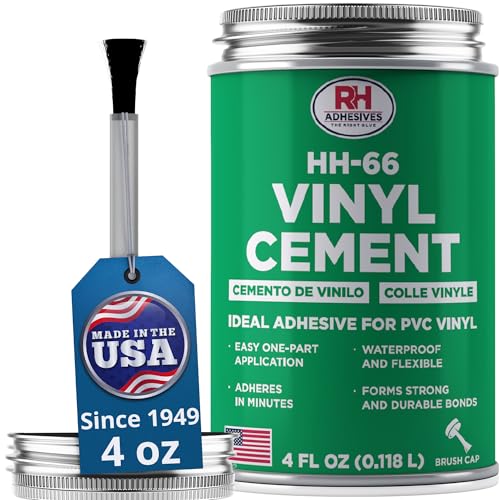
The HH-66 is a solvent-based contact cement engineered for flexible vinyl and PVC, making it a top contender for polypropylene-based materials with similar chemical profiles. Its formulation penetrates the plastic’s surface to create a welded, waterproof bond that remains flexible across a wide temperature range — from sub-freezing conditions up to 150°F. The built-in brush cap delivers even, controlled application, which is critical for achieving consistent adhesion on large patches like tarp repairs or pool liners.
Users consistently report success on materials that other glues cannot touch, including vinyl kayaks, inflatable boats, and marine upholstery. The cement can even be applied underwater in a pinch, a testament to its aggressive solvent chemistry. It reaches full cure in 24 hours, and during that window, the bond gains a flexible strength that resists cracking under vibration or movement.
It is important to note that HH-66 is explicitly not formulated for pure polyethylene or typical blue poly tarps. For genuine polypropylene, test a small area first, as its surface energy is still lower than most vinyl-based materials. Proper surface preparation — cleaning, drying, and applying glue to both surfaces — is non-negotiable for any solvent weld to hold.
Why it’s great
- Extremely flexible bond that doesn’t crack in cold or heat
- Fast tack time speeds up patching projects
- Can be applied underwater for emergency pool repairs
Good to know
- Not compatible with pure polyethylene or standard blue tarps
- Solvent-based requires good ventilation during application
2. 3M Scotch-Weld Plastic & Rubber Instant Adhesive PR100

This is not your typical super glue. The 3M Scotch-Weld PR100 is a low-viscosity, fast-curing cyanoacrylate specifically formulated for difficult substrates including plasticized PVC, EPDM, Nylon, and Santoprene — all low-energy plastics that share characteristics with polypropylene. Its handling time of under 20 seconds makes it ideal for small, precision assembly work where clamping is impractical.
The adhesive flows into tight gaps and creates a thin, nearly invisible bond line. Users have reported successful repairs on everything from radiator cracks to blender pitchers, and its ability to bond silicone rubber with the proper 3M primer shows its chemical adaptability. The flexible container allows a controlled squeeze for either a single drop or a steady bead, offering versatility for both micro repairs and larger bonds.
This is an instant adhesive, so positioning must be exact before the surfaces meet. It is intended for industrial and occupational use, meaning the bond is rigid rather than flexible. For polypropylene applications that experience constant flexing, a solvent-based cement may be more appropriate. The PR100 shines when you need a quick, high-strength hold on non-porous plastics that other instant glues refuse to stick to.
Why it’s great
- Handling strength in less than 20 seconds reduces assembly time
- Works on heavily plasticized PVC and other difficult plastics
- Low viscosity soaks into tight joints for strong bond lines
Good to know
- Rigid bond may crack if the base material flexes repeatedly
- Best results require a special surface primer for pure polypropylene
3. Bondtech Vinyl Cement with Brush
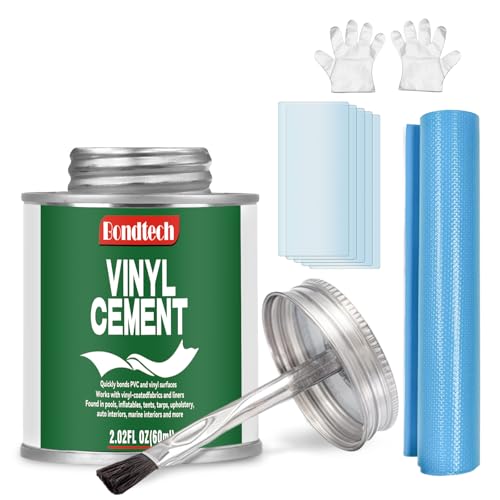
Bondtech’s vinyl cement is a high-density, solvent-based adhesive that builds a strong, flexible, and watertight bond on materials like PVC, EVA, and flexible polypropylene blends. It comes with both blue scratch-resistant patches and transparent UV-resistant patches, making it a complete repair kit right out of the box. The brush applicator ensures the paste spreads evenly, which is key when bonding patches to pool liners or inflatable mattresses.
Customer feedback highlights its effectiveness on jump house vinyl and swimming pool holes, with one user successfully patching two bottom leaks without draining the water — a strong indicator of the adhesive’s resistance to water pressure during cure. The formula reaches optimal strength in 24 hours and remains flexible enough to handle the movement of tarps and inflatable surfaces without cracking.
The key to success with this adhesive lies in application technique. The manufacturer advises applying a proper amount to the patch and spreading it evenly — too much glue on a lightweight patch can soften the material and cause curling. This is a solvent-based product, so work in a ventilated area and allow the surfaces to fully dry before application to ensure maximum adhesion strength.
Why it’s great
- Comes with both blue and transparent repair patches for different aesthetics
- Airtight and waterproof bond suitable for underwater repairs
- Wide compatibility with PVC, ABS, EVA, and rubber materials
Good to know
- Excessive glue application can soften thin patches and cause curling
- Solvent-based fumes require good ventilation during use
4. Loctite Vinyl, Plastic, and Fabric Adhesive

Loctite’s offering is a contact adhesive formulated for bonding vinyl, fabric, and plastic — making it a solid choice for upholstery repairs and attaching fabric to polypropylene surfaces. It dries clear, which is important for visible repair areas, and comes in a two-pack that provides enough material for several small projects. The paste form allows for pinpoint application without running or dripping.
Users have applied it to reattach padding on lawn mower seats and to glue fabric blinds to vinyl blinds with success. The adhesive does have a tendency to “string” if not applied carefully, but this is a common trait among contact adhesives and can be managed with slower, controlled bead application. Proper surface preparation — cleaning and drying both materials — is essential for the bond to achieve its advertised strength.
This is not a solvent weld; it relies on a flexible rubberized bond that sticks well to porous and semi-porous materials. For pure polypropylene-to-polypropylene joints under load, this adhesive may not have the chemical aggression to create a permanent weld. It is better suited for attaching fabric or flexible vinyl to polypropylene where some mechanical grip can be achieved.
Why it’s great
- Dries crystal clear, keeping repairs discreet
- Works on multiple surfaces including fabric, vinyl, and wood
- Flexible bond that handles vibration in moving applications
Good to know
- Can string or stretch during application if not applied carefully
- Not as aggressive on non-porous polypropylene as solvent cements
5. Christy’s Red Hot Blue Glue PVC Cement

Christy’s Red Hot Blue Glue is a medium-bodied, very fast-set PVC cement designed for pressure pipes and fittings. It chemically welds PVC surfaces together, creating a permanent, leak-proof joint. The blue tint helps the applicator see where the glue has been spread, reducing the chance of missed spots — a smart feature for pipe assembly where coverage directly determines joint integrity.
It is commonly used for indoor plumbing and outdoor sprinkler systems, and users report that it sets up quickly, even when applied underwater. The metal can preserves the solvent better than plastic containers, though some users note that the lid design can make resealing challenging over long periods. The cement is low-VOC compared to many industrial PVC glues, making it more tolerable for indoor work.
This cement is optimized for PVC pipe, not flexible polypropylene sheets or fabrics. For bonding rigid polypropylene parts, this cement may not soften the material effectively because polypropylene has a higher chemical resistance than PVC. It belongs in the tool kit for PVC repairs near polypropylene assemblies, but it is not a direct solution for pure polypropylene bonding unless the plastic is a compatible blend.
Why it’s great
- Very fast set time allows handling within seconds
- Blue color shows application coverage to prevent gaps
- Low-VOC formulation is more user-friendly for indoor applications
Good to know
- Designed for PVC plumbing, not flexible polypropylene sheeting
- Lid can be difficult to reseal; glue may thicken between uses
FAQ
Can I use standard super glue on polypropylene?
Do I need to sand polypropylene before applying adhesive?
Is HH-66 Vinyl Cement safe for drinking water containers?
Final Thoughts: The Verdict
For most users, the adhesive for polypropylene winner is the Bondtech Vinyl Cement because it offers a complete repair kit with patches and a brush applicator, making it easy to achieve a watertight, flexible bond on common polypropylene-based items like pool liners and inflatables. If you want a precision, fast-curing bond for rigid plastic assemblies, grab the 3M Scotch-Weld PR100. And for industrial-grade flexibility on heavy-duty vinyl and PVC fabrics, nothing beats the HH-66 Vinyl Cement.

Mo Maruf
I created WellFizz to bridge the gap between vague wellness advice and actionable solutions. My mission is simple: to decode the research and give you practical tools you can actually use.
Beyond the data, I am a passionate traveler. I believe that stepping away from the screen to explore new environments is essential for mental clarity and physical vitality.