Our readers keep the lights on and my smoothie glass nicely filled. As an Amazon Associate, I earn from qualifying purchases.
A dislocated knee is a violent injury that destabilizes the entire joint, making every step a gamble. The right brace locks out unwanted motion while allowing you to move with confidence, not fear. Choosing poorly means risking re-injury, delayed healing, or a brace that slips and chafes at the worst possible moment.
I’m Mohammad Maruf — the founder and writer behind WellFizz. I’ve spent years breaking down orthopedic support hardware, analyzing hinge geometry, pad density, and strap systems to separate the braces that actually stabilize from those that just cover your leg.
Whether you’re recovering post-reduction or avoiding surgery, finding the right brace for dislocated knee means understanding how hinge design, side-stay stiffness, and breathable materials work together to protect your joint during every phase of recovery.
How To Choose The Best Brace For Dislocated Knee
Selecting a brace for a dislocated knee isn’t about picking the most padded sleeve. You need a device that prevents the patella and the tibiofemoral joint from moving to the point of re-dislocation. This section explains the three critical factors that separate effective support from useless fabric.
Hinge Construction and Side Stabilizers
After a dislocation, the knee’s passive stabilizers (ligaments) are stretched or torn. A brace must provide active mechanical resistance to sideways and rotational forces. Look for bilateral hinges made of aluminum or stainless steel, not plastic. Premium units use triaxial hinges that track the natural rotation of the knee joint, preventing the hinge from binding under load.
Strap Configuration and Slippage Prevention
The most common complaint across all knee braces is migration. After a dislocation, a brace that slides down your leg becomes a hazard. You need at least four independent straps — two above the thigh and two below the calf. The best designs use a cross-strap pattern that creates a cradle, locking the brace in place even when you sit or bend your hip.
Material Breathability and Moisture Management
A dislocated knee brace is worn continuously, often for weeks. Neoprene retains heat and sweat, leading to skin maceration and odor. Cotton or moisture-wicking fabric blends (like HydraCinn or Lycra mesh) allow air circulation. If you have a latex allergy, verify that the brace is latex-free or invest in a cotton liner sleeve to wear underneath.
Quick Comparison
On smaller screens, swipe sideways to see the full table.
| Model | Category | Best For | Key Spec | Amazon |
|---|---|---|---|---|
| Shock Doctor Knee Brace | Hinged Support | Medium to heavy post-dislocation activity | Dual bilateral hinges, 4-way stretch Lycra mesh | Amazon |
| Mueller Hg80 Hinged Knee Brace | Hinged Support | Daily wear with sports/return-to-play | Triaxial hinges, HydraCinn fabric, 5 sizes | Amazon |
| Breg T Scope Premier | Post-Op Immobilizer | Full immobilization after dislocation | Adjustable range of motion, 17″-27″ thigh fit | Amazon |
| ELITE Orthopedic Knee Brace | Hinged Premium | Severe instability and OA support | Stainless steel hinges, adjustable flexible frame | Amazon |
| Azmec Straight Leg Brace | Immobilizer | Short-term immobilization (lightweight) | Removable side panels, 4 adjustable straps, cotton fabric | Amazon |
| TANDCF bestlife Universal Brace | Immobilizer | Budget-friendly post-op immobilization | 6 aluminum stays, 6 adjustable straps, open patella | Amazon |
| DonJoy Drytex Sport | Hinged Support | Ligament injury support after initial healing | Drytex breathable fabric, adjustable compression | Amazon |
In‑Depth Reviews
1. Shock Doctor Knee Brace

The Shock Doctor is built around heavy-duty bilateral dual hinges that provide genuine stabilization against ACL/PCL injuries and patella instability — exactly what a dislocated knee needs to avoid re-injury. The four-way stretch Lycra mesh wraps the leg without trapping heat, making it wearable for full days without the swampy feeling that neoprene causes. Users consistently report that the brace stays in place through court sports and heavy walking, with easy-grip tabs that allow precise tension adjustments even when your hands are tired.
What sets it apart is the pre-curved anatomical design, which prevents the hinge from digging into the side of your knee when you bend. The compression layer supports soft tissue alignment and promotes blood flow for healing.
For the price, this brace delivers the kind of structural integrity that clinics charge three times as much for. It fits both right and left knees, and sizing is generous — the X-Large accommodates athletic thighs and calves without cutting off circulation. If you need a brace that can transition from bed rest to light walking to full activity, this is the most versatile option.
Why it’s great
- Dual bilateral hinges provide real lateral and rotational resistance
- Breathable mesh prevents sweat buildup and skin irritation
- Latex-free construction for sensitive skin
Good to know
- Very tight out of the box; requires a break-in period of 2-3 days
- Straps may limit full knee bend during deep squats or lunges
2. Mueller Hg80 Hinged Knee Brace
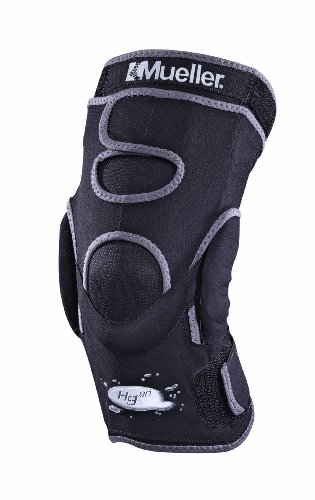
The Mueller Hg80 uses a triaxial hinge system that tracks the natural motion of the knee joint, providing side-to-side and hyperextension prevention without feeling like a rigid splint. The HydraCinn fabric is genuinely soft against the skin and wicks moisture better than standard neoprene — a major advantage for anyone who has to wear a brace for 12 hours straight. The brace slides on like a sleeve and tightens with a single strap, so you don’t have to fumble with multiple straps during a painful recovery.
The hinge design is particularly good for preventing the knee from drifting into a medial or lateral bend, which is the primary risk after a dislocation. Users with meniscus tears and MCL sprains reported over 80% pain reduction while walking, and the brace fits snugly enough to be worn under loose pants. A physical therapist with 27 years of experience rated it the best low-end brace they had ever used for acute instability.
The main drawback is sizing — the brace must be slipped over the foot, and users with calf measurements near the upper end of a size range often need to go up at least one size. The hinges are removable for washing, but reinsertion can be tricky. After two years of daily use, the material may stretch, so this is best suited for a rehab cycle rather than a permanent solution.
Why it’s great
- Triaxial hinges allow near-normal knee bending while blocking hyperextension
- HydraCinn fabric is breathable and comfortable against bare skin
- Slim profile fits under clothing easily
Good to know
- Must be slipped over foot; sizing is tight on larger calves
- Hinges may squeak during movement; material stretches over years of use
3. Breg T Scope Premier Post-Op Knee Brace

The Breg T Scope Premier is the brace your surgeon would prescribe if insurance weren’t an issue. It offers adjustable range of motion (ROM), meaning you can lock the knee straight for walking and then unlock it to 90 degrees when sitting — a critical feature during the transition from immobilization to active rehab. The frame is fully adjustable in both length and width, accommodating thighs up to 35.5 inches and heights from 4’11” to 6 feet.
The buckle closure system is faster and more secure than hook-and-loop straps, and the pads hold the leg in place without digging into the hamstring. Users reported that the brace rarely slips, even with jeans underneath, and the ventilation is significantly better than the cheap felt-padded braces issued by hospitals. If you compare the hospital price of this brace (often out-of-pocket) to the online price, the savings are substantial.
The downsides are real but manageable. The brace is heavier than a simple sleeve-style brace, and the side dial can press into your leg if you sleep on your side. Some users found that the pads required fine-tuning to avoid bruising on the shin or thigh. It also develops odor after weeks of continuous use, which is solved by wearing a thin cotton liner underneath.
Why it’s great
Why it’s great
- Adjustable ROM from full lock to 90 degrees for rehab flexibility
- Buckle closure is faster and more durable than Velcro
- Fully adjustable length and width for a custom fit
Good to know
Good to know
- Heavier than fabric-only braces; side dial may be uncomfortable for side sleepers
- Requires careful pad adjustment to avoid bruising; odor develops after weeks of wear
4. ELITE Orthopedic Knee Support Brace

The ELITE Orthopedic brace is built with stainless steel hinges, which provide a higher degree of structural rigidity than aluminum or plastic. This is the brace to consider if your knee instability is severe — if the leg constantly wants to drift sideways or the patella feels like it’s sliding out of its groove. The adjustable flexible frame contours to the leg without creating pressure points, and the design was engineered with input from orthopedic professionals to support daily use during OA management and post-surgery recovery.
The 6-strap configuration allows for precise compression tuning, and the open patella relief removes direct pressure from the kneecap, which is critical after a dislocation where the patella may be bruised or swollen. Users with patella tendon ruptures reported immediate pain relief and zero slippage, even during ambulation. The brace is lightweight for its size (1.56 pounds) and does not interfere with sitting in a car or chair.
The durability concerns are worth noting: at least one user reported that the frame broke after three months of use, and the replacement parts did not include the broken component. The return window is only 30 days, so an extended warranty or careful handling is advisable. If you have a latex allergy, you must wear a sleeve underneath, as the liner contains latex.
Why it’s great
- Stainless steel hinges provide maximum rigidity against lateral movement
- Open patella design relieves direct pressure on the kneecap
- Orthopedic professional input for daily comfort and support
Good to know
- Durability issues reported; frame can break within months
- Contains latex; requires separate sleeve for latex allergy sufferers
5. Azmec Straight Leg Brace Tri-Panel Immobilizer
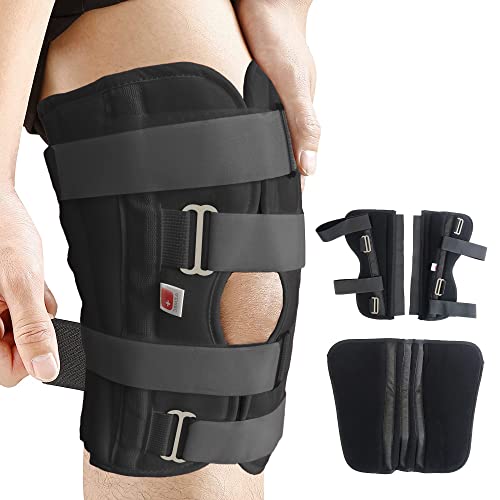
The Azmec Tri-Panel immobilizer is the entry-level option that prioritizes comfort and simplicity. Made from breathable, flexible cotton fabric, it feels soft against the skin and does not retain heat the way neoprene does. The 12-inch length is shorter than many full-leg immobilizers, making it less cumbersome for sleep and wheelchair use. The fully removable side panels allow you to adjust the rigidity as your swelling decreases and your confidence increases.
What makes this brace surprisingly effective is the adjustable hook-and-loop strap system that fits a wide range of sizes — from children (9 years old, 120 pounds) to larger adults (up to 21-inch thigh circumference). Users with torn menisci and dislocated knees noted that this brace was much less bulky than the hospital brace they were issued, which improved sleep quality and reduced frustration during recovery. The design fits both left and right legs.
This is not a brace for active use or sports recovery. The Velcro is functional but not premium; some users noted that the straps could be stronger. It is best suited for the first week of recovery when the goal is complete rest and immobilization.
Why it’s great
- Cotton fabric is comfortable, breathable, and non-irritating to skin
- Removable side panels allow adjustability as swelling subsides
- One-size-fits-all design accommodates a wide range of leg sizes
Good to know
- No lateral hinges; not suitable for weight-bearing or walking
- Velcro straps could be stronger; slides slightly when not fully tightened
6. TANDCF bestlife Universal Knee Immobilizer

The TANDCF bestlife immobilizer packs six removable aluminum stays and six adjustable straps into a design that feels much more substantial than its price suggests. The aluminum stays are deformable, meaning you can mold them to the exact contour of your leg, creating a custom fit that prevents the brace from drifting. The open patella design is a practical feature for wound care — if you have a surgical incision or bandage from the dislocation reduction, you can access it without removing the entire brace.
Users found this brace to be significantly more comfortable than the standard brace issued by the ER, with one noting that the 6-strap system made it easier to achieve a snug fit that didn’t require constant readjustment. The removable rods allow you to machine-wash the fabric cover without ruining the structural components, which is a hygiene advantage over cheaper all-in-one braces that can’t be washed.
The primary drawback is that the brace tends to slide down the leg when you stand, especially if you have more tapered thighs. The straps are effective but narrow, which concentrates pressure rather than distributing it. Some users with larger frames (around 5’9″ and 209 pounds) found that even the large size didn’t provide a secure grip at the top strap. This brace works best for extended periods of sitting or lying down.
Why it’s great
- 6 aluminum stays can be molded to your leg shape for a custom fit
- Open patella design allows easy access to surgical wounds
- Removable rods make the brace machine-washable
Good to know
- Tends to slide down on legs with tapered thighs when standing
- Narrow straps may not distribute pressure evenly at the top
7. DonJoy Drytex Sport Hinged Knee Brace
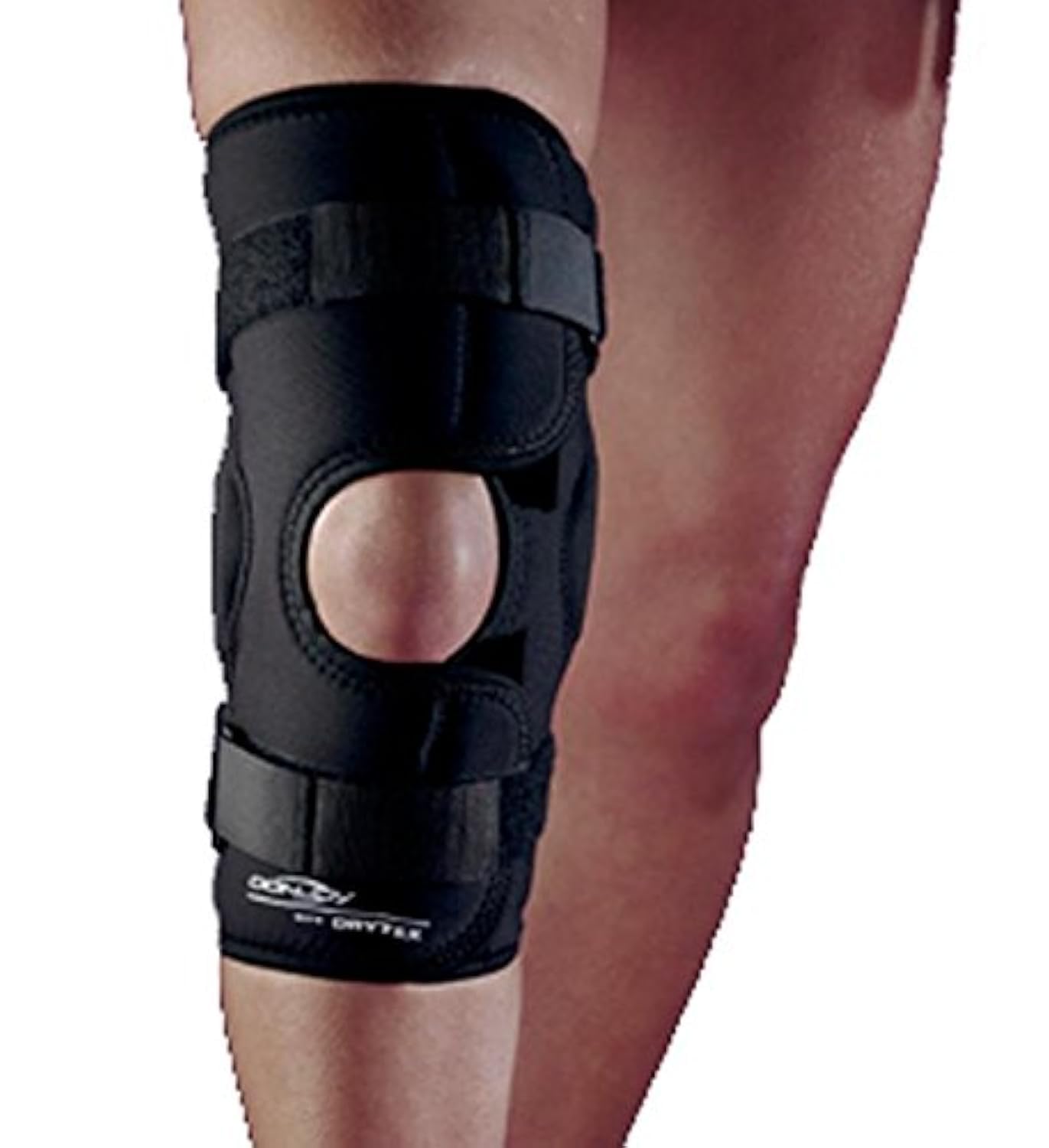
The DonJoy Drytex Sport is a hinged sleeve-style brace designed for the later stages of recovery, when you no longer need full immobilization but still require support against ligament and meniscus injuries. The Drytex fabric is thin, breathable, and compresses the knee without trapping moisture or restricting range of motion. The hinges are longer than typical sleeve hinges, providing a wider lever arm against sideways forces.
This brace is most effective when used as a prophylactic support during return-to-play activities — think walking, light jogging, or sports practice with controlled movements. It is not designed to immobilize a freshly dislocated knee. Users with partial ACL tears found that it provided comparable support to an Ace bandage wrap but with the added security of hinges that prevent the knee from buckling. The adjustable compression allows you to fine-tune the fit as swelling fluctuates.
The main issue is sizing consistency. The brace must be sized based on thigh and calf measurements taken exactly 6 inches above and below the kneecap. If you fall between sizes, the brace may be too loose to stay in place or too tight to be comfortable. The elastic can also stretch out after a few weeks of daily wear, causing the brace to slip. It’s best bought as a secondary brace for activity once the acute phase has passed.
Why it’s great
- Drytex fabric is highly breathable and thin, ideal for active use
- Longer hinges provide better leverage against lateral movement
- Adjustable compression accommodates changing swelling levels
Good to know
- Not suitable for acute post-dislocation immobilization
- Elastic may stretch after 2-3 weeks of daily wear, causing slippage
FAQ
Can I wear a hinged brace immediately after a knee dislocation?
How do I measure for a knee brace after a dislocation?
Why does my knee brace keep slipping down after a dislocation?
Final Thoughts: The Verdict
For most users, the brace for dislocated knee winner is the Shock Doctor Knee Brace because it provides heavy-duty bilateral hinge support in a breathable, comfortable package that works from the early rehab phase through return to activity. If you need full adjustable immobilization with range of motion settings for your recovery protocol, grab the Breg T Scope Premier. And for a budget-friendly entry-level immobilizer that’s gentle on the skin and easy to sleep in, nothing beats the Azmec Tri-Panel Brace.

Mo Maruf
I created WellFizz to bridge the gap between vague wellness advice and actionable solutions. My mission is simple: to decode the research and give you practical tools you can actually use.
Beyond the data, I am a passionate traveler. I believe that stepping away from the screen to explore new environments is essential for mental clarity and physical vitality.