Our readers keep the lights on and my smoothie glass nicely filled. As an Amazon Associate, I earn from qualifying purchases.
The standard-issue sling from the ER is a notorious piece of equipment: a thin cotton strap that digs into your cervical spine, a flimsy pouch that lets your arm dangle, and zero thought given to how you’ll sleep, shower, or use your phone one-handed. The difference between that misery and a smartly designed support system is the difference between counting the days until recovery and barely noticing you’re wearing one.
I’m Mohammad Maruf — the founder and writer behind WellFizz. I’ve spent hundreds of hours analyzing orthopedic support gear, comparing shoulder-strap foam densities, pocket layouts, breathability ratings, and the specific geometry that keeps a forearm stable without cutting off circulation so you don’t have to guess what works.
Whether you’re recovering from rotator cuff surgery, nursing a broken clavicle, or stabilizing a post-dislocation joint, finding the best arm sling means balancing immobilization with the real-world need to eat, type, and move through your day without adding neck pain to your injury list.
How To Choose The Best Arm Sling
Not all slings are built the same. The wrong one can cause more shoulder fatigue, restrict breathing, or slip off after ten minutes of wear. Here’s exactly what to look for before you click “add to cart.”
Forearm Support & Arm Pocket Depth
The pocket that holds your forearm should come up to at least the midpoint of your cast or brace. A shallow pocket lets the wrist flop forward, shifting weight onto the elbow and straining the injured joint. Look for a fabric channel that cradles the full forearm and includes a foam wrist pad to keep the hand in a neutral, palm-up position.
Shoulder Strap Padding & Width
The most common complaint about cheap slings is neck pain. After 30 minutes, a narrow strap acts like a cheese wire against the trapezius. A quality sling uses a minimum 2.5-inch wide strap with either a sewn-in foam pad or a detachable, movable shoulder cushion. The padding should be dense enough to distribute the arm’s weight without compressing to zero after a few days of use.
Breathability & Cleaning
You will sweat under a sling, especially during summer or if you sleep in it. Cotton and hollow-weave polyester fabrics breathe far better than neoprene or solid nylon. The best designs include mesh panels or ventilation holes on the underside of the arm pocket. Machine-washable or hand-washable construction is non-negotiable for hygiene over multi-week recovery periods.
Quick Comparison
On smaller screens, swipe sideways to see the full table.
| Model | Category | Best For | Key Spec | Amazon |
|---|---|---|---|---|
| Brownmed Ultimate Arm Sling | Cotton Classic | All-day wear for clavicle fracture | Machine washable, stretch cotton | Amazon |
| KONSEDIK Arm Sling | Padded Tech | Post-surgery with pocket storage | Hollow ventilation + thumb loop | Amazon |
| Wonder Care Shoulder Support | Shoulder Immobilizer | Upper-arm and shoulder stabilization | 5-inch wide chest band | Amazon |
| mosago Arm Sling | Lightweight Mesh | Hot weather and active recovery | Hidden side pockets | Amazon |
| Cozyhealth Arm Sling | Ergonomic Budget | Budget-friendly rotator cuff support | Ventilation holes, reversible | Amazon |
In‑Depth Reviews
1. Brownmed Ultimate Arm Sling

The Brownmed Ultimate is the sling that ER doctors wish they carried. Its cotton construction breathes like a t-shirt, not a plastic bag, and the fabric has enough stretch to conform to the shape of your arm without creating pressure points. The double-sided Velcro closure on the shoulder strap makes left-to-right reversal instant, and the thumb loops keep the hand from drifting forward — a critical detail for clavicle and upper-arm fractures.
The wide, cushioned shoulder strap distributes the arm’s weight better than any foam-padded nylon competitor. Users recovering from broken clavicles report wearing this thing 24/7 for four weeks without the typical neck-burning sensation. The fabric is also dryer-safe, so you can wash out sweat and be back in action within an hour. It contains no metal components, which matters if you’re heading for X-ray follow-ups.
The only real trade-off is that the shoulder strap, while comfortable, is narrow by modern standards — about 1.5 inches of sewn cotton padding. For very large or heavy individuals, the strap may stretch slightly over weeks of continuous use, though it still outperforms budget alternatives. This is the benchmark that other arm slings are measured against for long-term wear.
Why it’s great
- Breathable stretch cotton fabric handles all-day and sleep use
- Fully machine washable and dryer-safe for easy hygiene
- No metal parts means no X-ray removal hassle
Good to know
- Shoulder strap is narrower than some padded competitors
- Average Adult size may be short for very tall users
2. KONSEDIK Arm Sling
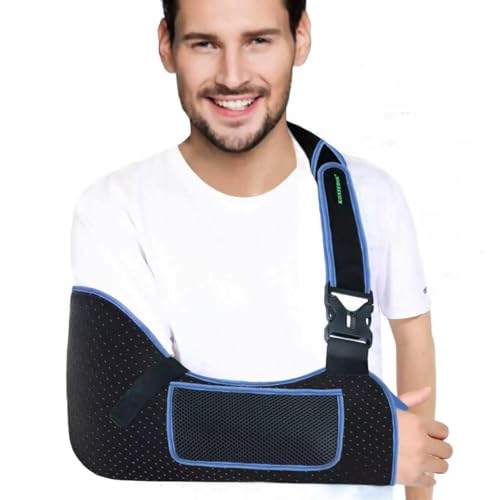
The KONSEDIK sling was designed by someone who clearly tried to put a sling on themselves one-handed. The press-lock buckle and hook-and-loop shoulder strap let you adjust the suspension angle without needing a second person, and the hollow-weave ventilation holes keep the arm pocket from turning into a sweat trap during summer recovery. The built-in anti-slip thumb loop is more secure than loose finger loops, holding the wrist in a neutral position even when you bend forward.
Where this sling really stands out is the thick movable sponge padding on the shoulder strap — roughly 2.5 inches of cushion that can be shifted to avoid the exact spot where a previous bruise or scar sits. A hidden side pocket fits a phone or credit card, which is a genuinely useful addition when your dominant hand is out of commission. The foam wrist pad adds another layer of support that cheaper slings omit entirely.
Be aware that the sewn hand hole at the end of the arm pocket is generously sized but not adjustable. Users with very large hands or oversized casts may find the opening too tight to slide through comfortably. The Medium size runs on the smaller side; if you’re on the borderline, sizing up is a smart move. For most adults with standard forearm lengths, this is a premium-feeling option at a mid-range price point.
Why it’s great
- Thick movable shoulder pad reduces neck pressure significantly
- Hollow ventilation holes keep air moving inside the pocket
- One-handed press-lock buckle for easy solo use
Good to know
- Sewn hand opening is not adjustable for very large casts
- Runs slightly small — consider sizing up for medium builds
3. Wonder Care Shoulder Support Brace
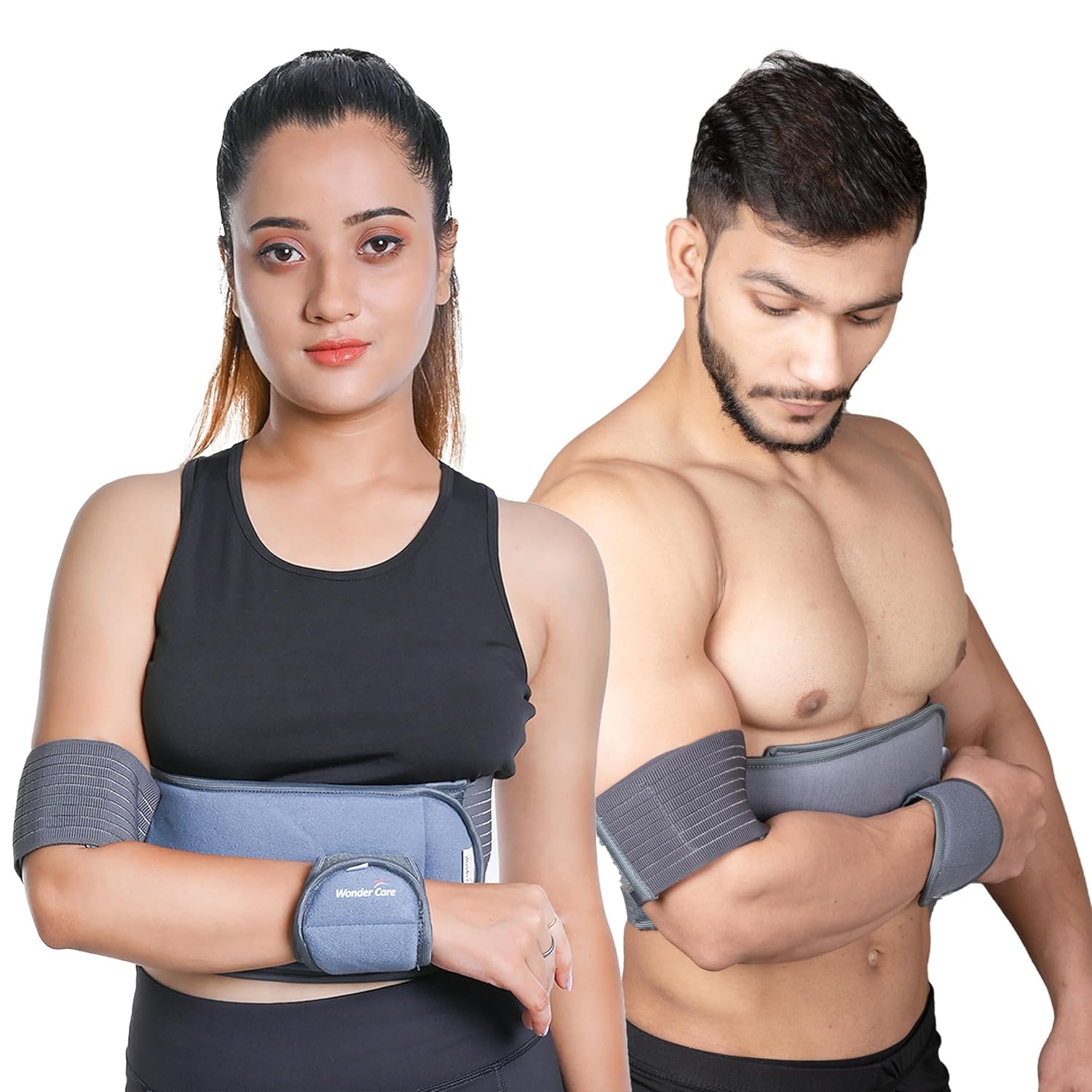
The Wonder Care is not a traditional sling — it is a shoulder immobilizer that uses a 5-inch wide band across the chest to keep the biceps and forearm cuffs locked in place. This design takes all pressure off the neck and transfers it to the torso, which is a revelation for anyone with existing cervical spine issues or nerve pain. The 100% cotton fabric is skin-friendly and breathable, and the whole brace is washable to maintain hygiene during daily wear.
It excels at preventing shoulder rotation and abduction after dislocation, reverse shoulder replacement, or clavicular joint reconstruction. Multiple reviewers recovering from rotator cuff surgery and sternum joint reconstruction report that it allowed them to sleep without the arm drifting out of position. The hook-and-loop front closure means you can put it on and take it off without any help from another person.
The main limitation is that the arm band is smaller than expected — users with biceps measuring 17 inches or more will find the loop too tight, potentially requiring a DIY Velcro extension. It also works best for upper-arm and shoulder injuries, not for isolated forearm or wrist fractures where you need the hand cradled. For pure shoulder stabilization after surgery, this is the most effective option in the lineup.
Why it’s great
- Eliminates neck pressure by shifting support to the chest
- Excellent for post-surgery shoulder immobilization
- Pure cotton fabric is gentle on sensitive skin
Good to know
- Arm band may be too tight for larger biceps over 17 inches
- Not ideal for wrist-only or forearm-only injuries
4. mosago Arm Sling
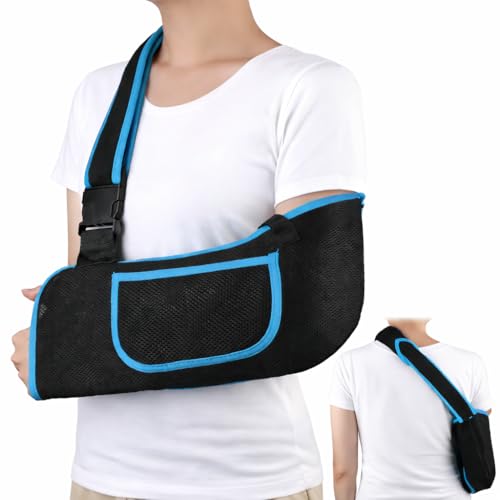
The mosago sling redefines what lightweight means — at under a quarter pound (roughly the weight of two eggs), it is barely noticeable on the shoulder. The body is constructed from a stretchy cotton arm pouch paired with a mesh forearm panel that maximizes airflow. The thick sponge-filled shoulder strap is movable and adjustable, providing superior neck relief compared to sewn-in padding that can’t be repositioned to avoid a tender spot.
Two hidden side pockets are a genuine convenience feature, letting you stash a phone, keys, or credit cards without needing a bag. The dual elastic thumb loops prevent the arm from sliding out when you bend down, and the quick-release latch makes removal simple. Pet owners will appreciate that the fabric resists attracting hair and fur — a small but real benefit for daily living.
A couple of sizing quirks exist: the XL shoulder strap is quite long for shorter users and may require careful adjustment, and the bicep area can feel tight for larger-armed individuals. The foam shoulder pad, while soft, can shift out of position during sleep if you move around aggressively. For warm-weather recovery and users who prioritize breathability above all else, this is the top pick.
Why it’s great
- Extremely lightweight — under 0.25 lbs for all-day wear
- Hidden pockets for phone and cards are genuinely useful
- Mesh panel and sponge strap maximize airflow and neck comfort
Good to know
- XL shoulder strap may be too long for short users
- Bicep area can feel tight for larger arm circumferences
5. Cozyhealth Arm Sling

The Cozyhealth sling punches well above its price class. It features a thickly padded shoulder strap with a wide surface area that distributes weight better than typical budget slings, and the polyester body is dotted with ventilation holes that prevent the arm pocket from trapping heat. The design is fully reversible for left or right arm use, and the integrated hand grip straps inside the pocket stabilize the arm without needing a separate wrist loop.
Multiple users recovering from rotator cuff surgery, broken collarbones, and rebuilt elbows report that this sling is a direct upgrade from what the hospital issued. The one-handed Velcro adjustment lets you dial in the arm angle precisely, and the entire assembly weighs only 5.3 ounces, so it doesn’t drag on the shoulder. It washes well and holds up after multiple cycles without losing its shape.
The thick padding does trap some body heat during sleep, making it less breathable than mesh-based alternatives for hot sleepers. The medium size fits most adults up to 5’8”, but taller users should check the forearm length guide. For the price, this delivers 90% of the comfort of premium slings at a fraction of the cost — an outstanding value for anyone needing short-term support.
Why it’s great
- Thick shoulder padding distributes weight evenly
- Reversible for left or right arm with zero disassembly
- Excellent one-handed adjustment mechanism
Good to know
- Thick padding can get warm during sleep
- Medium size may be short for tall individuals
FAQ
How do I know if an arm sling is too tight around my neck?
Can I wear an arm sling while sleeping on my back?
Final Thoughts: The Verdict
For most users, the best arm sling winner is the Brownmed Ultimate Arm Sling because its stretch cotton construction balances breathability, comfort, and durability for all-day wear during clavicle fractures and general recovery. If you want a sling with advanced neck relief and a smartphone pocket, grab the KONSEDIK Arm Sling. And for major shoulder immobilization where you cannot risk the arm rotating, nothing beats the Wonder Care Shoulder Support Brace.

Mo Maruf
I created WellFizz to bridge the gap between vague wellness advice and actionable solutions. My mission is simple: to decode the research and give you practical tools you can actually use.
Beyond the data, I am a passionate traveler. I believe that stepping away from the screen to explore new environments is essential for mental clarity and physical vitality.