Our readers keep the lights on and my smoothie glass nicely filled. As an Amazon Associate, I earn from qualifying purchases.
The single biggest mistake in a projector build is ignoring the ceiling. A standard white screen turns your home theater into a washed-out mess the moment a lamp flicks on. An ALR screen is not a luxury accessory — it is the only way to preserve contrast, black depth, and color saturation in any room that isn’t a cave. The optical microstructure built into these panels physically redirects overhead and side light away from your eyes, so the projector’s beam reaches you at full strength while ambient spill vanishes.
I’m Mohammad Maruf — the founder and writer behind WellFizz. After analyzing ALR material structures, gain ratings, viewing angles, and spring-tension systems across the full price spectrum, I’ve matched each screen to a specific real-world scenario so you can stop guessing and start watching.
The journey ends here, because choosing the right best alr screen means matching gain, ambient light rejection percentage, and frame type to your projector’s throw distance and your room’s light profile.
How To Choose The Right ALR Screen
An ALR screen works by layering a physical microstructure — either sawtooth ridges or Fresnel grooves — that bounces projector light toward the viewer while trapping ambient light from ceiling fixtures and windows. Understanding three variables will prevent you from pairing a long-throw projector with a UST-specific screen or buying a low-gain panel for a dim projector.
Gain vs. Ambient Light Rejection
Gain measures how much light the screen reflects relative to a standard white surface. A gain of 1.0 means equal reflection. Most ALR screens drop to 0.6–0.8 gain because the absorbing microstructure necessarily eats some light. This lower gain is actually a feature: it crushes black floor and preserves shadow detail. If your projector delivers at least 2,500 lumens, a 0.8-gain ALR screen will still produce a punchy image. Below 2,000 lumens, look for a gain of 1.0 or higher, typically found in Fresnel-based screens for long throw.
Microstructure Directionality
Sawtooth (also called black-grid) ALR material works omnidirectionally, rejecting light from ceilings and side windows equally. This makes it ideal for rooms with multiple ambient sources. Fresnel ALR uses concentric rings to focus light from a specific angle, which works brilliantly for long-throw projectors but fails with UST units because the beam angle does not match the grooves. Always match the microstructure to your projector’s throw classification.
Frame Type and Tension System
Fixed frames are the gold standard for ALR material because the screen surface must remain perfectly flat for the microstructure to function correctly. Look for frames with adjustable spring tension or metal rods rather than grommets — the latter can create puckering. Motorized pull-down ALR screens exist, but the tab-tension system is critical to prevent the fabric from curling and micro-distorting the ALR pattern over time.
Quick Comparison
On smaller screens, swipe sideways to see the full table.
| Model | Category | Best For | Key Spec | Amazon |
|---|---|---|---|---|
| AWOL VISION Serriform ALR-C120 | Fixed Frame UST | Best overall UST performance | 95% ceiling light rejection | Amazon |
| Valerion Fresnel ALR 100″ | Fresnel Fixed Frame | Best for bright-room long throw | 1.8 gain / 85% ALR | Amazon |
| NothingProjector Black Series 100″ | Fixed Frame UST | Best value UST with high rejection | 95% ambient light rejection | Amazon |
| Elite Screens ER150DHD3 150″ | Fixed Frame Long Throw | Best large format for theaters | 1.2 gain / CineGrey 3D | Amazon |
| Elite Screens ER120DHD3 120″ | Fixed Frame Long Throw | Best mid-range ALR for long throw | 1.2 gain / ISF Certified | Amazon |
| MIGO Tab-Tension Pull Down 100″ | Motorized Drop Down | Best motorized option with partial ALR | Tab-tension / grey crystal | Amazon |
| WonTeam 100″ ALR UST | Fixed Frame UST | Best entry-level fixed frame UST | 0.8 gain / micro-tooth 3D | Amazon |
| Paris Rhône CLR 100″ | Fixed Frame UST | Best budget dedicated ALR for UST | 0.6 gain / 92% ALR | Amazon |
| AWOL VISION MW-120 Matte White | Fixed Frame Universal | Best universal non-ALR with high gain | 1.3 gain / 170° viewing angle | Amazon |
In‑Depth Reviews
1. AWOL VISION Serriform ALR-C120 – 120″ Fixed Frame UST

The AWOL VISION Serriform pushes the ceiling-light-rejection ceiling to a genuine 95%, which means you can keep a six-bulb fixture on above the seating area and still see black bars that are actually black. Its serriform optical-surface lens microstructure is purpose-built for ultra-short-throw projectors only — pairing it with a long throw will not redirect the light correctly. Owners consistently report an 80% perceived picture-quality improvement over a bare wall or standard matte screen.
Assembly is the one real friction point. The frame requires precise screen-overhang alignment, and several verified buyers mention that the included instructions mislabeled bracket positions. Having a second person and a YouTube walkthrough makes the difference between a one-hour install and a frustrating afternoon. Once mounted, the tension system keeps the PVC fabric drum-tight with zero waves.
The 170° viewing angle is unusually wide for a high-rejection ALR screen. Most UST ALR panels top out around 160° before contrast drops off, but the Serriform maintains uniform color and black depth even when you sit well off-axis. At this rejection level, the screen demands a UST projector with at least 2,400 lumens to overcome the 0.6–0.7 effective gain — dimmer projectors will look anemic.
Why it’s great
- Record 95% ceiling ambient light rejection for near-TV daytime contrast.
- Ultra-wide 170° viewing angle keeps uniformity off-axis.
- 80% contrast improvement over matte white is verifiable in side-by-side shots.
Good to know
- Assembly requires precise alignment and is not intuitive; bracket labeling can be wrong.
- Only compatible with ultra-short-throw projectors — long throw will not work.
- Higher price point reflects premium optical microstructure, not frame build alone.
2. Valerion Fresnel ALR 100″ – Long Throw Fixed Frame
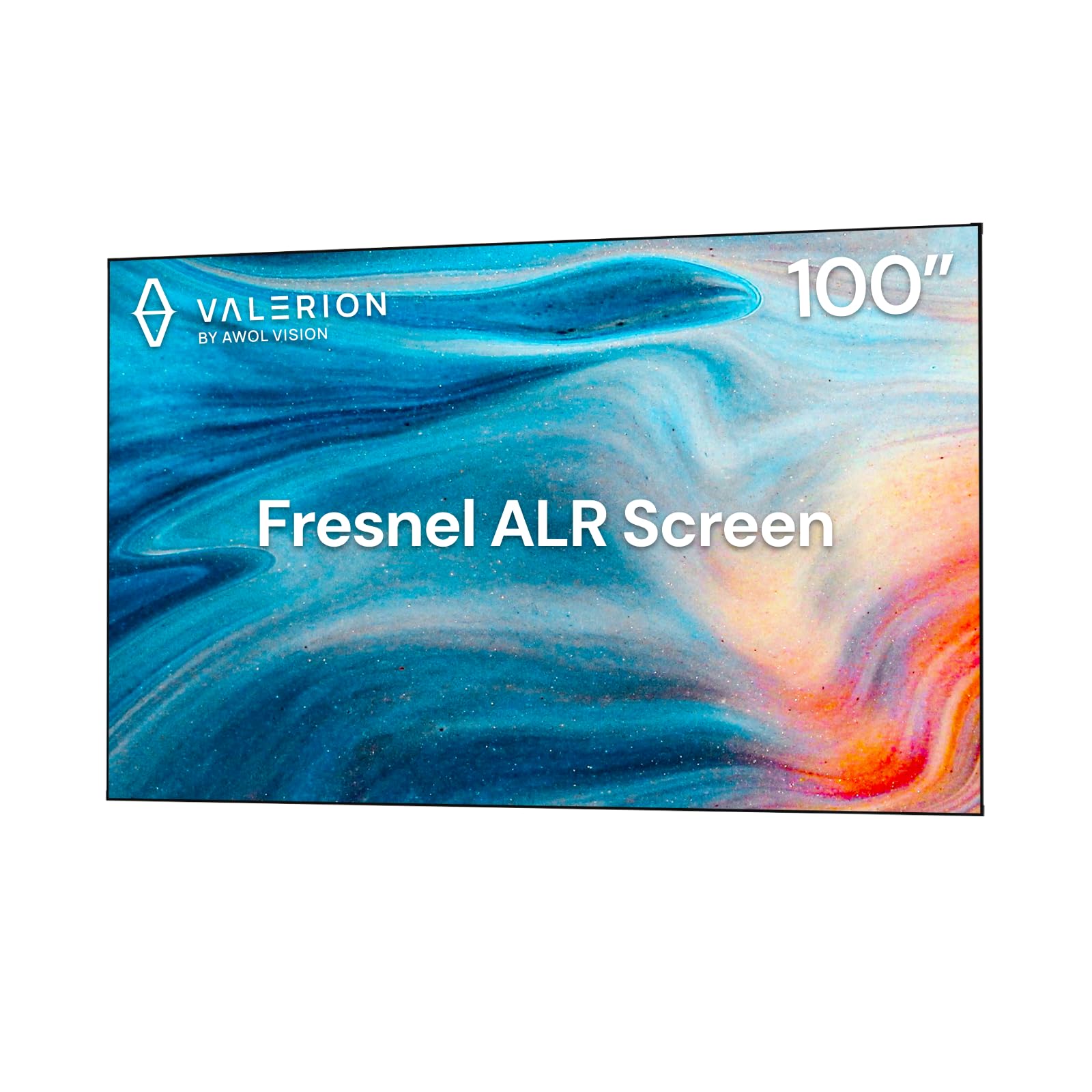
The Valerion Fresnel ALR is the rare screen that combines a high 1.8 gain with genuine ambient light rejection, made possible by its 8-layer Fresnel microstructure. Traditional ALR screens sacrifice gain to absorb ambient light — the Fresnel architecture instead redirects projector light into a tight horizontal cone while trapping ceiling and side wash. This makes it the single best option for long-throw projectors used in living rooms with uncontrolled daylight.
The 85% rejection rate applies to both overhead and side ambient sources, not just ceiling light. That dual-axis rejection is uncommon; most ALR screens focus on ceiling wash only and leave side windows unaddressed. The trade-off is a narrower 90° viewing angle — sit too far left or right and the image dims significantly because the Fresnel grooves are highly directional. The screen is also rollable for transport and uses a scratch-resistant PET surface that wipes clean without micro-marring.
Assembly is the biggest challenge. Multiple buyers report that the included instructions are essentially useless and that fiberglass gloves are necessary to handle the material safely. The frame itself uses a modular aluminum system with tension bolts, and once everything is aligned, the final flatness is excellent. Wall-mount placement should be double-checked before final screen installation because repositioning risks surface damage.
Why it’s great
- 1.8 gain delivers punchy HDR highlights even in bright rooms.
- 85% dual-axis ambient rejection handles ceiling and side light.
- Scratch-resistant, easy-to-clean PET surface for daily use.
Good to know
- 90° viewing angle means off-axis seats lose contrast quickly.
- Not compatible with ultra-short-throw or short-throw projectors.
- Assembly instructions are poor; fiberglass handling precautions required.
3. NothingProjector Black Series 100″ – Fixed Frame UST
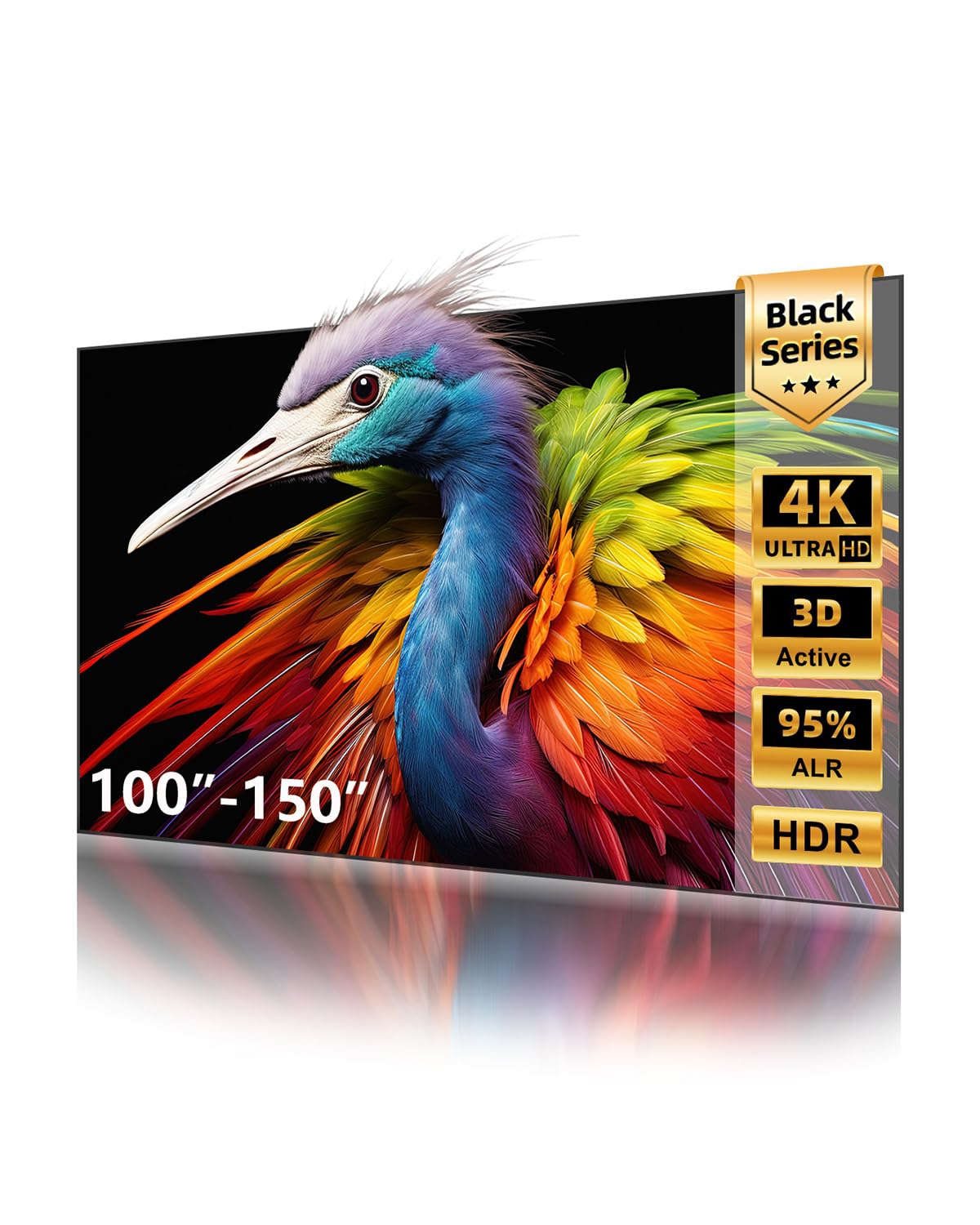
The NothingProjector Black Series delivers 95% ambient light rejection at a price point that undercuts most competitors offering the same rejection percentage by a notable margin. Its black-grid microstructure uses a multi-layer optical structure that appears dark gray from normal viewing angles but white from the projector’s lower position, which is exactly how UST ALR material should behave. Users with Samsung LPU7D and Hisense LS800 projectors report dramatic contrast improvements over projecting on a wall.
The 170° viewing angle is legitimately wide for a screen at this rejection tier. Most panels with 95% rejection narrow to 160° or less to maximize directional bounce, but the Black Series maintains solid uniformity across a broad seating arc. The 0.4-inch ultra-slim aluminum frame uses a black velvet finish that absorbs projector overshoot and eliminates the screen-border halo effect that cheap frames produce.
Assembly difficulty is the recurring concern across reviews. The sawtooth material is fragile during installation — one buyer reported crushed microstructures from over-tensioning. The frame itself is structurally sound once built, but the process requires patience and ideally two people working opposite sides simultaneously. After setup, the screen surface remains taut and wrinkle-free with correct spring tension.
Why it’s great
- 95% ambient rejection at a mid-range price point is exceptional value.
- 170° viewing angle preserves contrast across wide seating layouts.
- Ultra-slim black velvet frame eliminates halo and light spill.
Good to know
- Fragile sawtooth material can be damaged if over-tensioned during assembly.
- Setup is tedious; clear step-by-step instructions are not provided.
- Works best with UST projectors above 2,200 lumens due to effective gain drop.
4. Elite Screens ER150DHD3 – 150″ CineGrey 3D Long Throw
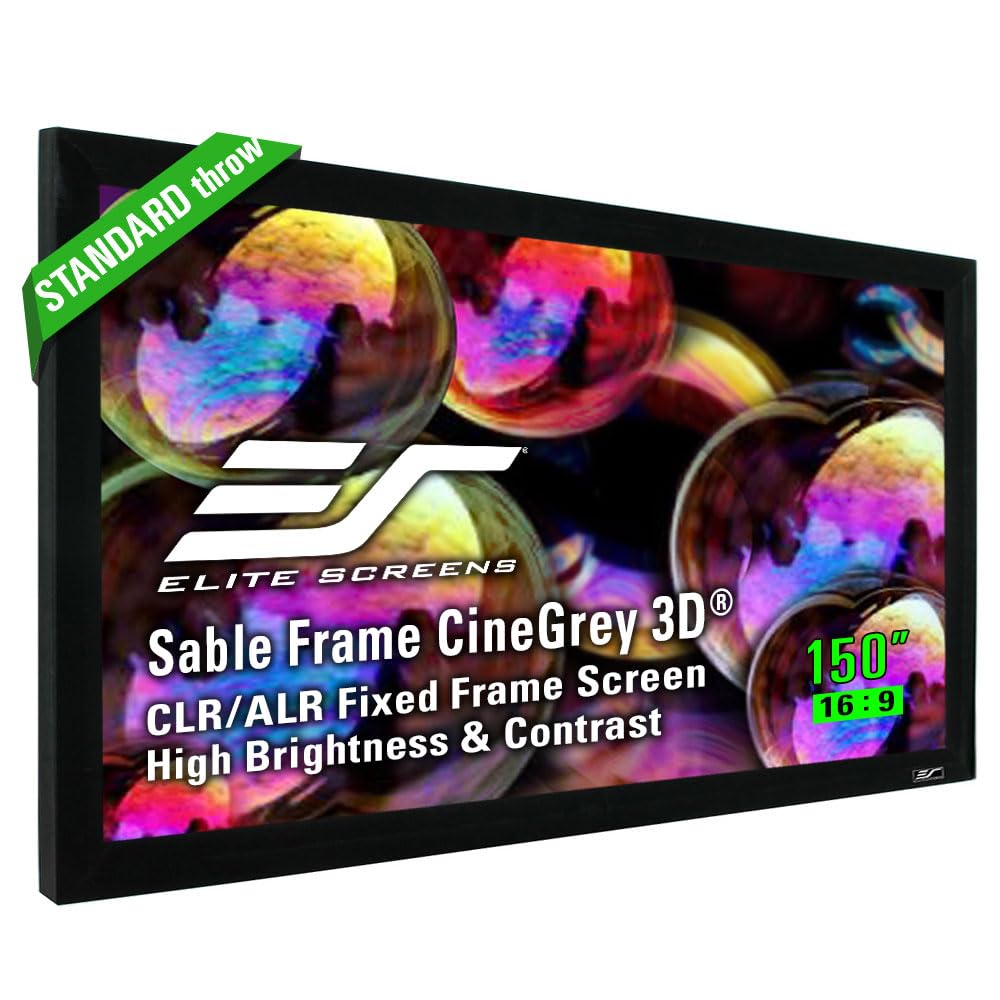
The 150-inch Elite Screens CineGrey 3D is the reference for anyone building a dedicated theater room with a long-throw projector. Its angular-reflective ALR material delivers a 1.2 gain, which is unusually high for an ALR screen — most competitors hover around 0.8 to 1.0. This means you can run your projector in eco mode and still achieve a punchy image without hotspotting, provided your throw distance is 1.5x the screen width or more.
The ISF certification is not a marketing sticker; the CineGrey 3D material underwent rigorous color-accuracy testing to ensure the ALR layer does not introduce a color cast. Owners report that black levels are dramatically deeper than standard white screens, and the black velvet-wrapped aluminum frame absorbs projector spill entirely. The screen supports 8K and passive 3D polarization, which is rare at this size and price tier.
Assembly is easier than most fixed-frame screens thanks to the Sable Frame system with adjustable fix plates and sliding wall-mount brackets. The metal-rod tensioning approach replaced older grommet designs after complaints about bunching, and the new rods produce a flatter surface. The primary downside is a strong off-gassing odor reported by several buyers that takes about a week to dissipate fully. This is common with newly manufactured optical materials but worth ventilating for.
Why it’s great
- Massive 150-inch diagonal with 1.2 gain — rare for ALR at this size.
- ISF-certified color accuracy prevents ALR-induced tint shift.
- Metal-rod tensioning produces flatter surface than grommet designs.
Good to know
- Strong initial off-gassing odor that may linger for days.
- Not compatible with ultra-short-throw or short-throw projectors.
- 35-pound weight requires at least two people and careful wall anchoring.
5. Elite Screens ER120DHD3 – 120″ CineGrey 3D Long Throw
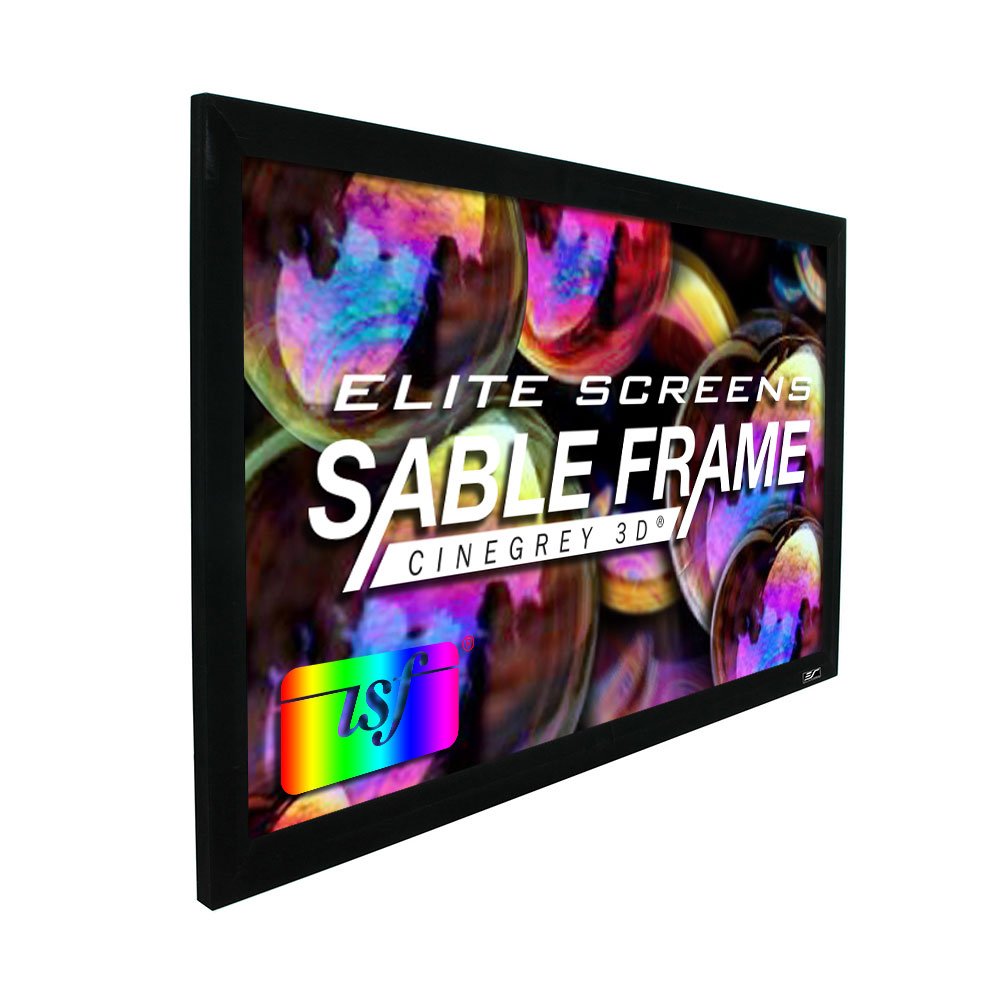
The 120-inch version of Elite Screens’ CineGrey 3D delivers identical ALR properties to its 150-inch sibling — 1.2 gain, 90° viewing angle, ISF certification — but at a weight and size that a single determined person can manage. The angular-reflective material rejects overhead and side ambient light effectively, and multiple buyers report that it eliminates room reflections from adjacent walls, which is a subtle but critical benefit for rooms with light-colored decor.
Hotspotting is the main controversy. Some users with Epson 5050UB projectors at 15-foot throws report visible hotspotting on the CineGrey 3D material, while others with 3,400-lumen projectors on eco mode report no hotspotting at all. This suggests the screen is sensitive to projector lens quality and throw distance — it rewards bright, high-quality optics but punishes budget projectors. The GREENGUARD GOLD certification ensures low chemical emissions, which addresses the off-gassing issue present in some competing ALR screens.
Assembly uses the updated metal-rod tensioning system that replaced grommets, which reduces fabric bunching but introduces a new challenge: the rods must be fed in sequence, and doing one side before the other makes locking the opposite side difficult. The included white gloves are a thoughtful touch for handling the optical surface without leaving oils, and the sliding wall brackets simplify centering after the frame is hung.
Why it’s great
- ISF-certified ALR with 1.2 gain for bright, accurate images.
- GREENGUARD GOLD certified — low VOC emissions for indoor air safety.
- Eliminates wall-reflected glare, improving perceived contrast.
Good to know
- Visible hotspotting with some projectors at long throw distances.
- Not compatible with ultra-short-throw or short-throw projectors.
- 90° viewing angle limits seating to a narrow sweet spot.
6. MIGO Tab-Tension Pull Down 100″ – Partial ALR Motorized
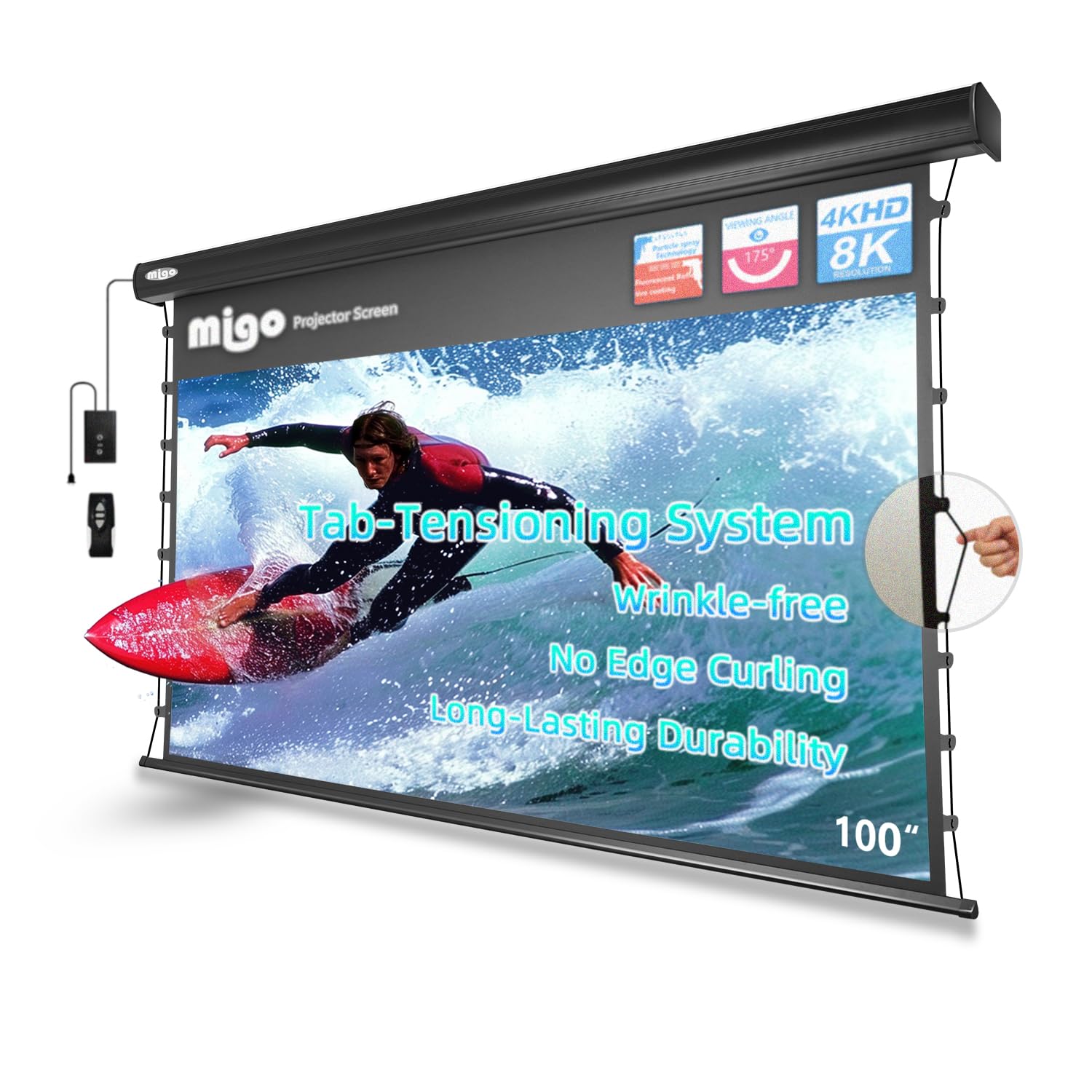
The MIGO Tab-Tension screen is a motorized drop-down that uses a grey crystal surface with partial ambient light properties — it is not a full sawtooth or Fresnel ALR screen, but it does improve contrast noticeably in rooms with moderate ambient light. The tab-tension system combined with a 7-pound bottom weight keeps the fabric flat, which is the primary challenge for motorized ALR screens that lack the rigidity of a fixed frame.
The motor itself is genuinely quiet — verified reviews note it is smooth and barely audible during extension and retraction. RF remote control works up to 16 feet and supports adjustable drop height, which is useful for centering the image under different ceiling heights. The aluminum housing with reinforced ribs prevents the casing from bowing over time, a failure mode common in cheaper motorized screens.
The critical caveat: this is not a true ALR screen for ultra-short-throw laser projectors. The grey crystal surface does not have the sawtooth or Fresnel microstructure needed to physically redirect light. It works well for standard long-throw projectors and acceptable for short throw, but UST owners will be disappointed with the ambient light rejection performance. The 3.0 gain effectively boosts brightness but also amplifies ambient wash, which partially defeats the purpose.
Why it’s great
- Tab-tension and weighted bottom keep the fabric drum-tight without waves.
- Quiet motor with RF remote and adjustable drop height.
- Versatile mounting: ceiling, wall, or recessed options included.
Good to know
- Not a true ALR screen — will not reject ambient light for UST projectors effectively.
- 3.0 gain boosts brightness but also washes out blacks in lit rooms.
- Requires a bright projector (3,000+ lumens) for optimal results.
7. WonTeam 100″ ALR Fixed Frame – UST
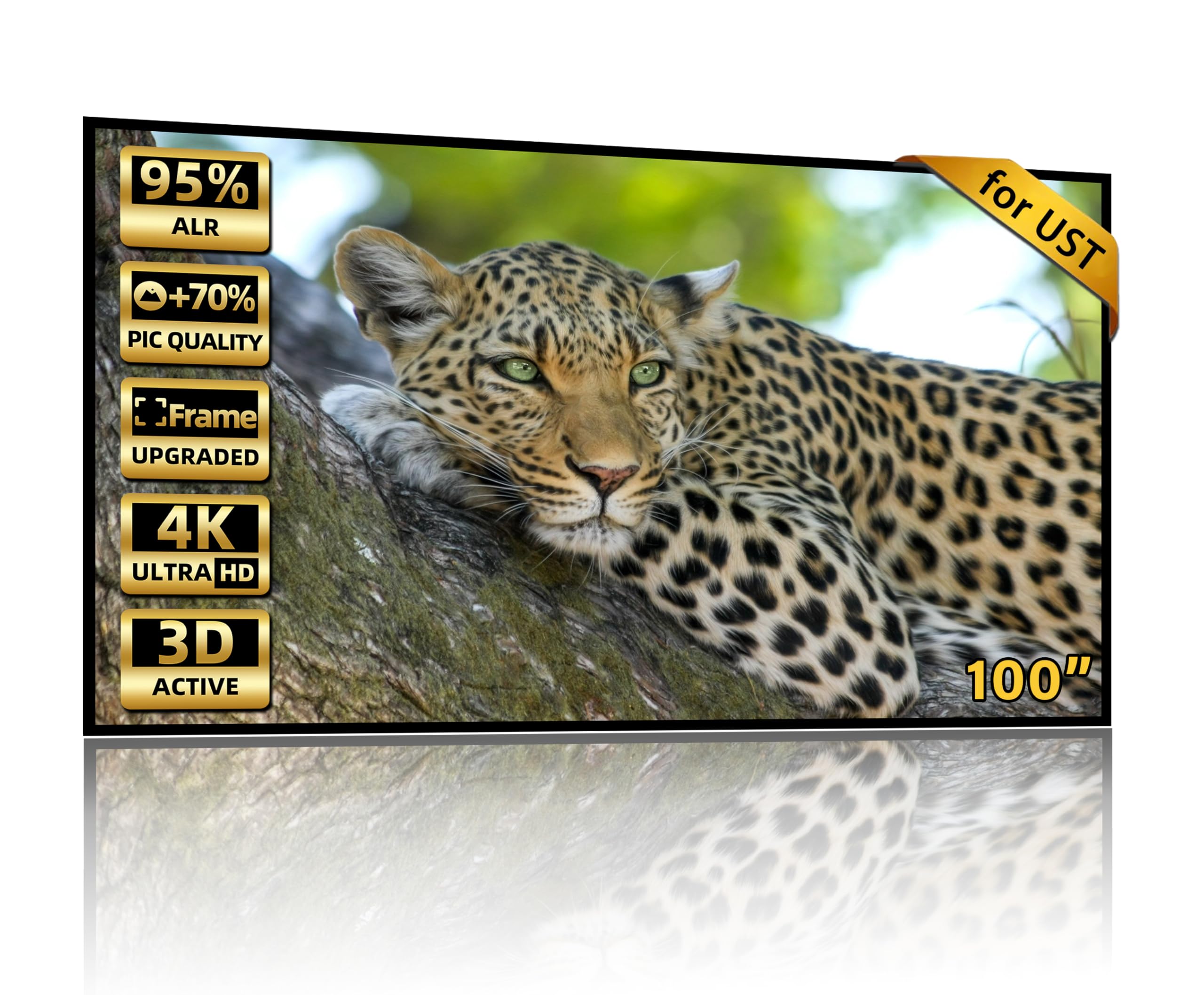
The WonTeam ALR screen delivers an entry-level price point for UST projector owners who want sawtooth microstructure rejection without paying premium-tier pricing. The precision micro-toothed 3D triangular grating absorbs ceiling light while directing projector bounce toward the audience, and the 0.8 gain ensures deep black levels despite the lower brightness output. Buyers using Epson LS300 and similar UST projectors report excellent daytime clarity with curtains open.
The dual-frame design uses an adaptive spring tension system that maintains flatness better than single-frame competitors at this price tier. The 1-centimeter ultra-narrow bezel is genuinely slim — thinner than most fixed frames — and the black velvet surface absorbs projector overshoot effectively. The upgraded PVC material includes self-healing properties that minimize minor surface impressions from cleaning or contact.
The main durability concern is long-term tension integrity. One verified buyer reported sagging after five months, which suggests the spring system may lose tension faster than premium frames. Assembly is straightforward but the springs require careful synchronization — locking one side before the other makes the opposite side nearly impossible to engage. The material is sensitive to over-tensioning, so following the included video instructions precisely is critical.
Why it’s great
- True ALR sawtooth microstructure at an aggressive price point.
- Ultra-narrow 1cm bezel for a sleek, borderless appearance.
- Self-healing PVC surface resists minor marks and impressions.
Good to know
- Some units report sagging and loss of tension within months.
- Spring synchronization during assembly is tricky without two people.
- Ambient rejection is effective but not at the level of + screens.
8. Paris Rhône CLR 100″ – Fixed Frame UST

The Paris Rhône CLR screen is a dedicated ceiling-light-rejecting screen for UST projectors at a price that makes it accessible for budget home theater builds. The black-grid ALR material with multi-layer optical structure rejects 92% of ambient light, and the 0.6 gain ensures excellent black depth — though it also cuts projector brightness by nearly half, meaning you need at least 2,500 lumens from your UST to maintain a vivid image. Owners with 2K-lumen projectors report good results in dim rooms but struggle in direct sunlight.
The aluminum frame with 0.4-inch ultra-slim profile and black velvet finish punches above its price tier in build quality. Hinged side panels make assembly easier than most fixed frames, and adjustable height sliders eliminate the need for shims during wall mounting. The 160° viewing angle is slightly narrower than premium competitors but still adequate for standard living room seating layouts.
The single biggest risk is manufacturing quality control. Several buyers received screens with crushed sawtooth crystals or fabric cut incorrectly, making tension impossible regardless of adjuster use. This is a known pain point at this price level — the microstructure material is fragile, and budget shipping can damage it before unboxing. Inspect the screen surface thoroughly before starting assembly, because you cannot return a partially built frame.
Why it’s great
- Genuine 92% ceiling light rejection at a very accessible price.
- Hinged frame design and height sliders simplify installation.
- 0.6 gain delivers deep, cinematic black levels.
Good to know
- Inconsistent QC — some units arrive with damaged sawtooth microstructure.
- 0.6 gain requires a bright projector (2,500+ lumens) for daytime use.
- Not effective in bright rooms with direct sunlight on the screen.
9. AWOL VISION MW-120 – 120″ Matte White Fixed Frame

The AWOL VISION MW-120 is not an ALR screen — it is a high-gain matte white PVC screen designed for universal projector compatibility, including standard throw, short throw, and ultra-short throw projectors. Its 1.3 gain produces a noticeably brighter image than standard matte white screens, which makes it a strong choice for budget builds where the projector lacks lumen headroom. The black baked design on the back eliminates light bleed-through, and the 170° viewing angle ensures uniform brightness across wide seating.
Assembly is genuinely the easiest on this list. The tensioning rod system allows a single person to set up the frame and attach the screen in under an hour — verified by multiple buyers who completed solo installation. The screen is also cleanable with mild soap and water, which is unusual for projection surfaces that typically require dry dusting only. This makes it practical for homes with children or pets where screen contact is possible.
The critical limitation: without ALR microstructure, this screen offers zero ambient light rejection. Ceiling lights or windows will wash out the image just as they would on a plain wall. Buyers who need daytime viewing capability should look at the AWOL Serriform or other ALR options. The MW-120 excels in dedicated light-controlled rooms where maximum brightness and easy setup are the priorities.
Why it’s great
- 1.3 gain delivers bright, punchy images even with lower-lumen projectors.
- Universal compatibility with any projector type — no throw restriction.
- Simplest assembly among all screens reviewed; solo installation feasible.
Good to know
- No ambient light rejection — useless in rooms with uncontrolled light.
- Matte white surface does not improve black levels like ALR materials do.
- Minor corner wrinkles possible if tensioning rods are not evenly adjusted.
FAQ
Can I use a UST ALR screen with a long-throw projector?
Why does my ALR screen look dark from the sides?
How does 0.6 gain affect my daytime viewing?
Final Thoughts: The Verdict
For most users, the best alr screen winner is the AWOL VISION Serriform ALR-C120 because it achieves the highest measured ceiling light rejection (95%) in a fixed frame that pairs perfectly with high-lumen UST projectors, delivering near-TV contrast in rooms where ceiling lights stay on. If you need a long-throw screen for a bright living room, grab the Valerion Fresnel ALR for its unique 1.8-gain Fresnel architecture that maintains daytime clarity. And for a motorized form factor where a permanent fixed frame is not an option, nothing beats the MIGO Tab-Tension Pull Down for smooth operation and a flat surface.

Mo Maruf
I created WellFizz to bridge the gap between vague wellness advice and actionable solutions. My mission is simple: to decode the research and give you practical tools you can actually use.
Beyond the data, I am a passionate traveler. I believe that stepping away from the screen to explore new environments is essential for mental clarity and physical vitality.