Our readers keep the lights on and my smoothie glass nicely filled. As an Amazon Associate, I earn from qualifying purchases.
Waking up on the cold tent floor with a sore hip is a rite of passage no side sleeper should endure. The standard 2-inch pad that works for back sleepers simply crushes your shoulder and hip into the ground, robbing you of hours of restful sleep before a long day on the trail. The fix isn’t a thicker sleeping bag — it’s a pad with enough vertical loft and targeted support to keep your spine aligned while you lie on your side.
I’m Mohammad Maruf — the founder and writer behind WellFizz. I’ve spent years analyzing outdoor gear specifications, comparing thermal ratings, material durability, and packed weight to help backpackers solve the specific problem of sleeping comfortably on uneven terrain.
Finding the right pad means balancing three things that matter most to side sleepers: thickness to prevent hip and shoulder contact with the ground, width to keep you centered, and insulation to stay warm when the temperature drops. This guide focuses exclusively on the best backpacking pad for side sleepers to help you match your sleep style to a pad that actually works.
How To Choose The Best Backpacking Pad For Side Sleepers
Back sleepers can get away with a 2-inch pad. Side sleepers cannot. The pressure on your hip and shoulder concentrates your full body weight into a small area, so the pad must either be thick enough to prevent bottoming out or use a design that cradles your body differently. Here’s what to look for.
Thickness and Bottoming Out
A pad that is 3.5 inches or thicker is generally the starting point for side sleepers. At 3 inches, many side sleepers will still feel the ground under their hip, especially if they weigh over 180 pounds. Some pads use an offset I-beam or Air Sprung Cell construction that prevents the “hammock effect” where your hips sink and your shoulders roll inward. Look for pads with at least 3.5 inches of loft and baffle structures that resist compression under point loads.
Width and Stability
A standard 20-inch wide pad forces your arms and legs to drape over the edge, which creates instability and drafts. Side sleepers often benefit from a 25-inch wide pad or a tapered design that is wider in the shoulder area. The added width also helps you stay centered because the pad won’t tilt when you shift from one side to the other during the night.
Insulation and R-Value
Side sleepers compress the insulation directly under their hip, making R-value reliability critical. Look for pads with ASTM F3340-22 tested R-values. A 4.5 R-value is sufficient for three-season use, while a 6.0 or higher extends into shoulder seasons and mild winter camping. Reflective foil layers, ThermalCore, or ThermaCapture technologies improve warmth without adding much weight.
Weight and Packed Size
Thicker pads are heavier, and side sleepers often need that extra thickness. The trade-off is between comfort and packability. Self-inflating foam pads offer consistent support but are bulkier and heavier. Air-only pads pack down much smaller but require inflation and are more vulnerable to punctures. For backpacking, an air pad with a pump sack and a weight under 1.5 pounds is a strong compromise.
Quick Comparison
On smaller screens, swipe sideways to see the full table.
| Model | Category | Best For | Key Spec | Amazon |
|---|---|---|---|---|
| Therm-a-Rest NeoAir Xlite NXT | Air Pad | Ultralight backpackers | 13 oz, 3 in thick, R-Value 4.5 | Amazon |
| NEMO Tensor All-Season | Air Pad | Quiet sleep, weight-to-warmth ratio | 3.5 in thick, 25 in wide, R-Value 4.2 | Amazon |
| Big Agnes Rapide SL | Air Pad | Side sleepers wanting firm support | 3.5 in thick, 4.25 in outer chambers, R-Value 4.8 | Amazon |
| Sea to Summit Ether Light XR | Air Pad | Plush, deep-cushion side sleeping | 21.5 in wide, 3.9 in thick, R-Value 4.1 | Amazon |
| Acacia Self Inflating Pad | Foam/Air Hybrid | Car camping, glamping comfort | 4.3 in thick, 28 in wide, R-Value 6.0 | Amazon |
| TREKOLOGY UL R7 | Air Pad | Budget all-season value | 4 in thick, 7.2 R-Value, 2 lb | Amazon |
| Hikenture Insulated Pad | Air Pad | Extreme budget ultralight | 1.53 lb, 3.2 in thick, R-Value 6.2 | Amazon |
In‑Depth Reviews
1. Therm-a-Rest NeoAir Xlite NXT Ultralight Sleeping Pad

The NeoAir Xlite NXT is the benchmark that every other ultralight pad is compared against. At 13 ounces for the regular size, it packs down to the volume of a 1-liter water bottle — a size that is practically invisible in a backpack. The WingLock valve is fast to inflate and even faster to deflate, which saves precious minutes when you are setting up camp in fading light.
For side sleepers, the 3-inch thickness is borderline but workable for most users under 180 pounds. The internal Triangular Core Matrix baffles provide surprisingly good stability; you do not get that “waterbed wobble” common in cheaper air pads. The ThermaCapture reflective layer gives an ASTM-tested R-Value of 4.5, which is warm enough for three-season use and even mild shoulder-season trips.
The surface has less crinkle noise than previous generations, though some users still report a faint rustling. The 30D ripstop nylon is durable for its weight, but the thin fabric demands careful site selection to avoid punctures from sharp rocks or thorns. For backpackers who prioritize weight savings above all else with decent side-sleep support, this is the standard.
Why it’s great
- Extremely lightweight and compact for its warmth level
- WingLock valve makes inflation and deflation effortless
- Stable baffle design minimizes wobble for side sleepers
Good to know
- 3-inch thickness may not be enough for heavier side sleepers
- Thin fabric requires careful ground preparation
- Slight crinkle noise still present for some users
2. NEMO Equipment Tensor All-Season Ultralight Insulated Sleeping Pad
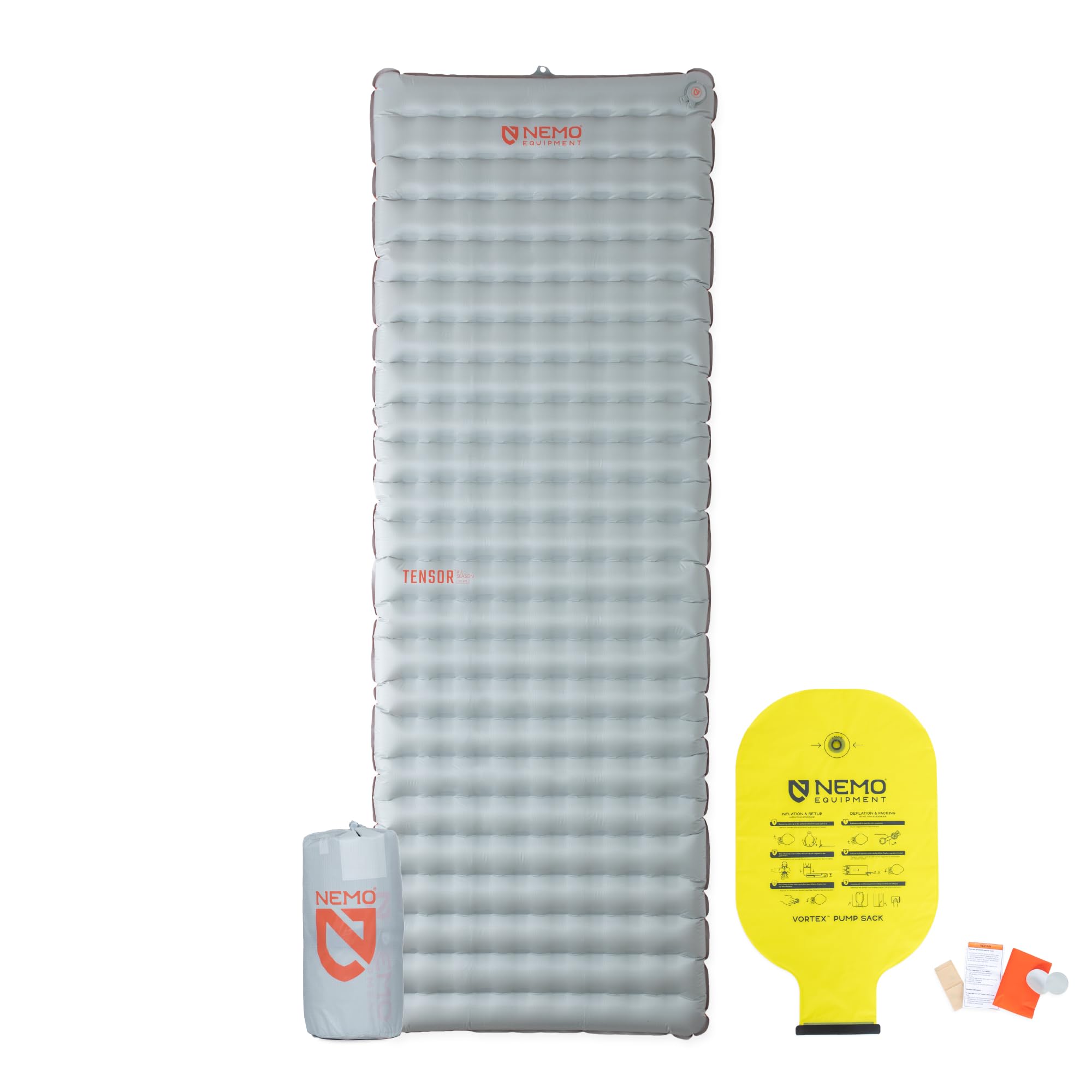
The NEMO Tensor All-Season is engineered for side sleepers who hate the crinkle sound of reflective air pads. Its dual-layer floating Thermal Mirror metallized film is genuinely quiet — no rustling when you shift from your left side to your right. The Spaceframe baffles use die-cut trusses that eliminate the springiness that makes some air pads feel unstable, giving you a stable platform that doesn’t bounce.
At 3.5 inches thick and 25 inches wide in the regular wide version, this pad provides enough real estate for side sleepers to spread their arms without hanging off the edge. The bluesign-approved nylon fabric feels premium and resists punctures better than the ultra-thin materials used on some competitors. The included Vortex pump sack inflates the pad in about three fills, and the integrated micro-adjustment valve lets you fine-tune firmness without losing air.
The R-Value is approximately 4.2, which makes it a capable three-season pad. It holds air well over multiple nights, though temperature changes will require a quick top-up. It is not the lightest pad at around 1.3 pounds, but the combination of width, quietness, and stable loft makes it a top choice for side sleepers who are willing to carry a few extra ounces for a better night’s sleep.
Why it’s great
- Extremely quiet surface with no crinkle noise
- 25-inch width provides excellent stability for side sleepers
- Spaceframe baffles create a stable, non-bouncy platform
Good to know
- Heavier than some ultralight alternatives
- Price sits at the upper end of the market
- Pump sack takes a few fills to fully inflate
3. Big Agnes Rapide SL Insulated Sleeping Pad

The Big Agnes Rapide SL uses a proprietary offset I-beam construction paired with 4.25-inch outer chambers that are taller than the center. This design cradles your body and keeps you centered on the pad — a specific feature that side sleepers benefit from because it prevents the natural tendency to roll toward the edge. The quilted top adds a layer of cushion that covers up surface irregularities in your tent site.
At 3.5 inches of overall thickness, the taller outer chambers effectively create a 4.25-inch containment wall at the edges, which is enough to keep most side sleepers from touching the ground. The two-layer heat-reflective film delivers an R-Value of 4.8, tested to ASTM standards, making it one of the warmest pads in the mid-range category. The high-volume valve with micro-adjustment lets you dial in the exact firmness without the finicky dual-valve dance found on some competitors.
It weighs around 1.5 pounds for the regular size, which is reasonable given the thickness and width. The Pumphouse inflation sack is effective and doubles as a dry bag. The 20-inch width is standard, so taller or broader side sleepers may prefer the 25-inch wide version. The Rapide SL occupies a sweet spot between weight, warmth, and comfort at a price that sits in the mid-range.
Why it’s great
- Taller outer chambers prevent rolling off the pad
- Quilted top adds noticeable comfort on uneven ground
- Micro-adjustment valve allows precise firmness control
Good to know
- Standard width is only 20 inches
- Heavier than the NeoAir Xlite NXT
- Pump sack can be finicky to use in windy conditions
4. Sea to Summit Ether Light XR Insulated Sleeping Pad

The Ether Light XR uses a grid of Air Sprung Cells — individual interconnected air chambers that move independently to contour around your body’s pressure points. For side sleepers, this means your hip sinks into the pad while your lower back and legs stay supported, rather than the entire pad collapsing under your hip. The 3.9-inch thickness is the most generous among the ultralight air pads in this lineup and provides genuine ground clearance for side sleepers of all sizes.
At 21.5 inches wide, the tapered regular version gives you enough room to sleep with your arms at your sides without hanging off. The ThermalCore insulation is quiet and reflects body heat back effectively, achieving an ASTM-tested R-Value of 4.1. The XPRESS valve system, combined with the integrated pump sack, inflates the pad rapidly, and the one-way deflation design makes packing up faster than most pads.
The weight is competitive at just over 1 pound for the regular, though the packed size is slightly larger than the NeoAir due to the thicker cell structure. Some users report that the pad works best when under-inflated — the Air Sprung Cells feel too firm when fully pumped, but letting out a little air creates the plush, cradling feel that makes this pad special. For side sleepers who prioritize cushion and contour over absolute weight savings, the Ether Light XR is hard to beat.
Why it’s great
- Air Sprung Cells contour around hips and shoulders
- 3.9-inch thickness provides excellent ground clearance
- XPRESS valve system for fast setup and takedown
Good to know
- Packed size is larger than some rivals
- Best performance is achieved with partial inflation
- R-Value is lower than some three-season competitors
5. Acacia Self Inflating Sleeping Pad with Foam
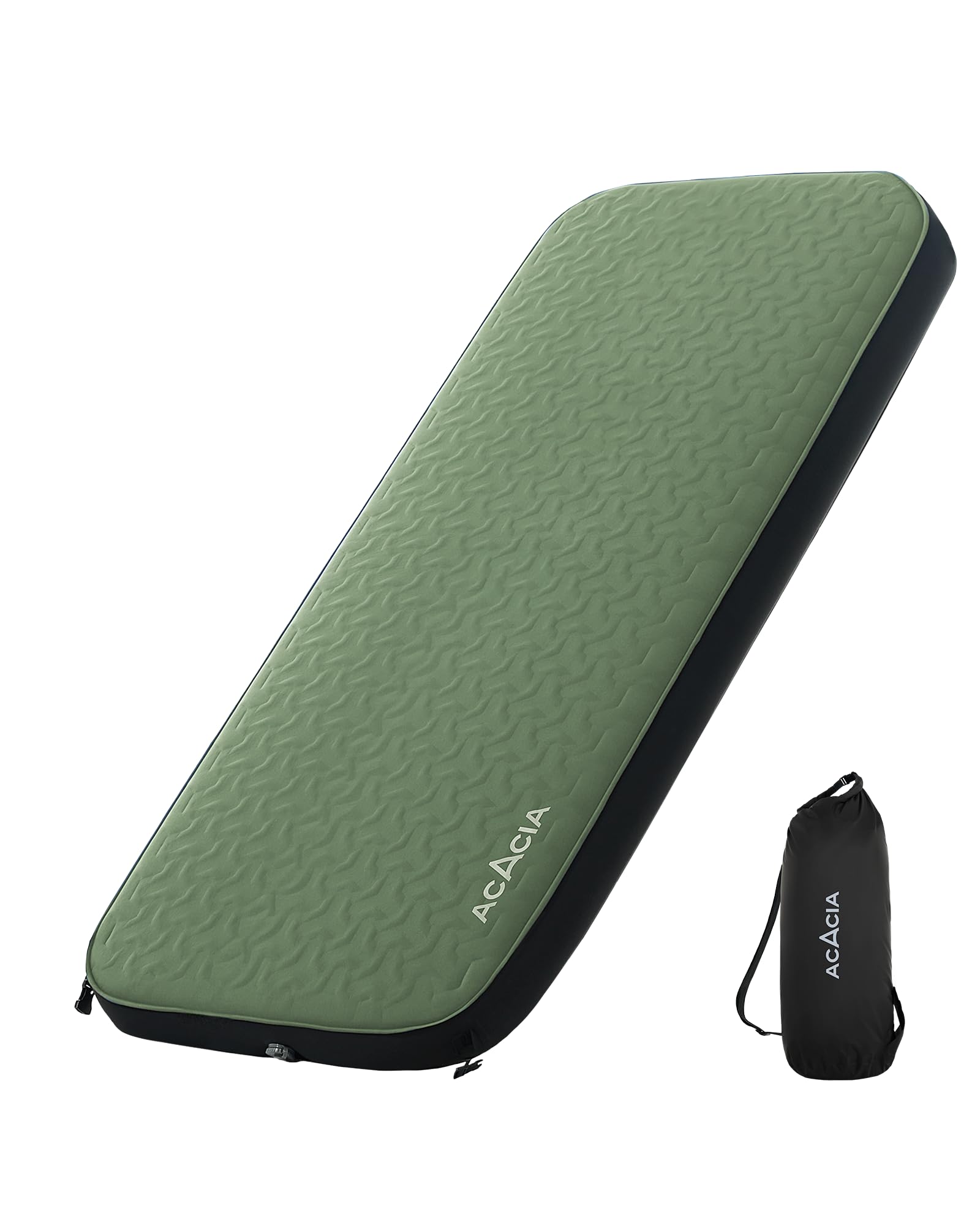
If you are car camping or base camping and weight is not the primary concern, the Acacia self-inflating pad offers side sleepers an experience that rivals a home mattress. The Y-shaped telescopic foam structure reduces bulk by up to 60 percent after deflation compared to traditional foam pads, but it still packs down to the size of a small duffel bag. At 5.3 pounds, this is a luxury item for car campers, not backpackers counting grams.
The 4.3-inch thickness is the tallest of any pad in this lineup, and the open-cell foam inside prevents the “bottoming out” that plagues air-only pads. Side sleepers over 200 pounds will appreciate that the foam supports their full weight without compressing to the ground. The R-Value of 6.0 is winter-grade, and the 28-inch width gives you room to sprawl without falling off — ideal for restless side sleepers who switch sides frequently during the night.
The included pump sack lets you fine-tune the firmness, though the pad self-inflates to about 80 percent on its own. The 30D elastic fabric with TPU coating is abrasion-resistant, and the two-way valve handles deflation well. It is bulky, heavy, and not for solo backpacking, but for comfort-focused side sleepers who drive to their site, the Acacia delivers unparalleled sleep quality.
Why it’s great
- 4.3-inch foam core prevents any ground contact for side sleepers
- 28-inch width provides generous sleeping surface
- R-Value of 6.0 is suitable for winter camping
Good to know
- Heavy at 5.3 pounds, not for backpacking
- Bulkier packed size limits portability
- Foam core makes full deflation and packing more difficult
6. TREKOLOGY Sleeping Pad UL R7
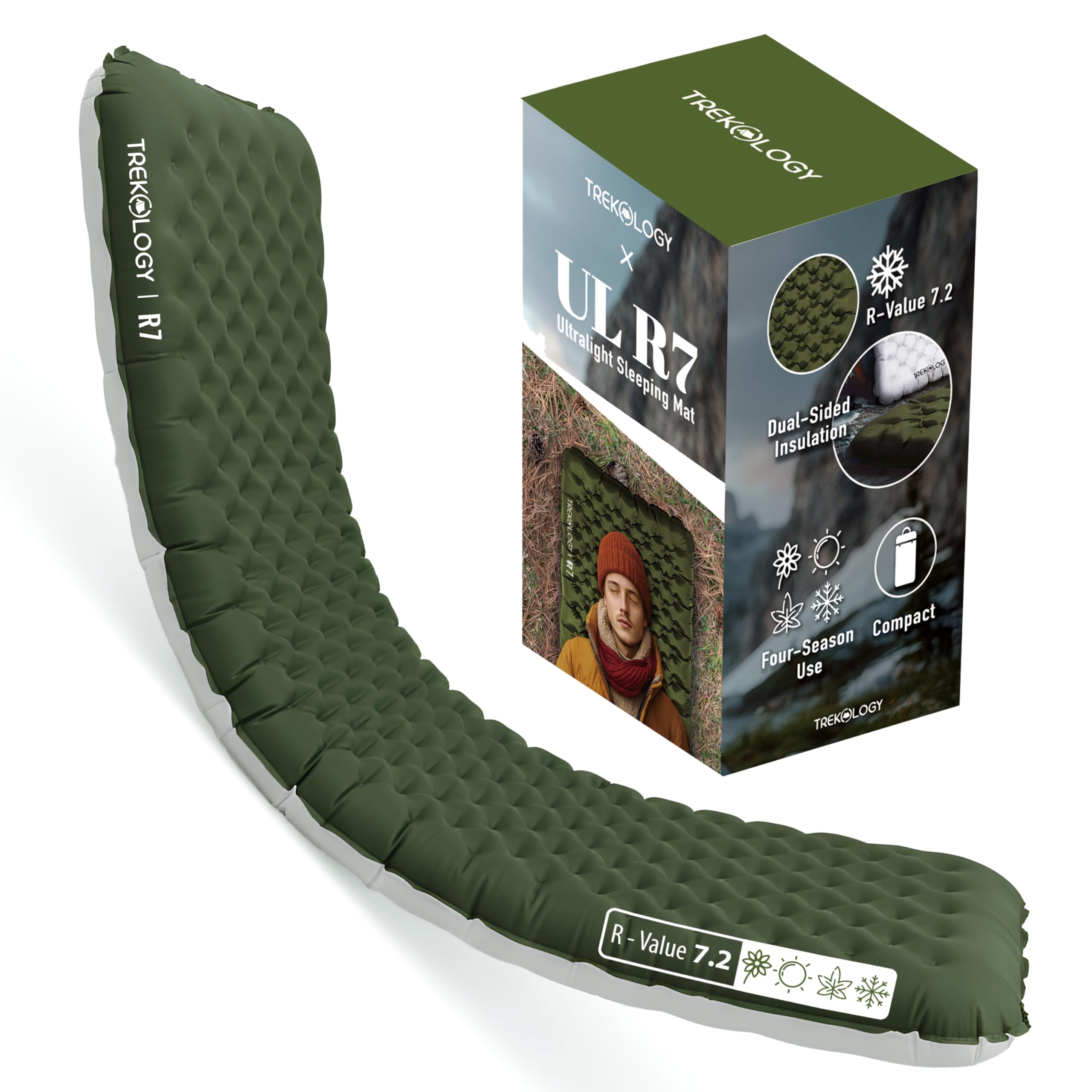
At an entry-level price point, the TREKOLOGY UL R7 offers impressive specs on paper: a 7.2 R-Value, 4 inches of thickness, and a weight of just 2 pounds. For side sleepers on a tight budget, the 4-inch loft provides genuine ground clearance that many pads at twice the price cannot match. The 40D ripstop nylon with TPU coating feels robust, and the patented anti-leak valve holds air well over multiple nights.
Real-world testing shows that the R-Value claim may be optimistic — several users report cold spots in temperatures below 20 degrees Fahrenheit, and the foil insulation inside the pad produces a crinkle noise similar to a Mylar blanket. For side sleepers weighing over 200 pounds, the 4-inch thickness still allows some hip contact with the ground, especially when lying on firmer surfaces. The 24-inch width is generous and helps keep you centered.
Customer feedback highlights that the pad is best suited for mild winter camping and three-season use where temperatures stay above freezing. Users 6 feet 2 inches and taller will find the regular length too short, with feet hanging off the end. It is a solid budget option for side sleepers who want thickness and warmth without a premium price tag, provided they are realistic about the insulation limits.
Why it’s great
- 4-inch thickness provides good hip clearance
- 24-inch width works well for side sleepers
- Very budget-friendly for the features offered
Good to know
- R-Value of 7.2 appears optimistic in real-world use
- Crinkle noise from internal foil insulation
- Regular length too short for users over 6 feet tall
7. Hikenture Camping Sleeping Pad with 6.2 R-Value
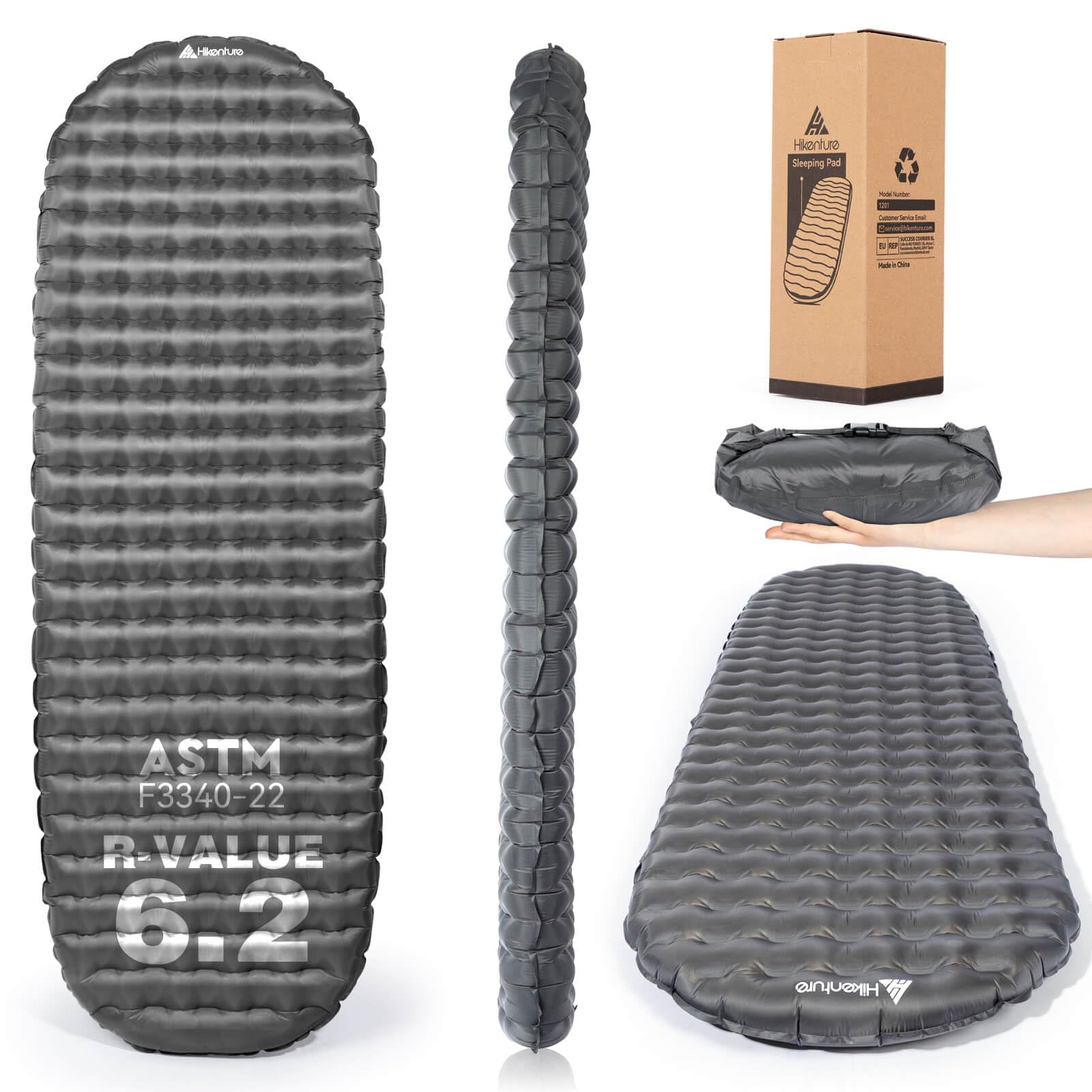
At just 1.53 pounds and an extremely budget-friendly price, the Hikenture pad is an attractive option for backpackers who need to save every dollar. The ASTM-tested R-Value of 6.2 is genuinely impressive for the price point, and users confirm that it provides real warmth in temperatures as low as 5 degrees Fahrenheit when paired with an appropriate sleeping bag. The 3.2-inch thickness, however, is the primary limitation for side sleepers.
Side sleepers under 160 pounds will find the 3.2-inch loft adequate for hip clearance on soft ground, but heavier users will feel the ground pressing through. The reflective aluminum film liner provides the warm rating but introduces a crinkle noise that some users find distracting. The pump sack integrated into the stuff sack works well and inflates the pad in roughly three full sack fills, though the system takes a couple of tries to master the seal.
Users report that the pad holds air well over two to three nights with minimal topping up, and the included repair patches come in handy for the occasional puncture. The 12-inch-by-3.5-inch packed size is compact enough for any backpack. For ultralight side sleepers on a strict budget who prioritize warmth over thickness, the Hikenture pad delivers exceptional value, but only if your body weight falls within the pad’s actual comfort range.
Why it’s great
- Extremely lightweight for an insulated pad
- ASTM-tested R-Value of 6.2 provides real warmth
- Inflation bag integrated into storage sack saves weight
Good to know
- 3.2-inch thickness insufficient for heavier side sleepers
- Crinkle noise from reflective liner
- Pump sack takes practice to use effectively
FAQ
How thick does a sleeping pad need to be for side sleepers?
Are self-inflating pads better than air pads for side sleepers?
Does R-value change when you lie on your side?
Can I use a closed-cell foam pad as a side sleeper?
Final Thoughts: The Verdict
For most side sleepers looking for the best balance of weight, warmth, and comfort, the backpacking pad for side sleepers winner is the Therm-a-Rest NeoAir Xlite NXT because it packs nearly invisible weight while providing 3 inches of stable loft and a proven 4.5 R-Value that works across three seasons. If you want a wider, quieter surface that keeps you centered, grab the NEMO Tensor All-Season. And for budget-conscious hikers who still need real warmth and 4 inches of thickness, nothing beats the value of the TREKOLOGY UL R7 for entry-level side sleeping comfort.

Mo Maruf
I created WellFizz to bridge the gap between vague wellness advice and actionable solutions. My mission is simple: to decode the research and give you practical tools you can actually use.
Beyond the data, I am a passionate traveler. I believe that stepping away from the screen to explore new environments is essential for mental clarity and physical vitality.