Our readers keep the lights on and my smoothie glass nicely filled. As an Amazon Associate, I earn from qualifying purchases.
Spotting a dandelion, a patch of clover, or a creeping charlie vine in an otherwise perfect lawn is a gut punch. The wrong spray can nuke the weeds right beside your turf, but it can also leave dead patches and bare dirt if you misjudge the active ingredients. The trick is knowing which selective chemistry targets the broadleaf invaders while leaving your grass completely untouched.
I’m Mohammad Maruf — the founder and writer behind WellFizz. I’ve spent hundreds of hours cross-referencing herbicide labels, customer reports, and active-ingredient breakdowns across the biggest lawn care brands to find the real-world winners.
This guide filters out the noise, comparing five proven formulations so you can confidently pick the best broadleaf herbicide for your specific weed pressure and turf type without risking your lawn’s health in the process.
How To Choose The Best Broadleaf Herbicide
Not all weed killers are created equal. A product that wipes out clover might barely faze wild violet, and one that’s safe on Bermuda can torch a fescue lawn. Here’s what matters most.
Focus on the Active Ingredient Trio
The most effective broadleaf herbicides combine three active ingredients: 2,4-D, MCPA, and Dicamba. This “Trimec” blend attacks different weed metabolisms simultaneously, providing knockdown across a wider spectrum. Products heavy on just one ingredient (like straight Dicamba) are more prone to weed resistance and require stricter temperature windows.
Turf Grass Compatibility
Cool-season grasses like Kentucky Bluegrass, Tall Fescue, and Perennial Ryegrass tolerate most selective herbicides. Warm-season grasses such as St. Augustine and Centipede are far more sensitive. Mesotrione-based products can be safely used on Centipede but may temporarily bleach or stunt certain cool-season varieties, especially under heat stress. Always check the label for your specific grass type.
Concentrate vs. Ready-to-Use
Concentrates (in oz) require mixing with water and a surfactant for even coverage, making them far more cost-effective for large lawns. Ready-to-use (RTU) sprayers are convenient for small patches but expensive per treatment. If you have over 1,000 sq. ft. of weeds, a concentrated liquid gives you better control over dosage and better value per gallon of spray.
Quick Comparison
On smaller screens, swipe sideways to see the full table.
| Model | Category | Best For | Key Spec | Amazon |
|---|---|---|---|---|
| Ferti-lome Weed Free Zone | Premium | Creeping Charlie & tough perennials | 32 oz concentrate; controls 80+ weeds | Amazon |
| Liquid Harvest Mesotrione | Premium | Pre & post-emergent on Centipede | 8 oz concentrate; 46 weed species | Amazon |
| Southern Ag Trimec | Mid-Range | All-around selective control | 32 oz concentrate; 5,000 sq. ft. coverage | Amazon |
| Bonide Chickweed, Clover & Oxalis Killer | Mid-Range | Large-area clover/chickweed treatment | 128 oz RTU; covers 10,000 sq. ft. | Amazon |
| Ortho Max Nutsedge Killer | Budget | Nutsedge & Kyllinga spot treatment | 24 oz RTU; 2-pack, rainproof in 2 hours | Amazon |
In‑Depth Reviews
1. Fertilome Weed Free Zone (32 oz)
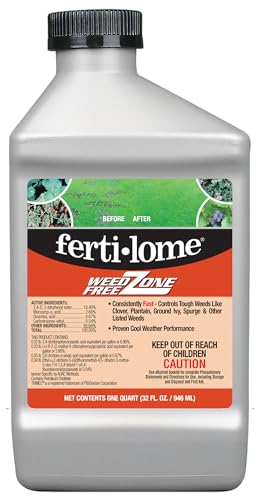
The Fertilome Weed Free Zone is the gold standard for tackling the most stubborn broadleaf perennials. Its blend of Dicamba, 2,4-D, and MCPA delivers visible injury within hours, not days. This is the product many users credit as the only effective solution for creeping charlie, wild violet, and thistle. The 32 oz concentrate is potent — a little goes a long way, and a second stronger application often finishes what the first pass started.
Safety across turf grasses is impressive. It is labeled for Kentucky Bluegrass, Bermuda, Bahia, and Zoysia without causing long-term harm. Users report success spraying between flowers and ornamentals without collateral damage. The formula also responds well to adding a few drops of dish soap as a surfactant to improve leaf adhesion, especially on waxy weeds like spurge.
There is a premium cost per ounce compared to generic Trimec, but the expanded weed spectrum and faster visible results justify the jump for those battling established perennials. For a homeowner who wants one product to handle nearly every broadleaf weed and does not want to reapply every two weeks, this is the most complete choice in its class.
Why it’s great
- Rapid visible results (injury within hours)
- Controls over 80 weed species including creeping charlie
- Safe on multiple cool and warm season turf types
Good to know
- Premium pricing per ounce compared to basic Trimec
- May require 2x concentration for heavy clover infestations
2. Liquid Harvest Mesotrione

The Liquid Harvest Mesotrione concentrate is a niche powerhouse for those managing sensitive warm-season lawns like Centipede and St. Augustine (sod only). Mesotrione is the same active ingredient found in the popular brand Tenacity, but at a fraction of the cost per oz. It offers both pre-emergent and post-emergent action, meaning it stops crabgrass seeds from germinating while also bleaching and killing emerged broadleaf weeds like clover and wild violet.
Application requires careful attention: the spray must be followed by 0.2 inches of water (rain or irrigation) within 10 days for activation. Users strongly recommend adding a spray dye to avoid overlap, as double-dosing can temporarily discolor or stunt turf. The 8 oz bottle makes a lot of spray solution; 1 teaspoon per 2 gallons of water is the typical post-emergent rate.
This is not a general-purpose convenience spray. It takes two to three weeks for full weed death, and the bleaching effect on weeds can be slow but thorough. For anyone growing Centipede who has struggled with crabgrass and broadleaf invaders simultaneously, this is a category-leading option that works without the collateral damage of traditional Trimec products.
Why it’s great
- Dual pre-emergent and post-emergent action
- Safe on Centipede and St. Augustine (sod)
- Highly concentrated; low cost per application
Good to know
- Requires 0.2″ water activation within 10 days
- Can temporarily bleach or stunt turf if over-applied
3. Southern Ag Trimec 32oz

The Southern Ag Trimec is the benchmark against which all other post-emergent broadleaf herbicides should be measured. Its patented combination of 2,4-D, MCPA, and Dicamba provides the most balanced weed kill spectrum available for the price. Users report wiping out dandelion invasions, clover patches, spurge, chickweed, and even onion grass in a single or double application. It works on 9 different turf types, making it one of the most versatile concentrates on the market.
It mixes easily in end-of-hose sprayers or pump sprayers at 2 oz per gallon of water. A surfactant is recommended for increased performance, especially on waxy-leaved weeds. The 32 oz bottle covers approximately 5,000 sq. ft., which is enough for most suburban lawns for a full season of spot treatments. Rainfastness is solid at 24 hours.
The one consistent limitation is weed return speed — some users note that without a pre-emergent program, new weeds pop up within a few weeks, requiring reapplication. It is also not a standout on creeping charlie compared to the Fertilome product. But for its price point, coverage area, and instant knockdown, the Southern Ag Trimec remains the most reliable everyday broadleaf solution for the average homeowner.
Why it’s great
- Proven three-way Trimec blend for wide spectrum control
- Works on 9 turf types including fescue and Bermuda
- Excellent value with 5,000 sq. ft. coverage per bottle
Good to know
- Weeds can return faster than premium options
- Less effective on creeping charlie without extra surfactant
4. Bonide Chickweed, Clover & Oxalis Killer 128oz

The Bonide Chickweed, Clover & Oxalis Killer is the highest-volume, lowest-application-effort solution in this roundup, coming in a 128 oz ready-to-use spray bottle that covers up to 10,000 sq. ft. It uses a powerful three-way blend of Triclopyr, MCPA, and Dicamba, which is particularly strong on chickweed, clover, and oxalis. Users report excellent results on dandelions and creeping charlie as well, with a clear and nearly odorless formula.
There is a trade-off with the RTU format: the built-in hand sprayer is decent for small to medium patches but becomes tedious on larger lawns. Most experienced users decant the liquid into a 2-gallon pump sprayer for better coverage. The formula takes a few days to show results, but users note that the weeds wilt and die completely without harming Bermuda or fescue lawns.
The main concern is inconsistency on clover — a handful of reviews mention limited effect on clover patches even after heavy spraying. This may be due to application timing or weed maturity. For anyone with a large lawn facing a chickweed or oxalis invasion who values convenience over extreme precision, this gallon jug offers the most immediate coverage for the investment.
Why it’s great
- Large 128 oz RTU bottle covers 10,000 sq. ft.
- Powerful Triclopyr + MCPA + Dicamba blend
- Clear, nearly odorless formula
Good to know
- Inconsistent results on established clover
- Hand sprayer not ideal for large lawns; use pump sprayer
5. Ortho Max Nutsedge Killer RTU 2-Pack
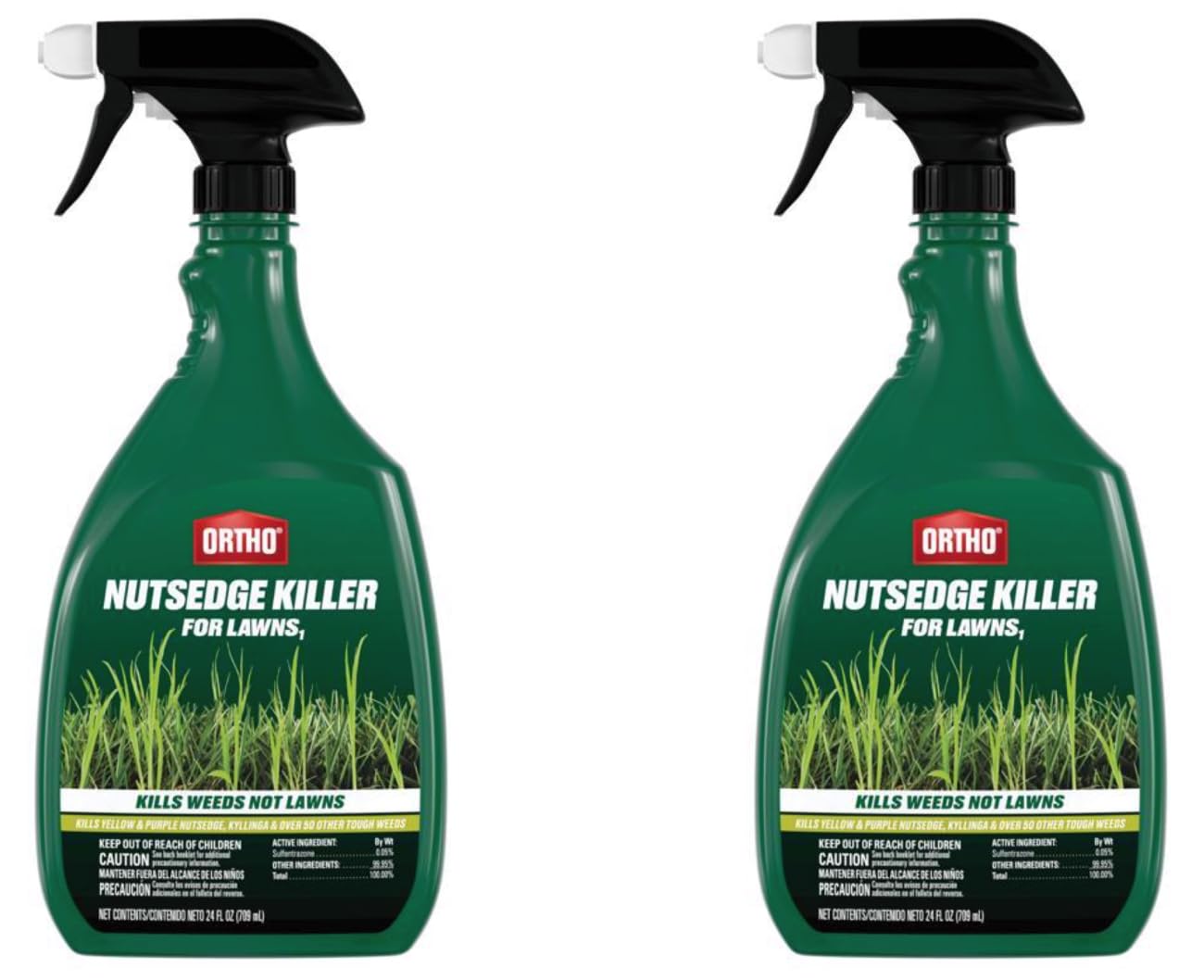
If your weed problem is specifically nutsedge (nutgrass), kyllinga, or wild onion, the Ortho Max Nutsedge Killer is the most targeted tool available. This 2-pack of 24 oz RTU bottles is rainproof in just 2 hours, which is significantly faster than most concentrates that require a 12 to 24-hour dry window. Users report that this is the only product that consistently kills yellow and purple nutsedge without harming the established lawn.
Application timing is critical for maximum effect. Users emphasize that it kills nutsedge fastest when sprayed as soon as the weed breaks the soil surface — tall, mature nutgrass takes longer and may require a second application. The RTU format eliminates mixing, making it ideal for spot-treating small patches in flower beds or turf.
Its primary weakness is its narrow target spectrum. This product does not tackle clover, dandelion, or creeping charlie. It is a specialist tool, not a general-purpose broadleaf spray. For anyone fighting nutgrass invasions that spread through pulling, this is the most efficient chemical solution that stops the problem at the root without spreading seeds.
Why it’s great
- Specifically targets nutsedge, kyllinga, and wild onion
- Rainproof in only 2 hours
- Convenient RTU format; no mixing required
Good to know
- Narrow spectrum — does not kill clover or dandelion
- Less effective on tall, mature nutsedge
FAQ
Can I use a broadleaf herbicide on St. Augustine grass?
Why is creeping charlie so hard to kill with some sprays?
How long should I wait before mowing after applying a broadleaf herbicide?
Final Thoughts: The Verdict
For most users, the winner is the broadleaf herbicide from Fertilome Weed Free Zone because it combines the widest weed spectrum with the fastest visible results, especially for stubborn perennials like creeping charlie. If you want the best overall value and versatility for typical clover and dandelion problems, grab the Southern Ag Trimec. And for sensitive warm-season grasses or a dual pre-emergent plus post-emergent approach, nothing beats the Liquid Harvest Mesotrione.

Mo Maruf
I created WellFizz to bridge the gap between vague wellness advice and actionable solutions. My mission is simple: to decode the research and give you practical tools you can actually use.
Beyond the data, I am a passionate traveler. I believe that stepping away from the screen to explore new environments is essential for mental clarity and physical vitality.