Our readers keep the lights on and my smoothie glass nicely filled. As an Amazon Associate, I earn from qualifying purchases.
A wedding ceremony moves fast — the first kiss, the ring exchange, the tear in a parent’s eye — and your camera either catches that moment in pristine 10-bit 4:2:2 color or leaves you with a flat, noisy file that falls apart in post. The difference between a usable clip and a cinematic masterpiece lives in the dynamic range, the autofocus tracking speed, and the dual card slot reliability your rig provides when the pressure is at its highest.
I’m Mohammad Maruf — the founder and writer behind WellFizz. Over years of deep market research, I’ve analyzed sensor readout speeds, log gamma curves, codec compression ratios, and thermal management systems across hundreds of camera bodies to separate the gear that delivers from the gear that fails when the aisle lights dim.
Whether you are shooting a solo elopement or a cathedral with twelve bridesmaids, your choice of body determines the depth, the roll-off, and the peace of mind in your final edit — this guide cuts through the noise to deliver the definitive, data-driven best camera for wedding videography for every budget and workflow.
How To Choose The Best Camera For Wedding Videography
Wedding videography is a unique hybrid discipline — you need the low-light sensitivity of a full-frame sensor for the dimly lit dance floor, the high-bitrate internal codecs of a cinema camera for skin tones that roll off like film, and the autofocus reliability of a modern mirrorless body so you never miss focus while the bride walks toward the alter. Three pillars separate a wedding-capable body from an also-ran.
Dual Card Slots Are Non-Negotiable
A single card slot is a single point of failure. When a memory card corrupts halfway through the reception — and it happens more often than manufacturers admit — you lose the entire afternoon if you have no backup. Every camera on this premium list records simultaneously to two cards (SD, CFexpress, or CFast), giving you instant redundancy. If your budget pushes you toward a single-slot body, budget for an external recorder that can serve as a second capture path.
Internal 10-Bit 4:2:2 Recording and Log Profiles
An 8-bit 4:2:0 file clips highlights and blocks up shadows when you try to match two camera angles or recover a blown-out window behind the couple. Ten-bit color depth gives you twelve times more color information per channel, letting you push exposure in post without banding. A flat log profile (V-Log, S-Log, C-Log, or Blackmagic RAW) retains 13–15 stops of dynamic range. Without these two features, your wedding film will look flat no matter how good your composition is.
Reliable Autofocus With Subject Tracking
Manual pull-focus is romantic until the groom steps two inches forward and your single-point AF misses the ring exchange. The best wedding cameras today use phase-detection autofocus with real-time eye and face tracking — they lock onto the couple and stay locked even as they turn, walk, and dip. Hybrid AF systems (phase + contrast) in bodies like the Sony a7 IV and Canon R6 Mark II deliver near-zero hunting in dim reception light. Avoid older contrast-detect-only bodies for run-and-gun wedding work.
Quick Comparison
On smaller screens, swipe sideways to see the full table.
| Model | Category | Best For | Key Spec | Amazon |
|---|---|---|---|---|
| Canon EOS R6 Mark II | Mirrorless | Run & Gun Hybrid | 6K oversampled 4K60p | Amazon |
| Sony a7 IV | Mirrorless | Hybrid Stills/Video | 7K oversampled 4K30p | Amazon |
| Panasonic LUMIX S5II | Mirrorless | Unlimited Recording | 14+ stop V-Log | Amazon |
| Nikon Z8 | Mirrorless | High-Res Slow-Mo | Internal 8K60p N-RAW | Amazon |
| Canon EOS R5 | Mirrorless | 8K Oversampling | 45MP 8K video | Amazon |
| Sony a7R III | Mirrorless | High-Resolution Still + 4K | 42.4MP BSI sensor | Amazon |
| Sony a7 III | Mirrorless | Great Value Full-Frame | 24.2MP, 693 phase AF | Amazon |
| Nikon Z50 II | Mirrorless | Compact Entry | 4K UHD 60p, 20.9MP | Amazon |
| Blackmagic Pocket 4K | Cinema | Cinematic Color Science | 13-stop dynamic range | Amazon |
| Nikon D7500 | DSLR | Budget Photography + Video | 51-point AF, 8 fps | Amazon |
| Panasonic HC-X2 | Camcorder | All-in-One Event | 20x Optical Zoom | Amazon |
| Blackmagic URSA Mini Pro G2 | Cinema | Professional Cinema Production | 15-stop DR, Super35 | Amazon |
| Leica Q3 | Compact | Travel / B-Roll Run & Gun | 60MP, 28mm f/1.7 | Amazon |
In‑Depth Reviews
1. Canon EOS R6 Mark II

The Canon EOS R6 Mark II is the most well-rounded hybrid body for wedding work at its tier. Its 24.2MP full-frame sensor oversamples 6K footage into 4K 60p with no crop, giving you crisp detail when you punch in for a tight two-shot. The Dual Pixel CMOS AF II locks onto faces and eyes faster than any previous Canon generation, even in the dim light of a first dance, and the 8-stop in-body stabilization lets you walk down the aisle handheld without a gimbal.
Beyond raw specs, the R6 Mark II delivers 10-bit 4:2:2 internal recording with C-Log 3, retaining 13+ stops of dynamic range. That latitude is what saves your highlights when the bride steps from shadow into direct sunlight during outdoor portraits. The body is also weather-sealed, a quiet benefit if you are shooting in mist or light rain. Dual UHS-II SD slots give instant redundancy for every clip you record.
The camera can shoot up to 40 fps with the electronic shutter for those fast candids, and the 0.5-inch OLED viewfinder with 120 fps refresh eliminates blackout during continuous bursts. Battery life comfortably exceeds 500 shots or over an hour of continuous 4K recording. The R6 Mark II simply disappears into your workflow — it is the benchmark against which all other wedding mirrorless bodies should be measured.
Why it’s great
- Reliable Dual Pixel AF II with face/eye tracking in low light
- Uncropped 4K 60p via 6K oversampling
- 8-stop IBIS for smooth handheld footage
Good to know
- No built-in ND filter
- 4K 120p has a 1.1x crop factor
2. Sony a7 IV

The Sony a7 IV brings a 33MP full-frame Exmor R sensor paired with the BIONZ XR processor, giving you a noticeable resolution bump over the a7 III while maintaining 4K 60p 10-bit 4:2:2 recording in the XAVC S-I codec. The 7K oversampling at 4K 30p yields exceptionally clean, artifact-free footage that holds up well when color matched across multiple camera setups on a multi-cam wedding shoot. The real-time Eye AF for humans and animals works reliably in dim reception lighting.
The S-Cinetone color profile makes skin tones look natural straight out of camera while preserving highlight roll-off that mimics the texture of film. This reduces grading time if you are delivering on tight deadlines. The fully articulating 3-inch touchscreen lets you frame low-angle shots of the cake cutting or high-angle crowd shots without contorting your body. Dual card slots accept CFexpress Type A and SD cards, giving you flexible backup options.
Battery life is outstanding for a mirrorless body — the NP-FZ100 pack powers well over 2,000 shots or nearly two hours of continuous video recording. The 693-point phase-detect AF covers 93% of the sensor, which means focus stays locked even when subjects move to the extreme edges of the frame during the ceremony processional. Hybrid shooters who need excellent stills resolution alongside cinema-quality video will find the a7 IV hard to beat.
Why it’s great
- S-Cinetone color profile for pleasing skin tones
- 7K oversampled 4K 30p
- 33MP stills for high-res photo deliverables
Good to know
- 4K 60p uses a Super35 crop
- Small rolling shutter in some panning scenarios
3. Panasonic LUMIX S5II

The LUMIX S5II marks a turning point in Panasonic’s video camera strategy — it finally introduces phase-detection autofocus to the L-mount compact line. The Phase Hybrid AF system gives you reliable subject tracking for walking shots down the aisle without the pulsing that earlier DFD-only Panasonic bodies exhibited. The 24.2MP full-frame sensor records unlimited 4:2:2 10-bit internally, meaning you can roll continuously through an entire ceremony without a hard stop.
The camera’s Active I.S. technology takes image stabilization to a new level — it analyses the camera’s movement and compensates not just for shake but for walking bounce, effectively reducing the need for a gimbal during handheld processionals and dance floor coverage. The 14+ stop V-Log/V-Gamut profile gives you massive grading latitude, making it possible to match an S5II with higher-end cinema cameras in a multi-camera edit. The internal fan keeps the sensor cool, preventing thermal shutdown even in hot summer venues.
Build quality is solid with a magnesium alloy chassis and weather sealing at every port and seam. The 779-point phase-detect array covers most of the frame, and the Real Time LUT feature lets you bake in a look while still recording in V-Log for flexibility. For wedding videographers who value color science from Panasonic’s cinema lineage — the Varicam DNA — at a mid-range price point, the S5II is a phenomenal pick.
Why it’s great
- Active I.S. for smooth walking shots without a gimbal
- Unlimited 4:2:2 10-bit internal recording
- Phase Hybrid AF eliminates pulsing
Good to know
- Battery life is average (approx. 370 shots per CIPA)
- Limited native L-mount lenses compared to Sony/Canon
4. Nikon Z8

The Nikon Z8 is a stacked full-frame powerhouse that packs most of the Z9’s capabilities into a smaller body, making it an ideal choice for wedding videographers who need high-frame-rate slow-motion without sacrificing image quality. The 45.7MP stacked CMOS sensor reads data at immense speed, enabling internal 8K 60p N-RAW recording and 4K 120p slow-motion with incredible detail retention. The EXPEED 7 processor drives an autofocus system that uses deep-learning detection for people, animals, and even vehicles.
When shooting a wedding, the ability to capture the bouquet toss at 120 fps and then slow it down to a 24p timeline with smooth motion is a genuine creative advantage — no other mirrorless in this range does 4K 120p with as little rolling shutter. The Z8 also features 8-stop in-body VR, which works in concert with Z-lens VR to produce gimbal-like stability for handheld gimbal shots during the reception. The -9 EV low-light AF detection is remarkable; it holds focus in candlelight where other systems hunt.
Video recording options are extensive: internal 12-bit N-RAW, ProRes RAW, H.265 10-bit, and 10-bit H.264. The camera writes to one CFexpress Type B card and one SD UHS-II slot, allowing simultaneous backup recording. The body is weather-sealed to Z9 standards, with a shutterless design that eliminates mechanical wear. For a wedding shooter who wants the highest resolution slow-motion and ultimate flexibility in post-production color grading, the Z8 is a unique weapon.
Why it’s great
- Internal 8K 60p N-RAW
- 4K 120p with minimal rolling shutter
- -9 EV low-light AF detection
Good to know
- CFexpress Type B cards are expensive
- Menu system is complex for new users
5. Canon EOS R5

The Canon EOS R5 shattered the resolution ceiling for mirrorless cameras when it launched, and it remains a top-tier choice for wedding videographers who need to extract maximum detail from every frame. The 45MP full-frame sensor records internal 8K 30p, giving you the ability to crop into a 4K timeline by 200% without losing sharpness — a lifesaver when you need a tight close-up of the ring exchange from your wide-angle camera angle. The DIGIC X processor enables 12 fps mechanical and 20 fps electronic continuous shooting.
The R5’s Dual Pixel CMOS AF II covers 100% of the frame with 1,053 AF zones, providing intelligent face, eye, and animal tracking that is incredibly sticky. When the bride turns her head or the officiant steps into the frame, the camera re-acquires focus on the primary subject instantly. The 5-axis in-body image stabilization provides up to 8 stops of correction, letting you capture stable handheld B-roll of the venue or reception details. The 10-bit C-Log recording with 4:2:2 color sampling gives ample latitude for post-production grading.
The body is built with a magnesium alloy chassis and features weather sealing at every seam and button. Dual card slots — one CFexpress Type B and one SD UHS-II — give you flexible backup options. The 3.2-inch vari-angle touchscreen is sharp at 2.1M dots and works well in bright outdoor conditions. While 8K recording can generate heat in prolonged takes, for standard wedding ceremony clips the R5 is a reliable and unbelievably detailed tool that future-proofs your content for large-format displays.
Why it’s great
- Immersive 8K internal recording for massive cropping flexibility
- 100% Dual Pixel AF coverage
- 8-stop IBIS for smooth handheld B-roll
Good to know
- Overheating limits 8K continuous recording
- CFexpress cards are expensive
6. Sony a7R III

The Sony a7R III is a stills-focused body that still delivers credible 4K video, making it a strong secondary camera for wedding videographers who prioritize high-resolution photography but want a reliable video backup. The 42.4MP back-illuminated Exmor R sensor offers incredible detail for 4K capture in Super35 mode (18MP), and the 399-point phase-detect AF combined with Eye AF gives you precise focus on faces and eyes during formal portraits and the first dance. The 10 fps continuous shooting with AE/AF tracking is sufficient for fast-moving moments.
For video, the a7R III records 4K 30p with full pixel readout in Super35, producing crisp footage with minimal noise. The S-Log profiles provide 14-stop dynamic range for grading flexibility. The NP-FZ100 battery life is excellent for the mirrorless category, lasting through a full day of mixed photo and video shooting without a swap. The high-resolution 3.69M-dot OLED viewfinder gives a clear, lag-free view while shooting both stills and video.
Build quality is solid with a magnesium alloy frame and weather sealing at key points. The dual SD card slots (one UHS-II) provide backup on still shoots. The 5-axis IBIS is effective for handheld video up to 5.5 stops. While the a7R III lacks the advanced video codecs of newer bodies, its stills resolution and reliable AF make it an excellent choice for the hybrid shooter who needs one body to do both jobs well at a premium-but-not-flagship price.
Why it’s great
- Massive 42.4MP sensor for detailed stills and crop flexibility
- Long battery life for all-day event shooting
- Reliable Eye AF for portrait work
Good to know
- Video codecs are limited to 8-bit 4:2:0 at 4K
- No full-frame 4K 60p option
7. Sony a7 III

The Sony a7 III redefined the full-frame entry point when it launched, and it remains a compelling option for wedding videographers working with a tighter budget. The 24.2MP back-illuminated sensor paired with the BIONZ X processor delivers 15 stops of dynamic range and excellent high-ISO performance up to 204,800, making it one of the best low-light cameras in its class — a godsend for poorly lit receptions and dance floors. The 693-point phase-detect AF system covers 93% of the frame, ensuring focus stays on the couple even as they move.
Video recording tops out at 4K 30p with full pixel readout and no pixel binning, producing clean, sharp footage. The S-Log 2 and S-Log 3 profiles give you grading flexibility, though the 8-bit 4:2:0 internal recording can banding in heavily graded shots. The NP-FZ100 battery comfortably shoots over 700 images or hours of continuous video — endurance that is rare at this level. The 5-axis IBIS is effective for smoothing out micro-movements during handheld gimbal work.
The body includes dual SD card slots (one UHS-II) for backup recording, a critical feature for wedding work. The weather-sealed magnesium alloy build feels rugged enough for heavy daily use. While the menu system is not as intuitive as Canon’s, the a7 III’s autofocus reliability, low-light performance, and battery life make it a no-brainer for videographers who need a dependable workhorse without spending on the latest generation. It is the ultimate value pick for building a two-camera wedding kit.
Why it’s great
- Outstanding low-light ISO performance
- Incredible battery life for an event camera
- 693-point phase-detect AF with wide coverage
Good to know
- Video limited to 8-bit 4:2:0 internal
- Menu system can be slow to navigate
8. Nikon Z50 II

The Nikon Z50 II is a compact APS-C mirrorless camera built around a 20.9MP DX-format sensor and the EXPEED 7 processor. It delivers 4K 60p video with built-in electronic VR, making it a capable entry-level wedge for wedding videographers who are just starting to build a kit. The hybrid AF system uses 231 points and supports both phase and contrast detection, with subject detection for people, dogs, cats, birds, and vehicles — enough reliability for standard ceremony and reception coverage.
The camera body is notably light, making it an excellent B-cam for tight gimbal setups or long handheld segments. The 3.2-inch tilting touchscreen is bright enough for outdoor backlight control, and the built-in flash offers a safety net for dim reception stills. The Picture Control system gives you 31 in-camera presets, including a flat profile for basic color grading, though you are limited to 8-bit 4:2:0 internal recording, which means less flexibility in post.
The kit bundles two lenses — a 16-50mm f/3.5-6.3 VR and a 50-250mm f/4.5-6.3 VR — giving you wide-angle to telephoto reach for various ceremony angles. Wi-Fi and Bluetooth connectivity via SnapBridge simplifies wireless sharing to mobile devices. Single SD UHS-I slot is the main liability for professional wedding work; you will want a second camera recording simultaneously for backup. As a lightweight, budget-friendly entry point into Nikon’s Z system, the Z50 II works best as a B-cam or a starter body.
Why it’s great
- Very lightweight and compact for gimbal work
- Dual-lens kit covers wide to telephoto
- 4K 60p with in-body electronic VR
Good to know
- Single SD slot (no backup)
- Internal recording is 8-bit only
9. Blackmagic Pocket Cinema Camera 4K

The Blackmagic Pocket Cinema Camera 4K is a dedicated cinema body that trades stills capability for pure video color science. The 4/3‑type sensor (Micro Four Thirds mount) records 13 stops of dynamic range in 12-bit Blackmagic RAW internally, giving you a grading canvas that rivals cameras costing four times as much. The dual native ISO up to 25,600 keeps noise minimal in dark venues, and the 4K DCI 4096×2160 resolution matches the cinema standard — perfect when you want that filmic look for the highlight reel.
The camera records to SD/UHS-II cards, CFast 2.0 cards, or external USB-C SSDs, giving you flexible media options. It includes a full DaVinci Resolve Studio activation key, making it a complete grading and editing solution out of the box. The 5-inch LCD touchscreen is bright enough for most indoor conditions, though it struggles in direct sunlight. The built-in mini XLR input with 48V phantom power lets you run a wireless lavalier directly into the camera without a separate audio recorder.
This is not a run-and-gun body — it lacks continuous autofocus, in-body stabilization, and a flip-out screen. You will need a gimbal or tripod for every shot, and battery life hovers around 30 minutes per LP-E6 cell. However, the image quality, the RAW flexibility, and the price point make the Pocket 4K the best entry into cinema-style wedding coverage for videographers who prioritize color grading above all else and are willing to rig out the camera properly.
Why it’s great
- 12-bit Blackmagic RAW internal recording with 13 stops DR
- Dual native ISO for clean low-light footage
- Includes DaVinci Resolve Studio license
Good to know
- Poor battery life (approx. 30 min per cell)
- No continuous autofocus or IBIS
10. Nikon D7500

The Nikon D7500 is a DSLR workhorse that pairs the same 20.9MP sensor found in the flagship D500 with an 18-140mm f/3.5-5.6 kit lens, providing class-leading stills quality and decent 4K 30p video. The 51-point AF system with 15 cross-type sensors and group-area AF tracks subjects reliably during portrait sessions and candid moments. At 8 fps burst, it will catch the bouquet toss sequence with solid keeper rates.
Video is limited to 4K 30p with no log profile, but the built-in 4K time-lapse function is a nice touch for capturing sunset venue setups. The 3.2-inch tilting touchscreen is responsive, and the battery life with the EN-EL15a pack easily lasts through a full day of heavy shooting. The body is weather-sealed and built from a magnesium alloy chassis, making it tough enough for years of event work.
This is a purely stills-first camera with video as a secondary function, and the lack of 10-bit internal recording or advanced AF tracking limits its use as a primary video body. The single card slot (SD UHS-I) also means no backup for your wedding footage. For the videographer who needs a dependable B-cam for tight shots and high-quality stills for the photo album, the D7500 delivers big value and proven durability at an entry-level tier.
Why it’s great
- Class-leading 20.9MP image quality at a low budget
- Excellent battery life for an all-day shoot
- Weather-sealed, durable build
Good to know
- Single card slot — no backup for wedding footage
- Limited video features (8-bit, no log profile)
11. Panasonic HC-X2

The Panasonic HC-X2 is a professional camcorder built around a 1.0-inch MOS sensor and a 24.5mm wide-angle lens with 20x optical zoom, making it a self-contained video solution for multicamera wedding shoots that need a long-reach angle without swapping lenses. Recording up to 4K 60p in HEVC or 10-bit 4:2:2, the camcorder includes built-in V-Log with 13 stops of dynamic range. The 5-axis Hybrid OIS stabilization keeps the image smooth even at full telephoto.
This camera excels in situations where you need a single operator to cover the whole ceremony from the back of the church: the 20x zoom brings you intimately close to the couple without moving the tripod. Professional features include 3G-SDI and HDMI simultaneous output, two XLR audio inputs with phantom power, and direct Ethernet streaming for live broadcast on the day. The built-in ND filter wheel (1/4, 1/16, 1/64) gives you exposure control without third-party filters.
Its all-in-one design eliminates the need for lens swapping — a clear advantage for event videographers who must react instantly to changing distances. The trade-off is a smaller sensor and less shallow depth-of-field than a full-frame mirrorless, but for clean, reliable, and deeply zoomable coverage of a wedding ceremony, the HC-X2 is purpose-built and delivers consistent results run after run.
Why it’s great
- 20x optical zoom with built-in ND filter wheel
- Professional XLR audio inputs and SDI/HDMI simultaneous output
- Built-in V-Log and 10-bit 4:2:2 recording
Good to know
- 1-inch sensor limits background blur compared to full-frame
- Not as compact as mirrorless options
12. Blackmagic URSA Mini Pro 4.6K G2
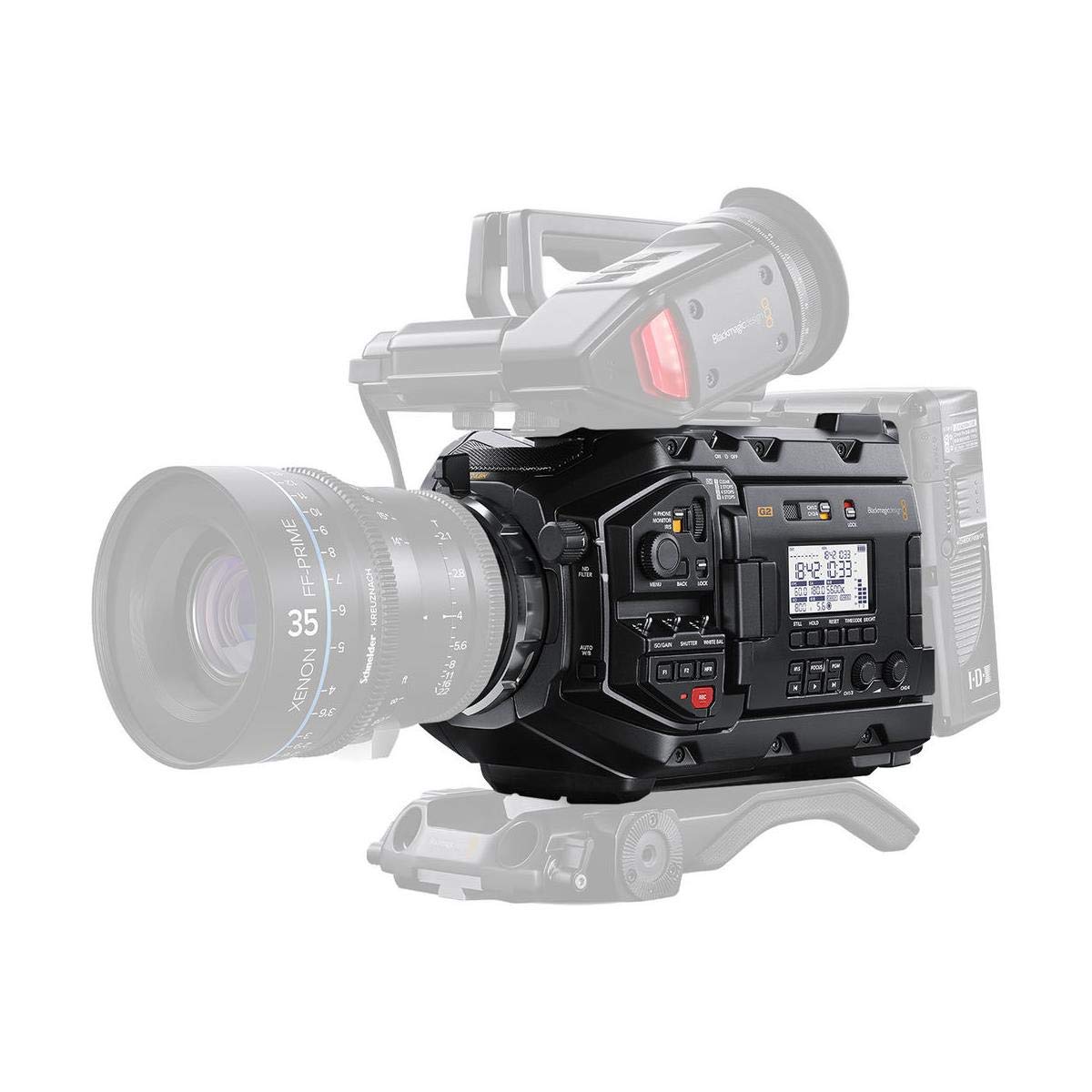
The Blackmagic URSA Mini Pro 4.6K G2 is a full-sized cinema camera built around a Super35 sensor with 15 stops of dynamic range and an EF lens mount with interchangeable PL, B4, and F mount options. This is the body you choose when the wedding film must have the same organic falloff and highlight roll-off as a Hollywood feature. The internal 4.6K recording at up to 120 fps in 12-bit Blackmagic RAW gives you creative slow-motion that holds up under extensive grading.
The camera includes built-in ND filters (2, 4, 6 stops), a professional ergonomic handgrip with start/stop, iris, and record buttons, and a 4-inch touchscreen that displays all critical shooting information. The dual CFast 2.0 card slots plus an SD UHS-II slot provide redundancy. Inputs include two XLR audio, full-size HDMI, 3G-SDI, and timecode in/out. The G2 supports USB-C SSD recording for cost-effective high-bitrate RAW capture.
This is a production rig — it requires batteries (not included), a tripod or shoulder mount, and a dedicated operator. But if you are running a serious wedding videography business where every frame must cut into a theatrical grade, the URSA Mini Pro G2 delivers image quality that leaves all mirrorless bodies behind. It is heavy, it is bulky, and it demands discipline, but the resulting film — with that Super35 depth and Blackmagic color science — is unmistakably cinematic.
Why it’s great
- 15 stops of dynamic range for extreme post-production latitude
- 4.6K 120 fps slow-motion in Blackmagic RAW
- Built-in motorized ND filter wheel
Good to know
- Heavy, bulky, and requires external batteries
- No image stabilization — requires tripod or gimbal
13. Leica Q3
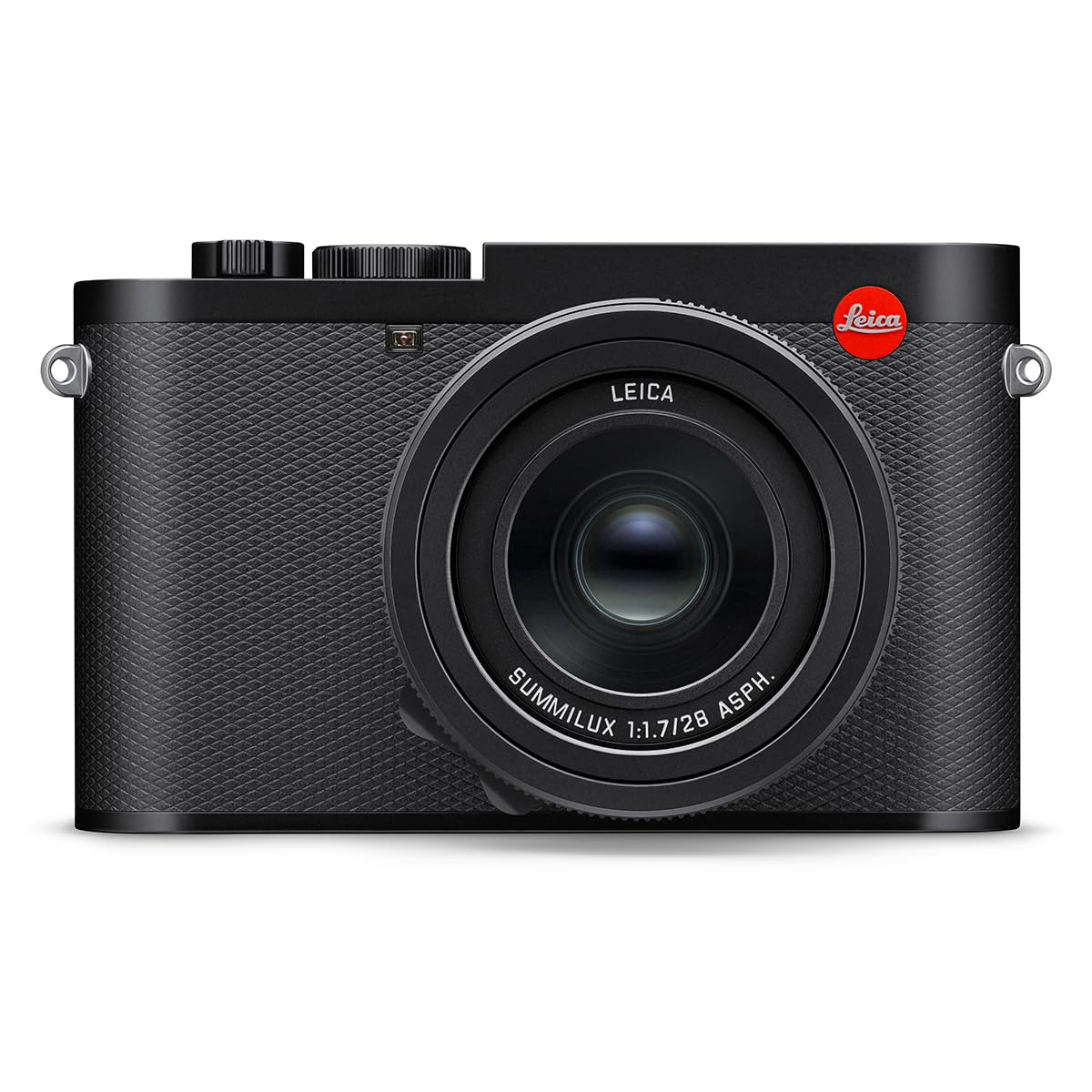
The Leica Q3 is a fixed-lens full-frame compact with a peerless 28mm f/1.7 Summilux lens and a 60MP BSI CMOS sensor featuring Triple Resolution Technology — it is the ultimate camera for capturing ambient B-roll, creative portraiture, and documentary-style wedding details with an unmatched tactile experience. The Maestro IV processor with 8GB of memory drives a hybrid AF system that uses both contrast and phase detection, giving fast lock-on for candids.
Video recording is limited to 8-bit 4:2:0 4K 30p, not at the same spec as contemporary mirrorless bodies, but the quality of the Summilux lens is so sharp and its bokeh so creamy that many wedding editors will take that optical advantage over bit depth flexibility. The digital zoom modes let you extend the frame to 35mm, 50mm, and 90mm crop equivalents while maintaining excellent detail thanks to the 60MP sensor. The optical image stabilization with tilt-shift compensator keeps handheld 28mm shots steady.
This is not a primary wedding camera; it lacks dual card slots, professional video codecs, and swappable lenses. But for the wedding filmmaker who wants a discreet second body that delivers the most beautiful natural-looking stills and video of the venue, the couple’s hands, and the table settings, the Q3 is a luxury asset that complements any serious kit. Its build quality and haptics are second to none, and the colors from that Leica lens are genuinely unique.
Why it’s great
- Incredibly sharp 28mm f/1.7 Summilux lens
- 60MP sensor allows digital zooms up to 90mm
- Exceptional build quality and Leica haptics
Good to know
- Video limited to 8-bit 4:2:0
- Fixed lens — no wide-angle or telephoto swaps
FAQ
Why do I need dual card slots for a wedding?
Is in-body image stabilization essential for wedding videography?
Final Thoughts: The Verdict
For most users, the best camera for wedding videography winner is the Canon EOS R6 Mark II because it delivers a perfect balance of 6K oversampled 4K 60p, class-leading Dual Pixel AF II, dual card slots, and robust in-body stabilization — all in a compact, weather-sealed body that works for both solo shooters and multi-camera setups. If you want the highest resolution slow-motion and ultimate post-production flexibility, grab the Nikon Z8. And for budget-conscious shooters building their first kit, nothing beats the practical value of the Sony a7 III with its incredible battery life and low-light performance.

Mo Maruf
I created WellFizz to bridge the gap between vague wellness advice and actionable solutions. My mission is simple: to decode the research and give you practical tools you can actually use.
Beyond the data, I am a passionate traveler. I believe that stepping away from the screen to explore new environments is essential for mental clarity and physical vitality.