Our readers keep the lights on and my smoothie glass nicely filled. As an Amazon Associate, I earn from qualifying purchases.
Spending 12, 14, or even 16 hours in an office chair isn’t a hypothetical—it’s a physical challenge that exposes every design flaw in a standard seat. A chair built for occasional desk work collapses under the sustained pressure of multi-shift schedules, leading to collapsed foam, seized gas cylinders, and chronic lower back strain that no cushion can fix. The difference between a chair you tolerate and one that preserves your body comes down to measurable structural choices: the weight capacity of the frame, the density of the foam, the adjustability range of the lumbar support, and the certification level of the gas lift.
I’m Mohammad Maruf — the founder and writer behind WellFizz. Over years of evaluating commercial-grade seating, I’ve focused on the engineering specs that separate a 40-hour-week chair from one built to survive 80+ hours: BIFMA certification tiers, seat foam density measured in pounds per cubic foot, recline mechanism cycle counts, and the alloy composition of the base frame.
This guide breaks down nine models engineered to withstand continuous use without degrading support. Whether you need a mesh back for airflow, a plush leather cushion for pressure relief, or an active-sitting mechanism that engages your core, the 24 hour office chair category rewards buyers who prioritize adjustability range and frame durability over surface-level comfort features.
How To Choose The Best 24 Hour Office Chair
A chair designed for continuous use must prioritize mechanical endurance over first-hour comfort. The following criteria separate a workstation that supports full shifts from one that develops structural issues within months.
Seat Foam Density and Thickness
Standard office chair foam densities hover around 1.5 to 1.8 lbs/ft³, which compresses noticeably after 6 months of daily use. For extended sitting, look for high-density foam above 2.0 lbs/ft³ combined with a seat thickness of at least 4 inches. The COLAMY chair uses a 6.7-inch thick cushion—this depth delays bottoming out by distributing weight across more foam volume, directly extending the useful life of the seat.
Lumbar Support Adjustability
Fixed lumbar bumps fail to accommodate varying spinal curves throughout a long sitting session. The most effective lumbar systems offer both height and depth adjustment. The FLEXISPOT ErgoX-PRO provides 5D lumbar adjustment, allowing you to extend the pad forward to maintain contact with your lower back during reclining positions. Static lumbar supports lose contact when you shift posture, reducing their pressure-relief benefit after just 30 minutes.
Frame Material and Weight Capacity
The base frame determines whether a chair wobbles or stays planted after a year of multi-shift use. Wood-and-metal frames like the COLAMY’s composite construction offer adequate stability for 250-300 lb loads, while reinforced nylon frames with fiberglass infill (seen in the FLEXISPOT) provide flex resistance without adding weight. Steel frames, as used in the HON Wave and Vari CoreChair, provide the highest long-term structural integrity for users over 300 lbs. Always check the gas lift class—Class 3 is standard; Class 4 (like the one in the FLEXISPOT) supports up to 551 lbs and resists seal failure over thousands of height adjustments.
Mesh vs Upholstered Seat Surface
Mesh seats prioritize breathability for warm environments and users who run hot, but they tension over time and can sag permanently if the frame isn’t reinforced. Upholstered foam seats offer more uniform pressure distribution but trap heat and degrade faster if foam density is low. The WorkPro Quantum 9000 and ELABEST chairs use full-mesh construction with nylon tensioning, while the TRALT and COLAMY chairs use dense foam beneath leather or PU surfaces. Choose mesh for all-day temperature management; choose foam for maximum pressure relief on sensitive sitting bones.
Quick Comparison
On smaller screens, swipe sideways to see the full table.
| Model | Category | Best For | Key Spec | Amazon |
|---|---|---|---|---|
| Steelcase Leap | Premium Upholstered | Spine-aligning lumbar support | 3D LiveBack + Natural Glide System | Amazon |
| Hbada X7 Smart | Smart Ergonomic | Automated lumbar tracking + cooling seat | Auto-adjust lumbar + dual-fan system | Amazon |
| FLEXISPOT ErgoX-PRO | High-Adjustability Mesh | Most adjustable lumbar + armrests | 5D lumbar + 7D armrests + 551lb capacity | Amazon |
| Vari CoreChair | Active Sitting Task | Core engagement + standing desk pairing | Tilting mechanism + 17–21.5″ seat height | Amazon |
| HON Wave Big & Tall | Heavy-Duty Mesh | 450lb capacity with steel frame | Steel-reinforced + 450lb weight limit | Amazon |
| WorkPro Quantum 9000 | Mid-Back Mesh Task | Long-term durability at mid-range cost | 8-10 hour daily rating + ratchet back height | Amazon |
| ELABEST Ergonomic Mesh | BIFMA-Certified Mesh | Commercial-grade mesh + 3D armrests | BIFMA 5.1 certified + synchro-tilt mechanism | Amazon |
| TRALT Ergonomic Chair | Foam + Mesh Hybrid | Short-statured users needing firm lumbar | 3.5″ high-density foam + 330lb capacity | Amazon |
| COLAMY Executive Chair | Budget Leather | Deep cushion comfort at entry-level price | 6.7″ thick foam + pop-out lumbar support | Amazon |
In‑Depth Reviews
1. Steelcase Leap Upholstered Hard Casters – Cobalt
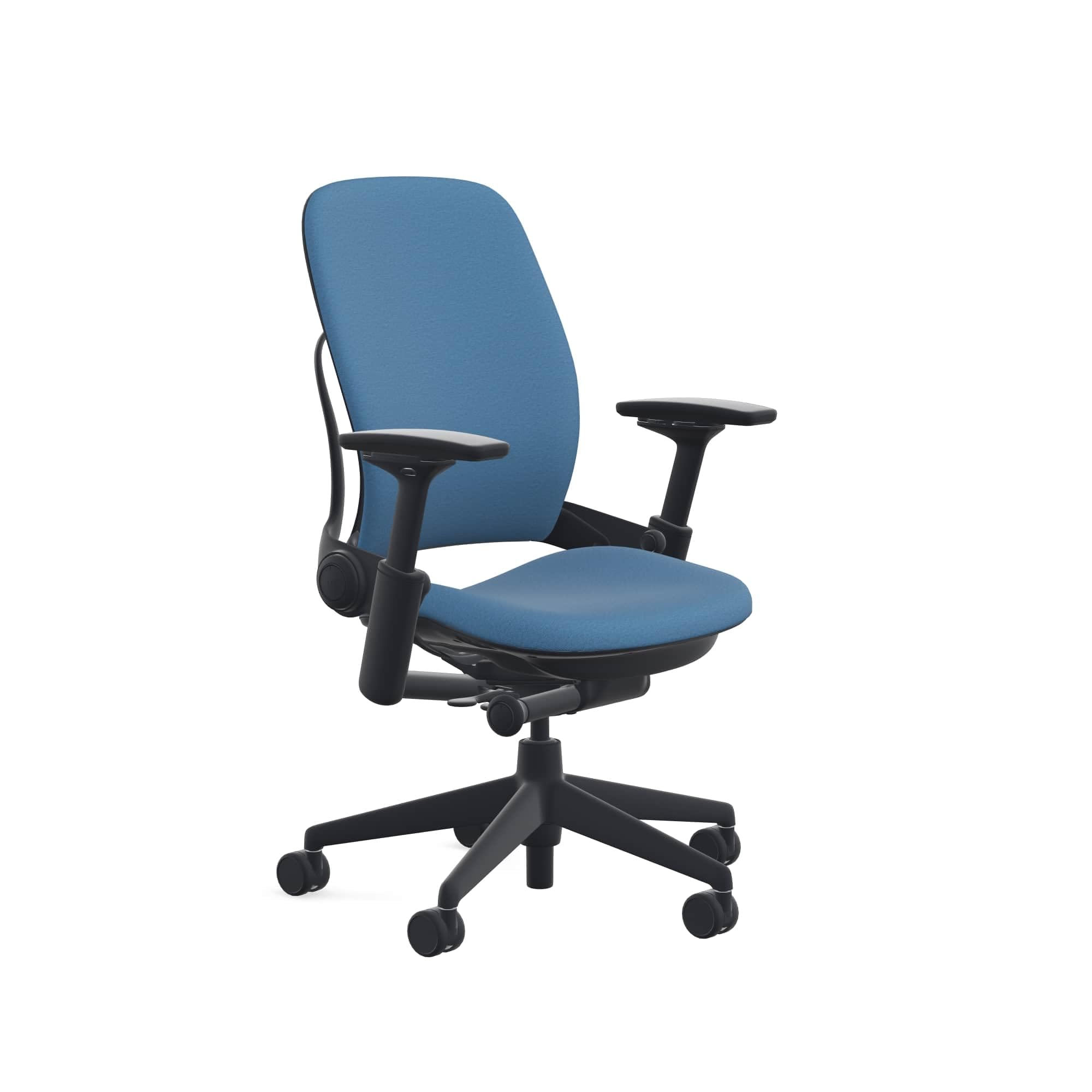
Steelcase Leap doesn’t arrive with marketing hype—it arrives pre-assembled, with 70+ years of seating research embedded into its frame. The 3D LiveBack technology uses a flexible spine that mimics the natural curvature of your vertebrae, allowing the backrest to contour to your exact spinal position whether you’re leaning forward to type or reclining to read. The Natural Glide System lets the seat slide forward as you recline, preventing the shirt-pulling sensation common in fixed-seat chairs.
The lower back firmness dial provides micro-adjustments to lumbar resistance that most chairs simply cannot match—you dial in how much push you want against your lumbar curve, not just where the pad sits. The 4D armrests adjust in height, width, depth, and pivot angle, accommodating arm positions for typing, mousing, and resting without forcing compromise. Seat depth adjustment accommodates different thigh lengths, ensuring the front edge doesn’t press behind the knee.
Customer feedback over years of use highlights the frame’s long-term structural integrity: after months of daily use, the chair’s tension mechanisms remain responsive, the foam retains its resilience, and the casters roll smoothly. The highest-tier investment in this list, the Leap is the reference standard for full-shift ergonomic support, justifying its position as the benchmark for serious buyers.
Why it’s great
- 3D LiveBack technology matches real spinal movement
- Lower back firmness dial for precise lumbar tension
- Natural Glide System prevents shirt pull during recline
- 4D armrests with full positional freedom
- Pre-assembled out of the box
Good to know
- Premium tier requires upfront investment
- Upholstered seat may run warm compared to mesh
- Some units may need tension knob adjustment over time
2. Hbada X7 Smart Ergonomic Chair
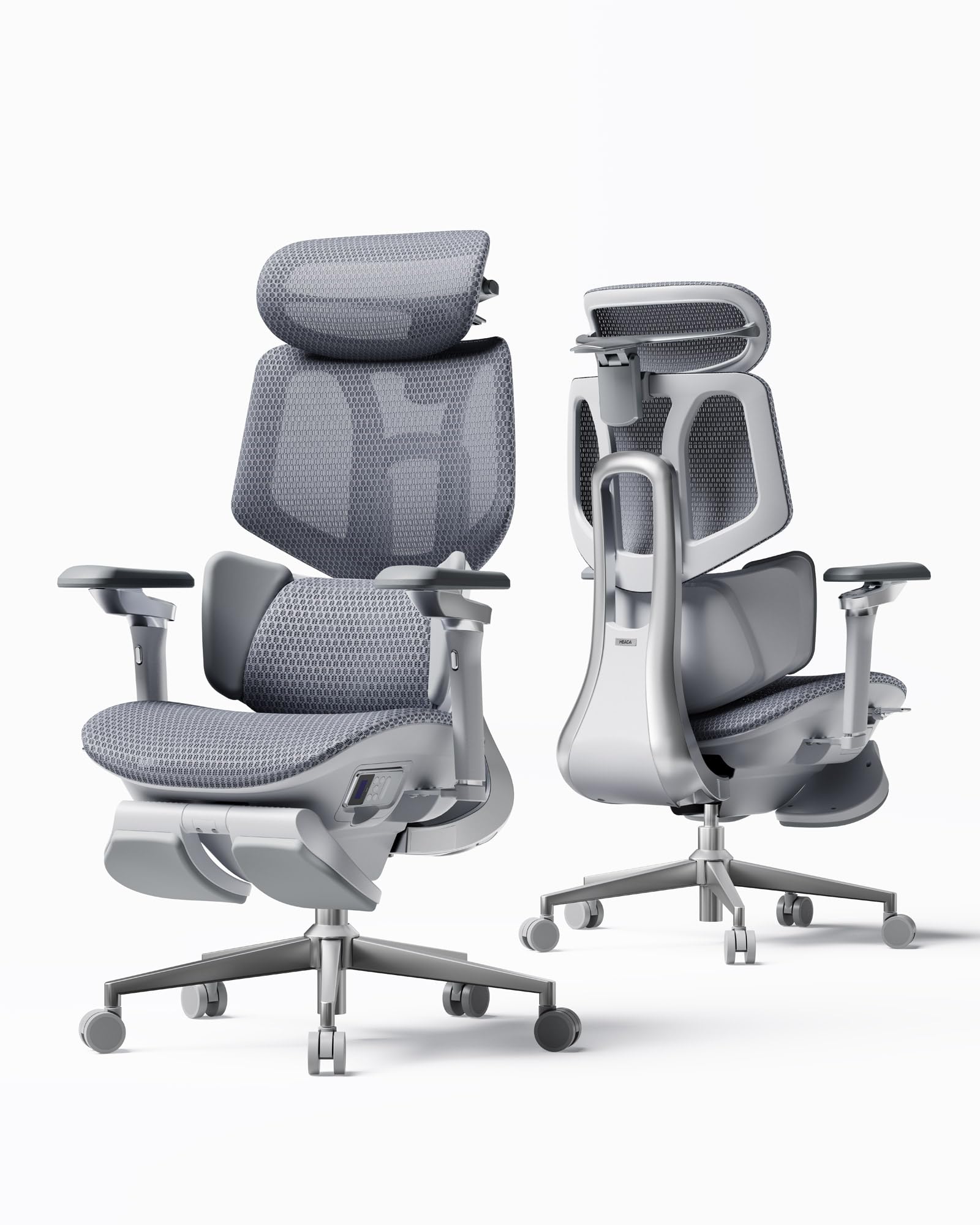
The Hbada X7 takes a different approach: instead of manual levers for every adjustment, it uses a gravity-sensing base that automatically adjusts lumbar support intensity based on your seated weight distribution. The 6D waist pillow aligns with your spine’s lateral curve, and the integrated 8D massage rollers with three-level heating (40-50°C) actively relieve muscle tension during breaks—a feature set absent from every other chair on this list.
The seat incorporates a dual-fan cooling system built into a 3D high-resilience mesh, offering three-speed airflow adjustment. This is the only chair here that actively cools the sitting surface, making it a strong candidate for users who generate significant body heat or work in unconditioned spaces. The 720° omnidirectional armrests combine 360° rotation with 110mm extension and 50mm lift, allowing arm positions that sync with the 140° recline angle.
The aircraft-grade aluminum frame keeps total weight manageable while supporting up to 330 lbs. Users under 6 feet report the headrest and lumbar alignment work naturally; taller users may find the back height insufficient for full neck support. If you want active cooling and lumbar automation for long shifts, the X7 delivers features no competitor matches at this level.
Why it’s great
- Gravity-sensing automatic lumbar adjustment
- Dual-fan seat cooling with 3-speed control
- 8D massage rollers with heat function
- 720° omnidirectional armrests
- Aluminum frame supports 330 lbs
Good to know
- Best suited for users under 6 feet
- Seat leather may show wrinkles over time
- Electronic components add complexity to repairs
3. FLEXISPOT ErgoX-PRO Ergonomic Office Chair
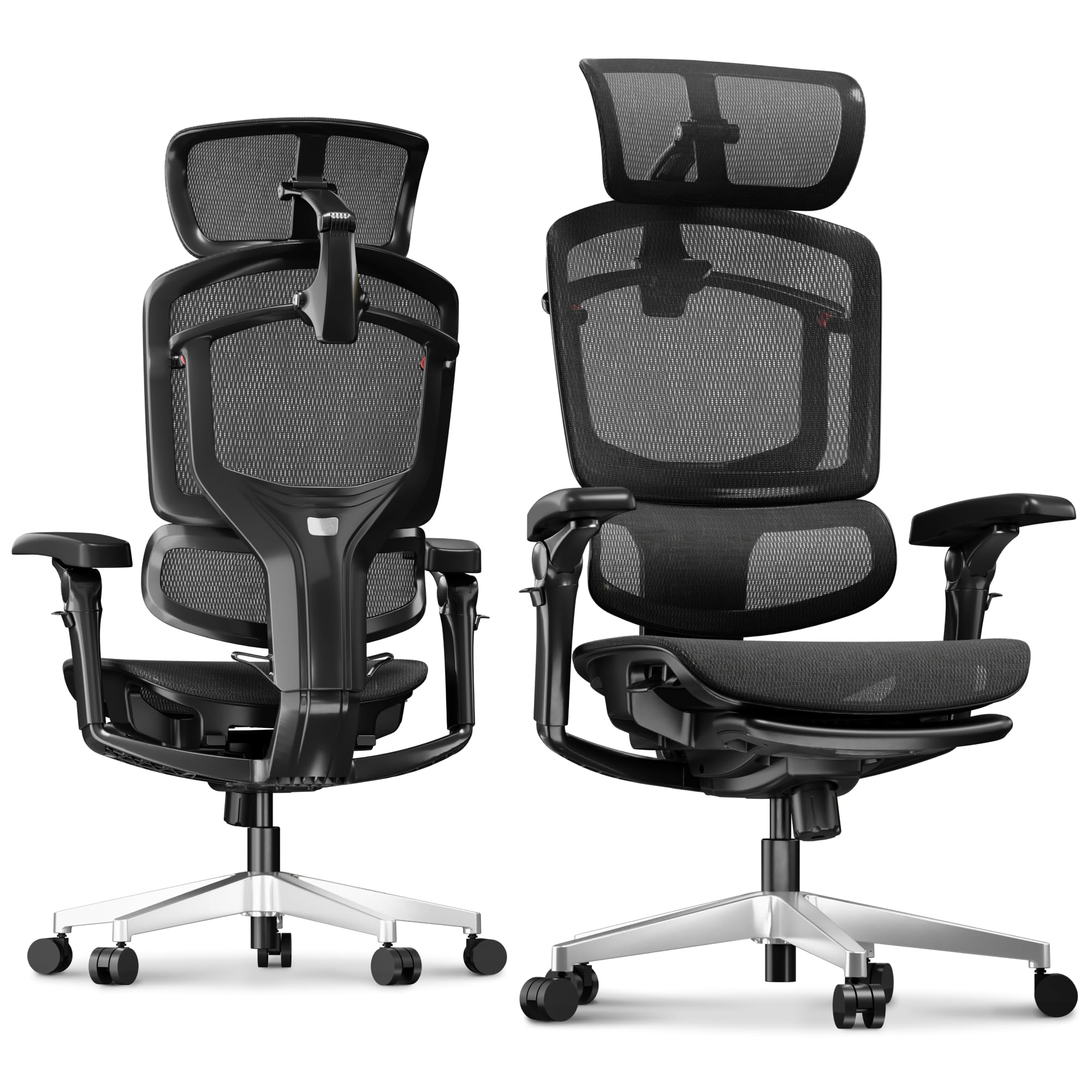
The FLEXISPOT ErgoX-PRO throws nothing away in the name of simplicity. Its 5D lumbar system extends outward, moves vertically, and pivots to follow your lower back through every recline angle—a significant upgrade from fixed lumbar bumps that lose contact after 30 degrees of recline. The 4D headrest rotates 70 degrees, slides 55mm, adjusts 45mm in height, and flips 70 degrees to double as a back support for compact setups.
Armrest adjustment is exhaustive: 7D linkage armrests move in height, width, depth, pivot, and rotation, following your arms through typing, mousing, and resting positions without breaking contact. The AeroWeave 5.0 mesh seat balances tension and airflow, while the Class 4 gas lift supports up to 551 lbs—a safety margin that eliminates sinking concerns even for heavy users. The 12-level fine-tuned backrest offers spring cushioning for natural movement during recline.
Users consistently report relief from previous back and hip pain after switching to this chair. The combination of infinitely adjustable lumbar, high-weight-rated frame, and optional footrest makes it the most versatile single chair for users who need to share a chair across different body types or shift between upright work and reclined breaks.
Why it’s great
- 5D lumbar extends, moves vertically, and pivots
- 7D armrests follow arms through all positions
- 551 lb capacity with Class 4 gas lift
- AeroWeave mesh seat for cooling airflow
- 12-level recline with spring cushioning
Good to know
- Height adjustment may be limited for very tall users
- Extensive adjustability requires initial tuning time
4. Vari CoreChair – Ergonomic Armless Office Chair
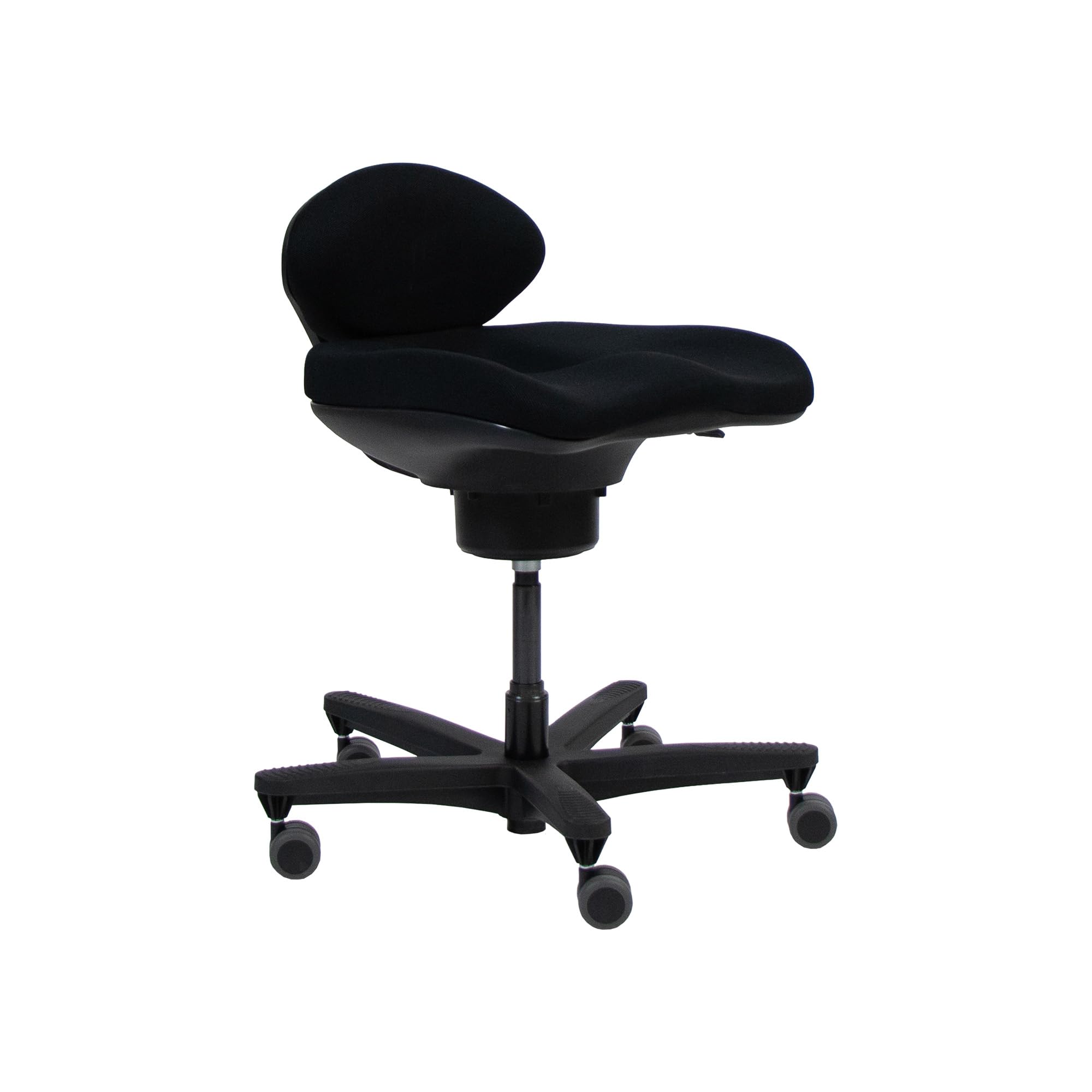
The Vari CoreChair rejects passive sitting entirely. Its patented tilting mechanism allows the seat to move in multiple planes, engaging your core stabilizer muscles to support your spine rather than relying on a fixed backrest. This active-sitting approach shifts the burden from static lumbar pressure to dynamic muscle engagement, reducing lower back strain for users who can tolerate deliberate movement throughout the day.
The sculpted seat and contoured backrest stabilize your pelvis to maintain neutral spine alignment without clamping your hips. Adjustable seat height (17–21.5 inches) and depth (16.75–18.33 inches) allow customization for different femur lengths, while the armless design lets the chair slide completely under standing desks for seamless sit-stand transitions. The compact footprint (18 x 18 inches) fits narrow workstations.
This is not a chair for relaxation—multi-user feedback describes it as “the most uncomfortable chair you’ll ever love” because it forces frequent position changes. It works best for standing-desk users, musicians, public speakers, and fit individuals who want to maintain core activation during seated periods. For anyone with existing lumbar injuries or a preference for passive support, a conventional ergonomic chair with deep lumbar adjustment will serve better.
Why it’s great
- Tilting mechanism engages core muscles during sitting
- Compact armless design slides under standing desks
- Adjustable seat height and depth for custom fit
- BIFMA-certified with 3-year warranty
- Sturdy alloy steel frame prevents tipping
Good to know
- Hard seat surface requires adjustment period
- No armrests may increase shoulder fatigue for some
- Expensive for a chair with minimal passive cushioning
5. HON Wave Big and Tall Ergonomic Mesh Office Chair

The HON Wave Big and Tall is engineered around a single priority: supporting larger body frames without flexing, creaking, or failing. Its steel-reinforced construction and extra-wide seating surface are rated to 450 lbs—the highest weight capacity in this guide—making it the only chair here certified for users who exceed the typical 300 lb limit. The padded stretch mesh seat distributes weight across a broad surface while the mesh back promotes airflow.
Adjustable lumbar support and height/width adjustable arms allow a personalized fit for broad shoulders and tall torsos. The heavy-duty tilt recline mechanism includes adjustable tension control and a swivel base with smooth-rolling casters rated for carpet and hard floors. The seat height range (18.5–21.5 inches) accommodates taller users who need higher seating to maintain proper thigh angle.
User feedback over multiple years confirms the frame’s structural integrity: no wobble, no sagging mesh, and no gas lift failure, even for users approaching the 400 lb mark. The trade-offs are that the armrest height max may be too low for very tall users (over 6’3″), and the seat foam is firmer than plush options. For heavy users who need commercial-grade durability without the Herman Miller price, the Wave is the undisputed choice.
Why it’s great
- 450 lb weight capacity with steel-reinforced frame
- Extra-wide seating surface for larger builds
- Breathable stretch mesh seat and back
- Heavy-duty tilt recline with adjustable tension
- Backed by HON Full Warranty
Good to know
- Arm heights may be too low for users over 6’3″
- Firm seat cushion, not plush
- No headrest included
6. WorkPro Quantum 9000 Series Ergonomic Mid-Back Mesh Chair

The WorkPro Quantum 9000 earns its mid-back classification by focusing on what matters for long sitting sessions: ratchet-adjustable back height, seat depth adjustment, and a tension-controlled tilt mechanism. The mesh seat and back construction promotes airflow while the waterfall seat edge reduces pressure behind the knees. Recommended for 8-10 hours daily use, it’s certified for heavy rotation in professional environments.
Customer feedback spanning six years of daily work-from-home use confirms the chair’s longevity: the mesh doesn’t sag permanently, the roller blade-compatible casters (user-replaceable) roll smoothly, and the metal adjustment points maintain their grip. At 275 lbs tested capacity, it’s rated for most users, though heavier individuals should check the limit. The armrests adjust in height but pivot too easily according to some users; they are removable for those who prefer armless configurations.
The primary limitation is that the seat depth adjustment range is moderate—users with very long or very short femurs may find the extremes limited. The plastic frame components, while durable, don’t match the rigidity of steel or aluminum frames in the premium tier. For a mid-back mesh chair that has proven its durability across almost a decade of continuous use, the Quantum 9000 delivers exceptional long-term value.
Why it’s great
- Ratchet-adjustable back height and seat depth
- Proven durability over 6+ years of daily use
- Breathable mesh seat with waterfall front edge
- Easy 15-minute assembly with included tools
- Limited lifetime warranty
Good to know
- Plastic casters may be noisy on concrete floors
- Armrest pivot locks absent; can shift during use
- Mesh back, not full high back for neck support
7. ELABEST Ergonomic Mesh Office Chair

The ELABEST chair distinguishes itself through BIFMA 5.1 commercial-grade certification—a standard that tests structural integrity, seat durability, and stability under repeated load cycles far beyond residential-grade thresholds. The bionic-curve backrest mimics natural spinal curvature, paired with an adjustable lumbar support that maintains contact through the synchro-tilt mechanism across three lockable recline positions.
The “Golden Triangle” back structure provides targeted shoulder and upper back support, reducing fatigue during extended typing and coding sessions. The 3D adjustable armrests customize height, width, and angle to match desk height and arm position. The ultra-breathable mesh seat actively prevents heat buildup—a critical advantage over foam seats that trap heat and degrade after months of use.
Customer feedback emphasizes the chair’s quality components: mostly metal construction with minimal plastic, easy assembly (around 20 minutes), and responsive customer service that ships replacement parts when needed. The seat height range (19.6–23.6 inches) and seat depth (17.7 inches) work best for users between 5’5″ and 5’10” under 200 lbs. For , it delivers Herman Miller-like ergonomic thinking without the flagship price.
Why it’s great
- BIFMA 5.1 certified for commercial durability
- Bionic-curve backrest with adjustable lumbar support
- Synchro-tilt mechanism with 3 lockable positions
- 3D armrests with height, width, and angle adjustment
- Ultra-breathable mesh seat reduces heat buildup
Good to know
- Best fit for 5’5″ to 5’10” users under 200 lbs
- Armrests may be too wide for small-framed users
- Firmer mesh seat may need break-in period
8. TRALT Ergonomic Office Chair with Adjustable Headrest
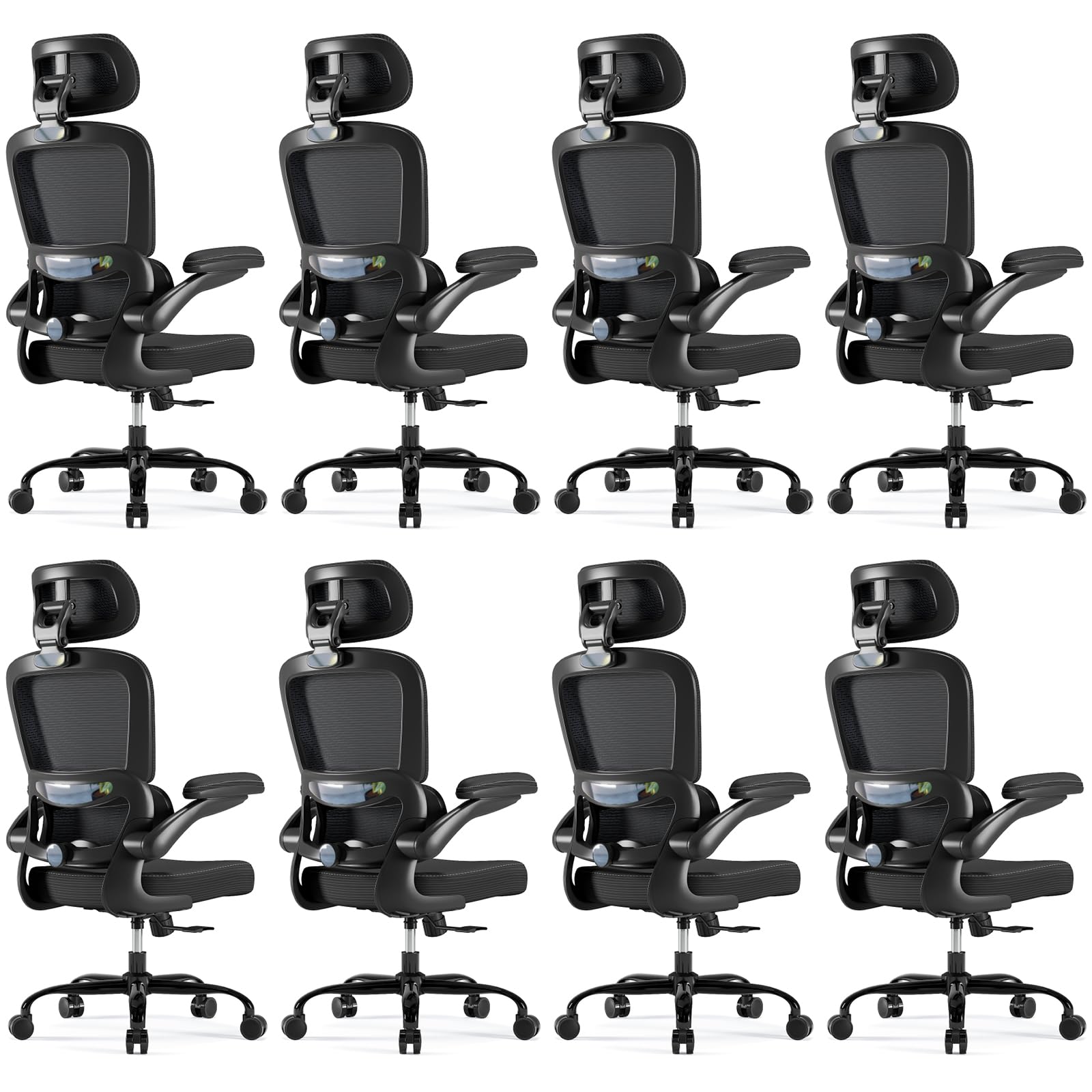
The TRALT chair combines a 3.5-inch high-density sponge cushion with a breathable mesh back, offering a hybrid solution that cushions sitting bones while keeping the upper back ventilated. The cushion density resists sagging under sustained weight, balancing softness and support for extended sitting sessions. Flip-up armrests allow the chair to be stored away when space is tight, a useful feature for compact home offices.
Adjustable headrest and lumbar support accommodate users from 5’5″ to 6’2″. The 20-inch wide seat distributes weight evenly across the cushion surface. The metal base supports up to 330 lbs, and the Class-3 gas lift provides smooth height adjustment. The chair arrives in a pack of eight—buyers receive a single chair, not a bulk lot, according to the listing’s unit description.
User reports highlight the chair’s firm but comfortable seat and effective lumbar support, especially for shorter users around 5’1″ who find the headrest doesn’t push their head forward. The flip-up arms, while convenient for storage, may lack lateral stability for users who lean heavily on armrests during recline. For the price, the combination of thick foam cushioning, adjustable lumbar, and mesh back makes it a strong entry-level pick for long-hour use.
Why it’s great
- 3.5-inch high-density foam resists sagging over time
- Flip-up armrests for space-saving storage
- Adjustable headrest and lumbar support
- Metal base supports up to 330 lbs
- Comfortable for short users, including 5’1″
Good to know
- Flip-up arms may feel unstable under heavy leaning
- Plastic casters may need replacement for smooth rolling
- Not designed for tall users over 6’2″
9. COLAMY Office Ergonomic Desk High Back Executive Chair

The COLAMY chair enters the conversation with an attention-grabbing spec: a 6.7-inch thick seat cushion with high-density foam padding underneath. This is the deepest cushion in this guide, designed to delay bottoming out during continuous sitting by distributing weight across a massive foam volume. The selected leather upholstery provides a smooth, easy-to-clean surface that resists staining from long shifts.
The pop-out lumbar support mechanism lets you adjust lower back protrusion via a push-button release, providing customizable pressure relief without requiring complex multi-axis adjustment. Upgraded large-diameter casters roll silently and protect flooring surfaces. The flip-up arms allow the chair to be tucked under desks for space efficiency. The heavy-duty metal base supports up to 300 lbs.
User feedback is generally positive, praising the chair’s comfort, sturdy build, and quick assembly. However, some taller users (above 5’6″) report that the headrest buttons can be defective, causing the headrest to drop to the lowest position. The seat has been described as firmer than expected by those accustomed to plush cushions, and the armrests may sit too low for standard desk heights. For users prioritizing maximum cushion depth at a budget-friendly price, the COLAMY delivers immediate comfort that outperforms its price tier.
Why it’s great
- 6.7-inch thick high-density foam seat cushion
- Pop-out lumbar support for adjustable lower back relief
- Upgraded silent casters protect floors
- Flip-up arms for compact storage
- Easy to clean leather upholstery
Good to know
- Headrest height adjustment may be defective on some units
- Seat may feel firmer than expected initially
- Armrests may be too low for standard desk heights
- Better suited for users under 5’6″
FAQ
How many hours per day is “24-hour” use actually feasible for a single chair?
Should I prioritize a mesh seat or a foam seat for 12-hour sitting sessions?
Is a steel frame always superior to reinforced nylon for extended use?
What does “active sitting” mean and does it actually reduce back pain?
How important is the “waterfall edge” design on the seat front?
Final Thoughts: The Verdict
For most users, the 24 hour office chair winner is the FLEXISPOT ErgoX-PRO because it offers the most comprehensive adjustability (5D lumbar, 7D armrests, 4D headrest) combined with a 551 lb-rated Class 4 gas lift and cooling mesh seat at a mid-range price that doesn’t compromise on commercial-grade features. If you want automated lumbar tracking and active seat cooling, grab the Hbada X7 Smart. And for heavy users (up to 450 lbs) who need a steel-reinforced frame with proven durability, nothing beats the HON Wave Big and Tall.

Mo Maruf
I created WellFizz to bridge the gap between vague wellness advice and actionable solutions. My mission is simple: to decode the research and give you practical tools you can actually use.
Beyond the data, I am a passionate traveler. I believe that stepping away from the screen to explore new environments is essential for mental clarity and physical vitality.