Our readers keep the lights on and my smoothie glass nicely filled. As an Amazon Associate, I earn from qualifying purchases.
A new vlogger’s first camera should eliminate friction, not create it. The difference between actually publishing and feeling stuck often comes down to one spec most people overlook on a spec sheet: how fast and reliably the autofocus can lock onto a face and follow it without hunting. After reviewing dozens of compact, mirrorless, and action-style models for this guide, it’s clear that sensor size and stabilization heavily influence the final image, but autofocus speed determines whether you capture the moment or miss it entirely.
I’m Mohammad Maruf — the founder and writer behind WellFizz. I’ve spent years analyzing the hardware specifications, real-world image data, and buyer feedback on compact and mirrorless cameras to separate the marketing claims from the actual shooting experience.
This guide walks through the essential specs for a confident first purchase, with in-depth reviews of the top-performing models that actually deliver on their promises. Whether you are filming in a studio or outdoors, the best option for your specific needs is the camera for beginner vloggers that matches your shooting style, budget, and growth ambitions.
How To Choose The Best Camera For Beginner Vloggers
The vlogging camera market has split into three distinct form factors: ultra-compact fixed-lens pocket cameras (like the Canon PowerShot V10 and DJI Osmo Pocket 3), interchangeable-lens mirrorless bodies (like the Sony ZV-E10 and Panasonic S5IIX), and tiny magnetic action cameras (like the Insta360 GO Ultra and DJI Osmo Nano). Your choice should be guided by how you create content and how much weight you are willing to carry daily.
Sensor Size and Low-Light Performance
A 1-inch sensor (found in the DJI Osmo Pocket 3, Sony ZV-1F, and Canon PowerShot V1) offers a strong balance between portability and image quality. APS-C sensors, like the 24.2MP sensor in the Sony ZV-E10, capture significantly more light and produce a shallower depth of field for that blurred-background look. Full-frame sensors, such as the 24.2MP sensor in the Panasonic S5IIX, represent the premium tier with superior dynamic range and noise control. For a beginner vlogger primarily shooting in good lighting, a 1-inch sensor is more than enough. For low-light flexibility, APS-C is the sweet spot.
Autofocus System: Phase Detection vs Contrast Detection
Phase-detection autofocus (PDAF) is vastly superior for video because it does not hunt back and forth to find focus. Cameras like the Sony ZV-E10 (425 phase-detection points), the Panasonic S5IIX (779 points), and the Canon PowerShot V1 (hybrid AF with 100 points) lock onto a face instantly and stay locked even when the subject moves. Contrast-detection systems, found in older or more budget-oriented models, cause noticeable focus breathing and are frustrating for solo vloggers. Always prioritize PDAF or hybrid AF for video-first use.
Stabilization: Mechanical Gimbal vs Electronic vs In-Body
Shaky footage is the fastest way to lose an audience. The gold standard for a compact vlogging camera is mechanical gimbal stabilization, as seen in the DJI Osmo Pocket 3 (3-axis) and the Xtra Muse (3-axis). These eliminate almost all walking shake. In-body image stabilization (IBIS) in mirrorless cameras like the Panasonic S5IIX and electronic stabilization in Canon and Sony models can reduce shake but rarely match the smoothness of a dedicated gimbal. For walk-and-talk vlogs, a gimbal-equipped camera is the most beginner-friendly solution.
Quick Comparison
On smaller screens, swipe sideways to see the full table.
| Model | Category | Best For | Key Spec | Amazon |
|---|---|---|---|---|
| DJI Osmo Pocket 3 Creator Combo | Gimbal Camera | Walk-and-talk vlogs | 1-inch CMOS + 3-axis gimbal | Amazon |
| Sony ZV-E10 Kit | Mirrorless | Interchangeable lens flexibility | 24.2MP APS-C + 425 AF points | Amazon |
| Canon PowerShot V1 | Compact | Studio vlogging with fan cooling | 1.4-type 22.3MP sensor | Amazon |
| Sony ZV-1 II | Compact | Ultra-wide selfie framing | 18-50mm zoom lens | Amazon |
| Insta360 GO Ultra | Action Cam | Wearable POV clips | 53g body + magnetic mount | Amazon |
| DJI Osmo Nano | Action Cam | Waterproof sports vlogs | 143° FOV + waterproof to 10m | Amazon |
| Xtra Muse | Gimbal Camera | Budget gimbal alternative | 1-inch CMOS + 4K/120fps | Amazon |
| Canon PowerShot V10 | Compact | Pocket-sized point-and-shoot | 19mm fixed wide lens | Amazon |
| Sony ZV-1F Bundle | Compact | Entry-level budget kit | 20.1MP 1-inch sensor | Amazon |
| Nikon COOLPIX P950 | Superzoom | Wildlife and travel vlogs | 83x optical zoom | Amazon |
| Panasonic LUMIX S5IIX | Full-frame | Pro-grade hybrid work | 24.2MP full-frame + 5.8K | Amazon |
In‑Depth Reviews
1. DJI Osmo Pocket 3 Creator Combo

The DJI Osmo Pocket 3 is the benchmark for beginner vloggers because it solves the two hardest problems in one compact device: smooth footage and reliable autofocus. The 1-inch CMOS sensor captures 4K video at 120fps with excellent low-light performance, while the integrated 3-axis mechanical gimbal eliminates the need for a separate stabilizer entirely. The 2-inch rotatable touchscreen automatically switches between horizontal and vertical orientation, a feature that saves significant time for creators who post across YouTube and TikTok.
The Creator Combo bundle adds the DJI Mic 2 transmitter, a wide-angle lens, a battery handle, and a mini tripod — transforming the base camera into a complete vlogging kit. The ActiveTrack 6.0 face and object tracking ensures you remain centered in the frame, even during active shoots like dancing or walking a pet. The 10-bit D-Log M color profile also gives you room to grade footage later without banding artifacts.
Real-world battery life averages around 166 minutes with the included battery handle, and the USB-C PD charging is fast. The main trade-off is the exposed gimbal mechanism, which is delicate and requires careful handling. For beginners who want professional-level smoothness without learning complex stabilization techniques, this is the most complete solution available.
Why it’s great
- 3-axis gimbal eliminates shakiness even when walking or running
- ActiveTrack 6.0 reliably locks onto faces and moving subjects
- Included DJI Mic 2 delivers clean wireless audio out of the box
- Rotatable screen for instant vertical or horizontal shooting
Good to know
- Gimbal is fragile and not waterproof — requires a protective case
- 2x digital zoom only; no optical zoom range
- Premium bundle price is significant for a beginner
2. Sony Alpha ZV-E10 Kit
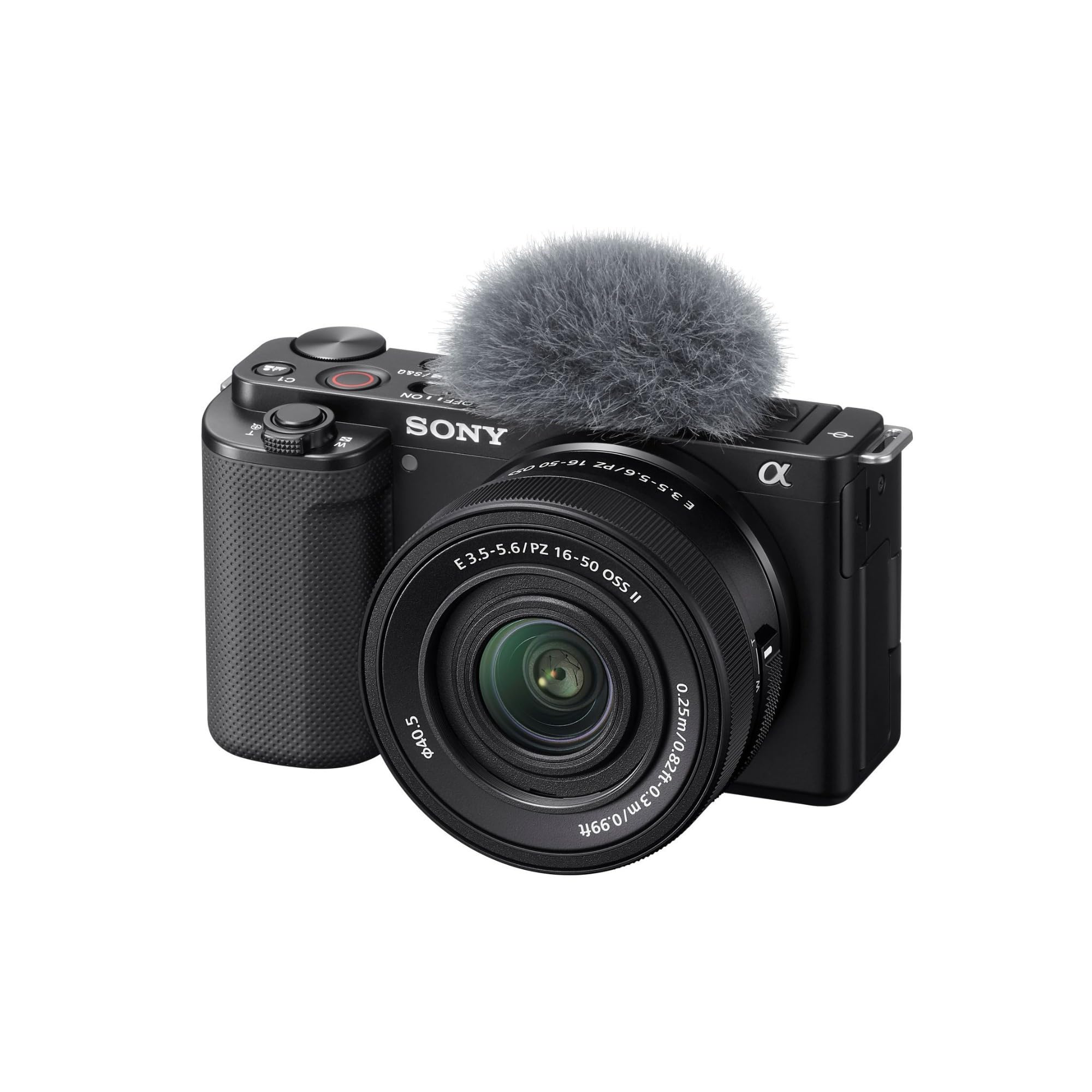
The Sony ZV-E10 is the most recommended interchangeable-lens camera for beginner vloggers because it offers the best path for skill progression. Its 24.2MP APS-C Exmor CMOS sensor oversamples 6K footage to deliver sharp 4K video without pixel binning, and the 425 phase-detection autofocus points lock onto eyes and faces with the speed and accuracy that Sony is known for. The Product Showcase setting instantly shifts focus from your face to an object held up to the lens, which is ideal for review-style vlogs.
The kit includes the Sony E PZ 16-50mm F3.5-5.6 OSS II power zoom lens, giving you a versatile wide-to-normal range in a compact package. The Background Defocus button lets you toggle between a blurred and sharp background with one press, and the 3.5mm mic jack supports external microphones for better audio. The side flip-out 3-inch touchscreen is fully articulated, allowing you to see yourself while recording.
Battery life is average for a mirrorless camera, and the kit lens is decent but many users upgrade to a fast prime lens like the Sigma 16mm F1.4 for better low-light performance. Beginners who plan to invest in lenses over time will find this camera has a very long useful life compared to fixed-lens competitors.
Why it’s great
- APS-C sensor offers superior depth of field and low-light performance
- 425 phase-detection AF points for reliable face and eye tracking
- Interchangeable lens mount allows future upgrades
- Product Showcase mode is highly useful for review vlogs
Good to know
- Kit lens has a variable aperture (F3.5-5.6) which limits low-light use
- No in-body stabilization — rely on kit lens OSS or a gimbal
- Battery life requires carrying a spare for all-day shoots
3. Canon PowerShot V1

The Canon PowerShot V1 carves a unique niche for vloggers who shoot long-form content in a studio or at a desk. Its built-in cooling fan eliminates the overheating issues that plague other compact cameras during extended 4K recording sessions, making it the best option in this list for unlimited recording without shutdowns. The 1.4-type 22.3MP sensor is larger than the typical 1-inch sensor, delivering 18.7MP video resolution with impressive dynamic range and 10-bit Canon Log 3 color depth for advanced grading.
The built-in 16-50mm F2.8-4.5 wide-angle zoom lens covers the most useful range for talking-head vlogs, and the hybrid autofocus with 100 points provides fast, reliable face detection. The DIGIC X processor handles the image processing, and the USB-C port supports power delivery for uninterrupted filming. This camera is larger and heavier than the pocket-sized competitors, but the thermal headroom makes it a more reliable tool for serious creators.
It lacks optical image stabilization, relying on electronic IS which introduces a crop on the image, and the lack of a built-in flash limits some photo capabilities. The SD card slot is located under the battery door, which can interfere with tripod quick-release plates. For vloggers producing hour-long tutorials or streams, the cooling fan is a decisive advantage.
Why it’s great
- Active cooling fan allows unlimited 4K recording without overheating
- Larger 1.4-type sensor outperforms standard 1-inch sensors
- Canon Log 3 with 10-bit color for professional-grade grading
- Built-in 16-50mm F2.8-4.5 zoom covers wide-angle vlogging needs
Good to know
- No optical image stabilization — electronic IS crops the frame
- SD card slot is placed under the battery door
- Larger and heavier than pocket gimbal cameras
4. Sony ZV-1 II

The Sony ZV-1 II is the successor to the wildly popular ZV-1 and its main upgrade is the ultra-wide 18-50mm zoom lens, which captures significantly more background in a selfie vlog frame than the 24mm equivalent of its predecessor. This wider field of view is a genuine advantage for creators who want to show their environment or fit two people in the frame without holding the camera at arm’s length. The 1.0-type Exmor RS sensor delivers solid image quality, and the F1.8-4.0 aperture allows for noticeable background blur at the wide end.
The directional 3-capsule microphone with the included windscreen captures clear audio, and the real-time Eye AF tracking keeps faces sharp even during movement. The side flip-out touchscreen is designed for self-recording, and the USB-C port supports live streaming without extra hardware. The camera body is compact enough to fit in a jacket pocket.
Early adopters reported reliability concerns, and the removal of Optical Steadyshot from the original ZV-1 means stabilization is now purely electronic, which is less effective for walking shots. Battery life is short enough that you will need at least one spare for a full day of shooting. For indoor studio vlogging, the wider lens is a clear upgrade, but outdoor shooters may prefer the original ZV-1’s built-in stabilization.
Why it’s great
- 18mm wide end captures much more background in selfie mode
- 1-inch sensor with F1.8 aperture for low-light performance
- Built-in directional microphone with windscreen
- USB-C live streaming without additional hardware
Good to know
- No optical stabilization — electronic stabilization only
- Short battery life requires spare batteries
- Reliability issues reported by some early buyers
5. Insta360 GO Ultra
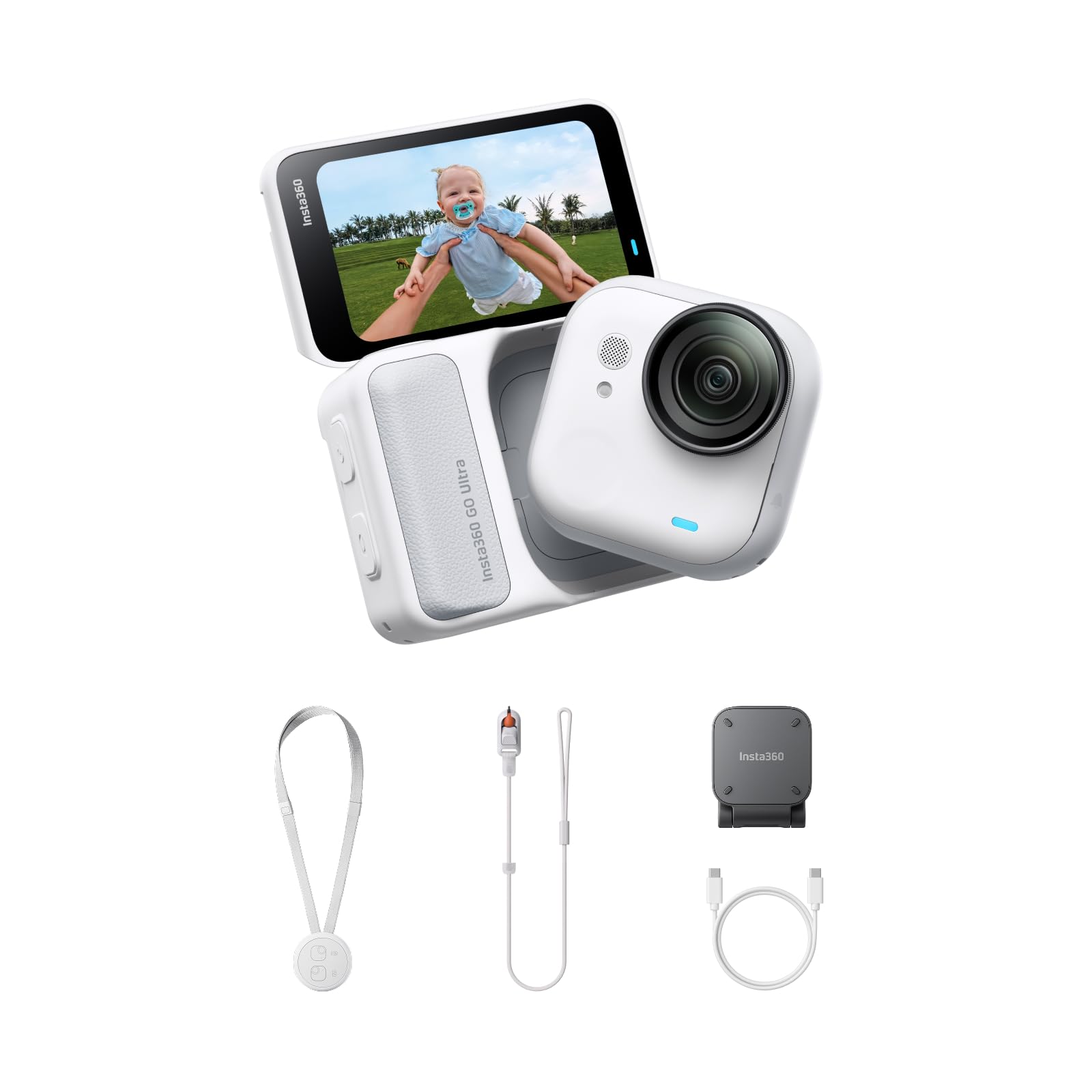
The Insta360 GO Ultra is the most creative tool in this lineup for beginner vloggers who want hands-free first-person perspective footage. The standalone camera module weighs only 53g — smaller than a watch — and attaches magnetically to hats, pendants, or any ferrous surface. This opens up POV shots that are impossible with a traditional camera, like cooking vlogs, cycling rides, or hands-free walk-throughs. The 1/1.28-inch sensor and 5nm AI chip deliver 4K60fps video with good dynamic range, and the 4K Active HDR mode handles high-contrast outdoor scenes well.
The Action Pod adds a touchscreen for framing, extends battery life to around 200 minutes, and provides USB-C connectivity. Three levels of FlowState Stabilization plus 360 Horizon Lock keep footage exceptionally smooth, even during active movement. The camera is waterproof to 10 meters with the standalone module, and the 4K Active HDR preserves detail in shadows and highlights simultaneously.
The most significant issue is accessory availability — the Action Pod lacks a standard ¼-20 tripod mount, forcing users into proprietary mounting solutions that can be hard to find at launch. The magnetic pendant is strong but may not grip thick winter jackets. For creators prioritizing unique POV angles over traditional vlogging, this is an inspiring device with a few practical limitations.
Why it’s great
- 53g magnetic module enables truly hands-free POV shooting
- FlowState stabilization and Horizon Lock keep footage smooth
- IPX8 waterproof to 10m for underwater vlogs
- Fast charging reaches 80% in 12 minutes
Good to know
- No standard ¼-20 tripod mount on the Action Pod
- Magnetic pendant may not hold securely on thick jackets
- Proprietary accessory ecosystem with limited availability
6. DJI Osmo Nano Standard Combo (128GB)
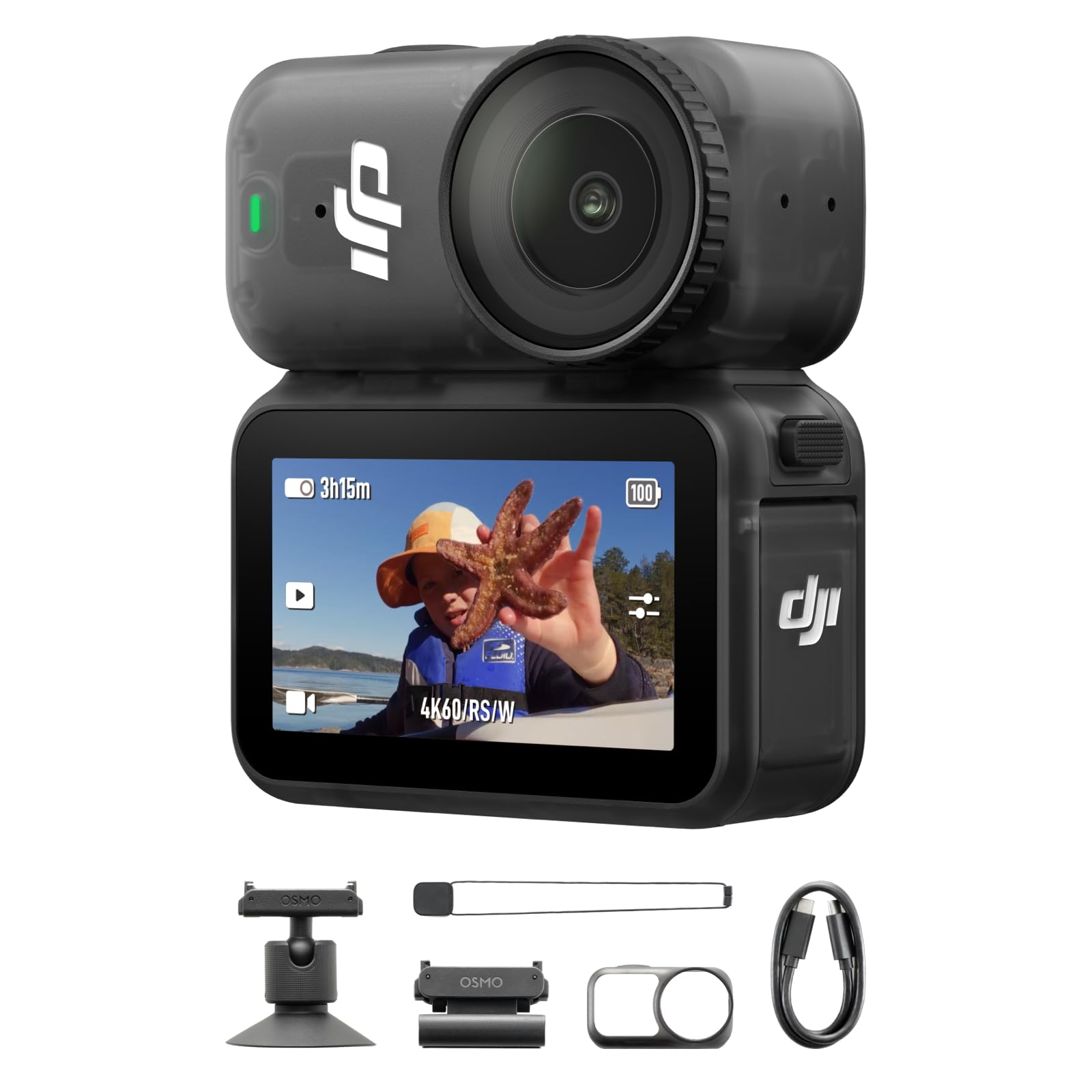
The DJI Osmo Nano is DJI’s most recent entry into the ultra-compact action camera space, designed for vloggers who need a rugged, waterproof camera that can go anywhere. Its 1/1.3-inch sensor captures 4K video at 60fps with a 143-degree ultra-wide field of view, and the 10-bit D-Log M color profile provides grading flexibility that is unusual in an action camera at this level. The magnetic mounting system allows it to attach to hats, bike handles, or the included lanyard for hands-free POV shots.
The Standard Combo includes a multifunctional Vision Dock that extends battery life to around 200 minutes, plus 128GB of built-in storage and expandable microSD support. The camera is waterproof up to 10 meters directly, and the IPX4 splash-resistant dock adds some protection for outdoor use. The magnetic accessories make it easy to switch between handheld and wearable modes quickly, and the OsmoAudio feature allows direct pairing with two DJI microphones for clean audio.
The compact body heats up during extended high-resolution recording, but the built-in overheat protection automatically stops recording to protect hardware. Without the dock, standalone battery life is roughly 60 minutes in 4K mode. For vloggers who need a camera that can survive rain, splashes, and active outdoor shooting, the Osmo Nano is a durable and capable tool.
Why it’s great
- Waterproof to 10m without a housing
- 143° ultra-wide FOV captures immersive POV footage
- 128GB built-in storage plus microSD expansion
- Magnetic mounting for versatile POV angles
Good to know
- Heats up during extended 4K recording sessions
- Dock drains battery even when powered off
- Bare camera battery life is around 60 minutes
7. Xtra Muse Vlogging Camera

The Xtra Muse is a surprisingly capable alternative to the DJI Osmo Pocket 3 for budget-conscious beginner vloggers who still want mechanical gimbal stabilization. It features a 1-inch CMOS sensor that records 4K video at 120fps, matching the frame rate of more expensive competitors, and the built-in 3-axis gimbal keeps footage remarkably smooth during movement. The master follow mode and face/object tracking work reliably for keeping the subject centered, and the 2-inch touchscreen makes it easy to frame shots.
The standard bundle includes a carrying bag, wrist strap, handle with a 1/4-inch thread, and a USB-C cable, making it ready to use out of the box. Battery life is around 161 minutes in real-world testing, which is competitive with the Osmo Pocket 3. The color science is decent, and the 10-bit X-Log color mode allows some grading flexibility in post-production.
Build quality is slightly less refined than the DJI alternative, with a more plastic feel, and the accessory ecosystem is limited. Some users report that the DJI Pocket 3 accessories fit after firmware updates, but this is not guaranteed. For vloggers on a tighter budget who do not want to compromise on mechanical stabilization, the Xtra Muse offers strong value.
Why it’s great
- Built-in 3-axis gimbal eliminates shaky footage
- 1-inch sensor with 4K/120fps recording
- Face and object tracking keeps subject centered
- Battery life around 161 minutes
Good to know
- Build quality feels less premium than DJI alternatives
- Limited accessory ecosystem compared to DJI
- Some accessories only fit after firmware updates
8. Canon PowerShot V10

The Canon PowerShot V10 is designed for absolute simplicity: an ultra-compact body with a retractable front-facing screen and a built-in stand that folds out for hands-free desktop recording. The 15.2MP 1-inch back-illuminated CMOS sensor delivers solid 4K video quality, and the fixed 19mm wide-angle lens (35mm equivalent) is wide enough for a single-person vlog without distortion. The stereo microphone with a center channel for noise reduction records surprisingly clear audio for a camera this small.
Image stabilization has three modes — IS Off, IS On, and IS Enhanced — and the enhanced mode works well for static handheld shots but is less effective for walking footage. The USB-C charging and micro-HDMI output make it easy to connect to external monitors or charge on the go. The camera is genuinely pocket-sized and weighs very little, making it a candidate for daily carry.
The lack of any optical zoom or lens cover is a significant limitation — the fixed 19mm lens cannot reach distant subjects, and the exposed lens risks scratches without a cover. Battery life is about 1-2.5 hours depending on recording settings. For beginner vloggers who shoot mostly static selfies or desk videos and value extreme portability, the V10 is a focused tool, but it lacks the versatility of other options on this list.
Why it’s great
- Ultra-compact design fits in any pocket or bag
- Built-in stand enables hands-free desktop recording
- 1-inch CMOS sensor delivers good 4K image quality
- Three stabilization modes for different shooting conditions
Good to know
- Fixed 19mm lens has no optical zoom capability
- Exposed lens is vulnerable to scratches without a cover
- Battery life is limited to 1-2.5 hours
9. Sony ZV-1F Vlogging Camera Bundle
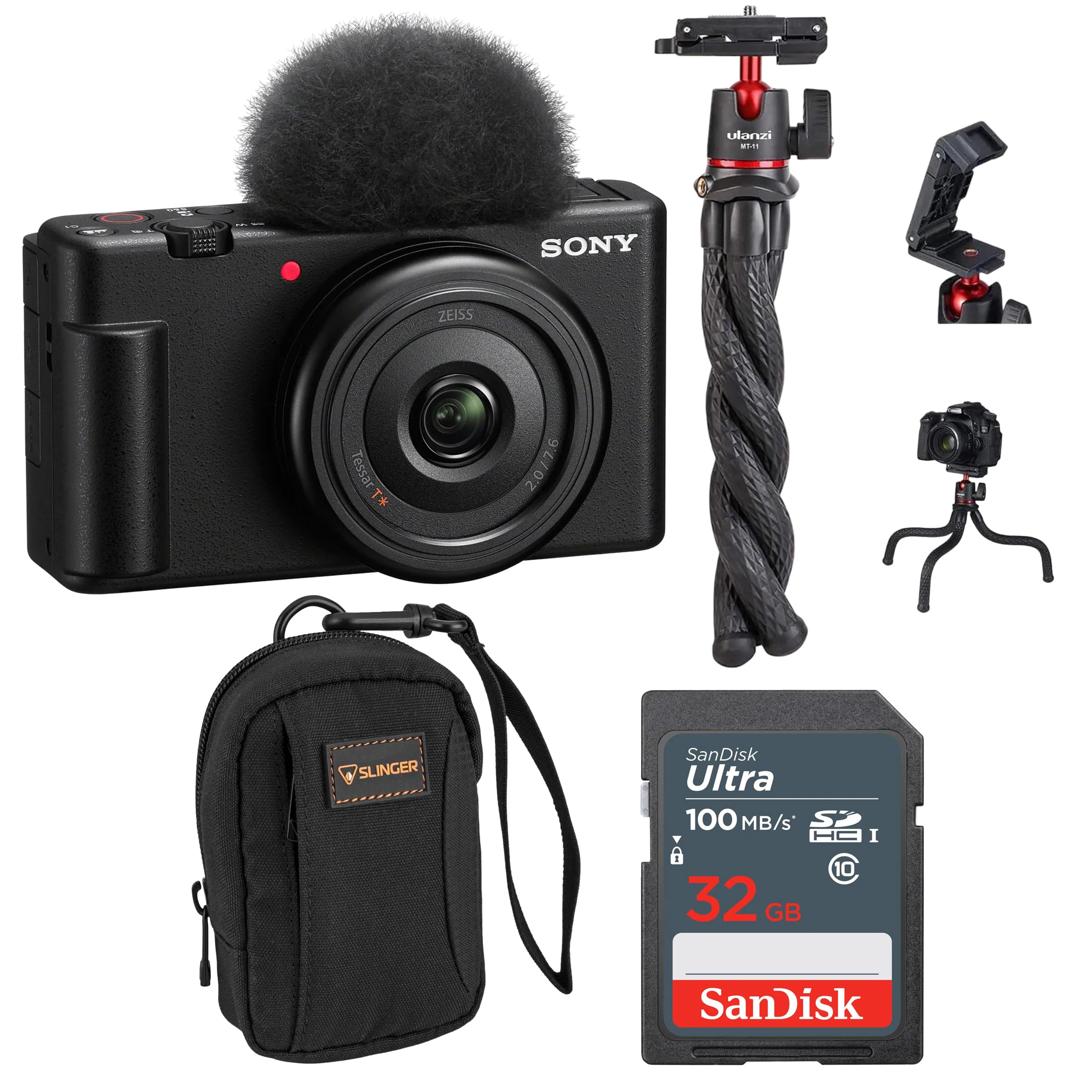
The Sony ZV-1F is the most budget-friendly entry point into Sony’s ZV series, designed for beginner vloggers who want a streamlined shooting experience without learning advanced camera controls. The 20.1MP 1-inch Exmor RS sensor captures 4K30p video with good color science and the 20mm-equivalent F2.0-8 Zeiss lens provides a wide enough field of view for standard selfie vlogs. The Background Defocus button and Face Priority AE work automatically to produce clean, professional-looking results with minimal effort.
This bundle includes a tripod, a 32GB SDHC card, and a camera bag, so a new creator can start filming immediately without additional purchases. The side flip-out 3-inch touchscreen makes framing straightforward, and the built-in directional 3-capsule microphone with the included windscreen handles audio reasonably well. The camera can also stream directly over USB-C for live content.
Stabilization is electronic and relatively weak, producing noticeable shake during walking shots, and the contrast-detection autofocus is slower and less reliable than phase-detection systems found in higher models. Slow-motion and hyperlapse modes are fun but limited. For a strict budget-conscious vlogger shooting mostly static or tripod-based content, the ZV-1F represents good value when the kit is considered.
Why it’s great
- Entry-level price makes it accessible for first-time buyers
- Complete bundle includes tripod, SD card, and case
- Background Defocus button for instant professional look
- USB-C live streaming without extra hardware
Good to know
- Electronic stabilization is weak for walking footage
- Contrast-detection autofocus hunts in low light
- Battery life is acceptable but needs spares for longer shoots
10. Nikon COOLPIX P950

The Nikon COOLPIX P950 is the outlier in this guide — it is not a traditional vlogging camera, but it serves a specific type of beginner vlogger who shoots wildlife, nature, or travel content from a distance. Its headline feature is the 83x optical zoom lens, offering an equivalent focal length range of 24-2000mm, which allows you to capture birds, distant landscapes, or faraway subjects in sharp detail. The dual-detect optical vibration reduction helps keep long-telephoto shots steady, and the 4K UHD video capability with HDMI output makes it viable for video projects.
The vari-angle TFT LCD screen gives flexibility for shooting at awkward angles, and the high-resolution electronic viewfinder is useful in bright outdoor conditions. The camera offers full manual controls alongside easy auto modes, making it accessible for beginners who want room to learn. The lens is a NIKKOR ED glass construction that delivers sharp images across the zoom range.
This is a relatively large and heavy camera — it is not pocketable, and it is not designed for walk-and-talk selfie vlogging. The autofocus uses contrast detection, which hunts more than phase-detection systems, and the video quality, while decent, does not match the 1-inch or APS-C competitors for pure image quality. For a vlogger whose content centers on wildlife observation or long-distance subjects, the P950 is a unique and capable tool.
Why it’s great
- 83x optical zoom reaches subjects far beyond any other camera here
- 4K UHD video and HDMI output for external recording
- Vari-angle screen for flexible shooting angles
- Manual controls allow skill development
Good to know
- Large and heavy — not suitable for pocket or daily carry
- Contrast-detection autofocus hunts in video mode
- Not designed for selfie vlogging or walk-and-talk use
11. Panasonic LUMIX S5IIX Kit
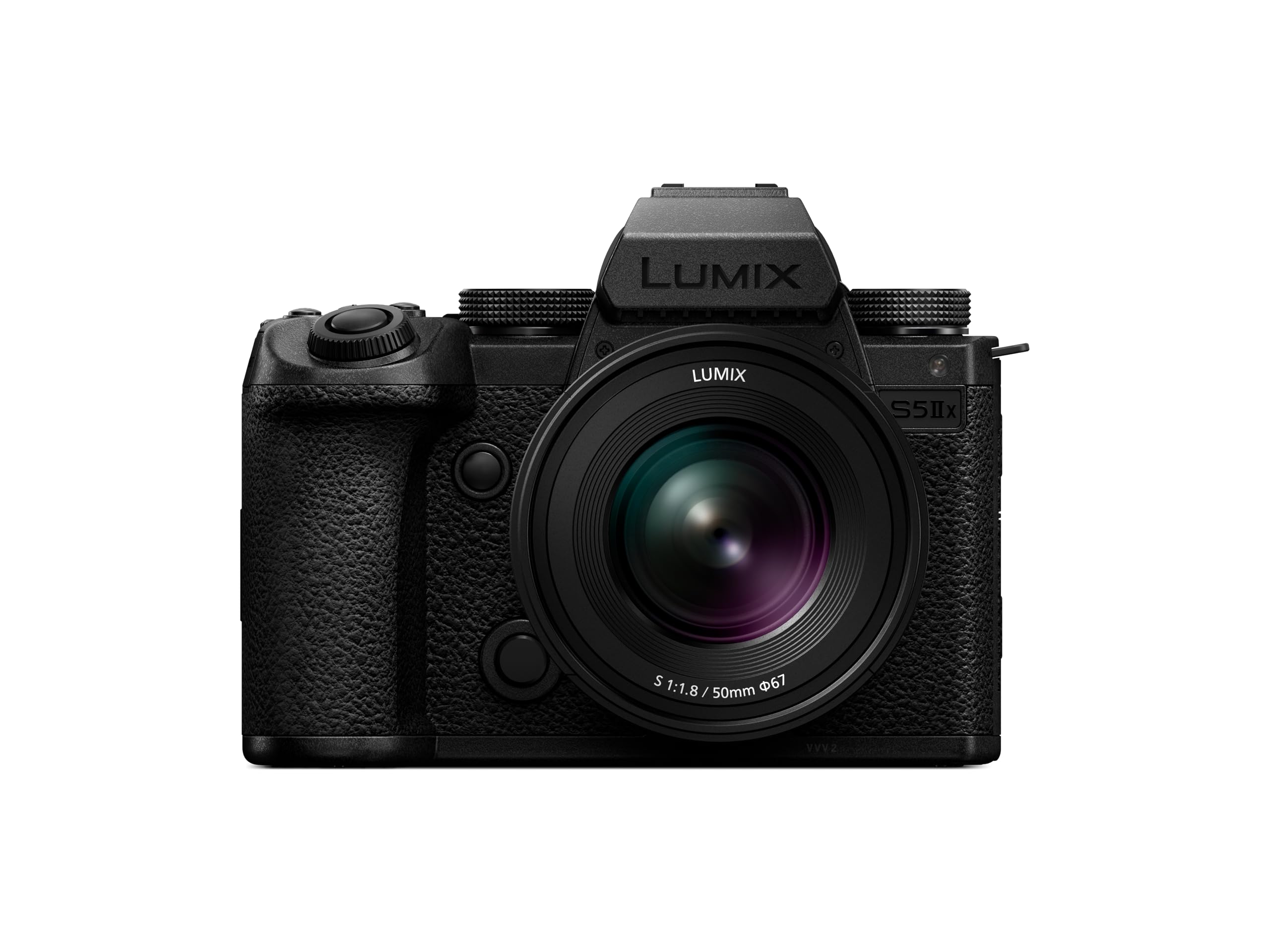
The Panasonic LUMIX S5IIX sits at the premium end of this guide as a full-frame mirrorless camera that offers beginners an extraordinary upgrade path. The 24.2MP full-frame CMOS sensor delivers 5.8K ProRes and RAW video output over HDMI, with 14+ stops of dynamic range through V-Log/V-Gamut capture. The Phase Hybrid autofocus system uses 779 phase-detection points, making it the most accurate and responsive autofocus system in this entire list, and the Active I.S. provides excellent stabilization for walking shots without a gimbal.
This kit includes the 20-60mm F3.5-5.6 and 50mm F1.8 lenses, giving you both a versatile zoom and a bright prime for low-light work right out of the box. The built-in cooling fan achieves unlimited 4K recording without overheating, and the camera supports wireless and wired IP streaming for live content. The dual SD card slots provide backup or overflow storage for long shoots.
The hardware investment is significant, and the feature set may overwhelm a complete beginner who wants simple point-and-shoot operation. The L-mount lens ecosystem, while growing, is smaller than Sony E-mount or Canon EF/RF. For a beginner who is serious about eventually producing broadcast-quality content and is willing to learn, the S5IIX is a future-proof platform that will serve for many years.
Why it’s great
- Full-frame sensor with 5.8K ProRes and RAW output
- 779 phase-detection AF points for best-in-class tracking
- Cooling fan enables unlimited 4K recording
- Two-lens kit provides both zoom and prime flexibility
Good to know
- Premium investment is high for a beginner
- L-mount lens ecosystem is smaller than Sony or Canon
- Complex menu system can overwhelm new users
FAQ
Is a 1-inch sensor good enough for indoor vlogging with low light?
Should I choose a camera with a built-in gimbal or buy a separate stabilizer?
How important is external microphone support for a beginner vlogger?
What is the real-world battery life I should expect from these cameras?
Final Thoughts: The Verdict
For most users, the camera for beginner vloggers winner is the DJI Osmo Pocket 3 Creator Combo because it delivers gimbal-smooth footage, reliable autofocus, and a complete creator kit in a pocket-friendly form factor. If you want interchangeable lens flexibility for future growth and prefer APS-C image quality, grab the Sony ZV-E10 Kit. And for wearable POV shooting that no traditional camera can match, nothing beats the Insta360 GO Ultra.

Mo Maruf
I created WellFizz to bridge the gap between vague wellness advice and actionable solutions. My mission is simple: to decode the research and give you practical tools you can actually use.
Beyond the data, I am a passionate traveler. I believe that stepping away from the screen to explore new environments is essential for mental clarity and physical vitality.