Our readers keep the lights on and my smoothie glass nicely filled. As an Amazon Associate, I earn from qualifying purchases.
Nothing kills the peace of a backyard gathering like the drone of a yellow jacket near your drink, or the sight of a paper wasp nest forming under your eaves. A dedicated spray delivers a targeted, high-velocity stream that knocks down stinging insects from a safe distance, eliminating the threat before anyone gets hurt.
I’m Mohammad Maruf — the founder and writer behind WellFizz. I spend my time analyzing shelf after shelf of aerosol insecticides, cross-referencing active-ingredient potency with user-reported knockdown speeds to find the formulations that actually work when you need them most.
This guide cuts through the marketing to deliver the only best bee killer spray options worth your money, ranked by reach, kill speed, and safety margin.
How To Choose The Best Bee Killer Spray
Picking the wrong aerosol can be the difference between a clean dispatch and an angry swarm. Focus on three core factors before you pull the trigger.
Spray Distance & Accuracy
A safe engagement range is non-negotiable. Most paper wasp and hornet nests are located under rooflines, inside eaves, or in high corners. A spray that reaches 15 feet lets you stand well out of the insects’ flight path. Premium formulas push to 20 or even 27 feet, and some include a precision nozzle or extension tube that delivers a tight stream rather than a mist, so you hit the nest without soaking surrounding surfaces.
Active Ingredient & Safety Profile
The chemical backbone determines knockdown speed and environmental impact. Pyrethroid-based sprays (permethrin, tetramethrin) offer near-instant paralysis and are the gold standard for large infestations, but they require caution around pets and pollinator plants. Plant-based options rely on geraniol or peppermint oil—safer for households with kids and animals, though sometimes slower to immobilize. Check whether the formula is “plastic-safe” if you are spraying near outdoor electrical boxes or PVC trim.
Application Method & Residual Action
Wet sprays coat the nest and kill on contact, but the effect is limited to what you hit. Foaming sprays expand into cavities, making them ideal for underground yellow jacket colonies or wall voids. For ground bees and digger nests, a powder or dust applicator (puffer bulb) delivers a persistent barrier that insects track into the colony. Choose a format that matches the nest location you are dealing with.
Quick Comparison
On smaller screens, swipe sideways to see the full table.
| Model | Category | Best For | Key Spec | Amazon |
|---|---|---|---|---|
| CRC 14010 | Rescue-Grade | Instant knockdown at distance | 20 ft spray / 47,600V dielectric | Amazon |
| Spectracide 3-Pack | Long-Range | High, hard-to-reach nests | 27 ft spray / 20 oz per can | Amazon |
| Bonide Spider & Ground Bee | Dust Applicator | Underground yellow jacket nests | 0.25% permethrin dust / 10 oz | Amazon |
| STEM Plant-Based | Pet-Safe | Households with pets & kids | 10 ft spray / botanical oils | Amazon |
| Spectracide Wasp & Hornet (2PK) | Foaming Action | Cavity and ground nests | Foaming formula / 40 oz total | Amazon |
In‑Depth Reviews
1. CRC 14010 Wasp and Hornet Killer Plus
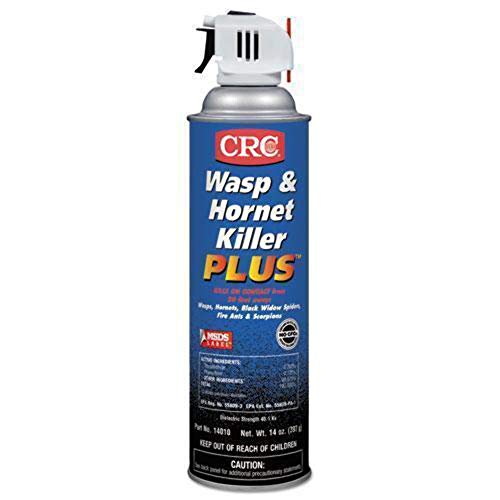
The CRC 14010 is the closest thing to a professional-grade aerosol you can pull off a shelf. Its stream reaches a verified 20 feet with dense, accurate coverage that soaks a nest in seconds. Users consistently report that wasps and hornets drop out of the air on contact — no chasing, no second spray needed. The formula carries a 47,600-volt dielectric rating, meaning it is safe to use near electrical boxes, junction covers, and outdoor utility equipment without risk of shorting.
Ergonomics are surprisingly thoughtful for a utility tool. The trigger is large enough to operate with gloved hands, and the extension tube locks under the trigger during storage, preventing accidental discharge. It targets more than just stinging wasps: black widow spiders, fire ants, and scorpions also succumb to the same high-strength pyrethroid blend, making this a multi-pest outdoor defense spray.
The one recurring complaint involves the nozzle assembly: a few customers reported the spray head detaching under pressure, requiring a two-hand grip to keep it seated. This is a minor confidence issue on an otherwise brutally effective can. If you need one-shot certainty against an aggressive hornet nest at the height of summer, this is the spray to reach for.
Why it’s great
- Instant knockdown on contact — insects stop moving immediately
- Long 20 ft reach allows safe engagement from ground level
- Plastic-safe formula with high dielectric strength for electrical areas
Good to know
- Nozzle can detach under heavy spray pressure
- Chemical odor is strong; wear a mask if sensitive
2. Spectracide Wasp and Hornet Killer 3-Pack

The Spectracide 3-Pack is built for the homeowner who has nests in truly awkward positions — under the peak of a two-story gable, inside a high attic vent, or across a fence line you cannot approach. The aerosol claims a 27-foot spray distance, and verified buyers confirm it reaches and soaks nests far above head height. Those extra few feet of stream translate directly into safety margin: you stand farther from the insects’ defensive flight zone.
Each can holds 20 ounces, giving you substantially more product per unit than the standard 14-ounce or 10-ounce offerings. The three-pack arrangement means you can keep one in the garage, one in the garden shed, and one for the car without worrying about running dry mid-job. The formula kills on contact and eliminates the nest itself, so re-infestation is less likely after treatment.
The spray is less precise than the CRC — it produces a wider foam pattern that can drift in wind, so you want to use it on calm evenings. A few users noted that the foaming action is aggressive and can leave visible residue on painted surfaces. Plan your approach accordingly, and this becomes the best option for tall or distant nests where every extra foot of reach matters.
Why it’s great
- Industry-leading 27 ft spray reach for high or distant nests
- Generous 20 oz per can in a convenient three-pack
- Kills on contact and eliminates the nest structure
Good to know
- Wide foam pattern can drift in wind
- Residue may leave visible marks on painted surfaces
3. Bonide 363 Spider and Ground Bee Killer

Wet aerosols struggle with underground nests because the liquid absorbs into soil before reaching the colony. The Bonide 363 solves that problem by delivering a fine permethrin dust through a snorkel-tube puffer. Users apply a light coating to the entrance hole of a ground bee or yellow jacket burrow, and the insects track the powder deep into the tunnels, effectively poisoning the entire colony from within.
The dust formula has a secondary advantage: it leaves a residual barrier that continues killing newly hatched or returning insects for days after application. This is especially useful for large colonies where a single aerosol blast might miss workers returning from forage. The 10-ounce bottle covers a surprising number of holes — experienced users treated 80% of their lawn entrances with two bottles and saw no activity after mowing.
The critical caveat is that permethrin dust is toxic to pollinators (bees, butterflies) and to cats if ingested. Do not puff the dust onto flowering plants or in areas where pets dig. Use a targeted application at dawn or dusk when ground bees are inside, and the Bonide becomes the most efficient tool for soil-level nest elimination.
Why it’s great
- Dust penetrates underground tunnels where liquid spray cannot reach
- Residual barrier kills returning insects for days
- Snorkel tube allows precise application into burrow openings
Good to know
- Permethrin is highly toxic to cats and pollinator insects
- Dust application requires calm, dry weather to avoid drift
4. STEM Kills Wasps, Hornets and Yellow Jackets

The STEM spray is the strongest option for anyone who prioritizes household safety over raw knockdown speed. Its active ingredients are plant-based botanical oils (primarily geraniol), and the formula contains no added dyes, synthetic fragrances, or harsh chemical odors. Verified buyers confirm it works on paper wasp nests of moderate size — typically 4 inches in diameter — with wasps dying within hours of contact. Users with dogs and young children specifically praised this option because it allows treatment near doorways and patios without evacuating the area.
The practical trade-off is that the botanical formulation does not produce the same instant paralysis as synthetic pyrethroids. Some users noted the spray left an oily residue on surfaces, including camera lenses and composite decking. The included nozzle delivers a stream that reaches roughly 10 to 15 feet after you remove the plastic tab and shake thoroughly — adequate for most eave-height nests but shorter than the top-tier synthetic sprays.
One nuance: the label color (orange, red, or purple) reportedly correlates with geraniol concentration and spray distance. The orange-labeled can seems to offer the best balance of potency and reach. If you need to dispatch a small-to-medium wasp nest and your priority is zero chemical fumes around family, the STEM spray does the job without the toxic baggage.
Why it’s great
- Plant-based formula with no harsh chemical odor
- Safe for use around people and pets when used as directed
- Entomologist-tested botanical blend effective on wasps
Good to know
- Slower knockdown than synthetic sprays — minutes to hours
- Oil-based residue can stain composite decking and lenses
5. Spectracide Wasp & Hornet Killer Aerosol (2-Pack)
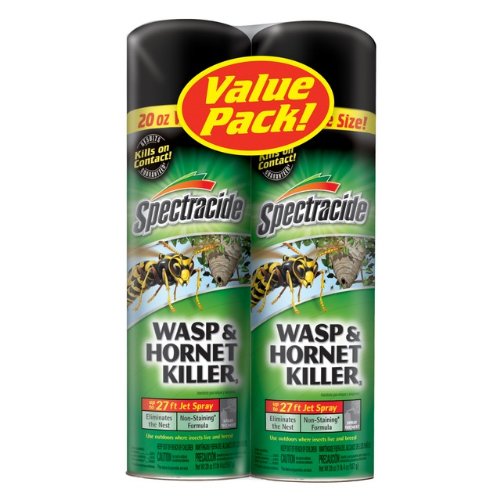
The two-pack of Spectracide Wasp & Hornet Killer brings a foaming formula that expands on contact, making it the right choice for nests tucked into wall voids, birdhouses, or cracks between stones. Liquid sprays run out of these cavities before fully coating the colony, but foam fills the space and traps the insects inside. Users reported that a single application to a large colony inside a birdhouse eliminated the infestation immediately, with no wasps escaping.
Each can holds 20 ounces, and the two-pack gives you 40 total ounces of product — enough volume to treat multiple nest sites or a single large infestation without rationing. The foam also acts as a visual marker, so you can see exactly where you have applied the chemical, reducing the risk of missed spots. The unscented formula avoids the cloying perfume of some competitors, though the chemical base is still potent and should not be inhaled directly.
One area where the foaming action falls short is yellow jacket ground nests. The foam tends to sit on top of the soil entrance rather than penetrating deep into the tunnels. If you are dealing specifically with underground colonies, the Bonide dust applicator above is a more reliable tool. For everything else — eaves, eaves, soffits, and structural gaps — the Spectracide foam delivers a satisfyingly complete kill.
Why it’s great
- Foaming formula expands into cavities and fills nest voids
- Two-pack provides 40 oz total — excellent volume for multiple nests
- Unscented formulation avoids strong chemical smells
Good to know
- Foam lacks penetration for underground yellow jacket tunnels
- Not as effective on paper wasp nests in open, exposed locations
FAQ
Can I use bee killer spray indoors?
How long does it take for plant-based spray to kill wasps?
Does bee killer spray work on yellow jacket ground nests?
What is the difference between wasp spray and bee spray?
Why does my bee killer spray leave a greasy residue?
Final Thoughts: The Verdict
For most users, the best bee killer spray winner is the CRC 14010 because its combination of instant knockdown, 20-foot reach, and dielectric safety make it the most capable single can for typical household wasp and hornet encounters. If you need to reach nests beyond 20 feet, grab the Spectracide 3-Pack for its 27-foot range and excellent value. And for underground yellow jacket colonies where liquid sprays fail outright, nothing beats the Bonide 363 dust applicator for total colony elimination within 24 hours.

Mo Maruf
I created WellFizz to bridge the gap between vague wellness advice and actionable solutions. My mission is simple: to decode the research and give you practical tools you can actually use.
Beyond the data, I am a passionate traveler. I believe that stepping away from the screen to explore new environments is essential for mental clarity and physical vitality.