Our readers keep the lights on and my smoothie glass nicely filled. As an Amazon Associate, I earn from qualifying purchases.
The promise of air tube headphones is straightforward: move the electrified speaker away from your ear canal and replace the copper wire with a hollow acoustic tube to slash your head’s exposure to radiofrequency radiation. But the category is littered with fragile connectors, hollow-sounding drivers, and earbuds that refuse to stay seated. The trick is finding a pair that delivers both genuine EMF reduction and audio that doesn’t make you reach for your old wired buds.
I’m Mohammad Maruf — the founder and writer behind WellFizz. I’ve combed through patents, lab verification claims, and hundreds of customer feedback entries to sort the air tube headphones that actually hold up from the ones that snap, hiss, or slip after a few weeks.
Whether you are shopping for yourself or a family member concerned about long-term exposure, this guide walks through the most reliable best air tube headphones for emf protection on the market right now, ranked by build durability, sound quality, and real-world fit.
How To Choose The Best Air Tube Headphones For EMF Protection
Not all air tube headphones are created equal. The design is mechanically simple — a hollow tube carries sound from a remote speaker to your ear — but the execution varies wildly. Some models use thin, brittle plastic that cracks at the connector within months. Others pack surprisingly capable drivers that deliver punchy bass, while competitors sound like you’re listening through a drinking straw. Here are the specific factors that separate a worthwhile purchase from a frustrating one.
Verify the Actual Air Tube
Some products labeled “air tube” rely almost entirely on shielded copper wiring and place the speaker only a centimeter away from the ear. True models feature a visible, flexible, hollow tube — typically 4 to 8 inches long — between the earbud and the speaker housing. If the wire is solid all the way to the bud, you aren’t getting real EMF reduction. Look for product images that show a distinct gap or bulge near the ear, which is where the tube connects to the earbud housing.
Check the Connector Durability
The joint where the air tube meets the speaker housing is the single most common failure point reported across the category. Buyers frequently report the tube pulling out or the wire snapping at the base after three to four months. Models with a reinforced collar or a strain-relief boot at this junction generally survive longer. If the product page shows a bare plastic tube entering a smooth housing without any visible reinforcement, expect a shorter lifespan.
Assess Earbud Weight and Fit
Because the speaker is moved lower down the cord, the earbud itself is just a plastic or metal housing with an acoustic channel. This makes some buds extremely light, which is good for comfort but can cause them to slide out during movement. Other models add metal rings or heavy housings that clank against your collarbone or fall out when you turn your head. Multiple tip sizes — silicone and foam — are essential for achieving a secure seal. Without a good seal, bass response drops dramatically and the perceived sound quality suffers.
Understand Driver Size and Sound Signature
Air tube headphones typically use 8mm to 10mm drivers housed in a separate enclosure on the cord. The sound signature is almost always less bass-heavy than standard in-ear monitors because the tube itself acts as a low-pass filter, rolling off sub-bass frequencies. The best units compensate with a slightly larger driver or a tuned acoustic chamber inside the housing. If you listen to bass-heavy genres, look for models that specifically mention “bass drivers” or “metal speaker chambers” that improve resonance.
Quick Comparison
On smaller screens, swipe sideways to see the full table.
| Model | Category | Best For | Key Spec | Amazon |
|---|---|---|---|---|
| DefenderShield EMF Radiation-Free | Premium | Secure active fit + best audio | 8-inch tube, copper-infused braid | Amazon |
| Symphonized Premium Airtube | Premium | Rich 3D sound with wood housing | 8mm bass driver, real wood encl. | Amazon |
| RadiArmor Anti-Radiation | Mid-Range | Lab-verified 99.9% RF reduction | Shielded wire + air tube combo | Amazon |
| SYB Shield Your Body Air Tube | Mid-Range | Durable 2-year build + carrying case | 8mm dynamic driver | Amazon |
| Aircom A3 Active Air Tube | Mid-Range | Best sound among air tubes tested | Airflow tech, magnetic end caps | Amazon |
| SafeSleeve Anti-Radiation Free | Budget-Friendly | Entry-level price with carrying case | Aluminum metal earbuds | Amazon |
| ibrain Air Tube Headphones | Budget-Friendly | Lowest cost entry point | 20+ years air tube mfr. | Amazon |
In‑Depth Reviews
1. DefenderShield EMF Radiation-Free Earbuds

The DefenderShield is the most well-rounded air tube headphone currently available, combining the longest physical tube in the category — a full 8 inches — with a copper-infused braided cord that provides additional ELF mitigation. The metal speaker chambers improve resonance, giving the audio a clarity and fullness that most competitors lack, especially in the midrange where vocal intelligibility matters most for podcasts and calls.
The kit includes three silicone ear tip sizes and three interchangeable sports tips, along with a pair of shirt clips and a drawstring pouch. That clip system is critical here: the earbuds themselves are lightweight but tend to shift during chewing or leaning over, and the clips anchor the cord to your collar, keeping the tube geometry stable. The controls — a single-button inline remote with microphone — are basic but reliable, and the lack of active noise cancellation is intentional to keep electrical components away from your head.
The biggest trade-off is durability over time. A subset of users report the speaker housing failing within a year, and the warranty process has drawn complaints. At the premium end of the price spectrum, you are paying for the most thoroughly engineered air tube design and the best out-of-box audio, but you should budget for a possible replacement down the line.
Why it’s great
- Longest air tube (8 inches) moves speaker far from ear
- Copper braided cord provides extra ELF shielding
- Comes with 6 earbud tips and shirt clips for active use
- Superior clarity and resonance for the category
Good to know
- Some units fail within 12 months at the speaker joint
- Earbuds can fall out during chewing or leaning without clips
- Higher price point than most competitors
2. Symphonized Premium Airtube Headphones
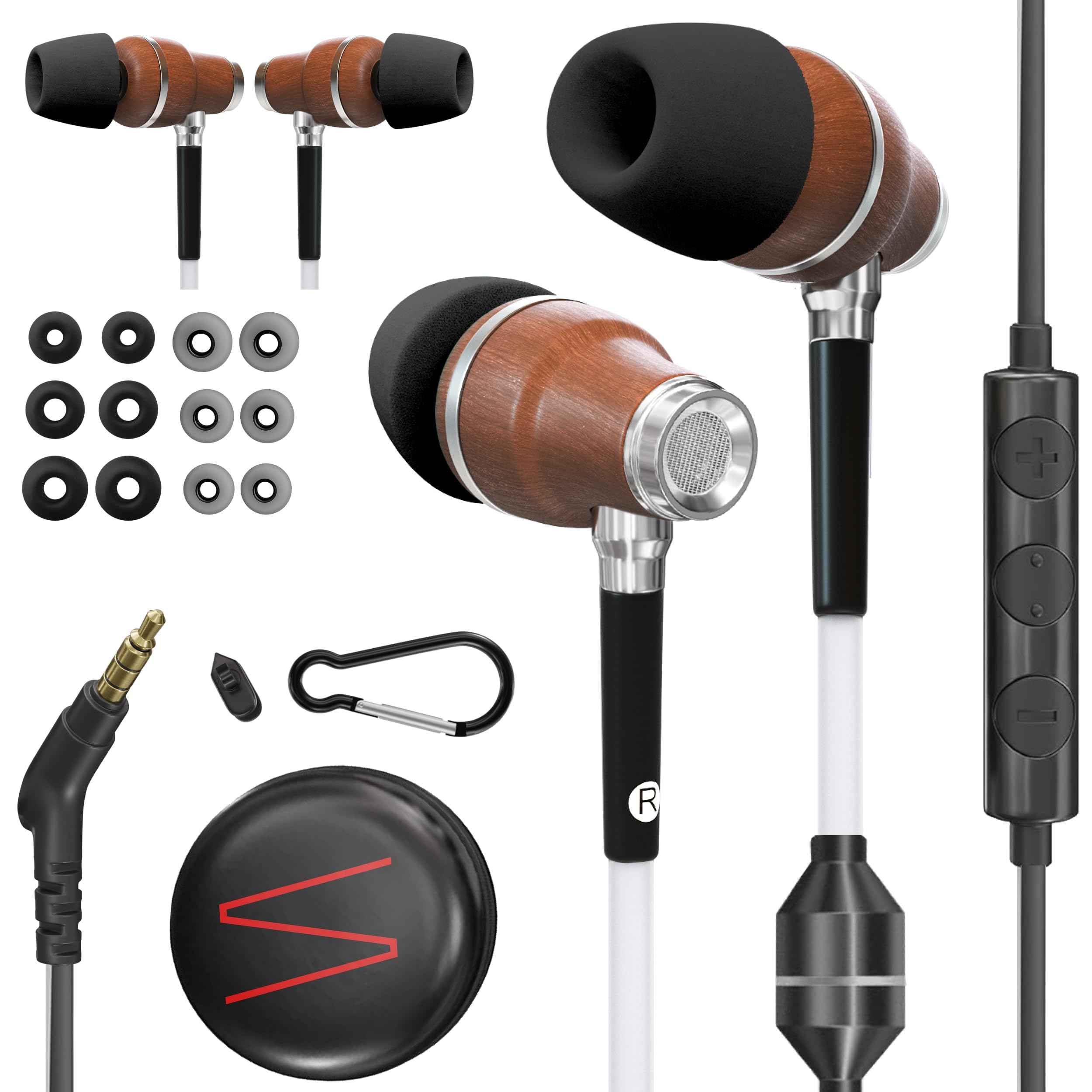
Symphonized takes a distinct approach to the air tube formula by encasing the remote driver in real bamboo wood. The natural wood housing isn’t just cosmetic — it contributes to a warmer, more resonant sound signature with noticeably better bass extension than most plastic-bodied air tube headphones. The 8mm dynamic driver can push enough low-end energy that with a little EQ adjustment, these approach the fullness of conventional wired earbuds.
The package includes both foam and silicone ear tips in multiple sizes, which is a welcome addition since foam tips improve both noise isolation and bass seal. The cable is standard rubber rather than braided, but the 3.5mm jack is reinforced at the base. Users consistently praise the clarity for both music and calls, and the inline microphone and single-button control work without issue across Android and iOS devices via a standard adapter.
The two-year failure point appears to be a recurring theme in user feedback — the left channel often cuts out due to a wire break inside the cable rather than the tube. That puts this model a step behind the DefenderShield in long-term reliability, but the sound quality punches well above its price tier. If you prioritize audio performance over absolute longevity, this is a strong contender.
Why it’s great
- Wood housing produces warmer, more resonant sound
- Includes both foam and silicone ear tips for custom fit
- Good bass extension after EQ adjustment
- Excellent value for the audio quality tier
Good to know
- Common wire failure at around the two-year mark
- No volume control on the inline remote
- Standard rubber cable can tangle easily
3. RadiArmor Anti-Radiation Air Tube Headphones

RadiArmor backs its EMF claims with third-party lab verification — the company states 99.9 percent radiation reduction compared to holding a phone to your ear and 98 percent compared to traditional or Bluetooth headphones. The design is straightforward: a shielded wire runs from the 3.5mm jack to a speaker housing about halfway down the cord, then transitions into a flexible air tube that terminates at a lightweight earbud. Two sizes of silicone ear tips are included.
The new updated earbuds are lighter than the original version, which helps with comfort during extended wear. The noise isolation is decent for a passive design — the flexible silicone tips block a fair amount of ambient noise, though not at the level of foam-tipped competitors. The inline controls cover volume up, volume down, and a multifunction call/music button, and the long tangle-free cord is practical for tucking your phone into a pocket or bag during calls or listening sessions.
The most common complaints center on the tube length being slightly short — the speaker housing sits closer to the collarbone than on the DefenderShield — and the earpieces can slip out during more dynamic movement. A subset of buyers also note that the music sound quality is only average compared to higher-end air tube models, though call clarity is reliably clear. The one-year hassle-free warranty provides a measure of protection that cheaper models lack.
Why it’s great
- Lab-verified 99.9% RF reduction claim
- Updated lightweight earbuds improve comfort
- Includes one-year warranty for peace of mind
- Good call clarity and reliable inline controls
Good to know
- Tube is shorter than category best, speaker sits higher
- Earbuds can slip out during active movement
- Music sound quality is average for the category
4. SYB Shield Your Body Air Tube Headset

The SYB headset is one of the more durable entries in the air tube market, with multiple user reports of surviving over two years of regular use — including one pair that was slept on by a dog and still functioned. The cord is longer than average and includes a clip for securing to clothing, though the metal earbud housings are on the heavier side. That weight can cause them to clank together at chest height during walking, which some users find annoying.
The sound quality is acceptable for the category, with an 8mm dynamic driver that delivers clear mids and highs but limited bass extension. The inline controls include volume, playback, and call-answering, and the microphone works well after a small repositioning to eliminate a reported “tunnel effect” for callers. The included carrying case is a hard plastic shell, much more protective than the soft pouches most competitors provide.
The main drawback is the fit during movement. The heavier earbuds tend to work their way out of the ear canal when turning the head, making these primarily suited for seated or stationary use. The cord also tangles easily in the case if not wound carefully. For a home or office setting where you will be sitting still for long calls, this is a solid, durable option that outlasts most of the competition.
Why it’s great
- Proven durability over 2+ years of daily use
- Hard protective carrying case included
- Full inline controls with volume and microphone
- Comfortable earbuds for stationary listening
Good to know
- Heavy metal earbuds clank together when walking
- Earbuds fall out during head movement
- Cord tangles inside the hard case
5. Aircom A3 Active Air Tube Headphones

The Aircom A3 is the first air tube headphone to implement what the company calls Airflow technology — an expanded acoustic chamber that gives sound waves more room to develop before entering the tube. The result is noticeably clearer and more natural sound than the majority of air tube designs, with better separation between highs, mids, and lows. Users who have compared a half-dozen air tube models consistently rank the A3 second only to the DefenderShield in audio quality.
The design includes Clic-it magnetic end caps on the earbud housings, which let the buds snap together around your neck when not in use — a simple but effective anti-tangle solution. The cable has a clip for anchoring to clothing, and the earbuds are shaped with a rounded tip that many users find comfortable for reclining or bed use. The in-ear fit, however, is polarizing: the “handle” piece that houses the tube connection is hard plastic, and the included tips may not create a secure seal for every ear shape.
The primary vulnerability is the same one that plagues the category: the connector joint. Multiple reports describe the air tube snapping near the earbud after a few months of use, and the company’s customer service has been described as unresponsive. The A3 also lacks an inline volume control, requiring you to adjust volume on the source device. For short-to-medium-term use in a stationary setting where sound quality is the top priority, this is the best-sounding mid-range option.
Why it’s great
- Best sound quality among mid-range air tube headphones
- Magnetic end caps prevent tangling when not in use
- Airflow chamber produces clearer, more natural audio
- Comfortable for reclining and stationary use
Good to know
- Tube connector joint is fragile, prone to snapping
- No inline volume control on the cable
- Fit is polarizing due to hard plastic handle piece
6. SafeSleeve EMF Protection Anti Radiation Free Air Tube Headphones

SafeSleeve positions itself as an accessible entry point into the air tube category, with aluminum metal earbuds that look more polished than the all-plastic alternatives at a similar price. The design uses standard air tube technology to move the speaker away from the ear, and the included zipper carrying case is a practical storage solution that reduces the likelihood of cord damage during transport — a real concern for entry-level buyers.
The inline microphone and On/Off – Play/Stop switch are functional, and the 3.5mm plug is compatible with most devices via an inexpensive adapter for newer smartphones. The three included silicone ear tip sizes allow for some fit customization, though the earbud shape is round and lacks the contoured angle that many ears need for a secure fit. This leads to one of the most common complaints: the earbuds feel awkward in the ear and tend to fall out during casual movement like walking or turning the head.
Sound quality is the weakest point. Multiple buyers describe the audio as muffled, with an echo effect during calls and clicking noises during podcast playback. The music experience is consistently rated as poor compared to conventional wired earbuds. For someone who prioritizes EMF reduction above all else and is willing to accept lower-grade audio for very occasional use, the SafeSleeve is a functional starter. For anyone who listens to music or takes calls regularly, the sound degradation will become a frustration quickly.
Why it’s great
- Aluminum earbuds feel more premium than plastic counterparts
- Zipper carrying case provides good storage protection
- Standard 3.5mm jack works with most devices via adapter
- Lowest barrier to entry into air tube technology
Good to know
- Sound quality is muffled with echo on calls
- Earbuds are uncomfortable and fall out easily
- Audio experience well below conventional earbuds
7. ibrain Air Tube Headphones EMF Free Airtube Earbuds

ibrain claims over 20 years of specialization in air tube technology and holds patents across multiple countries, which lends some credibility to their implementation. The gold-colored metal earbuds and retractable cable give the unit a distinctive look, and the company positions these as a perfect gift for family members concerned about EMF — including pregnant women and children. The 3.5mm jack is compatible with standard devices, and the frequency range covers 20 Hz to 20,000 Hz.
Sound quality is described as decent but inferior to active noise-cancelling earbuds, with a thin bass response that is typical of the category. The most defining characteristic of the ibrain, however, is its fragility. Multiple long-term users report the same failure pattern: the tube disconnects from the base or splits at the junction, exposing wires, usually within three to four months. Several buyers have gone through four pairs in a single year, and the 30-day warranty does little to cover this recurring defect.
For a budget entry, the ibrain works well out of the box — comfortable fit, clear mids, and a reliable inline microphone. But the structural weakness at the tube-to-housing joint makes it nearly impossible to recommend for regular use. If you need an occasional-use backup pair for a family member and are prepared to treat it as semi-disposable, it serves that limited role. For daily listening, the connector failure rate is too high to justify the purchase.
Why it’s great
- Patented air tube technology from a 20-year manufacturer
- Comfortable fit and clear mids for the price
- Retractable cable prevents cord tangles
- Lightweight and suitable for children
Good to know
- Tube connector fails within 3-4 months for many users
- 30-day warranty does not cover long-term durability
- Thin bass response even by air tube standards
FAQ
Do air tube headphones completely eliminate EMF radiation?
How long does the air tube typically last before breaking?
Can I use air tube headphones with a smartphone that has no headphone jack?
Will air tube headphones sound as good as regular wired earbuds?
Final Thoughts: The Verdict
For most users, the best air tube headphones for emf protection winner is the DefenderShield EMF Radiation-Free Earbuds because it combines the longest physical tube separation, the most secure fit options, and the best overall sound quality for daily calls and music listening. If you want rich, warm audio with a stylish design and prioritize sound over two-year durability, grab the Symphonized Premium Airtube Headphones. And for lab-verified RF reduction at a mid-range price with a one-year warranty, nothing beats the RadiArmor Anti-Radiation Air Tube Headphones.

Mo Maruf
I created WellFizz to bridge the gap between vague wellness advice and actionable solutions. My mission is simple: to decode the research and give you practical tools you can actually use.
Beyond the data, I am a passionate traveler. I believe that stepping away from the screen to explore new environments is essential for mental clarity and physical vitality.