Our readers keep the lights on and my smoothie glass nicely filled. As an Amazon Associate, I earn from qualifying purchases.
The chalky white film that clings to your shower door, the crusty deposits around your faucet base, and the dull haze on your glass enclosure all share one culprit — calcium carbonate and other hard water minerals. Brute scrubbing rarely touches it, and generic bathroom sprays just smear the residue around. A purpose-formulated remover uses mild acids to dissolve these mineral bonds without damaging your fixtures, restoring that just-installed transparency your shower had when it was new.
I’m Mohammad Maruf — the founder and writer behind WellFizz. My research focuses on decoding household cleaning chemistry and matching products to real-world water hardness levels so you don’t waste time on solutions that simply don’t bite.
After analyzing dozens of formulations, application methods, and user feedback across varying water hardness zones, I’ve narrowed the field to five standouts. This guide to the best calcium remover for showers breaks down what actually cuts through crystallized deposits versus what just smells nice while doing nothing.
How To Choose The Best Calcium Remover For Showers
Not all calcium removers are formulated alike. Some rely on gentle surfactants that work only on fresh residue, while others use stronger acids that can etch polished surfaces if left on too long. Understanding three key factors will save you from buying a product that either does nothing or damages your shower.
Acid Type and Concentration
Sulfamic acid-based formulas are the most common for household calcium removal because they dissolve calcium carbonate effectively without producing harsh fumes. Phosphoric acid options work faster on thick, layered deposits but require careful rinse timing. Citric acid variants are gentler on surfaces and safer for frequent use, though they may need longer dwell times on stubborn buildup. Check the active ingredient — not the brand name — to match the strength to your deposit thickness.
Surface Compatibility
Glass shower doors tolerate most acid-based descalers well as long as you rinse promptly. Chrome and stainless steel fixtures should only be cleaned with non-abrasive formulas to avoid pitting or microscratches. Natural stone tiles, such as marble or travertine, react badly to acidic cleaners and require pH-neutral alternatives. Enameled cast iron and acrylic shower bases also need gentler formulations to prevent dulling or yellowing over time.
Application Method and Dwell Time
Spray-on foam formulas cover large vertical surfaces like glass doors and wall tiles efficiently. Gel or paste versions cling better to textured surfaces such as shower floors and grout lines, giving the acid more contact time. Review the required dwell time — some products need ten to fifteen minutes to soften thick deposits, while others begin dissolving within a minute. Faster-acting options reduce the risk of surface damage from extended acid exposure.
Quick Comparison
On smaller screens, swipe sideways to see the full table.
| Model | Category | Best For | Key Spec | Amazon |
|---|---|---|---|---|
| CLR PRO 32 oz (2-Pack) | Industrial Strength | Thick, layered deposits | Sulfamic acid formula, 32 oz per bottle | Amazon |
| CLR Free & Clear 26 oz | Fragrance-Free | Sensitive users, daily spray | No dyes or fragrances, 26 oz trigger spray | Amazon |
| CRL Bio-Clean 16 oz | Premium Cream | Stubborn glass stains | Cream-based acid, 16 oz manual applicator | Amazon |
| Astonish Specialist 750ml | Multi-Surface | Light limescale upkeep | No-scrub eucalyptus formula, 750 ml | Amazon |
| RMR-86 32 oz (2-Pack) | Mold/Mildew Focus | Mold stains + calcium mix | Bleach-based, 32 oz per bottle | Amazon |
In‑Depth Reviews
1. CLR PRO Calcium, Lime & Rust Remover (32 oz, Pack of 2)

The CLR PRO delivers the most aggressive sulfamic acid formulation in this lineup, engineered specifically for commercial-grade descaling but sized appropriately for home use. Users consistently report that it dissolves hardened calcium rings around toilet bowls and thick crust on showerheads within minutes without requiring elbow grease. The two-bottle pack provides enough volume to treat an entire bathroom and kitchen, making it the most cost-effective option per ounce at this performance tier.
The EPA Safer Choice certification confirms that the formula avoids phosphates, ammonia, and bleach while still maintaining industrial-level dissolving power. Customer feedback highlights its effectiveness on rust stains alongside calcium — a rare dual capability that saves buying separate products for different mineral deposits.
The primary trade-off is fume intensity. Multiple reviews warn that the vapors are strong enough to require an open window and a mask during application, especially in enclosed shower stalls. It also demands closer attention to dwell time on chrome fixtures to avoid dulling the finish.
Why it’s great
- Fast-acting on thick, layered calcium deposits
- EPA-certified safer chemistry without phosphates or bleach
- Excellent value per ounce in the two-pack
Good to know
- Strong fumes require ventilation and mask
- Not ideal for gentle daily maintenance sprays
2. CLR Free & Clear Calcium, Lime & Rust Remover (26 oz)
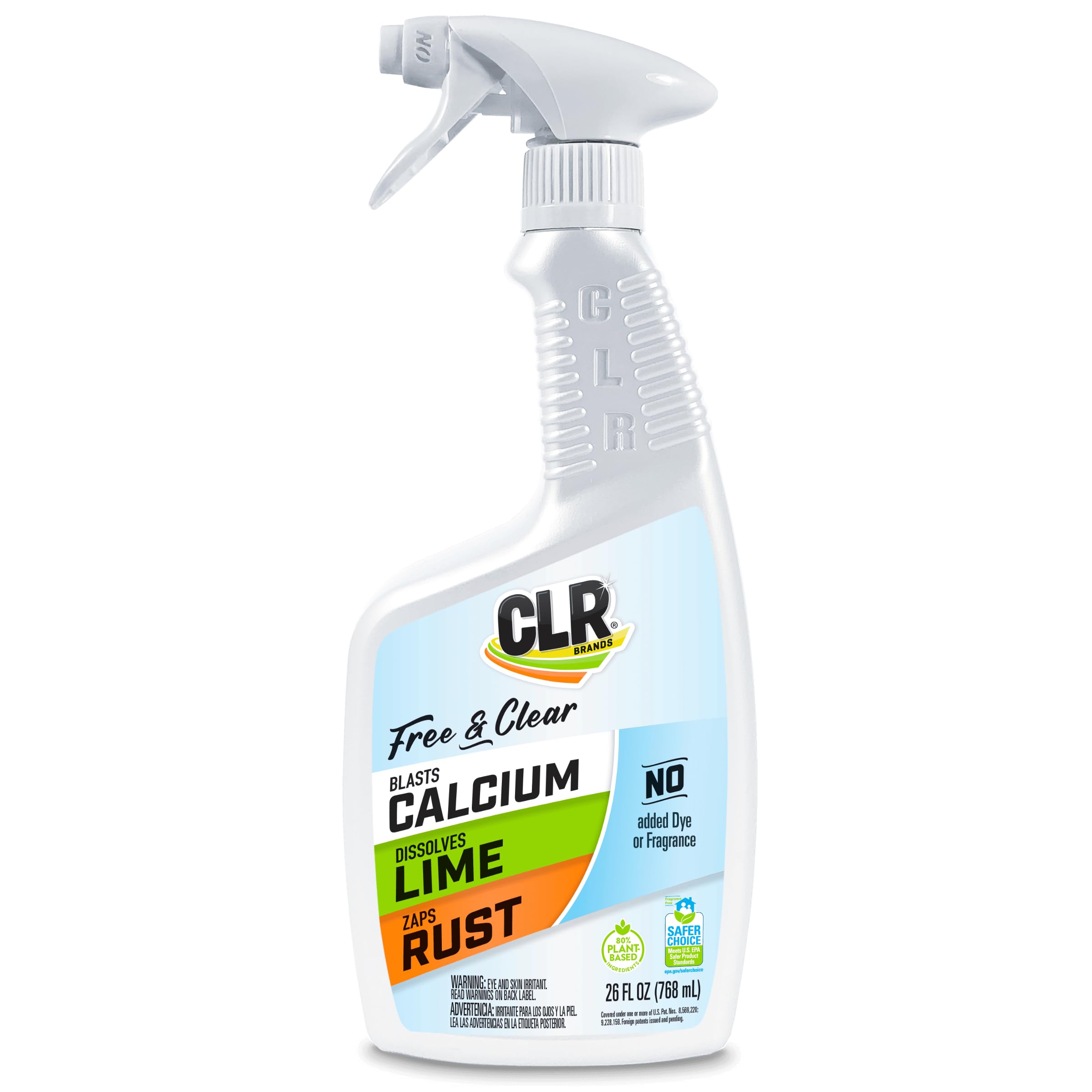
This fragrance-free variant of the trusted CLR formula solves a specific pain point for households where strong chemical scents trigger allergies or headaches. It uses the same sulfamic acid core chemistry that makes CLR effective on hard water stains, but removes both artificial dyes and masking fragrances. Users living with asthma or chemical sensitivity report being able to clean their shower without triggering respiratory reactions, a meaningful advantage over scented competitors.
The trigger spray format makes it convenient for weekly maintenance — a quick mist on shower glass and chrome fixtures followed by a rinse keeps calcium buildup from ever reaching crusty levels. Customer reviews consistently note that it dissolves fresh soap scum and hard water spotting almost instantly, though multiple users mention that old, deeply embedded limescale may require a longer soak or a second application.
The main limitation is that the absence of thickeners means the liquid runs down vertical surfaces faster than gel formulas, reducing contact time on walls. Users with heavy buildup in vertical applications may need to apply more generously or switch to a paste-style product for those spots.
Why it’s great
- No dyes or fragrances — ideal for sensitive users
- Effective daily maintenance spray for light buildup
- EPA Safer Choice certified
Good to know
- Thinner liquid runs off vertical surfaces quickly
- Less effective on thick, years-old deposit layers
3. CRL Bio-Clean Water Stain Remover (16 oz)

The CRL Bio-Clean stands apart from every other product in this guide because of its cream-based consistency. Rather than a watery spray that drips off glass, this thick paste clings to vertical shower doors and allows the acid to work on calcium deposits without running down to the track. Users describe applying it with a damp sponge, working it into the stain, and watching years of hard water etching disappear from glass panels that had been written off as permanently damaged.
Customer reviews from hard water regions consistently report that Bio-Clean removes stains that other products couldn’t touch — including seven-year-old deposits on windows and truck glass. The trade-off is that it requires manual application effort, not a simple spray-and-wipe. This is a high-performance tool for the user willing to invest ten to fifteen minutes of light scrubbing for results that rival professional restoration.
The 16-ounce bottle is smaller than spray options, and the thick formula means you use more per application. However, for the specific use case of clearing etched mineral haze from glass shower enclosures, no other product in this lineup matches its documented user satisfaction rate. Some reviews note mild microscratching on softer glass types if excessive pressure is used.
Why it’s great
- Cream formula clings to vertical glass surfaces
- Removes old, etched hard water stains others miss
- High satisfaction from users with extreme hard water
Good to know
- Requires manual application and some scrubbing
- Smaller bottle at a higher per-use cost
4. Astonish Specialist Ultimate Limescale Remover (750ml)

Astonish positions this spray as a fast-acting, no-scrub solution for limescale and hard water stains, and it delivers well on light to moderate buildup. The eucalyptus scent is genuinely pleasant — a refreshing change from the chemical odor most descalers emit — making it a reasonable choice for households that prioritize a pleasant cleaning experience. The 750 ml bottle provides good volume at an accessible price point for initial entry into specialty cleaning.
Customer feedback reveals a clear split based on deposit severity. Users dealing with fresh soap scum and light mineral haze find it works with minimal effort. However, multiple reviews note that older, thickened calcium deposits require repeated applications and still may not fully dissolve. The spray nozzle was cited by one user as failing after two uses, which could be an isolated quality control issue but is worth noting for heavy-use households.
The formula’s cruelty-free and vegan certification appeals to ethically minded buyers, but the primary drawback is its limited power ceiling. This is a maintenance product for monthly upkeep in areas with moderate water hardness, not a restoration tool for neglected shower doors with years of buildup.
Why it’s great
- Pleasant eucalyptus scent — less chemical odor
- Works fast on light limescale and soap scum
- Cruelty free and vegan friendly
Good to know
- Struggles with thick, old calcium deposits
- Spray nozzle durability has some mixed reports
5. RMR-86 Instant Mold and Mildew Stain Remover (32 oz, Pack of 2)

RMR-86 is not a dedicated calcium remover — its primary chemistry targets mold and mildew staining through a bleach-based formula. It earns a place in this guide because many showers face a combined problem: calcium scale mixed with mold growth in grout lines, corners, and along the bottom track. Users who need single-product coverage for both issues will find that RMR-86 obliterates black mildew stains within fifteen seconds while also bleaching out the organic matter trapped in calcium deposits.
The performance on mold is genuinely unmatched — reviews consistently report that years of dark staining on ceilings and grout disappear with one spray. However, it does not dissolve calcium the way an acid-based descaler does. You would still need a dedicated calcium remover for thick mineral crust, then follow up with RMR-86 for the biological staining that often accompanies neglected showers.
The strongest caution across every review is fume intensity. Multiple users emphasize that a full-face respirator and chemical gloves are mandatory, not optional. The vapors are strong enough to cause burning eyes and throat even in ventilated rooms. This is a powerful tool that must be treated with professional-grade respect.
Why it’s great
- Instant mold and mildew stain removal in seconds
- Prevents biological regrowth for months
- Two-bottle pack covers large areas
Good to know
- Bleach-based — does not dissolve calcium mineral deposits
- Extremely strong fumes require full PPE
FAQ
Can I use a calcium remover on my marble shower floor?
Why does my calcium remover leave a white haze after drying?
How often should I use a calcium remover to prevent buildup?
Final Thoughts: The Verdict
For most users, the best calcium remover for showers winner is the CLR PRO 32 oz Two-Pack because it combines industrial-strength dissolving power with EPA-certified safer chemistry at the best per-ounce value. If you need a fragrance-free option for chemical sensitivity, grab the CLR Free & Clear 26 oz. And for restoring etched glass shower doors that other products couldn’t fix, nothing beats the CRL Bio-Clean 16 oz cream formula.

Mo Maruf
I created WellFizz to bridge the gap between vague wellness advice and actionable solutions. My mission is simple: to decode the research and give you practical tools you can actually use.
Beyond the data, I am a passionate traveler. I believe that stepping away from the screen to explore new environments is essential for mental clarity and physical vitality.