Our readers keep the lights on and my smoothie glass nicely filled. As an Amazon Associate, I earn from qualifying purchases.
Pushing 4K at 120 frames per second demands a monitor that balances pixel density, refresh rate, and panel technology without compromise. The difference between a mediocre 4K 120Hz display and a great one comes down to contrast ratios, color volume, and how well the monitor handles motion resolution at high frame rates. This is the threshold where gaming and professional workflows converge, and the wrong choice here means either washed-out HDR or visible motion blur.
I’m Mohammad Maruf — the founder and writer behind WellFizz. My research focuses on analyzing display hardware specifications, panel technologies, and real-world performance data to help buyers sort through the clutter of refresh rate claims and color gamut numbers.
After evaluating over a dozen panels across IPS, VA, QD-OLED, and WOLED technologies, this guide presents the best options for a 4k 120hz monitor that actually delivers on its specs without hidden tradeoffs.
How To Choose The Best 4K 120Hz Monitor
A 4K 120Hz monitor is a long-term investment in your visual experience, whether for gaming, creative work, or everyday productivity. The panel technology you choose — OLED, IPS, or VA — will dictate everything from contrast ratio to motion clarity. Before clicking buy, weigh how each spec directly affects your daily use.
Panel Technology: OLED vs IPS vs VA
OLED offers infinite contrast and per-pixel lighting, meaning blacks are truly black and HDR content looks spectacular. QD-OLED panels from Samsung and MSI push color volume further with quantum dot layers, while LG’s WOLED provides excellent brightness with Micro Lens Array technology. IPS panels from LG and ASUS offer faster response times than VA, but they cannot match OLED’s black depth. VA panels, like the Samsung Odyssey G7’s 3000:1 native contrast, sit between the two, but their slower pixel transitions can introduce ghosting in fast scenes.
Refresh Rate and Response Time Versus Real-World Use
Native 120Hz is the floor for smooth 4K gaming on consoles and modern GPUs. However, many monitors advertise dual-mode capabilities — switching between 4K at higher refresh rates (165Hz–240Hz) and 1080p at even higher rates (320Hz–360Hz). Response times quoted as 0.03ms (GtG) are typical for OLED, while 1ms is standard for fast IPS. The lower the response time, the less motion blur you’ll perceive during fast-paced titles.
Connectivity and Bandwidth: Don’t Get Stuck at 60Hz
To drive 4K at 120Hz with 10-bit color and HDR, you need HDMI 2.1 (48Gbps bandwidth) or DisplayPort 1.4 with DSC (Display Stream Compression). Older HDMI 2.0 ports cap out at 4K 60Hz. USB-C with DP Alt Mode is a bonus for laptop users, as it can deliver video and daisy-chain power delivery.
Quick Comparison
On smaller screens, swipe sideways to see the full table.
| Model | Category | Best For | Key Spec | Amazon |
|---|---|---|---|---|
| MSI MPG 321URX QD-OLED | Premium QD-OLED | Gaming & HDR | 240Hz, 0.03ms, True Black 400 | Amazon |
| LG 32GX850A-B UltraGear OLED | Premium WOLED | Competitive & console | 165Hz (330Hz dual), 0.03ms | Amazon |
| ASUS ROG Swift PG32UCDM | Premium QD-OLED | No-compromise HDR | 240Hz, 0.03ms, Dolby Vision | Amazon |
| ASUS ROG Strix XG32UCG | Mid-Range Fast IPS | Versatile use | Dual Mode 4K 160Hz/FHD 320Hz | Amazon |
| Dell UltraSharp U2725QE | Mid-Range IPS Black | Professional work | 120Hz, 5ms, Thunderbolt 4 | Amazon |
| Alienware AW3225QF | Premium QD-OLED | Premium gaming | 240Hz, QD-OLED, Dolby Vision | Amazon |
| LG 27G810A-B UltraGear | Mid-Range Fast IPS | High frame rate esports | Dual Mode 4K 180Hz/FHD 360Hz | Amazon |
| Samsung Odyssey G7 G75F | Premium VA Curved | Immersive ultrawide | 180Hz, 1ms, HDR600 | Amazon |
| KTC 32″ Fast IPS | Budget IPS | Value 4K gaming | 165Hz, 1ms, 3000:1 contrast | Amazon |
| BenQ SW272U | Professional IPS | Photography editing | 60Hz, 99% Adobe RGB, 16-bit LUT | Amazon |
| Acer Predator X27U | Budget QD-OLED | Budget OLED gaming | 240Hz, 0.03ms, WQHD | Amazon |
In‑Depth Reviews
1. MSI MPG 321URX QD-OLED

The MSI MPG 321URX delivers a 32-inch 4K QD-OLED panel with a 240Hz refresh rate and 0.03ms GtG response time, making it one of the fastest 4K monitors available. The quantum dot layer pushes DCI-P3 coverage to 99% with a Delta E ≤ 2, so colors appear vibrant and accurate straight out of the box. VESA DisplayHDR True Black 400 certification means HDR highlights hit 1000 nits peak while maintaining deep, inky blacks on the 1.07 billion color palette.
The monitor includes HDMI 2.1 ports that fully support 4K at 120Hz with 10-bit color on both PC and consoles, plus a USB-C port with 90W power delivery for laptop connectivity. OLED Care 2.0 handles pixel refresh and burn-in mitigation automatically, and the 3-year warranty covers the panel against image retention. The 4-way adjustable stand offers tilt, swivel, pivot, and height adjustments for ergonomic setups.
Text clarity on the QD-OLED panel is slightly softer than on high-end IPS monitors due to the subpixel layout, but at normal viewing distances, the difference is negligible for productivity tasks. The matte coating effectively reduces reflections without introducing excessive grain. If you want the best balance of motion clarity, color accuracy, and HDR performance for both gaming and creative work, this is the benchmark.
Why it’s great
- Infinite contrast ratio with perfect blacks for HDR content
- 240Hz refresh rate eliminates motion blur in fast-paced titles
- KVM switch supports PiP/PbP for multi-device workflows
Good to know
- Standard stand lacks height adjustment on some units
- QD-OLED text fringing is visible on white backgrounds at close range
2. LG 32GX850A-B UltraGear OLED
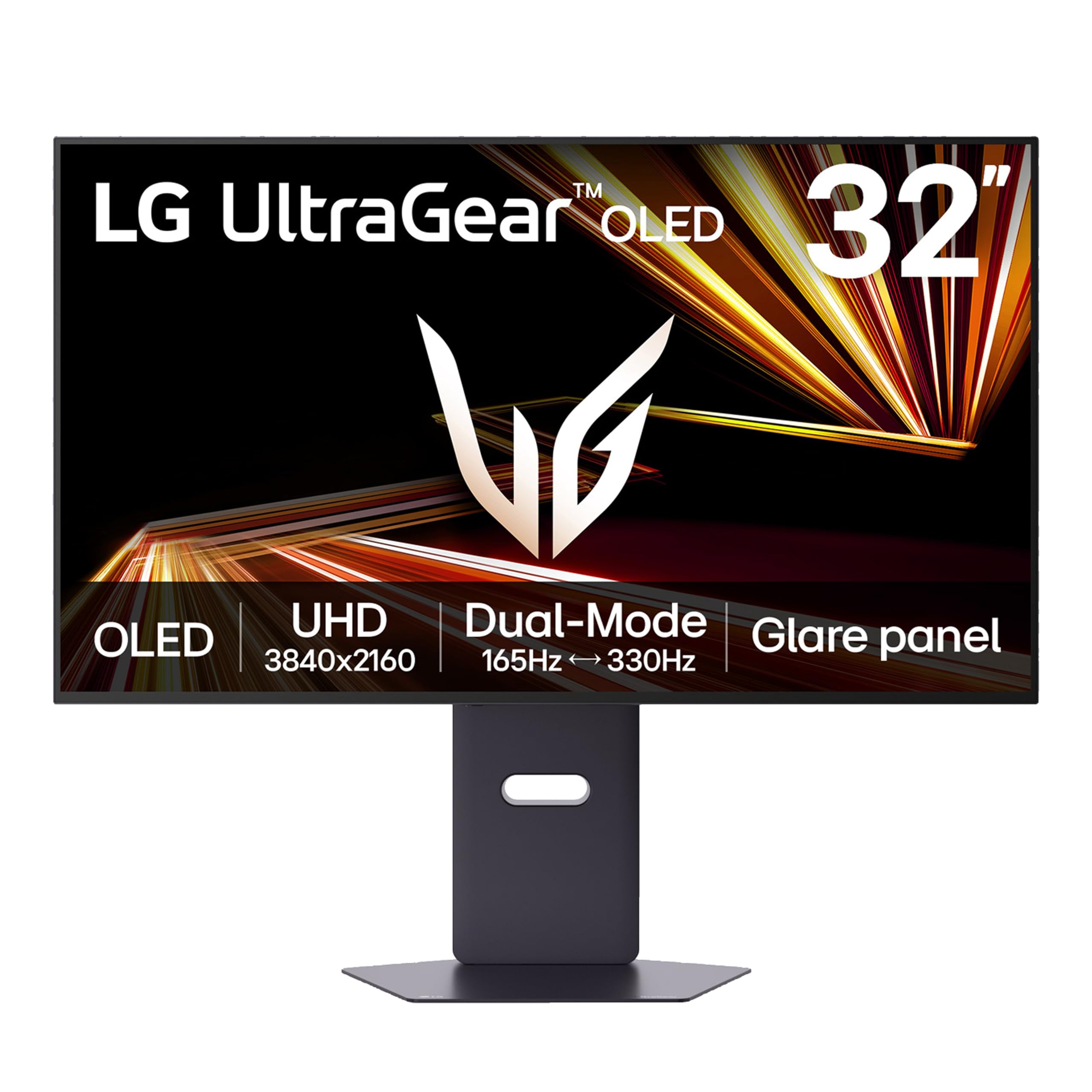
LG’s 32GX850A-B uses a glossy WOLED panel with Micro Lens Array+ technology to deliver a typical brightness of 275 nits and improved viewing angles compared to earlier OLEDs. The 4K 165Hz native refresh rate can be doubled to 1080p 330Hz via hotkey, which is useful for competitive shooters. The 0.03ms response time ensures zero perceptible ghosting at any frame rate.
VESA DisplayHDR True Black 400 certification comes with a 1.5M:1 contrast ratio, giving HDR content the deep black levels and punchy highlights that OLED is known for. The monitor includes both G-Sync and FreeSync Premium Pro for smooth variable refresh rate playback across NVIDIA and AMD GPUs. The UL-certified flicker-free and low blue light features reduce eye strain during extended sessions.
The glossy screen reflects light more aggressively than matte alternatives, so you’ll want to control room lighting. Some users report coil whine from the internal fan at low volumes, but this is generally not audible with audio or gameplay active. For the price, this WOLED offers a bright, responsive 4K 120Hz experience without the premium of QD-OLED.
Why it’s great
- True 4K 165Hz with dual-mode for 330Hz at 1080p
- Excellent color accuracy and deep black levels
- Solid build with metal frame and adjustable stand
Good to know
- Glossy panel shows reflections in bright rooms
- Internal fan emits noticeable noise in silent environments
3. ASUS ROG Swift PG32UCDM

The ROG Swift PG32UCDM features a 32-inch QD-OLED panel with a custom heatsink and graphene film designed to reduce burn-in risk by improving heat dissipation. The 4K 240Hz refresh rate and 0.03ms response time make it equally suited for high-frame-rate competitive gaming and cinematic single-player titles. Peak brightness reaches 1000 nits on small HDR highlights, and the panel supports Dolby Vision alongside HDR10 for comprehensive HDR coverage.
Color accuracy is factory-calibrated to Delta E < 2 with 99% DCI-P3 coverage, and the 10-bit panel delivers smooth gradients without banding. The monitor includes three USB 3.2 Gen 1 ports, a USB-C port with 90W power delivery, and two HDMI 2.1 ports for console connectivity. DisplayWidget Center software lets you adjust OLED Care settings and monitor parameters with a mouse rather than the joystick.
The semi-gloss coating reduces glare better than a pure glossy finish while maintaining image clarity. The 3-year warranty includes burn-in coverage, which is crucial for long-term ownership. If cost is less of a concern and you want the best HDR and motion clarity available, the PG32UCDM is the top-tier pick for both gaming and media consumption.
Why it’s great
- 1000 nits peak brightness for stunning HDR
- Dolby Vision and HDR10+ support for versatile HDR
- Burn-in coverage included in 3-year warranty
Good to know
- Premium price point limits accessibility
- Semi-gloss coating still shows reflections in direct light
4. ASUS ROG Strix XG32UCG
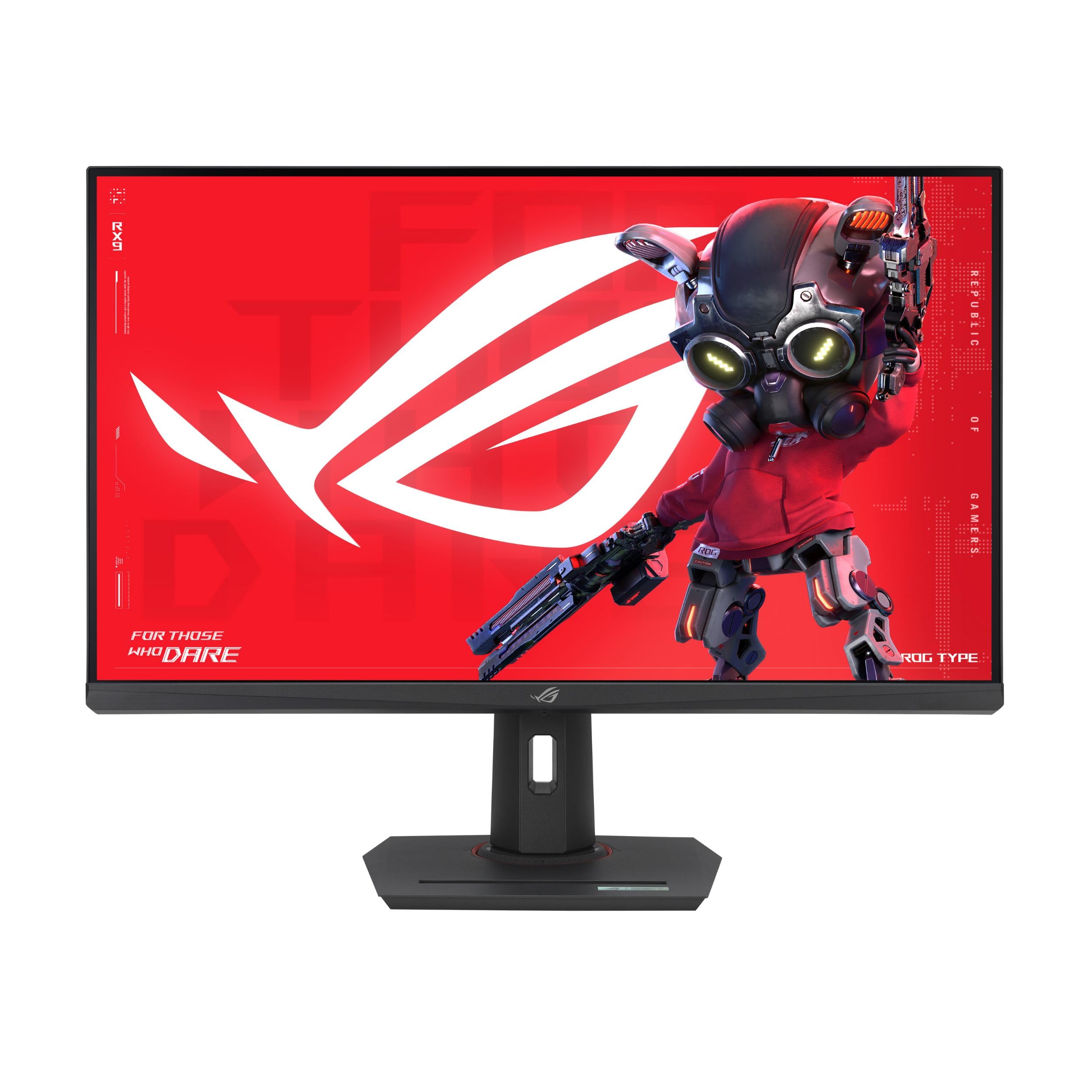
The ROG Strix XG32UCG uses a 32-inch Fast IPS panel with dual-mode capability: 4K at 160Hz or Full HD at 320Hz. The 0.3ms minimum response time is faster than standard IPS panels and approaches the responsiveness of some lower-tier OLEDs. ASUS’s Extreme Low Motion Blur Sync (ELMB SYNC) technology allows you to use backlight strobing simultaneously with variable refresh rate for exceptionally clear motion.
Color coverage hits 130% sRGB and 95% DCI-P3, making it suitable for both gaming and color-sensitive professional tasks like photo editing. The USB-C port with DP Alt Mode supports single-cable connectivity for laptops, and the integrated tripod socket is a novel feature for streamers mounting cameras. The 4-way ergonomic stand includes height, tilt, swivel, and pivot adjustments.
The Fast IPS panel cannot match OLED’s black levels — the static contrast ratio of 1000:1 is typical for IPS, so HDR content lacks depth in dark scenes. However, the 1199 nit peak brightness capability (via dynamic contrast) makes highlights pop in well-lit rooms. If you need a large 4K 120Hz monitor that works equally well for office tasks, console gaming, and PC esports, this is the most versatile mid-range option.
Why it’s great
- Dual-mode at 4K 160Hz or FHD 320Hz for versatile performance
- ELMB SYNC combines strobing with VRR for sharp motion
- Extensive ergonomic adjustments and built-in tripod socket
Good to know
- IPS contrast ratio limits HDR black depth
- Built-in speakers are underpowered for immersive audio
5. Dell UltraSharp U2725QE
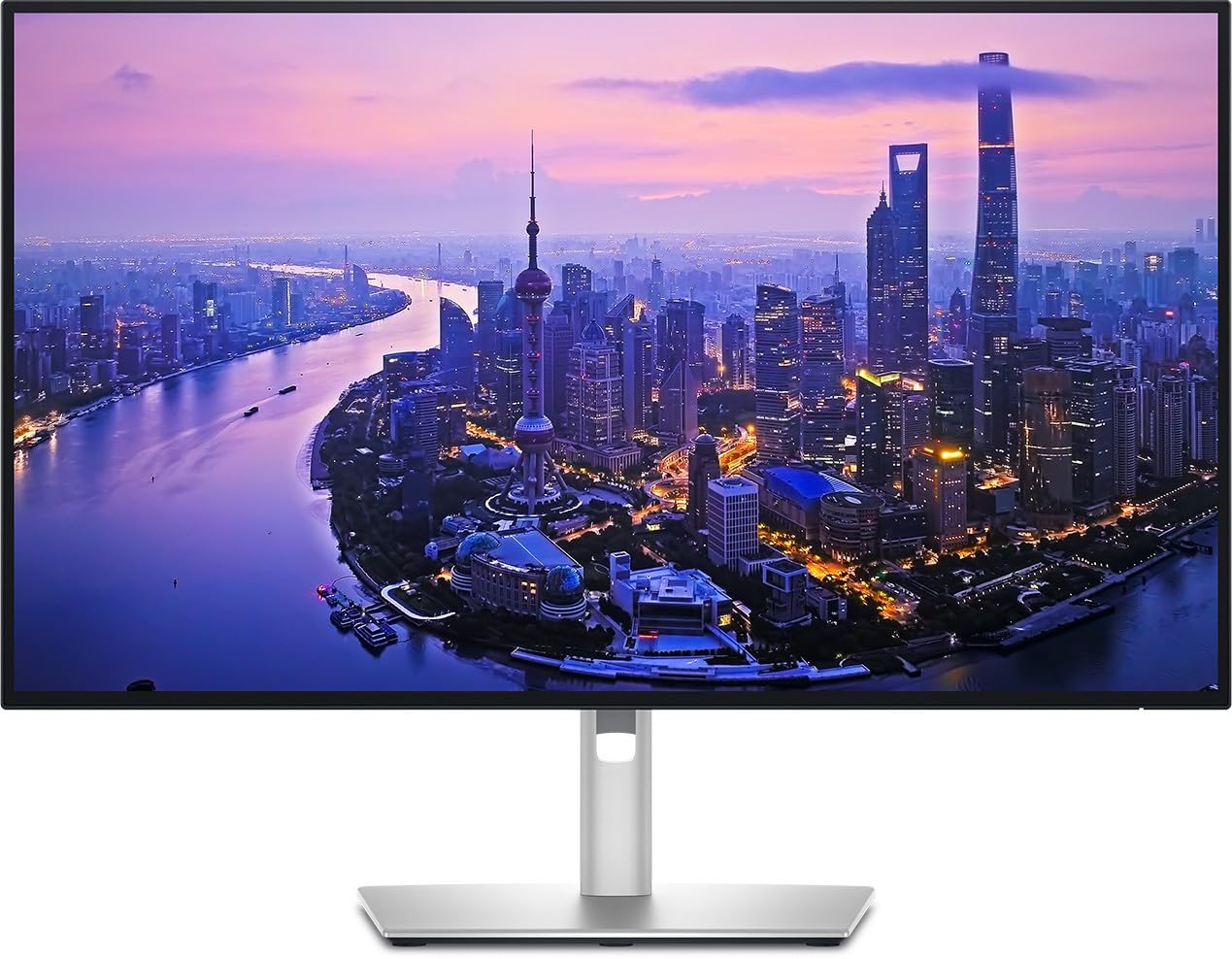
The Dell UltraSharp U2725QE is the standout option for professionals who need 4K 120Hz for productivity. The 27-inch IPS Black panel offers a 2000:1 native contrast ratio — twice that of standard IPS — resulting in deeper blacks and better shadow detail for photo editing and design work. Factory calibration to Delta E < 1.5 with 99% DCI-P3 ensures colors are accurate from the start.
Thunderbolt 4 provides 140W power delivery over a single cable, making this an ideal hub for compatible laptops. The monitor also includes HDMI 2.1, USB-C, USB-A ports, and a 2.5Gb Ethernet port. ComfortView Plus reduces harmful blue light without shifting the color tone to yellow, and the ambient light sensor adjusts brightness automatically in changing room lighting.
The 5ms response time is slower than gaming-oriented monitors, so motion clarity in fast-paced titles is less sharp. This is not a monitor for competitive esports. However, for all-day professional use where color accuracy, connectivity, and eye comfort are priorities, the U2725QE delivers a premium experience that few gaming monitors can match.
Why it’s great
- 140W Thunderbolt 4 power delivery simplifies laptop setup
- IPS Black technology doubles contrast ratio over standard IPS
- Factory color calibration ensures Delta E < 1.5 accuracy
Good to know
- 5ms response time is too slow for competitive gaming
- Mac users report compatibility issues with Thunderbolt connection
6. Samsung Odyssey G7 G75F
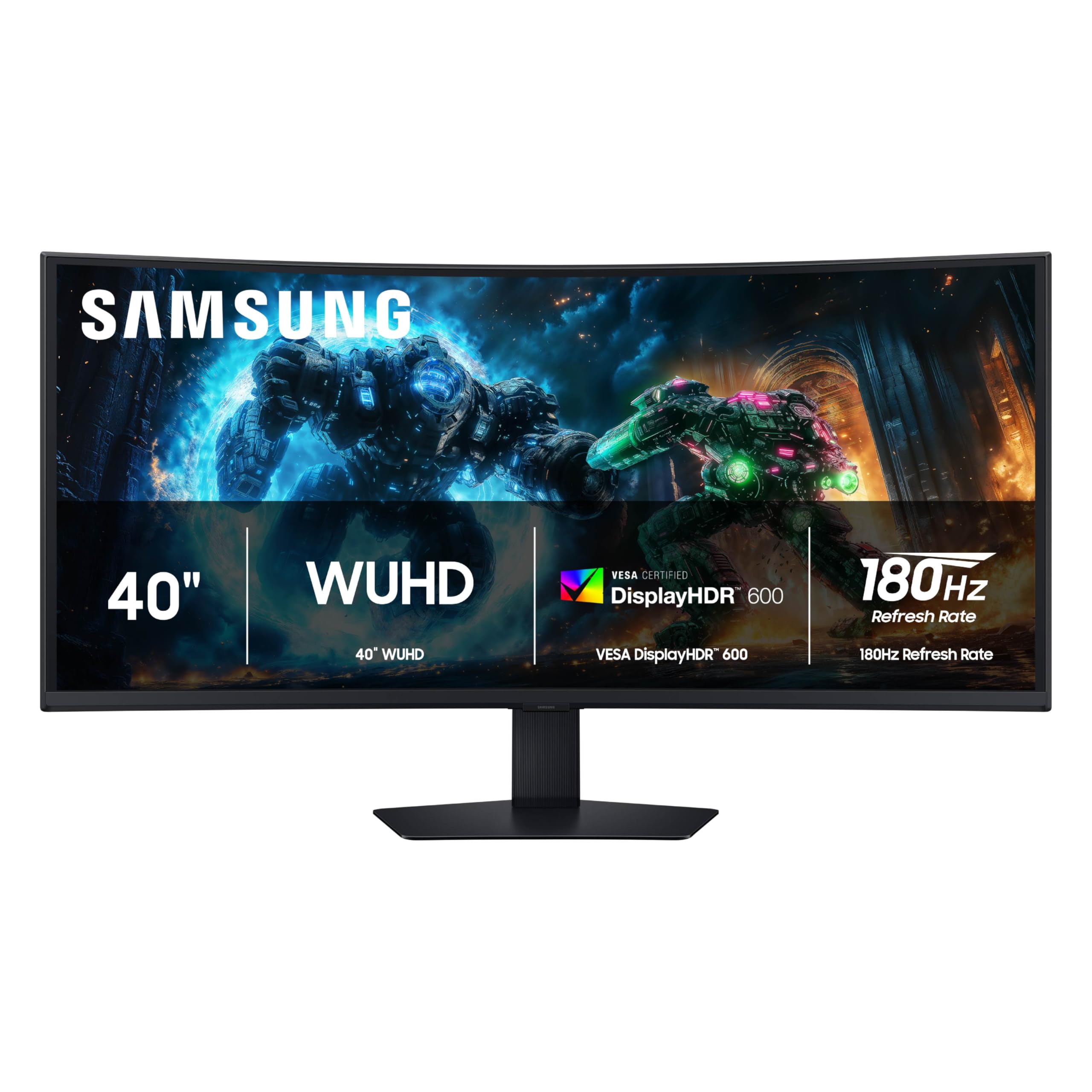
The Samsung Odyssey G7 G75F breaks the 16:9 mold with a 40-inch 21:9 ultrawide curved display at 5120 x 2160 resolution. The 1000R curvature wraps the screen around your field of view for an immersive feel in racing and flight simulators. The VA panel delivers a 3000:1 native contrast ratio, and VESA DisplayHDR 600 certification provides brighter highlights and deeper blacks than typical VA monitors.
The 180Hz refresh rate and 1ms GtG response time are competitive for ultrawide panels, and AMD FreeSync Premium Pro ensures smooth frame rate synchronization with compatible GPUs. The monitor includes both HDMI and DisplayPort inputs, plus USB hub connectivity for peripherals. The adjustable stand supports height and tilt adjustments.
VA panel ghosting can appear in very fast scene transitions, particularly in dark-to-light pixel changes. The 350 cd/m² typical brightness is lower than OLED and high-end IPS options, making standard HDR less impactful. If you prioritize screen real estate and ultrawide immersion for work or simulation gaming over pure motion clarity, this is a compelling option at the premium end.
Why it’s great
- 40-inch ultrawide 21:9 format for immersive simulations
- 3000:1 VA contrast ratio for better black levels than IPS
- 180Hz refresh rate with FreeSync Premium Pro support
Good to know
- VA ghosting in fast dark scene transitions
- 350 nits brightness is low for impactful HDR
7. LG 27G810A-B UltraGear
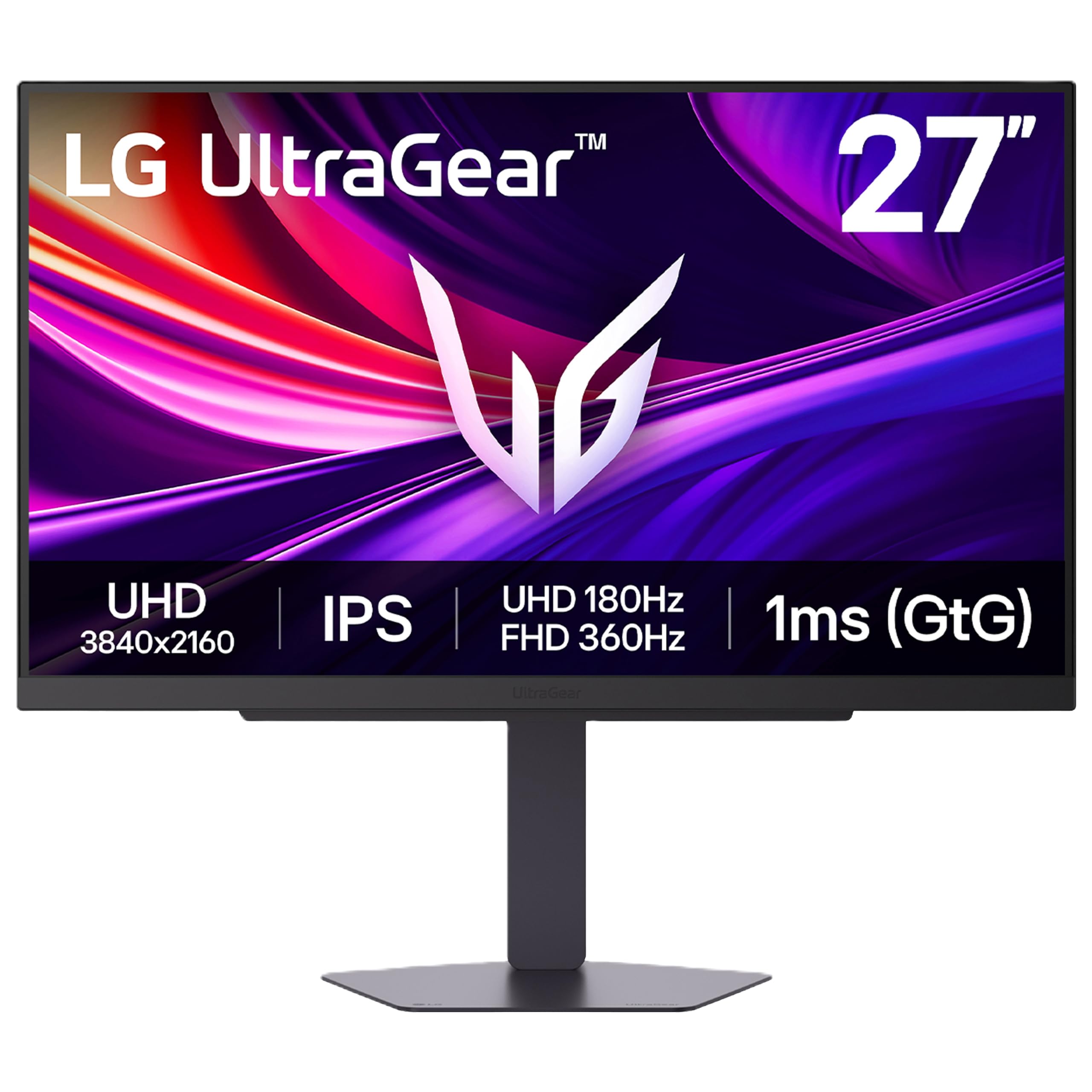
The LG 27G810A-B fits a 27-inch 4K UHD Fast IPS panel into a compact chassis with dual-mode capabilities: 4K at 180Hz or Full HD at 360Hz. The 1ms GtG response time keeps motion blur to a minimum, and support for both G-Sync and FreeSync Premium ensures smooth gameplay with either GPU brand. VESA DisplayHDR 400 provides moderate HDR brightness at 400 nits.
Color accuracy reaches 95% DCI-P3, and the 4-pole headphone jack with DTS HP:X offers 3D spatial audio for gaming headsets through a single connection. Black Stabilizer brightens dark areas to help spot opponents hiding in shadows, and the Dynamic Action Sync feature reduces input lag. The adjustable stand provides height, tilt, swivel, and pivot adjustments.
IPS contrast ratio of 1000:1 means blacks appear gray in dark scenes, so HDR impact is limited compared to OLED or VA panels. The internal fan adds a low hum that is noticeable in quiet rooms. For gamers who want 4K 120Hz with the option to switch to 360Hz for competitive titles, this LG offers excellent versatility in a smaller 27-inch footprint.
Why it’s great
- Dual-mode from 4K 180Hz to FHD 360Hz for versatility
- G-Sync and FreeSync Premium support for smooth VRR
- Compact 27-inch size fits smaller desks
Good to know
- IPS contrast ratio limits HDR depth in dark scenes
- Fans produce low but noticeable noise in quiet rooms
8. Alienware AW3225QF
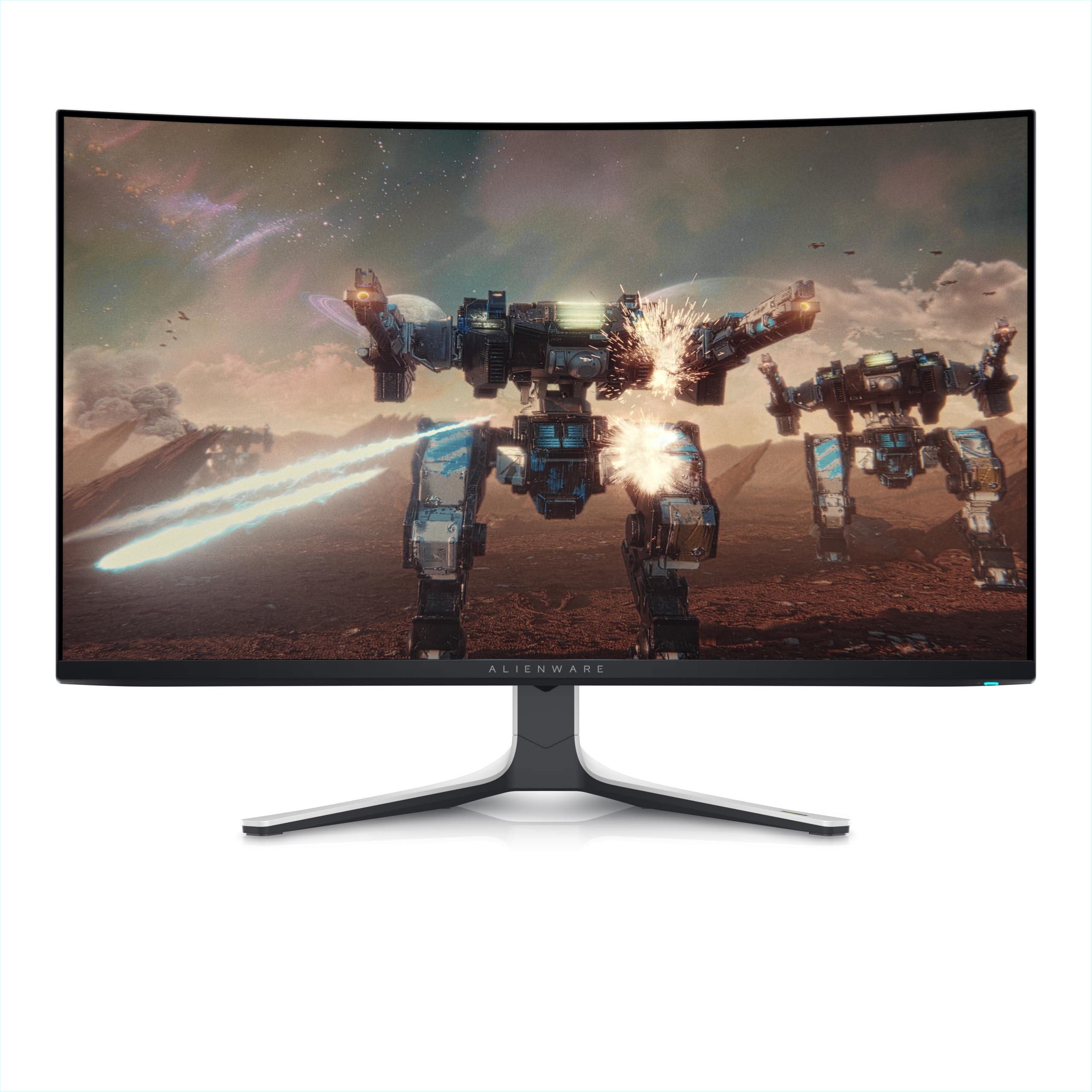
The Alienware AW3225QF delivers a 32-inch 4K QD-OLED panel with a 240Hz refresh rate and hardware support for Dolby Vision, making it a strong contender for both gaming and high-end media consumption. The QD-OLED technology provides infinite contrast, deep blacks, and vibrant colors with a wide color gamut. The 0.03ms response time is typical for OLED and ensures smooth motion across all frame rates.
The monitor includes DisplayPort and HDMI 2.1 ports for full-bandwidth 4K 120Hz connectivity on consoles and modern GPUs. Text fringing is present on certain backgrounds but is generally not distracting at normal viewing distances. The build quality is solid with a 6-kilogram weight and a compact footprint. The anti-burn-in features work automatically in the background.
The lack of a full-featured adjustable stand on the stock model may require a third-party monitor arm for optimal ergonomics. Some users report needing a USB-C to DisplayPort cable to achieve 120Hz on Mac M1 machines over HDMI. For a premium 4K 120Hz monitor with excellent color performance, the AW3225QF is a top choice for those who prefer Dell’s Alienware ecosystem.
Why it’s great
- 4K QD-OLED with 240Hz and Dolby Vision support
- Excellent build quality with professional design
- Automatic anti-burn-in technology for long life
Good to know
- Standard stand lacks full height adjustment
- Requires specific cable setup for 120Hz on Mac M1
9. KTC 32″ Fast IPS
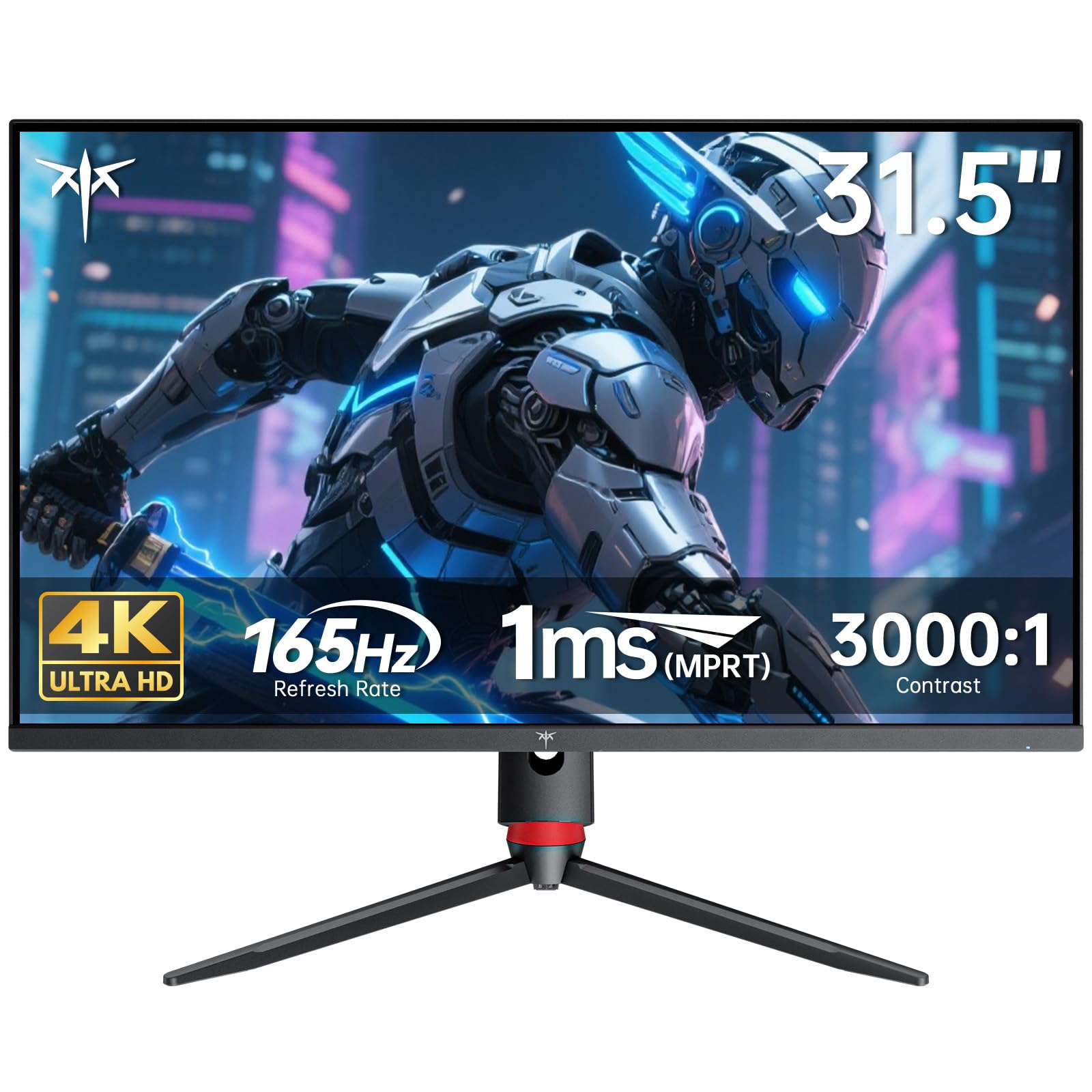
The KTC 32-inch Fast IPS monitor offers a 4K UHD resolution at 165Hz with a 1ms MPRT response time, delivering smooth motion at a price that undercuts most competitors. The 121% sRGB color gamut and 1.07 billion color support provide vibrant visuals for both gaming and daytime productivity. The 3000:1 contrast ratio is unusually high for an IPS panel, but real-world testing suggests it may not consistently reach that number in all scenarios.
The monitor includes HDMI 2.1 and DisplayPort 1.4 connectivity, making it compatible with both PC and next-gen consoles at 4K 120Hz. Adaptive Sync technology supports both FreeSync and G-Sync for reduced screen tearing. The stand offers tilt and height adjustments, and the VESA 100x100mm mount is available for arm setups.
Some units have been reported to cap at 100Hz via HDMI rather than the advertised 165Hz, so DP is recommended for full bandwidth. The included built-in speakers are adequate for casual use but lack volume and clarity for immersive gaming. For buyers on a strict budget who need a large 4K 120Hz panel, this delivers acceptable performance with manageable compromises.
Why it’s great
- Large 32-inch 4K 165Hz display at an entry-level price
- HDMI 2.1 and DP 1.4 support for full bandwidth connectivity
- Vibrant colors with 121% sRGB coverage
Good to know
- Advertised 165Hz may require DP cable over HDMI
- Bezels are larger than product images suggest
10. BenQ SW272U

The BenQ SW272U is built for professional photographers and visual artists who need precise color reproduction. The 27-inch 4K Nano Matte panel covers 99% Adobe RGB, 99% DCI-P3, and 99% Display P3, making it one of the most color-accurate monitors available at its price point. The 16-bit 3D LUT ensures smooth color transitions and consistent output across the entire gamut. Hardware calibration via Palette Master Ultimate software allows you to calibrate without altering the monitor’s internal LUT.
The 90W USB-C port with DP Alt Mode enables a single-cable connection for laptops while delivering video and power simultaneously. BenQ’s Paper Color Sync technology simulates how colors will look on different paper types and printers, streamlining the photo-to-print workflow. The TUV-certified anti-glare coating reduces surface reflections without the grainy texture typical of aggressive matte finishes.
The 60Hz refresh rate and standard IPS response time make this unsuitable for gaming or fast-moving video editing. Input switching via the OSD is reported to be finicky, and some users experience issues with the included puck controller. For professional color-critical work where 4K 120Hz is not required, the SW272U is a top-tier choice.
Why it’s great
- 99% Adobe RGB and DCI-P3 coverage for professional color work
- 16-bit 3D LUT ensures smooth color gradients
- Paper Color Sync for accurate print previews
Good to know
- 60Hz refresh rate limits gaming and video work
- OSD input switching is unreliable during sleep mode
11. Acer Predator X27U
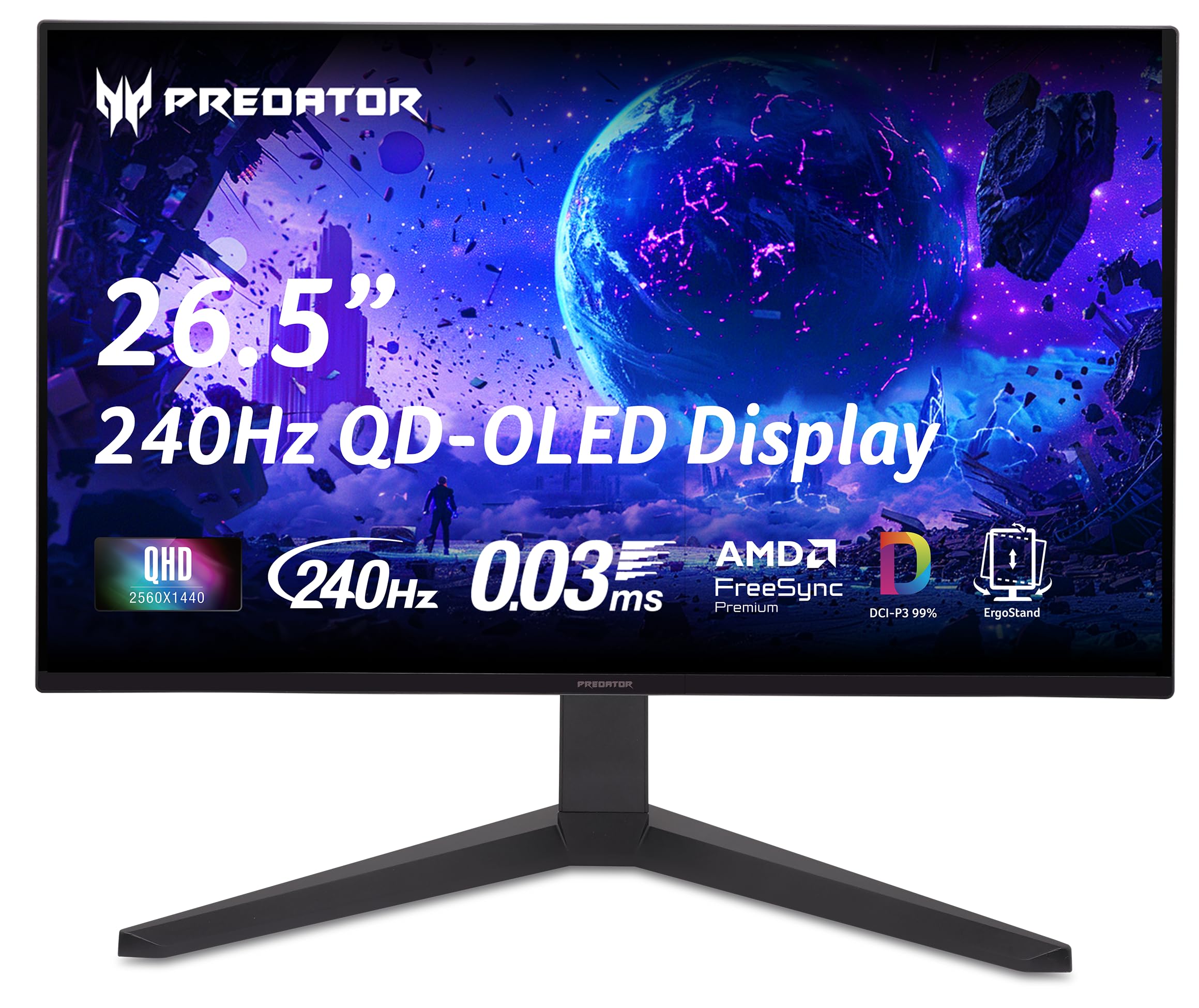
The Acer Predator X27U brings a 26.5-inch WQHD QD-OLED panel with a 240Hz refresh rate and 0.03ms response time at an entry-level price for OLED technology. The 99% DCI-P3 color gamut and Delta E < 2 calibration deliver vibrant colors and accurate skin tones. AMD FreeSync Premium provides variable refresh rate with low framerate compensation for smooth gameplay across diverse frame rates.
The 2560×1440 resolution is not true 4K, but the high pixel density on the 26.5-inch screen provides sharp text and detailed images. The ZeroFrame design with minimal bezels reduces the overall footprint for multi-monitor setups. The adjustable stand supports height, pivot, swivel, and tilt for flexible positioning.
Brightness is lower than on premium OLEDs, hitting around 250 nits typical, which makes HDR less impactful in well-lit rooms. The glossy screen finish shows fingerprint smudges and reflections. Some users report a cracked stand on delivery, so check packaging carefully. If you want OLED quality at a budget-friendly price and do not need native 4K resolution, this is a strong option.
Why it’s great
- QD-OLED at a budget-oriented price point
- 240Hz refresh rate with zero ghosting on fast scenes
- Excellent color accuracy with 99% DCI-P3 coverage
Good to know
- WQHD resolution is not true 4K
- Lower brightness limits HDR impact in bright rooms
FAQ
Can I use a 4K 120Hz monitor with an older graphics card?
Does a 4K 120Hz monitor require HDMI 2.1?
What is the difference between 4K 120Hz and 4K 240Hz?
Final Thoughts: The Verdict
For most users, the 4k 120hz monitor winner is the MSI MPG 321URX QD-OLED because it combines 4K resolution, 240Hz refresh rate, true HDR performance, and professional-grade color accuracy in a single package. If you want dual-mode versatility at a lower price, grab the ASUS ROG Strix XG32UCG. And for pure photo editing color accuracy without the need for high refresh rates, nothing beats the BenQ SW272U.

Mo Maruf
I created WellFizz to bridge the gap between vague wellness advice and actionable solutions. My mission is simple: to decode the research and give you practical tools you can actually use.
Beyond the data, I am a passionate traveler. I believe that stepping away from the screen to explore new environments is essential for mental clarity and physical vitality.