Our readers keep the lights on and my smoothie glass nicely filled. As an Amazon Associate, I earn from qualifying purchases.
Middle school is the sweet spot where social dynamics shift from parallel play to full negotiation, bluffing, and competitive table talk—so the board games on your shelf need to match that jump in cognitive and emotional demand. A game that worked for a third-grader will feel patronizing; a complex Euro-game aimed at adults will cause glazed eyes and arguments. The challenge is finding titles that hit the narrow band of satisfying depth without rulebook overwhelm.
I’m Mohammad Maruf — the founder and writer behind WellFizz. I’ve spent years analyzing product specs, dealer inventories, and parent-buyer sentiment for the middle-school demographic, tracking which mechanics (engine-building, set-collection, area-control) hold their attention session after session and which ones collect dust after one play.
After evaluating dozens of candidates across price tiers and play styles, here is my curated guide to the board games for middle schoolers that actually deliver lasting replay value for this exact age band.
How To Choose The Best Board Game For Middle Schoolers
A middle-schooler’s attention span and social tolerance vary wildly from age 10 to 14. The sweet spot lands on games that take 30–60 minutes—long enough to feel substantial, short enough to finish before focus fades—and support 3–5 players so no one sits out. Below are the three specs that matter most when filtering this category.
Game Mechanics and Cognitive Load
Look for mechanics that reward planning but don’t require a rulebook deep-dive. Set-collection (Ticket to Ride), tile-laying (Harmonies), and resource-management (CATAN) all teach forward thinking without AP-prone analysis paralysis. Avoid games with hidden traitor mechanics or complex player elimination for the younger end of the band—these can trigger exclusion feelings. A game that includes a solo variant is a huge bonus because it lets a child master the rules at their own pace before competing with siblings.
Component Durability and Table Presence
Middle schoolers are not gentle with game boxes. Look for card stock above 300 gsm, wooden tokens instead of thin cardboard chits, and boards that lie flat out of the box. Games with miniatures or molded plastic standees (like Exploding Kittens: The Board Game) tend to survive drops and spills better than those with paper standees. The box should close securely—loose lids mean lost pieces before the second play.
Replay Value and Modular Setup
A board game for this age group dies if every session feels identical. Modular boards (CATAN’s hex tiles, Ticket to Ride’s random ticket draws) force different routes and strategies each time. Variable scoring conditions (Harmonies’ animal-card rotation) serve the same function without adding rules. Check whether the game comes with alternative scenarios or expansion compatibility—a game that can grow with the child is worth ten that plateau after five plays.
Quick Comparison
On smaller screens, swipe sideways to see the full table.
| Model | Category | Best For | Key Spec | Amazon |
|---|---|---|---|---|
| CATAN (6th Edition) | Strategy | Trading & negotiation | 60-min playtime, 3–4 players | Amazon |
| Ticket to Ride (2025 Refresh) | Family Strategy | Route-building & geography | 225 plastic trains, 5 colors | Amazon |
| Asmodee Harmonies | Tile-Laying | Solo or quiet strategy | 120 wooden tokens, 30 min | Amazon |
| Spin Master Tetris Board Game | Puzzle/Party | Fast head-to-head puzzle races | 128 Tetriminos, 20-min rounds | Amazon |
| Exploding Kittens Board Game | Party/Family | High-energy, silly reveals | 91 cards, flip-board mechanic | Amazon |
In‑Depth Reviews
1. CATAN (6th Edition) Board Game

CATAN remains the gold standard for teaching resource management and negotiation to the middle-school set, and the 6th Edition sharpens everything that made the original a classic. The modular hex board ensures no two starting islands look alike, which is critical for replay value when you have a 12-year-old who memorizes optimal settlement spots. The built-in card trays and chunkier wooden pieces solve the two biggest complaints from previous editions—no more sliding cards and no more tiny settlements that disappear under a palm.
The core loop of roll, trade, build forces kids to practice mental math (counting resource probabilities) and social persuasion (convincing a sibling to trade ore for sheep) simultaneously. At 60–90 minutes per session, the pacing hits the sweet spot for sustained attention without dragging into frustration territory. The 6th Edition rulebook has been rewritten for clarity, which means less parent-coaching and more independent play starting round two.
Middle-schoolers who enjoy strategy games like chess but want more player interaction will latch onto the negotiation dynamic here. The robber mechanic adds a light take-that element that generates groans and laughs rather than hurt feelings, as long as you remind everyone it is part of the game. Up to four players can compete, and the expansion kits (Seafarers, Cities & Knights) extend the system for when the basic game feels too familiar.
Why it’s great
- Modular hex board creates near-infinite replayability
- Teaches resource trade-offs and probability awareness naturally
- 6th Edition component upgrades (trays, chunky wood pieces) improve tactile feel
Good to know
- Only supports 3–4 players out of the box; a 5–6 player expansion is sold separately
- Dice-roll randomness can frustrate players who prefer pure strategy
2. Ticket to Ride (2025 Refresh) Board Game
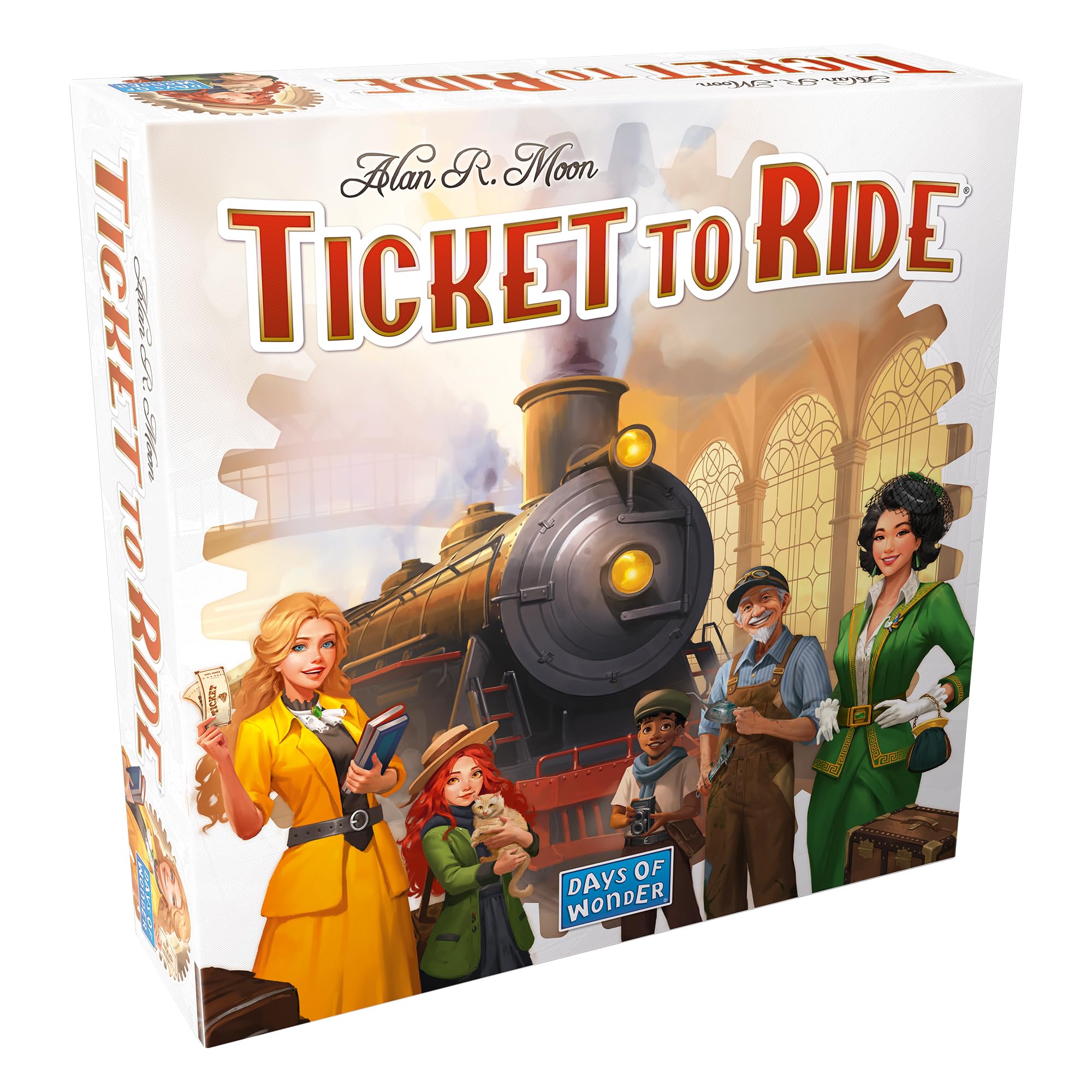
Ticket to Ride is the board game equivalent of a perfect three-act structure: easy to learn the first act, full of agonizing decisions in the second, and a sprint to the finish in the third. The 2025 Refresh retains everything that made the original a gateway classic—collecting colored train cards and claiming routes across a map of North America—while updating the graphic design for cleaner legibility. That matters when you have a 10-year-old trying to read city names across the board without squinting.
The set-collection mechanic is intuitive enough that a fourth-grader can grasp it in one round, but the strategic depth (blocking opponents, hoarding colors for long routes, choosing between immediate points and future ticket completion) keeps an eighth-grader engaged. The 225 plastic trains in five colors offer a satisfying tactile component—clicking them onto the board is half the fun. Games run 30–60 minutes depending on player count, which fits neatly into a school-night window.
Because the game uses a North American map, it sneaks in geography lessons: kids learn that Helena is in Montana and that Miami connects to Atlanta before they realize they are studying. The 2025 edition includes updated ticket cards and a rules booklet that is noticeably easier for pre-teens to follow independently. With expansions available for Europe, Asia, and other maps, the system can grow with the player’s interest.
Why it’s great
- Teaches geography alongside strategy without feeling like a lesson
- Scales well from 2 to 5 players with consistent pacing
- High-quality plastic trains and board hold up to weekly use
Good to know
- Route-blocking can cause mild frustration for very competitive younger kids
- Map expansions require separate purchases for variety
3. Asmodee Harmonies Board Game

Harmonies is the board game for the middle-schooler who finds loud party games overwhelming but craves satisfying intellectual puzzles. The premise is simple—you place 3D wooden tokens onto a personal board to create landscapes that match animal card conditions—but the scoring system layers depth through terrain height, animal placement, and token synergy. The 120 wooden tokens are chunky and satisfying to handle, and the artwork on the 42 animal cards is genuinely beautiful enough to pause the game for appreciation.
What sets Harmonies apart for this age group is its solo mode. A 10- to 14-year-old can set up the game alone, play through a 30-minute session, and feel genuinely accomplished regardless of whether anyone else wants to join. The multiplayer version is effectively “multiplayer solitaire”—each player builds their own board—which eliminates the social anxiety around being blocked or attacked. This makes it ideal for neurodivergent kids or those who need a low-pressure entry to board gaming.
The tile-laying mechanic rewards spatial reasoning: you must decide whether to stack tokens for height bonuses or spread them across the board to satisfy multiple animal cards. At roughly 30 minutes per game, you can easily play two or three sessions in an evening, letting kids experiment with different strategies without a huge time commitment. The rulebook is short and illustrated, so a motivated pre-teen can learn it without adult help.
Why it’s great
- Exceptional tactile quality—wooden tokens and thick card stock feel premium
- Included solo mode lets kids practice independently before multiplayer
- Low social friction: no blocking or take-that mechanics
Good to know
- Minimal player interaction may bore kids who love negotiation games like CATAN
- Game can end abruptly when the last animal card is drawn
4. Exploding Kittens: The Board Game
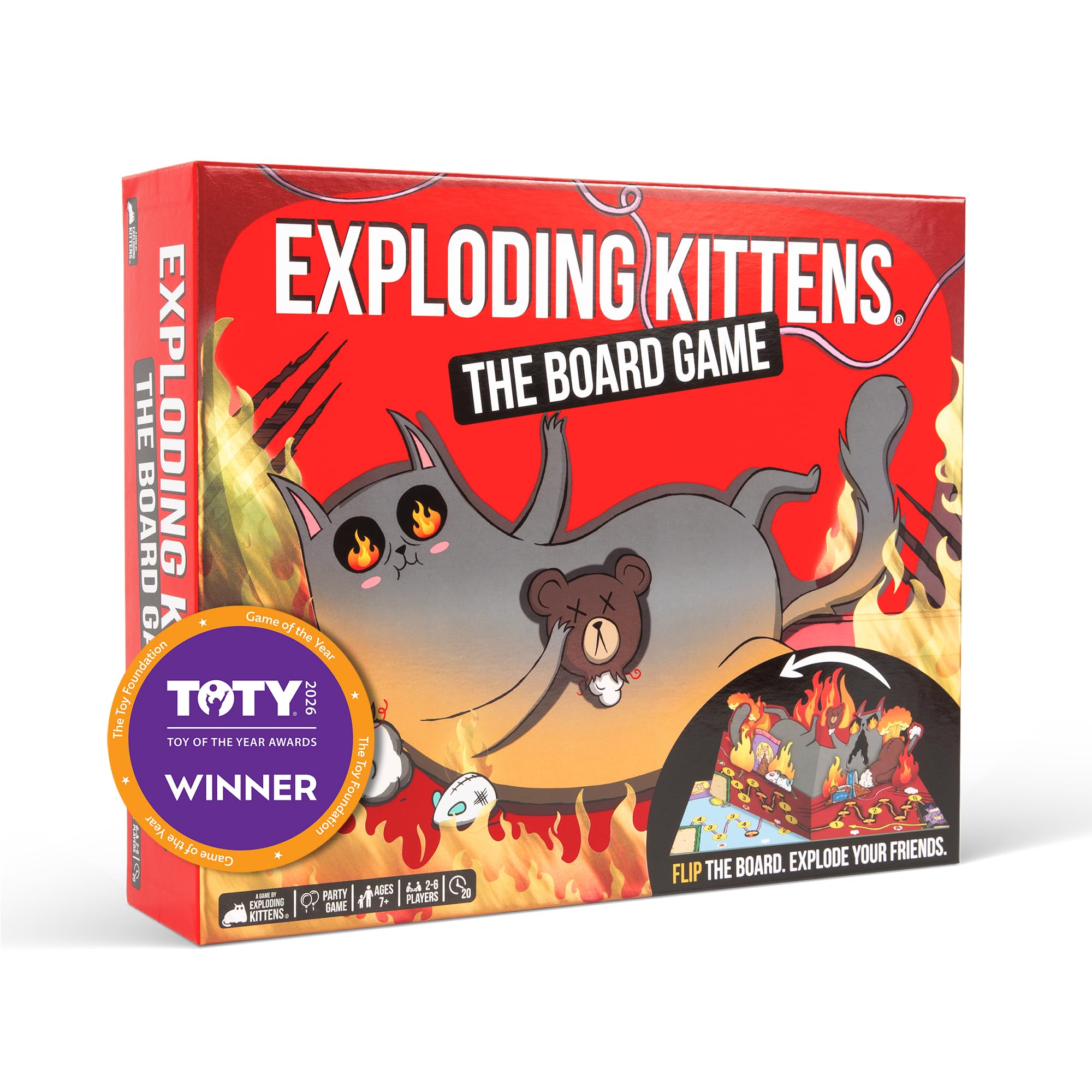
Exploding Kittens: The Board Game takes the chaotic energy of the original card game and gives it a physical board that flips midway through, completely changing the path to victory. The “Transform Board” mechanic is the standout feature: players start on one side, but an action can flip the board over to reveal a completely different route, forcing everyone to adapt their strategy on the fly. For a room full of middle-schoolers who crave surprise and one-upmanship, this delivers the dopamine hit every three or four turns.
The 65 Action Cards and 26 Move Cards contain the same irreverent humor—Meatpants, Litterbox Sandworm, Butterfly Punch—that made the original a phenomenon among the 10–14 demographic. The pop-up game board and six character standees (including TacoCat and GnomeCat) are sturdy enough for the handle-by-the-edges treatment that kids give game components. Playtime ranges 45–90 minutes depending on the number of players, with 5–6 players creating the best chaos-to-decision ratio.
Some parents should know that the game’s humor leans into absurdity (cat-butts on cards). If that aligns with your household tolerance, the game will get played multiple times a week. The 2026 Toy of the Year award from the Toy Foundation confirms it has broad appeal, though the board-flip mechanic does require the hinge to be broken in before it operates smoothly—expect a stiff first three or four flips.
Why it’s great
- Flip-board mechanic creates genuine surprise each session
- Supports up to 6 players—ideal for sleepovers and larger groups
- Card art and humor are perfectly tuned for the middle-school sensibility
Good to know
- Board hinge is stiff initially and requires several plays to loosen
- Gameplay can feel anticlimactic compared to the original card game’s rapid pace
5. Spin Master Games Tetris: The Board Game
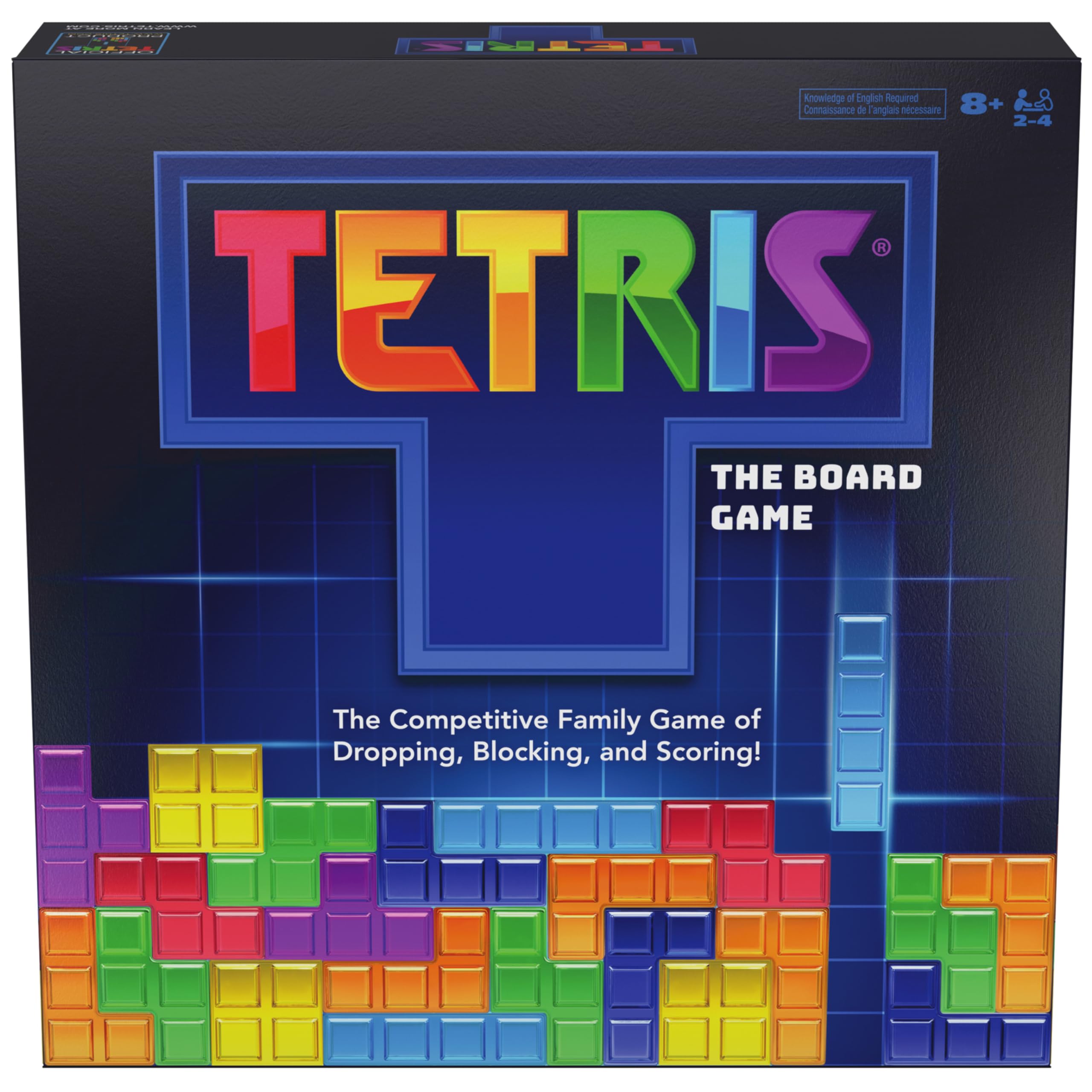
The Tetris Board Game successfully translates the iconic digital puzzle into a physical head-to-head race without losing the spatial-reasoning challenge that made the original addictive. Each player gets a grid and a pool of Tetriminos (the classic seven shapes), and the goal is to complete lines to drop garbage pieces into opponents’ grids. The “Garbage Drop” mechanic—placing a piece on a marked icon to force a blocker into another player’s board—adds the competitive edge that keeps middle-schoolers engaged rather than just solving a solo puzzle.
With 128 semi-translucent Tetriminos and a 20-minute playtime, this game is best as a quick warm-up or between longer games. The rules are simple enough that an 8-year-old can play, but the spatial-rotation decisions require enough mental effort that a 14-year-old will not feel bored. The area-control and blocking mechanics mean that raw speed is not the only path to victory—you have to think about where to place your blocker for maximum disruption.
Component-wise, the grids and bases fit together securely without sliding, and the Tetriminos are molded from durable plastic that resists bending. Some customers report that a few puzzle pieces arrived slightly bent, though this seems to be a packaging issue rather than a design flaw. For the price, this is a solid entry-level game that introduces competitive puzzle mechanics without the investment required for deeper strategy games.
Why it’s great
- Excellent spatial-reasoning workout disguised as a fast party game
- 20-minute rounds fit perfectly between homework and dinner
- Blocking mechanic adds social strategy without complex rules
Good to know
- Some pieces may arrive slightly bent due to packing compression
- Limited to 4 players maximum; larger groups need to rotate
FAQ
What is the ideal playtime for a board game aimed at middle-schoolers?
Are board games with solo modes better for this age group?
How many players should a family board game support for this age?
Final Thoughts: The Verdict
For most families, the board games for middle schoolers winner is the CATAN 6th Edition because its modular board and negotiation mechanics create genuinely different games each session while teaching resource management that maps directly to real-world decision-making. If your child prefers quiet spatial puzzles over social bluffing, grab the Asmodee Harmonies for its outstanding solo mode and satisfying tactile components. And for high-energy sleepover chaos that needs to engage six kids at once, nothing beats the Exploding Kittens: The Board Game with its transformative flip-board and laugh-out-loud card art.

Mo Maruf
I created WellFizz to bridge the gap between vague wellness advice and actionable solutions. My mission is simple: to decode the research and give you practical tools you can actually use.
Beyond the data, I am a passionate traveler. I believe that stepping away from the screen to explore new environments is essential for mental clarity and physical vitality.