Our readers keep the lights on and my smoothie glass nicely filled. As an Amazon Associate, I earn from qualifying purchases.
A cheap robot vacuum is a calculated bet. The difference between a liberating purchase and a frustrating paperweight comes down to a handful of specs—LiDAR versus gyroscopic navigation, suction measured in Pascals, and the critical presence of a self-emptying base. This guide breaks down exactly where the smart money goes.
I’m Mohammad Maruf — the founder and writer behind WellFizz. I have analyzed over 300 robot vacuum specifications and dug into thousands of verified user reports to isolate the performance traits that actually separate a capable budget model from a disappointment.
By the end of this guide, you will know which models deliver reliable suction and smart navigation without pushing past the real value ceiling for a cheap robot vacuum.
How To Choose The Best Cheap Robot Vacuum
Selecting a budget-friendly robot vacuum requires focusing on the features that directly affect daily usability, not marketing checkboxes. The core components that define a worthwhile purchase are navigation accuracy, suction delivery, brush design, and dust disposal convenience.
Navigation: LiDAR vs. Random Bounce
A robot that bumps its way around your living room will clean eventually, but it will take three times as long and miss edges repeatedly. LiDAR navigation—which uses spinning lasers to map a room in seconds—is the single most important upgrade for a budget model. It allows the unit to clean in neat rows, remember furniture placement, and return to its dock without wandering. Avoid any unit that relies solely on gyroscopic or random-path cleaning if you want predictable coverage.
Suction and Brush Architecture
Suction numbers between 2,000 Pa and 13,000 Pa sound like a wide gap, but the real-world difference narrows on hard floors. Carpets require higher suction and a brush roll that does not tangle with pet hair. Look for an anti-tangle brush design—often a floating roller or a combed edge—that reduces maintenance. A model with 6,000 Pa suction and a good brush will outperform an 8,000 Pa model with a standard roller on long-haired pet homes.
Self-Emptying or Manual Bin?
A self-emptying base is worth the premium if you value hands-off operation. Models in the lower tier require emptying the dustbin after every run, which becomes a daily chore in a home with pets. Self-emptying stations with 2.5 to 5-liter bags extend maintenance intervals to weeks. Bagless self-emptying systems exist, but they are less common in the budget bracket and require rinsing the reusable cup periodically.
Quick Comparison
On smaller screens, swipe sideways to see the full table.
| Model | Category | Best For | Key Spec | Amazon |
|---|---|---|---|---|
| roborock Q10 S5+ | Premium | Powerful suction & son | 10,000 Pa HyperForce Suction | Amazon |
| DREAME D20 Plus | Premium | Hands-off for 150 days | 13,000 Pa Suction + 5L Bag | Amazon |
| Airzeen Q20 Ultra | Mid-Range | Bagless self-emptying | 6,000 Pa Suction + Bagless Dock | Amazon |
| eufy C10 | Mid-Range | Slim design & corner cle | 4,000 Pa Suction + 2.85″ Slim | Amazon |
| Tikom L8000 Plus | Mid-Range | Self-emptying on a budg | 6,000 Pa Suction + 3L Self-Empty | Amazon |
| uninell Robot Vac | Mid-Range | Long runtime for big ho | 7,000 Pa Suction + 3.5L Base | Amazon |
| iRobot Roomba 105 Combo | Entry-Level | Vacuum and mop combina | 70x Power-Lifting + Mop Pad | Amazon |
| iRobot Roomba 105 Vac | Entry-Level | Reliable brand with LiD | 70x Power-Lifting + LiDAR | Amazon |
| eufy 11S MAX | Budget | Ultra-slim, quiet cleani | 2,000 Pa Suction + 2.85″ Slim | Amazon |
In‑Depth Reviews
1. roborock Q10 S5+
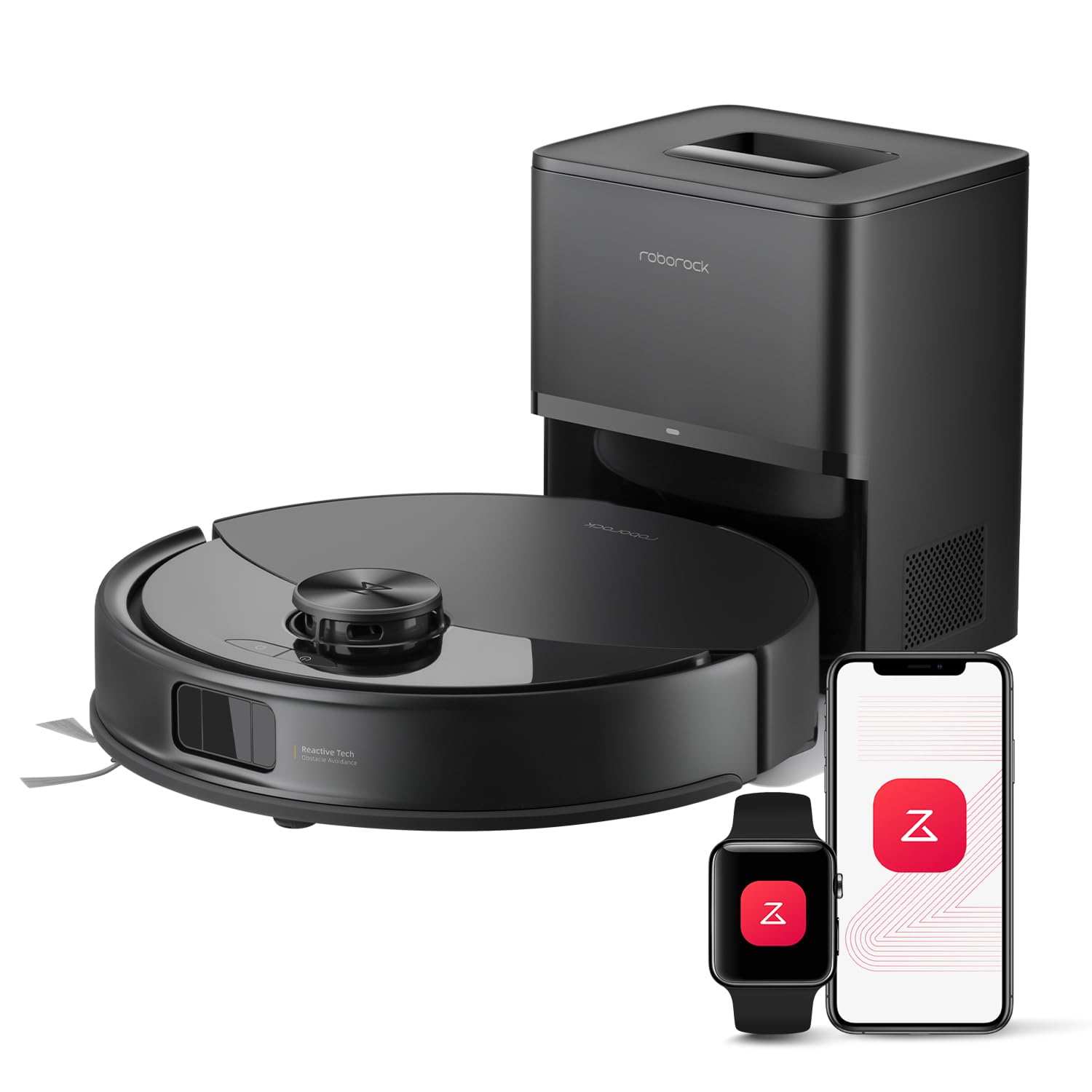
The roborock Q10 S5+ claims the top spot because it delivers premium-tier features—10,000 Pa suction, VibraRise 2.0 sonic mopping, and ReactiveTech obstacle avoidance—at a price point that straddles the mid-range boundary. The dual anti-tangle system, which combines a combed main brush with a specialized side brush, drastically reduces hair wrap compared to standard roller designs. This alone saves ten minutes of maintenance per week in a household with long hair or shedding pets.
PreciSense LiDAR navigation builds detailed multi-level maps and supports up to five saved floor plans, making it suitable for homes with basements or multiple stories. The auto-empty dock holds a 2.7-liter bag that extends to about 70 days of hands-free operation. The mopping module lifts 8 millimeters when carpets are detected, so you do not have to swap pads manually between room types.
Reported downsides include a dock that requires proprietary bags and a mop system best suited for light maintenance rather than deep stain removal. Some users note that the obstacle avoidance occasionally struggles with black or reflective furniture legs. The app is fast and intuitive, and the unit handles the transition from tile to low-pile carpet without getting stuck.
Why it’s great
- 10,000 Pa suction lifts embedded pet hair from carpets effectively
- Dual anti-tangle brushes minimize hair wrap on rollers
- VibraRise 2.0 mop lifts automatically on carpet detection
Good to know
- Auto-empty dock requires non-reusable bags
- Mop is for light cleaning only, not scrubbing dried stains
2. DREAME D20 Plus
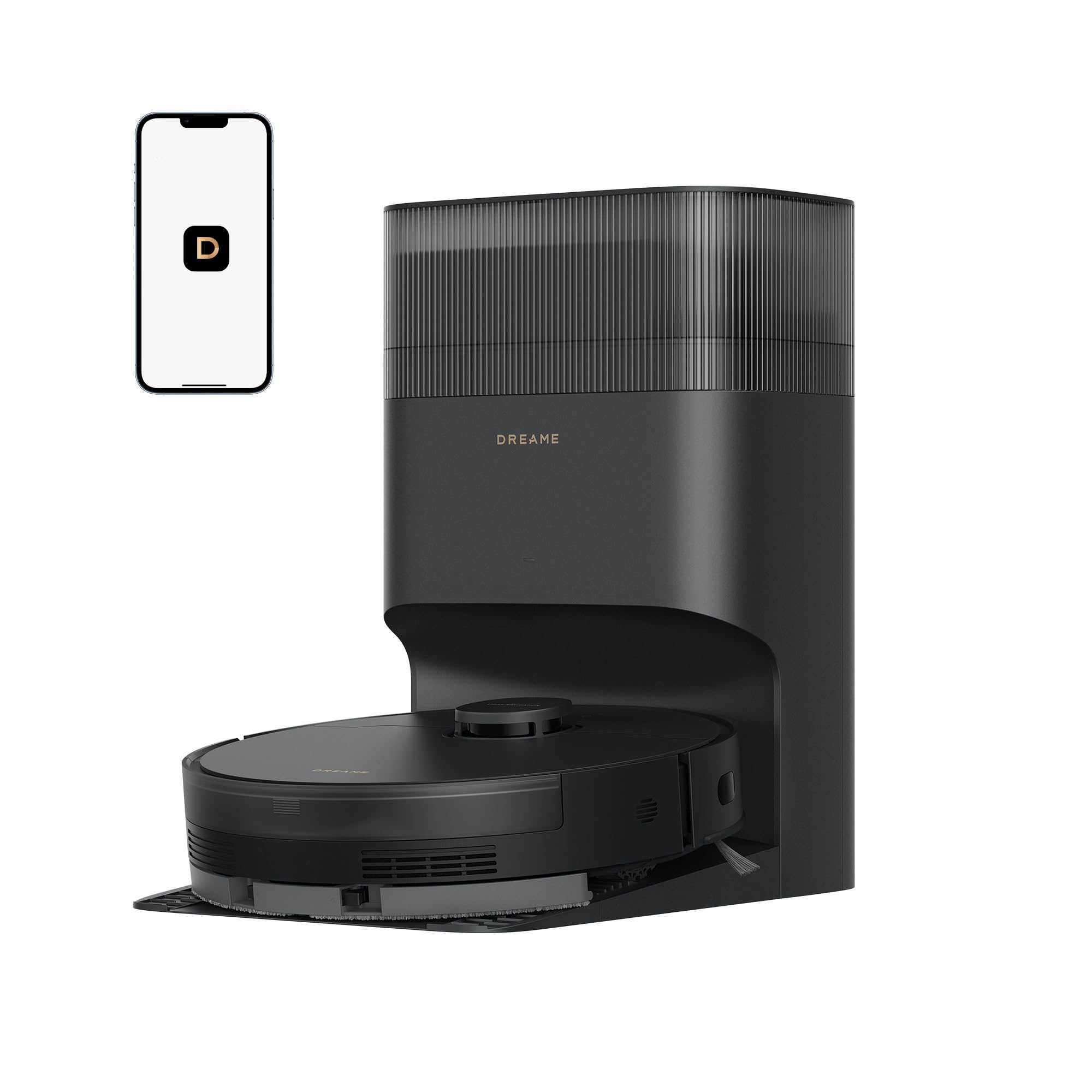
The DREAME D20 Plus is the hands-down winner for anyone who wants the longest stretch between maintenance events. Its self-emptying station uses a 5-liter dust bag—the largest in this lineup—rated for up to 150 days of debris collection. That is five months of not touching a vacuum bin, which redefines the convenience ceiling for a budget-conscious buyer. The 13,000 Pa Vormax suction is the highest raw power number here, though the real benefit shows on medium-pile carpets where deeper debris gets dislodged.
The DuoBrush anti-tangle system uses two counter-rotating rollers to actively prevent hair from spiraling around the axle. This design is noticeably easier to clean than a single brush roll. Pathfinder mapping technology creates editable floor plans, and the app allows 32 levels of water flow adjustment for the mopping function. The 500-milliliter dustbin and 350-milliliter water tank handle larger homes without requiring mid-run emptying.
User reports highlight occasional struggles with high-nap rugs and a learning curve for the app layout. The mopping pad is effective on hard floors but runs out of water after about 800 square feet, requiring a refill for larger spaces. The unit is quiet during vacuuming, and the auto-empty cycle is brief but audible.
Why it’s great
- 5-liter dust bag allows up to 150 days of hands-off cleaning
- 13,000 Pa suction power lifts debris from medium-pile carpets
- DuoBrush design effectively reduces hair tangles on rollers
Good to know
- App interface is not the most intuitive on first use
- Mopping water tank needs refilling for homes over 800 sq ft
3. Airzeen Q20 Ultra
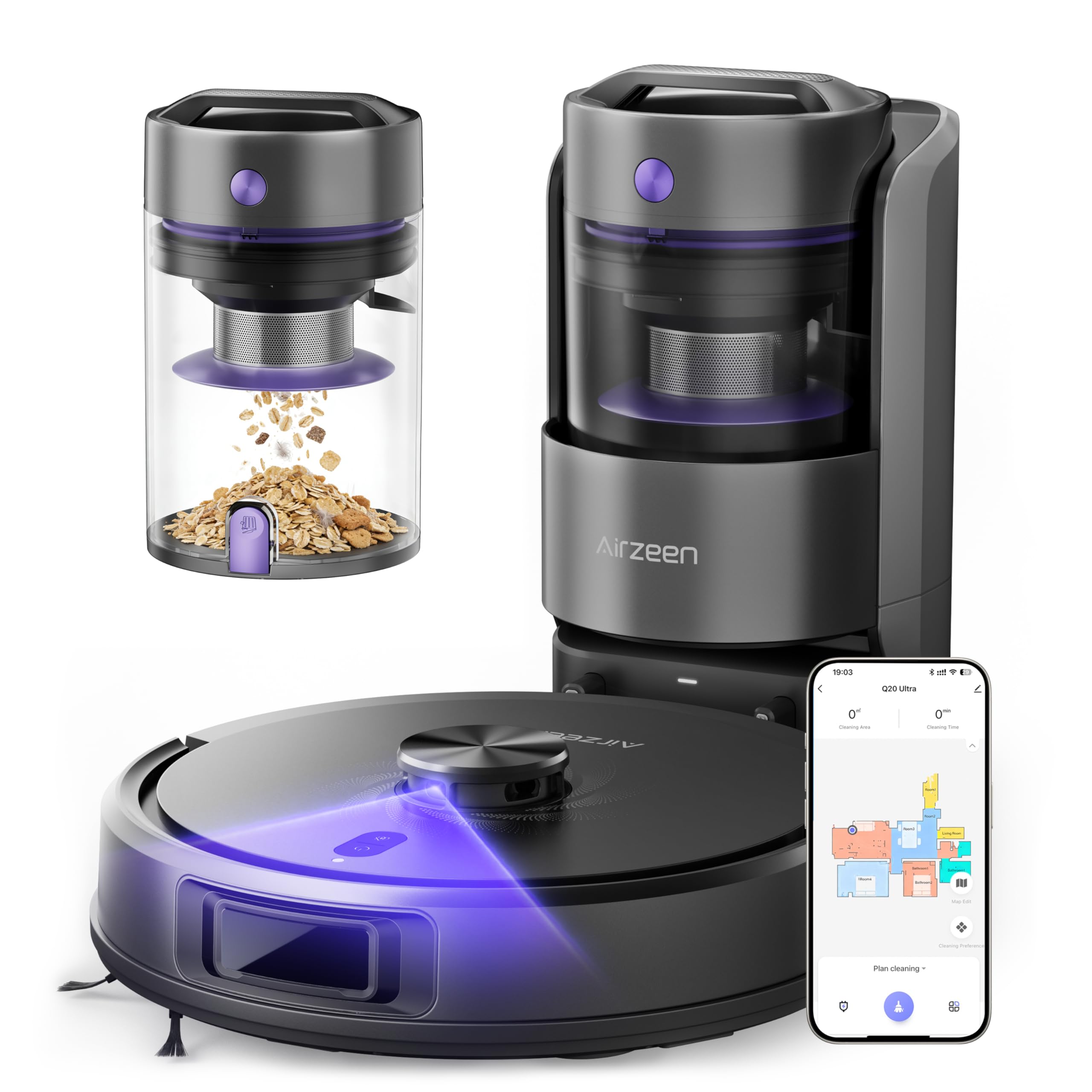
The Airzeen Q20 Ultra fills a unique niche in the budget segment: a self-emptying robot that eliminates the recurring cost of disposable dust bags. Its bagless docking station collects debris into a reusable cup that you rinse under a faucet every 45 days or so. Over a year of ownership, this saves roughly compared to bag-dependent systems. The 6,000 Pa suction is adequate for hardwood floors and low-pile carpets, and three adjustable power levels allow customization for different mess sizes.
Smart LiDAR navigation produces accurate maps and supports up to five floor plans for multi-level homes. The 4-in-1 system vacuums, sweeps, mops, and self-empties in one cycle, cutting cleaning time by roughly half compared to doing each step separately. The mopping pad is a simple drag system rather than a scrubbing unit, but it handles light dust mopping on tile and sealed wood floors without leaving puddles.
The bagless dock is the standout feature, but the self-emptying mechanism has been reported to fail in some units, triggering false “dust bin not connected” errors. Customer support responsiveness has been inconsistent in those cases. The app is functional and includes remote scheduling, no-go zones, and voice control compatibility with Alexa and Google Assistant.
Why it’s great
- Bagless self-emptying saves money on replacement bags long-term
- LiDAR mapping supports up to five floor plans for multi-level homes
- 6,000 Pa suction handles pet hair and crumbs on hard floors
Good to know
- Self-emptying mechanism can malfunction with false connection errors
- Mopping function is a basic drag pad, not a scrubbing system
4. eufy C10
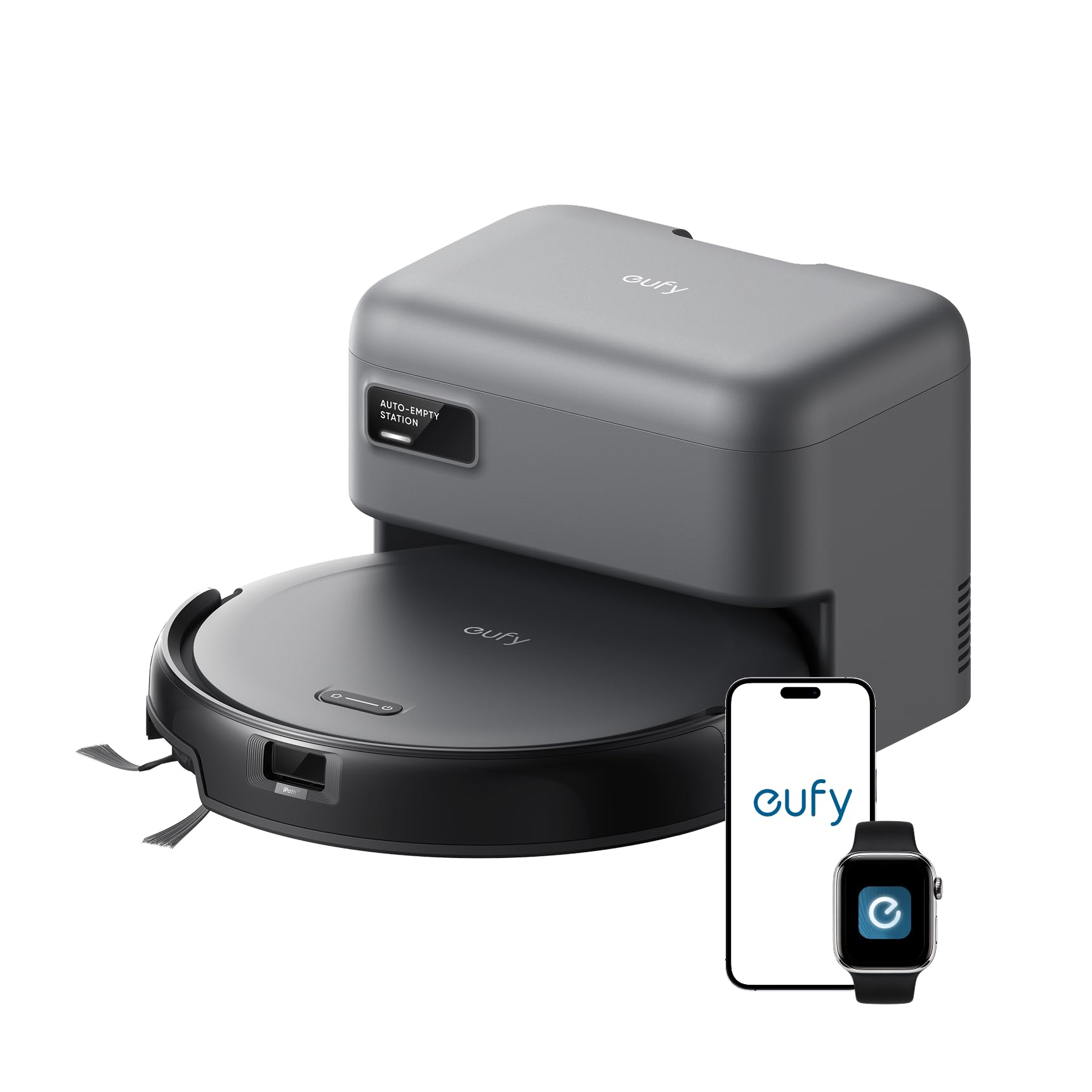
The eufy C10 is the best option for furniture clearance issues. At 2.85 inches tall, it slides under most sofas, bed frames, and dresser bases that block thicker robots. The CornerRover arm extends a side brush into tight corners and along baseboards, areas that many round robots ignore. The self-emptying dock holds a 3-liter bag rated for about 60 days of debris, so you are not emptying the bin daily.
LiDAR navigation maps rooms efficiently, and the 4,000 Pa suction is sufficient for hard floors and low-pile carpets. The rolling brush is designed with anti-hair-wrap features, and user reports confirm that it tangles far less than standard brushes over multiple cleaning cycles. The app allows scheduling, suction adjustment, and water level control for the mopping function.
The battery covers approximately 1,200 square feet before needing a recharge, which leaves some larger homes requiring zone scheduling. The auto-empty cycle is noticeably louder than the vacuum itself—about 75 decibels for 15 seconds. Some users report that the no-go zones have a 2-foot buffer, making precise room blocking less accurate than expected.
Why it’s great
- 2.85-inch profile fits under low-clearance furniture
- CornerRover arm extends cleaning reach into baseboard edges
- Anti-tangle brush design reduces roller hair wrap
Good to know
- Auto-empty dock is significantly louder than the vacuum motor
- No-go zones have a 2-foot buffer, limiting precision blocking
5. Tikom L8000 Plus
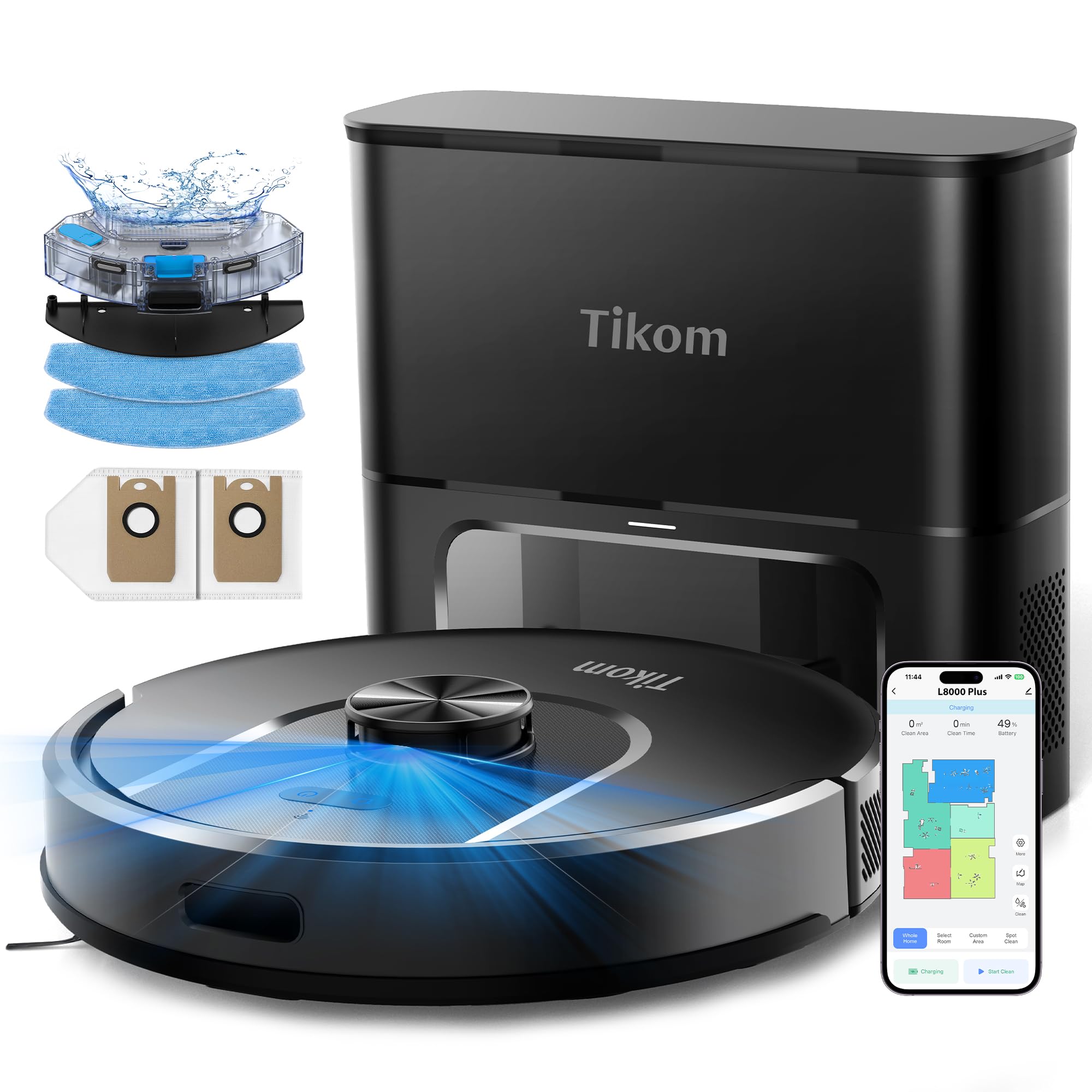
The Tikom L8000 Plus delivers a strong self-emptying feature set at a price that undercuts many competitors. The 3-liter dust bag holds roughly 90 days of dirt, and the station automatically empties the robot’s bin after each cleaning cycle. The 6,000 Pa suction jumps to maximum mode when carpet is detected, which helps lift ground-in dust from medium-pile rugs. The 150-minute runtime in gentle mode covers approximately 2,000 square feet on a single charge.
360-degree LiDAR navigation scans rooms and builds maps that the app can edit with no-go and no-mop zones. The system supports up to five saved maps for multi-floor homes. The 2-in-1 sweeping and mopping function works well on sealed hard floors, though the mop pad must be removed or blocked off with a no-go zone to prevent wetting carpets.
Users consistently praise the suction power and quiet operation, but the mopping function is essentially a damp cloth dragged across the floor. It handles light dust and small spills but will not scrub sticky messes. The proprietary dust bags are required for the auto-empty function, and hair occasionally wraps around the side brush, requiring manual removal every few cycles.
Why it’s great
- 6,000 Pa suction with auto carpet boost cleans rugs deeply
- 3-liter self-emptying base reduces manual bin emptying for months
- LiDAR navigation creates precise maps with no-go zone support
Good to know
- Mopping function is a basic damp cloth, not a scrubbing pad
- Proprietary dust bags are needed for the auto-empty station
6. uninell Robot Vacuum
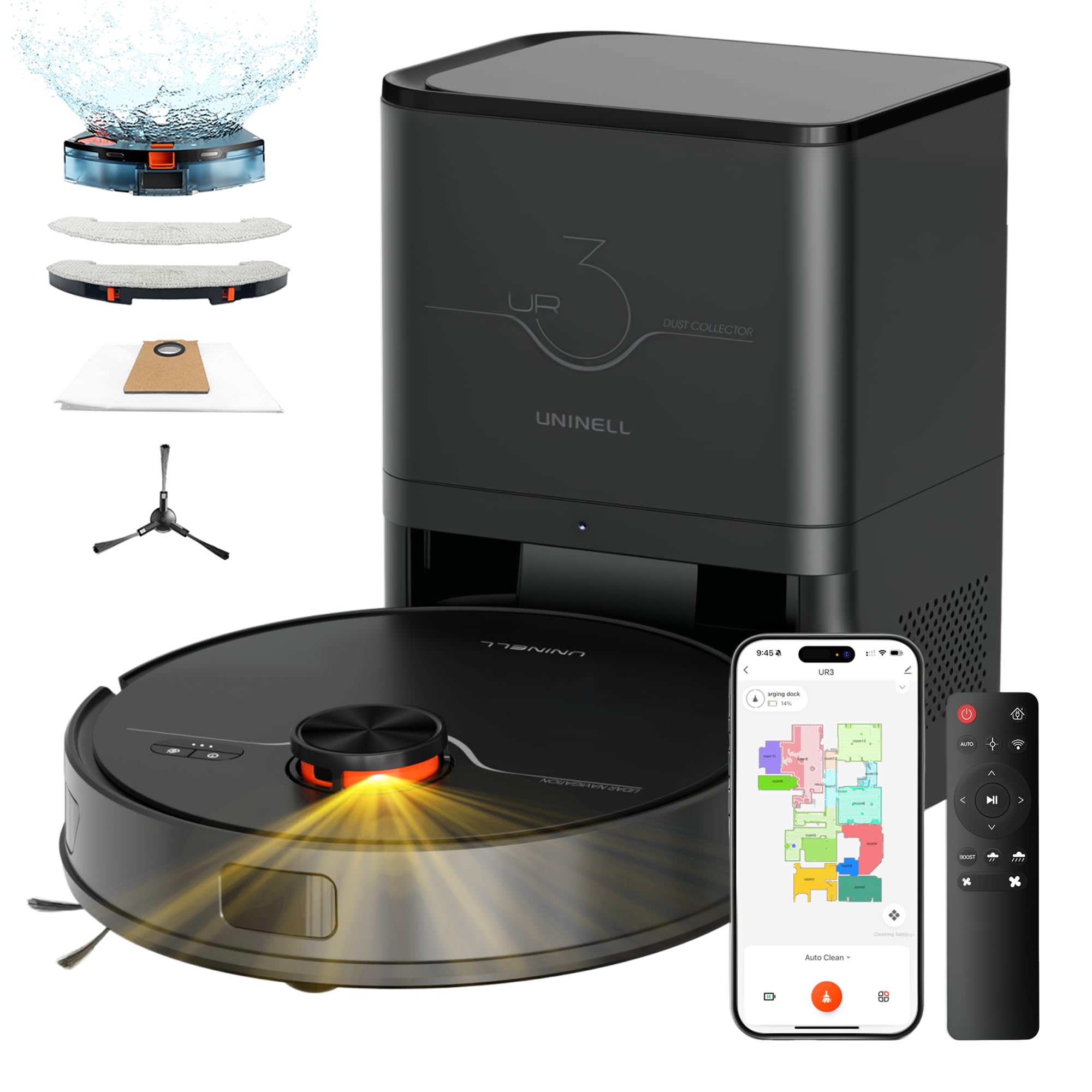
The uninell robot vacuum targets larger homes with its 180-minute runtime and 3.5-liter self-emptying base. That battery capacity covers roughly 2,000 square feet before needing a recharge, which reduces the need for mid-cleaning dock returns. The 7,000 Pa suction is slightly higher than the field average and includes auto carpet boost. The tangle-free brush design is specifically marketed for pet households, and user reports confirm that hair wrap is significantly lower than on standard single-brush robots.
LiDAR navigation scans the home and creates accurate maps with no-go zone functionality. The app and included remote control offer dual access—useful for households where some members prefer physical buttons. Voice control works with Alexa and Google Assistant. The unit handles tile-to-carpet transitions smoothly and smartly avoids cliff edges.
The mop function uses a stationary pad that simply drags behind the vacuum. It is not designed for scrubbing or stain removal. Some users note that the robot can get briefly stuck on low-profile furniture legs or raised thresholds. The dust bags are proprietary, though the two-year warranty and lifetime support provide peace of mind for a budget appliance.
Why it’s great
- 180-minute runtime covers large homes on a single charge
- 7,000 Pa suction with auto carpet boost lifts embedded debris
- Includes both remote control and app for flexible operation
Good to know
- Mop pad is a passive drag system, not a scrubbing element
- Occasionally gets hung up on low furniture legs or raised thresholds
7. iRobot Roomba 105 Combo
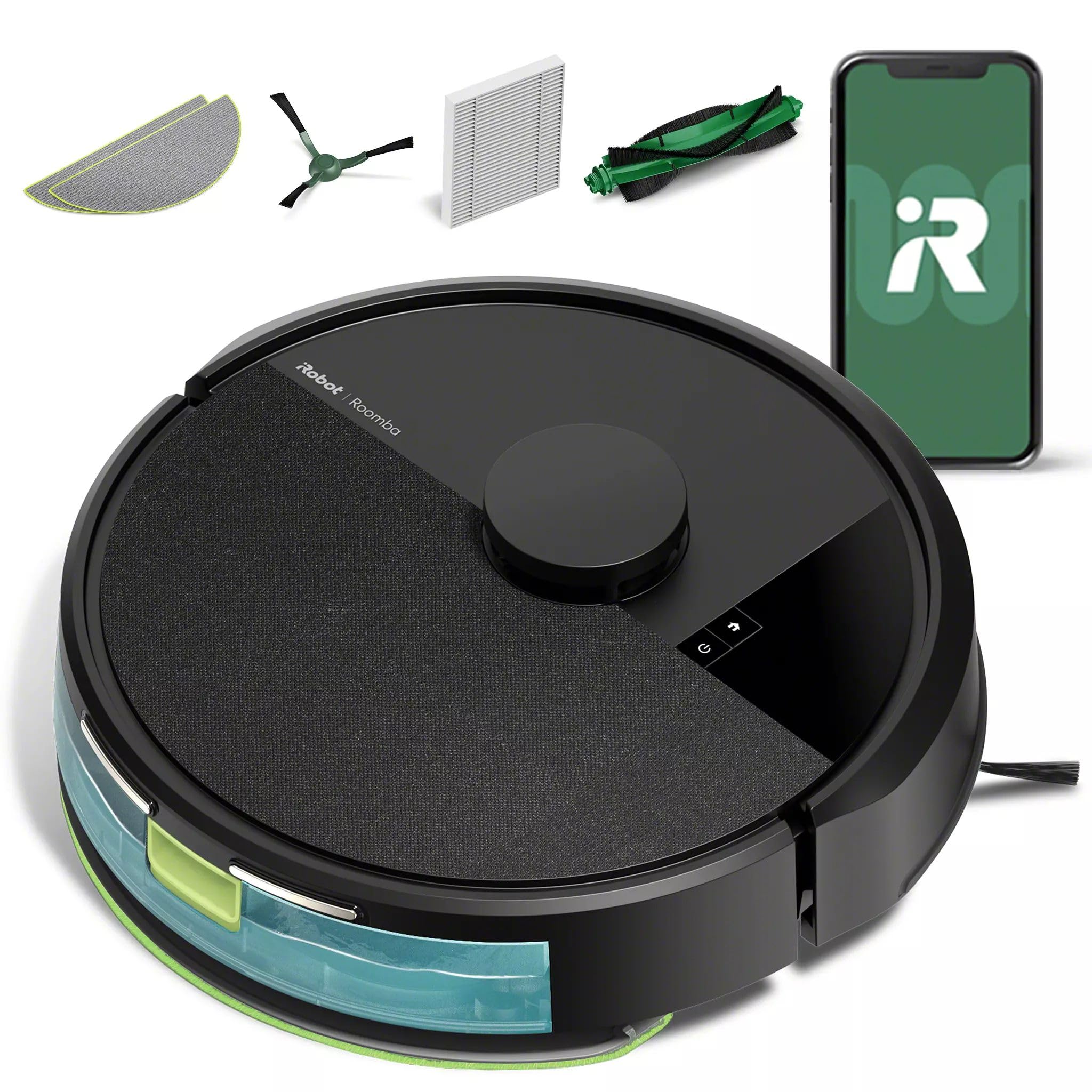
The Roomba 105 Combo brings the trusted iRobot brand into the budget bracket with a vacuum-and-mop hybrid that automatically lifts the mop pad when it detects carpets. This feature alone solves the most common complaint about combo units—soaking area rugs. The 70x power-lifting suction rating, measured against the Roomba 600 series, provides strong pickup on hard floors and low-pile carpets. ClearView LiDAR navigation maps rooms accurately and avoids obstacles.
The 4-stage cleaning system includes a multi-surface brush, edge-sweeping brush, and microfiber mop pad. The micro-pump controls water flow to keep the pad uniformly moist. SmartScrub mode offers deeper scrubbing on stuck-on messes. Battery life is 100 minutes, which is sufficient for an average apartment but may require recharging for larger homes. The app allows custom cleaning schedules, room targeting, and keep-out zone creation.
Some users report that the initial mapping process can take several days to stabilize, and the app uses 24-hour time notation, which throws off some users. The dustbin is positioned near the charging contacts, making removal slightly awkward. Suction is strong enough to grab pet fur and dust bunnies, but the mop pad needs to be swapped or cleaned every few cycles to avoid spreading dirt.
Why it’s great
- Mop pad automatically lifts away from carpets to prevent wetting
- 70x power-lifting suction handles pet hair and debris effectively
- ClearView LiDAR maps rooms with obstacle avoidance
Good to know
- Initial mapping may need several days to stabilize
- Dustbin placement near charging contacts can be awkward to access
8. iRobot Roomba 105 Vac

The Roomba 105 Vac is the entry-level LiDAR model from iRobot, offering the same navigation and suction platform as the Combo version but without the mopping hardware. This makes it a pure vacuum unit that skips the weight and complexity of a water tank and mop pad. The 70x power-lifting suction, borrowed from higher-tier models, provides strong debris pickup on hard floors and low-pile carpets. The battery lasts 200 minutes, which is almost double the runtime of many budget robots and covers larger floor plans in one pass.
The 3-stage cleaning system uses a multi-surface brush and edge-sweeping brush to channel debris into the suction path. Spot cleaning mode focuses on a single area for five minutes, which is useful for concentrated messes around pet feeding stations. The app supports scheduling, room targeting, filter life monitoring, and keep-out zone creation. Voice control works with Alexa, Siri, and Google Assistant.
The dustbin is small for a 200-minute runtime, meaning the bin can fill up before the battery runs out in a larger home. The unit spins in circles and displays a “put on ground” error in some reported units, though customer support has addressed this with replacements. The single-brush design is actually more effective than the dual-brush setup from older Roomba models, according to some users, because it does not scatter debris as much.
Why it’s great
- 200-minute battery is the longest runtime in its price tier
- 70x power-lifting suction delivers strong pickup on carpets
- LiDAR navigation and spot cleaning target specific mess areas
Good to know
- Dustbin is small and may fill up before the battery depletes
- A small number of units have reported navigation errors requiring support
9. eufy 11S MAX

The eufy 11S MAX is the quietest, slimest, and most straightforward robot in this lineup. It has no Wi-Fi, no app, and no self-emptying station—just a remote control, a dock, and a motor that produces less noise than a microwave. At 2.85 inches tall, it fits under furniture that blocks thicker units. The 2,000 Pa suction is the lowest here, but it is tuned for hard floors and low-pile carpets where it performs admirably.
BoostIQ Technology automatically increases suction within 1.5 seconds when the robot moves from hard floors to carpet, optimizing power for surface changes. The 100-minute battery covers roughly 800 square feet. The anti-scratch tempered glass top withstands scuffs from furniture overhangs. Drop-sensing tech prevents stair falls. The 600-milliliter dustbin is generous for a unit this size.
The lack of mapping means the 11S MAX cleans randomly, which results in longer cycle times and occasional missed spots. It also gets stuck under protruding furniture and on low objects like charger cables. The side brush and front wheel collect pet hair and require manual cleaning with a knife tool. Replacement filters are an ongoing expense. For someone who wants a simple, quiet machine that runs from a remote, this is the right choice.
Why it’s great
- Operates at noise levels comparable to a microwave
- 2.85-inch profile fits under most furniture
- Simple remote-control operation with no app needed
Good to know
- No mapping means random cleaning patterns and longer cycle times
- Side brush and wheel collect pet hair that needs manual removal
FAQ
Is LiDAR navigation worth paying extra for in a cheap robot vacuum?
How much suction do I really need for pet hair on hardwood floors?
Can a budget robot vacuum handle medium-pile carpets effectively?
How often do I need to replace the dust bag in a self-emptying station?
Do cheap robot vacuums work with Alexa and Google Assistant?
Final Thoughts: The Verdict
For most users, the cheap robot vacuum winner is the roborock Q10 S5+ because it combines 10,000 Pa suction, a self-emptying dock, sonic mopping, and reliable obstacle avoidance at a price that undercuts many lesser models. If you want the absolute longest stretch between maintenance, grab the DREAME D20 Plus with its 150-day dust bag. And for a pure value play that avoids recurring bag costs, nothing beats the Airzeen Q20 Ultra with its bagless self-emptying station.

Mo Maruf
I created WellFizz to bridge the gap between vague wellness advice and actionable solutions. My mission is simple: to decode the research and give you practical tools you can actually use.
Beyond the data, I am a passionate traveler. I believe that stepping away from the screen to explore new environments is essential for mental clarity and physical vitality.