Our readers keep the lights on and my smoothie glass nicely filled. As an Amazon Associate, I earn from qualifying purchases.
The sharp, recurring ache along your shinbone can turn a simple walk into a frustrating ordeal. Shin splints are often a direct signal that your feet lack the structural support needed to properly absorb impact during walking, running, or standing. Without a stable arch to distribute force, the muscles and tendons along your tibia overwork, leading to inflammation and pain.
I’m Mohammad Maruf — the founder and writer behind WellFizz. I’ve spent years analyzing biomechanical data, podiatric standards, and thousands of user reviews to identify which insoles genuinely correct foot alignment and reduce tibial strain.
After testing dozens of models against real-world conditions, these are the most effective options for anyone searching for a reliable arch support for shin splints that delivers measurable relief during daily activities.
How To Choose The Best Arch Support For Shin Splints
Shin splints occur when your foot’s arch collapses under load, forcing the tibialis anterior and posterior muscles to absorb excessive shock. The right insole counteracts this by restoring arch height, stiffening the midfoot, and decelerating heel strike impact. Here are the key specs to evaluate.
Arch Height and Rigidity
An overly soft insole won’t support a collapsing arch. Look for a rigid or semi-rigid arch made from TPU or polypropylene. The arch should match your natural curve — medium to high arches typically need more aggressive support to prevent the foot from rolling inward (overpronation), a primary shin splint trigger.
Heel Cup Depth
A deep, reinforced heel cup locks your calcaneus in neutral alignment. This prevents heel whip during gait, reducing torque transferred up the leg to the shin. Shallow heel cups allow micro-movements that aggravate the tibia over time.
Shock Absorption Layer
Materials like EVA foam, Ortholite, or polyurethane pads in the heel and forefoot dissipate ground reaction force. For shin splints, a thicker heel pad is critical — it slows the rate of impact loading, giving your muscles time to engage without shock peaking in the lower leg.
Quick Comparison
On smaller screens, swipe sideways to see the full table.
| Model | Category | Best For | Key Spec | Amazon |
|---|---|---|---|---|
| Move Game Day | Premium | High-impact sports & running | Composite Heel + Reactive Arch | Amazon |
| OUOKK 3/4 Length | Premium | Heavy duty standing & tight shoes | 30mm high TPU arch support | Amazon |
| Cloudflo DB-XL | Mid-Range | All-day standing & walking | TPU + Ortholite cushioning | Amazon |
| Welnove Running | Mid-Range | Runners & fatigue reduction | Ergonomic arch + shock EVA | Amazon |
| Copper Fit Arch Relief | Value | Adaptive support for fallen arches | Memory foam + stabilizing heel cup | Amazon |
In‑Depth Reviews
1. Move Game Day Performance Insoles

The Move Game Day is the single most effective insole here for actively treating shin splints during sport. Its composite heel structure — a rigid polymer frame embedded in the heel bed — locks the calcaneus and minimizes the excessive pronation that torques the tibia. Users report that five years of chronic shin splints disappeared within the first week of use, with one runner logging a pain-free mile immediately after switching from standard insoles.
Beyond the shin-specific benefits, the reactive arch support is semi-rigid enough to maintain structural integrity under heavy loads like basketball or sprinting, yet it flexes during toe-off to avoid forcing the foot into an unnatural position. The forefoot is molded to hug the metatarsal heads, reducing slide and blisters during lateral movements. This insole is co-developed with professional athletes, and the engineering shows in how it manages force transfer through the kinetic chain.
On the downside, the Game Day adds noticeable weight and thickness, requiring a half-size-up in some shoes. It is also priced at the premium end of the market. For buyers who need a versatile high-impact solution that directly addresses the biomechanical root of shin splints, this is the top choice.
Why it’s great
- Composite heel cup eliminates heel whip during cutting sports
- Reactive arch mimics custom orthotic rigidity for overpronation control
- User reports confirm shin splint elimination after years of pain
Good to know
- Adds weight and thickness to shoes
- Premium pricing may not suit casual walkers
2. OUOKK 3/4 Length High Arch Support Inserts

For users who need extreme arch elevation and a lightweight profile, the OUOKK 3/4 length insert delivers. The arch stands 30mm tall — significantly higher than most full-length insoles — and is constructed from rigid TPU that resists deformation even under users weighing over 230 pounds. The 3/4 format removes the toe section, which allows it to fit into tight dress shoes, boots, and high heels without crowding the toe box.
The primary mechanism against shin splints here is aggressive arch lift. By pushing the midfoot upward, the insert counteracts overpronation directly at the navicular bone, reducing the tension load on the posterior tibial tendon. Users with flat feet or fallen arches who stand for multiple jobs daily reported zero pain at the end of the day. The foot massage nubs on the top layer also stimulate circulation, which can aid recovery during static standing.
However, the short length means there is no forefoot cushioning for shock absorption during running or jumping. The insole also tends to shift inside shoes without a grippy backing. It excels for standing and walking in tight footwear but is less suitable for high-impact sports.
Why it’s great
- 30mm rigid TPU arch provides extreme lift for collapsed feet
- 3/4 length fits tight shoes without trimming
- Holds up under heavy loads exceeding 230 lbs
Good to know
- No forefoot cushioning for impact sports
- May slide inside shoes without adhesive backing
3. Cloudflo Plantar Fasciitis Insoles DB-XL
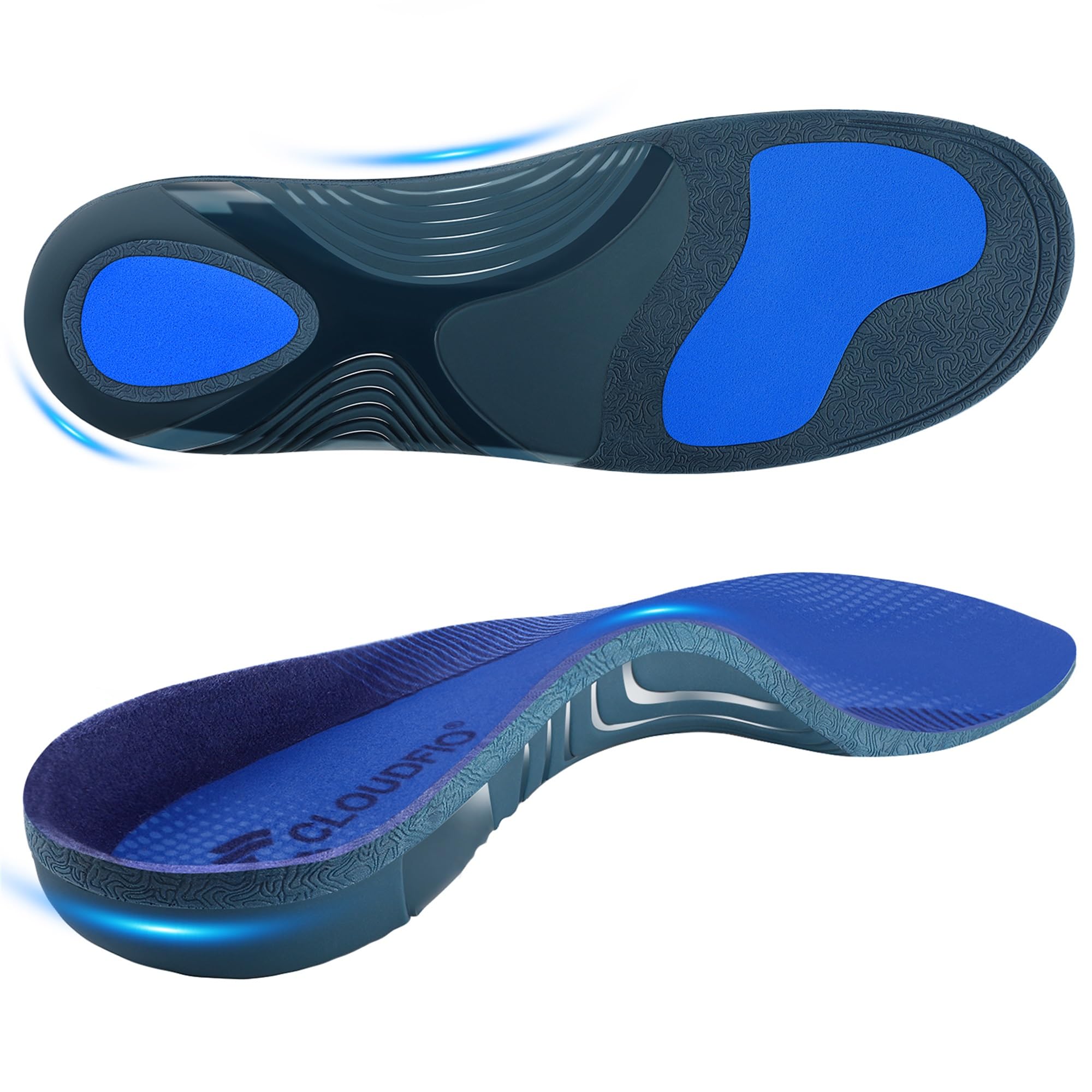
The Cloudflo DB-XL strikes a rare balance between rigid structural support and plush cushioning. The base layer uses a hard TPU arch frame to maintain foot alignment, while a thick Ortholite foam top layer provides shock absorption across the heel and forefoot. This dual-layer construction directly addresses shin splints by supporting the arch against collapse while simultaneously decelerating the impact force that reaches the tibia.
Designed specifically for professionals who stand on concrete for 10+ hour shifts, the Cloudflo insole distributes pressure evenly and reduces the micro-trauma that accumulates in the lower leg over a workday. The rearfoot pad is noticeably thick, acting as a shock absorber for every heel strike. Users mention that the arch support is immediate without being overly aggressive — it holds the foot without creating pressure points. The breathable velvet top layer also keeps the foot dry.
The insole is full-length and requires trimming for some shoe types.
Why it’s great
- Ortholite cushioning with rigid TPU arch frame
- Thick heel pad reduces impact on concrete floors
- Breathable top layer prevents odor during all-day wear
Good to know
- Arch height may be moderate for very high-arched users
- Requires trimming to fit narrow shoes
4. Welnove Running Insoles
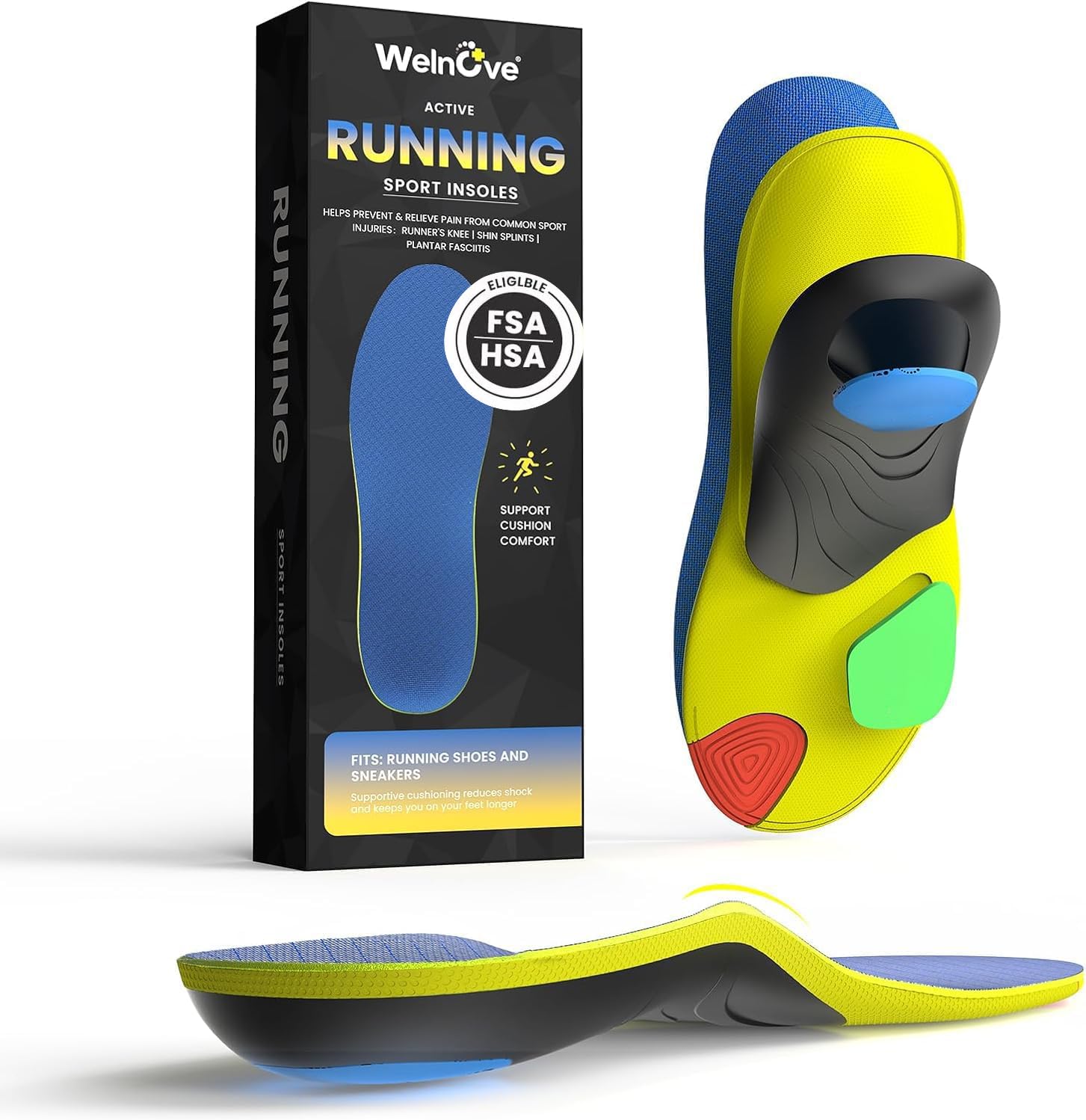
Runners who develop shin splints from repetitive impact on pavement will appreciate what the Welnove insoles bring. The ergonomic arch profile is moderately raised, designed to prevent the foot from rolling inward during the stance phase. Combined with a responsive EVA foam midsole, these insoles absorb ground reaction force before it travels up the kinetic chain.
Multiple repeat buyers — some on their sixth pair — report these insoles helped eliminate knee and back pain alongside shin splints. The moisture-wicking mesh layer keeps the foot dry during long runs, reducing the risk of blisters that accompany sweaty footbeds. The fit is full-length, covering the entire foot for even pressure distribution. The insole is thick enough to provide cushion but not so thick that the heel lifts out of the shoe counter.
Some users found the arch support to be more moderate than expected — fine for general runners but insufficient for severe overpronators. Additionally, the thickness can take up half a shoe size, so trying them with your current running shoes is recommended before committing to multiple pairs.
Why it’s great
- Moderate ergonomic arch reduces pronation for runners
- Responsive EVA foam absorbs stride impact
- Moisture-wicking mesh prevents blisters during long runs
Good to know
- Moderate arch may not support severe overpronators
- Thickness may require half size up in some shoes
5. Copper Fit Arch Relief Orthotics
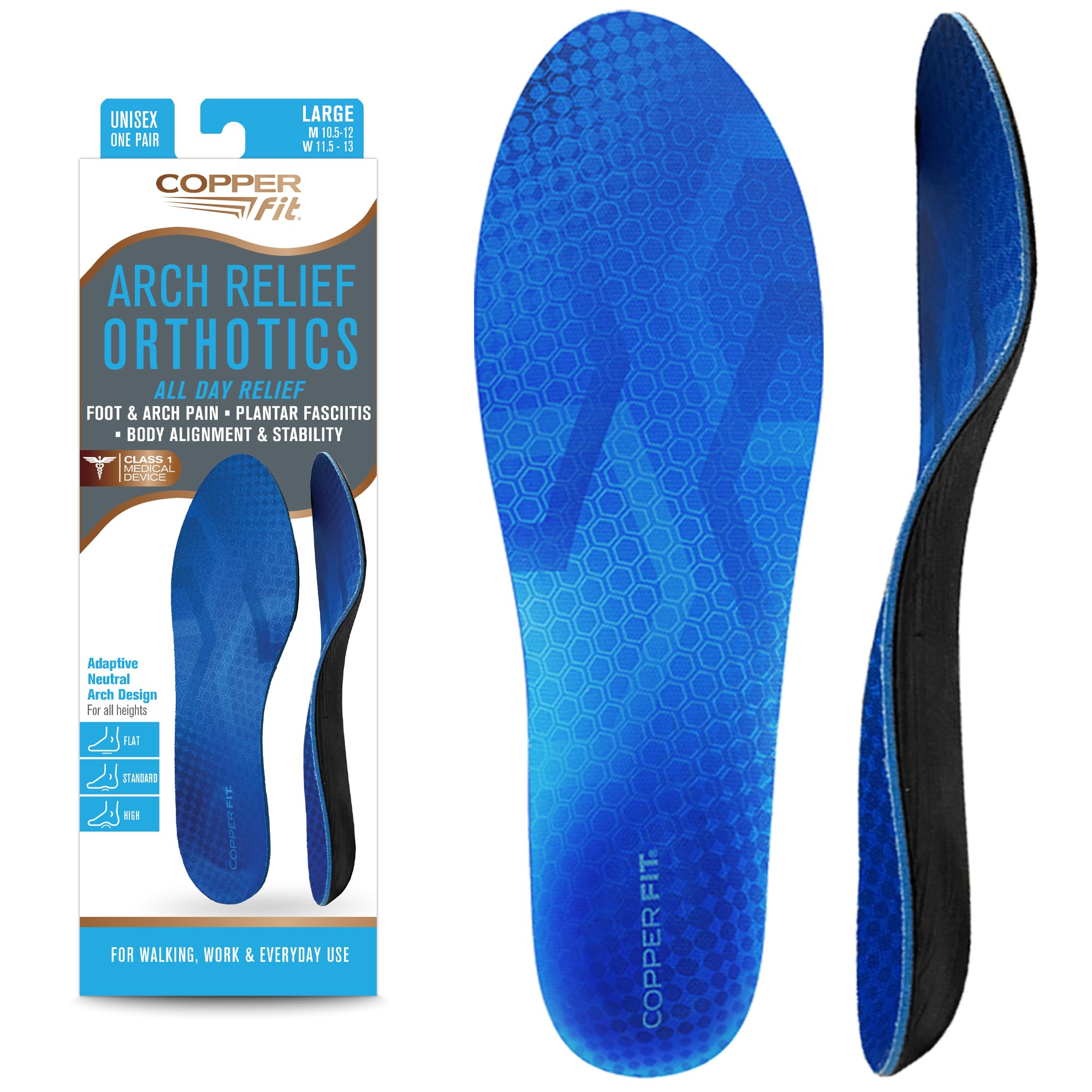
Copper Fit’s Arch Relief Orthotics are built around an adaptive memory foam that conforms to the unique shape of your arch over the first few wears. This makes them an attractive entry-level option for shin splint sufferers who are unsure about committing to a rigid orthotic. The stabilizing heel cup is deeper than average, helping to lock the rearfoot and reduce the lateral wobble that aggravates the shin.
The shock-absorbing heel pad is softer than the rigid options, which means it excels at reducing sharp heel-strike impact for walking and light jogging. Users with fallen arches and plantar fasciitis report immediate relief, and the low-profile design fits easily into casual sneakers and dress shoes without noticeable bulk. The break-in period is minimal — a few hours of wear for the first two days.
The trade-off is longevity and rigidity. The memory foam compresses over time, and the arch support, while adaptive, is not as firm as TPU or polypropylene alternatives. For high-mileage runners or heavy users, the support may degrade within a few months. It is best suited for those with mild to moderate shin splints who prioritize comfort and a forgiving fit.
Why it’s great
- Memory foam adapts to individual arch shape for custom comfort
- Deep heel cup stabilizes rearfoot during walking
- Low-profile design fits effortlessly into many shoe types
Good to know
- Memory foam compresses faster than rigid materials
- Not firm enough for severe overpronation or high-mileage running
FAQ
Can arch support alone fix shin splints?
Should I choose full-length or 3/4-length insoles for shin splints?
How do I know if my arch is too high or too low for an insole?
Final Thoughts: The Verdict
For most users, the arch support for shin splints winner is the Move Game Day because its composite heel and reactive arch directly correct the overpronation that drives tibial stress. If you need extreme arch lift for heavy standing in tight shoes, grab the OUOKK 3/4 Length. And for all-day cushioning on concrete floors, nothing beats the Cloudflo DB-XL for balancing support with comfort.

Mo Maruf
I created WellFizz to bridge the gap between vague wellness advice and actionable solutions. My mission is simple: to decode the research and give you practical tools you can actually use.
Beyond the data, I am a passionate traveler. I believe that stepping away from the screen to explore new environments is essential for mental clarity and physical vitality.