Our readers keep the lights on and my smoothie glass nicely filled. As an Amazon Associate, I earn from qualifying purchases.
A 120Hz TV isn’t just a spec sheet number—it’s the difference between a blurry soccer ball skipping across the pitch and a smooth, lifelike arc that follows the player’s foot. For gaming, sports, and action movies, the jump from a standard 60Hz panel to 120Hz (or higher) transforms motion handling from acceptable to noticeably fluid, reducing judder and keeping fast-moving objects crisp on screen.
I’m Mohammad Maruf — the founder and writer behind WellFizz. For years, I’ve analyzed how manufacturers implement high refresh rates, from the panel’s native refresh ceiling to the VRR range, and how that translates into real-world performance for gaming consoles, PC rigs, and live sports broadcasts.
The sheer range of panels—from Mini-LED QLEDs to self-lit OLEDs—makes finding a genuine 120hz tv a search that demands you look past marketing claims and into the native refresh rate, HDMI 2.1 support, and local dimming architecture that actually delivers on the fluid-motion promise.
How To Choose The Best 120Hz TV
A 120Hz TV is a purchase you’ll live with for half a decade or more, so sorting the native performers from the software-boosted pretenders is essential. Focus on three areas: the true panel refresh rate, the HDMI 2.1 ecosystem, and the backlight architecture that defines contrast and brightness in HDR content.
Native Refresh Rate vs. Interpolated Motion
Not every 120Hz TV runs at a true 120Hz. Some panels are 60Hz native and use black frame insertion or motion smoothing to simulate a higher rate, which can introduce artifacts and input lag. A native 120Hz (or 144Hz) panel—like the Hisense U7 series with its 165Hz native ceiling—delivers genuine fluidity without the ghosting or soap-opera effect. For gaming on a PS5 or Xbox Series X, native 120Hz support via HDMI 2.1 is non-negotiable.
HDMI 2.1 Bandwidth and VRR
To push a 4K signal at 120Hz, you need full-bandwidth HDMI 2.1 ports (usually 48 Gbps). Cheaper “120Hz” TVs sometimes only offer this on one port or limit bandwidth, forcing 4:2:0 chroma subsampling. Variable Refresh Rate (VRR), AMD FreeSync Premium Pro, and NVIDIA G-Sync compatibility ensure that frame-rate drops don’t produce screen tearing. The LG G5 OLED, for instance, offers four full HDMI 2.1 inputs, making it a true multi-console hub.
Backlight Technology and Local Dimming
Mini-LED backlights with hundreds or thousands of local dimming zones (like the TCL QM7K’s LD2500 series) produce deep blacks and high peak brightness, rivaling OLED in bright rooms. OLED panels, like the LG G5, achieve perfect black per pixel without any blooming, but they typically cap at lower overall brightness than Mini-LED alternatives. For a home theater in a controlled light environment, OLED’s infinite contrast is superior; for a bright living room with mixed-use sports and gaming, a high-zone Mini-LED often wins.
Quick Comparison
On smaller screens, swipe sideways to see the full table.
| Model | Category | Best For | Key Spec | Amazon |
|---|---|---|---|---|
| LG G5 OLED evo | OLED | Ultimate home theater & competitive gaming | 120Hz native, 0.1ms response, 4x HDMI 2.1 | Amazon |
| Sony BRAVIA 5 XR50 | Mini-LED | PS5 gaming & cinematic upscaling | 120Hz native, XR Processor AI, XR Motion Clarity | Amazon |
| Hisense U7 55U7SG | Mini-LED QLED | High-refresh gaming on a budget | 165Hz native, 3000-zone dimming, anti-glare | Amazon |
| Samsung Neo QLED QN70F | Mini-LED QLED | AI-enhanced upscaling & sports viewing | 144Hz native, NQ4 AI Gen2, Quantum Matrix | Amazon |
| Amazon Ember 55″ Mini-LED | Mini-LED QLED | Deep Fire TV ecosystem integration | 144Hz native, 512-zone dimming, Dolby Vision IQ | Amazon |
| Roku Pro Series 55″ | QLED Mini-LED | Roku OS fans wanting 120Hz + Dolby Vision IQ | 120Hz native, 4K QLED, Dolby Vision IQ | Amazon |
| TCL QM7K 55″ | Mini-LED QLED | Bright room performance with high zone count | 144Hz native, LD2500 dimming zones, HVA panel | Amazon |
| Hisense CanvasTV S7 | QLED Art TV | Gallery-style design with 144Hz motion | 144Hz native, Hi-Matte display, art mode | Amazon |
| Samsung M70H Mini LED | Mini-LED | Mid-range brightness & color booster | Motion Xcelerator + DLG 120Hz, 60Hz native panel | Amazon |
| Roku Plus Series 55″ | Mini-LED QLED | Budget entry with Roku simplicity | 4K QLED Mini-LED, VRR, Dolby Vision | Amazon |
| Panasonic W70 50″ | LED 4K | Budget Fire TV with HDMI 2.1 | 4K UHD, MEMC motion, HDR10+, HDMI 2.1 | Amazon |
In‑Depth Reviews
1. LG 77-Inch Class OLED evo G5 Series

The LG G5 OLED evo sets the standard for what a 120Hz TV can deliver. Its Brightness Booster Max pushes pixel luminance to over 2000 nits in HDR highlights, while still maintaining the perfect black levels that only self-lit OLED pixels can achieve. The Alpha 11 AI Gen2 processor uses AI Super Upscaling to clean up lower-resolution content, and the 120Hz native refresh rate with a 0.1ms response time eliminates any motion blur during fast-paced gaming or sports.
For gamers, four full-bandwidth HDMI 2.1 inputs mean you can connect a PS5, Xbox Series X, and a gaming PC simultaneously without swapping cables. NVIDIA G-Sync and AMD FreeSync Premium Pro compatibility ensure VRR-synced frames without tearing, and the 165Hz mode available via the Game Optimizer pushes beyond standard 120Hz for PC titles that support it. The webOS platform is responsive, with access to 350+ free LG Channels and five years of software updates promised.
The One Wall Design leaves virtually no gap when wall-mounted, and the included bracket simplifies installation. The remote lacks backlit buttons, which is a minor inconvenience in dark rooms. Also, the power cable is non-detachable and exits the bottom, requiring some planning for clean in-wall wiring. For buyers who prioritize ultimate motion clarity and HDR performance without compromise, this is the reference-grade choice.
Why it’s great
- Perfect black levels with 2000+ nit peak brightness for stunning HDR
- Four full HDMI 2.1 inputs with G-Sync and FreeSync Premium Pro
- Near-instantaneous 0.1ms pixel response for zero motion blur
Good to know
- Remote is not backlit, which can be frustrating in low light
- Power cable is non-detachable and exits the bottom, complicating wall wiring
- No stand is included; requires a VESA mount or separate purchase
2. Sony BRAVIA 5 65 Inch TV (K-65XR50)

Sony’s BRAVIA 5 leverages thousands of Mini LEDs controlled by the XR Backlight Master Drive to deliver captivating brightness and authentic contrast without the halo effect common on lesser Mini-LED sets. The XR Processor with AI technology works in real time to upscale HD content to near-4K clarity and applies XR Motion Clarity to keep fast-moving objects—like a football in flight or a car in a racing game—crisp and blur-free at 120Hz.
For PS5 owners, exclusive features like Auto HDR Tone Mapping and Auto Genre Picture Mode automatically optimize the picture when a PlayStation is detected. The Game Menu consolidates all gaming picture settings and assist features into one overlay. Google TV integration with Apple AirPlay 2 and Google Cast makes streaming seamless, and the SONY PICTURES CORE app provides access to a large IMAX Enhanced collection with included movies.
Studio-calibrated picture modes for Netflix, Prime Video, and Sony Pictures Core ensure that you see content as the creator intended. The panel’s anti-reflection coating is excellent, minimizing glare in bright rooms. The main caveat is that only two of the four HDMI ports are HDMI 2.1, which limits simultaneous 4K120Hz connections. The built-in speakers are decent but a soundbar is recommended for full Dolby Atmos immersion.
Why it’s great
- XR Motion Clarity delivers blur-free motion at 120Hz with minimal judder
- Exclusive PS5 Auto HDR and Genre Picture Mode optimize gaming instantly
- Studio-calibrated modes for Netflix, Prime Video, and Sony Pictures Core
Good to know
- Only two of four HDMI ports are full-bandwidth 2.1
- Built-in audio is acceptable but lacks bass for cinematic Atmos
- Premium price point relative to similarly spec’d Mini-LED competitors
3. Hisense 55″ U7 Mini-LED ULED (55U7SG)
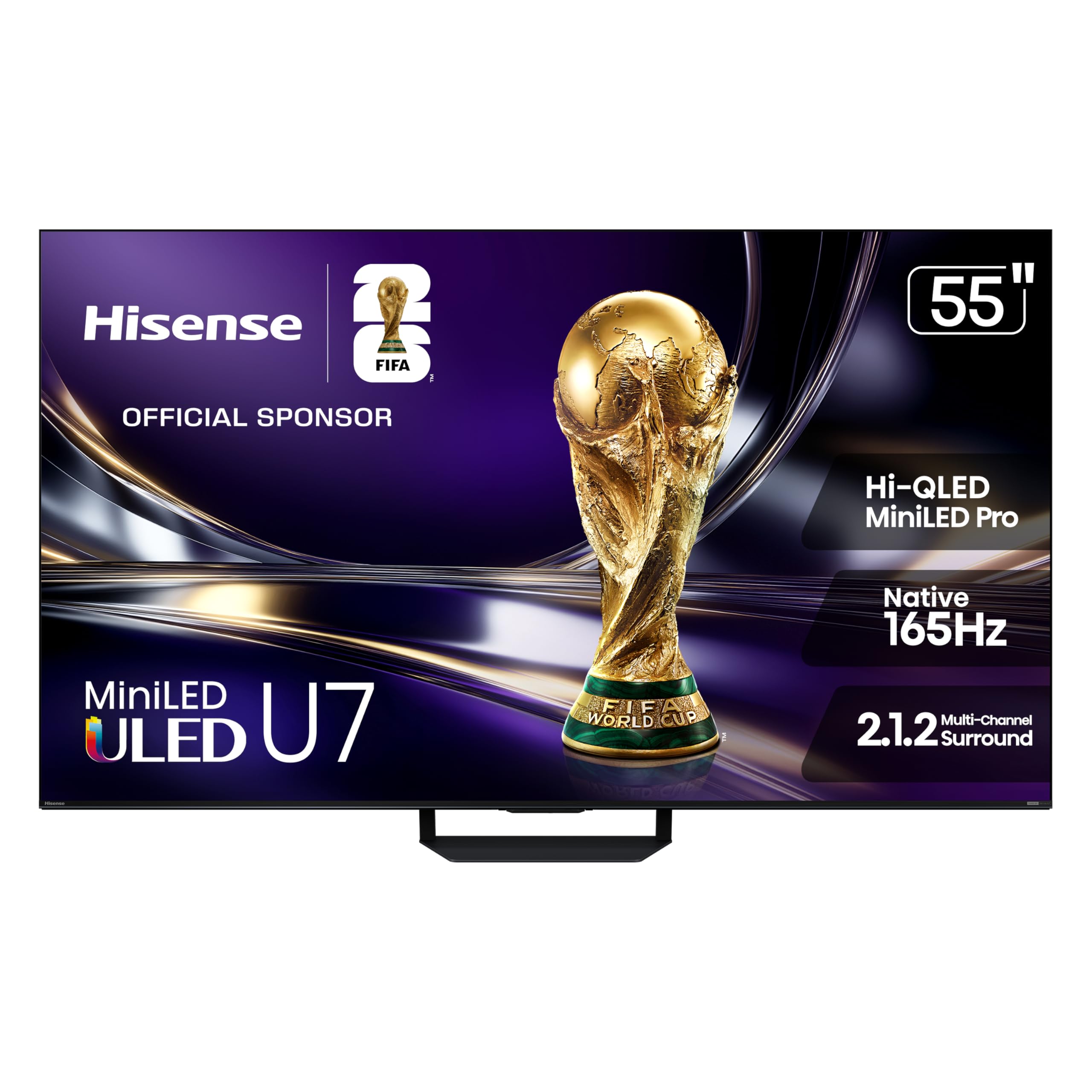
The Hisense U7 series punches far above its price bracket with a native 165Hz refresh rate—higher than most competitors—making it a compelling choice for PC gamers who want to push frame rates beyond 120fps. The Hi-QLED MiniLED Pro backlight, combined with up to 3000 local dimming zones and 3000 nits peak brightness, delivers exceptional contrast and pop in HDR content. The anti-reflection and glare-free layer keeps the image clear even with ambient light.
The Hi-View AI Engine Pro constantly analyzes the scene to adjust color, contrast, and detail, and it handles SDR to HDR-like conversion effectively. Google TV integration is smooth and responsive, with support for all major streaming apps. The 2.1.2-channel sound system is one of the better built-in audio setups in this tier, though adding a soundbar still elevates the experience for Dolby Atmos content.
Input lag is impressively low in game mode, and VRR support ensures tear-free gameplay across the full refresh range. Filmmaker Mode is available for purists who want to bypass processing. The cheap-feeling remote is a minor letdown, and the Google TV interface can feel bloated with ads. For the price, however, the U7 delivers native high-refresh performance that rivals TVs costing twice as much.
Why it’s great
- Native 165Hz refresh rate is the highest in this price tier
- High zone count (up to 3000) produces deep blacks for a Mini-LED
- Excellent anti-glare layer works well in bright rooms
Good to know
- Remote feels cheap and lacks backlighting
- Google TV interface includes bloatware and ad suggestions
- Built-in sound is good but not a substitute for a proper soundbar
4. Samsung 65-Inch Neo QLED QN70F

The Samsung Neo QLED QN70F uses Quantum Matrix Technology with precision-controlled Mini LEDs to achieve deep blacks and bright highlights with minimal blooming. The NQ4 AI Gen2 processor leverages 20 neural networks to upscale content to 4K and enhances HDR-like brightness dynamically. Motion Xcelerator at 144Hz native ensures that sports and games remain fluid without the artifacts of interpolation.
Samsung TV Plus provides 2,700+ free channels, including 400+ premium channels, reducing the need for additional subscriptions. Gaming Hub consolidates cloud gaming services, consoles, and apps in one interface. The slim design and titanium black finish complement modern living spaces, and the SolarCell remote eliminates the need for disposable batteries.
Viewing angles are strong for a VA-based panel, though not as wide as OLED. The Tizen interface is fast, but the simplified remote can be frustrating for power users who want direct access to inputs. The 60Hz native when checked in some technical specs raises questions—buyers should confirm that the Motion Xcelerator + DLG combination delivers the advertised 120Hz/144Hz experience, as it uses Dual Line Gate technology rather than a purely native high-refresh panel.
Why it’s great
- Quantum Matrix Mini-LED produces excellent contrast and peak brightness
- AI upscaling via 20 neural networks sharpens lower-resolution sources
- Extensive free TV channel selection via Samsung TV Plus
Good to know
- DLG 120Hz may not feel identical to a native 120Hz panel for hardcore gamers
- Simplified remote lacks direct input buttons and feels less intuitive
- Some units have been reported with a slow startup time
5. Amazon Ember 55″ Mini-LED Series
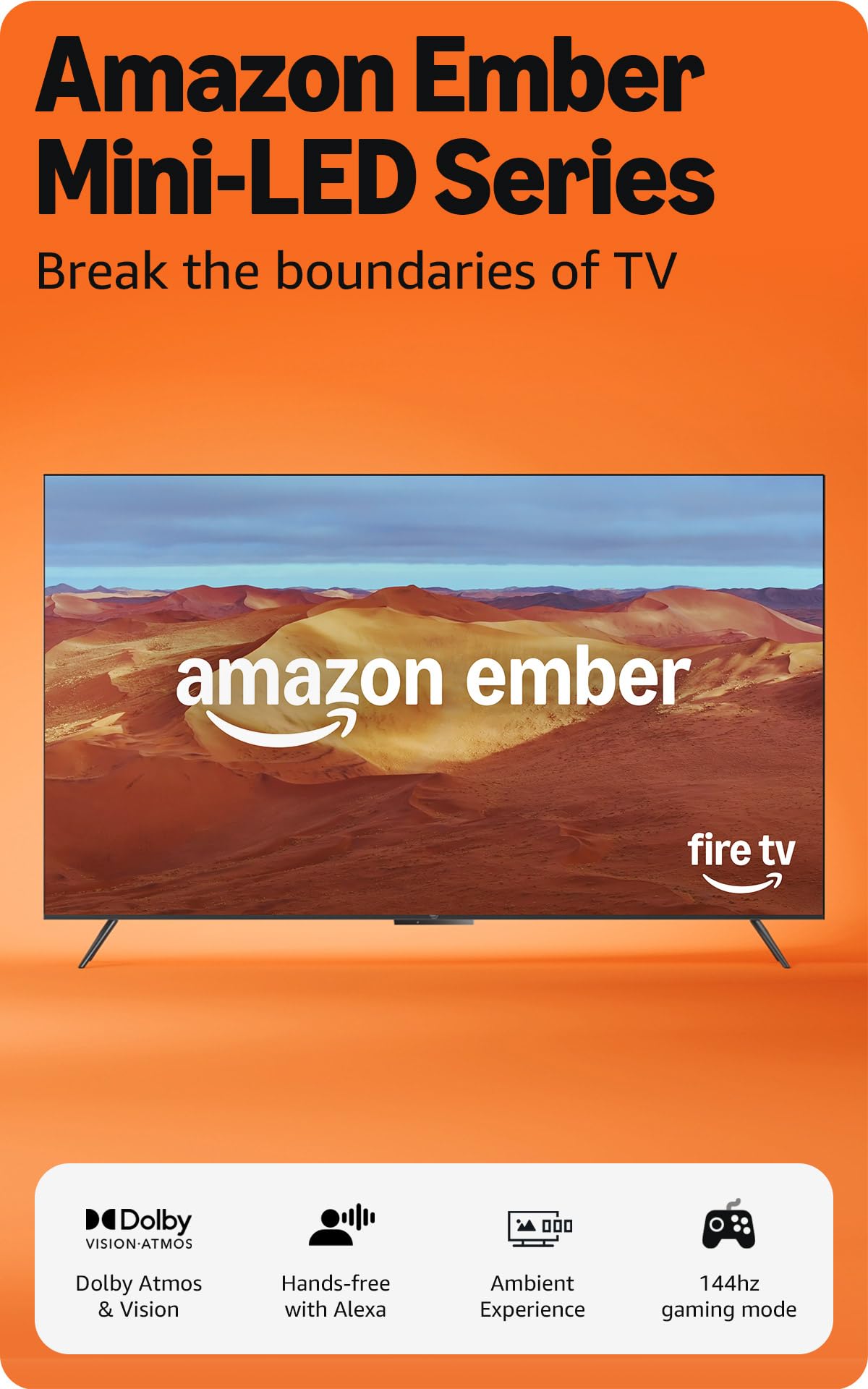
Amazon’s Ember Mini-LED Series is the company’s best TV for gaming, offering a 144Hz native refresh rate with AMD FreeSync Premium Pro certification for tear-free, low-latency gameplay. The 512-zone mini-LED backlight delivers higher contrast than most sets in its price range, with peak brightness up to 1,400 nits for striking HDR highlights. Dolby Vision IQ and HDR10+ Adaptive adjust the picture based on ambient room lighting.
The new Fire TV experience (2026) is streamlined and fast, with Alexa+ providing natural language search and personalized recommendations. The Omnisense technology wakes the display when you enter the room, and the built-in 2.1 Dolby Atmos audio system with a subwoofer produces impressive bass for a flat panel. Hands-free Alexa works even when the screen is off for timers and smart home control.
Smart Picture Max uses AI to clean up incoming signals and optimize color and sharpness scene by scene. Some users report that after software updates, the interface can become sluggish, requiring a FireStick 4K Max to restore snappiness. The home screen is heavy with Amazon ads, which may frustrate those who prefer a cleaner UI. For Fire TV loyalists who want native 144Hz performance, however, this is a compelling package.
Why it’s great
- Native 144Hz with FreeSync Premium Pro for smooth gaming
- 512-zone dimming and 1,400-nit peak brightness rival higher-end sets
- Built-in 2.1 audio with subwoofer delivers punchy sound
Good to know
- Fire TV interface can become slow after major software updates
- Home screen includes prominent Amazon ads and promoted content
- Some units have reported audio sync issues via HDMI eARC
6. Roku Smart TV 55-Inch Pro Series
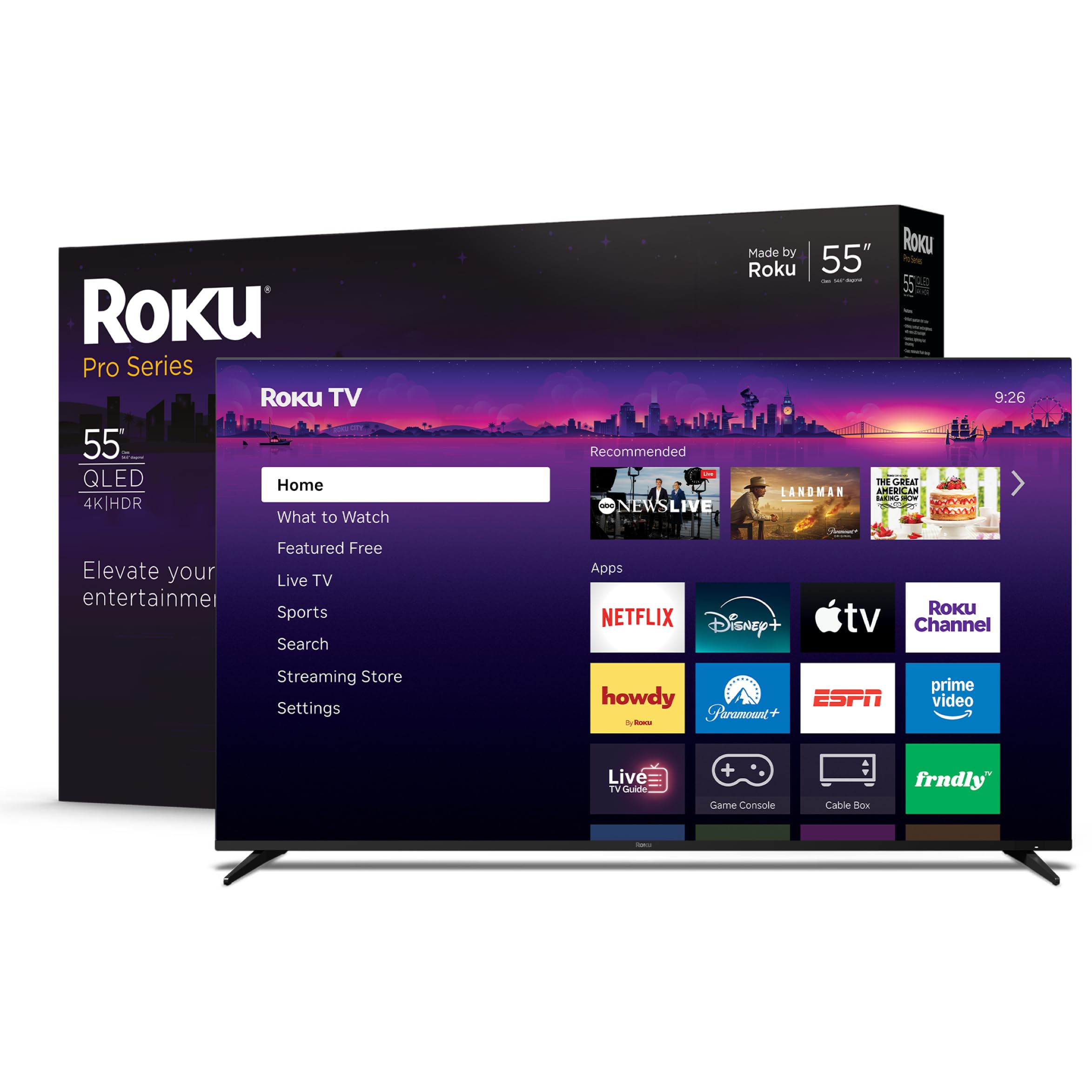
The Roku Pro Series 55″ combines a native 120Hz refresh rate with a QLED Mini-LED panel and Dolby Vision IQ for a bright, colorful, and fluid viewing experience. The backlit Roku Voice Remote Pro is rechargeable and includes hands-free voice controls and a lost remote finder. The minimalist design sits nearly flush against the wall when mounted, and the bezel-less look makes the screen feel larger than its diagonal.
Roku’s OS remains one of the simplest and most user-friendly smart TV platforms, with automatic game mode, FreeSync Premium Pro, ALLM, and VRR for tear-free gaming. The side-firing speakers and Dolby Atmos support produce immersive sound that outperforms many competitors’ built-in audio. Smart Picture Max AI refines color and sharpness automatically per scene.
Some users have reported brown spots or audio sync issues developing after a few weeks of use, though these appear to be isolated to specific batches rather than a widespread flaw. The Roku ecosystem is slightly more limited in app selection compared to Google TV, but the core streaming apps are all present. For those who value a clutter-free, intuitive interface paired with genuine 120Hz performance, this is an excellent choice.
Why it’s great
- Native 120Hz with FreeSync Premium Pro for smooth gaming
- Backlit remote with lost-remote finder and rechargeable battery
- Excellent built-in sound with Dolby Atmos and side-firing speakers
Good to know
- Limited reports of screen defects (brown spots) and audio sync issues
- Roku app selection is slightly narrower than Google TV or Fire TV
- No full-array local dimming zone count as high as top-tier Mini-LEDs
7. TCL 55 Inch Class QM7K Series
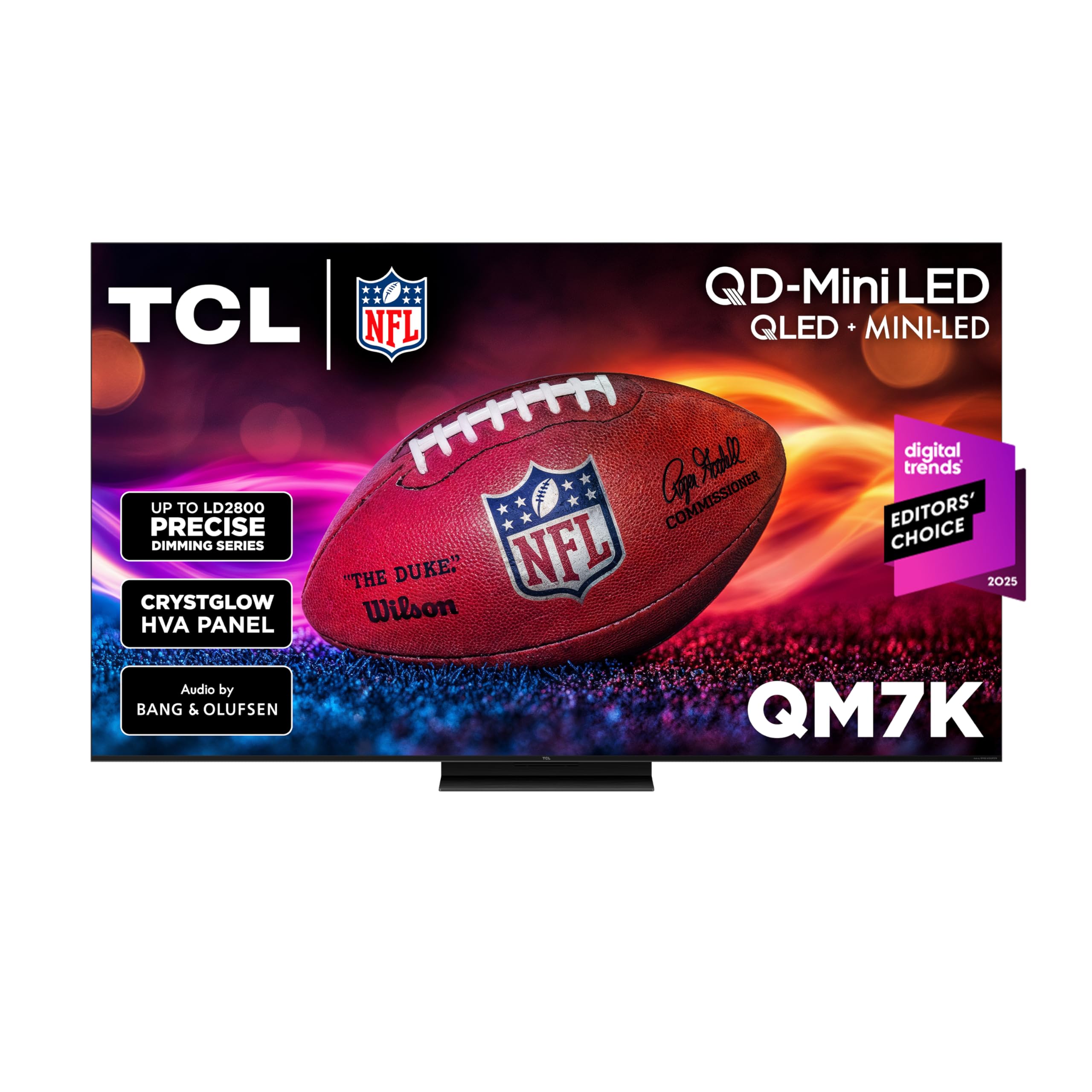
TCL’s QM7K series brings QD-Mini LED technology that combines the color volume of QLED with the pixel-level precision of Mini-LED. The LD2500 Precise Dimming Series—up to 2500 local dimming zones—delivers pure black levels and “halo-free” brightness, making it ideal for bright living rooms where contrast can be a challenge. The CrystGlow HVA Panel effectively blocks reflections and maintains crisp detail in lit environments.
With a native 144Hz refresh rate, the QM7K handles fast-paced content—from sports to first-person shooters—with fluidity. Google TV integration is responsive, and the TCL Halo Control System, which includes a Super High Energy LED Microchip and Zero Delay Transient Response, minimizes ghosting. The Onkyo-tuned audio system provides clear dialogue and respectable bass, though a soundbar is still recommended for full immersion.
Some users have noted that the remote feels cheap compared to the premium build of the TV itself, and the Google TV platform includes bloatware that can slow down navigation over time. The Bang & Olufsen audio partnership is a marketing highlight, but the actual sound output is merely average. For those prioritizing high zone count and anti-reflective performance at a competitive price, the QM7K is a strong contender.
Why it’s great
- Up to 2500 local dimming zones for excellent contrast
- 144Hz native refresh rate ensures fluid gaming and sports
- Excellent anti-reflective CrystGlow HVA panel for bright rooms
Good to know
- Remote feels cheap and plasticky for a TV in this tier
- Onkyo audio is decent but not as immersive as dedicated sound systems
- Google TV can accumulate bloatware and slow down over time
8. Hisense 75″ Hi-QLED S7 CanvasTV
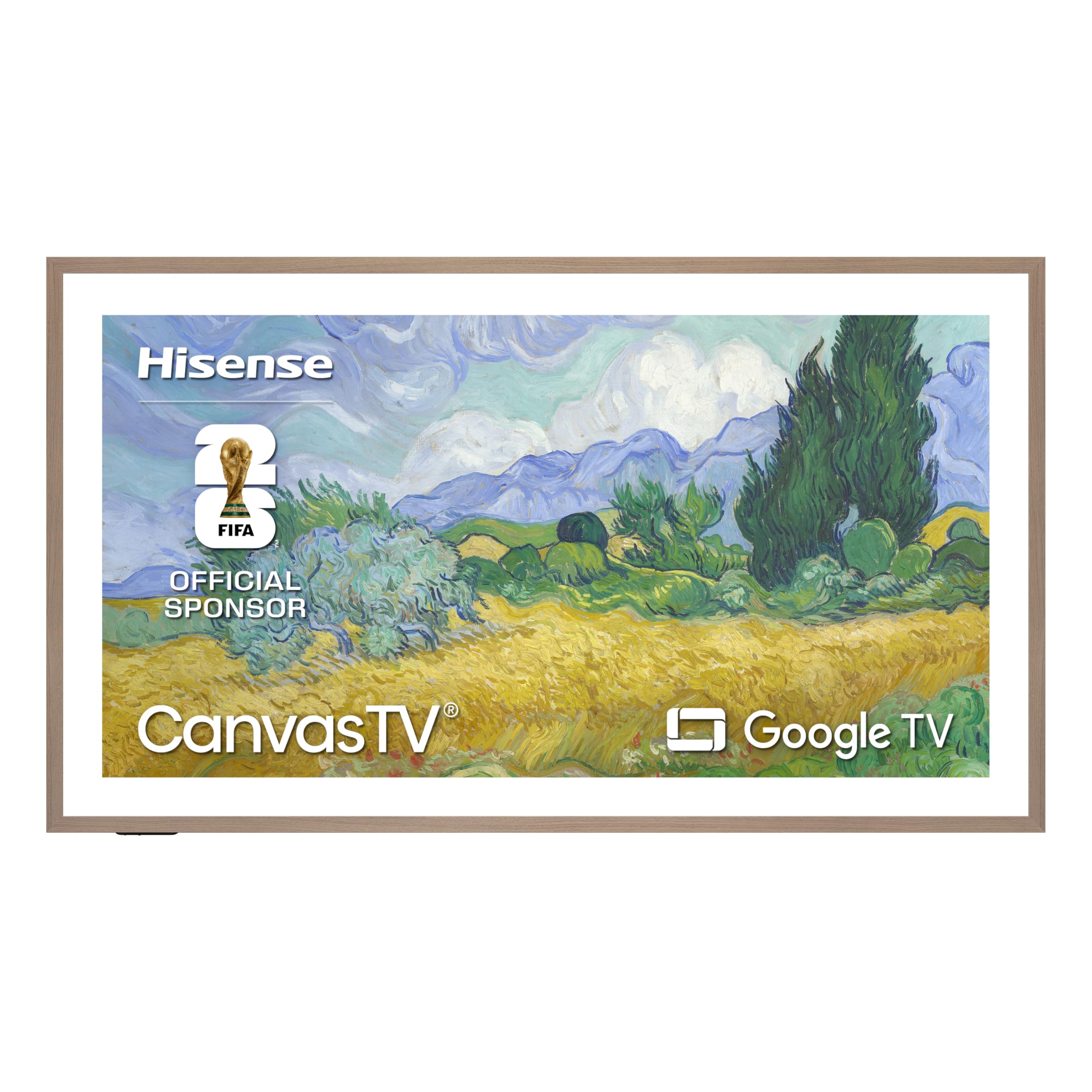
The Hisense CanvasTV S7 is a unique hybrid that doubles as a gallery display when powered off, using a Hi-Matte anti-glare surface that eliminates reflections and makes displayed art look like a canvas print. Under the surface, it packs a native 144Hz refresh rate with AI Smooth Motion, ensuring that when you switch from art mode to action movies or gaming, motion stays crisp and blur-free. The included teak magnetic frame and ultra-slim wall mount complete the gallery aesthetic.
The 4K Hi-QLED panel delivers vibrant, accurate colors, and the AI Ambient Light Sensor adjusts brightness and color temperature to match the room’s lighting. The 2.0.2 multi-dimensional sound with DTS Virtual:X creates immersive audio with virtual height effects, though external speakers would elevate the theater experience further. Google TV comes pre-loaded with access to 10,000+ apps and hundreds of free live channels.
Motion detection wakes the display when you enter the room and fades it when you leave, saving energy while maintaining the art-gallery illusion. Some users note that the art mode, while impressive, still looks like a backlit TV rather than a true painting in very bright rooms. The recessed power and HDMI connections may require additional planning for a truly flush wall installation. For those who want 144Hz performance without sacrificing living room aesthetics, this is a compelling option.
Why it’s great
- Native 144Hz with AI Smooth Motion for blur-free action
- Hi-Matte anti-glare surface convincingly mimics canvas in art mode
- Included teak frame and flush wall mount for a seamless look
Good to know
- Art mode still appears backlit rather than like a true painting
- Wall mount lacks adjustments; recessed wiring needed for flush look
- Built-in sound is good but not on par with dedicated home theater audio
9. Samsung 65-Inch Class Mini LED M70H Series
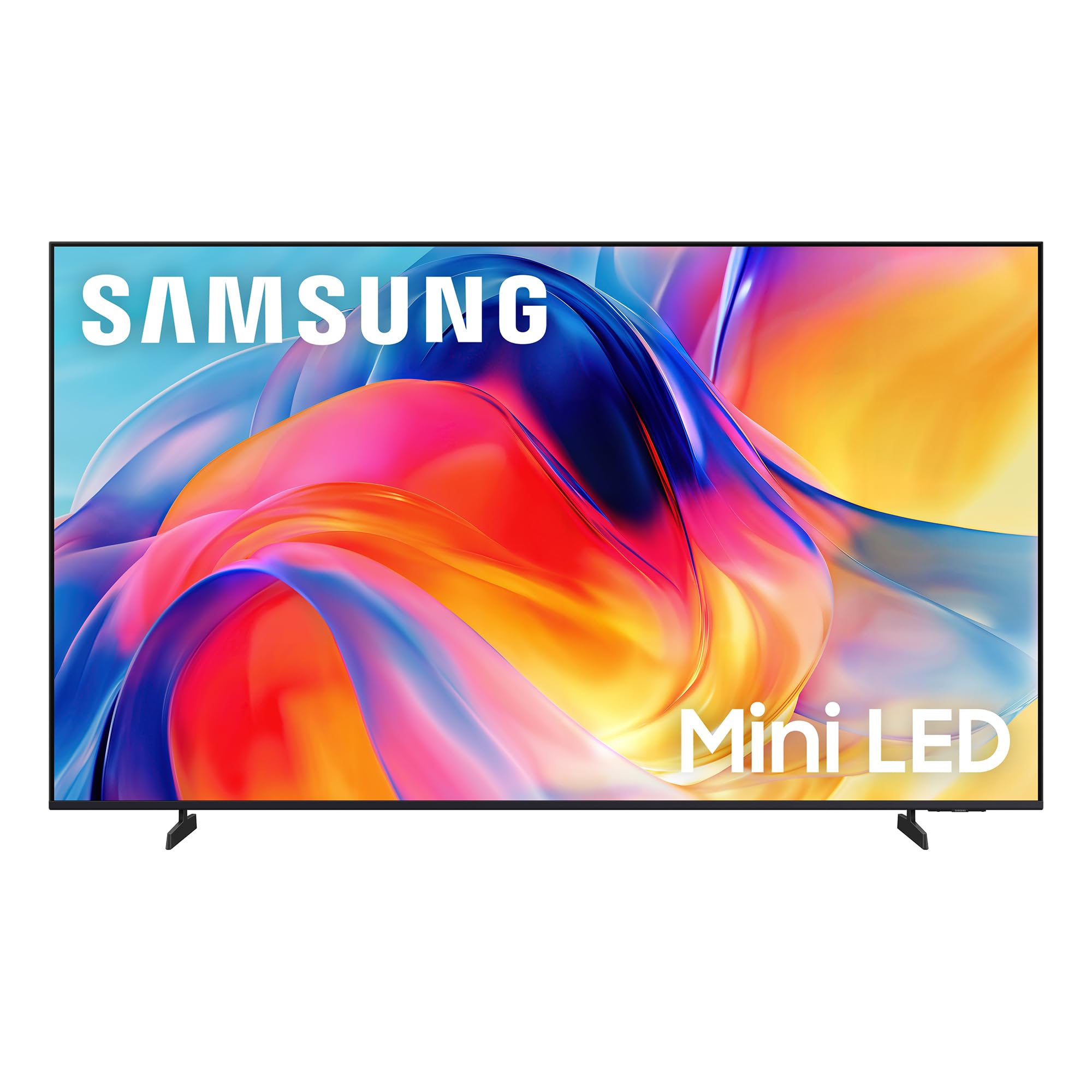
The Samsung M70H is a mid-range Mini-LED TV that uses Motion Xcelerator with Dual Line Gate technology to simulate a 120Hz-like experience, though the base panel itself is 60Hz native. For casual viewers and those who primarily watch cable TV or stream movies, this DLG approach can smooth motion noticeably. The Mini LED processor delivers brighter highlights and deeper blacks than a standard LED set, and the Pure Color Spectrum support provides one billion true-to-life colors.
Samsung TV Plus offers 2,700+ free streaming channels, including 750+ subscription-free options, reducing the need for extra subscriptions. Gaming Hub brings together console, cloud, and app-based games in one interface. Soccer Mode optimizes settings for clearer motion and more vibrant greens, which sports fans will appreciate. The Color Booster feature enhances color intensity for a more vivid picture.
The key limitation is the panel’s 60Hz native refresh rate—serious gamers expecting true 120Hz for competitive play will find this insufficient. The remote is simplified and lacks direct input buttons, and the startup time can be slow (10-12 seconds). For buyers who want Mini-LED picture quality and don’t need native 120Hz for gaming, this fills a niche at a lower entry point.
Why it’s great
- Mini-LED backlight produces better contrast than standard LED TVs
- Extensive free channel selection via Samsung TV Plus
- Color Booster and Soccer Mode enhance specific content types
Good to know
- Panel is 60Hz native; DLG 120Hz is interpolated, not true native
- Slow startup time and default to Samsung TV Plus can be frustrating
- Simplified remote lacks direct input selection buttons
10. Roku Smart TV 55-Inch Plus Series
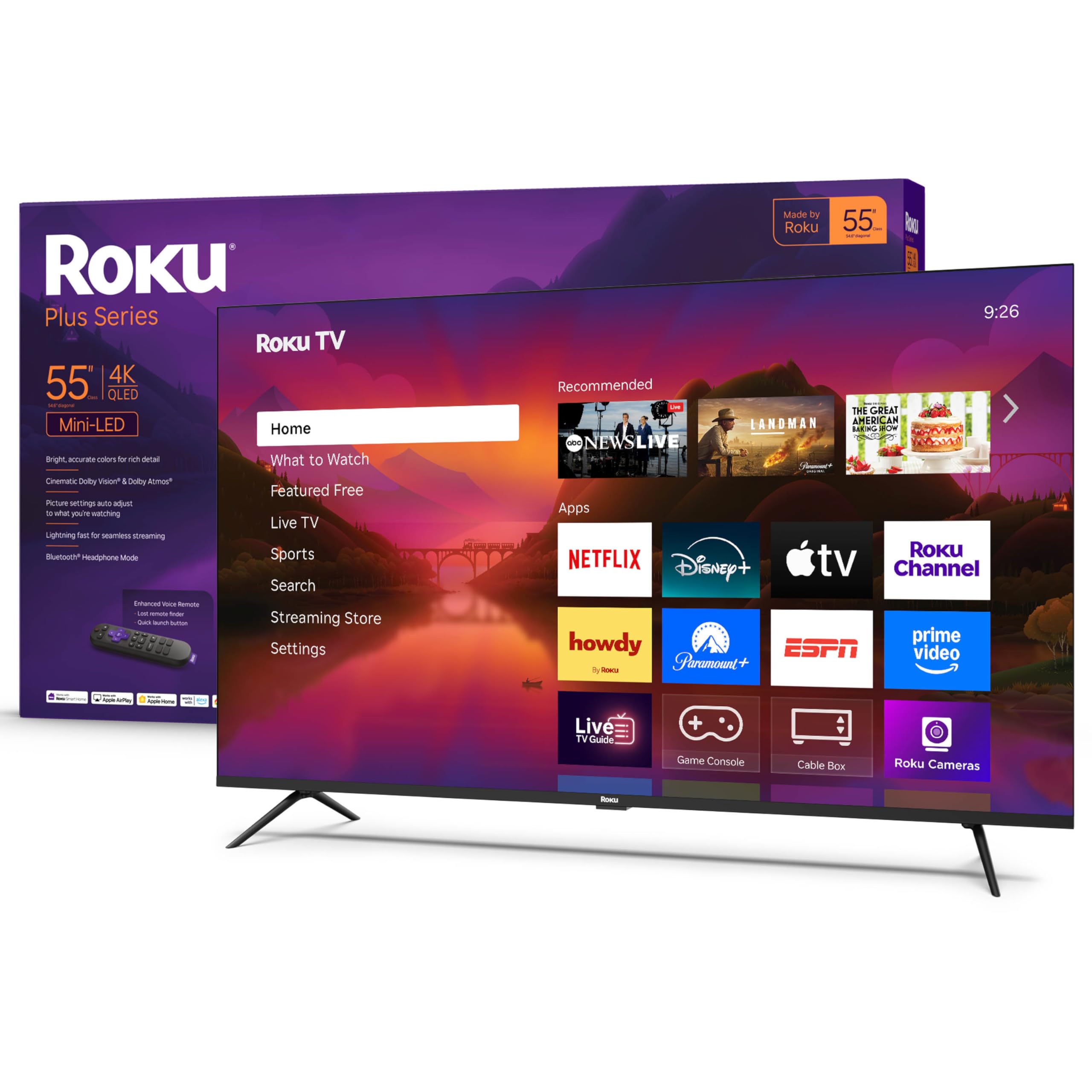
The Roku Plus Series 55″ offers a Mini-LED QLED panel with Dolby Vision and Dolby Atmos at a very accessible price point. While it does not advertise a 120Hz native refresh rate in its technical specs, it supports VRR (Variable Refresh Rate) and Game Mode, which help reduce tearing and input lag. The AI-powered Roku Smart Picture Max cleans up incoming signals and automatically adjusts color and sharpness.
The Roku OS is the standout feature—intuitive, fast, and free of bloatware, with 500+ free TV channels and automatic software updates. The enhanced voice remote includes a lost remote finder and personal shortcuts. Bluetooth Headphone Mode allows private listening without waking others, and the built-in subwoofer adds surprising bass depth for a flat panel at this price.
The main trade-off is that this is not a native 120Hz gaming TV—it’s a 60Hz panel with VRR assistance. For users primarily watching movies and casual sports, the fluidity is adequate, but competitive gamers should look to the Pro Series or alternatives with native 120Hz. Some users report a USB port quirk where bias lights stay on for ~10 minutes after the TV is turned off. For budget-minded buyers who want Mini-LED quality and Roku simplicity, this is a solid entry point.
Why it’s great
- Mini-LED QLED panel delivers rich colors and deep blacks for the price
- Roku OS is the gold standard for simplicity and ease of use
- Voice remote with lost remote finder and Bluetooth headphone mode
Good to know
- 60Hz native panel with VRR—not a true 120Hz gaming TV
- USB port may keep bias lights on for ~10 minutes after shutdown
- Built-in sound is good but lacks the low-end of dedicated audio systems
11. Panasonic W70 Series 50″ LED 4K Smart Fire TV

The Panasonic W70 series is a budget-friendly entry into the 4K smart TV space with Fire TV built-in, including an HDMI 2.1 port for connecting modern gaming consoles. While its native refresh rate is 60Hz, it uses MEMC (Motion Estimation, Motion Compensation) technology to interpolate motion and reduce judder in fast-moving scenes. The HDR10+ support and 4K Studio Color Engine aim to deliver vibrant colors and decent brightness for the price.
Alexa voice control is integrated into the remote, allowing hands-free searching, app launching, and smart home control. Apple AirPlay and Bluetooth support add flexibility for wireless audio streaming and private listening. The four HDMI ports provide ample connectivity for multiple devices, and the metal stands give the TV a sturdy feel that belies its low cost.
Customer feedback highlights a wide quality variance: some units work perfectly with excellent picture quality, while others suffer from slow Fire TV performance, freezing, random power-ons, and remote failures. The processor can feel sluggish when switching between apps or navigating menus, and the Fire TV interface is saturated with Amazon ads. For buyers who primarily need a basic 4K screen with smart features and occasional motion smoothing, this can work—but it’s not a true 120Hz gaming or sports TV.
Why it’s great
- HDMI 2.1 port allows 4K120 input from modern consoles (though panel is 60Hz)
- Alexa voice control and Apple AirPlay are convenient for smart home users
- Metal stands and sturdy build for a very low entry price
Good to know
- 60Hz native panel with MEMC interpolation—not true 120Hz
- Inconsistent quality control; some units are defective out of the box
- Slow processor leads to sluggish Fire TV navigation and app switching
FAQ
Do I need HDMI 2.1 to run a 120Hz TV with my PS5 or Xbox Series X?
What is Dual Line Gate (DLG) 120Hz and should I avoid it for gaming?
Can I watch standard 24fps movies on a 120Hz TV without judder?
How many local dimming zones do I need for a good HDR experience on a 120Hz TV?
Does a 120Hz TV improve motion for regular cable or streaming content?
Final Thoughts: The Verdict
For most users, the 120hz tv winner is the Hisense 55″ U7 Mini-LED because it delivers a genuine native 165Hz refresh rate, thousands of local dimming zones, and excellent anti-glare performance at a price that undercuts premium rivals. If you want perfect black levels and the fastest possible pixel response for high-end home theater and competitive gaming, grab the LG OLED evo G5. And for those who need a living-room centerpiece that doubles as a gallery display without sacrificing high-refresh motion, nothing beats the Hisense CanvasTV S7.

Mo Maruf
I created WellFizz to bridge the gap between vague wellness advice and actionable solutions. My mission is simple: to decode the research and give you practical tools you can actually use.
Beyond the data, I am a passionate traveler. I believe that stepping away from the screen to explore new environments is essential for mental clarity and physical vitality.