Our readers keep the lights on and my smoothie glass nicely filled. As an Amazon Associate, I earn from qualifying purchases.
A C-section scar isn’t just a mark on the body — it’s a daily reminder of a major surgery, and the thick, raised, or discolored tissue that forms can feel impossible to hide. The struggle to find a cream that actually flattens the raised ridge and fades the dark line without irritating sensitive post-surgical skin is real.
I’m Mohammad Maruf — the founder and writer behind WellFizz. I’ve spent over a decade analyzing consumer health products, cross-referencing clinical claims against ingredient data and thousands of verified buyer experiences to find what truly works.
This guide breaks down five top-tier treatments to help you choose the best c-section scar cream for your recovery, focusing on silicone potency, formula texture, and how quickly each option delivers visible flattening and fading.
How To Choose The Best C-Section Scar Cream
Not all scar creams tackle the unique demands of a C-section scar — a thick, often raised incision that sits under constant clothing friction. Choosing the right one means understanding the active ingredients and how they match your scar’s maturity and your skin’s sensitivity.
Silicone First, Oils Second
Medical-grade silicone is the only ingredient with consistent clinical backing for flattening and softening raised scars. It creates a protective barrier that hydrates the scar tissue from within. Oils like Vitamin E and Centella Asiatica support fading and soothe redness, but they work alongside silicone, not instead of it. For a fresh C-section scar, a silicone-based gel should be your primary focus.
Texture and Wearability Matter
You will be applying this cream one to three times a day, often under a high-waistband or against a shirt. A thick, greasy formula that pills or stains your clothes gets abandoned fast. A fast-drying, non-greasy gel that disappears into the skin and leaves no white cast is far more likely to survive your daily routine long enough to actually work. Consistency over months is what delivers results.
Old Scars vs. New Scars
Scars less than six months old respond fastest to silicone creams because the tissue is still remodeling. Older scars — those a year or more past surgery — need formulas with higher concentrations of silicone combined with ingredients like niacinamide or hyaluronic acid to tackle deeper discoloration and texture. If your scar is over a year old, expect a longer timeline and look for a triple-action formula.
Quick Comparison
On smaller screens, swipe sideways to see the full table.
| Model | Category | Best For | Key Spec | Amazon |
|---|---|---|---|---|
| Rejuvaskin RejuvaSil | Premium Silicone Gel | Long-term reshaping | 30ml (1.0 fl oz) | Amazon |
| Medical Grade Silicone Scar Gel | Medical Grade | Itch relief & flattening | 1.7 fl oz | Amazon |
| Mederma Scar Serum | Triple-Action Serum | Old scar discoloration | 1 fl oz | Amazon |
| Rvlaim Silicone Scar Cream | Value Silicone Gel | Fast absorption | 1.7 fl oz | Amazon |
| Bio-Oil Skincare Oil | Hydrating Oil Serum | Surface fading & hydration | 4.2 fl oz | Amazon |
In‑Depth Reviews
1. Rejuvaskin RejuvaSil Silicone Scar Gel
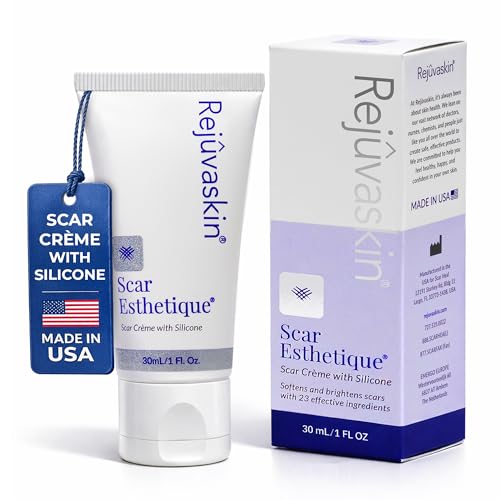
RejuvaSil is the benchmark for silicone scar therapy. Its semi-occlusive barrier mimics the skin’s natural moisture layer, which is exactly what flattens and softens stubborn C-section scar tissue over time. Users with scars over a year old consistently report the tissue becoming noticeably softer and flatter with persistent use, and the gel’s botanical blend helps calm redness without irritation.
The 30ml tube is smaller than some competitors, but the concentrated silicone formula requires only a thin layer — a single tube can last several weeks with twice-daily application. It is fragrance-free and works well for sensitive skin, making it safe for the delicate lower abdomen area. Users who pair it with massage report faster texture improvement.
Where it stands out is its proven track record with older, more stubborn scars. While some light creams fade color quickly, RejuvaSil targets the physical structure of the scar itself. It is the premium choice for anyone who has already tried basic creams and wants serious reshaping power backed by dermatologist recommendations.
Why it’s great
- Clinically proven silicone barrier flattens raised tissue
- Fragrance-free and safe for sensitive post-surgical skin
- Works well on both new and older scars with consistent use
Good to know
- Smaller tube size requires repurchasing over long treatment periods
- Works best when massaged in, adding a minute to your routine
2. Medical Grade Silicone Scar Gel

This gel is engineered for comfort as much as for correction. Its medical-grade silicone formula mimics the skin’s natural barrier to flatten raised hypertrophic scars while simultaneously targeting the itching and discomfort that often plague healing C-section incisions. Users report that the aloe-like consistency absorbs quickly and provides noticeable relief from the scratchy tightness that scar tissue can cause.
The 1.7-ounce tube offers a generous amount of product for the tier, and the fast-drying, oil-free formula leaves no greasy residue, making it ideal for daytime wear under high-waisted pants or a belly band. It is also 100% fragrance-free and paraben-free, which reduces the risk of irritation on a sensitive surgical site.
Where it excels is in its dual action — it soothes the uncomfortable sensations of a healing scar while actively working to flatten and soften the tissue. This makes it particularly useful during the first few months post-surgery when the scar is still maturing and prone to itching. Users who need both texture improvement and daily comfort will find this a strong daily driver.
Why it’s great
- Specifically targets scar-related itching and discomfort
- Oil-free, fast-drying texture works well under clothing
- Fragrance-free formula is safe for sensitive post-surgical skin
Good to know
- Requires twice-daily application for best flattening results
- Larger incisions may need three applications per day
3. Mederma Scar Serum
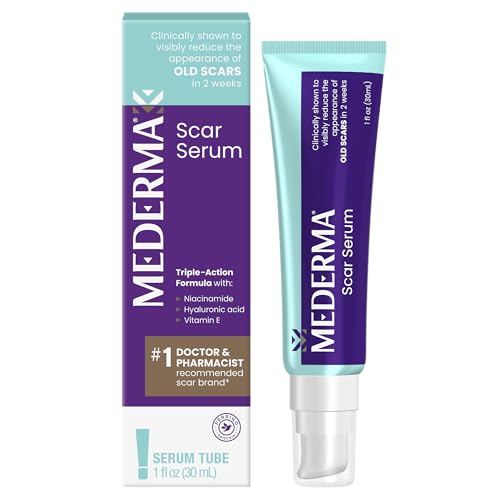
Mederma targets the discoloration and uneven tone that can make an old C-section scar look dark and prominent years after surgery. Its triple-action formula combines Vitamin E, hyaluronic acid, and niacinamide — ingredients focused on lightening hyperpigmentation and smoothing texture rather than just silicone-based flattening. Users with scars that are six months or older report visible improvement in darkness within a few weeks.
The serum consistency is lightweight and absorbs quickly without leaving a sticky layer. It is designed for twice-daily use over an eight-week cycle, and the brand’s clinically shown results are specific to old scars, which is a distinct advantage over general scar creams. It is also HSA and FSA eligible, which can make it a practical option for post-surgical care budgets.
Its limitation is that it does not rely on a high concentration of silicone. While it flattens somewhat, its primary strength is color correction. For a C-section scar that is already flat but remains dark or red, this is an excellent targeted treatment. For a raised, thick keloid, you will want a silicone-dominant gel alongside it.
Why it’s great
- Niacinamide and hyaluronic acid effectively target scar discoloration
- Lightweight serum texture absorbs in seconds with no residue
- Doctor and pharmacist recommended for scar treatment
Good to know
- Lower silicone content means less flattening power for raised scars
- Results on scars older than two years may take longer to appear
4. Rvlaim Silicone Scar Cream
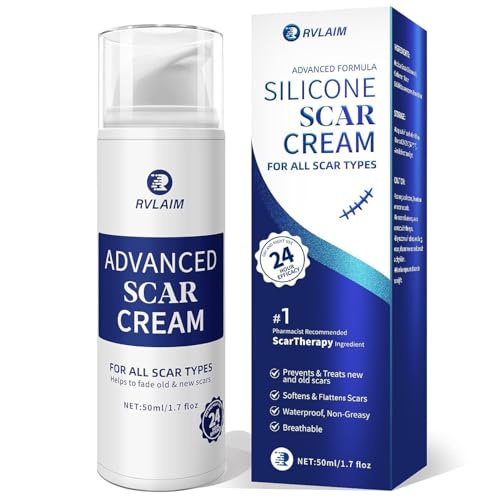
Rvlaim delivers a medical-grade silicone formula with the added benefit of Centella Asiatica, a botanical known for calming redness and supporting collagen repair. This makes it a well-rounded choice for new C-section scars that are still pink and slightly raised. Users note that the cream absorbs in under a minute with no white cast or sticky residue, a critical feature for anyone who wants to apply it and get dressed immediately.
At 1.7 fluid ounces, it offers more volume than many silicone gels in its tier, making it a practical option for the long treatment timeline that scar healing demands. It is alcohol-free and fragrance-free, so it won’t sting or irritate the sensitive incision line even when applied fresh. The non-greasy finish also makes it suitable for use under makeup or sunscreen.
Its biggest strength is its value-to-performance ratio. It uses the same core active ingredient (silicone) as premium gels but at a lower overall investment. For a first-time buyer who is unsure how consistently they will stick with a scar routine, this is a low-risk entry point that still uses the right science. The trade-off is that it may take longer to show flattening results compared to more concentrated silicone gels.
Why it’s great
- Centella Asiatica helps calm redness while silicone works
- Generous 1.7 oz tube offers solid value for daily use
- Dries fast with zero sticky residue under clothes
Good to know
- Full flattening results require consistent use over several months
- Gel may take longer to show results on very thick or raised scars
5. Bio-Oil Skincare Body Oil

Bio-Oil is a different approach entirely — it is not a silicone-based scar gel but a nutrient-rich oil serum designed to improve the appearance of scar discoloration and uneven skin tone. Its blend of Vitamin E, chamomile, and lavender oil locks in moisture and helps fade the dark pigment that can linger around a C-section incision. It is also non-comedogenic, meaning it will not clog pores on the sensitive abdominal area.
The 4.2-ounce bottle is the largest volume in this roundup, making it an economical choice for covering not just the scar but the entire belly area for overall skin tone improvement. Users report that it absorbs surprisingly well for an oil, though a short wait time is needed before getting dressed. It is also cruelty-free and vegan, which matters for ethically-minded buyers.
Bio-Oil’s limitation is clear: it does not flatten raised scar tissue. If your C-section scar is a thick, raised line, this oil will soften the skin around it and lighten the color, but it will not physically flatten the ridge. It works best as a supplement to a silicone gel — applied in the morning for hydration and left to absorb, with silicone gel used at night for structural correction.
Why it’s great
- Large 4.2 oz bottle provides excellent coverage and value
- Effectively fades dark discoloration and uneven skin tone
- Non-comedogenic formula won’t clog pores around the scar
Good to know
- Does not contain medical-grade silicone, so it will not flatten raised scars
- Oil texture requires a brief wait before dressing to avoid transfer
FAQ
How soon after a C-section can I start using scar cream?
Will scar cream completely erase my C-section scar?
Can I use Bio-Oil and a silicone gel together?
Final Thoughts: The Verdict
For most users, the best c-section scar cream winner is the Rejuvaskin RejuvaSil because its medical-grade silicone barrier provides the most reliable flattening and softening for both new and stubborn old scars, backed by consistent dermatologist recommendations. If you want fast absorption and a budget-friendly silicone option that works for fresh scars, grab the Rvlaim Silicone Scar Cream. And for targeting dark discoloration on an already-flat scar, nothing beats the Bio-Oil Skincare Oil for hydration and even tone.

Mo Maruf
I created WellFizz to bridge the gap between vague wellness advice and actionable solutions. My mission is simple: to decode the research and give you practical tools you can actually use.
Beyond the data, I am a passionate traveler. I believe that stepping away from the screen to explore new environments is essential for mental clarity and physical vitality.