Our readers keep the lights on and my smoothie glass nicely filled. As an Amazon Associate, I earn from qualifying purchases.
Between a toddler’s sprint across the living room and a teenager’s eye-roll at the dinner table, the defining challenge of family photography is capturing sharp, emotionally resonant images of subjects who won’t hold still. Autofocus speed, low-light performance, and a forgiving zoom range separate a camera that documents life from one that preserves it.
I’m Mohammad Maruf — the founder and writer behind WellFizz. I’ve spent years obsessing over sensor readout speeds, phase-detection point counts, and optical formula designs to pinpoint which cameras actually solve the real-world chaos of photographing a growing family.
After combing through specifications and real owner experiences, I’ve distilled the options down to a focused list of the best cameras for family photography that balance portability, autofocus intelligence, and image quality across every price tier.
How to Choose the Best Cameras For Family Photography
Three specs define whether a camera survives the real-life test of family use: autofocus architecture, sensor size, and the kit lens’s usable zoom range. Ignore the marketing fluff about “pro-grade” features you’ll never touch and focus on what keeps your kids in focus.
Autofocus Speed and Subject Tracking
Phase-detection autofocus with human and animal eye detection is the single most important feature for family photography. Contrast-detection-only systems hunt and miss critical moments. Look for at least 143 AF points with real-time tracking — anything less guarantees blurry running shots.
Sensor Size and Low-Light Performance
APS-C sensors (Canon EOS R100, Sony A6100) offer a great balance of price, portability, and indoor capability. Full-frame sensors (Canon EOS RP, Sony a7 III) pull ahead in dim living rooms and evening events, delivering cleaner ISO 6400 images. Your choice depends on whether you shoot mostly during golden hour or under kitchen lights.
Kit Lens Versatility
A bundled lens covering 24-70mm equivalent (full-frame) or 18-55mm (APS-C) handles 90% of family scenarios — from group portraits to tight headshots. Avoid bundles that include extreme telephoto lenses unless you specifically need wildlife or sports reach; they often compromise optical quality for range.
Quick Comparison
On smaller screens, swipe sideways to see the full table.
| Model | Category | Best For | Key Spec | Amazon |
|---|---|---|---|---|
| Sony a7 III + 28-70mm | Full-Frame Mirrorless | Low-light indoor portraiture | 693 phase-detection AF points | Amazon |
| FUJIFILM X-T30 III | APS-C Mirrorless | SOOC JPEG color for families | 425 phase-detection AF points | Amazon |
| Panasonic LUMIX S5IIX | Full-Frame Mirrorless | Hybrid photo/video family memory keeping | 779 phase-detection AF points | Amazon |
| Canon EOS RP + 24-105mm | Full-Frame Mirrorless | Entry-level full-frame travel with family | DIGIC 8 image processor | Amazon |
| Nikon D7500 + 18-55mm + 70-300mm | DSLR | Action sports and distance shooting | 51-point AF system | Amazon |
| Panasonic LUMIX S9 + 18-40mm | Full-Frame Mirrorless | Ultra-portable daily carry | 255 depth-from-defocus AF points | Amazon |
| Sony A6100 + 16-50mm | APS-C Mirrorless | Fastest AF in its price tier | 425 phase-detection AF points | Amazon |
| OM SYSTEM E-M10 Mark IV | Micro Four Thirds Mirrorless | Pocketable form factor with IBIS | 4.5-stop 5-axis in-body stabilization | Amazon |
| Canon EOS Rebel T7 Bundle | DSLR (Renewed) | Budget-conscious beginners needing a full kit | 24.1MP APS-C CMOS sensor | Amazon |
| Canon EOS R100 + 18-45mm | APS-C Mirrorless | Lightest kit for everyday parents | 143 Dual Pixel CMOS AF zones | Amazon |
| Fujifilm X100VI | Fixed-Lens Compact | Documentary-style family storytelling | 40.2MP X-Trans CMOS 5 HR sensor | Amazon |
In‑Depth Reviews
1. Sony a7 III Full-Frame Mirrorless with 28-70mm Lens

The Sony a7 III remains the benchmark for full-frame family photography because it combines a 24.2MP back-illuminated sensor with 693 phase-detection AF points covering 93% of the frame. That AF coverage means you can compose off-center and still lock focus on a child’s eye instantly — no recomposing and praying. The 10 fps burst with AE/AF tracking captures unpredictable motion like a toddler jumping into a pool without losing exposure consistency frame to frame.
The bundled 28-70mm f/3.5-5.6 lens is decent for daylight portrait work, but the real strength is the body’s 15-stop dynamic range and ISO ceiling up to 204,800. Indoor birthday parties lit by string lights become usable images without flash. Owners consistently report that the battery endurance (~710 shots per charge) outlasts a full day of family events, which removes the constant anxiety of hunting for outlets.
The menu system is dense — Sony’s labyrinthine UI is real — but the customizable Fn menu and My Menu tabs let you bury the complexity after a single setup session. The 4K video from the full-frame sensor is genuinely stunning for family memory clips, though you’ll want a UHS-II card for high bitrate recording. For the family photographer who values low-light headroom and autofocus reliability above gear size, this is the smartest mid-range investment.
Why it’s great
- 693-point phase-detection AF with real-time eye tracking for humans and animals
- Excellent high-ISO performance up to 204,800 for indoor candids
- Industry-leading battery life for all-day shoots without a spare
Good to know
- Complex menu structure requires initial effort to customize
- Kit lens is mediocre for low light; budget for a fast prime later
2. FUJIFILM X-T30 III with XC13-33mm Lens
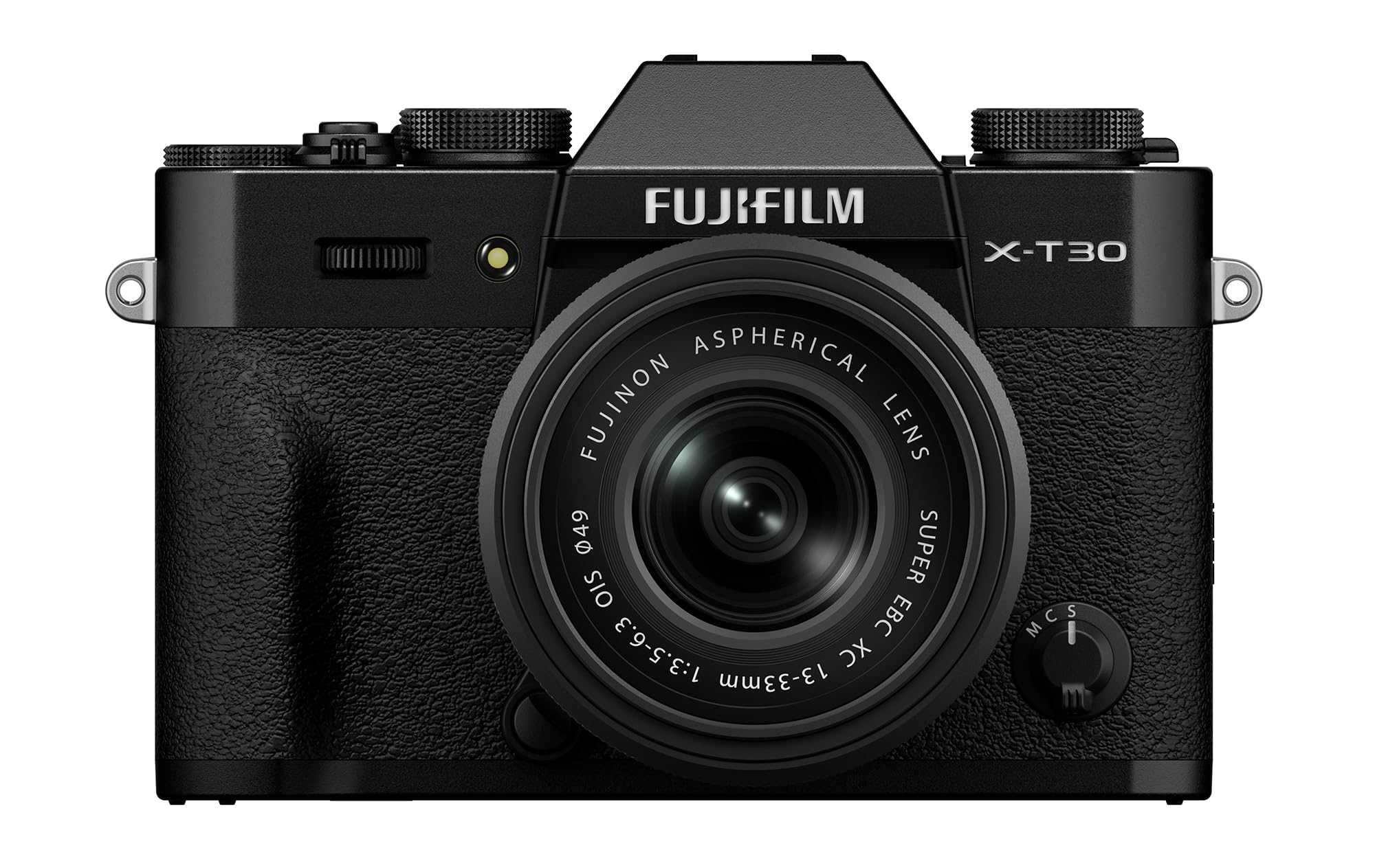
Fujifilm’s X-T30 III delivers the most pleasing straight-out-of-camera JPEGs for family photography, thanks to 20 built-in Film Simulations — Astia, Classic Chrome, and the new Nostalgic Neg. produce skin tones and environmental warmth that eliminate the need for post-processing. Parents who want to print photos directly from memory cards or share them immediately via the smartphone app will find this workflow transformative.
The 26.1MP X-Trans CMOS 4 sensor paired with 425 phase-detection AF points and AI-powered subject detection keeps moving children sharp even in challenging crosslight scenarios. The XC13-33mm f/3.5-6.3 kit lens offers an equivalent 20-50mm range, versatile enough for wide group shots and compressed portraits at the long end. The body is remarkably compact — small enough to slip into a diaper bag without dominating the space.
The absence of in-body image stabilization means you’ll need steady hands or a fast shutter speed in dim interiors, and the kit lens is slow at the long end. Battery life is average — expect to carry a spare for full-day weddings or park outings. The retro dial interface has a learning curve, but once you internalize the exposure triangle controls, you’ll appreciate the tactile feedback that keeps you in the moment rather than buried in menus.
Why it’s great
- Twenty Film Simulations produce gorgeous skin tones and color without editing
- AI-powered subject detection AF reliably tracks kids and pets
- Extremely compact body fits in bags alongside family essentials
Good to know
- No in-body stabilization; requires steady technique or fast glass for low light
- Kit lens is slow at 33mm (f/6.3), limiting indoor performance
3. Panasonic LUMIX S5IIX with 20-60mm + 50mm Lenses
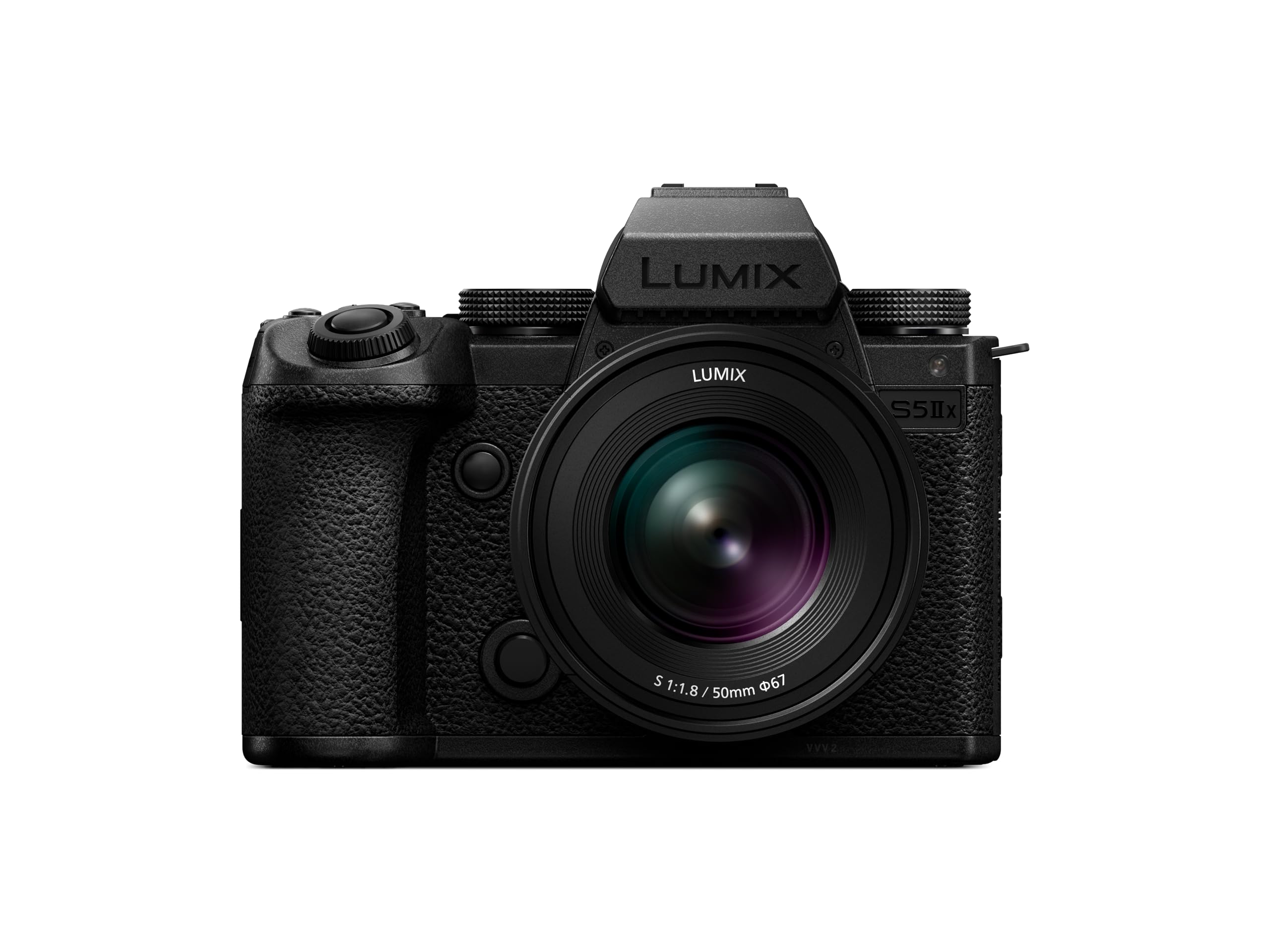
For families where both stills and video matter equally — capturing a child’s first recital in 4K and also grabbing sharp birthday portraits — the Panasonic S5IIX offers Phase Hybrid AF with 779 points that rivals Sony’s system. The kit bundle includes both the 20-60mm f/3.5-5.6 zoom and the 50mm f/1.8 prime, giving you a wide-to-standard zoom and an excellent low-light portrait lens straight out of the box.
The Active I.S. stabilization is remarkable for handheld video of kids running in the backyard, smoothing out walking shots that would be unusable on most mirrorless bodies. Unlimited 5.8K ProRes recording via the internal fan means you never hit a recording limit during school plays or holiday dinners. The 24.2MP full-frame sensor delivers 14+ stops of dynamic range, preserving highlight detail in harsh midday sun and shadow detail in dim corners.
The bundled 50mm f/1.8 is the hidden value here — on full-frame, it produces a classic portrait look with creamier backgrounds than any kit zoom can achieve. The body is larger than APS-C alternatives, which may matter if you need to pack light for travel. The menu system is easier to navigate than Sony’s but still rewards an evening of setup. For the photo-video family documentarian, this kit genuinely offers the most complete feature set in its segment.
Why it’s great
- Bundled 50mm f/1.8 prime delivers professional portrait depth of field
- Active I.S. provides gimbal-like stabilization for family video clips
- Unlimited 5.8K video recording with internal fan for heat management
Good to know
- Larger and heavier body than APS-C alternatives
- L-mount lens ecosystem is still smaller than Sony E or Canon RF
4. Canon EOS RP with RF24-105mm Lens

The Canon EOS RP is the lightest full-frame mirrorless body on this list, making it the most comfortable option for parents who already carry a toddler. The 26.2MP sensor captures beautiful depth of field, and the bundled RF24-105mm f/4-7.1 IS STM lens provides a versatile 24-105mm equivalent range that covers wide landscapes and tight portraits without swapping glass.
The Dual Pixel CMOS AF delivers fast, confident face tracking for stills, and the touchscreen interface is intuitive enough that someone new to interchangeable-lens cameras can focus by tapping on the child’s face. The 5-stop optical image stabilization in the kit lens helps keep shots sharp in fading evening light, though the variable aperture loses speed at the telephoto end. The 4K video has a 1.6x crop and limited frame rate, but 1080p video quality is excellent for family clips.
Battery life is adequate for a full day of moderate shooting — owners report 3+ hours of mixed use on a single charge. The body feels solid and well-damped despite its low weight. The RF lens mount grants access to Canon’s expanding lens lineup, including excellent L-series glass for when your ambitions grow. For the budget-conscious family who wants full-frame image quality without the bulk or expense of higher-tier models, the RP remains a compelling entry point.
Why it’s great
- Lightest full-frame body available — comfortable for all-day carry
- Intuitive touchscreen AF with excellent face detection
- Versatile 24-105mm lens covers most family scenarios
Good to know
- 4K video has a 1.6x crop, limiting wide-angle use
- Lens aperture is slow at telephoto end (f/7.1)
5. Nikon D7500 with 18-55mm + 70-300mm Lenses

The Nikon D7500 bundle addresses the specific pain point of parents whose kids play outdoor sports: the 70-300mm telephoto lens lets you capture action from the sidelines without being in the shot. The 20.9MP DX-format sensor combined with the EXPEED 5 processor and 51-point Multi-CAM 3500FX II AF system delivers 8 fps continuous shooting for up to 100 consecutive JPEGs, enough to capture a soccer goal or a dance recital leap.
The optical viewfinder provides a lag-free, bright view of fast-moving subjects — a real advantage over entry-level electronic viewfinders that can stutter during rapid panning. The tilting touchscreen LCD is useful for low-angle shots of children playing on the ground. While the 18-55mm VR lens covers general family snapshots, the 70-300mm effectively extends your reach to 450mm equivalent, making this the only kit on this list that can handle wildlife or distant action without additional investment.
The bundled accessories — tripod, flash, filter kit — are budget-grade and likely to be replaced, but the core camera and lenses deliver genuine value. The D7500 body is built to a higher weather-sealing standard than many entry-level DSLRs, offering peace of mind during beach trips or light drizzle. The trade-off is size: this is a chunky body to lug through a museum or on a long hike, and the optical viewfinder lacks the exposure preview of mirrorless alternatives.
Why it’s great
- Dual-lens kit covers 27-450mm equivalent for sports and portraits
- 51-point AF system handles fast, erratic motion well
- Weather-sealed body offers extra durability for outdoor family trips
Good to know
- Bundled accessories (tripod, bag, flash) are low quality and may need upgrading
- Heavier and larger than mirrorless alternatives
6. Panasonic LUMIX S9 with S 18-40mm Lens

Panasonic’s LUMIX S9 rethinks the full-frame experience by shrinking it into a body that rivals APS-C mirrorless cameras in size. The bundled 18-40mm f/4.5-6.3 lens retracts into an ultra-compact form factor that fits into a coat pocket, making this the most portable full-frame option for parents who want full-frame quality without the bulk. The 24.2MP sensor delivers excellent dynamic range and color depth.
The LUMIX Lab app integration is the fastest smartphone transfer system among tested cameras — photos appear in your phone’s library within seconds over ultra-fast Wi-Fi, a feature that matters enormously for parents who want to share images of their kids with relatives immediately. The Open Gate recording mode captures video in multiple aspect ratios simultaneously, perfect for creating both vertical Instagram stories and horizontal video albums from a single clip. IBIS provides good stabilization for handheld shooting.
The major compromise: there is no electronic viewfinder, no hotshoe for flash, and no headphone jack. The bright rear screen works well in most conditions but can struggle in direct sunlight. The 18-40mm lens’s slow aperture (f/6.3 at the long end) limits indoor performance, and the body is slippery without an aftermarket grip. For the parent who values social-media-ready sharing and portability above all other features, the S9 is a uniquely capable device.
Why it’s great
- Ultra-compact full-frame body that fits in a jacket pocket
- Fastest Wi-Fi photo transfer to smartphone for immediate sharing
- Open Gate recording captures multiple aspect ratios from one clip
Good to know
- No electronic viewfinder or hotshoe limits shooting in bright sun or with flash
- Kit lens is slow (f/6.3); struggles indoors without added light
7. Sony Alpha A6100 with 16-50mm Zoom Lens

The Sony A6100 holds the fastest autofocus claim among APS-C cameras in its bracket at 0.02 seconds, with 425 phase-detection points covering 84% of the sensor. Real-time Eye AF for humans and animals locks onto a child’s eye even as they turn their head mid-run, dramatically reducing the miss rate for candids. The 24.2MP Exmor CMOS sensor with front-end LSI delivers good dynamic range and ISO up to 51,200 for dim interiors.
The 11 fps continuous shooting with continuous AF is genuinely useful for action sequences — a kid blowing out birthday candles, a dog catching a frisbee. The 180-degree tiltable 3-inch touchscreen enables comfortable waist-level or overhead shooting, angles that frequently produce the most natural family portraits. The bundled 16-50mm f/3.5-5.6 power zoom retracts into a compact state for storage and extends electronically for shooting.
The EVF quality is below the standard of even the A6400, with noticeable lag in fast panning, and the menu system is Sony’s famously dense interface. The kit lens is fragile — one owner reported grinding after a drop. There is no in-body stabilization, so you’ll rely on lens-based stabilization or fast shutter speeds. For the value-conscious family photographer who prioritizes autofocus speed above all other features, this remains a capable entry point into the Sony E-mount ecosystem.
Why it’s great
- World’s fastest AF at 0.02 seconds with real-time eye tracking
- 425 AF points covering 84% of the sensor for edge-to-edge focus
- 11 fps continuous shooting with full AF/AE tracking
Good to know
- Electronic viewfinder quality is noticeably behind peers
- Kit lens is fragile and lacks durability for daily family use
8. OM SYSTEM Olympus E-M10 Mark IV with 14-42mm Lens

The OM SYSTEM E-M10 Mark IV is the smallest interchangeable-lens camera with in-body image stabilization, achieving 4.5 stops of shake correction — enough to shoot sharp handheld images at shutter speeds that would blur on most systems. The flip-down monitor and dedicated selfie mode make this the most family-friendly camera for parents who want to include themselves in the frame without guessing composition.
The 20MP Live MOS sensor paired with the 14-42mm EZ pancake lens creates a package small enough to slip into a jacket pocket or a small handbag. The 16 Art Filters — including a nostalgic Instant Film mode — add immediate creative variety to family photos without post-processing. The 121 contrast-detection AF points are slower than phase-detection systems, but 4.5-stop IBIS means you can compensate with slower shutter speeds in low light.
The Micro Four Thirds sensor is smaller than APS-C, which means less background blur and slightly more noise at high ISO. The 14-42mm kit lens is decent but upgrading to the OM 12-45mm f/4 PRO noticeably improves sharpness. The Wi-Fi transfer app is slower than modern implementations, and the camera uses a proprietary charger rather than USB-C. For the parent who prioritizes portability and stabilization above raw sensor size, this camera offers a uniquely compact package.
Why it’s great
- 4.5-stop in-body stabilization enables sharp handheld shots in low light
- Flip-down selfie screen makes family group photos easy to frame
- Remarkably compact body with pancake lens fits in most pockets
Good to know
- Contrast-detection AF is slower than phase-detection systems
- Smaller sensor produces less background blur and more noise at high ISO
9. Canon EOS Rebel T7 DSLR Bundle (Renewed)

The Canon EOS Rebel T7 bundle is the most complete entry-level kit for families who need everything out of one box: camera body, 18-55mm and 75-300mm lenses, a 500mm preset telephoto, 32GB memory card, tripod, flash, and bag. For absolute beginners who are unsure what they need, this eliminates the analysis paralysis of buying components separately. The 24.1MP APS-C CMOS sensor with DIGIC 4+ processor delivers solid image quality typical of Canon’s entry-level DSLR line.
The 9-point AF system with one center cross-type point is dated — it hunts more than modern mirrorless systems, and you’ll miss action shots that a Sony A6100 would catch easily. However, the optical viewfinder provides a constant, lag-free view that many beginners prefer over EVF. The bundle includes a 500mm f/8 preset telephoto lens that requires a tripod for stable shooting at distance, useful for nature outings but not essential for daily family use.
This is a renewed (refurbished) unit with a one-year warranty, making it the most affordable way to get into interchangeable-lens photography. The 75-300mm lens is slow and soft at the long end, and the included accessories are utilitarian rather than premium. For a family on a strict budget that wants to learn photography fundamentals with real lenses and a reliable body, this bundle offers the best component-to-cost ratio available.
Why it’s great
- Most complete budget kit with two zoom lenses and accessories included
- Optical viewfinder offers lag-free, bright viewing for beginners
- 24.1MP sensor produces clean images for its age and tier
Good to know
- 9-point AF system misses fast-moving subjects compared to modern AF systems
- Renewed unit may show cosmetic wear; bundled accessories are budget quality
10. Canon EOS R100 with RF-S18-45mm Lens

The Canon EOS R100 is the lightest and most affordable entry into the EOS R mirrorless system, making it the ideal camera for parents who want a step up from smartphone photography without the weight of a DSLR. The 24.1MP APS-C CMOS sensor with DIGIC 8 processor produces Canon’s characteristic pleasing color science, particularly for skin tones. The bundled RF-S18-45mm f/4.5-6.3 IS STM lens is a compact standard zoom with optical stabilization.
The Dual Pixel CMOS AF covers up to 143 zones with human, animal, and vehicle detection — remarkably capable for the price tier. The 6.5 fps continuous shooting in One-Shot AF captures predictable moments well, though burst rates drop in continuous AF mode. The body weighs approximately 356 grams with battery, which is genuinely comfortable for a full afternoon at a pumpkin patch or zoo. Young reviewers noted that fast continuous shooting captured horse riding and mid-arrow motion, confirming the AF system has real capability.
The camera ships with a USB-C cable but no external battery charger — you must charge the battery inside the camera via USB, which is inconvenient if you need to swap batteries. The 4K video is limited to 24 fps, and the LCD screen is fixed (not articulating), making selfies or high-angle shots more difficult. For the budget-minded parent who wants Canon’s ecosystem and the lightest possible body for daily carry, the R100 delivers meaningful quality at a comfortable weight.
Why it’s great
- Lightest EOS R series body at ~356g — easy to carry all day
- Dual Pixel CMOS AF with subject detection punches above its price
- Canon’s color science produces excellent skin tones out of camera
Good to know
- No external battery charger included; must charge via USB cable
- Fixed LCD screen limits creative composition angles
11. Fujifilm X100VI Digital Camera (Fixed Lens)

The Fujifilm X100VI is not for every family photographer, but for the parent who wants to approach family documentation as artistry, nothing else matches its character. The fixed 23mm f/2 lens (equivalent to 35mm full-frame) imposes a creative constraint — you zoom with your feet — that paradoxically produces more intentional, composed images over time. The 40.2MP X-Trans CMOS 5 HR sensor resolves exceptional detail, and the 6-stop in-body stabilization lets you shoot handheld in remarkably low light.
The hybrid optical-electronic viewfinder is the X100VI’s defining feature: you can frame through the bright optical finder for a classic rangefinder experience or switch to the EVF for perfect exposure preview. The 20 Film Simulations — including the new REALA ACE — produce JPEG files that genuinely look like they belong in a printed family album without any post-processing. The built-in 4-stop ND filter enables wide-aperture shooting in bright conditions, useful for getting shallow depth of field in outdoor portraits.
The fixed focal length is a dealbreaker for parents who need zoom — you cannot cover a soccer game or a tight group shot without physical movement. Autofocus is sometimes inconsistent compared to Sony’s phase-detection systems, and the battery life is short, especially with IBIS engaged. The lens is not weather-sealed, though a magnetic filter adapter provides partial protection. For the photographer-parent who values image character, haptics, and the joy of shooting, the X100VI is an heirloom-quality tool that encourages you to document your family’s story every single day.
Why it’s great
- 40.2MP sensor and 6-stop IBIS deliver stunning image quality in a compact body
- Twenty Film Simulations produce archival-quality JPEGs with zero editing
- Hybrid viewfinder offers unique intuitive framing experience
Good to know
- Fixed 35mm-equivalent lens cannot zoom; incompatible with sports or tight portraits
- Short battery life requires carrying a spare for full-day events
FAQ
How does a Micro Four Thirds sensor compare to APS-C for family photography?
Do I need an external flash for indoor family photos?
How many autofocus points do I really need for kids?
Should I buy a DSLR or a mirrorless camera for family use in 2025?
Final Thoughts: The Verdict
For most families, the best cameras for family photography winner is the Sony a7 III because it offers full-frame low-light performance, industry-leading autofocus with 693 phase-detection points, and battery life that lasts a full day of events. If you value straight-out-of-camera color and a more compact, enjoyable shooting experience, grab the FUJIFILM X-T30 III. And for the parent who documents family life through both stills and video, the most complete kit is the Panasonic LUMIX S5IIX with its bundled 20-60mm and 50mm f/1.8 lenses.

Mo Maruf
I created WellFizz to bridge the gap between vague wellness advice and actionable solutions. My mission is simple: to decode the research and give you practical tools you can actually use.
Beyond the data, I am a passionate traveler. I believe that stepping away from the screen to explore new environments is essential for mental clarity and physical vitality.