Our readers keep the lights on and my smoothie glass nicely filled. As an Amazon Associate, I earn from qualifying purchases.
Living with arthritis in your back means that every bend, lift, or twist can feel like a gamble. The stiffness and inflammation don’t just limit your mobility — they steal the confidence needed to get through a workday, play with your kids, or even drive to the store without flinching. A properly designed brace changes that equation, but only if it delivers the right mix of targeted compression, structural stability, and breathable comfort for all-day wear.
I’m Mohammad Maruf — the founder and writer behind WellFizz. I’ve spent thousands of hours analyzing brace design science, from the steel spring gauge and stay materials to the pressure distribution geometry that actually offloads an arthritic lumbar spine.
After evaluating dozens of models on build quality, support architecture, and real-world feedback from arthritis sufferers, I’ve isolated the true standouts. This guide breaks down the best back brace for arthritis to help you move, work, and rest with less fear and more freedom.
How To Choose The Best Back Brace For Arthritis
Arthritic back pain isn’t just a matter of sore muscles — it involves inflamed joints, bone spurs, and reduced spinal flexibility. The right brace must stabilize the lumbar vertebrae without restricting the gentle movement that keeps your back functional. Here are the three non-negotiable criteria for an arthritis-focused brace.
Stay Count and Material
The rigid stays embedded in a brace are what separate real support from a simple belt. For arthritic backs, a minimum of four stays — ideally a mix of memory-aluminum alloys and spring steel — provides the structural rigidity needed to prevent excessive bending that aggravates inflamed facet joints. Cheap plastic strips deform quickly and offer no meaningful resistance against forward flexion.
Compression Design and Lumbar Pad Configuration
Arthritis pain is rarely uniform. A brace with a removable, adjustable lumbar pad lets you dial in the exact point of pressure relief against your lower spine. Look for a pad that fits into a dedicated pocket — not one that’s sewn in permanently. A removable pad also allows you to switch between a firmer 3D silicone pad and a softer foam triangle pad, depending on whether your flare-up demands deep compression or gentle cradling.
Breathability and Wear Duration
Unlike athletes who wear a brace for short bursts, arthritis sufferers often need support for six to ten hours a day. A brace constructed from perforated neoprene or four-way stretch mesh with ventilated side panels prevents sweat buildup and skin irritation. Neoprene that lacks airflow will trap heat and moisture, which can exacerbate any underlying skin sensitivity common in older adults.
Quick Comparison
On smaller screens, swipe sideways to see the full table.
| Model | Category | Best For | Key Spec | Amazon |
|---|---|---|---|---|
| MUELLER 255B | Premium Mid-Range | All-day wear and driving | 4 Steel Springs, 52% Polyester | Amazon |
| Dr. Arthritis Back Brace | Mid-Range | Posture correction + sciatica | 6 Metal Strips (4 Alu + 2 Springs) | Amazon |
| Sparthos Back Brace | Mid-Range | Herniated disc and spinal stenosis | Adjustable Lumbar Pad, Nylon Mesh | Amazon |
| FEATOL Back Brace (Classic) | Mid-Range | Heavy lifting and gym work | 4 Support Strips, Neoprene Body | Amazon |
| Lightweight Back Brace (Cybryeh) | Budget-Friendly | Discreet wear under clothing | 4-Inch Width, 220g Weight | Amazon |
| FREETOO Back Brace | Mid-Range | 360° vertical support | 4 Memory-Alu Stays + 2 Steel Springs | Amazon |
| FEATOL Lower Back Brace (5 Stays) | Premium | Demanding workdays and recovery | 5 Reinforced Stays (3 Alu + 2 Plates) | Amazon |
In‑Depth Reviews
1. MUELLER Sports Medicine Lumbar Back Brace
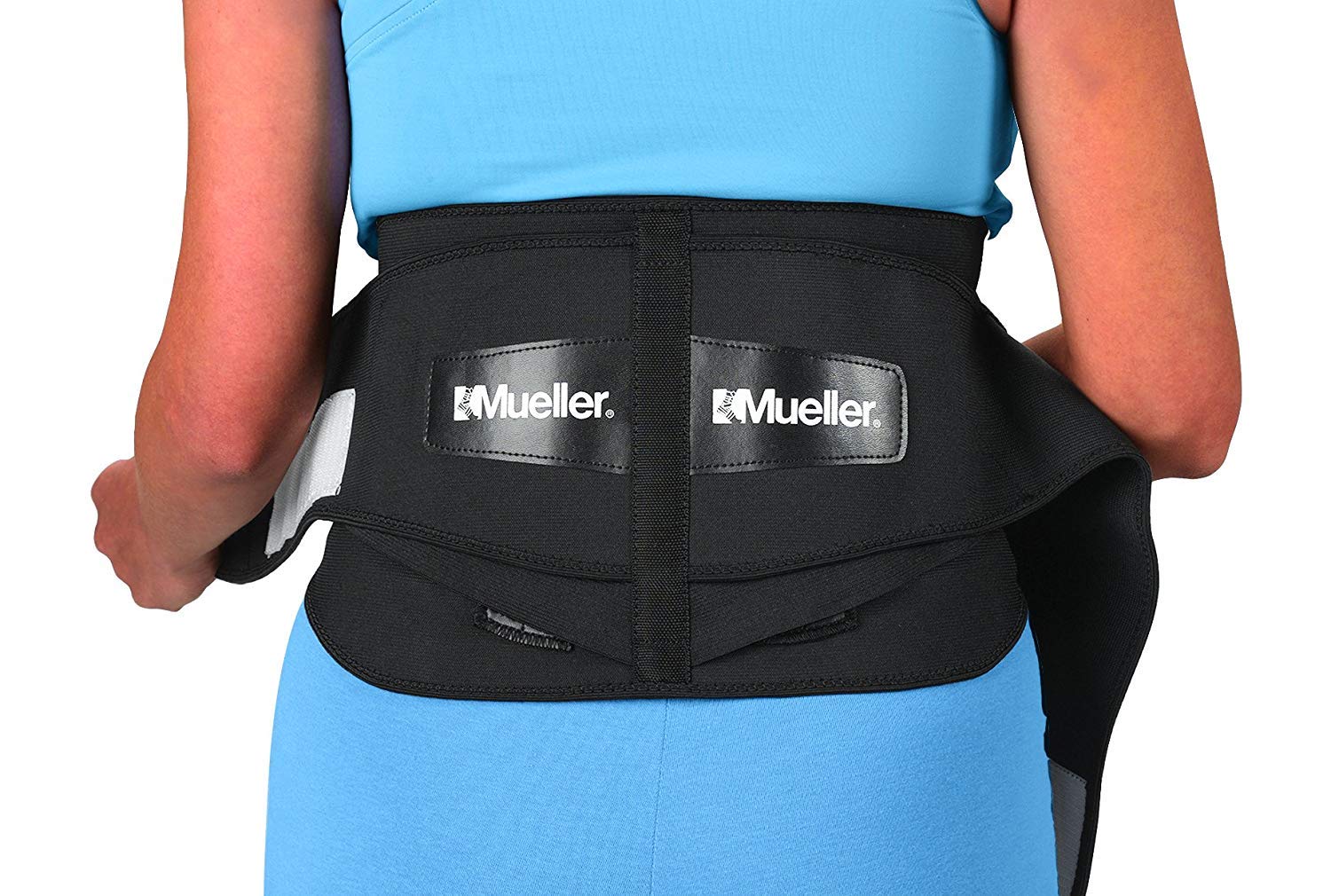
Four steel springs run vertically along the spine to provide firm, targeted compression that resists buckling when you bend forward — a critical trait for arthritis sufferers whose lumbar vertebrae can’t tolerate exaggerated flexion. The removable lumbar pad adds an extra layer of cushioning directly over the L3-L5 region, where arthritic inflammation most commonly settles.
Breathability is a standout feature here. The mesh exterior is treated to resist odor, and the open-weave structure allows enough airflow to prevent the clammy feeling that makes many braces unwearable after a few hours. This brace also includes an internal molded plastic component that prevents the whole unit from rolling or bunching up when you sit — a common failure in cheaper neoprene wraps that shift during driving or desk work.
On the downside, several users note a strong chemical smell straight out of the package that takes a few days to air out. The ventilation also isn’t aggressive enough for very hot climates or high-sweat activities. Sizing is generous — the Regular fits waists from 28 to 50 inches — but you must measure around the widest part of your stomach, not your pant size, because the brace wraps higher than a typical belt.
Why it’s great
- Four real steel springs deliver rigid, non-collapsing support for arthritic spines
- Removable lumbar pad lets you adjust cushioning depth by condition
- Anti-roll internal structure stays in place during seated activities
Good to know
- Initial chemical odor may require 2-3 days of airing out
- Breathability is moderate — not ideal for heavy sweating or humid environments
2. FREETOO Back Brace for Lower Back Pain Relief

The FREETOO brace uses four memory-aluminum stays that are significantly harder than the PP (polypropylene) strips found in most budget braces, plus two steel springs positioned along the waist sides for 360° vertical support. This stay configuration is engineered to prevent excessive rolling of the paraspinal muscles while decreasing disc pressure — exactly the mechanical relief needed when arthritis has narrowed the spinal canal and created bone spurs that pinch nerve roots.
The fabric is a major differentiator. The inner layer features a velvet-like microfiber that feels soft against the skin, reducing the chafing and irritation that often plague arthritis patients who need to wear a brace for consecutive hours. Two silicone anti-skid bands on the waist prevent the brace from migrating upward when you sit, bend, or twist. The four-way stretch elastic material also uses 3D knitting technology that applies different compression levels across the belly, sides, and back for a graduated squeeze rather than a uniform crush.
Some long-term users have reported that the Velcro hook-and-loop fasteners lose grip after about six months of daily use. The brace can feel slightly bulky under thinner shirts, so if you need completely invisible wear, this might not be the right pick. But for anyone who prioritizes structural rigidity and non-slip performance for the workday, the FREETOO delivers at a compelling price point in the mid-range tier.
Why it’s great
- Quadruple-harder memory-aluminum stays provide genuine structural spine support
- Dual silicone anti-skid bands prevent roll-up during bending or sitting
- Velvet inner layer is gentle on sensitive skin for extended wear
Good to know
- Velcro durability may degrade after 6 months of heavy daily use
- Not completely invisible under tight or lightweight clothing
3. Dr. Arthritis Back Brace Support Belt
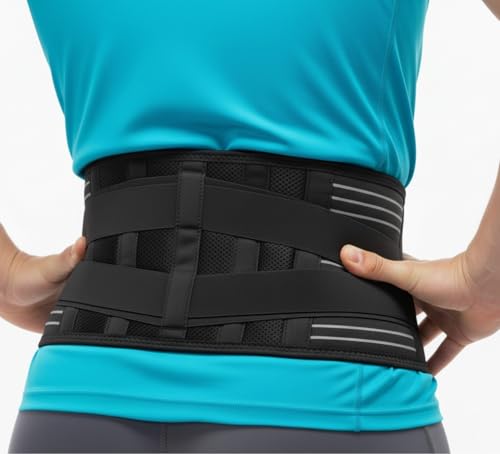
As the name implies, this brace was developed with direct input from medical professionals, and it shows in the multi-pad approach. The package includes two separate lumbar pads — a firmer 3D contoured pad and a softer triangular foam pad — so you can swap compression levels based on your current arthritis flare severity. The six metal strips (four aluminum support bars plus two spring steels) create a stabilization cage that feels rigid without digging into the ribs.
The V-shaped cut is a thoughtful ergonomic detail that accommodates the natural curve of the waist and hips. Many braces ride up or pinch at the hip bone when you sit down; the Dr. Arthritis brace uses a tapered profile that wraps cleanly around the pelvic crest. Silicone anti-skid bumps on the interior surface further lock the brace in place, which is crucial for arthritis patients who experience sharp pain when a shifting brace yanks on inflamed tissue.
That said, sizing can be tricky. Users with a 26-inch natural waist report that the Medium runs larger than expected, so you should rely on the manufacturer’s size chart rather than Amazon’s suggested size. The cotton-blend material, while breathable, is less stretchy than neoprene, which can feel restrictive during deep bending motions. If you need full freedom for floor-level tasks, this brace’s rigidity may limit you.
Why it’s great
- Two interchangeable lumbar pads let you customize compression to your flare level
- V-shaped cut and silicone bumps keep the brace anchored during movement
- Six metal stays provide medical-grade stabilization for the lower back
Good to know
- Sizing runs large — always consult the brand’s size chart
- Limited stretch compared to neoprene; less ideal for deep bending or yoga
4. Sparthos Back Brace for Lower Back Pain
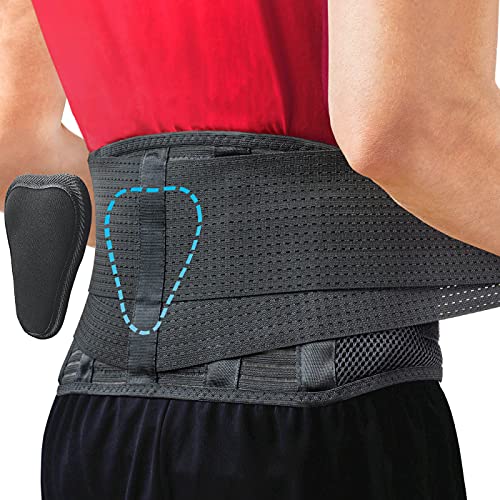
The Sparthos brace is built around the idea that arthritis support shouldn’t feel like a corset. The main body is a thin, flexible nylon mesh that wraps snugly without adding bulk, and the adjustable lumbar pad — which sits in a sewn-in pocket — can be positioned higher or lower to match your specific pain point. This is unusually accommodating for a sub- brace, as most fixed-pad designs force the cushion to sit at a predetermined height that may not align with your arthritic segment.
Users with spinal stenosis and bone spurs have reported that the Sparthos reduces the need for a walking cane after consistent use. The brace’s flexible stays prevent the spine from collapsing into forward flexion while still allowing enough range of motion for household chores and light work. The front width measures roughly 11 inches, which creates a gentle “wasp waist” contour that many women find more flattering than the blocky shape of industrial-grade braces.
However, the narrow front width can be a limitation — users with a wider torso or flank hernias have noted that the coverage feels insufficient on the sides. The strong Velcro is also notoriously hard to disengage, which could be a challenge for arthritis sufferers with reduced hand grip strength. If you have any dexterity issues in your fingers, you may need assistance removing this brace.
Why it’s great
- Adjustable-position lumbar pad targets your specific joint pain location
- Thin nylon mesh profile fits discreetly under most daily clothing
- Flexible stays reduce forward slump without locking you in place
Good to know
- Narrow front width may not offer enough lateral support for wider torsos
- Strong Velcro can be difficult to release for users with arthritis in their hands
5. Lightweight Back Brace for Lower Back Pain (Cybryeh)

This isn’t a heavy-duty workhorse — it’s a minimalist support belt designed for arthritis sufferers who need light stabilization rather than rigid immobilization. At just 220 grams and 4 inches wide, the Cybryeh brace is intended to be worn under clothes throughout a normal day without announcing itself. The perforated neoprene bottom strap wraps around the hips and pelvis, delivering dynamic compression that moves with you during walking or gentle bending.
The dual elastic straps on the front create adjustable pressure zones, so you can increase tension on the lower band if your arthritic pain is concentrated near the sacroiliac joint or ease up if you’re experiencing a flare in the mid-back. Because the brace is so slim, it slips under dress shirts and blouses without creating a visible bump — a rare quality for any back brace. The one-size-fits-most approach is forgiving, and the low-profile nature makes it excellent for air travel or long car rides where you need that subtle reminder not to slouch.
But minimalism has trade-offs. This brace offers very little structural support for heavy lifting, deep bending, or acute flare-ups. Several physical therapists have advised against wearing it full-time because it can encourage muscle dependency without providing enough spinal stabilization to prevent further injury. If you have severe arthritic degeneration or need to move large objects, this brace is not your answer — it’s a tool for maintenance, not recovery.
Why it’s great
- Ultra-lightweight at 220g — disappears under regular clothing
- Perforated neoprene breathes well for all-day wear during light activity
- Dual adjustable straps provide customized pressure for varying pain zones
Good to know
- Too minimal for heavy lifting, deep bending, or acute arthritis flares
- Full-time use may lead to muscle weakening without sufficient spinal support
6. FEATOL Back Brace Support Belt (Classic 4-Strip)

FEATOL’s classic back brace earns its reputation through sheer versatility. The 4-strip support system (two rigid stays flanking the spine plus two flexible strips on the sides) creates a 360-degree stabilization ring that feels especially secure during weight-bearing activities. The brace comes with an optional 3D silicone lumbar pad that grips the skin above the tailbone and provides concentrated compression directly over the arthritic joints of the lower lumbar spine.
The neoprene inner belt is elastic enough to allow a full range of motion — you can squat, twist, and reach overhead without the brace digging into your ribs — while the outer elastic band uses a high-quality hook-and-loop closure that offers a wide adjustment range. The dual-layer strap system means you can tighten the lower support band independently from the upper band, which is useful when arthritis pain is asymmetrical. Users have reported moving heavy loads with “almost zero pain” after switching to this brace from stiffer medical braces.
That said, the breathability is only average. The neoprene body can trap heat during warm-weather activity, and some users with sensitive skin have experienced mild irritation around the edges after prolonged wear. The sizing chart, which asks you to measure around the navel, is critical — ordering based on pant size will almost certainly give you the wrong fit. For the price point in the mid-range tier, this brace delivers strong value for both daily support and gym work.
Why it’s great
- 4-strip system with independent dual-layer tension for targeted pain relief
- 3D silicone lumbar pad provides non-slip compression exactly where arthritis flares
- Excellent range of motion — no rib digging during squats or twists
Good to know
- Neoprene body can trap heat; less breathable than mesh alternatives
- Skin irritation possible for some users during extended wear sessions
7. FEATOL Lower Back Brace with 5 Reinforced Stays
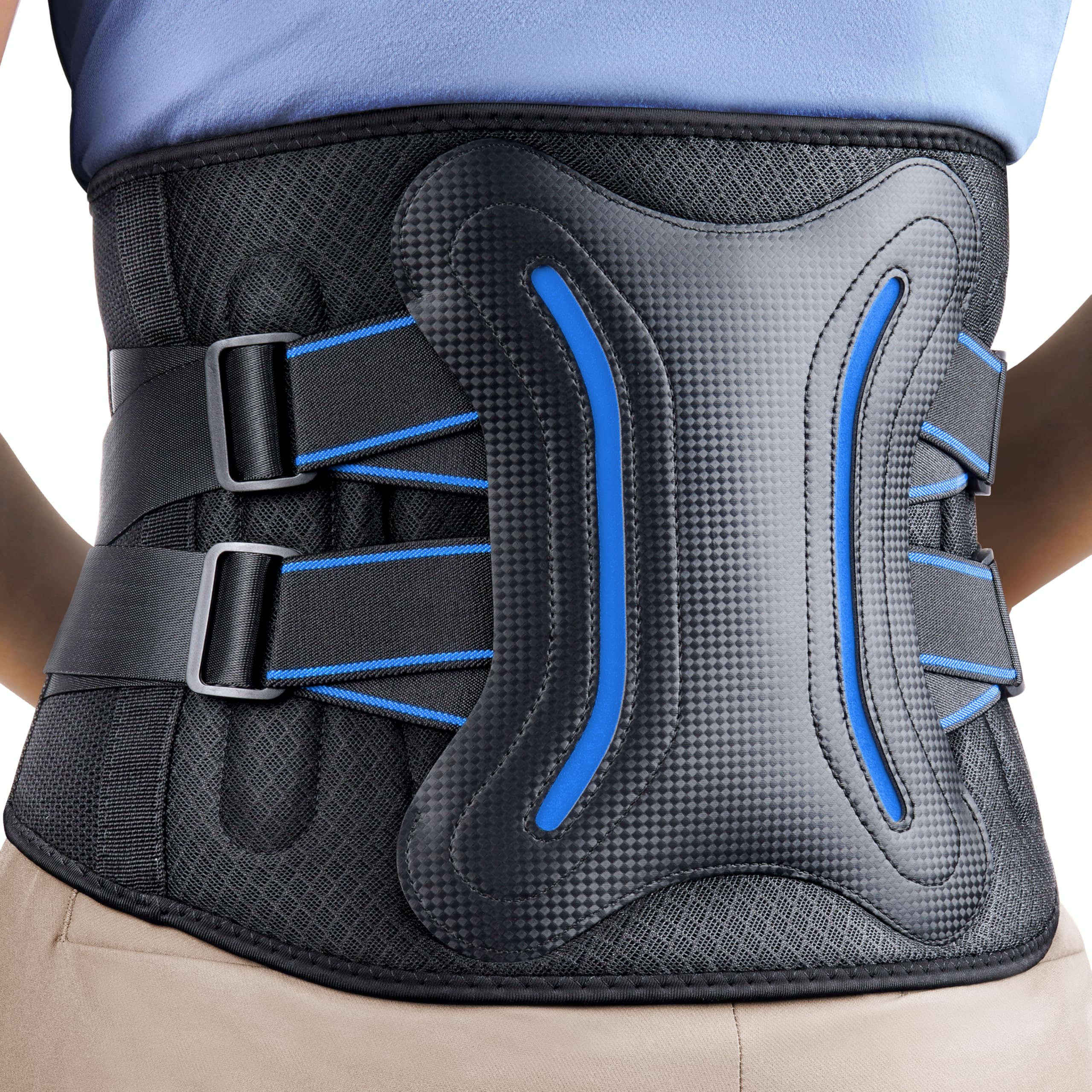
The FEATOL 5-stay model is the most structurally ambitious brace in this lineup. It deploys three memory-aluminum stays running parallel to the spine plus two broader support plates flanking the waist, creating a stabilization framework that genuinely resists twisting and forward slump. For arthritis patients dealing with severe lumbar stenosis or post-surgical recovery, this level of support can make the difference between walking with a cane and walking unassisted — several user reviews confirm this outcome directly.
The attention to practical details sets this brace apart. Finger loops on the tensioning straps make application easier for arthritic hands that struggle with fine motor tasks — a small but important design choice that few competitors replicate. The low-profile construction, despite the dense stay system, allows the brace to fit under most everyday clothing without looking like medical equipment. A mesh backing panel prevents the heat buildup that commonly plagues multi-stay braces, though it’s not as breathable as a full open-mesh design.
The trade-off for this level of support is some bulk. Under a tight t-shirt or a thin dress shirt, the outline of the stays is visible. A few customers also noted that the brace arrived without clear instructions explaining that the Velcro covering on the tensioning straps needs to be removed before first use — a simple oversight that can cause confusion. For demanding workdays, yard chores, or any activity that puts real mechanical stress on your lower back, the FEATOL 5-stay is the premium choice for genuine stabilization.
Why it’s great
- 5-stay architecture delivers exceptional anti-twist and anti-slump rigidity
- Finger loops on straps aid application for users with limited hand dexterity
- Low-profile enough for wear under daily clothes despite advanced support
Good to know
- Stays are visible under very tight or thin clothing
- Arrives without clear removal instructions for the Velcro protective covers
FAQ
Should I wear a back brace for arthritis all day?
What is the difference between a steel spring and a plastic stay for arthritic backs?
Can a back brace make my arthritis pain worse if I wear it incorrectly?
Final Thoughts: The Verdict
For most users, the best back brace for arthritis winner is the MUELLER Sports Medicine Lumbar Back Brace because it combines real steel springs, a removable lumbar pad, and an anti-roll design that stays put during both seated and standing activities — all at a price that makes it accessible without sacrificing structural integrity. If you want advanced 360° vertical support with a velvet-soft inner layer that won’t irritate sensitive skin, grab the FREETOO Back Brace. And for the heaviest demands — demanding workdays, post-surgical recovery, or severe lumbar stenosis — nothing beats the FEATOL Lower Back Brace with 5 Reinforced Stays.

Mo Maruf
I created WellFizz to bridge the gap between vague wellness advice and actionable solutions. My mission is simple: to decode the research and give you practical tools you can actually use.
Beyond the data, I am a passionate traveler. I believe that stepping away from the screen to explore new environments is essential for mental clarity and physical vitality.