Our readers keep the lights on and my smoothie glass nicely filled. As an Amazon Associate, I earn from qualifying purchases.
Rolling your ankle once is bad enough, but the real frustration starts when that first misstep turns into a chronic weakness that buckles under the slightest uneven pavement. The challenge isn’t just finding something to wrap around your ankle — it’s finding a brace that delivers genuine lateral stability without cutting off circulation or forcing you to buy new shoes a half-size up. After analyzing dozens of options, the clear differentiator comes down to how each brace manages compression, stabilizes the joint, and fits inside your everyday footwear.
I’m Mohammad Maruf — the founder and writer behind WellFizz. I’ve spent years sifting through clinical studies and consumer reviews on ankle support gear, focusing specifically on what measurable specs separate a flimsy sleeve from a true recovery tool.
Whether you’re recovering from a grade-1 sprain or trying to prevent re-injury during sports, finding a reliable ankle wrap for sprain means knowing which features actually stabilize the joint without restricting daily movement.
How To Choose The Best Ankle Wrap For Sprain
Not every ankle wrap offers the same level of motion control. The wrong choice can actually delay healing by failing to restrict the inversion forces that caused the sprain in the first place. Here is exactly what to prioritize.
Closure and Compression System
A simple pull-on sleeve provides uniform compression but almost no resistance against ankle roll. For a true sprain wrap, look for a lace-up design or multi-directional strap system that lets you dial in tension across the arch, the heel, and the top of the foot. This graduated control is what actually prevents the joint from rotating past its safe range.
Removable Stabilizers vs. Built-In Support
Some wraps integrate flexible plastic or aluminum splints on both sides of the ankle. These splints create a mechanical block against inversion and eversion without adding rigid bulk. If you’re returning to sports like basketball or volleyball, a wrap with detachable stabilizers gives you the option of full immobilization during early recovery and lighter protection later.
Material Breathability and Profile
Neoprene retains heat and can boost circulation, but thick neoprene makes it impossible to wear the brace inside a normal sneaker. Lightweight nylon-spandex blends or 3D-knit fabrics offer better moisture transport and a slimmer fit. Measure the arch circumference of your ankle and check the product’s sizing chart — an oversized wrap will slide and bunch, causing irritation rather than stability.
Quick Comparison
On smaller screens, swipe sideways to see the full table.
| Model | Category | Best For | Key Spec | Amazon |
|---|---|---|---|---|
| Vive Ankle Brace | Mid-Range | All-day wear and light activity | Split strap, open heel, fits up to 14″ arch | Amazon |
| Dr. Welland Ankle Brace | Mid-Range | Sprains with instability and swelling | Side stabilizers, adjustable arch straps | Amazon |
| ZOELION Compression Support | Mid-Range | Mild sprain with plantar fasciitis overlap | 3-zone graduated compression, fishnet strap | Amazon |
| AGPTEK Lace-Up Brace | Premium | Post-surgery or high-impact sports recovery | Detachable aluminum splints, cross lacing | Amazon |
| Shock Doctor Ankle Stabilizer | Premium | Athletes needing low-profile lateral support | Speed-lace closure, flexible support stays | Amazon |
In‑Depth Reviews
1. Vive Ankle Brace for Sprained Ankle
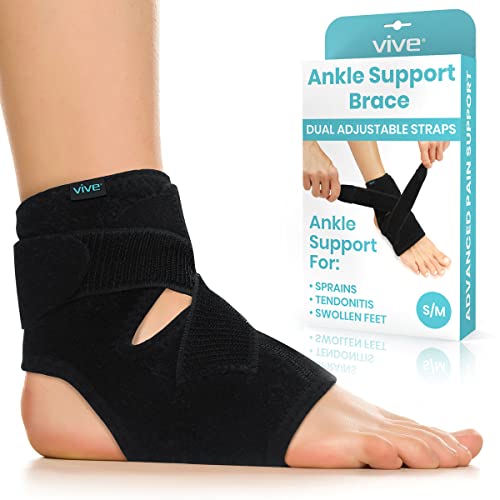
The Vive brace uses a split-strap design and open heel that allows the wrap to contour around the ankle without bunching under the Achilles. The adjustable cross-brace compression bands let you tighten the arch and instep independently, which is critical for managing peroneal tendonitis and general sprain swelling. One reviewer completed a 24-mile rim-to-rim hike through the Grand Canyon with this brace under a boot and reported zero pain — that level of real-world stress testing speaks directly to its durability.
The neoprene blend is breathable enough for all-day use, and at just 0.09 kilograms it adds virtually no weight. The fit accommodates arch circumferences up to 14 inches, and the lace-up style provides a snug heel lock that prevents the brace from shifting during lateral movement. Multiple customers confirmed it works effectively for both right and left ankles without any orientation issues.
The Velcro straps attract lint and pet hair over time, and some users noted that the adhesive backing loses grip after several weeks of daily use. The brace also runs slightly bulky for narrow dress shoes — it works best inside sneakers, hiking boots, or athletic trainers. For the price, the Vive delivers the most versatile balance of stability and comfort for moderate activity levels.
Why it’s great
- Customizable split-strap fit targets both arch and heel compression independently
- Ultra-lightweight neoprene construction works well for all-day wear and hiking
- Open heel eliminates pressure on the Achilles during dorsiflexion
Good to know
- Velcro straps lose adhesion after extended daily use
- Attracts lint and pet hair due to the neoprene surface texture
2. Dr. Welland Ankle Brace with Side Stabilizers
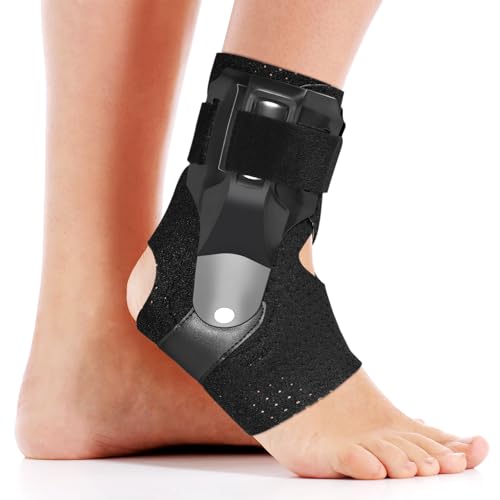
The Dr. Welland brace integrates rigid side stabilizers that physically block inversion and eversion — exactly what a sprained ankle needs to avoid re-injury during the healing window. The adjustable straps allow you to lock the arch and ankle position independently, and the neoprene-nylon blend provides enough moisture wicking to keep the skin dry during extended wear. One customer with a history of multiple sprains and a torn tendon said this brace prevented their ankle from collapsing during walking and exercise, outperforming every other wrap they had tried.
It fits into most athletic shoes without forcing a size increase, and the nylon outer layer resists the lint buildup that plagues pure neoprene models. The brace works on either foot and comes in three sizes. Users with conditions ranging from peroneal tendonitis to post-surgery recovery reported significant pain reduction and improved walking confidence within days of use.
The plastic buckle on the top strap is the weakest component — a few customers reported it breaking after a month of regular tightening. The brace also runs slightly warm during high-intensity activity due to the neoprene layer. For anyone needing aggressive lateral control without stepping up to a full rigid boot, the Dr. Welland provides the best stability-to-comfort ratio in the mid-range tier.
Why it’s great
- Side stabilizers provide mechanical resistance against ankle rolling during walking and sports
- Adjustable arch and ankle straps allow fine-tuned compression for different foot shapes
- Nylon fabric resists lint and stays cleaner than neoprene-only wraps
Good to know
- Plastic buckle on the top strap can break with repeated heavy use
- Neoprene layer retains heat during extended activity in warm weather
3. ZOELION Ankle Brace Compression Support
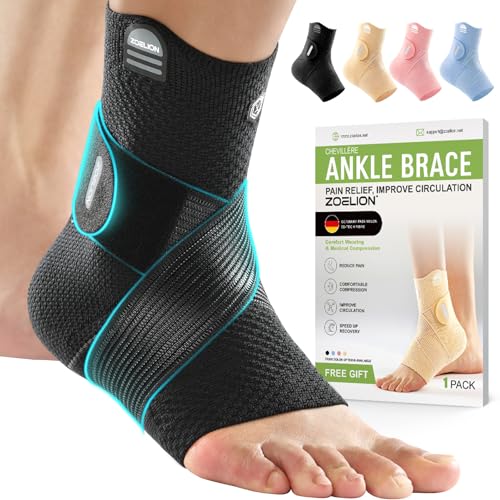
The ZOELION brace uses a 3D knit technique that creates three distinct compression zones: a gentle instep section, a firm arch-and-heel wrap, and pressure-free edges that prevent digging. The removable fishnet X-strap adds targeted support specifically under the arch and along the Achilles without adding the bulk of a traditional lace-up system. Customers with plantar fasciitis and mild sprains found that the graduated compression relieved pain while still allowing them to wear normal sneakers without sizing up.
The German-imported PA66 high-elastic fabric actively wicks moisture away, and the non-roll design keeps the sleeve in position during a full workday. One reviewer who was recommended this brace by a physical therapist after other models failed due to tightness or poor fit reported it delivered consistent comfort and stability. The X-strap is fully removable, letting you switch between light compression recovery days and reinforced support for activity days.
Sizing is slightly generous — several customers advised ordering down if your measurements fall between two sizes. The brace is not designed for severe instability or post-surgery immobilization; it works best for grade-1 sprains, chronic weakness, and overuse conditions like tendinitis. Users with acute high-grade sprains will need a model with rigid stabilizers instead.
Why it’s great
- 3-zone graduated compression targets inflammation without restricting blood flow
- Removable fishnet X-strap provides versatile support from light recovery to moderate activity
- Moisture-wicking air-knit fabric keeps feet dry and odor-free during extended wear
Good to know
- Sizing runs slightly large; measure carefully before ordering
- Not suitable for high-grade sprains needing rigid lateral immobilization
4. AGPTEK Ankle Brace Lace-Up with Removable Splints
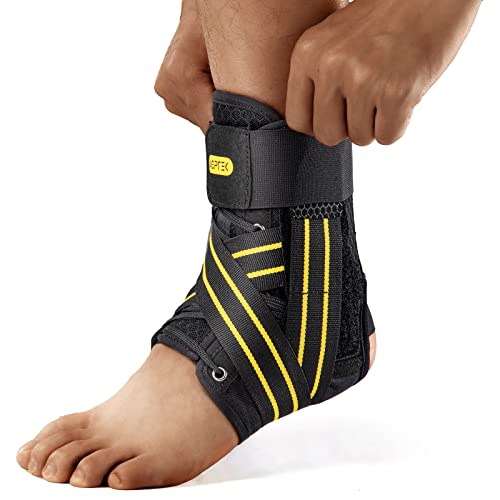
The AGPTEK brace abandons conventional strap systems in favor of a cross-shoelace closure combined with lightweight aluminum splints on both sides. This design locks the heel pocket tightly and provides 360-degree resistance against rotation — exactly what a fractured or post-surgery ankle needs. Multiple customers reported that the AGPTEK outperformed the braces their orthopedic surgeons provided, offering better fit and more consistent immobilization.
The splints are fully detachable, which means you can use the brace as a rigid stabilizer during early recovery and then convert it to a flexible sports sleeve once the joint strengthens. The polyester-nylon shell is breathable and durable, and the lace-up design lets you adjust tension across the entire foot, not just the arch. One customer used it for pickleball while recovering from Achilles tendon pain and noted the injury did not worsen — a strong indicator that the brace absorbs rotational force effectively.
The brace runs slightly small; customers with size 9 feet found the large fit snug, and those with wider ankles needed stretchable shoes for proper clearance. The aluminum splints add some rigidity that makes sitting cross-legged or driving uncomfortable for extended periods. This is a high-performance recovery tool best suited for users who need maximum protection before returning to high-impact sports.
Why it’s great
- Detachable aluminum splints provide 360-degree rotational resistance for post-surgery recovery
- Cross-lace closure allows fine-tuned tension adjustment across the entire foot
- Outperforms many doctor-provided braces in user-reported fit and comfort
Good to know
- Runs small; consider ordering one size up from your normal shoe size
- Rigid splints make sitting or driving with the brace on less comfortable
5. Shock Doctor Ankle Stabilizer with Flexible Support Stays

The Shock Doctor stabilizer uses a speed-lace closure and flexible support stays that sit flush against the ankle, making it one of the slimmest high-support wraps on the market. The low-profile design fits inside most basketball shoes and sneakers without causing pressure points, which is a major advantage for athletes who need protection without sacrificing footwear fit. One customer with size 14 extra-wide shoes reported that the brace stretched to a near-perfect fit after initial tightness, providing reliable support during play.
The back lacing system allows you to adjust compression even after the brace is on, accommodating swelling that fluctuates throughout the day. The flexible stays are made from a plastic composite that resists bending fatigue, and the spandex-nylon blend wicks sweat effectively during intense games. Users praised the brace for preventing ankle rolling during basketball and pickleball, and for being comfortable enough to wear for full eight-hour shifts on their feet.
Sizing runs small — multiple customers advised ordering one size larger than your typical shoe size. The Velcro closure on the bottom strap tends to stick to socks and can wear out faster than the rest of the construction. This brace delivers moderate rather than maximum support, so it is not ideal for acute high-grade sprains or post-operative recovery. For active individuals with chronic mild instability, it offers the best balance of slim fit and functional stabilization.
Why it’s great
- Low-profile design fits comfortably inside most athletic shoes without altering fit
- Speed-lace closure with back lacing allows on-the-fly adjustments for swelling changes
- Flexible plastic stays resist fatigue while keeping the ankle stable during lateral movement
Good to know
- Sizing runs small; order one size larger than usual for proper fit
- Bottom Velcro strap can catch on socks and may wear out before the rest of the brace
FAQ
Can I wear an ankle wrap for sprain inside my regular shoes?
How do I know if I need a wrap with removable splints or just compression?
How tight should an ankle wrap be during recovery?
Can I sleep with an ankle wrap on for sprain recovery?
Final Thoughts: The Verdict
For most users, the ankle wrap for sprain winner is the Vive Ankle Brace because it combines a customizable split-strap design with a lightweight neoprene build that works for both recovery and daily activity. If you need aggressive lateral control with side stabilizers for moderate-to-severe instability, grab the Dr. Welland Ankle Brace. And for a low-profile, moisture-wicking option that fits seamlessly into athletic shoes during sports, nothing beats the Shock Doctor Ankle Stabilizer.

Mo Maruf
I created WellFizz to bridge the gap between vague wellness advice and actionable solutions. My mission is simple: to decode the research and give you practical tools you can actually use.
Beyond the data, I am a passionate traveler. I believe that stepping away from the screen to explore new environments is essential for mental clarity and physical vitality.