Our readers keep the lights on and my smoothie glass nicely filled. As an Amazon Associate, I earn from qualifying purchases.
The barrier between you and a perfect flat white has always been the gear — separate grinder, espresso machine, and milk pitcher cluttering your counter. An all-in-one unit collapses that workflow into a single footprint, but the real trap is trusting that one machine can do everything well without sacrificing shot quality or steam power. The wrong pick leaves you with weak espresso and a grinder that clogs at the worst moment.
I’m Mohammad Maruf — the founder and writer behind WellFizz. I’ve spent years analyzing the internal hardware of these machines, from burr geometry and PID temperature stability to OPV pressure regulation, to separate genuine performance from marketing gimmicks.
After weeks of cross-referencing real user experiences and technical specs, this guide cuts through the noise to help you find the right all in one coffee and espresso machine for your counter and your palate.
How To Choose The Best All In One Coffee And Espresso Machine
An all-in-one machine promises convenience, but the internal parts — the grinder, the pump, the heating system — determine whether that convenience comes at the cost of quality. Focus on these three pillars to avoid ending up with a machine that looks great but pulls sour shots.
Grinder Quality and Adjustability
The grinder is the most critical component in an integrated system. Stepped conical burr grinders with 15 to 30 settings let you dial in the perfect particle size for different roast levels. A machine with a narrow grind range or a blade-style grinder will produce inconsistent extraction, leading to bitter or watery espresso regardless of the pump pressure.
Temperature Stability and Pressure Control
PID (Proportional-Integral-Derivative) control maintains water temperature within a narrow window, preventing the sourness of under-extraction or the bitterness of scorching. Pair that with an OPV (Over-Pressure Valve) that regulates the pump pressure to the ideal 9-bar extraction zone. Machines without PID or OPV rely on guesswork and often deliver unpredictable results.
Steam Wand Performance and Milk System
A commercial-style steam wand with a ball joint gives you the articulation needed for proper microfoam. Some machines include automated milk systems that handle frothing with one touch, which is great for convenience but often limits texture control. If latte art is your goal, a manual wand with sufficient steam pressure is non-negotiable.
Quick Comparison
On smaller screens, swipe sideways to see the full table.
| Model | Category | Best For | Key Spec | Amazon |
|---|---|---|---|---|
| Breville Barista Express | Mid-Range | Entry-level home barista | PID + 15-bar Italian pump | Amazon |
| Philips 5500 Series | Premium | One-touch convenience | 20 presets + SilentBrew | Amazon |
| Ninja Luxe Café Pro | Premium | Multi-drink versatility | Integrated tamper + scale | Amazon |
| De’Longhi La Specialista Arte Evo | Premium | Cold brew in 5 minutes | Cold Extraction Technology | Amazon |
| Philips 4400 Series | Mid-Range | Easy cleanup and speed | LatteGo milk system | Amazon |
| Gevi 20 Bar | Mid-Range | Budget semi-automatic | 58mm portafilter + OPV | Amazon |
| MIROX 15 Bar | Budget-Friendly | Bean-to-cup on a budget | PID + 15 grind settings | Amazon |
| Cuisinart Grind & Brew | Budget-Friendly | Single-serve drip coffee | Conical burr mill | Amazon |
| Bosch VeroCafe 800 | Premium | Super-automatic luxury | 35 drinks + touchscreen | Amazon |
In‑Depth Reviews
1. Breville Barista Express BES870XL
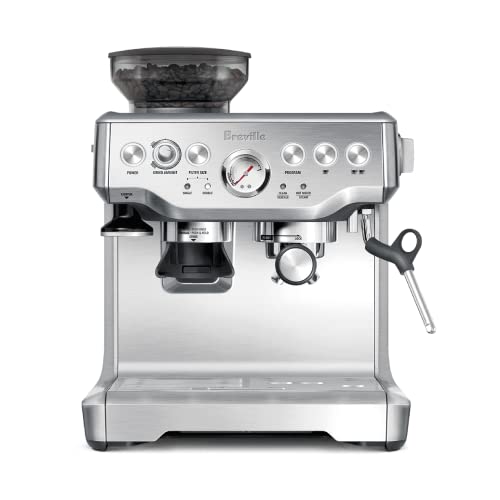
The Breville Barista Express remains the benchmark for entry-level home espresso because it packs a conical burr grinder, PID temperature control, and a low-pressure pre-infusion feature into one brushed stainless steel chassis. The grinder doses directly into the 54mm portafilter, so you skip the messy transfer step that cheaper machines require. Digital temperature control holds water within a precise window, which directly translates to balanced extraction and repeatable shots day after day.
Users consistently report that this machine pulls shots better than many local cafes after a short dialing-in period. The integrated tamper and Razor dose trimming tool help remove the guesswork from puck preparation, though the grinder can be noisy during operation. Long-term owners note that diligent maintenance — backflushing, group head cleaning, and regular descaling — keeps this unit running for years. One reviewer logged five-plus years of daily use with only a single gasket replacement.
The 67-ounce water tank handles multiple back-to-back drinks, and the commercial-style steam wand produces silky microfoam for latte art once you master the technique. Some users recommend upgrading to a bottomless portafilter and a self-leveling tamper for finer control, but the stock package delivers cafe-level espresso out of the box. This machine demands a learning curve, but the ceiling for drink quality is far higher than any fully automatic unit at this price tier.
Why it’s great
- Integrated conical burr grinder with dose control eliminates need for separate equipment.
- PID temperature control and pre-infusion produce balanced, repeatable extractions.
- Proven long-term durability with proper maintenance, often exceeding five years of daily use.
Good to know
- Integrated tamper is convenient but some users prefer a separate tool for more consistent pressure.
- Grinder can be noisy and requires periodic cleaning to prevent clogs.
2. Philips 5500 Series EP5544/94
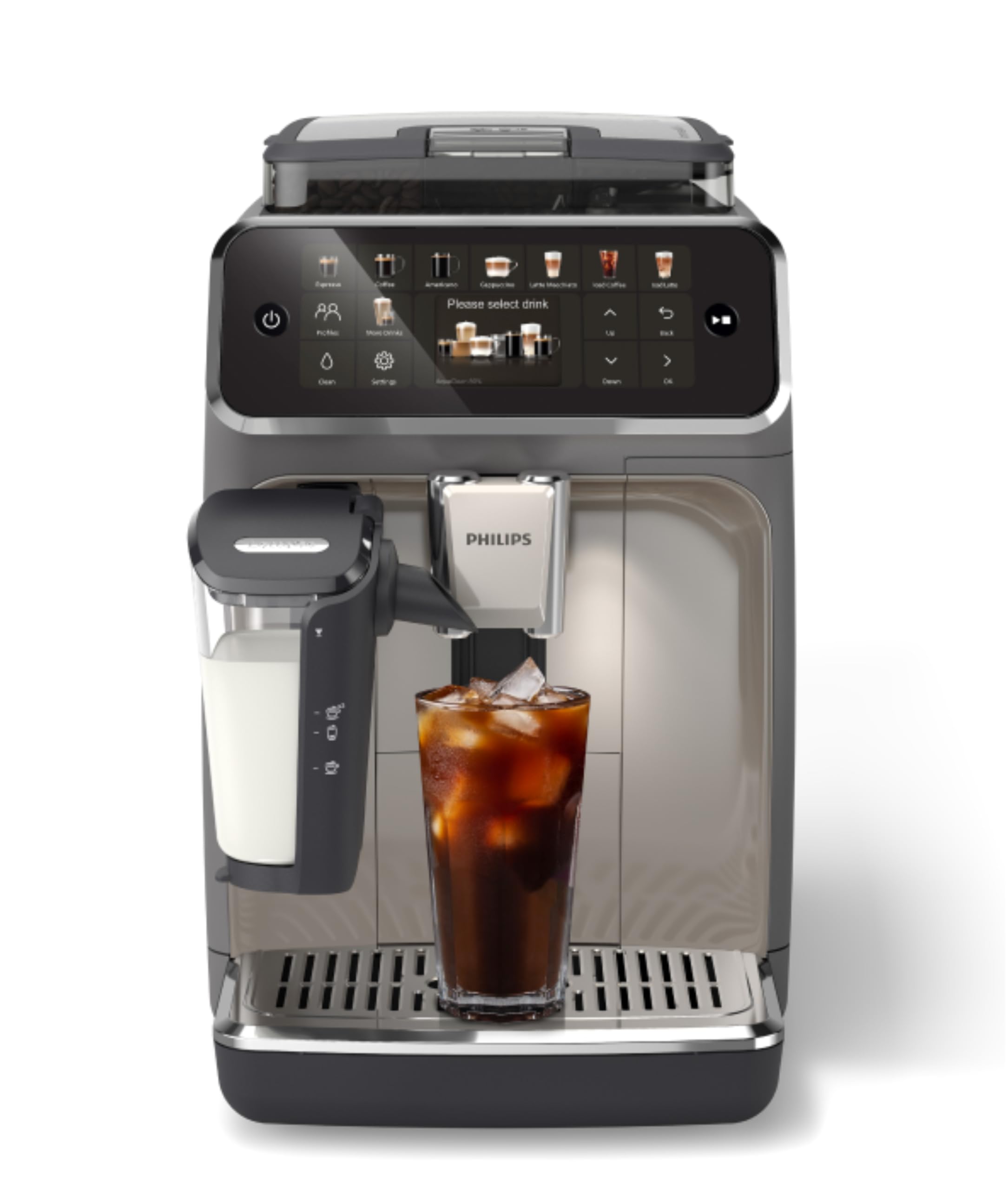
The Philips 5500 Series is a super-automatic machine built for people who want cafe-quality drinks without touching a tamper or steam wand. SilentBrew technology dampens the grinding noise significantly compared to earlier Philips models, and the QuickStart feature heats the thermoblock in three seconds. The LatteGo milk system uses just three parts with no internal tubes, making it the fastest milk system to rinse — a genuine time saver for daily use.
With 20 drink presets including iced coffee, espresso, latte macchiato, and cappuccino, the 5500 covers nearly every order you would normally place at a coffee shop. The color display lets you save up to four user profiles with individual strength, volume, and milk level preferences. One-touch brewing means you press a button and walk away, and the machine automatically grinds, tamps, and extracts without any user intervention.
Some users report that the bean hopper feeds to one side, triggering a false “add beans” alert when one side empties before the other. A quick shake of the hopper resolves the issue, but it is a quirk worth knowing. The overall build quality and the 15-bar Italian pump deliver consistent pressure, and the AquaClean filter reduces descaling frequency. For those who prioritize speed and minimal cleanup over manual control, this is the most polished option in the lineup.
Why it’s great
- LatteGo milk system rinses in 10 seconds with no hidden tubes — genuinely easy to clean.
- SilentBrew technology makes grinding noticeably quieter than competing super-automatics.
- Twenty presets and four user profiles offer maximum convenience for multiple drinkers.
Good to know
- Bean hopper may cause false “add beans” errors if beans settle unevenly.
- No manual steam wand for users who want to control milk texture themselves.
3. Ninja Luxe Café Pro Series ES701

The Ninja Luxe Café Pro does something few all-in-one machines attempt: it handles espresso, drip coffee, cold brew, and hot water from the same platform. Barista Assist Technology monitors every brew and adapts the grind-size recommendation based on the previous extraction, removing the trial and error that frustrates new espresso users. The integrated tamper uses a lever mechanism, so you apply consistent pressure every time without spilling grounds across your counter.
Weight-based dosing is the standout feature here. Instead of grinding by time, the built-in scale measures the exact dose of ground coffee for your selected drink. That precision eliminates under-dosing or over-dosing, which are the most common causes of channeling and uneven extraction. The Dual Froth System Pro combines steaming and whisking for hands-free microfoam that works with dairy and plant-based milks, and it includes five preset froth functions from steamed milk to cold foam.
The grind range offers 25 settings, which gives enough resolution for everything from fine espresso to coarse cold brew. Some users note that the quad-shot option does not froth and brew simultaneously, and a few report that the grind measurement can overfill the basket if the beans are oily. The included XL milk jug and built-in storage compartment keep accessories organized. This machine is ideal for households where one person wants espresso and another wants a full cup of drip coffee without switching devices.
Why it’s great
- Integrated scale provides weight-based dosing for precise, repeatable doses every time.
- Barista Assist technology recommends grind adjustments based on previous brew results.
- Covers espresso, drip coffee, and cold brew from a single machine without swapping parts.
Good to know
- Quad-shot and frothing cannot run simultaneously, slowing multi-drink workflows.
- Grind measurement may overfill with oily beans, requiring occasional manual adjustment.
4. De’Longhi La Specialista Arte Evo EC9255M

The La Specialista Arte Evo brings De’Longhi’s Cold Extraction Technology to a compact all-in-one platform, letting you brew cold coffee in under five minutes without diluting it with ice. Active Temperature Control offers three infusion temperature settings — low, medium, and high — so you can match the brew heat to the roast level of your beans. Dark roasts benefit from a lower temperature to avoid bitterness, while light roasts extract better at the high setting.
The conical burr grinder has eight settings and doses directly into the portafilter using a dosing funnel that minimizes mess. A pressure gauge on the front panel gives real-time feedback on extraction pressure, helping you dial in the grind size without relying on taste alone. The commercial-style steam wand has a ball joint for articulation, though some users find the movement range slightly limited compared to standalone prosumer wands.
Long-term owners report consistent performance over two years of daily use, with the main caveat being that dark roasts can sometimes jam the grinder. Setting the grinder to a coarser setting (around 7 or 8) when using oily dark beans resolves the issue. The included barista kit — dosing funnel, tamping mat, and metal tamper — adds value for beginners. This machine strikes a strong balance between automated convenience and manual control, making it a top pick for home baristas who also want cold brew capability.
Why it’s great
- Cold Extraction Technology brews cold coffee in under five minutes without dilution.
- Active Temperature Control with three settings lets you match brew heat to roast level.
- Integrated pressure gauge provides real-time feedback for precise dialing in.
Good to know
- Grinder can jam with oily dark roasts unless set to a coarser grind.
- Steam wand articulation is slightly limited compared to standalone prosumer wands.
5. Philips 4400 Series EP4444/90
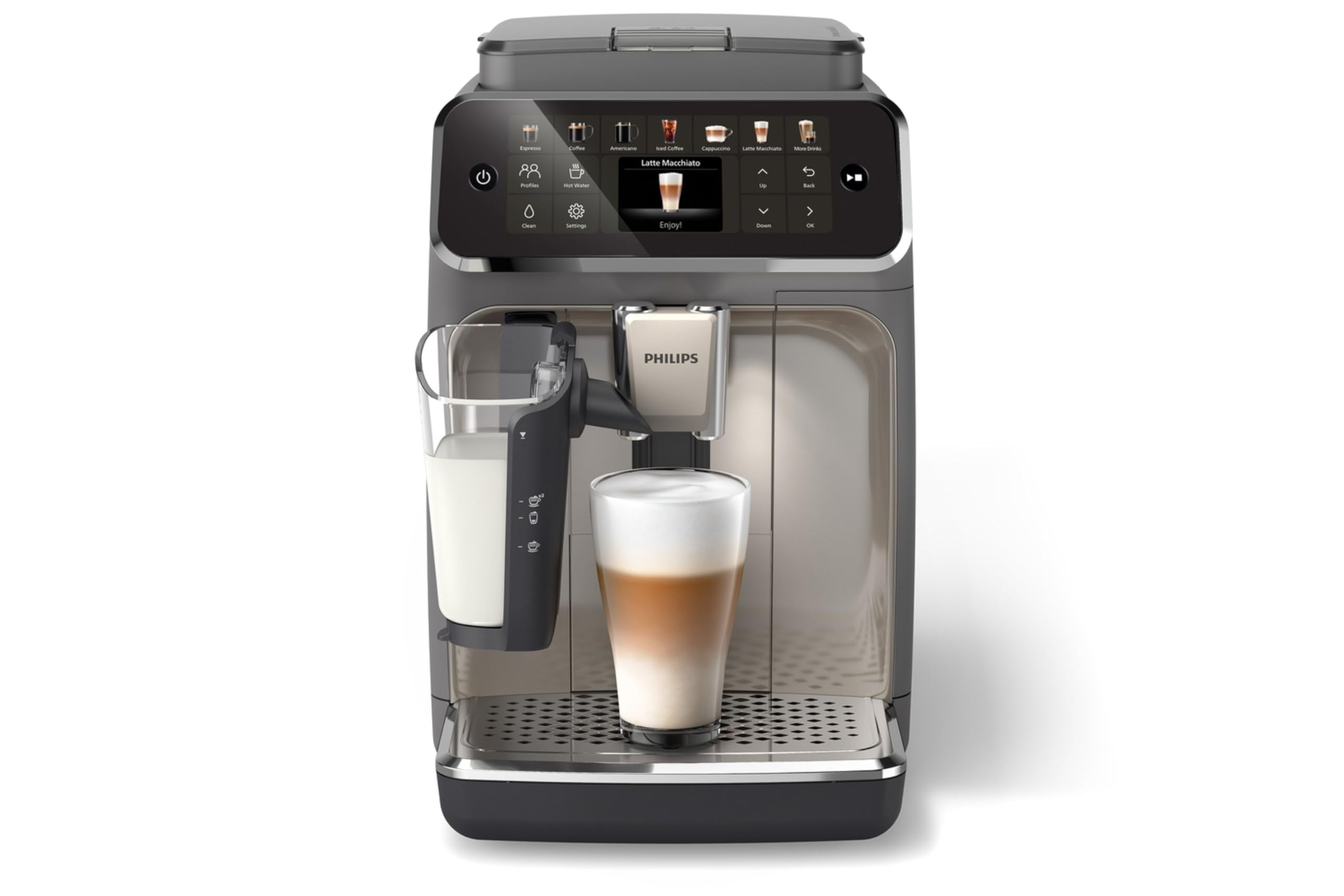
The Philips 4400 Series strips the super-automatic experience down to the essentials without sacrificing shot quality. It shares the same LatteGo milk system and SilentBrew technology as the higher-tier 5500, but caps the presets at 12 and saves only two user profiles. For households that mostly cycle between espresso, latte, and cappuccino, the fewer options actually simplify the interface — the color display is less cluttered and easier to navigate.
Brew temperature is noticeably hot, which is a common complaint on cheaper thermoblock machines that struggle to maintain extraction heat. The 15-bar Italian pump applies consistent pressure, and the pre-infusion cycle wets the puck before ramping to full pressure, reducing channeling. Users who upgraded from pod machines report a dramatic improvement in crema thickness and flavor depth, especially when using freshly roasted beans.
Some users note that the water tank requires refilling every three to four cups, and the machine does not produce firm pucks — the spent grounds come out soupy, which is common for super-automatics that use a bypass chute. The LatteGo milk container is small and needs milk added for each session, but the 10-second rinse saves enough time to offset that. At this tier, the 4400 offers the best hands-off experience for someone who wants quality espresso without learning the manual skills required by semi-automatic machines.
Why it’s great
- LatteGo milk system rinses in seconds with no internal tubes — effortless daily maintenance.
- SilentBrew technology keeps grinding noise low, certified by Quiet Mark.
- Simple color display with 12 presets is less overwhelming than feature-packed models.
Good to know
- Water tank needs frequent refills, especially when making multiple milk-based drinks.
- Pucks are often wet and crumbly, not firm like semi-automatic machines produce.
6. Gevi 20 Bar Espresso Machine
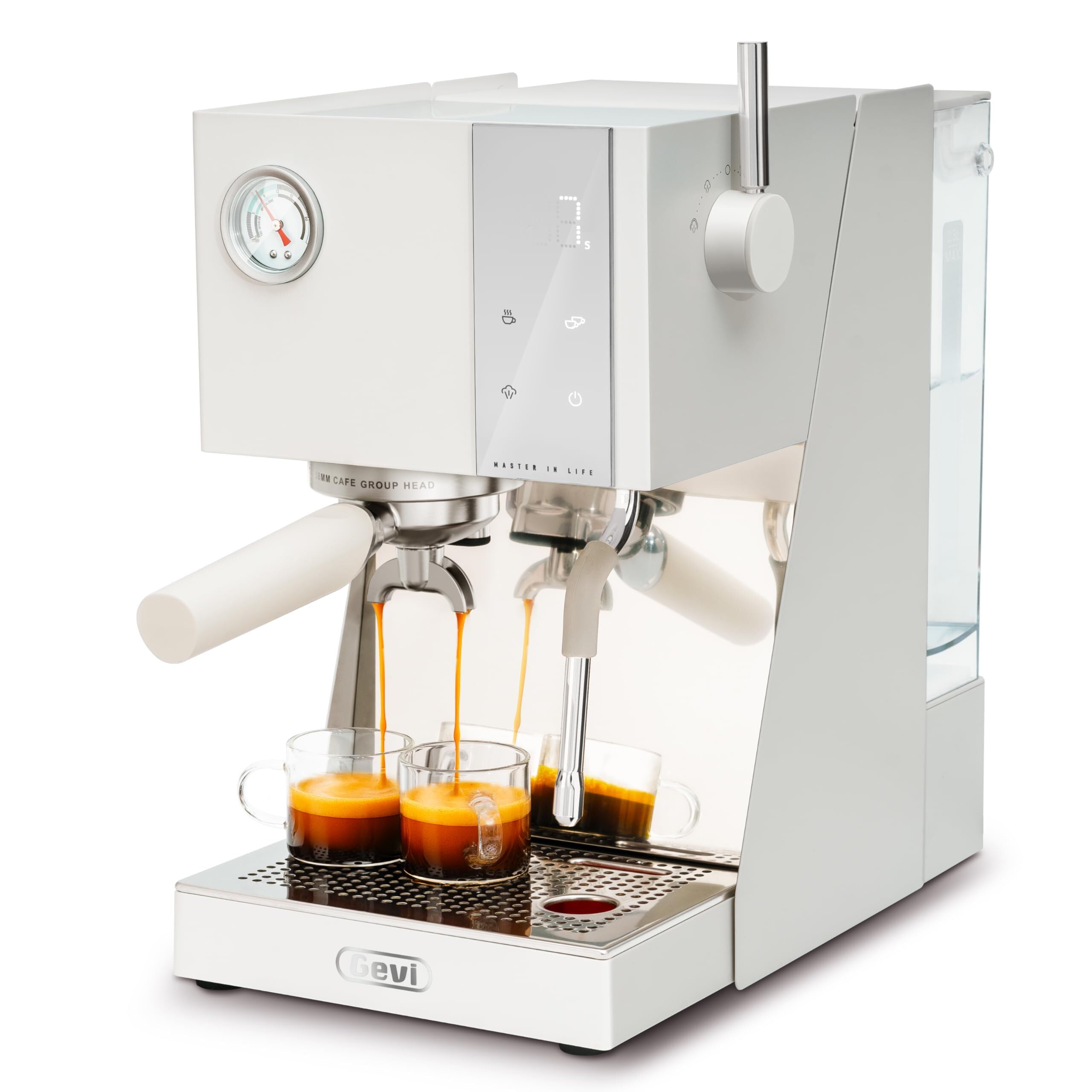
The Gevi 20 Bar machine punches above its price class by including a commercial-grade 58mm portafilter, PID temperature control with three presets (92°C, 94°C, 96°C), and an OPV that regulates pressure to the 9-12 bar sweet spot. Most machines in this range use 51mm or 54mm portafilters, so the 58mm size makes a real difference in water distribution and crema consistency. The Italian Ulka pump delivers genuine 20 bar pressure, though the OPV ensures extraction stays in the optimal range.
The smart touch display shows real-time shot timer, temperature, and pressure readings, giving you the same feedback loop that prosumer machines provide at double the cost. The stainless steel housing and metal interior components feel substantial, and the 2.3-liter detachable water tank reduces refill frequency during larger sessions. The steam wand is a ball-joint design with a four-hole tip that produces silky microfoam suitable for latte art, and users report that the steam pressure is quiet but forceful enough to texture milk in under 30 seconds.
Early adopter reviews highlight that the machine works best when paired with a quality external grinder, as the included pressurized baskets compensate for pre-ground coffee but limit extraction quality. The learning curve is minimal compared to prosumer options, making this a strong upgrade path for someone moving from a pressurized basket machine to a true semi-automatic. The 12-month warranty and lifetime technical support provide peace of mind, though some users wish for a longer initial coverage period given the all-metal construction.
Why it’s great
- Commercial 58mm portafilter improves water distribution and crema compared to smaller sizes.
- PID with three temperature presets and OPV valve provide precise extraction control.
- Real-time touch display shows shot timer, temperature, and pressure for informed adjustments.
Good to know
- No integrated grinder — requires a separate grinder for best results.
- Warranty is limited to 12 months, though lifetime technical support is included.
7. MIROX 15 Bar Espresso Machine AC-517E
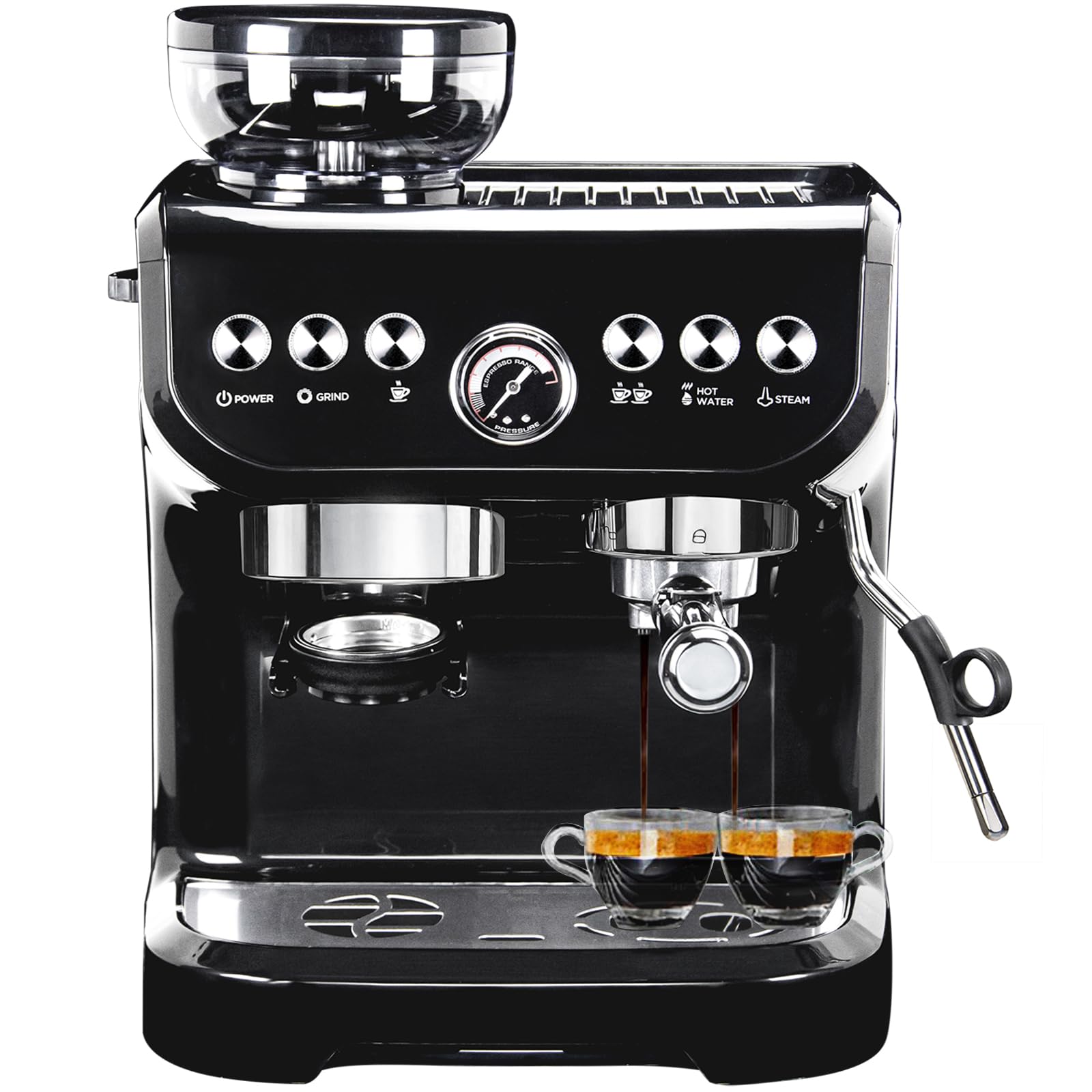
The MIROX 15 Bar machine packs an integrated conical burr grinder, PID temperature control, and a 15-bar pump into a compact ABS housing that weighs only 17 pounds. The ABS construction makes it lighter than all-metal machines, which helps if you need to move it around your counter frequently. Fifteen grind settings cover the spectrum from fine espresso to coarse cold brew, and the manual magnetic tamper attaches to the machine for quick access.
The 70-ounce water tank is one of the largest in this price tier, reducing refills for multiple consecutive drinks. Low-pressure pre-infusion gradually ramps pressure at the start of extraction, which helps draw out flavors more evenly from lighter roasts. The steam wand delivers manual microfoam texture, though some users note that the wand is positioned on the right side and sits low, requiring the milk pitcher to be tilted for proper positioning.
Reliability is the primary concern here. Multiple reports describe the grinder failing after five to twelve months, with lights flashing and no extraction possible. The plastic portafilter handle can crack if over-tightened, and the steamer sometimes spits water for the first 30 seconds before producing dry steam. For the price, the feature set is impressive — PID, integrated grinder, large tank — but the longevity stories make this a riskier pick for someone who expects years of daily use without intervention.
Why it’s great
- Built-in conical burr grinder with 15 settings eliminates the need for separate equipment.
- Large 70-ounce water tank handles multiple drinks without constant refilling.
- PID temperature control and pre-infusion improve extraction consistency at this tier.
Good to know
- Long-term reliability is inconsistent, with grinder failures reported within the first year.
- Plastic portafilter handle and steam wand positioning may frustrate frequent users.
8. Cuisinart Grind and Brew DGB-30
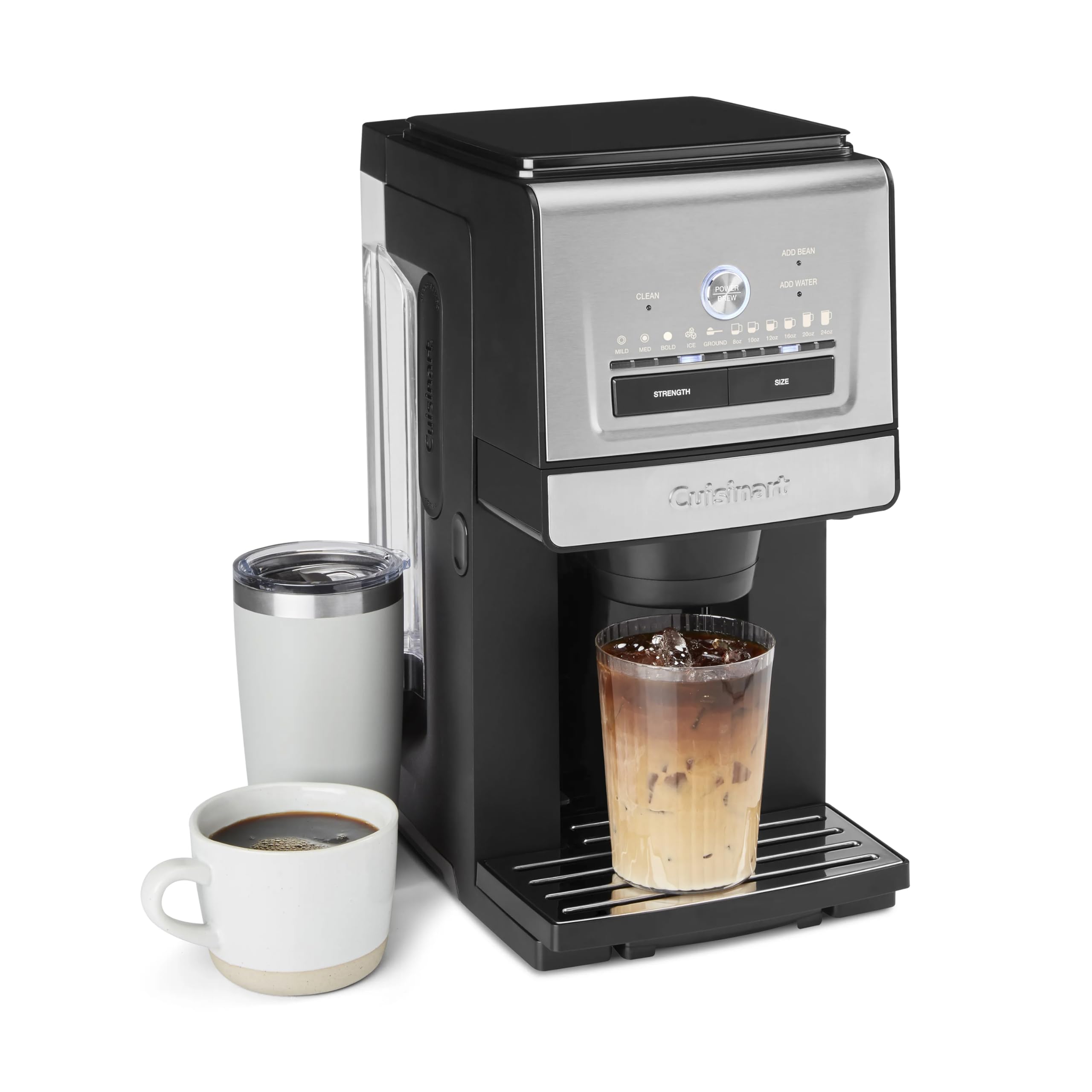
The Cuisinart Grind and Brew DGB-30 is not an espresso machine — it is a single-serve drip coffee maker with a built-in conical burr grinder. For households that want fresh-ground coffee without the complexity of espresso extraction, this unit grinds whole beans and brews a single cup ranging from 8 to 24 ounces. The stainless steel burr mill grinds beans immediately before brewing, and the hotter brewing temperature extracts more flavor than typical pod machines.
The control panel offers adjustable brew strength, a grind-off option for pre-ground coffee, and an over-ice feature for cold coffee without dilution. The 58-ounce water reservoir is large enough for several back-to-back cups, and removable parts make cleaning straightforward. However, users report that the grinder settings are not truly adjustable — the grind size stays at a medium-coarse level, which limits your ability to dial in for different bean types or preferred extraction levels.
Customer reviews are divided. Enthusiasts praise the convenience and hot brewing temperature, while critics point to the inconsistent burr grinder that produces uneven grounds, leading to sour or bitter cups depending on the batch. The machine does not come with the reusable filter basket fully assembled, and if you want paper-filter clean up, you need to buy additional #4 cone filters. This is a solid drip coffee machine with a grinder built in, but anyone expecting espresso-quality output should look at the semi-automatic options instead.
Why it’s great
- Built-in conical burr mill grinds fresh beans immediately before each brew cycle.
- Brews hotter than typical single-serve pod machines, improving flavor extraction.
- Brew strength control and over-ice feature add versatility without added complexity.
Good to know
- Grind size is fixed at medium-coarse with no real adjustability for fine-tuning.
- Some units produce inconsistent grounds, resulting in bitter or sour coffee.
9. Bosch VeroCafe 800 TPU60309
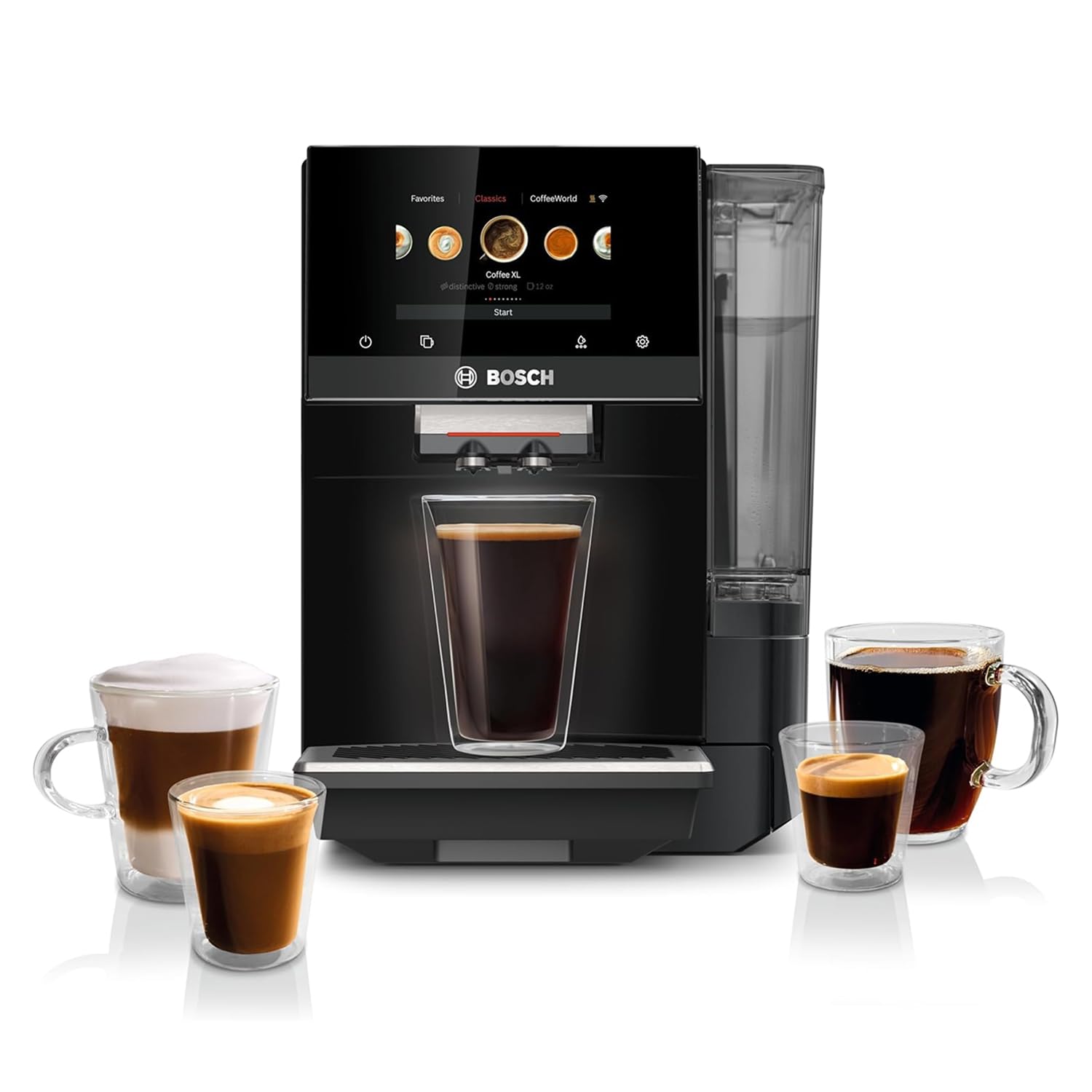
The Bosch VeroCafe 800 sits at the top of the super-automatic food chain with 35 programmable beverages, a large touchscreen interface, and Home Connect app control for remote brewing. The machine uses a ceramic disc grinder rather than traditional steel burrs, which generates less heat and produces a more uniform particle size. That detail matters for extraction consistency, especially when brewing lighter roasts that are more sensitive to heat degradation during grinding.
The milk system uses a flexible tube that draws milk from any container you choose — carton, pitcher, or jug — rather than a built-in reservoir. That approach gives you the freedom to switch between whole milk, oat milk, and almond milk without cleaning a separate tank. The touchscreen guides you through each drink customization with clear icons, and the cleaning process includes animated step-by-step instructions that reduce the intimidation factor of super-automatic maintenance.
The 5.1-pound bean hopper is the largest in this roundup, and the 18.4-inch depth means it needs dedicated counter space. Some users note that the coffee temperature could be hotter, and the milk ratio customization is limited to a minimum of 30 percent milk, which may be too much for those who prefer a strong espresso shot with just a touch of foam. The price is the highest in the list, but for a household that wants a true set-it-and-forget-it experience with a large drink library, the VeroCafe 800 offers the most polished user interface of any super-automatic on the market.
Why it’s great
- Ceramic disc grinder produces uniform particle size with minimal heat generation.
- Flexible milk tube draws from any container, eliminating milk system reservoir cleaning.
- Home Connect app enables remote brewing and scheduling for ultimate convenience.
Good to know
- Brew temperature may not satisfy users who prefer piping hot coffee.
- Milk ratio customization is capped at a minimum of 30%, limiting strong espresso-only drinks.
FAQ
What size portafilter is best for an all-in-one machine?
Should I choose a super-automatic or a semi-automatic machine?
How often should I descale an all-in-one espresso machine?
Why does my machine produce wet pucks after extraction?
Final Thoughts: The Verdict
For most users, the all in one coffee and espresso machine winner is the Breville Barista Express because it balances integrated grinding, PID temperature control, and a manual steam wand in a package that lets you grow from beginner to confident home barista. If you want a super-automatic that handles everything with one touch, grab the Philips 5500 Series. And for cold brew versatility without an extra appliance, nothing beats the De’Longhi La Specialista Arte Evo.

Mo Maruf
I created WellFizz to bridge the gap between vague wellness advice and actionable solutions. My mission is simple: to decode the research and give you practical tools you can actually use.
Beyond the data, I am a passionate traveler. I believe that stepping away from the screen to explore new environments is essential for mental clarity and physical vitality.