Our readers keep the lights on and my smoothie glass nicely filled. As an Amazon Associate, I earn from qualifying purchases.
One mistimed landing on a fast break or a single awkward step during a pickup game can sideline you for weeks with a rolled ankle. That sharp, familiar pain isn’t just frustrating—it’s a signal that your joint needs serious structural reinforcement. The right brace doesn’t just mask discomfort; it actively prevents that inversion moment, letting you push harder and recover faster.
I’m Mohammad Maruf — the founder and writer behind WellFizz. I analyze hundreds of consumer health products annually, focusing on the mechanical and material design of joint supports to separate true protection from passive sleeves.
Selecting the right ankle support for sports means balancing your sport’s demands with the brace’s rigidity, fit, and breathability, not just grabbing the highest-rated option.
How To Choose The Best Ankle Support For Sports
Not every ankle brace provides the same protection. A soft compression sleeve might feel comfortable for walking, but it won’t stop a lateral roll during a jump cut. Here are the factors that actually matter for active sports.
Support Level vs. Sport Demands
Match brace rigidity to your activity. High-impact sports like basketball, volleyball, and football demand firm stabilization—look for lace-up designs with rigid side splints or figure-8 straps. Lower-impact activities like running or hiking often do fine with moderate support from a compression wrap or a simple lace-up brace. Using a low-support sleeve on a hardwood court is asking for trouble.
Closure System: Lace-Up vs. Strap vs. Sleeve
A lace-up system gives you micro-adjustability across the entire ankle, ideal for achieving a snug feel without pressure points. Hook-and-loop straps offer quick donning and removal. Pure sleeves provide basic compression and proprioception but little rolling resistance. For serious sports protection, choose a lace-up brace with secondary stabilizing straps.
Removable Splints for Versatility
Brackets with removable aluminum or plastic splints give you flexibility. Wear the splints in during early recovery or game time for maximum rigidity; remove them for lighter practices or daily wear. This single feature transforms a recovery tool into a prevention device, saving you from buying two separate braces.
Low-Profile Fit for Shoe Compatibility
A bulky brace that forces you to size up two shoe sizes will compromise your footwork and may even cause blisters. Look for an open-heel design and thin, breathable materials that slide into your standard athletic shoes. The best sports braces are the ones you forget you’re wearing after the first few steps.
Quick Comparison
On smaller screens, swipe sideways to see the full table.
| Model | Category | Best For | Key Spec | Amazon |
|---|---|---|---|---|
| AGPTEK Lace-Up Brace | Mid-Range | All-around sports protection | Removable aluminum splints | Amazon |
| Vive Lace Up Brace | Mid-Range | Adjustable compression | Figure-8 stabilizing straps | Amazon |
| Fitomo Triple-Lock Brace | Mid-Range | Secure fit during movement | Triple-Lock system | Amazon |
| Shock Doctor Stabilizer | Premium | Low-profile daily wear | Speed-lace closure | Amazon |
| McDavid Bio-Logix Brace | Premium | Competition-grade stability | Flex-link hinge design | Amazon |
In‑Depth Reviews
1. AGPTEK Ankle Brace for Women Men
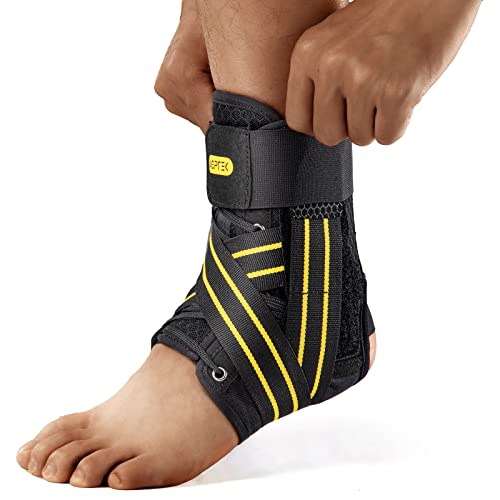
The AGPTEK brace delivers the most versatile setup in this entire roundup, thanks to its cross-lace design and two removable aluminum splints. You get a secure, micro-adjustable fit without the bulk of traditional strap-based systems, and the splints provide true 360-degree lateral rigidity when you need it most during high-intensity jumps. The breathable polyester and nylon shell prevents sweat buildup during extended sessions on the court or track.
Customer feedback emphasizes its ability to outclass doctor-provided braces in both comfort and structural support. Users recovering from fractures and post-surgery have found the adjustable closure system saves time while still offering the immobilization needed to protect the joint. The medium size accommodates women’s 10W shoes well, and the low-profile profile means it fits inside most athletic sneakers without forcing a size-up.
For athletes moving from recovery back into active play, the removable splints are the killer feature—keep them in for games, take them out for light training. At a price point that undercuts competitor models with fewer adjustments, this is the most balanced pick on the list for anyone who needs both protection and flexibility.
Why it’s great
- Removable aluminum splints for two modes of support
- Gusseted lace design allows precise tension control
- Breathable nylon/polyester blend for long wear
Good to know
- Yellow color may not suit all preferences
- Medium may feel snug on larger ankle circumferences
2. Vive Lace Up Ankle Brace

The Vive brace delivers a classic lace-up platform enhanced with figure-8 stabilizing straps that wrap around the heel and arch for targeted medial and lateral support. The open-heel design reduces bulk and allows it to slip into low-top sneakers and Vans without excessive pressure on the Achilles. The nylon construction feels durable against sweat and friction, and the low-profile cut means it won’t peek out above most shoe collars.
Reviewers consistently note it fits well inside casual athletic shoes rather than requiring oversized footwear, and many report it was doctor-recommended for sprains and tendonitis. The adjustable tension across both the laces and the dual Velcro straps lets you dial in exactly the compression level you need during different phases of recovery. The bilateral design works on either foot, simplifying ordering and swapping.
One caveat: sizing can be inconsistent, with some users finding the medium too large and needing to size down. The brace can also feel bulky against the top of the foot for extended walking. For everyday training and recovery where you don’t need rigid splints, the Vive provides a solid, affordable foundation that outperforms basic sleeves at a similar price point.
Why it’s great
- Figure-8 straps target lateral and medial stability
- Open-heel design fits in standard athletic shoes
- Bilateral for left or right foot use
Good to know
- Size consistency can be an issue
- May feel bulky in narrow shoes for walking
3. Fitomo Triple-Lock Ankle Brace
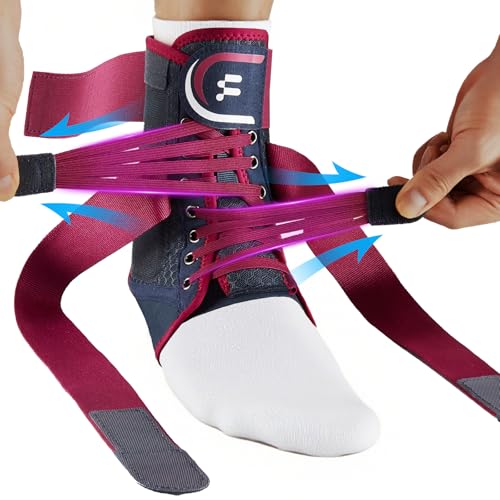
The Fitomo uses a triple-lock retention system that combines top-strap compression, dual removable side stabilizers, and cross-crepe straps to prevent the brace from shifting during dynamic movement. This is a critical feature for sports involving lateral cuts, where a loosening brace can actually increase injury risk. The durable polyester and nylon blend held up after half a year of daily use in customer tests, with no fraying or strap fatigue.
What sets this brace apart is how quickly you can put it on and lock it down compared to lace-up alternatives. The hook-and-loop closure system allows for fast tension adjustments, which is valuable during practice when you need to switch between drills quickly. Users recovering from stroke-related foot drop and post-ORIF surgery found it provided both confidence and functional stability without making the shoe feel excessively tight.
The low-profile design is balanced—it fits inside most sneakers with standard athletic socks, though some users wished for a two-pack at this price point. For athletes who prioritize efficiency and hate re-adjusting mid-game, the Fitomo’s lock-in design makes it a strong contender for moderate-to-high support needs without the lace-up learning curve.
Why it’s great
- Triple-lock system prevents shifting during play
- Quick hook-and-loop closure for fast adjustments
- Removable side stabilizers for flexible use
Good to know
- Single brace per package at mid-range price
- Stabilizers may feel rigid for some during walking
4. Shock Doctor Ankle Stabilizer

The Shock Doctor Stabilizer is built around a speed-lace closure system that tightens evenly across the instep and wraps the ankle in a compression fit in seconds. The flexible support stays provide enough rigidity to resist inversion without making the joint feel locked in cement, making it ideal for athletes who need protection without sacrificing proprioception. The multi-layer construction combines SBR, nylon, polyester, rubber, and latex to create a durable shell that breathes reasonably well during extended wear.
Customer feedback consistently praises its true-to-size fit, even inside work boots and various athletic shoe styles, with the low-profile design keeping the bulk minimal. Adjustable straps at all tension points let you customize compression, though the bottom Velcro can attract lint and fuzz over time. Users with wider feet (size 14 extra wide) found the largest option initially tight but stretchable to a near-perfect fit after short wear.
This stabilizer is best suited for athletes who need a reliable, low-profile brace they can wear all day—on the court and off. It won’t deliver the same rigid lateral lock of a splint-style brace, so those with severe instability should consider a firmer option. For moderate support needs during basketball, volleyball, or other multidirectional sports, the Shock Doctor hits the sweet spot of portability and protection.
Why it’s great
- Speed-lace closure for quick, even tightening
- Flexible support stays balance rigidity and feel
- True-to-size fit inside most athletic shoes
Good to know
- Bottom Velcro attracts lint and pet hair
- Not firm enough for serious ankle instability
5. McDavid Bio-Logix Ankle Brace
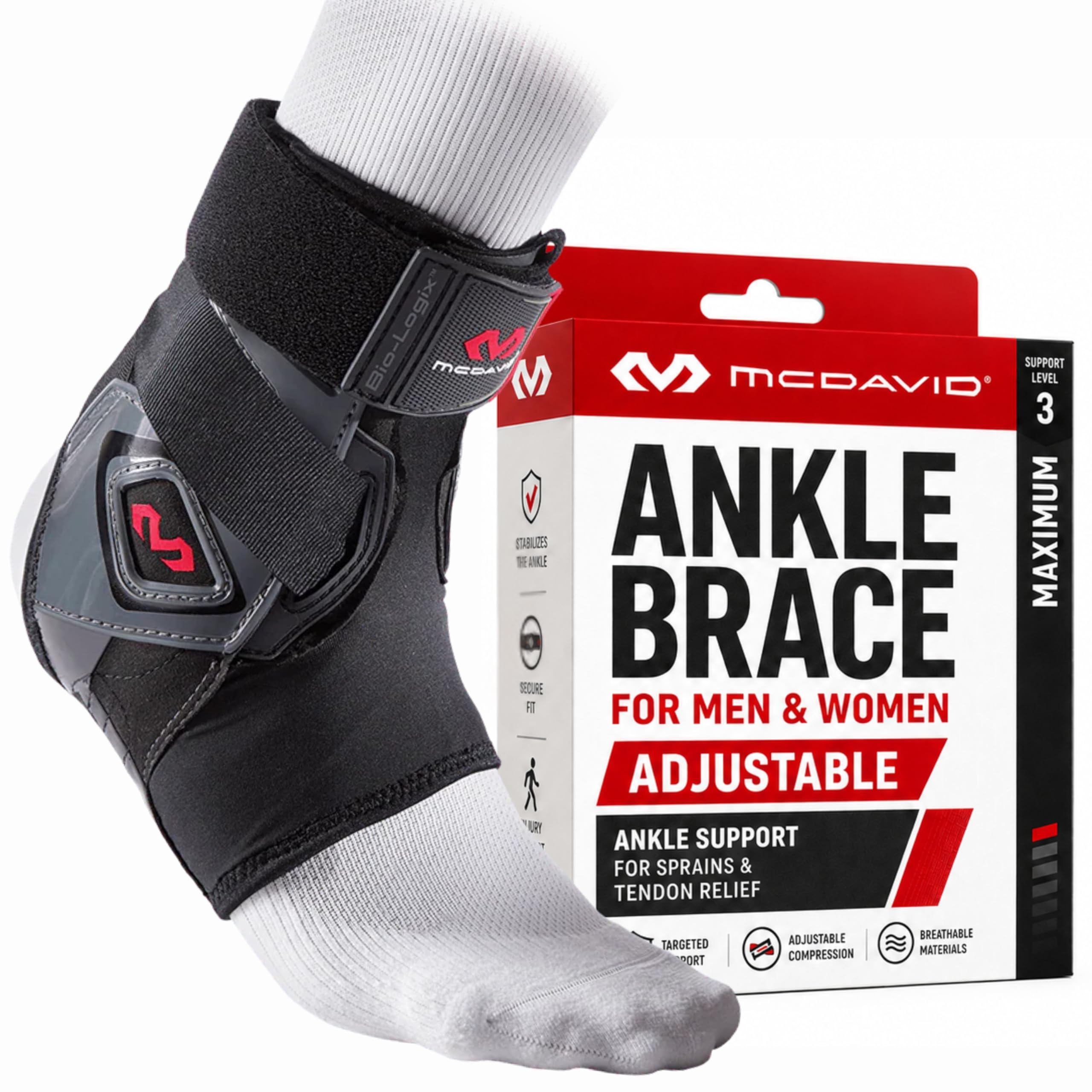
The McDavid Bio-Logix represents the highest build quality in this roundup, featuring a mechanical flex-link hinge that provides engineered support through the full range of motion. The neoprene, nylon, and spandex shell wraps the ankle in memory foam padding that conforms to your anatomy over time, reducing pressure points. The anatomically contoured side splints target the lateral and medial sides specifically rather than offering generic bilateral crush protection.
Designed as a competition-grade brace for sports like soccer, basketball, and tennis, the McDavid uses a vertical tube construction with two adjustable Velcro straps. The top strap tightens the splints for inversion resistance, while the bottom strap locks the sleeve around the foot. Users on construction sites, climbing ladders and walking uneven terrain, have reported it dramatically reduces end-of-day achiness without limiting mobility. The right/left specific design (purchase separately) ensures a truly anatomical fit.
One trade-off: the brace is thicker than most low-profile alternatives, which can interfere with tricky soccer moves or feel tight inside narrow athletic shoes. The sizing is also more finicky—small fits size 8 feet but the tube may be too short for taller ankles; medium/large has longer straps but the tube may feel loose. For athletes who prioritize premium materials and real hinge articulation over quick convenience, the McDavid delivers a confidence-inspiring step that justifies its premium placement.
Why it’s great
- Flex-link hinge provides natural range of motion with support
- Memory foam padding for long-wear comfort
- Anatomic left/right design for better fit
Good to know
- Thicker build may feel tight in narrow shoes
- Sizing can be tricky, especially tube length vs. foot size
FAQ
Can I wear an ankle brace inside my basketball shoes?
What is the difference between a lace-up brace and a sleeve?
How do I know if I need removable splints?
Can I wash my ankle brace?
Final Thoughts: The Verdict
For most users, the ankle support for sports winner is the AGPTEK Lace-Up Brace because it combines removable aluminum splints, a precision lace system, and breathable materials at a mid-range price that beats many clinical options. If you want a quick, low-profile fit for moderate support during basketball or volleyball, grab the Shock Doctor Stabilizer. And for competition-grade hinge articulation and memory foam comfort, nothing beats the McDavid Bio-Logix Brace.

Mo Maruf
I created WellFizz to bridge the gap between vague wellness advice and actionable solutions. My mission is simple: to decode the research and give you practical tools you can actually use.
Beyond the data, I am a passionate traveler. I believe that stepping away from the screen to explore new environments is essential for mental clarity and physical vitality.