Our readers keep the lights on and my smoothie glass nicely filled. As an Amazon Associate, I earn from qualifying purchases.
The search for a smartwatch that actually looks like a watch, tracks hard workouts without dying by lunch, and syncs seamlessly with your Android phone usually ends in compromise—oversized plastic bricks or delicate fashion pieces that can’t handle a hike. You want a timepiece that projects your style, monitors your health accurately, and lasts the week, not just the morning.
I’m Mohammad Maruf — the founder and writer behind WellFizz. I’ve spent thousands of hours analyzing wearable hardware, comparing GPS chipset performance, battery chemistries, display technologies, and build materials across hundreds of models to separate genuine performance from marketing fluff.
Whether you’re scaling trails or scaling the corporate ladder, this guide cuts through the noise to deliver the definitive list of the android smartwatch for men that balances rugged durability with refined style.
How To Choose The Best Android Smartwatch For Men
Three core metrics separate a smartwatch you’ll wear daily from one that ends up in a drawer: battery life that matches your routine, health sensors that you trust, and a display you can read in direct sunlight. Here’s what matters most.
Display technology and brightness
AMOLED panels deliver deep blacks and vibrant colors, but peak brightness—measured in nits—determines whether you can read stats on a sunny trail run. Look for at least 1,000 nits for outdoor usability. Transflective displays, common on ultra-rugged models, sip power and stay readable in direct light but lack the visual pop of AMOLED.
GPS accuracy and satellite support
Basic single-band GPS can drift by dozens of meters near tall buildings or dense forest canopy. Multi-band GPS with support for at least five satellite constellations (GPS, GLONASS, Galileo, BeiDou, QZSS) locks faster and tracks your route precisely. If you run trails or navigate urban canyons, multi-band is non-negotiable.
Battery capacity and real-world longevity
Claimed battery life is often measured in power-saving mode with minimal interaction. For daily use with always-on display and workout tracking, expect 50–60% of the listed figure. A watch with a 400–500 mAh battery and an efficient OS can comfortably last 5–10 days, while a 200–300 mAh Wear OS device typically requires nightly charging.
Build materials and water resistance
Titanium and sapphire crystal withstand scratches and impacts far better than aluminum and standard glass. Water resistance ratings matter: 5 ATM means safe for swimming, while 10 ATM or dive-rated (40m+) suits serious water sports. Silicone bands are comfortable for workouts; leather or titanium bands dress up for the office.
Quick Comparison
On smaller screens, swipe sideways to see the full table.
| Model | Category | Best For | Key Spec | Amazon |
|---|---|---|---|---|
| Amazfit T-Rex 3 Pro | Premium Rugged | Adventure & multi-day treks | 700 mAh battery, 27 days typical | Amazon |
| Garmin Forerunner 970 | Premium Multisport | Triathlon & serious runners | 560 mAh, 15 days smartwatch | Amazon |
| Garmin Fenix 8 51mm | Ultimate Expedition | Diving, mountaineering, ultra-endurance | 29 days smartwatch, 84h GPS | Amazon |
| Samsung Galaxy Watch 8 Classic | Premium Lifestyle | Android ecosystem & style | 445 mAh, 30 hours typical | Amazon |
| Google Pixel Watch 3 | Premium Integrated | Pixel phone owners & Fitbit fans | 36 hours power-save mode | Amazon |
| Samsung Galaxy Watch 5 Pro | Mid-Range Tough | Hikers wanting titanium build | Sapphire glass, titanium case | Amazon |
| Amazfit Active Max | Mid-Range All-Rounder | Daily fitness with offline maps | 1.5″ 3000-nit AMOLED, 24 day bat. | Amazon |
| AMAZTIM T3 Ultra | Mid-Range Rugged | Blue collar / outdoor work | 470 mAh, MIL-STD-810H | Amazon |
| Motorola Moto Watch 120 | Entry-Level Style | Budget-friendly daily wear | 10-day battery, AMOLED display | Amazon |
In‑Depth Reviews
1. Amazfit T-Rex 3 Pro
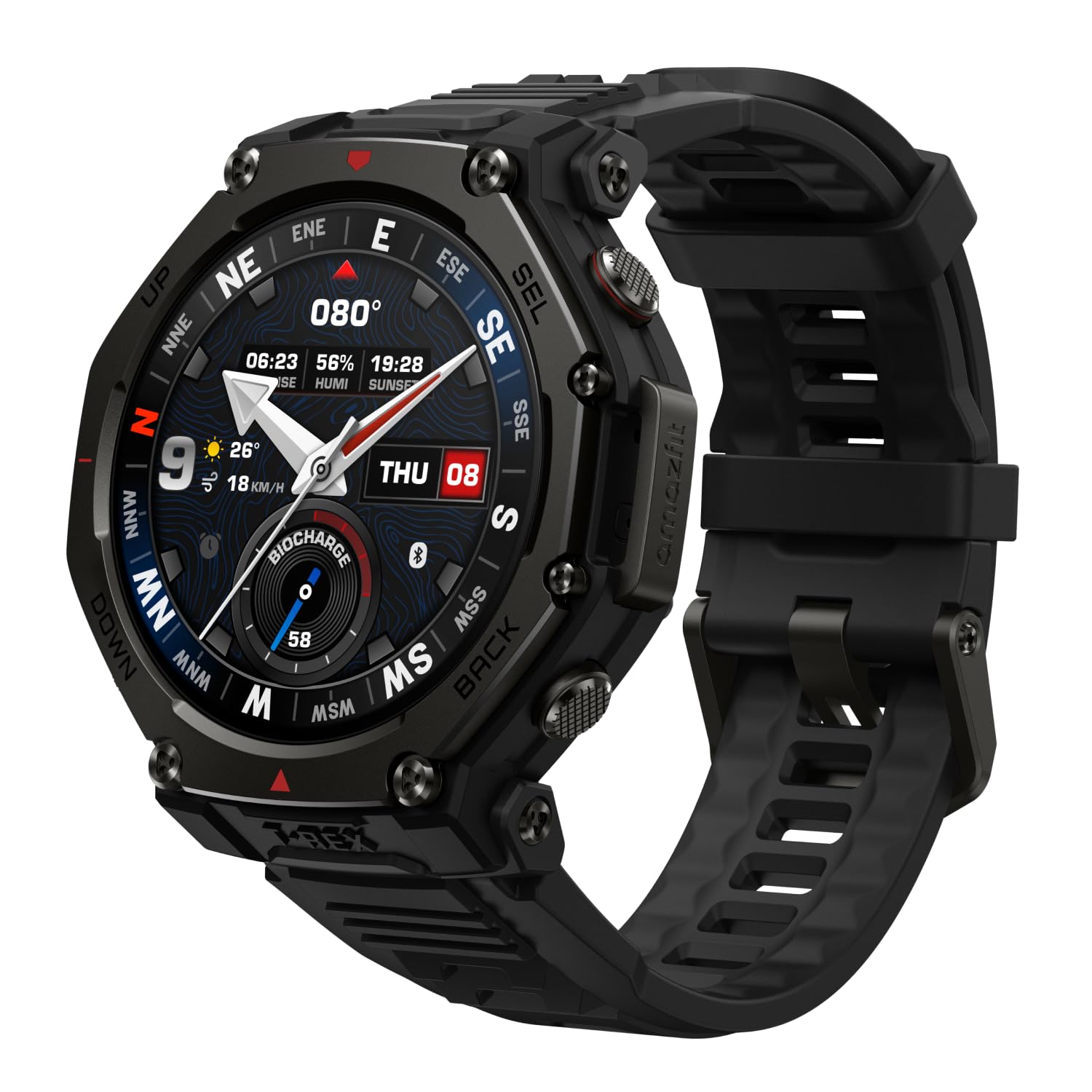
The T-Rex 3 Pro hits a sweet spot most watches miss: it packs a 700 mAh battery that delivers a genuine 10–14 days of mixed use, a 3000-nit sapphire AMOLED display that stays legible under direct midday sun, and a titanium bezel that shrugs off scrapes. The dual-band GPS with six satellite constellations locks in under 10 seconds even under heavy tree cover, which is rare outside the Garmin ecosystem.
Health tracking is comprehensive—BioTracker sensor for heart rate and SpO2, sleep staging, and stress monitoring—though the onboard algorithms occasionally lag behind Garmin’s Firstbeat analytics for recovery scoring. The built-in two-color flashlight (red for low interference, white for clarity, and an SOS strobe) is surprisingly practical for tent setup or late-night gear sorting.
The Zepp app interface is clean but the watch face store is less curated than Wear OS alternatives. If you want a rugged watch that doesn’t demand daily charging and costs roughly a third of a Garmin Fenix 8, this is the benchmark.
Why it’s great
- Exceptional 700 mAh battery outlasts most premium competitors by days
- Dual-band GPS with 6 satellite systems provides fast, accurate route tracking
- Robust build with titanium bezel and sapphire glass survives real abuse
Good to know
- Software ecosystem is less refined than Garmin or Wear OS
- Wet screen can be difficult to unlock in cold conditions
2. Garmin Forerunner 970

The Forerunner 970 is built for runners who obsess over data. The 1.4-inch AMOLED display is Garmin’s brightest yet, with sapphire lens protection, and the 560 mAh battery delivers a reliable 10–15 days in smartwatch mode—or 26 hours of continuous GPS tracking. Multi-band GPS with SatIQ technology dynamically switches between bands to preserve battery without sacrificing accuracy.
Training metrics are where this watch leaves competitors behind: running economy, step speed loss, training readiness, and HRV status are all derived from Firstbeat analytics. The built-in LED flashlight is a runner-specific touch that makes pre-dawn or post-sunset miles safer. The watch also supports Garmin Coach adaptive training plans for 5K through marathon distances.
Setup is more involved than a consumer smartwatch—expect a learning curve for the button-and-touch hybrid interface—and the HRM 600 chest strap (sold separately) is required for running dynamics. For triathletes or serious runners, the data depth justifies the investment.
Why it’s great
- Running-first analytics with running economy and step speed loss metrics
- Bright AMOLED with sapphire lens withstands scratches
- 15-day battery with always-on display is best-in-class for GPS training
Good to know
- Proprietary metrics require compatible HRM chest strap for full data
- Steeper initial learning curve than typical Wear OS watches
3. Garmin Fenix 8 51mm

The Fenix 8 is the heaviest hitter in this lineup—51mm titanium case, scratch-resistant sapphire lens, and a 40-meter dive rating with leakproof metal buttons. The 1.4-inch AMOLED display is crisp, but the real story is battery life: up to 29 days in smartwatch mode and an astonishing 84 hours in GPS mode, making it the only watch here that can handle multi-week expeditions without a charger.
Navigation is overpowered: multi-band GPS with SatIQ, a 3-axis compass, gyroscope, barometric altimeter, full-color topo maps, and dynamic round-trip routing that recalculates if you leave the trail. Health monitoring includes ECG, HRV status, training readiness, sleep coaching, and Pulse Ox. The off-grid voice command feature works without a phone connection, which is unique in this tier.
The 51mm case is genuinely large—it won’t slip under a dress shirt cuff—and the price is the highest here by a wide margin. For divers, mountaineers, and ultra-endurance athletes who need the toughest tool possible, the Fenix 8 is the definitive choice.
Why it’s great
- Market-leading 29-day smartwatch battery with 84-hour GPS tracking
- Dive-rated to 40 meters with leakproof metal buttons
- Full offline mapping with multi-band GPS and SatIQ technology
Good to know
- 51mm case is extremely large and may feel bulky for smaller wrists
- Premium price point is the highest in this guide
4. Samsung Galaxy Watch 8 Classic (2025)
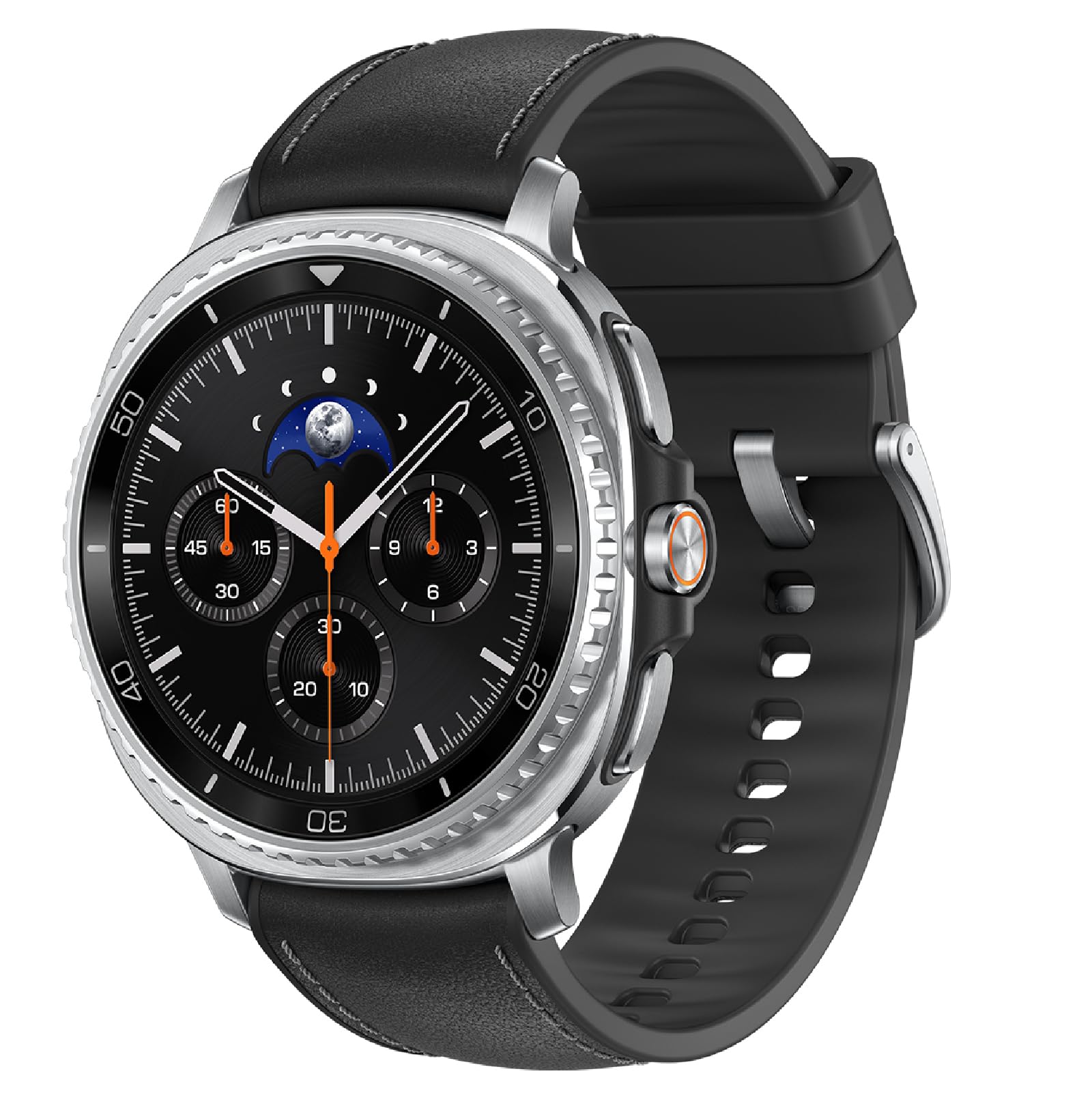
The Galaxy Watch 8 Classic brings back the tactile rotating bezel that fans demanded, paired with a 46mm stainless steel case and sapphire crystal. The Super AMOLED display is among the brightest on the market, and the BioActive sensor (optical heart rate, bioelectrical impedance, and temperature) delivers accurate readings for heart rate, sleep staging, body composition, and skin temperature.
Wear OS 5 with One UI Watch 6 provides deep integration with Samsung phones—seamless Buds control, camera shutter, smart home toggles—but also works with any Android phone. The battery is the limiting factor: 30 hours with always-on display means nightly charging is the norm. The included eco-leather band looks sharp but may be snug for wider wrists.
Advanced sleep coaching, running coach with personalized form tips, and blood pressure monitoring (calibrated with a cuff) add genuine health utility. If you prioritize app ecosystem and design polish over multi-week battery life, this is the best-looking Wear OS watch available.
Why it’s great
- Satisfying rotating bezel navigation with haptic feedback
- Deep Samsung ecosystem integration and full Wear OS app library
- Accurate BioActive sensor for body composition and temperature
Good to know
- Battery life requires nightly charging under normal use
- Proprietary bands limit third-party strap options
5. Google Pixel Watch 3 (41mm)

The Pixel Watch 3 leverages Google’s acquisition of Fitbit to deliver the most polished health-tracking experience outside of Garmin. The 41mm Actua AMOLED display is 10% larger than the previous generation and hits a peak brightness that makes it readable in sunlight. Battery life is the trade-off: a full 24 hours with always-on display, or up to 36 hours in power-saving mode, which is competitive for Wear OS but still means daily charging.
Advanced Running from Fitbit provides real-time coaching with pace and heart rate targets, and the new Daily Readiness score uses sleep, resting heart rate, and HRV to tell you whether to train or rest. Offline maps with turn-by-turn navigation work without a phone, a feature typically reserved for premium Garmin models. The LTE version allows calls and texts without carrying your phone.
The round domed design is elegant and comfortable, but the 41mm diameter may look small on larger wrists. The eSIM lock can be frustrating with some carriers. For Pixel phone owners who value Fitbit’s algorithm depth, this is the natural pairing.
Why it’s great
- Industry-leading Fitbit health algorithms for sleep and readiness scoring
- Seamless integration with Pixel phones and Google ecosystem features
- Offline maps and turn-by-turn navigation without phone connection
Good to know
- 41mm diameter appears small on larger male wrists
- eSIM locking policy restricts carrier flexibility
6. Samsung Galaxy Watch 5 Pro 45mm LTE
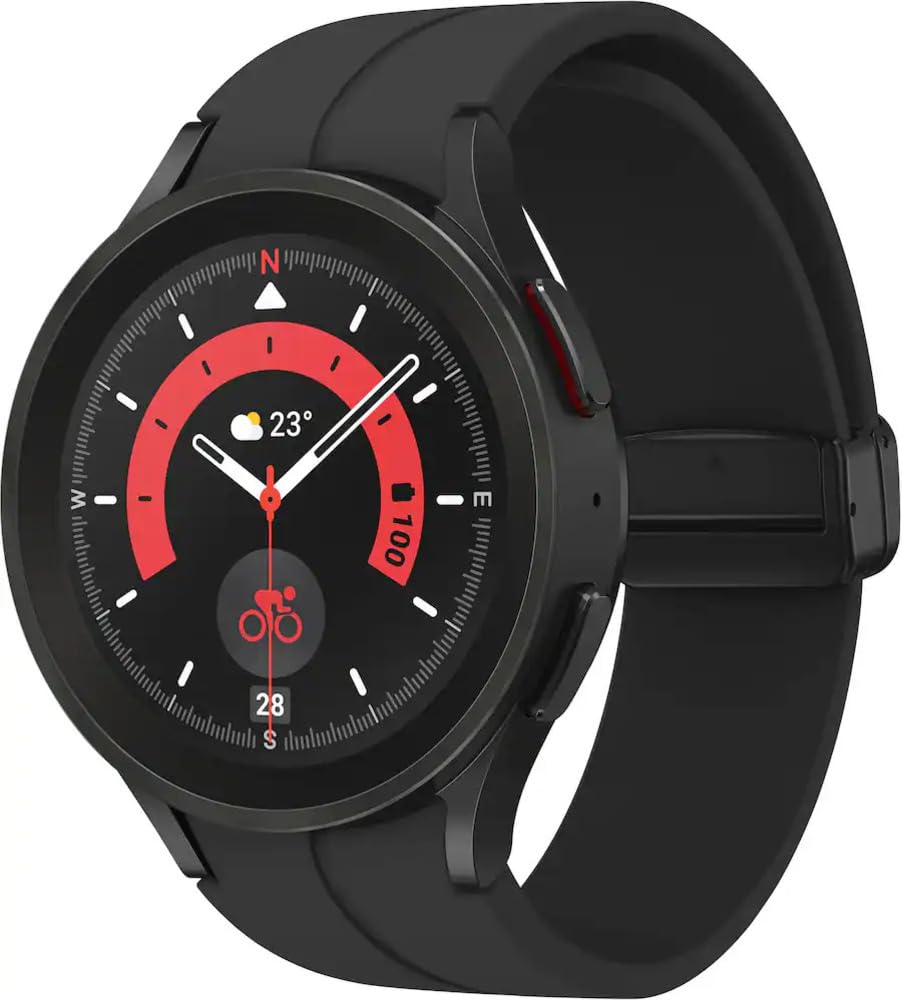
The Galaxy Watch 5 Pro takes the premium build of Samsung’s flagship line—titanium case, sapphire crystal glass, and D-buckle sport band—and pairs it with a larger battery than the standard model. The improved BioActive sensor sits closer to the skin for more accurate heart rate readings, and the body composition analysis (BIA) provides segmental muscle and fat data that few competitors offer.
GPS route tracking with GPX import and Track Back navigation is a genuine hiking tool, guiding you back to your starting point via voice or vibration prompts. Auto workout tracking detects activities like swimming, rowing, and HIIT automatically. The LTE version allows standalone calls and streaming without a phone nearby.
Battery life is improved over the base model but still averages 2–3 days with normal use, or about 4 days in power-saving mode. The US version notably lacks blood pressure monitoring and the rotating bezel was removed in favor of a digital bezel. For hikers who want a titanium Wear OS watch without paying Fenix prices, this is a solid mid-range pick.
Why it’s great
- Durable titanium case and sapphire glass resist trail damage
- Body composition analysis provides segmental muscle and fat metrics
- GPX route import and Track Back navigation for hiking
Good to know
- Battery averages 2–3 days, short for outdoor enthusiasts
- No rotating bezel and US version disables blood pressure monitoring
7. Amazfit Active Max
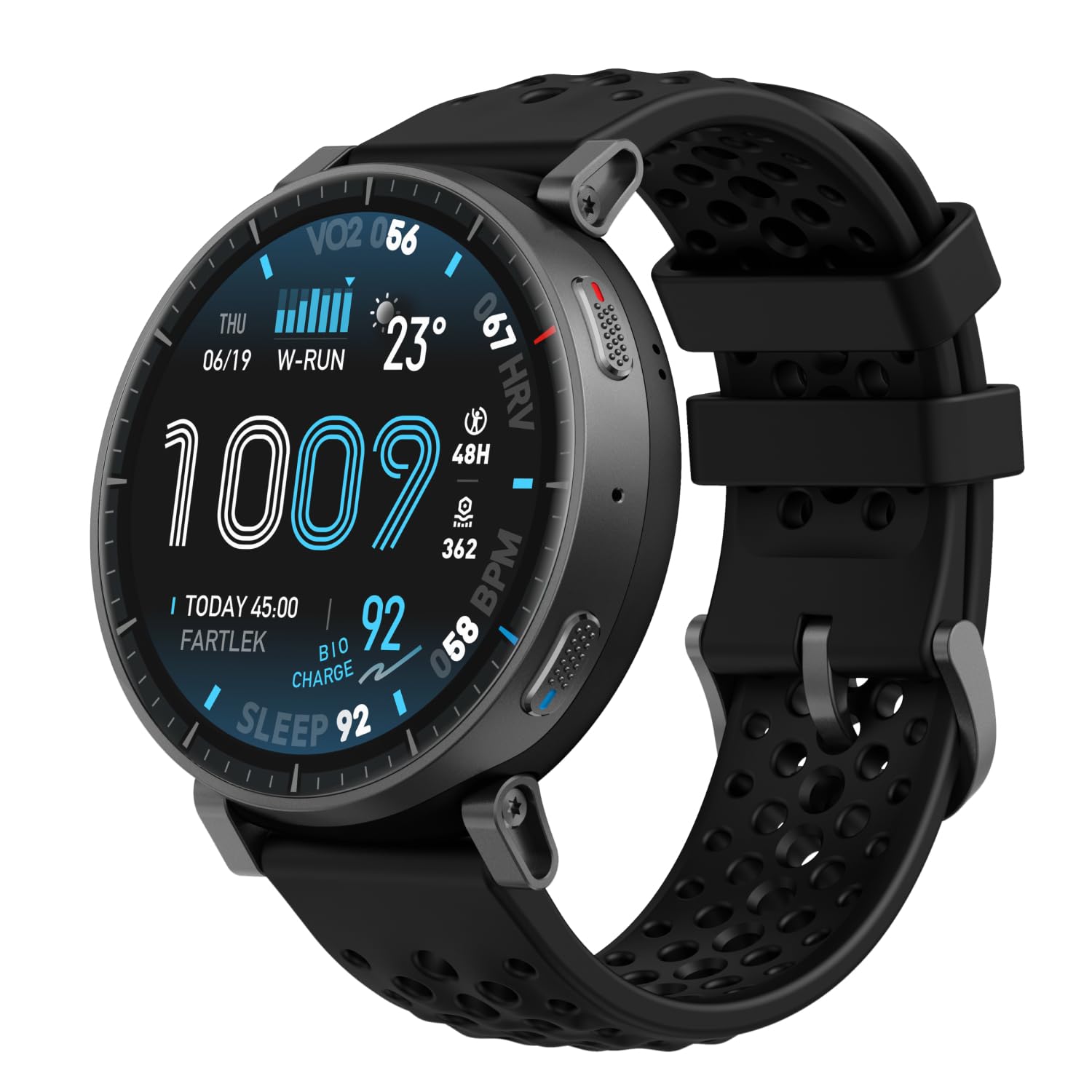
The Active Max is Amazfit’s answer to the question: what if a mid-range watch had a display brighter than most premium flagships? The 1.5-inch AMOLED panel hits 3,000 nits, making it the most readable screen in direct sunlight at this price tier. The 200 mAh battery is smaller than the T-Rex 3 Pro’s, yet the watch still delivers up to 25 days of typical use thanks to an efficient low-power chipset.
Offline maps with downloadable terrain and ski maps, turn-by-turn navigation, and 4GB of onboard music storage make it viable for phone-free runs. The Zepp Coach feature generates adaptive AI training plans for distances from 3K to full marathon. BioCharge energy monitoring combines workout load, stress, and heart rate to tell you when to push and when to recover.
GPS accuracy is good but not at the level of dual-band systems on more expensive watches. The silicone band and plastic chassis feel less premium than metal alternatives. For the price, you get a bright display, extended battery, and offline mapping that rivals watches costing twice as much.
Why it’s great
- Ultra-bright 3000-nit AMOLED display is best-in-class for outdoor visibility
- Impressive 24-day battery life from an efficient platform
- 4GB storage and offline maps for phone-free navigation
Good to know
- GPS accuracy lags behind dual-band systems
- Build materials feel less premium than metal competitors
8. AMAZTIM T3 Ultra
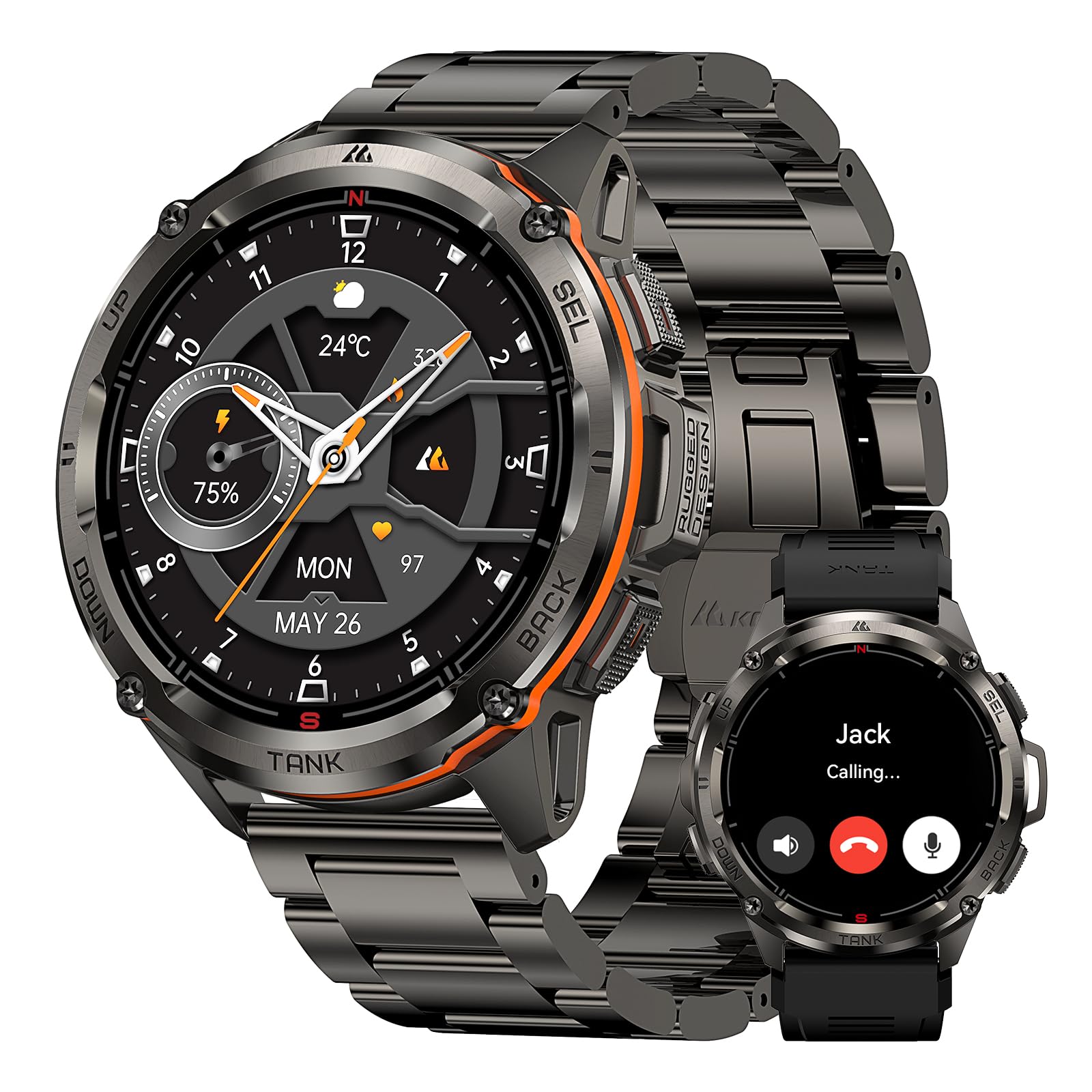
The AMAZTIM T3 Ultra is built for blue-collar environments and outdoor work where a standard smartwatch wouldn’t survive the week. The military-grade MIL-STD-810H certification means it passed 15 tests including salt spray, rain, shock, and impact. The 470 mAh cobalt-based battery delivers around two weeks of normal use, and the 1.43-inch AMOLED display is bright and sharp.
GPS positioning uses dual-band and six satellite systems, locking in 8–45 seconds with accuracy that surpasses most watches in its tier. The included silicone band and stainless steel strap offer two looks from one purchase, and the 5 ATM water resistance means it’s safe for swimming up to 50 meters. The Compass, barometric altimeter, and 170 sports modes cover everything from hiking to HIIT.
Software is the main compromise: the companion app is functional but less polished than Zepp or Samsung Health, and health data accuracy for blood pressure and SpO2 can be inconsistent. The watch is thick and heavy—not suited for dress shirts. For mechanics, truck drivers, or construction workers who need a rugged watch that won’t break the bank, this is a compelling option.
Why it’s great
- Passed 15 MIL-STD-810H military durability tests
- Dual-band GPS with 6 satellite systems for fast, accurate positioning
- Comes with both silicone and stainless steel bands
Good to know
- Health sensor accuracy can be inconsistent
- Large, heavy chassis is not suitable for formal wear
9. Motorola Moto Watch 120

The Moto Watch 120 proves that an entry-level smartwatch doesn’t have to look cheap. The stainless steel case and rose gold alloy buckle give it a premium aesthetic that punches above its price, and the AMOLED display is surprisingly vibrant for the tier. Battery life is the standout feature: up to 10 days on a single charge, which is exceptional for an AMOLED smartwatch at this price.
Health tracking covers the basics—heart rate, SpO2, stress monitoring, and sleep analysis—but lacks the depth and accuracy of higher-end sensors. The sleep monitor has been noted as harder to read and less reliable than competitors. Notifications, weather, and music controls work reliably, and the watch pairs with both Android and iPhone without issue.
The magnetic charger is finicky to align and the always-on heart rate monitoring can impact battery life if enabled. There’s no onboard GPS, so run tracking requires a phone nearby. For someone who wants a stylish everyday watch with basic health features and doesn’t want to charge every night, the Moto Watch 120 delivers solid value.
Why it’s great
- Stylish stainless steel case with premium rose gold accents
- Excellent 10-day battery life for an AMOLED watch
- Vibrant display with wide range of customizable watch faces
Good to know
- No onboard GPS requires phone connection for run tracking
- Sleep monitoring and charger alignment can be inconsistent
FAQ
How important is multi-band GPS for an Android smartwatch?
Does a Wear OS watch work well with any Android phone?
Can I swim or shower with a 5 ATM rated smartwatch?
Final Thoughts: The Verdict
For most users, the android smartwatch for men winner is the Amazfit T-Rex 3 Pro because it combines a titanium build, dual-band GPS, and a 700 mAh battery that lasts two weeks without costing a fortune. If you want the deepest running analytics and a sapphire AMOLED, grab the Garmin Forerunner 970. And for the ultimate expedition tool with a 40-meter dive rating and 29-day battery, nothing beats the Garmin Fenix 8.

Mo Maruf
I created WellFizz to bridge the gap between vague wellness advice and actionable solutions. My mission is simple: to decode the research and give you practical tools you can actually use.
Beyond the data, I am a passionate traveler. I believe that stepping away from the screen to explore new environments is essential for mental clarity and physical vitality.