Our readers keep the lights on and my smoothie glass nicely filled. As an Amazon Associate, I earn from qualifying purchases.
That rush of hot or cold air every time you pull down the attic stairs isn’t just uncomfortable — it’s actively draining your home’s conditioned air through an unsealed ceiling opening. A dedicated attic stair insulation cover is the single most effective retrofit for stopping this thermal short-circuit, and the engineering gap between a simple tent and a multi-layer radiant barrier determines whether you actually save on utility bills or just look like you did.
I’m Mohammad Maruf — the founder and writer behind WellFizz. I’ve spent years analyzing building envelope products, digging into R-value data, material layering, and real-world installation tolerances to separate legitimate energy savers from weekend projects that don’t move the needle.
Whether you’re battling winter drafts or summer heat gain, choosing the right best attic stair insulation cover depends on matching the cover’s dimensions, zipper quality, and reflective barrier construction to your specific attic opening and climate demands.
How To Choose The Best Attic Stair Insulation Cover
The attic stair opening is a major gap in your home’s thermal envelope. A proper insulation cover isn’t just a dust shield — it’s a targeted retrofit that can drop your heating and cooling load noticeably. Focus on three dimensions: material layering, physical fit, and access mechanics.
Material Layering and R-Value
The best covers use a double-bubble reflective foil core that creates an air gap and reflects up to 97 percent of radiant heat. Single-layer plastic tents (like the Duck Brand design) offer convenience but lack a true thermal break. Look for at least a 6mm double-bubble layer if you want measurable temperature separation—covers in the R-14 to R-16 range deliver real results.
Precise Dimensional Fit
Standard attic openings measure 25 inches by 54 inches with an 11-inch depth, but not all covers accommodate the full depth. An 11-inch sidewall allows the cover to staple inside the rough opening while clearing the folded ladder. If your opening is deeper or non-standard, a cover with 13-inch depth (like the ThermoClimb) or the ability to fold oversized material (like the Insulation MarketPlace 30×60 model) gives you flexibility without gaps.
Zipper and Access Strategy
If you access your attic more than once a season, zipper quality determines whether the cover is a convenience or a frustration. Heavy-duty zippers with robust stitching that run cleanly around corners make one-handed operation possible. Entry-level models with flimsy zippers risk binding or tearing after a few uses. For very frequent access, consider a cover with a full-length zipper that aligns with the ladder.
Quick Comparison
On smaller screens, swipe sideways to see the full table.
| Model | Category | Best For | Key Spec | Amazon |
|---|---|---|---|---|
| Miloo Attic Door Cover | Premium | Maximum R-Value & fire safety | R-Value 15.6, 6mm double-bubble | Amazon |
| Energy Wise Premium Cover | Mid-Range | Proven draft elimination | R-Value 14.5, reflective foil | Amazon |
| Thermal Armor Attic Cover | Mid-Range | Year-round temperature regulation | 97% radiant heat reflection | Amazon |
| Insulation MarketPlace 30×60 | Mid-Range | Larger or non-standard openings | 30″x60″x11″, R-15.4 | Amazon |
| Duck Brand Stairway Cover | Budget | Tool-free, no-staple installation | Flexible rod frame, 9 sq ft | Amazon |
| Remington Solar ThermoClimb | Premium | Deep openings & lifetime warranty | 13″ deep, R-3.8, Velcro straps | Amazon |
In‑Depth Reviews
1. Miloo Attic Door Insulation Cover

The Miloo cover hits the sweet spot for homeowners who want a measurable thermal upgrade without a complicated install. Its 6mm double-bubble inner lining delivers an R-Value of 15.6, which is among the highest you’ll find in a zippered attic tent, and the multi-layer construction includes a reflective film outer layer that blocks both radiant heat and moisture migration. Real-world owners report eliminating the temperature differential that caused condensation on walls near the attic door, and the long zipper provides clean one-handed access when climbing the ladder.
The 25x54x11-inch sizing fits the vast majority of standard attic openings, and the kit includes all necessary components — you just need a staple gun and ten minutes. Multiple verified reviewers noted that the cover completely solved air leak issues identified during whole-home energy audits, and the sturdy black border makes stapling around the frame straightforward. The 2.29-pound weight means it doesn’t sag or pull away from the frame over time.
One detail that sets Miloo apart is the shallow entrance point design — it creates a safer transition when you’re climbing up and down, with enough clearance for the folded stairs to sit beneath the cover without bulging. The unit also works well as a whole-house fan cover for the same ceiling opening.
Why it’s great
- Highest R-Value (15.6) in a zippered cover
- 10-minute staple gun install with clear instructions
- Eliminates moisture and condensation issues near attic door
Good to know
- Slightly heavier than plastic tents at 2.29 lbs
- Requires a staple gun — not a no-tool option
2. Energy Wise Premium Attic Door Insulation Cover

Energy Wise’s cover is the most verified option in this category, with a long track record of reviews spanning multiple years. The double-bubble reflective foil wrapped in aluminum reflects up to 97 percent of radiant heat, and the “failsafe” zippers — as the manufacturer calls them — are robust enough to survive frequent attic access without binding. One reviewer reported that the cover eliminated a 10-degree Fahrenheit temperature differential at the stair opening, reducing it to a single degree after installation.
The 11-inch sidewalls are designed to staple inside the rough opening, and the material’s extra thickness creates a tight seal when combined with a rubber weatherstrip. Several long-term users noted the zippers were still working perfectly after five years of seasonal use, which is a strong indicator of durability in a category where zipper failure is a common complaint. The staple gun installation genuinely takes about 15 minutes, and instructions are included in the package.
The stated R-Value of 14.5 is realistic for a double-bubble reflective assembly, and at least one reviewer calculated that the cover saved roughly per month on their electric bill, meaning the unit pays for itself in under two heating seasons. For standard 25×54-inch openings, this is the most proven, reliable choice on the market.
Why it’s great
- Proven 5-year durability with working zippers
- Eliminated 10°F temperature differential in verified tests
- Quick payback on energy savings
Good to know
- 11″ sidewalls may lose some clearance on very tight frames
- Staple gun not included
3. Thermal Armor Attic Stairs Insulation Cover
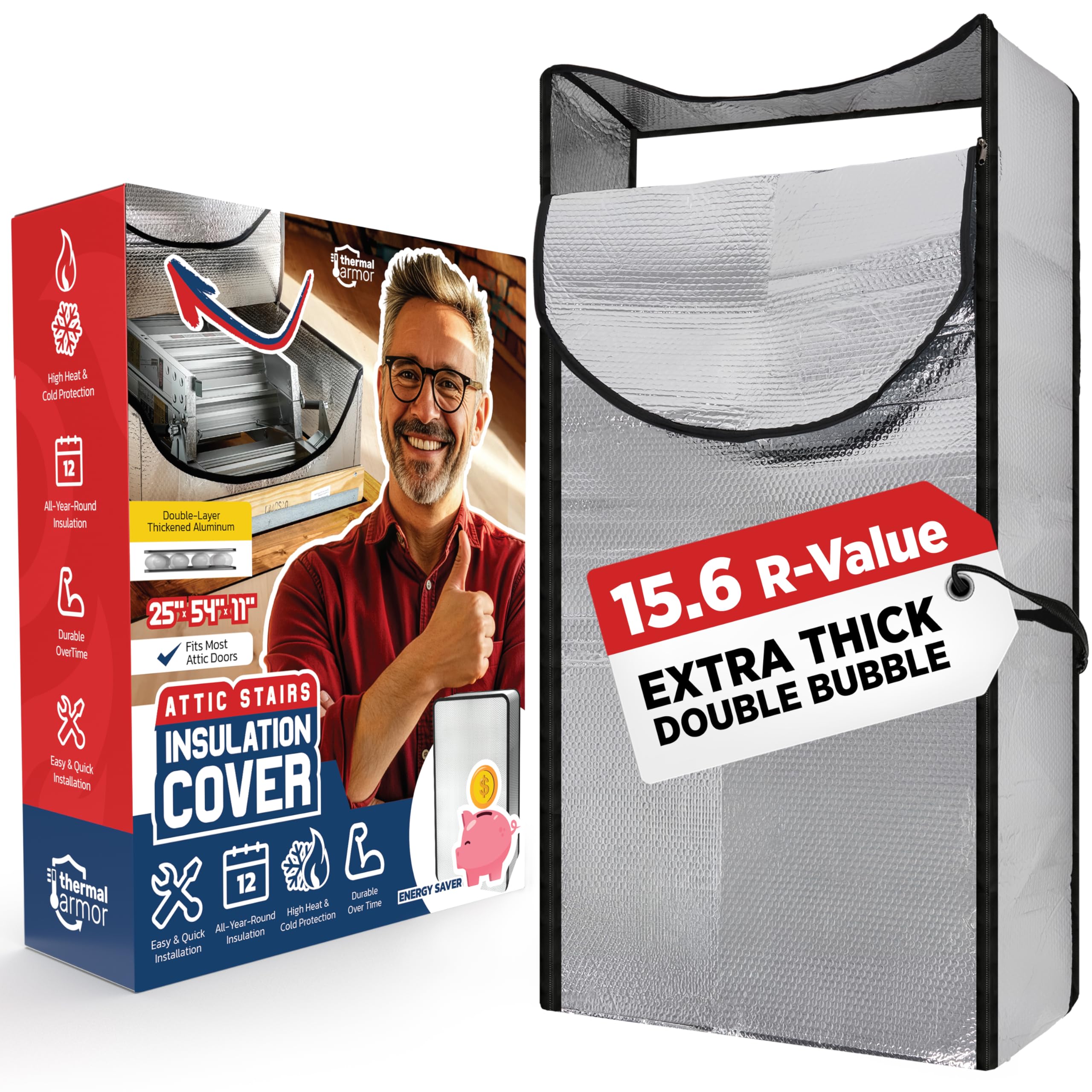
Thermal Armor positions this cover as an air-quality-focused solution, with aluminum foils that block air exchange and prevent pollutants from migrating from the attic into your living space. The double-bubble construction reflects up to 97 percent of radiant heat, and early adopters reported impressive temperature reductions — one reviewer measured a 15-degree Fahrenheit drop in their attached garage after installation. The 54x25x11-inch sizing matches standard openings, and the included foil tape helps seal the perimeter against the frame.
The double zipper design allows you to access the attic without fully removing the cover, though a few users noted the zipper feels less robust than the Miloo or Energy Wise units. The installation is straightforward with a staple gun, and the package includes a basic staple gun that some reviewers found inadequate — plan to use your own electric or manual stapler for a secure fit. The unit covers 1,350 square inches of opening.
For homes where air quality is a primary concern — such as households with allergies or respiratory sensitivities — the seal created by this cover helps reduce the migration of dust, insulation fibers, and unconditioned air from the attic space. The midsummer performance, especially in southern climates, is a standout feature based on real-world feedback.
Why it’s great
- Reduced garage temps by 15°F in summer conditions
- Foil tape included for perimeter sealing
- Emphasizes air quality and pollutant blocking
Good to know
- Included staple gun is low-quality
- Zipper durability is a concern for frequent use
4. Insulation MarketPlace 30×60 Attic Door Cover

If your attic opening is larger than the standard 25×54 inches, or if you simply want the thermal performance of an oversized cover that you can fold to fit, the Insulation MarketPlace 30×60 model is a smart alternative. The pure aluminum foil laminated over an extra-thick double-bubble layer delivers an R-Value of 15.4 — competitive with the Miloo unit — and the 30-inch width and 60-inch length give you room to cut or fold for non-standard openings.
Real-world results are impressive: one reviewer reported a reduction on their first month’s gas heating bill after installing this cover, which means the unit paid for itself in a single billing cycle. The heavy-duty zipper is noticeably thicker than budget options, and the 11-inch depth accommodates most pull-down stair mechanisms without interference. The 1.81-pound weight makes it easy to handle during installation, and the material cuts cleanly with utility scissors if you need to trim.
The manufacturer notes a 94 percent reduction in heat transfer at the attic door, and the reflective value is rated at 97 percent. For homeowners with oversized attic hatches, scuttle holes, or openings that don’t match standard dimensions, this cover avoids the frustration of a 25×54 cover that leaves a gap.
Why it’s great
- Oversized 30×60 inches fits larger openings
- R-Value 15.4 with heavy-duty zipper
- Proven monthly gas savings
Good to know
- Must be folded or trimmed for standard 25×54 openings
- Not as rigid as sidewall-focused designs
5. Duck Brand Stairway Attic Cover
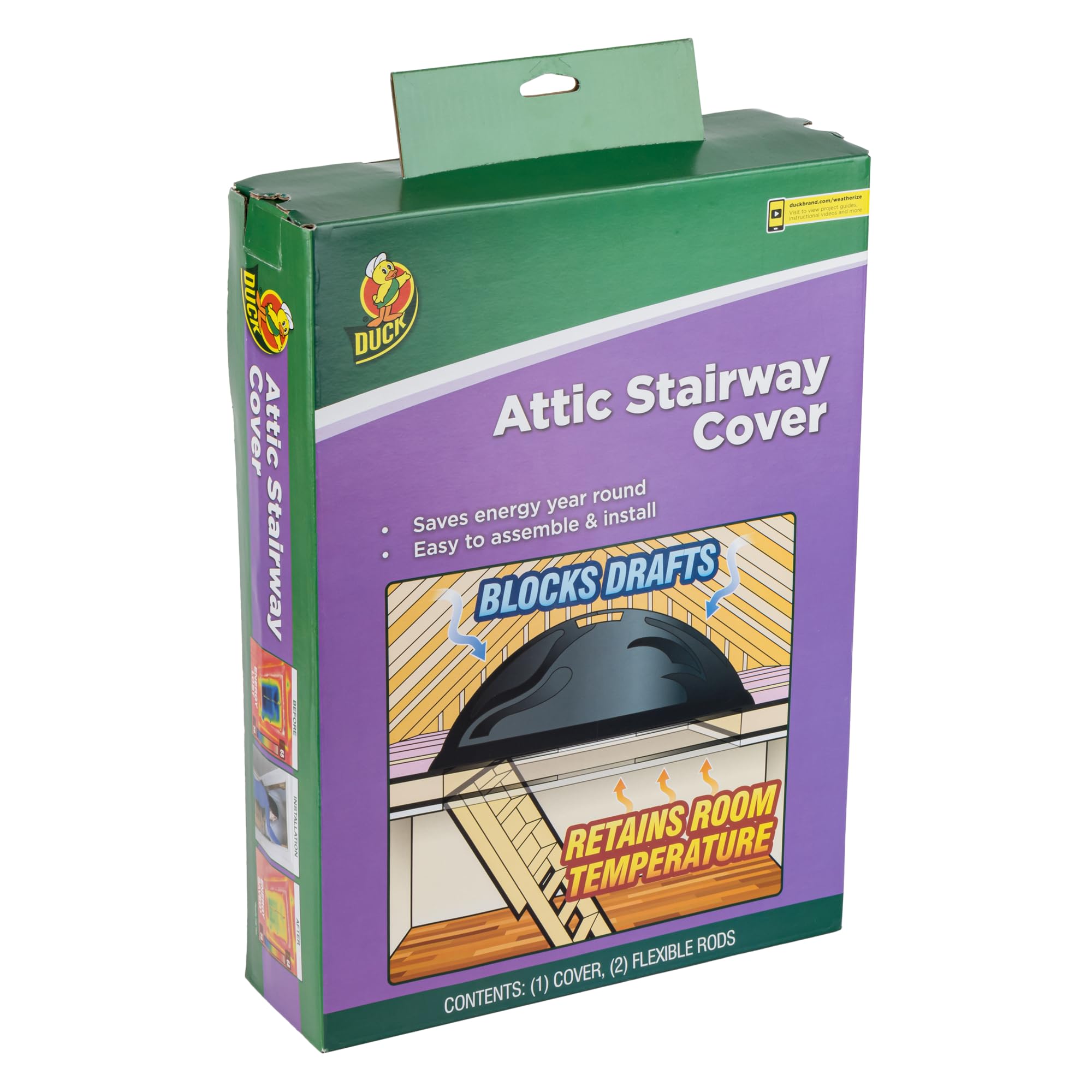
The Duck Brand cover is the most accessible option in this list — it requires no tools, no stapling, and no permanent attachment to your attic frame. The assembly involves crisscrossing two tent-style shock cord poles through channels in the fabric, then wedging the assembled cover into the stair opening. For renters or homeowners who want a temporary solution, this design is genuinely simple and effective at blocking drafts.
The trade-off for that convenience is thermal performance. The plastic material lacks the double-bubble reflective core of the foil-based covers, so it works primarily as a draft blocker rather than a radiant barrier. One reviewer noted that their first unit lasted seven years, but a replacement purchased later disintegrated within a year — suggesting possible material changes. The cover fits openings up to 25.5 by 54 inches, and it can be repositioned easily when you need attic access.
For seasonal use — putting it in place during winter and removing it during summer — the Duck cover is functional and inexpensive. If you need year-round thermal separation or live in an extreme climate, the lack of a true reflective barrier means you’ll see less energy savings compared to the foil-based alternatives.
Why it’s great
- No tools or staples required for installation
- Lightweight and easy to reposition for attic access
- Proven draft blocker in cold climates
Good to know
- Inconsistent durability across production batches
- No radiant barrier — less effective in summer
6. Remington Solar ThermoClimb Attic Door Insulation Cover

The ThermoClimb is built for homeowners who need extra clearance — its 13-inch depth accommodates deeper attic openings that standard 11-inch covers can’t seal. The construction uses a ceramic and neoprene material blend rather than the typical foil bubble wrap, and the adjustable Velcro straps allow you to secure the cover without stapling directly into the frame. The R-factor is rated at 3.8, which is lower than the double-bubble covers, but the material thickness and seal quality make it effective at stopping conditioned air loss.
The zipper on the ThermoClimb is genuinely high-quality — multiple long-term users reported no binding or snagging after years of use, which is a weak point on many budget covers. The Velcro strap system lets you tension the cover precisely around the opening, and the limited lifetime warranty backs the construction. One reviewer in Houston reported that after installing the cover and replacing the weatherstripping on the attic door, they could no longer feel the extreme heat from the attic.
At the entry-level tier of premium covers, the ThermoClimb’s primary value is its deep fit and robust zipper. If your opening is deeper than 11 inches, this is essentially your only option among dedicated attic stair covers, and the build quality justifies the higher investment.
Why it’s great
- 13-inch depth fits deeper attic openings
- Durable zipper with no binding after years of use
- Limited lifetime warranty
Good to know
- Lower R-value (3.8) compared to foil bubble covers
- Velcro straps may loosen over time
FAQ
How do I measure my attic opening for an insulation cover?
Will an attic stair cover work with a whole-house fan?
Can I install an attic stair cover without a staple gun?
Does an attic stair cover really save money on energy bills?
Final Thoughts: The Verdict
For most users, the best attic stair insulation cover winner is the Miloo Attic Door Cover because it delivers the highest R-Value (15.6) in a durable, zippered package that installs in under 15 minutes. If you want the most verified long-term value, grab the Energy Wise Premium Cover — it has a proven five-year track record and eliminates temperature differentials effectively. For non-standard openings deeper than 11 inches, nothing beats the Remington Solar ThermoClimb with its lifetime warranty and high-quality zipper.

Mo Maruf
I created WellFizz to bridge the gap between vague wellness advice and actionable solutions. My mission is simple: to decode the research and give you practical tools you can actually use.
Beyond the data, I am a passionate traveler. I believe that stepping away from the screen to explore new environments is essential for mental clarity and physical vitality.