Our readers keep the lights on and my smoothie glass nicely filled. As an Amazon Associate, I earn from qualifying purchases.
The difference between a bonsai that thrives and one that slowly declines often comes down to what’s happening below the surface. Standard potting soil retains too much moisture, suffocating roots and inviting rot. Bonsai soil must be a structured aggregate that balances water retention with rapid drainage and constant airflow to the root system.
I’m Mohammad Maruf — the founder and writer behind WellFizz. I’ve spent years analyzing the physical properties of soil aggregates, from particle size distribution to water-holding capacity, to understand what truly supports healthy root development in confined containers.
This guide breaks down the key specs and mix compositions that separate effective bonsai substrates from common garden dirt. Use it to find the best bonsai soil for your specific tree species and climate.
How To Choose The Best Bonsai Soil
Selecting the right substrate is about understanding the physical structure, not just the brand. The goal is a mix that stays loose, drains fast, and still holds enough moisture between waterings. Focus on these factors.
Particle Size and Uniformity
Bonsai soil should consist of individual particles between 1/8 and 1/4 inch in size. Smaller particles collapse into mud, blocking air pockets. Uniform sifting removes dust and fines that cause compaction. Look for soil that has been pre-screened and washed to guarantee consistent particle size.
Aggregate Composition
The three core components are akadama (clay that breaks down slowly), pumice (lightweight volcanic glass that holds air and moisture), and lava rock (porous for drainage and anchoring roots). A blend of these provides the ideal balance. Conifers prefer higher drainage, while tropicals benefit from a bit more moisture retention.
Source and Processing
Japanese akadama is the gold standard for its ability to hold structure over years. Domestic pumice and lava rock are excellent alternatives that offer similar performance at lower cost. Pre-washed and dust-free mixes save you the hassle of rinsing and sifting before your first repot.
Quick Comparison
On smaller screens, swipe sideways to see the full table.
| Model | Category | Best For | Key Spec | Amazon |
|---|---|---|---|---|
| Bonsai Jack Universal Organic Bonsai Soil Mix #221 | All-Purpose | General bonsai & succulents | 2 Gallons / pH 6.4 | Amazon |
| Bonsai Outlet Horticultural Pumice | Pumice Only | Mixing own custom blends | 1/4″ uniform particle size | Amazon |
| Tinyroots Akadama 2.25qt | Single Aggregate | Master-level bonsai & conifers | Sifted 1/8″ to 1/16″ mesh | Amazon |
| Tinyroots Conifer Bonsai Soil Blend | Pre-Mixed | Junipers, pines, & cedars | 2.25 Quarts / Resealable bag | Amazon |
| OUPENG 9.7lb Mix Horticultural Lava Rock Pebbles | Bulk Aggregate | Top dressing & soil amendment | 9.7 lbs / Multi-color mix | Amazon |
In‑Depth Reviews
1. Bonsai Jack Universal Organic Bonsai Soil Mix #221
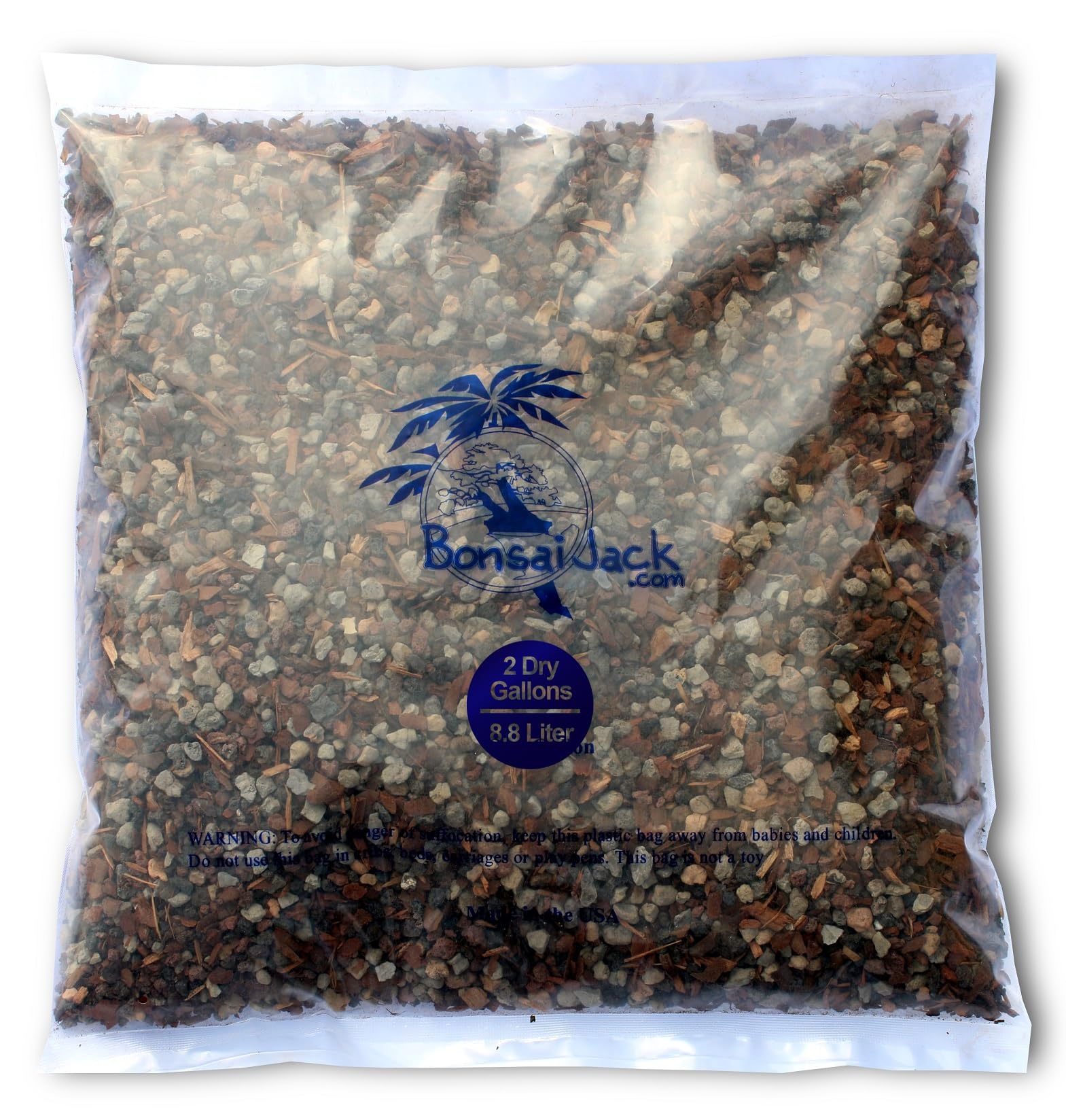
Bonsai Jack has sold over a hundred thousand bags of this mix, and that volume alone signals consistent quality. The #221 formulation is a screened and pre-washed blend optimized for a pH of 6.4, which is ideal for the vast majority of bonsai trees including tropicals. It’s ready to use straight from the bag, saving you the time and mess of sifting out dust.
The particle structure stays loose over time, preventing the compaction that suffocates roots. Users report excellent drainage while noting it holds enough water to keep full-sun trees hydrated between waterings. The pine bark component adds slight acidity, which benefits arid-loving species like succulents and thick-leaved tropicals.
For a general-purpose mix that performs consistently across species and climates, this is the strongest mid-range choice available. It breaks down slowly and offers a durability that cheaper blends often lack. Phone support is included with each order, which is rare for a soil product.
Why it’s great
- Pre-washed and ready to use with no dust
- Optimized pH of 6.4 suits most bonsai species
- Large 2-gallon size provides good value per volume
Good to know
- Not recommended for mature trees in refinement stage
- Shallow-rooted plants may need additional weight for stability
2. Bonsai Outlet Horticultural Pumice – Tinyroots 2.25 Quarts

This is pure, professional-grade American pumice sifted to a uniform 1/4-inch particle size. Pumice is unique because it absorbs moisture into its porous structure while maintaining large air pockets between particles, creating an environment where roots can breathe and grow freely. This bag is hand-mixed, dried, and dust-free.
It works best as a component in a custom blend rather than a standalone soil. Mix it with akadama for a classic bonsai substrate or with lava rock for a free-draining succulent mix. Users confirm the bag weight matches the listing and that a small amount stretches surprisingly far in smaller pots.
If you prefer to build your own soil recipe rather than buy a pre-mixed bag, this is the cleanest, most consistent pumice source at this price point. Some users noted dust upon arrival that required rinsing, but that’s common with pumice and doesn’t affect the final performance.
Why it’s great
- Uniform 1/4-inch particle size ensures consistent aeration
- Absorbs and releases moisture without waterlogging
- High-quality American pumice, not a cheap imitation
Good to know
- More expensive than buying raw bulk pumice
- May require rinsing to remove dust before use
3. Tinyroots Akadama 2.25qt

Akadama is the traditional Japanese soil used by master gardeners, and this Tinyroots offering is sourced from volcanic soil in Japan. It is double-sifted through a 1/8-inch mesh and then a 1/16-inch mesh to remove dust and small particles, leaving only clean, angular granules that provide excellent drainage and root penetration.
A key feature is the visual moisture indicator — the akadama darkens significantly when wet and lightens as it dries. This gives you a clear, real-time cue for when to water, which is invaluable for beginners and experts alike. The granules do not crumble easily when squeezed, indicating good structural integrity.
This is a single-aggregate product, ideal for blending with pumice or lava rock. It works beautifully for conifers, deciduous trees, and even succulents. If you want to use the same soil Japanese masters have trusted for generations, this bag is the real deal.
Why it’s great
- Genuine Japanese akadama with proper sifting
- Darkens when wet, providing a watering guide
- Granules stay firm and resist breakdown
Good to know
- Small bag size (2.25 quarts) for the price
- Packaging may show signs of storage wear
4. Tinyroots Conifer Bonsai Soil Blend – 2.25 Quarts

This blend is formulated specifically for conifers like junipers, Japanese black pines, white pines, cedars, and cypress. It combines double-sifted pine bark fines, coarse river sand, calcine clay, and pumice. The heavy particles are pre-sifted to protect delicate roots from damage during repotting.
Users report a consistent, clean particle size with no dust or compaction right out of the bag. It drains freely while holding enough moisture to keep conifer roots from drying out too fast. Many mix it 50/50 with peat moss for extra moisture retention, especially for seedlings like bristlecone pine or coast redwood.
If you grow conifers and want a ready-to-use mix that simplifies repotting, this is a solid choice. The resealable bag is a practical touch for storing leftover soil. Some experienced users suggest adjusting the ratio of this mix for older trees that prefer even sharper drainage.
Why it’s great
- Formulated specifically for conifer species
- Clean, dust-free particles right from the bag
- Resealable bag for easy storage
Good to know
- May need peat moss added for moisture retention with seedlings
- Not ideal as sole soil for older trees needing sharper drainage
5. OUPENG 9.7lb Mix Horticultural Lava Rock Pebbles

This is a bulk bag of mixed lava rock pebbles and colorful gritty rocks, designed to be used as a soil additive, top dressing, or decorative element. Lava rock’s porosity provides excellent drainage while holding trace minerals that benefit plants. It is pre-washed with no artificial fillers, though a rinse before first use is recommended to remove transit dust.
At nearly 10 pounds, this bag offers substantial volume for the entry-level price point. It works well as a drainage layer at the bottom of pots, mixed into a custom bonsai or succulent blend, or as a decorative top dressing that helps retain surface moisture and prevent erosion.
This is not a standalone bonsai soil but a versatile component. If you need bulk aggregate for mixing, top dressing, or crafting terrariums, this is a budget-friendly way to stock up. The multi-color stones add visual interest to display pots, though the primary function remains drainage and aeration.
Why it’s great
- Large 9.7-pound bag offers excellent volume
- Porous lava rock improves drainage and aeration
- Pre-washed with no dyes or chemicals
Good to know
- Not a pre-mixed bonsai soil — requires blending
- Will have powder on surface due to shipping; needs rinsing
FAQ
Can I use regular garden soil for bonsai?
How often should I repot and replace the soil?
Is akadama necessary for healthy bonsai, or can I use pumice and lava rock?
Final Thoughts: The Verdict
For most users, the best bonsai soil winner is the Bonsai Jack Universal Organic Bonsai Soil Mix #221 because it delivers consistent, pre-washed performance at a competitive volume, supporting a wide range of species. If you want a pure aggregate to build custom blends, grab the Bonsai Outlet Horticultural Pumice. And for master-level traditionalists, nothing beats the Tinyroots Akadama for its genuine Japanese sourcing and clear watering cues.

Mo Maruf
I created WellFizz to bridge the gap between vague wellness advice and actionable solutions. My mission is simple: to decode the research and give you practical tools you can actually use.
Beyond the data, I am a passionate traveler. I believe that stepping away from the screen to explore new environments is essential for mental clarity and physical vitality.