Our readers keep the lights on and my smoothie glass nicely filled. As an Amazon Associate, I earn from qualifying purchases.
Bermudagrass spreads like a quiet invasion, sending runners under mulch, through flower beds, and right up against your prized shrubs. A selective formula that targets the weed without torching your ornamentals or turf is the only strategy that works long term.
I’m Mohammad Maruf — the founder and writer behind WellFizz. I’ve analyzed hundreds of herbicide labels and customer experiences to find the formulas that actually stop rhizome regrowth without collateral damage.
After cross-referencing active ingredients, application rates, and real lawn scenarios, this is the definitive guide to choosing the best bermuda grass killer for your specific landscape situation.
How To Choose The Best Bermuda Grass Killer
Bermudagrass is one of the toughest warm-season weeds to eliminate because it stores energy in deep rhizomes and stolons. A surface-level spray that just singes the leaves will never stop regrowth. You need a chemistry that translocates through the vascular system to the root nodes.
Selective vs. Non-Selective Formulas
Selective herbicides like Quinclorac and Fluazifop target grassy weeds while leaving broadleaf ornamentals and cool-season turf unharmed. Non-selective formulas containing glyphosate kill everything they touch, making them useful only for bare ground, patios, or spot-treating in non-vegetation areas. For flower beds and lawns, always reach for a selective solution first.
Active Ingredient Match to Your Turf Type
Not all formulas are safe on every lawn. Mesotrione works well on Centipede, St. Augustine (sod only), and Tall Fescue, but it can damage Zoysia and Bermudagrass itself. Quinclorac is excellent on warm-season lawns like Bermuda and Zoysia but requires a surfactant for best results. If you are treating near edible plants, check the label for crop safety intervals.
Application Method and Coverage
Ready-to-use spray bottles offer convenience for small flower beds, but concentrate formulas that mix with water deliver better cost-per-treatment for larger areas. A pump sprayer with a spray dye indicator helps you avoid double-coverage, which can stress your desired turf. Always follow the label’s mix rate precisely — overdosing can stunt or bleach your grass.
Quick Comparison
On smaller screens, swipe sideways to see the full table.
| Model | Category | Best For | Key Spec | Amazon |
|---|---|---|---|---|
| Primesource Quinclorac 1.5L Select | Selective | Large lawns with crabgrass | Quinclorac 18.92% | Amazon |
| Ortho Lands B-Gon Grass Killer | Selective | Flower beds & ornamentals | Fluazifop, Ready to Use | Amazon |
| Liquid Harvest Mesotrione | Selective | Centipede & cool-season turf | Mesotrione, 8 oz | Amazon |
| Fertilome Over The Top Grass Killer | Selective | Around vegetables & shrubs | 8 oz, covers 2,000 sq ft | Amazon |
| Hi-Yield Killzall 365 | Non-Selective | Patios, driveways & bare ground | 32 oz, covers 4,300 sq ft | Amazon |
| Target 6 Plus (MSMA 48.2%) | Selective | Golf courses & sod farms | MSMA 48.3%, 2.5 Gal | Amazon |
| Celcius WG Herbicide | Selective | Bermuda lawns in hot climates | WG concentrate | Amazon |
In‑Depth Reviews
1. Primesource Quinclorac 1.5L Select Liquid Crabgrass Killer (64 oz)
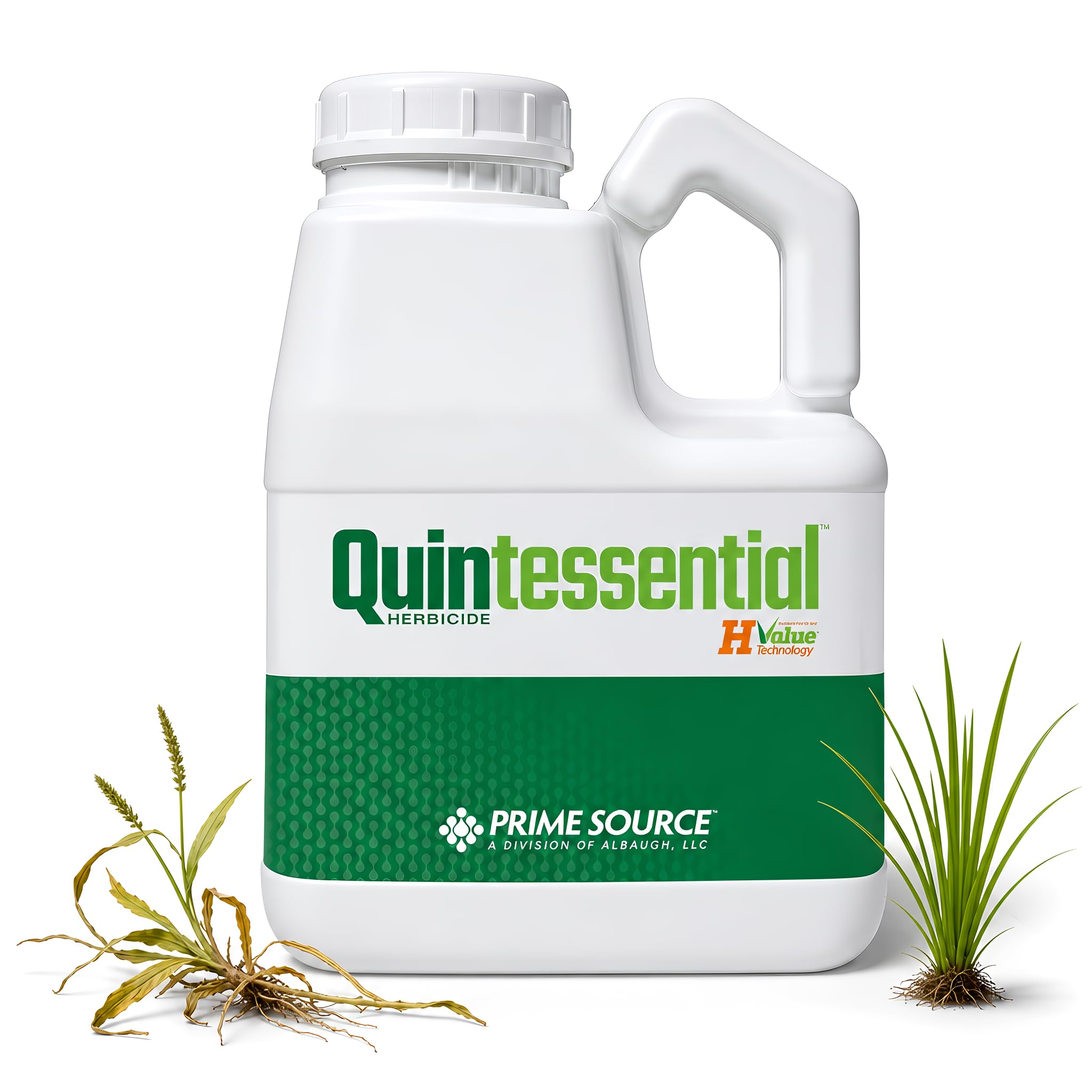
This concentrate delivers 18.92% Quinclorac, a proven active ingredient that targets crabgrass, foxtail, and Bermudagrass without harming established warm-season turf. Users report visible wilting within 24 to 72 hours when mixed with a methylated seed oil (MSO) surfactant, with full kill in under a week. The 64-ounce jug yields a substantial volume of mixed spray, making it the most cost-efficient option for a half-acre or larger lawn.
Reviewers emphasize that adding a spray dye indicator ensures even coverage and prevents overlap damage to desired grass. The product is safe on Bermuda, Zoysia, and Tall Fescue lawns when applied at the label rate. For homeowners tired of spot-treating the same Bermudagrass patches all season, this single-application knockdown is a major time saver.
One caveat: Quinclorac works best when Bermudagrass is actively growing and not drought-stressed. Applying during a hot, dry spell reduces translocation to the roots, which can leave live nodes underground. A follow-up application 14 days later is recommended for heavy infestations, but most users report complete control after one round with a quality surfactant.
Why it’s great
- Fast visual results in 24-72 hours with surfactant
- Safe on Bermuda, Zoysia, and Fescue lawns
- High concentration provides excellent value per treatment
Good to know
- Requires MSO or non-ionic surfactant for best adhesion
- Less effective on stressed or dormant grass
2. Ortho Lands B-Gon Grass Killer for Landscapes (4-Pack)

Ortho’s selective grass killer uses Fluazifop, an active ingredient that targets grassy weeds without harming broadleaf ornamentals, shrubs, and ground covers. The ready-to-use format eliminates mixing errors and is ideal for precise spot spraying around established flower beds and landscape plants. Each bottle in the 4-pack covers small to medium areas with no preparation time.
Customer feedback highlights its effectiveness on Bermudagrass growing inside Dymondia, Liriope, and evergreens without damaging the desired plants. The spray nozzle delivers a targeted stream that reaches between foliage, reducing waste and drift. For homeowners who want a simple, no-mix solution for protecting ornamental landscaping, this is the most straightforward option available.
Because it is ready to use, the cost per square foot is higher than concentrates. It also works more slowly, with full results visible after 7 to 10 days. For large lawns or heavy infestations, a concentrate offers better value, but for precision work near valuable shrubs and perennials, the convenience and safety of Fluazifop are hard to beat.
Why it’s great
- Won’t harm broadleaf ornamentals, shrubs, or ground covers
- Ready-to-use trigger spray eliminates measuring and mixing
- Effective on Bermudagrass in flower beds and cracks
Good to know
- Higher cost per treatment compared to concentrates
- Slower acting — full results take over a week
3. Liquid Harvest Mesotrione – 8 oz Concentrate

Mesotrione is an all-season herbicide that works both pre-emergently (stopping seed germination) and post-emergently (killing existing weeds). Liquid Harvest’s 8-ounce concentrate targets 46 broadleaf and grass species, including Bermudagrass, crabgrass, clover, and dandelion. It is seed-safe, meaning you can overseed immediately after application without waiting weeks for the chemistry to degrade.
Users on Centipede grass and Tall Fescue report excellent control of Bermudagrass and broadleaf weeds with minimal damage to their lawn. The product requires activation via rain or watering within 10 days — a half-inch of irrigation ensures the chemical reaches the root zone. A blue spray dye is strongly recommended to prevent double-coverage, which can temporarily discolor or stunt healthy turf.
The slower action is the tradeoff. Treated weeds turn white and die over 2 to 3 weeks, which can test patience. It also requires careful handling on St. Augustine and Zoysia, where overapplication causes visible stress. For cool-season lawns that need both pre-emergent prevention and post-emergent control in one product, this is the most versatile choice.
Why it’s great
- Pre-emergent and post-emergent in one formula
- Seed-safe — overseed immediately after application
- Targets 46 weed species including Bermudagrass
Good to know
- Requires rain or irrigation within 10 days
- Slower acting — full death takes 2-3 weeks
4. Fertilome 8 oz Over The Top Grass Killer – 10434

Fertilome’s selective formula is designed specifically for use around vegetables, gardens, trees, and ornamentals, making it one of the few grass killers that is safe near edible crops. The 8-ounce concentrate makes 8 gallons of spray solution, covering up to 2,000 square feet. Users report visible stunting within 48 hours and complete kill of Bermuda and crabgrass after about 3 weeks when applied to short grass.
Real-world feedback emphasizes patience: the product works slowly but reliably on grass under 6 inches tall. Taller grass may only stunt rather than die, requiring a second application. Mixing a few drops of dish soap as a surfactant improves leaf adhesion and speeds results. It is safe on shrubs, roses, and Monkey grass when applied carefully, making it the best option for edible gardens and mixed ornamental beds.
The main limitation is the slow action. Full dieback can take 3 weeks or more, and heavily established Bermudagrass may need a follow-up treatment. But for gardeners who need to protect both their vegetables and their flowers from invasive grass, the targeted selectivity and crop safety make this a reliable tool.
Why it’s great
- Safe to use around vegetables, shrubs, and ornamentals
- Visible effects in 48 hours
- Broadleaf plants remain unharmed
Good to know
- Slow action — full results may take 3 weeks
- Less effective on grass over 6 inches tall
5. Hi-Yield Killzall 365 (32 oz)

Hi-Yield’s non-selective formula is designed for total vegetation control on driveways, patios, fence lines, and other non-lawn areas where bare ground is desired. The 32-ounce concentrate treats up to 4,300 square feet, making it one of the highest coverage-to-volume ratios available. Users confirm it kills all vegetation, including deep-rooted Bermudagrass, brush, and vines.
The product takes longer to work than some alternatives — visible results appear over a week or more — but the kill is complete and long-lasting. Double applications on stubborn weeds, especially mature vines or Bermuda runners, are occasionally needed. It does not affect moss or certain woody stems, so check the label if your problem goes beyond grass.
Because it is non-selective, it cannot be used on lawns or near desirable plants. Application on a calm, windless day is essential to avoid drift onto flower beds. For clearing large areas of Bermudagrass completely before replanting or laying hardscape, this concentrate delivers the raw power needed at a very low cost per square foot.
Why it’s great
- Extremely cost-effective — covers 4,300 sq ft per bottle
- Kills deep-rooted grass, vines, and brush completely
- Long-lasting bare ground control
Good to know
- Non-selective — kills any plant it touches
- Slow acting; full results take over a week
6. Target 6 Plus (MSMA 48.2%) Turf Herbicide – 2.5 Gallon

MSMA (Monosodium Methanearsonate) is a professional-grade selective herbicide historically used on golf courses, sod farms, and highway rights-of-way. Target 6 Plus delivers 48.3% MSMA for aggressive control of Dallisgrass, Crabgrass, Johnsongrass, Nutsedge, and Bermudagrass in established warm-season turf. At a mix rate of 2 ounces per gallon, the 2.5-gallon jug provides enough concentrate for dozens of applications on large properties.
Customer reports consistently describe it as fast-acting and potent, with visible results within days. Users with Japanese Zoysia and Bermuda lawns praise its ability to knock out Dallisgrass without harming the surrounding turf when mixed correctly. A careful measuring approach is essential — overdosing can stress or brown Bermuda grass into dormancy, though recovery is expected the following season.
The regulatory status of MSMA is restricted in some areas for residential use, so verify local regulations before purchasing. The large jug size is best suited for property owners managing several acres. For smaller lawns, the upfront volume and mixing precision requirement may be overkill, but for raw power against tough Southern grasses, MSMA remains a benchmark.
Why it’s great
- Fast knockdown of Dallisgrass, Crabgrass, and Nutsedge
- Safe on established Bermuda and Zoysia when mixed correctly
- Professional-grade concentration for large properties
Good to know
- Regulatory restrictions apply in some residential areas
- Overdosing can stress or brown desired turf
7. Celcius WG Herbicide 6666194
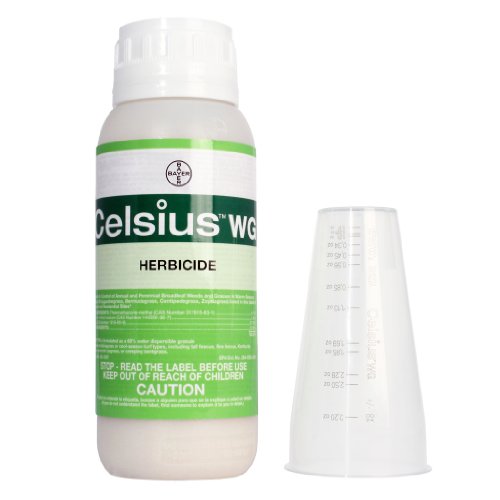
Celcius WG from Bayer is a wettable granule selective herbicide that targets broadleaf weeds and clover in warm-season Bermuda grass lawns. One bottle of concentrate covers roughly 10,000 square feet for spot treatment, and users in hot climates like Phoenix report excellent control of invasive clover and buttonweed while leaving the Bermuda turf completely unharmed.
Reviewers note that it works slowly but thoroughly. Dieback begins days after application, with full weed death taking 3 to 4 weeks at a rate of 1 ounce per 10 gallons of water. Multiple treatments throughout the growing season keep weeds from returning. A small digital scale is recommended for accurate measuring of the wettable powder.
The upfront cost is higher than most homeowner products, but the longevity of the container balances the expense for serious lawn enthusiasts. It is ineffective against crabgrass, so you may need a secondary herbicide if crabgrass is also a problem. For pure broadleaf control without damaging your Bermuda lawn, especially in high-heat regions, Celcius WG is a long-term solution worth the investment.
Why it’s great
- Excellent safety on Bermuda grass in hot climates
- Long-lasting control with spot treatment coverage
- Highly effective on clover and broadleaf weeds
Good to know
- Slow acting — full results take 3-4 weeks
- Does not control crabgrass
FAQ
How long does it take for a Bermuda grass killer to show results?
Can I use a Bermuda grass killer in my vegetable garden?
Will a selective grass killer damage my St. Augustine or Centipede lawn?
Final Thoughts: The Verdict
For most users, the best bermuda grass killer winner is the Primesource Quinclorac because it combines fast post-emergent knockdown with excellent safety on warm-season turf when used with a surfactant. If you need to protect flower beds and ornamentals, grab the Ortho Lands B-Gon. And for a versatile pre- and post-emergent solution that allows immediate overseeding, nothing beats the Liquid Harvest Mesotrione.

Mo Maruf
I created WellFizz to bridge the gap between vague wellness advice and actionable solutions. My mission is simple: to decode the research and give you practical tools you can actually use.
Beyond the data, I am a passionate traveler. I believe that stepping away from the screen to explore new environments is essential for mental clarity and physical vitality.