Our readers keep the lights on and my smoothie glass nicely filled. As an Amazon Associate, I earn from qualifying purchases.
The single biggest pain of owning a gas chainsaw—mixing oil and fuel—disappears the moment you switch to a four-stroke engine. Unlike traditional two-stroke saws that require precise ratios of 25:1 or 50:1, a 4-stroke chainsaw runs on straight unleaded gasoline, eliminating the mess, the smoke, and the guesswork. This category delivers the torque and endurance of a gas-powered tool without the premix ritual.
I’m Mohammad Maruf — the founder and writer behind WellFizz. I’ve analyzed hundreds of power tool specs, combed through thousands of verified owner reports, and tracked warranty claim patterns across budget, mid-range, and premium gas chainsaws to separate genuine engineering from marketing hype.
Whether you are clearing storm debris, felling trees, or processing firewood, choosing the right tool starts with understanding the engine cycle. This guide breaks down the top contenders for the best 4 stroke chainsaw, examined through real-world cutting performance, maintenance demands, and long-term reliability.
How To Choose The Best 4 Stroke Chainsaw
Four-stroke chainsaws offer a fundamentally different ownership experience than their two-stroke counterparts. The key decision points revolve around engine displacement, oil system design, and the specific trade-offs between weight and torque.
Engine Displacement and Bar Length
Displacement in a 4-stroke chainsaw directly correlates with torque. A 46cc to 49cc four-stroke engine provides enough grunt for an 18-inch bar and logs up to 36 inches in diameter. Smaller engines around 38cc handle pruning and light limbing but struggle in dense hardwood. Match the bar length to the thickest wood you will cut regularly—an 18-inch bar is the sweet spot for firewood and farm cleanup.
Lubrication and Oiling Systems
Automatic oilers are standard on most 4-stroke chainsaws, but not all oilers are equal. Adjustable oil flow allows you to match lubrication to wood density and bar length. Fixed-rate oilers tend to either starve the chain in dry hardwood or waste oil in softwood. Check the oil tank capacity relative to fuel tank size—running out of bar oil before fuel defeats the purpose of continuous cutting.
Starting Mechanism and Choke Design
Easy-start features vary widely. Some 4-stroke saws use a primer bulb combined with a combined choke/stop control, while others rely on a multi-step cold-start procedure. Patented starting systems that reduce rope pull effort by up to 30 percent make a real difference for users with limited upper-body strength or those starting the saw repeatedly throughout the day.
Quick Comparison
On smaller screens, swipe sideways to see the full table.
| Model | Category | Best For | Key Spec | Amazon |
|---|---|---|---|---|
| SENIX 18-Inch 49cc | 4-Stroke | All-purpose firewood & heavy limbing | 49cc 4-cycle engine, 18″ bar | Amazon |
| SENIX 16-Inch 46cc | 4-Stroke | Medium-duty cutting & tree trimming | 46cc 4QL full crank, 16″ bar | Amazon |
| DEWALT DCCS623B | Battery | Pruning & light limbing | 20V brushless, 8″ bar | Amazon |
| Husqvarna 120 Mark III | 2-Stroke | Homeowner limbing & pruning | 38cc X-Torq, 16″ bar | Amazon |
| PROYAMA 68cc | 2-Stroke | Heavy-duty felling & large logs | 68cc 4.5HP, 22″ & 24″ bars | Amazon |
| ECHO CS-271T-12 | 2-Stroke | Climbing & one-handed pruning | 26.9cc, 12″ bar, top handle | Amazon |
| Husqvarna 450 Rancher | 2-Stroke | Ranch firewood & farm cutting | 50.2cc X-Torq, 20″ bar | Amazon |
| Makita XCU04PT1 | Battery | Quiet, low-maintenance cutting | 36V brushless, 16″ bar | Amazon |
| NEO-TEC 20-Inch 62cc | 2-Stroke | Budget-friendly heavy cutting | 62cc 3.5HP, 20″ bar | Amazon |
In‑Depth Reviews
1. SENIX 18-Inch 4-Cycle 49cc Gas Chainsaw
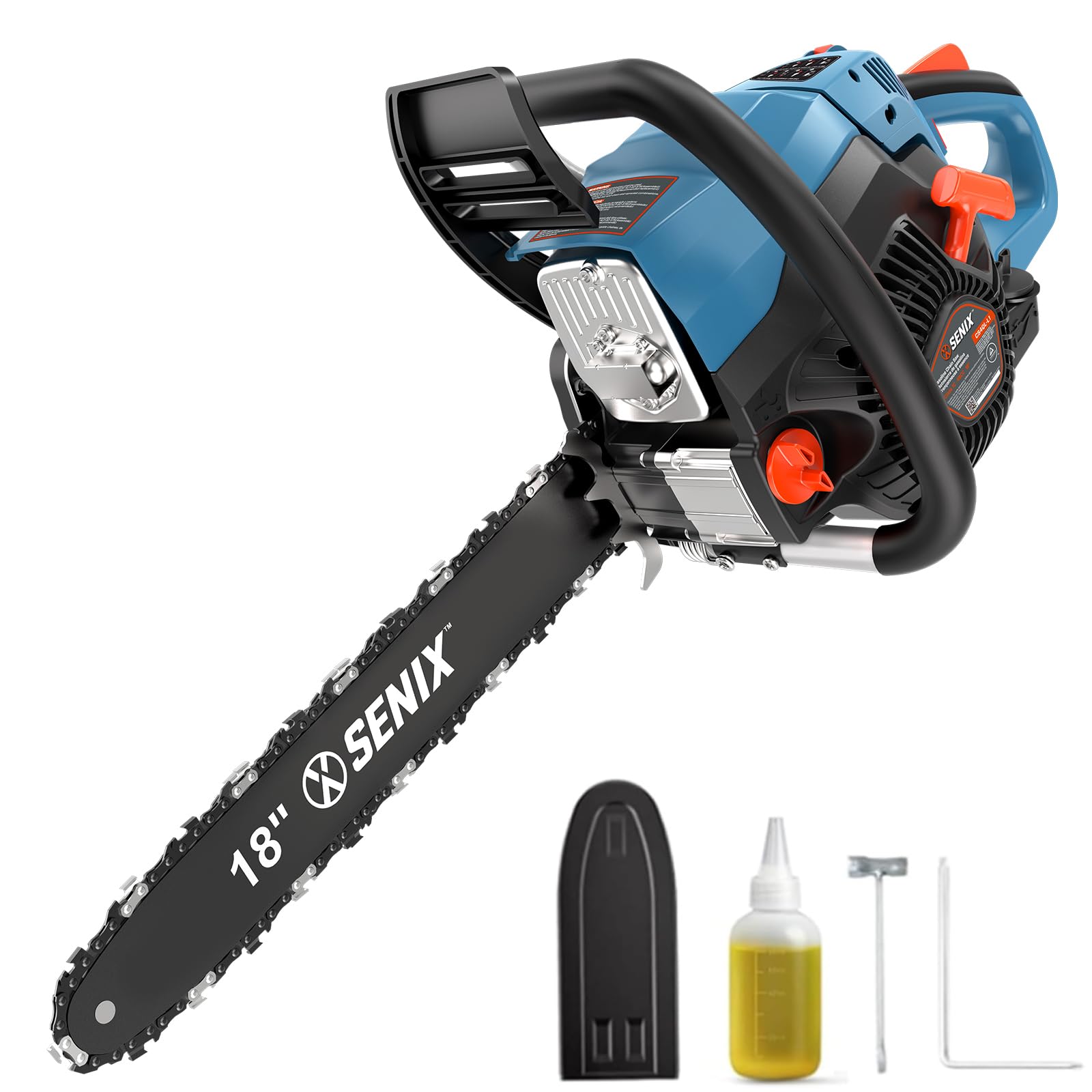
The SENIX 4QL is the quintessential 4-stroke chainsaw for homeowners who want gas power without the premix. Its 49cc four-cycle engine delivers a broad, flat torque curve that refuses to bog down even when buried in 20-inch oak. Where a two-stroke would need to scream for peak power, this engine pulls steadily from low RPM, making long cuts feel less exhausting.
Owners report that the patented 4QL technology allows all-directional operation without oil starvation—a real advantage for limbing at awkward angles. The automatic oiler keeps the 18-inch bar lubricated through continuous use, and the 20-percent more compact chassis makes it surprisingly maneuverable for a 16-pound saw. The loop handle provides 360-degree control that traditional rear-handle designs cannot match.
Some units have been reported to arrive with a spark plug gap set incorrectly from the factory—a simple adjustment to 0.030 inch resolves starting hiccups. The included cover and scrench tool provide solid out-of-box value, and the 2-year warranty offers peace of mind. For anyone tired of two-stroke smoke and mixing jugs, this saw is the clear choice.
Why it’s great
- Clean 4-cycle operation with no gas/oil mixing required
- Broad torque curve cuts without bogging in dense hardwood
- Compact chassis with loop handle for excellent maneuverability
Good to know
- Spark plug gap may need adjustment from the factory
- Slightly heavier than equivalent 2-stroke saws
2. SENIX 16-Inch 46cc 4-Stroke Gas Chainsaw
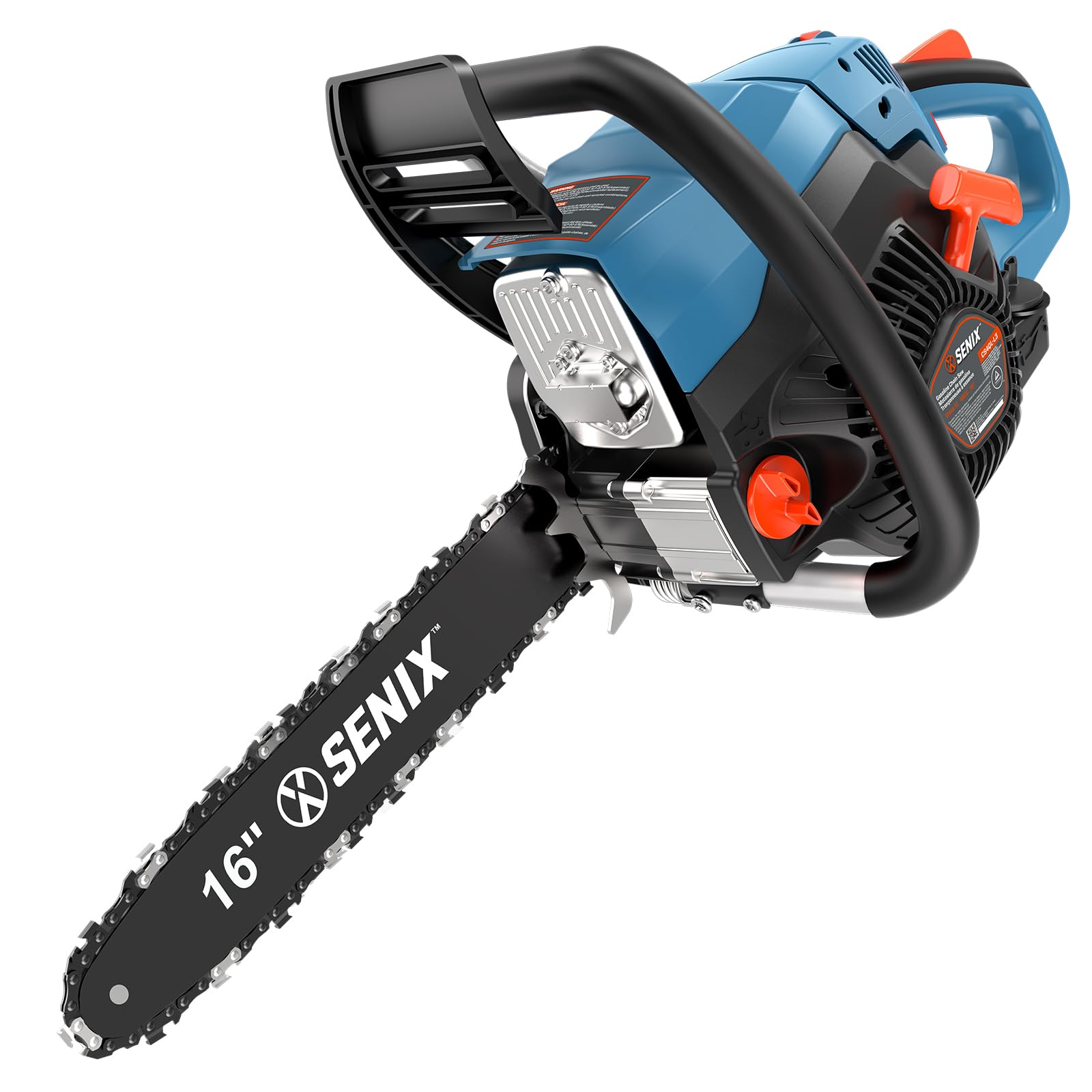
The smaller 46cc sibling of the 49cc SENIX offers the same 4QL four-stroke engineering in a slightly lighter, more agile package. With a 16-inch bar, this saw is designed for homeowners who need to trim limbs, cut firewood, and clear moderate brush without the weight penalty of a full-size saw. The full crank engine delivers smooth power at about 70 percent of a two-stroke’s RPM but with comparable cutting speed due to superior torque.
Owners consistently praise the easy starting routine and the elimination of blue exhaust smoke. The automatic oiler keeps the bar lubricated reliably, and the loop handle provides comfortable control during extended pruning sessions. The 1.77 horsepower output is modest by specs, but the linear power delivery makes every cut feel controlled and predictable.
Some users report that the stock chain dulls faster than expected on dirty wood—replacing it with an Oregon chain solves the issue and significantly improves cut speed. The 3-year warranty on this model is notably better than the 2-year coverage on the larger SENIX, adding to the ownership value. For lighter-duty tasks where a full-size 18-inch saw feels like overkill, the 46cc version is a smart compromise.
Why it’s great
- Lower weight than larger 4-stroke models for easier handling
- Patented 4QL technology prevents oil starvation at any angle
- Excellent 3-year warranty coverage
Good to know
- Stock chain may dull quickly in dirty conditions
- Less power than full-size saws for large diameter hardwood
3. Husqvarna 450 Rancher 20-Inch Gas Chainsaw

While not a 4-stroke, the Husqvarna 450 Rancher sets the benchmark for what a premium gas chainsaw should deliver. Its 50.2cc X-Torq engine produces 3.2 horsepower—nearly double the power of the 49cc 4-stroke SENIX—while burning cleaner and consuming less fuel than conventional two-stroke designs. For users who need to cut all day, the 450 Rancher’s power-to-weight ratio is exceptional.
The LowVib handle system dampens vibration effectively, and the asymmetrical handle design improves control during long cuts. Smart Start technology reduces the effort needed on the starter cord, and the inertia-activated chain brake adds a crucial safety layer. Air Injection keeps the air filter clean by expelling debris before it enters the intake, extending maintenance intervals significantly.
Some owners note the factory spark plug can be over-torqued, and the oil delivery system may be inconsistent on early units. The saw is also heavier than battery alternatives at 11.3 pounds dry, though the power output justifies the weight. For anyone who needs professional-grade reliability and cutting speed, the 450 Rancher remains a top contender despite requiring premix.
Why it’s great
- 3.2HP X-Torq engine provides superior cutting speed
- LowVib system reduces operator fatigue during extended use
- Air Injection keeps engine running clean in dusty conditions
Good to know
- Requires premix fuel unlike 4-stroke alternatives
- Some quality control issues with spark plug torque from factory
4. Makita XCU04PT1 36V Brushless 16″ Chain Saw Kit

The Makita XCU04PT1 proves that battery-powered saws can match gas performance for most homeowner tasks. The 36V (18V X2) brushless motor delivers power comparable to a 32cc gas engine, with instant-on torque that eliminates the throttle lag inherent in piston engines. The 0 to 3,940 feet per minute chain speed allows clean, aggressive cuts through hardwood up to 16 inches thick.
Tool-less chain adjustment is a genuine convenience—no tools needed to tension the chain between cuts. The kit includes four 5.0Ah batteries, enough runtime to process a full truckload of firewood on a single rotation. At idle, the saw is effectively silent, making it ideal for use in noise-sensitive areas where gas saws are prohibited or unwelcome. Oil residue is minimal compared to gas saws, and there is no exhaust smell.
The 22-pound weight with two batteries installed is heavier than a gas saw of equivalent bar length, and the thin kerf chain is not meant for commercial-duty abuse. Battery life drops noticeably in thick frozen wood during winter. For users upgrading from a gas saw expecting identical power, the Makita offers close-to-gas torque with far less maintenance and zero smoke.
Why it’s great
- Instant torque with zero throttle lag for smooth cuts
- Near-silent idle operation for noise-sensitive areas
- Four 5.0Ah batteries provide extended runtime between charges
Good to know
- 22 pounds with batteries is heavier than most gas equivalents
- Performance drops in cold weather compared to gas saws
5. Husqvarna 120 Mark III 16-Inch Gas Chainsaw

The Husqvarna 120 Mark III is a compact gas saw that defies its modest 38cc displacement. Owners routinely report cutting through 20-foot palm trees and thick hardwood with surprising ease. The X-Torq engine delivers 1.88 horsepower with reduced fuel consumption and lower emissions than traditional two-stroke engines, though it still requires oil mixing.
The combined choke and stop control simplifies the starting sequence, and the air purge system removes air from the carburetor for faster starts. At 10.7 pounds, this is one of the lightest gas saws in its class, making it ideal for overhead limbing and extended trimming sessions. The LowVib dampeners reduce hand fatigue noticeably compared to budget saws.
Some owners find the choke control temperamental—it requires precise throttle position to engage the fast idle correctly. The saw is built for occasional homeowner use, not daily professional abuse. For users who want a reliable, lightweight gas saw for property maintenance without the complexity of a 4-stroke system, the 120 Mark III is a proven performer.
Why it’s great
- Lightweight 10.7-pound design reduces arm fatigue
- X-Torq engine cuts efficiently despite small displacement
- Air purge and combined choke/stop simplify starting
Good to know
- Choke control can be temperamental to engage
- Designed for homeowner use, not daily professional cutting
6. PROYAMA 68cc 4.5HP Gas Chainsaw with 22″ & 24″ Bars
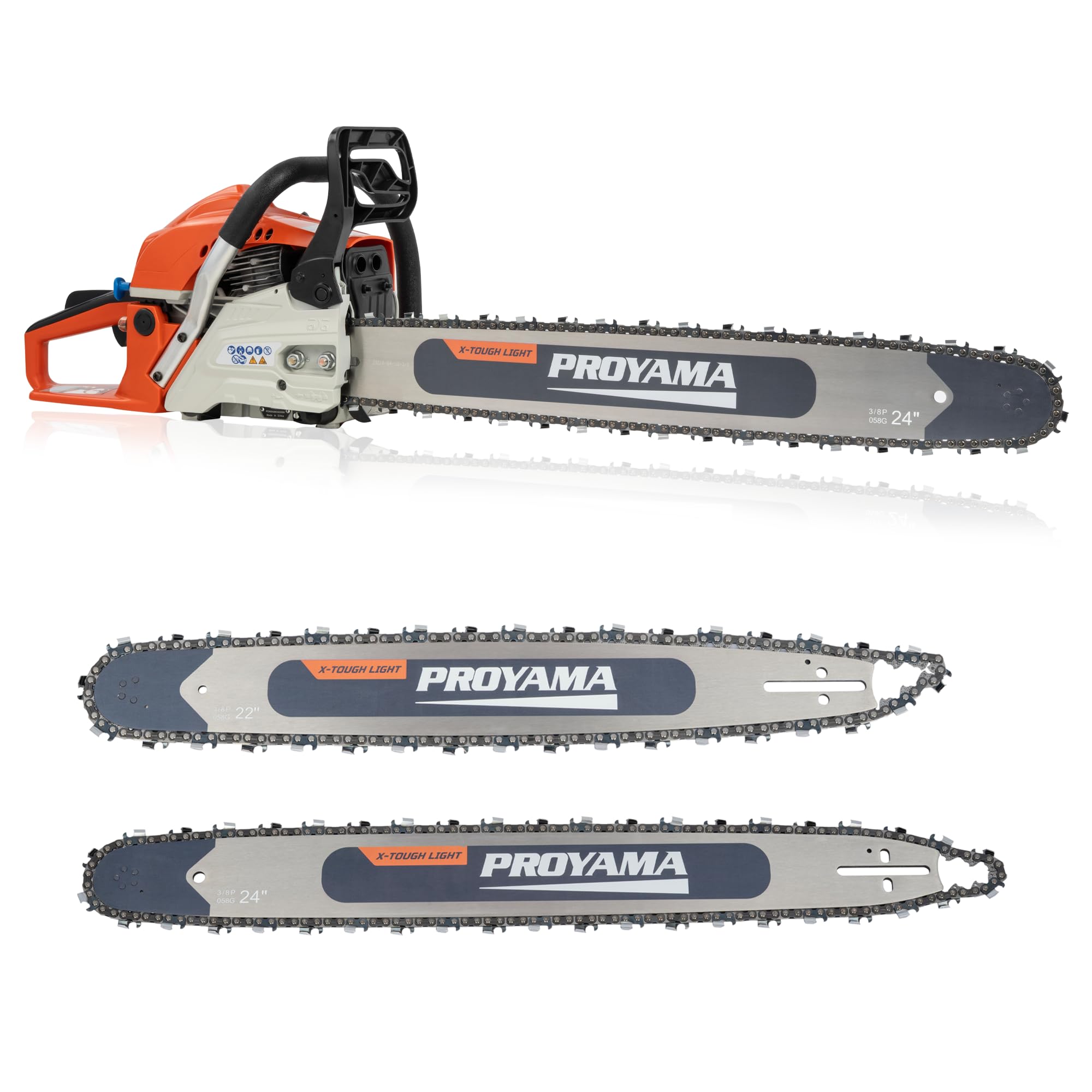
The PROYAMA 68cc is a high-displacement two-stroke built for users who need to tackle large-diameter logs without spending premium-brand money. The 4.5-horsepower engine spins the chain through 22-inch and 24-inch guide bars with authority. Owners report cutting through 40-inch pine trees in a single day, consuming 8 to 10 tanks of fuel without the saw losing power.
The magnesium alloy chain brake and case provide durability that resists deformation during heavy cutting. The dual-bar system lets you swap between a 22-inch bar for maneuverability and a 24-inch bar for maximum reach. The included accessories bundle—face shield, hearing protection, gloves, fuel bottle, and toolkit—adds genuine value for first-time chainsaw buyers.
Quality control varies between units. Some owners report the carburetor needs tuning out of the box, and vibration levels are higher than premium brands like Husqvarna or Stihl. The engine is labeled 68cc but measures 62cc actual displacement. For homeowners who need occasional heavy cutting and are comfortable with basic carburetor adjustments, the PROYAMA offers exceptional power per dollar.
Why it’s great
- Exceptional power for large-diameter logging tasks
- Includes two guide bars for different cutting scenarios
- Comprehensive accessory package adds value
Good to know
- Carburetor tuning adjustment may be required on some units
- Higher vibration levels than premium-brand saws
7. ECHO CS-271T-12 12-Inch Top Handle Chainsaw
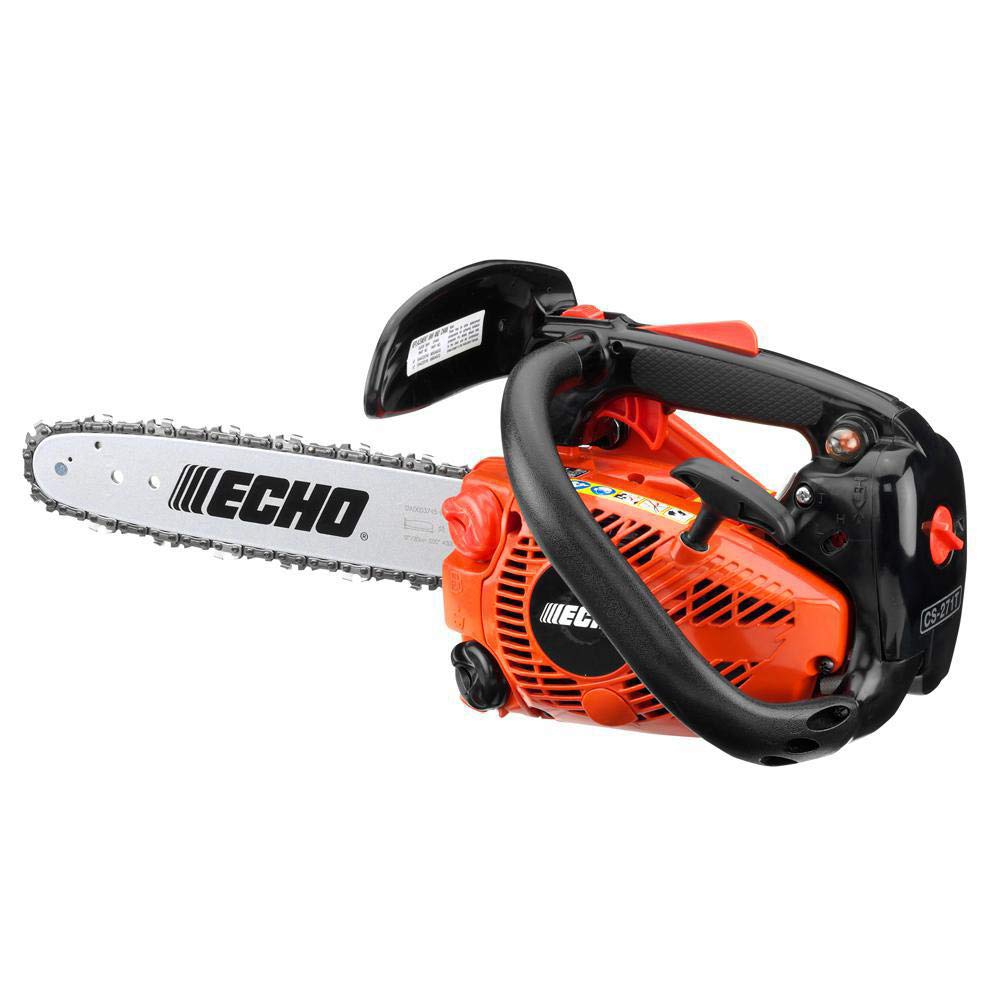
The ECHO CS-271T-12 is a purpose-built top-handle saw designed for arborists and tree climbers who need one-handed operation at height. The 26.9cc engine delivers surprising power for its size—it cuts through 8-inch logs without bogging and maintains high chain speed even under load. At roughly 10 pounds, it is one of the lightest gas saws available.
The i-30 starting system reduces the effort required on the pull cord, a genuine benefit when starting the saw dozens of times per day. The side-access chain tensioner allows quick adjustments without removing the bar nut. The inertia-activated chain brake and vibration reduction system meet professional safety standards while maintaining comfort during extended use.
The 12-inch bar limits the saw to pruning and small limb removal—it is not suitable for felling trees or bucking firewood. Fuel consumption is high for a 26.9cc engine, and the price point sits at the premium end for a saw of this size. For homeowners who need a compact saw for brush and small branches, the CS-271T is overbuilt but extremely reliable.
Why it’s great
- Lightweight top-handle design for one-handed climbing work
- i-30 starting system reduces pull cord effort significantly
- Professional-grade build quality with reliable starting
Good to know
- 12-inch bar limits cutting capacity to small limbs only
- High price relative to engine displacement and bar length
8. DEWALT DCCS623B 20V 8-Inch Pruning Chainsaw

The DEWALT DCCS623B is an 8-inch pruning saw that fills a specific niche: quick cleanup of branches and saplings up to 7 inches in diameter. The brushless motor provides efficient power delivery, and the saw weighs roughly half as much as a gas-powered equivalent, making it ideal for users who find traditional chainsaws intimidating or physically demanding.
Owners as young as 70 report operating the saw with ease, praising its lightweight balance and manageable size. Battery life with a 6Ah pack lasts a full weekend of moderate pruning, and the tool-free chain tensioning system simplifies field adjustments. The saw automatically oils the bar, and the included scabbard stores the wrench conveniently.
The tool-only pricing means you need a DEWALT 20V battery and charger to run it, adding to the total cost if you are not already in the ecosystem. The 8-inch bar is too short for any serious bucking or limbing work. For property owners who need a quick, clean way to maintain small branches and light brush, this is the most entry-level-friendly option available.
Why it’s great
- Extremely lightweight design suitable for all users
- Brushless motor provides efficient battery power management
- Tool-free chain tensioning for quick field adjustments
Good to know
- Tool-only—requires separate DEWALT battery purchase
- 8-inch bar limits capacity to small limbs only
9. NEO-TEC 20-Inch 62cc Gas Powered Chainsaw

The NEO-TEC NCS6200 is the budget entry in this lineup, offering a 62cc two-stroke engine and 20-inch bar at a price that undercuts most competitors by a wide margin. The 3.5-horsepower output provides adequate torque for firewood processing and tree felling, and the wrap-around handle improves control during angled cuts. Owners who followed the break-in procedure report the saw starting consistently in one to two pulls.
At 14 pounds, the NEO-TEC is competitive with mid-range saws in weight, and the hardened chain holds up well in dirty conditions. The precision carburetor promises optimized combustion for better fuel economy, and the included toolkit plus zippered storage pouch add convenience.
The most significant catch is the fuel ratio—this saw requires a 25:1 gas-to-oil mix, which is oil-rich compared to modern 50:1 saws. Idle stability is inconsistent across units, with some owners reporting that the engine needs a single pull to keep running after longer cuts. Replacement parts ship from China, which may delay repairs. For budget-constrained buyers who are comfortable with a richer oil mix and occasional tuning, the NEO-TEC delivers impressive value.
Why it’s great
- Lowest entry price for a 62cc engine with 20-inch bar
- Light 14-pound weight with wrap-around handle for control
- Hardened chain maintains sharpness in abrasive conditions
Good to know
- Requires 25:1 oil mix instead of standard 50:1
- Idle stability may require adjustment after break-in
- Replacement parts sourced from China, potential lead times
FAQ
Can I use regular unleaded gasoline in a 4-stroke chainsaw?
Is a 4-stroke chainsaw more reliable than a 2-stroke?
Why does my 4-stroke chainsaw feel slower than my old 2-stroke?
Can I use a 4-stroke chainsaw upside down for pruning?
Final Thoughts: The Verdict
For most users, the best 4 stroke chainsaw winner is the SENIX 18-Inch 49cc because it delivers genuine four-stroke convenience—no premix, lower emissions, and a smooth torque curve that cuts through hardwood without bogging. If you prefer a lighter saw with the same 4QL engineering for lighter tasks, grab the SENIX 16-Inch 46cc. And for users who need the absolute maximum power for large-diameter felling without stepping up to premium-brand pricing, nothing beats the raw torque of the PROYAMA 68cc.

Mo Maruf
I created WellFizz to bridge the gap between vague wellness advice and actionable solutions. My mission is simple: to decode the research and give you practical tools you can actually use.
Beyond the data, I am a passionate traveler. I believe that stepping away from the screen to explore new environments is essential for mental clarity and physical vitality.