Our readers keep the lights on and my smoothie glass nicely filled. As an Amazon Associate, I earn from qualifying purchases.
Every step sends a shockwave from your heel to your hip. If your knees ache after a run, a walk, or even a day on your feet, your shoes are likely the culprit. The right pair of athletic shoes for knees doesn’t just cushion your foot—it absorbs impact, stabilizes your stride, and reduces the load on your patellar tendon and meniscus with every footstrike.
I’m Mohammad Maruf — the founder and writer behind WellFizz. I spend my time dissecting foam compound densities, midsole stack heights, and heel-to-toe drops so you don’t have to guess which shoe actually protects your joints.
After analyzing real-user reviews across nine models spanning neutral daily trainers, stability workhorses, and maximum-cushion cruisers, I’ve built a data-backed guide to the best athletic shoes for knees that actually deliver measurable joint protection through smart engineering.
How To Choose The Best Athletic Shoes For Knees
Not every cushioned shoe protects your knees equally. You need to match three core variables—cushioning type, stability feature, and drop height—to your own body mechanics. Here’s what separates a knee-saver from a lookalike.
Midsole Foam Density & Energy Return
The foam compound that makes up your midsole determines how much impact force reaches your knee joint. Soft, plush foams feel luxurious but can bottom out under heavier loads, sending shock straight to the patella. Denser, more resilient foams—like PEBAX-based blends or nitrogen-infused EVA—maintain their shape and return energy forward, which keeps your stride efficient and reduces peak knee flexion torque.
Heel-To-Toe Drop & Knee Load
The drop (the difference in height between the heel and forefoot) directly changes how your quadriceps and patellar tendon work. A higher drop (10mm–12mm) shifts load away from the Achilles and toward the quads, which often relieves knee pain if you have patellar tendinitis. A lower drop (0mm–6mm) mimics barefoot mechanics and can aggravate the patellofemoral joint in runners with weak quads. Match the drop to your specific knee pain location.
Pronation Guidance & Stability Elements
Overpronation—where your foot rolls inward excessively—twists your tibia and stresses the medial knee ligaments. Underpronation (supination) sends shock up the lateral chain. Shoes with medial posts, guide rails, or firmer density foams on the inner arch correct this rotational force. For neutral runners, a balanced platform without aggressive correction is ideal—you don’t want stability features forcing your knee into an unnatural path.
Stack Height & Ground Feel
A higher stack (heel foam thickness over 30mm) offers more impact dampening but reduces proprioception—your brain’s awareness of foot position. For knee health, a moderate stack around 25mm–35mm with a wide base provides the best compromise: enough cushion to absorb shock, but not so much that your knee joint has to compensate for instability. Ultra-high stacks (over 40mm) can cause wobble on uneven pavement, forcing your knee stabilizers to work overtime.
Quick Comparison
On smaller screens, swipe sideways to see the full table.
| Model | Category | Best For | Key Spec | Amazon |
|---|---|---|---|---|
| Orthofeet Tilos | Orthopedic | Severe knee pain & back relief | 4 removable orthotic inserts | Amazon |
| ASICS SUPERBLAST 2 | Max Cushion | Energy return with joint protection | Turbo foam + 45mm heel stack | Amazon |
| ASICS Gel-Nimbus 28 | Max Cushion | Post-surgery & high-impact protection | Hybrid gel + foam midsole | Amazon |
| New Balance More v6 | Max Cushion | All-day standing & wide feet | Fresh Foam X, 4E widths | Amazon |
| Saucony Hurricane 24 | Stability | Overpronation & long distances | 2.25 lb stability platform | Amazon |
| Brooks Trace 4 | Neutral Daily | Plantar fasciitis & daily wear | Memory foam insole | Amazon |
| ASICS Gel-Cumulus 27 | Neutral Daily | Versatile training & walking | Gel rearfoot cushioning | Amazon |
| Brooks Revel 8 | Neutral Daily | Lightweight everyday running | 1.5 lb, 10mm drop | Amazon |
| Ryka Devotion X Max | Walking | Women’s walking & travel comfort | Removable insole for orthotics | Amazon |
In‑Depth Reviews
1. Orthofeet Men’s Orthopedic Tilos Hands-Free Walking Sneaker

The Orthofeet Tilos is engineered for people whose knee pain comes from biomechanical inefficiency—flat feet, overpronation, or a collapsed arch. The package includes four different insert combinations, allowing you to tune the arch height and cushioning density to your exact foot shape. Users report immediate relief from foot and lower-back pain, which cascades to reduced knee strain because the foot sits in proper neutral alignment inside the shoe.
Its hands-free design uses a stretchable collar so you step in without bending over—a convenience that matters if post-run knee stiffness makes tying laces painful. The outsole is water-repellent but not fully waterproof; one user noted damp feet after walking through wet grass. At 2.4 pounds per pair, it’s heavier than most trainers, but the trade-off is a substantial platform that doesn’t flex unexpectedly under load.
Long-term durability is a question mark after just two weeks in one reviewer’s experience, yet multiple users bought additional pairs for international travel. For severe patellar tendonitis or chronic knee pain tied to poor foot alignment, this is the most adjustable option on the list.
Why it’s great
- Four orthotic inserts enable precise arch customization for knee alignment
- Dramatic pain relief reported by nurses and older adults with chronic knee issues
- Easy slip-on entry reduces strain on stiff joints
Good to know
- Water repellency is moderate—not suitable for heavy rain or deep puddles
- Heavier build; not ideal for speed work or sprinting
- Bland style may not appeal to runners seeking flashy designs
2. ASICS Unisex SUPERBLAST 2 Running Shoes
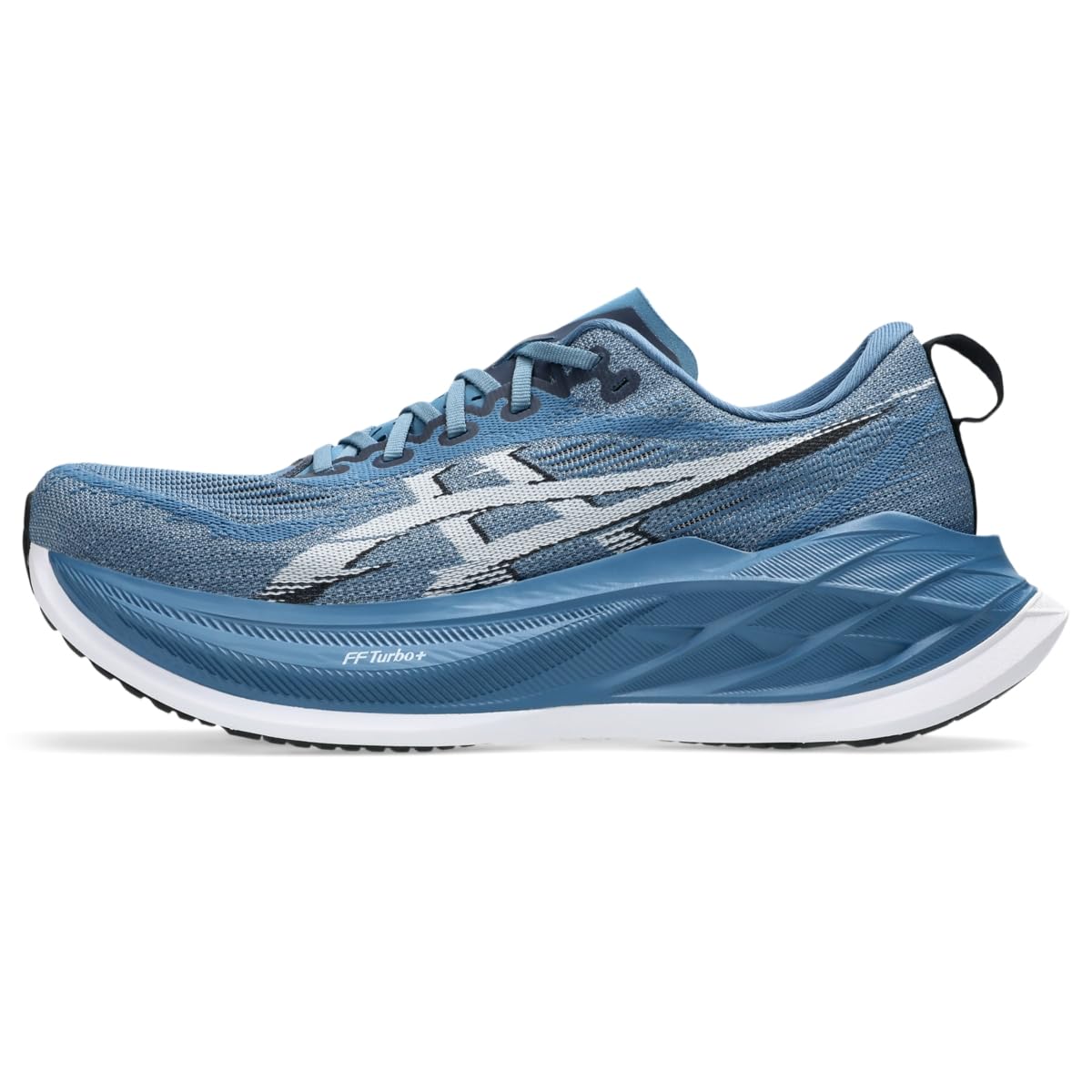
The SUPERBLAST 2 sits at the intersection of maximum cushion and lively energy return, thanks to its high-rebound Turbo foam midsole paired with a 45mm heel stack. That stack height is among the tallest in this roundup, providing serious impact absorption for long miles on pavement. Heavier runners (around 200 pounds) report that the foam doesn’t bottom out, which is critical for knee protection—when the midsole collapses, your patella takes the load.
Users consistently describe the shoe as a “Swiss Army knife” that works equally well for slow recovery runs and race-pace workouts. The toe box offers generous room for splay, allowing your foot to function naturally without pinching the metatarsals. The outsole grip is adequate for dry roads but lacks aggressive lugs for trail use.
One minor quibble: the shoe runs slightly long, and wide-footed buyers should size up half a step. The foam is springier than some carbon-plated racers while being softer than daily trainers, which gives it a unique feel that protects knees without sacrificing speed.
Why it’s great
- Ultra-high stack with dense foam prevents bottoming out for heavier runners
- Versatile across training paces, from slow jogs to tempo efforts
- Spacious toe box allows natural foot mechanics
Good to know
- Runs long; wide-foot users may need to size up half a step
- Not designed for trail or wet-surface running
- Premium midsole may wear faster than conventional EVA
3. ASICS Men’s Gel-Nimbus 28 Running Shoes
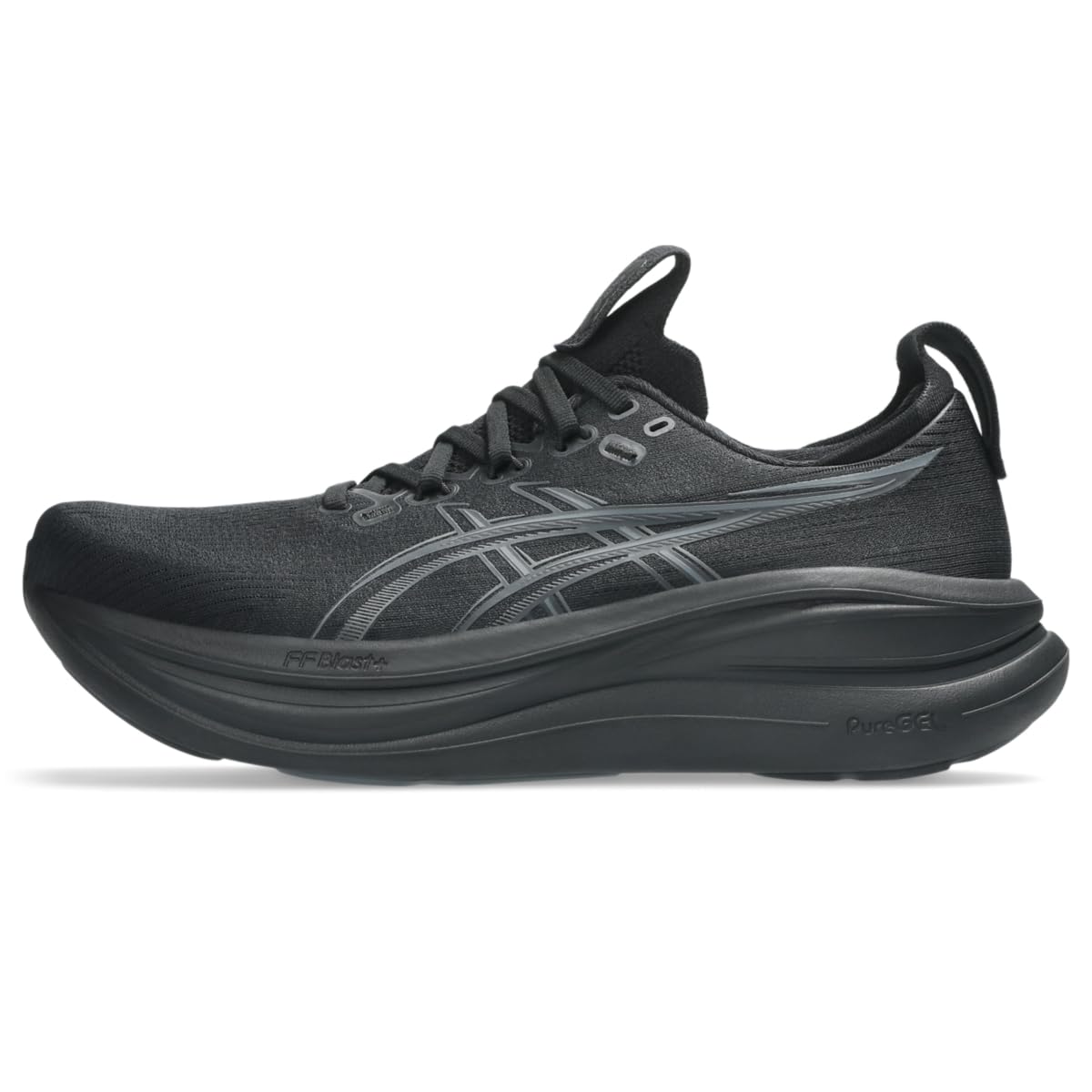
The Gel-Nimbus 28 represents ASICS’ latest evolution in maximalist cushioning for knee protection. Its hybrid midsole combines traditional gel units at the rearfoot with a new foam compound that is both lighter and more resilient than previous versions. Reviewers recovering from knee surgery or back surgeries report that this shoe allows them to walk and jog without the sharp twinge they felt in lesser-cushioned models.
The redesigned tongue and pull-loop system make entry easier, and the upper material breathes well during warm-weather runs. However, the sizing has shifted—multiple users note that the 28 runs narrower and slightly shorter than the 26 or 27, requiring a half-size to full-size jump for those with wider feet. The outsole rubber shows excellent grip even on wet pavement, which adds safety for runners worried about slipping and tweaking their knee.
Arch support is moderate; a few users add aftermarket insoles for higher arches. At 1.96 pounds, it’s lighter than the Orthofeet Tilos but heavier than the Brooks Revel 8, striking a balance between plush protection and daily wearability.
Why it’s great
- Trusted by post-surgery users for high-impact shock absorption
- Gel units provide targeted rearfoot dampening for heel-strikers
- Excellent wet-pavement grip reduces fall risk
Good to know
- Narrower fit than previous Gel-Nimbus versions; size up for wide feet
- Moderate arch support may require orthotic upgrades
- Price point sits at the high end of the premium tier
4. New Balance Men’s Fresh Foam X More V6
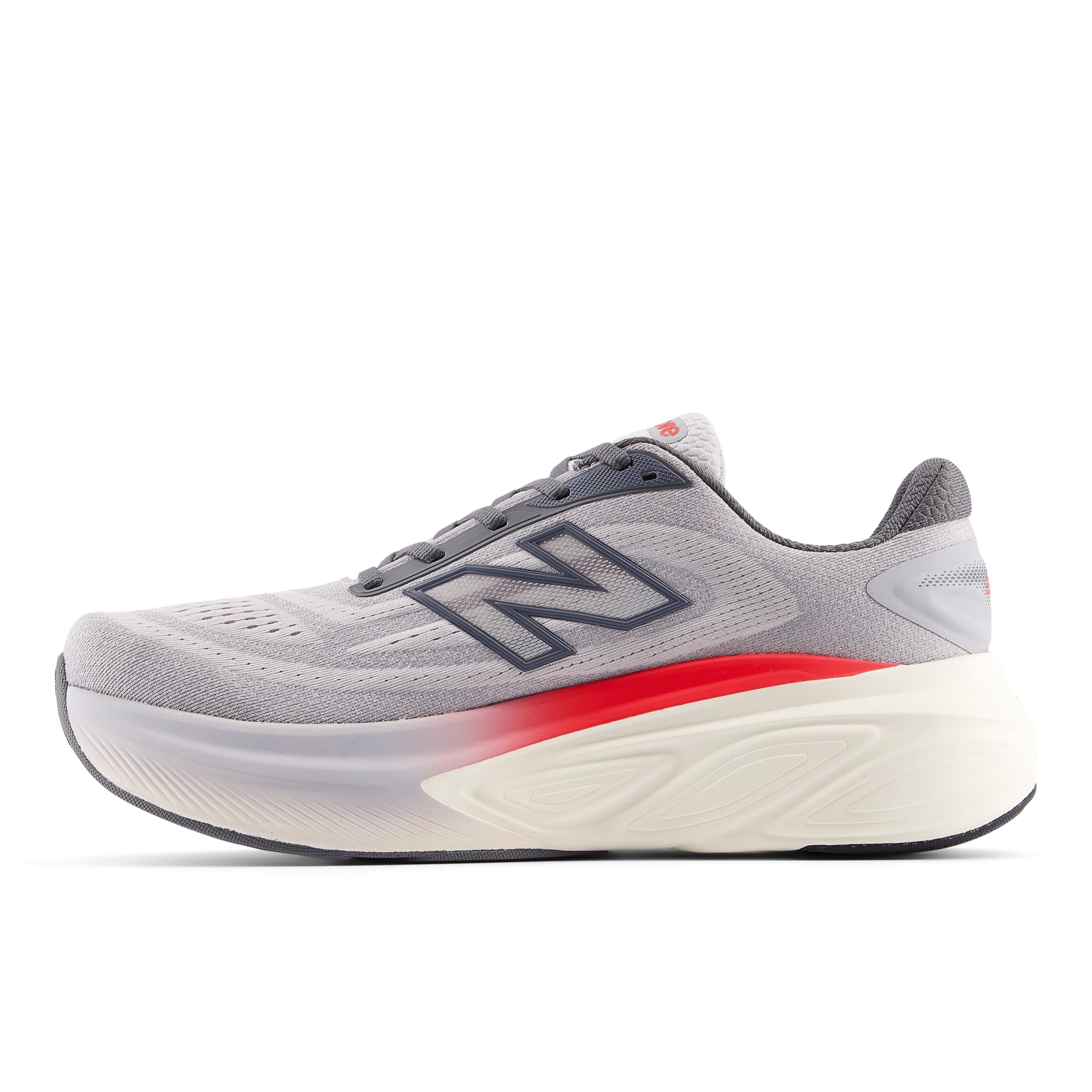
The Fresh Foam X More v6 is built for one primary mission: make every step feel like landing on a memory-foam mattress. Its midsole uses New Balance’s softest proprietary foam, which compresses noticeably on impact but does not collapse entirely—the platform stays stable thanks to a wide base that prevents rolling. For people who stand 8–9 hours a day or log 20,000 steps, this shoe transforms hard floors and asphalt into forgiving surfaces.
Available in 4E extra-wide widths, it accommodates bunions and wide forefeet without pinching. The knit upper is soft and breathable, but the outsole tread is the Achilles heel—several users report accelerated wear, especially on the heel strike zone, because the soft foam extends close to the ground. That trade-off is common among max-cushion shoes: ultimate comfort often means swapping shoes every 300–400 miles instead of 500+.
Reviewers consistently compare it favorably against the Hoka Bondi 9 for plushness, and many prefer it for all-day wear due to the lack of a rigid rocker. If knee pain is aggravated by hard landings rather than poor alignment, this is a top contender.
Why it’s great
- Extremely plush Fresh Foam X absorbs high-impact landings on hard surfaces
- Wide sizing (4E) fits swollen or wide feet without pressure points
- Stable platform despite soft foam; no wobble during walking
Good to know
- Outsole tread wears faster than average due to soft midsole design
- Runs about half a size big; size down for snug fit
- Not designed for speed work—too plush for fast transitions
5. Saucony Men’s Hurricane 24 Sneaker
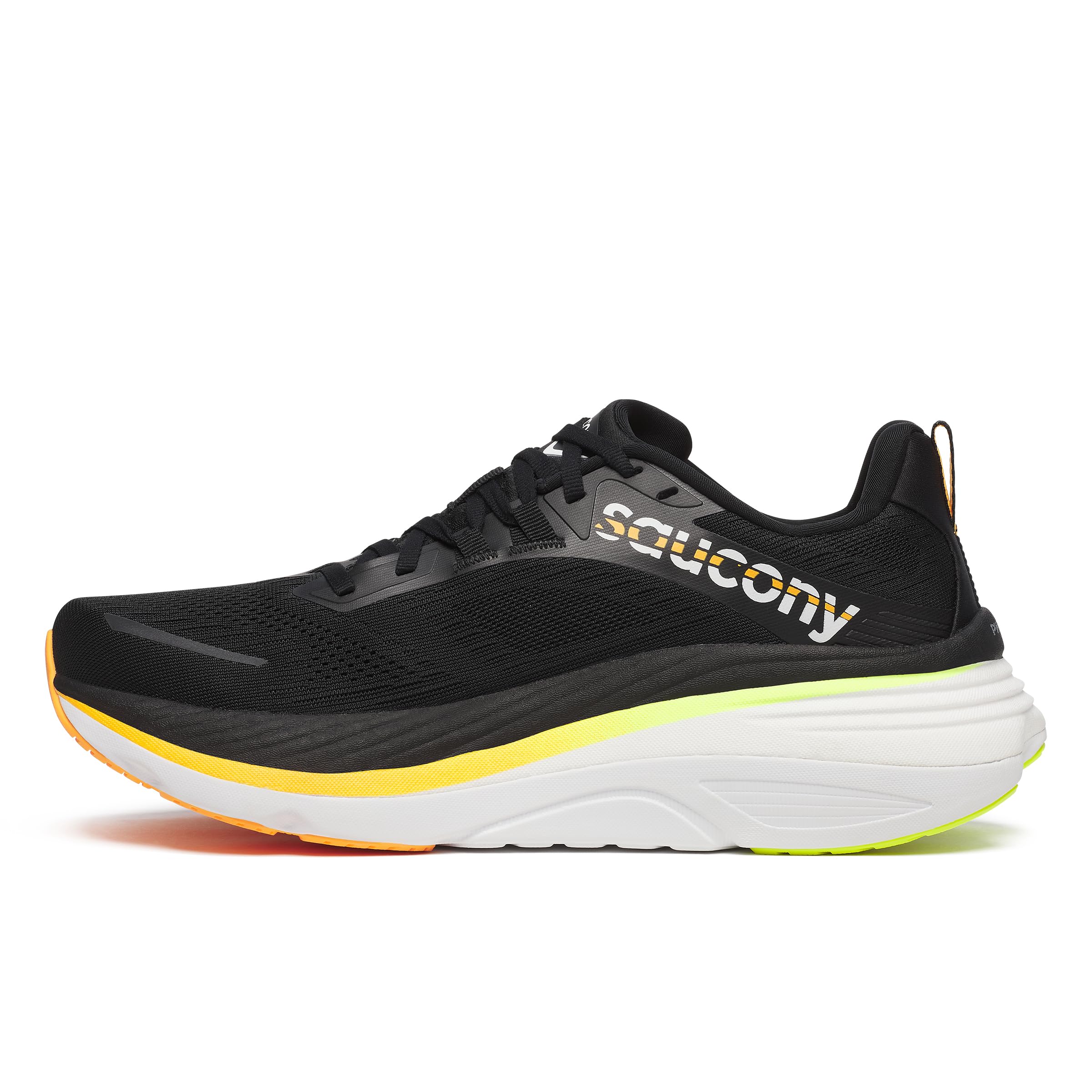
The Hurricane 24 is Saucony’s answer to serious overpronation—the inward roll of the foot that twists the tibia and stresses the medial knee. Its Guidance Frame technology uses firmer foam densities along the medial arch to gently correct excessive motion without a harsh medial post that feels like a brick underfoot. Reviewers describe the stability as “non-intrusive,” meaning it guides rather than forces your foot into alignment.
This shoe shines for long, slow miles. Multiple users report handling 20+ mile runs and two-hour zone 2 sessions with zero knee flare-ups. The 2.25-pound weight makes it one of the heavier options here, and it’s not built for 5K speed work—the cushioning and stability components add bulk. The toe box is roomy in the forefoot, accommodating splay without feeling sloppy, though fit consistency varies between manufacturing origins (Vietnam vs. China pairs).
One reviewer noted that despite being a neutral runner, they had no issues using the Hurricane for walking, praising the cloud-like cushioning that eased their patellar tendonitis. At a more accessible price point than many premium stability shoes, it delivers serious knee protection for flat-footed runners.
Why it’s great
- Non-intrusive guidance corrects overpronation without rigid posts
- Excellent for ultra-distance training—handles 20+ mile runs
- Cloud-like cushioning with roomy forefoot fit
Good to know
- Heavier build not suitable for tempo runs or racing
- Fit consistency varies between manufacturing batches
- Neutral runners may find the guidance unnecessary
6. Brooks Women’s Trace 4 Neutral Running Shoe
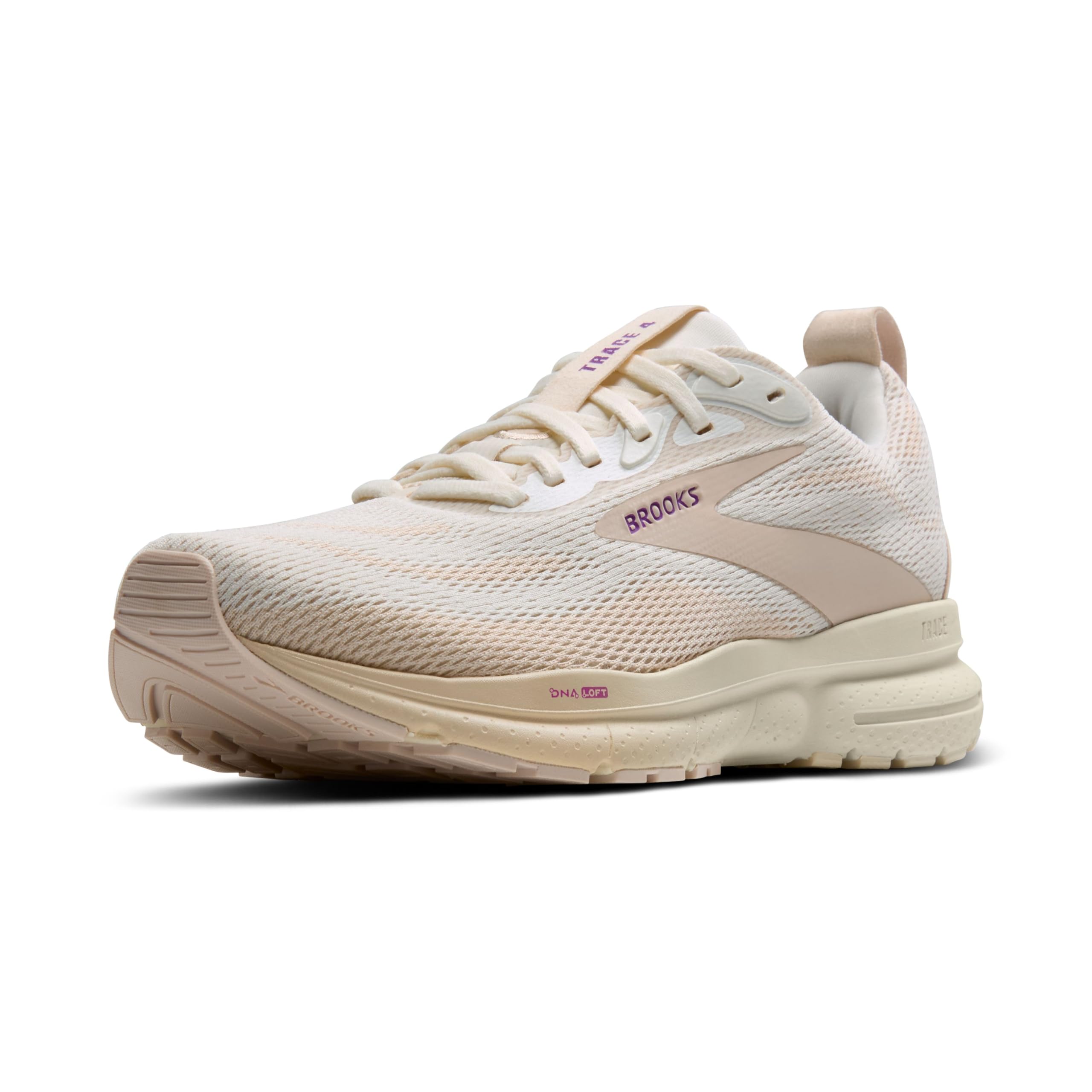
The Brooks Trace 4 is a neutral daily trainer that doesn’t try to be flashy—it simply provides consistent, reliable cushioning with a 10mm drop that offloads the patellar tendon. The memory foam insole adds a layer of step-in comfort that conforms to your foot shape over the first mile, and the midsole uses Brooks’ BioMoGo DNA foam which adapts to your pace: softer at slow speeds, firmer when you push.
Users with plantar fasciitis and past foot injuries find the Trace 4 provides the stability they need without corrective posts, making it a solid choice for neutral runners whose knee pain stems from impact rather than alignment. The shoe weighs just 1.5 pounds, so it doesn’t fatigue your hip flexors during long days. Reviewers note the fit is similar to the Ghost 16 but with a slightly softer ride.
The upper is breathable and the outsole holds up well through 300+ miles of road running. It lacks the plush factor of max-cushion models like the More v6, but for runners who prefer a moderate stack with reliable knee-friendly geometry, it earns its place.
Why it’s great
- 10mm drop reduces patellar tendon load for heel-strikers
- Memory foam insole molds to your foot for custom comfort
- Lightweight design won’t fatigue hips during all-day wear
Good to know
- Not as plush as max-cushion alternatives for heavy runners
- Neutral platform offers no pronation correction
- Limited to women’s sizing in this model
7. ASICS Men’s Gel-Cumulus 27 Running Shoes
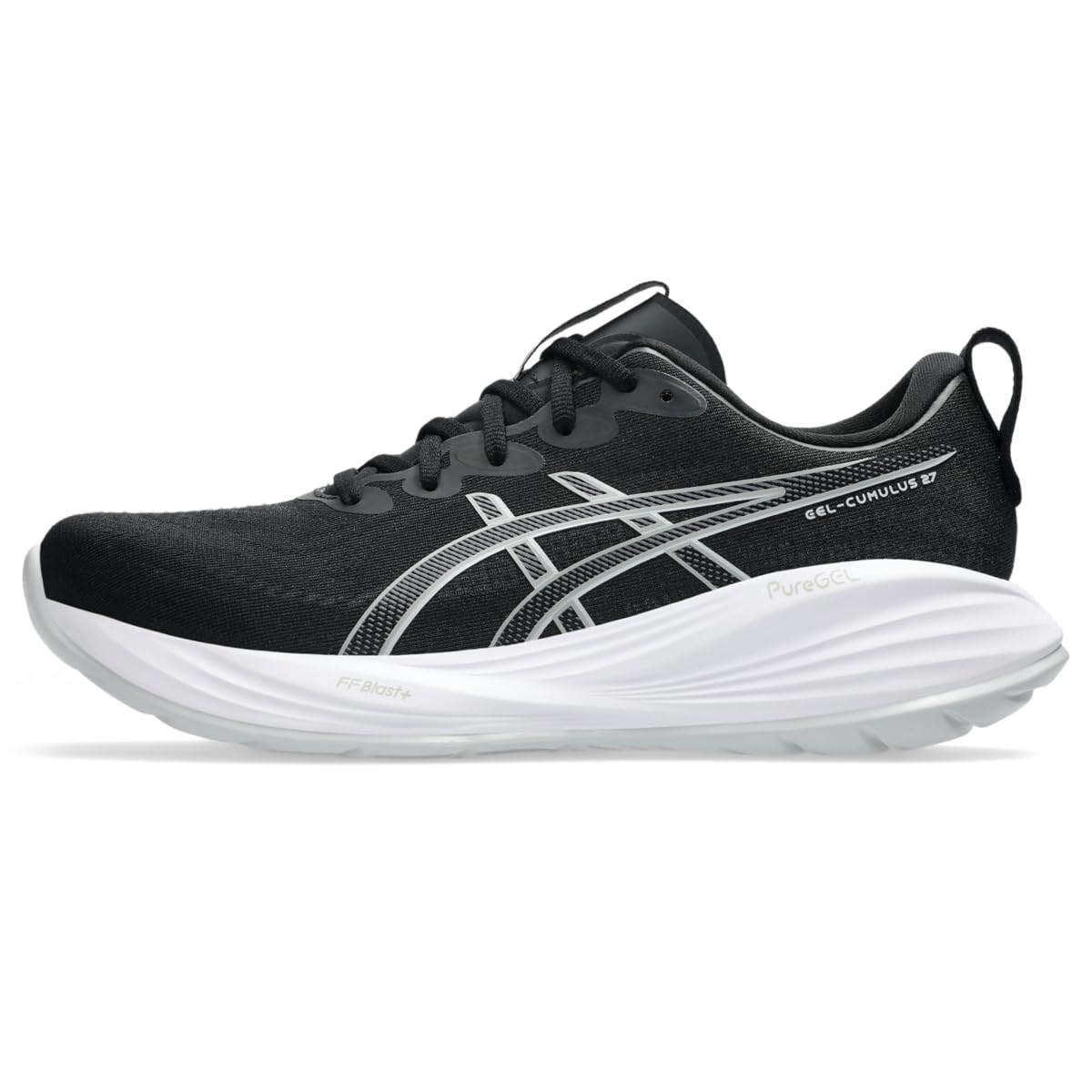
The Gel-Cumulus 27 sits one notch below the Nimbus in ASICS’ lineup but delivers a nearly identical level of knee protection at a lower investment. Its rearfoot gel unit is visible through the midsole and specifically targets the heel-strike phase, which is where most runners generate the impact forces that travel up to the knee. The foam is softer than the Cumulus 26 but denser than the Nimbus 28, making it a Goldilocks option for runners who want cushion without a boat-like feel.
Reviewers praise the Cumulus 27 for its comfortable toe box (slightly larger than previous versions, which prevents toe-mashing) and its breathable engineered mesh upper. The outsole is durable for mixed pavement and treadmill use, and the fit runs true to size for most users. A few loyal Cumulus fans even prefer it over the Nimbus, noting it feels lighter and more responsive while still protecting their knees during marathon training blocks.
It’s not built for heavy pronators, so overpronators will need to look at stability options. But for neutral runners looking for a do-everything trainer that won’t exacerbate knee pain, this is a benchmark pick.
Why it’s great
- Gel unit provides targeted rearfoot impact dampening for heel-strikers
- Lightweight and responsive feel without sacrificing cushioning
- Roomy toe box prevents pressure on metatarsals
Good to know
- Neutral platform—insufficient for moderate or severe overpronation
- Some users find the toe box too wide, causing fabric puckering
- Not as plush as the Nimbus for maximum protection
8. Brooks Men’s Revel 8 Neutral Running & Walking Shoe
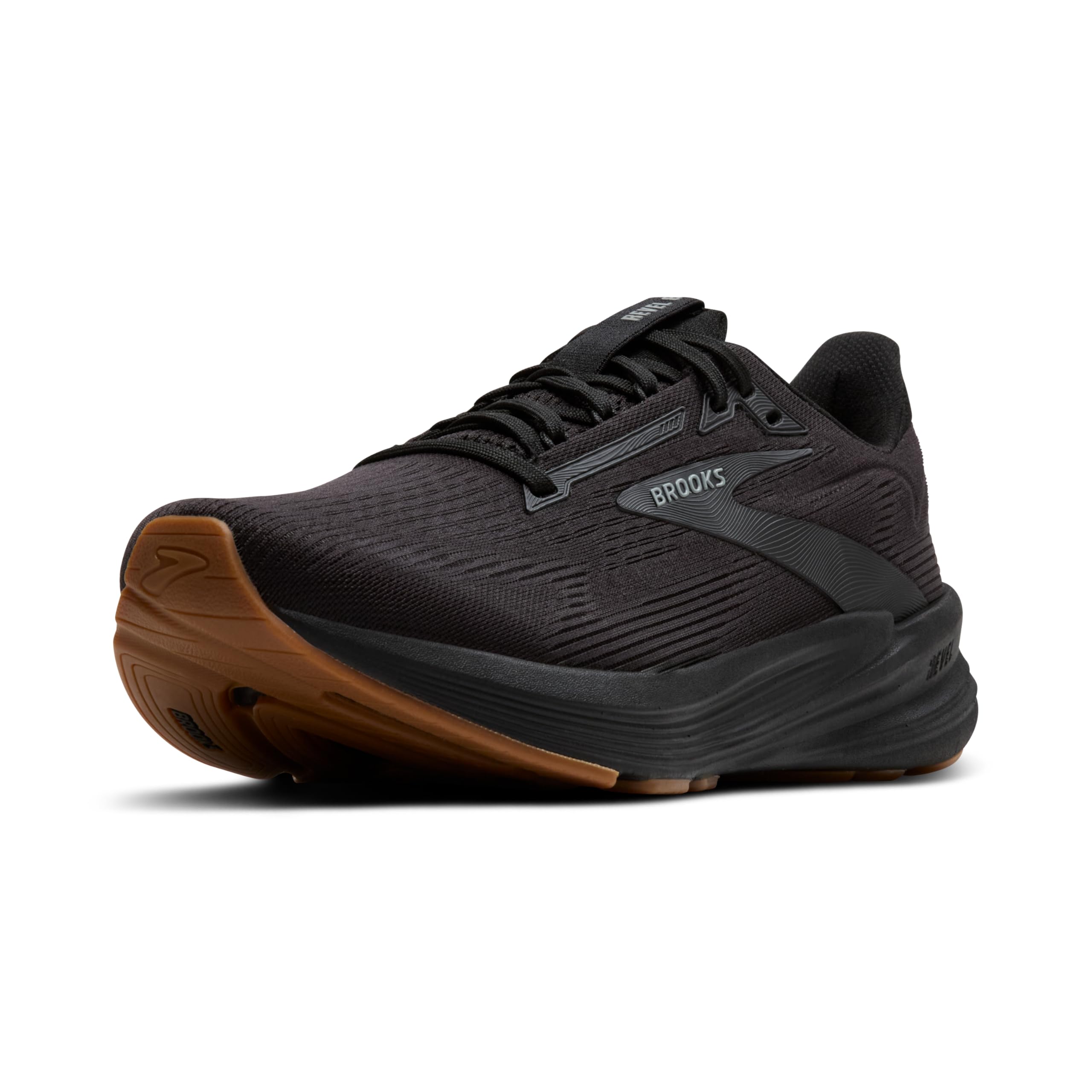
The Revel 8 is Brooks’ entry-level neutral shoe, but its 10mm drop and BioMoGo DNA midsole make it surprisingly effective for knee-friendly running. A soccer referee who logged 274 miles in a season reported that switching from trail runners (with inadequate padding) to the Revel 8 eliminated bloody toenails and aching feet—clear evidence that the foam density and drop angle distribute impact forces more evenly.
At 1.5 pounds, it’s one of the lightest options here, which helps reduce the cumulative load on your knees over long distances. The upper breathes well and the sole lasts impressively long—multiple users note that the outsole shows minimal wear after hundreds of miles. The trade-off is that the cushioning is firmer than premium options like the Nimbus or More v6; heavier runners may feel the pavement more on long runs.
Fit is true to size but narrow in the toe box; one reviewer recommends ordering a full size up if you have wide feet. The shoelaces are shorter than average, which can affect lockdown if you rely on a heel-lock lacing method for knee stability.
Why it’s great
- Lightweight design reduces cumulative joint load on long runs
- Durable outsole holds up well past 300 miles
- 10mm drop is ideal for reducing patellar tendon stress
Good to know
- Firmer cushioning may not suit heavier runners needing max plushness
- Narrow toe box; size up for wider feet
- Short laces make heel-lock lacing difficult
9. Ryka Devotion X Max RS Walking Shoes
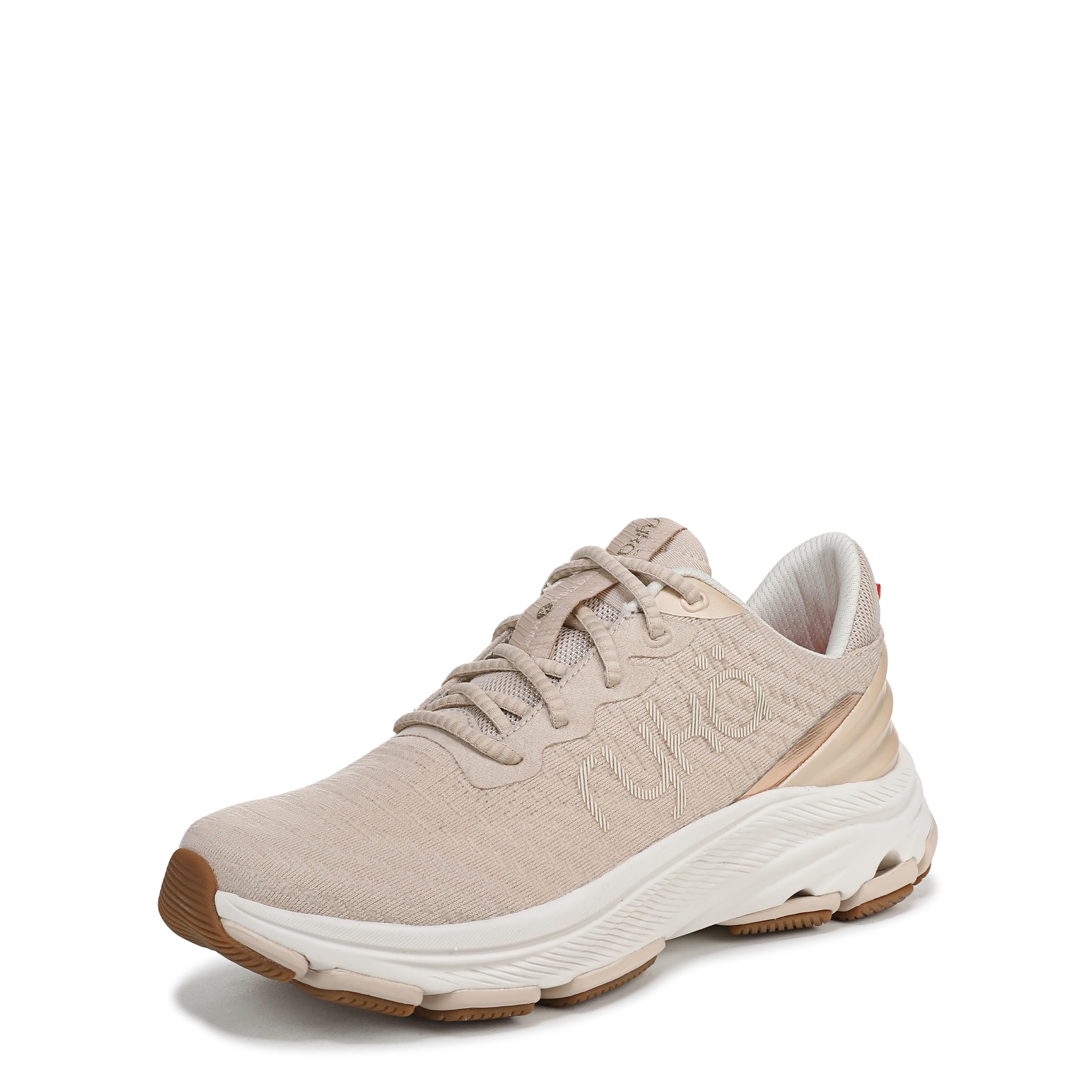
The Ryka Devotion X Max is a women’s-specific walking shoe that prioritizes comfort for people who spend hours on their feet. Its removable insoles accommodate custom orthotics, which is critical for walkers whose knee pain originates from flat feet or high arches. The wide toe box is genuine—users with 4E feet report that Ryka’s wide actually fits, unlike brands where “wide” is barely wider than standard.
Reviewers frequently compare it favorably to the Hoka Bondi 9, noting that the Devotion X Max is more cushioned and significantly more affordable. The pearlized heel wrap adds style, and the non-slip outsole provides stability on smooth indoor floors. One user said she could run for the first time in years without leg or foot pain, which speaks to the shoe’s ability to absorb impact.
The downsides are minor: the toe box might be too wide for narrow-footed users, causing fabric puckering. And while the shoe is lightweight, it’s not designed for serious running—it’s optimized for walking at a natural pace. For everyday walking and travel where knee protection is the priority, it delivers outsized value.
Why it’s great
- Removable insoles allow custom orthotics for knee alignment correction
- Wide toe box accommodates bunions and foot swelling
- More cushioned than premium models like Hoka Bondi 9
Good to know
- Designed for walking, not high-cadence running
- Wide toe box may feel loose for narrow-footed users
- Limited to women’s sizes only
FAQ
Does a higher heel-to-toe drop always reduce knee pain?
How much cushion is too much for knee protection?
Can stability shoes fix knee pain from overpronation?
Final Thoughts: The Verdict
For most users, the athletic shoes for knees winner is the ASICS SUPERBLAST 2 because its high-rebound foam and tall stack deliver impact protection without sacrificing responsiveness for daily training. If you need severe knee pain relief from a biomechanical standpoint, grab the Orthofeet Tilos. And for all-day standing and walking comfort with wide sizing, nothing beats the New Balance More v6.

Mo Maruf
I created WellFizz to bridge the gap between vague wellness advice and actionable solutions. My mission is simple: to decode the research and give you practical tools you can actually use.
Beyond the data, I am a passionate traveler. I believe that stepping away from the screen to explore new environments is essential for mental clarity and physical vitality.