Our readers keep the lights on and my smoothie glass nicely filled. As an Amazon Associate, I earn from qualifying purchases.
The sharp, electric jolt from a herniated disc doesn’t just limit movement—it rewires how you live. Between the constant fear of re-injury and the search for something that actually locks down the L4-L5 or L5-S1 segments without cutting off circulation, most lumbar supports fail where it counts. A brace designed for a disc injury must do more than squeeze—it needs to shape the spine’s natural curve while stabilizing the core enough to offload the posterior annulus.
I’m Mohammad Maruf — the founder and writer behind WellFizz. I’ve spent a decade analyzing orthopedic supports through the lens of biomechanics and clinical outcomes, filtering through hundreds of braces to isolate the ones that deliver measurable distraction and pelvic anchoring for disc-related pain.
This roundup is built for the person who needs immediate unloading of a compromised disc, not general back pain management. Here is the definitive guide to the best back brace for herniated disc, ranked by decompression mechanics and real-world structural integrity.
How To Choose The Best Back Brace For Herniated Disc
Selecting a brace for a herniated disc is fundamentally different from choosing a general lumbar support. You need mechanical unloading of the disc space, not just abdominal compression. Three variables separate a clinically effective brace from a simple corset: the rigidity of the posterior panel, the adjustability of distraction force, and the construction material’s ability to prevent migration during movement.
Posterior Panel Rigidity & Decompression Plate
A herniated disc requires posterior pressure to create an anterior shift of the nucleus pulposus, reducing impingement on the nerve root. Look for braces with either a molded polyethylene back panel or a bionic decompression plate that spans L1 to S1. These semi-rigid or rigid elements lock the lumbar spine into a neutral lordotic curve, preventing flexion movements that exacerbate disc bulging. A simple elastic wrap has zero chance of providing this kind of targeted unloading.
Compression & Pulley Systems
The ability to concentrate compression precisely over the injured disc level is critical. Braces with dual-tension straps or pulley mechanisms allow you to tighten the upper and lower portions independently, creating a gradient that lifts the vertebral segment above the disc. For patients with limited grip strength or post-operative restrictions, a pulley system with finger tabs drastically simplifies donning while delivering 3x to 5x the mechanical advantage of standard Velcro straps.
Breathability & Wear Duration
If your disc is herniated, you’ll likely wear the brace for 6 to 12 hours a day. Non-breathable neoprene traps heat and moisture, leading to skin irritation and early removal. Braces constructed from nylon-Kevlar blends, mesh modal, or perforated elastic allow air circulation and reduce sweat accumulation. A brace you take off early is a brace that fails—prioritize materials that stay cool against the skin.
Quick Comparison
On smaller screens, swipe sideways to see the full table.
| Model | Category | Best For | Key Spec | Amazon |
|---|---|---|---|---|
| ASPERMS QD PRO | Semi-Rigid | Sustained core stability | Inelastic shell, dual PullTabs | Amazon |
| BraceAbility LSO | Semi-Rigid | Pre-and post-surgery | Dual pulley, LSO design | Amazon |
| Timtakbo LSO | Semi-Rigid | Decompression & alignment | 26° arch plate, pulley system | Amazon |
| BaxMAX | Mid-Rigid | Active, on-the-go compression | 5:1 pulley, 5 oz weight | Amazon |
| NEENCA | Semi-Rigid | Daily desk & light activity | Multi-point support stays | Amazon |
| FEATOL | Semi-Rigid | Work & heavy chores | 5 reinforced stays | Amazon |
| Bracepost | Mid-Rigid | All-day wear with hot/cold therapy | Bionic spine design, ice pack | Amazon |
In‑Depth Reviews
1. ASPEN Quikdraw PRO Back Brace

The ASPEN Quikdraw PRO is built on a foundation of inelastic fabric, which means it resists stretch and keeps the L1-L5 segments locked in neutral better than any elastic alternative. The patented pulley system with dual PullTabs allows you to tighten the upper and lower halves independently, creating a compression gradient that can be precisely positioned over the herniated disc level. This is the same brace trusted across North American trauma centers and rehab facilities—a clinical-grade tool, not a consumer accessory.
At roughly half a pound, the brace is remarkably light given its rigidity. The breathable construction prevents sweat accumulation during extended wear periods, and the ergonomic cut permits a full range of motion for walking and daily tasks without the brace digging into the stomach during seated postures. Users with spinal fusion recoveries and post-fall rehab have reported significant improvements in standing endurance and pain modulation—some noting it allowed them to stay active while protecting the injured segment.
The sizing is non-negotiable. Measure your waist at the navel, not your pant size—choosing larger if in doubt ensures the brace overlaps securely. The inelastic shell provides zero vertical give, which is exactly what a compromised disc needs: stability, not cushion. If you can tolerate one brace for 10+ hours a day, this is it.
Why it’s great
- Inelastic shell resists creep for consistent support
- Dual PullTabs let you target compression above and below disc level
- Light enough (0.7 lb) for all-day compliance
Good to know
- Must measure carefully—wrong size fails to overlap properly
- Not designed for high-intensity or contact sports
2. BraceAbility Lumbar Decompression Back Brace
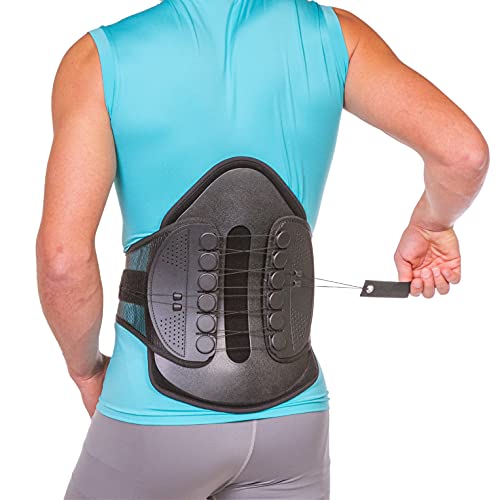
The BraceAbility LSO is designed explicitly for the discectomy and laminectomy recovery timeline. Its dual-pulley system provides nearly 3x the compression of a standard strap, which is critical in the weeks following disc surgery when intra-abdominal pressure must be carefully managed. The wraparound application eliminates the need to twist or bend—a tangible advantage for patients with acute nerve irritation or post-operative movement restrictions.
Long-term users report this brace holding up for multiple years across repeated recovery cycles. The plastic-backed panel provides a rigid boundary against flexion and extension, and the adjustable hook-and-loop closure allows fine-tuning as swelling subsides post-operation. Users who previously purchased braces from their physical therapist often note this BraceAbility model equals or exceeds the clinical standard at a fraction of the clinical markup.
One recurring detail: the back panel can feel flimsy when bending aggressively and the brace may shift if the fit isn’t snug against the iliac crests. For users with a narrower waist, sizing down (e.g., Medium instead of Large) prevents the brace from wandering. It’s best suited for recovery and daily mobility, not for high-load activities like construction or competitive lifting.
Why it’s great
- Dual-pulley system triples compression without extra effort
- No-bend application protects post-surgery back
- Holds up for multiple years across recovery cycles
Good to know
- Back panel can feel unsupportive during deep forward flexion
- May need to size down for a secure fit on narrower waists
3. Timtakbo LSO Back Brace with Decompression Plate

The Timtakbo LSO brings a bionic decompression plate that can be adjusted to three arch positions, including a maximum 26-degree lumbar extension. That degree of segmental distraction is what actively offloads the posterior annulus of a herniated disc—not just immobilization, but genuine unloading. The pulley system with finger tabs makes high-compression fitting accessible to users with arthritis or limited hand strength.
Users with chronic herniations that “go out completely” report that this brace immobilizes roughly 80% of lower back motion, allowing them to function during acute flare-ups. The included removable abdominal plate adds an extra layer of intra-abdominal pressure support, which is particularly helpful for those with diastasis or lumbar instability following pregnancy or weight loss. The brace also accommodates hot/cold packs through a dedicated pocket
The trade-off is bulk. The arch plate and extra abdominal piece create a thicker profile that shows under fitted clothing, and the brace is not intended for sleeping. Users with CRMO and post-surgical recoveries have found it easier to don independently than many clinical orthoses.
Why it’s great
- Adjustable 26° arch plate creates genuine disc unloading
- Pulley system delivers high compression with minimal effort
- Removable abdominal plate for extra core stabilization
Good to know
- Bulky profile shows under fitted clothing
- Arch plate may feel aggressive if you’re not used to extension bracing
4. BaxMAX Adjustable Back Brace
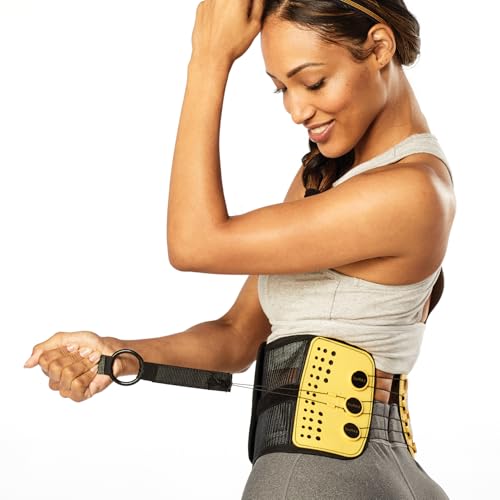
The BaxMAX flips the script on bulky disc braces by weighing just five ounces without sacrificing compression power. Its patented 5:1 pulley system uses a Kevlar-reinforced line to multiply your pull by five, delivering focused compression directly over the lumbar spine. The nylon-Kevlar blend mesh is aggressively breathable, making this the best option for active users who need to wear the brace during walking, light gym work, or yard maintenance without overheating.
Used in over 3,000 chiropractic clinics for 15 years, the BaxMAX is designed to prevent muscle atrophy during extended wear. Its three-way wearing positions allow you to adjust whether you need maximum support for standing or a slightly looser setting for seated desk work. Users with L4/L5 herniations and spondylolisthesis report instant back support upon tightening, with the pulley system allowing micro-adjustments throughout the day.
The main limitation is the material’s tendency to roll up when sitting for long stretches. This brace shines in dynamic activity and upright postures but struggles during prolonged seated sessions. It also lacks the rigid posterior plate found in clinical LSO braces, so it’s best for mild-to-moderate herniations rather than acute surgical-stage cases.
Why it’s great
- 5:1 pulley multiplies compression power dramatically
- Ultra-lightweight breathable construction for active all-day wear
- Three wearing positions for standing, seated, and transitional support
Good to know
- Can roll up at the edges during prolonged sitting
- Lacks rigid posterior plate for severe disc instability
5. NEENCA Lower Back Brace

The NEENCA brace uses a multi-point support design with two elastic Velcro straps to deliver lumbar stabilization without the bulk of a full LSO corset. The high-quality mesh fabric keeps you cool during 8-hour desk sessions, and the slim profile fits under clothing without announcing itself. Users with seven prior spine surgeries have called this the best brace they’ve worn in nine years—including insurance-provided orthoses.
Medical-grade polyester and spandex construction ensures the brace holds its tension over months of daily use. The custom-fit system accommodates a wide range of waist sizes (25.9 to 65 inches), making it one of the most size-inclusive disc-specific braces on the market. The support stays apply multi-point pressure across the posterior lumbar region, distributing load away from the injured disc segment.
Some users report the brace may roll at the front during deep flexion, and the semi-rigid stays offer less decompression than a dedicated LSO brace. For moderate herniations requiring consistent postural support rather than aggressive unloading, this is a reliable, low-profile option that won’t interfere with your daily routine.
Why it’s great
- Low-profile design fits discreetly under clothes
- Breathable mesh prevents heat buildup during long wear
- Exceptional size range for diverse body types
Good to know
- Less decompression than LSO braces with rigid plates
- Can roll at the front during deep forward bends
6. FEATOL Lower Back Brace with 5 Reinforced Stays
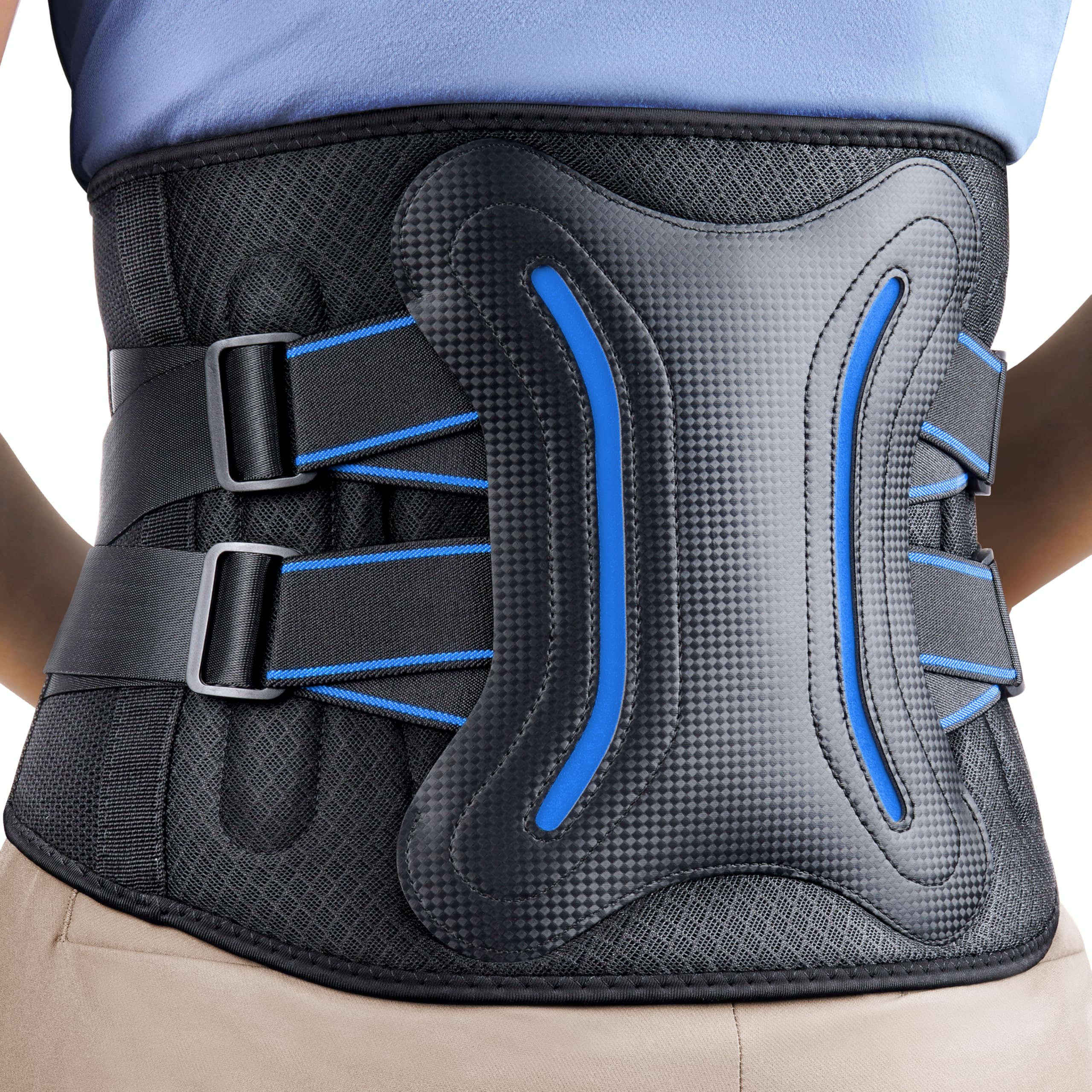
Five reinforced stays—three memory-aluminum and two support plates—make the FEATOL a 360-degree stabilization machine for users who can’t avoid heavy lifting or prolonged standing during recovery. The dual-tension straps let you tighten the upper and lower sections independently, directing the bulk of the support to the specific spinal level where the disc is compromised.
Users in their mid-70s report that this brace enables 2+ hours of yard work and standing without back pain, a game-changer for remaining active during disc degeneration. The elastic material and adjustable straps create a “second skin” feel that stays in place without migrating. The low-profile design fits under most work trousers, making it practical for construction, warehouse, and industrial environments where a bulky brace would be impractical.
The trade-off for that support density is less breathability than mesh-based designs. Users in hot climates or high-exertion settings may find the material traps heat. Additionally, the stiff stays can be uncomfortable during prolonged sitting—this is a brace optimized for movement, not desk work.
Why it’s great
- Five stays provide 360-degree stabilization
- Stays in place during lifting, bending, and walking
- Fits under work clothes for daily industrial use
Good to know
- Less breathable than mesh alternatives
- Stays can dig in during extended sitting
7. Bracepost Bionic Spine Back Brace

The Bracepost brace differentiates itself by integrating a bionic spine design scaled 1:1 to the human spine, using memory-aluminum stays that are four times harder than standard PP strips. This delivers targeted vertical support along the exact curvature of your lumbar vertebrae, reducing pressure on the intervertebral discs with each step. The integrated pocket for a reusable hot/cold pack adds a therapeutic layer that’s particularly valuable during acute disc inflammation.
The soft modal and breathable mesh construction includes intentional ventilation holes to prevent heat build-up, and silicone strips on both sides keep the brace anchored during bending and twisting. One user with severe recurrent disc issues noted this brace prevents acute episodes without the muscle atrophy rigid braces cause.
The Velcro closure can weaken over several months of daily use, and the leather-look spine support may feel less substantial than a full polymer plate for very unstable discs. For moderate herniations where passive support plus active thermal therapy is the preferred protocol, this is an excellent integrated solution.
Why it’s great
- Integrated hot/cold pack pocket for active disc therapy
- Memory-aluminum stays match natural spine curvature
- Silicone anti-slip strips prevent brace migration during movement
Good to know
- Velcro closure may weaken with extended daily use
- Leather spine support less rigid than polymer LSO plates
FAQ
Can I sleep wearing a brace for my herniated disc?
How tight should I fasten a disc-specific brace?
Will a back brace weaken my core muscles?
Final Thoughts: The Verdict
For most users, the best back brace for herniated disc winner is the ASPEN Quikdraw PRO because its inelastic construction and dual PullTabs provide the most reliable segmental support for L1-S1 disc injuries without unnecessary bulk. If you want active decompression through an adjustable arch plate, grab the Timtakbo LSO. And for lightweight, on-the-go compression that won’t slow you down, nothing beats the BaxMAX Adjustable Back Brace.

Mo Maruf
I created WellFizz to bridge the gap between vague wellness advice and actionable solutions. My mission is simple: to decode the research and give you practical tools you can actually use.
Beyond the data, I am a passionate traveler. I believe that stepping away from the screen to explore new environments is essential for mental clarity and physical vitality.