Our readers keep the lights on and my smoothie glass nicely filled. As an Amazon Associate, I earn from qualifying purchases.
Weak suction is the single biggest complaint in the breastfeeding community — a pump that doesn’t empty properly leads to low supply, clogged ducts, and frustration. The right pump must deliver consistent vacuum strength that mimics a baby’s natural rhythm without causing pain.
I’m Mohammad Maruf — the founder and writer behind WellFizz. I’ve spent years analyzing suction mechanisms, motor durability, and flange fit across hundreds of breast pumps to separate marketing claims from real-world performance.
After evaluating nine models on vacuum consistency, comfort, and output efficiency, I’ve identified the strongest options for every pumping style. This guide covers the most reliable breast pump for suction on the market right now.
How To Choose The Best Breast Pump For Suction
Suction is not just about raw vacuum power. A pump’s ability to empty the breast depends on the interplay between vacuum strength, cycle speed, flange fit, and whether the motor maintains consistent pressure. Here’s what to evaluate before buying.
Vacuum Strength and Range
Measured in mmHg, vacuum strength tells you the maximum suction the motor can generate. Hospital-grade pumps typically reach 250-300 mmHg. More important than the max number is the range of adjustable levels — you want fine-grained control to find the sweet spot between effective expression and comfort.
Cycle Patterns vs. Raw Power
A pump that only pulls hard without mimicking a baby’s suckling rhythm often triggers nipple pain and slower letdown. Look for pumps with distinct stimulation (fast, light cycles) and expression (slower, deeper suction) phases. The ability to switch between these patterns automatically or manually makes a major difference in output.
Flange Fit is Non-Negotiable
The wrong flange size directly reduces effective suction. If the flange is too large, it pulls in areola tissue, causing swelling and poor drainage. If too small, it restricts flow. Many pumps now include multiple flange sizes or inserts (17mm to 28mm) — this is a must-have feature for proper suction transfer.
Closed System Design
A closed system prevents milk from entering the tubing and motor, maintaining consistent suction over time and preventing bacterial growth. This is especially critical for wearable pumps where the motor sits close to the collection cup. Backflow membranes are the key component here.
Quick Comparison
On smaller screens, swipe sideways to see the full table.
| Model | Category | Best For | Key Spec | Amazon |
|---|---|---|---|---|
| Paruu P20 | Wearable | Budget hands-free pumping | 4 modes + 12 levels | Amazon |
| MomMed S21 | Wearable | Complete wearable kit | 3 modes + 12 levels, <45 dB | Amazon |
| Lansinoh Discreet Duo | Wearable | Hospital-strength wearable | 4 modes, 9 levels, <45 dB | Amazon |
| Zomee Z2 | Portable | Alternating dual pumping | 3 modes, 9 levels, 4.7 oz bottles | Amazon |
| BabyBuddha 2.0 | Portable Primary | Full replacement for hospital pump | 3 modes, 21 levels, 270+ mmHg | Amazon |
| Philips Avent | Plug-in | Plug-in hospital strength | 8 stim / 16 expr levels, 270 mmHg | Amazon |
| Momcozy M6 | Wearable | High-output wearable pumping | 3 modes, 9 levels, 295 mmHg | Amazon |
| Spectra S1 Plus | Portable Primary | Quiet, rechargeable primary pump | Cycle + vacuum independent control | Amazon |
| Medela Sonata | Portable Primary | Hospital-grade in a compact frame | Responsive vacuum tech, <2.5 lbs | Amazon |
In‑Depth Reviews
1. BabyBuddha Breast Pump 2.0
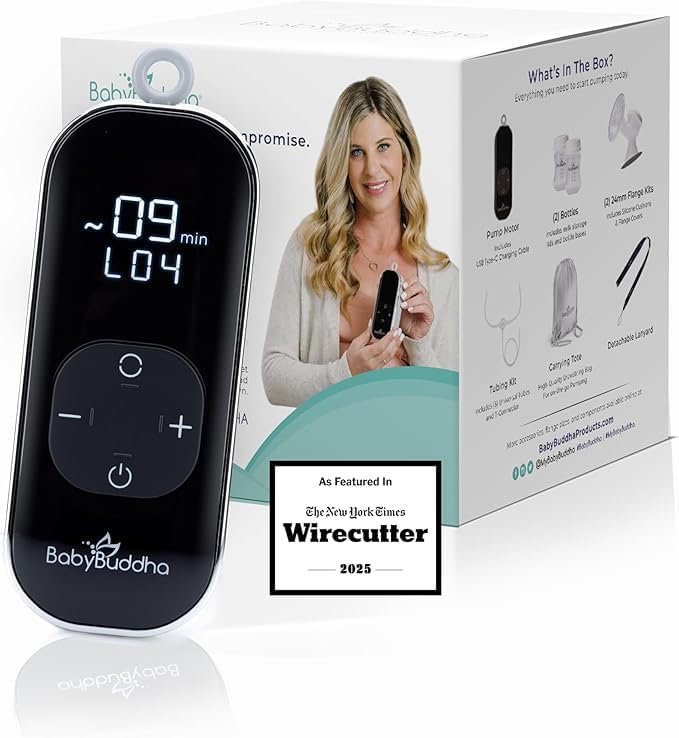
The BabyBuddha 2.0 delivers hospital-grade suction in a palm-sized portable unit, making it the strongest primary pump in this lineup. With 21 suction combinations across three modes — including a new soft stimulation setting — this pump provides the fine-grained control that nursing parents need to dial in the exact vacuum strength and cycle pattern for efficient emptying. Real-world testing shows output increases of 2+ ounces per session compared to standard portable pumps, with full drainage happening in about 15 minutes.
IBCLC-recommended for its ability to replace a full-size electric pump, the BabyBuddha uses a closed system with separate tubing and collection containers. The motor is compact enough to clip to a waistband or fit in a pocket, and the USB-C charging means you can top it off from a laptop or power bank. Users report that pairing it with BabyBuddha cups or compatible third-party collection cups makes it wearable, though the motor itself is louder than most all-in-one wearables — a trade-off for the superior suction power.
The included kit covers everything from flange sizes (22-24mm) to soft massage inserts, duckbill valves, bottles with lids, and a travel tote. For exclusive pumpers or those rebuilding supply, the BabyBuddha 2.0 offers true hospital-grade performance without being tethered to a wall outlet.
Why it’s great
- Exceptionally strong, adjustable suction with 21 levels
- Portable and powerful enough for exclusive pumping
- USB-C charging for on-the-go use
Good to know
- Motor is louder than all-in-one wearables
- Requires cups or flanges for hands-free use (sold separately)
2. Medela Sonata Smart
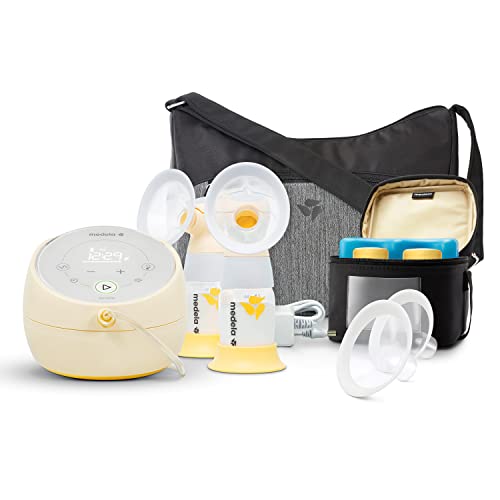
The Medela Sonata brings hospital-grade performance from the Symphony into a compact, rechargeable unit that weighs under 2.5 pounds. Its responsive vacuum technology automatically adjusts suction to maintain consistent pressure as milk flow changes, which prevents the drop-off in suction that cheaper pumps experience as the breast empties. The result is a more consistent session that drains both breasts thoroughly without needing constant manual tuning.
The Flex breast shields with soft silicone rims are a standout feature — they provide a better seal than standard rigid flanges and allow pumping without leaning forward. The closed system with overflow protection keeps milk out of the tubing, preserving suction integrity over months of daily use. The LCD touchscreen is intuitive, though the companion app adds minimal value. Battery life delivers about 90-100 minutes per charge, enough for 2-3 full sessions.
Users transitioning from a Medela Symphony — the gold standard for hospital pumps — report nearly identical milk output with the Sonata, making it the best upgrade for parents who need hospital suction at home. The quiet motor won’t wake a sleeping baby, and the included backpack (or tote, depending on stock) makes transport easy.
Why it’s great
- Responsive vacuum maintains suction as flow changes
- Comfortable Flex shields with soft rims
- Quiet, compact, and truly portable
Good to know
- Occasional glitchy touchscreen or error code
- Battery lasts about 1.5 hours per full charge
3. Spectra S1 Plus

The Spectra S1 Plus remains the most consistently recommended pump by lactation consultants for a reason — its independent cycle and vacuum controls allow you to dial in a pumping rhythm that exactly matches your letdown pattern. Instead of preset modes, you can adjust cycle speed (38-54 cycles per minute) and vacuum strength separately, which provides unmatched customization for achieving the most efficient milk removal without nipple pain.
The rechargeable battery delivers hours of cordless use, and the backlit nightlight makes middle-of-the-night sessions much more manageable. The closed-system design with backflow protectors keeps milk out of the tubing, maintaining consistent suction over years of use. The pump is one of the quietest on the market — users report it can run in a nursery without waking a sleeping baby.
The included tote bag fits the pump, bottles, and accessories for easy transport. One limitation is the flange sizing — the kit comes with 24mm and 28mm flanges, so parents needing smaller sizes (20mm or less) will need to purchase them separately. Despite this, the S1’s suction customization and build quality make it the top choice for parents who want a primary pump that just works.
Why it’s great
- Independent cycle speed and vacuum control for fine-tuning
- Very quiet motor with long battery life
- Backlit nightlight for nighttime sessions
Good to know
- Only includes 24mm and 28mm flanges
- Bulkier than newer portable pumps
4. Philips Avent Double Electric

The Philips Avent Double Electric delivers hospital-strength suction at 270 mmHg using Natural Motion technology that combines suction with silicone massage cushions. This approach mimics a baby’s unique combination of suckling and tongue movement, promoting faster letdown while reducing nipple friction. The soft silicone flange shield adapts to individual breast shape, creating a better seal that transfers suction more efficiently.
With 8 stimulation levels and 16 expression levels, the range of fine-tuning is among the widest of any non-wearable pump. The closed system keeps milk out of the tubing, and the low part count makes assembly and cleaning much faster than more complex pumps. The bottle attachment is compatible with the Philips Avent Natural bottle range, which is a plus for parents already using that system.
The main trade-off is that this unit is plug-in only — there is no rechargeable battery, so you must be near an outlet during pumping. Users who prioritize portability should look at the battery-powered models in this guide. For parents who pump primarily at home and want gentle, effective suction, the Avent is a comfortable, reliable choice.
Why it’s great
- Soft silicone flange for comfort and better seal
- Wide adjustment range with 24 total levels
- Few parts for easy cleaning
Good to know
- Must be plugged into an outlet during use
- Not as portable as rechargeable options
5. Momcozy M6 Wearable

The Momcozy M6 stands out among wearables for its 2nd Gen motor that delivers a powerful 295 mmHg of suction — significantly higher than the typical wearable range of 200-250 mmHg. This extra vacuum strength, combined with the “Ideal Rhythm” pattern developed through over 1,000 trials, allows the M6 to drain the breast as effectively as a Spectra S1, according to user reports. For exclusive pumpers who need hands-free freedom without sacrificing output, this is a strong contender.
The DoubleFit flange uses a dual-seal system with a soft inner silicone layer and a firmer outer ring, providing both comfort and a leak-resistant seal. The stand-up milk bowl design allows easy pouring into storage bags or bottles without spills. Despite its power, the M6 operates quietly enough for use during meetings or while out running errands, though a tight-fitting pumping bra is essential to maintain proper positioning.
Some users have reported occasional motor issues, though the company’s warranty and customer service team are reputed to be responsive with replacements. Avoid bending over while pumping to prevent milk reaching the motor unit. For parents who want wearable convenience with near-primary-pump output, the M6 delivers the best suction in the wearable category.
Why it’s great
- Highest wearable suction at 295 mmHg
- DoubleFit flange for comfort and seal
- Drains as effectively as plug-in primary pumps
Good to know
- Requires a tight bra to stay in place
- Occasional motor issues reported
6. Zomee Z2 Double Electric

The Zomee Z2 introduces an alternate-mode technology that rhythmically switches expression between breasts, mimicking the natural pause babies take between nursings. This pattern increases stimulation on both sides and helps trigger a second letdown for more total output. With 3 pumping styles (Stimulation, Expression, 2-Phase) and 9 suction levels, the Z2 provides enough customization to find your comfort zone without overwhelming choices.
Users transitioning from a Spectra S2 consistently report achieving the same or better output in about half the time (20 minutes vs. 30-45 minutes), thanks to the aggressive yet comfortable suction pattern. The LCD screen with a built-in nightlight is a thoughtful touch for late-night sessions. The unit is rechargeable via USB-C and holds enough charge for roughly 6 thirty-minute sessions — but the battery indicator is missing, so you’ll need to plan recharges based on use.
The 4.7-ounce bottle capacity is on the smaller side, which may require a mid-session bottle swap for oversuppliers. Only parts that contact milk require washing (4 pieces total), making cleanup fast. The 2-year warranty adds peace of mind. For parents seeking a portable primary pump with a unique alternating suction pattern, the Z2 is a smart mid-range option.
Why it’s great
- Alternating mode mimics natural nursing rhythm
- Shorter pumping sessions than Spectra S2
- USB-C rechargeable with long battery life
Good to know
- Small 4.7 oz bottle capacity
- No battery level indicator
7. Lansinoh Discreet Duo
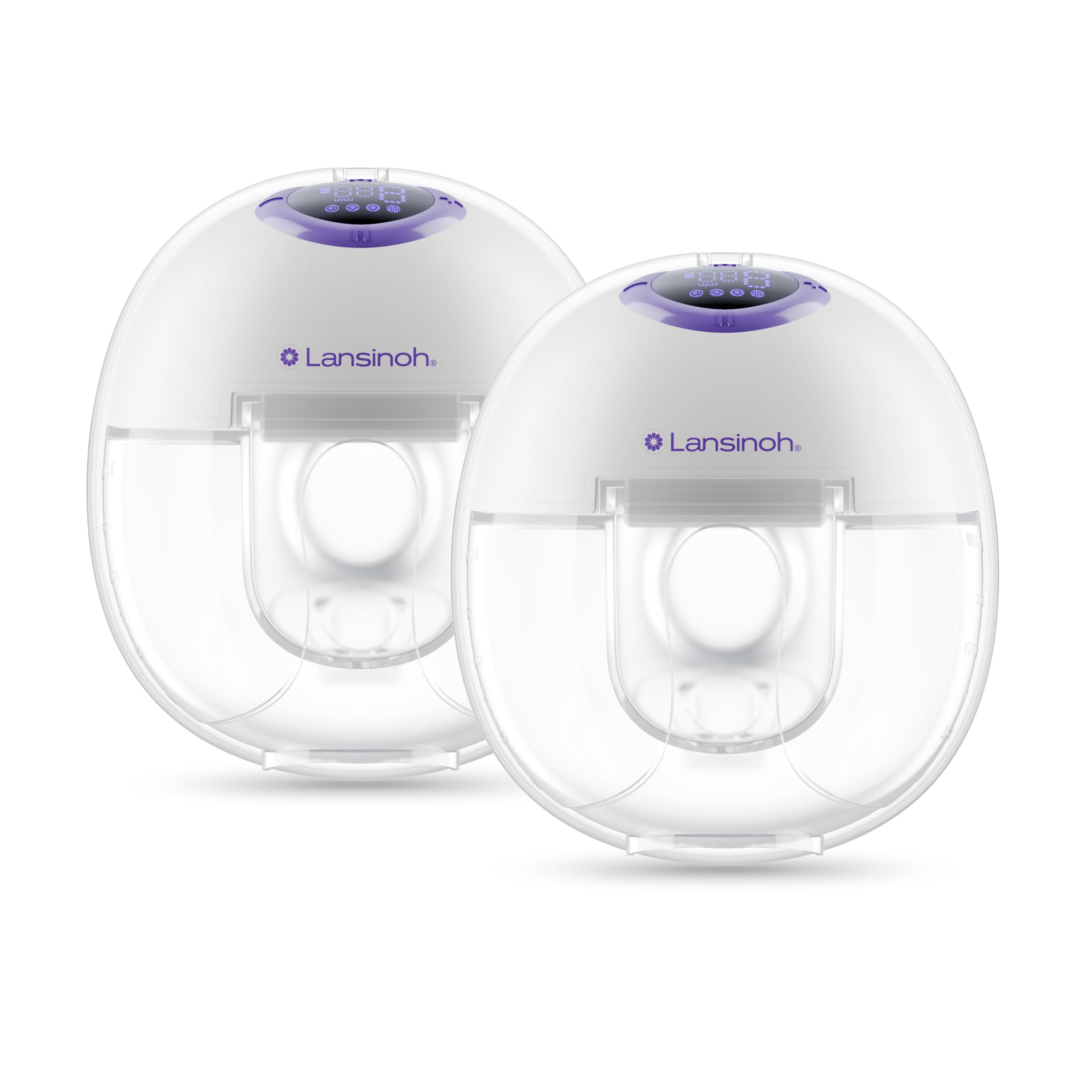
The Lansinoh Discreet Duo brings hospital-strength suction into a wearable, cordless form factor. With 4 pumping modes and 9 levels of vacuum, this pump delivers the same reliability Lansinoh is known for in its manual and flanged electric pumps. Users who have tried Willow, Elvie, and Eufy report that the Discreet Duo empties better — getting at least half an ounce more per session — making it a strong option for under-producers.
The closed-system design prevents backflow into the motor, maintaining suction consistency. The included 24mm and 21mm flanges cover a good range, and smaller sizes are available from Lansinoh’s store. Operation is under 45 dB, though other people in the room will hear it running — it is not silent, but it is not disruptive. The automatic shut-off at 20 minutes prevents over-pumping and saves battery.
Battery life reaches about 100 minutes per charge, delivering 4-5 sessions. The pump is lightweight and fits into a standard pumping bra, though users note it is not fully invisible under clothing due to its shape. The low part count (just 4 pieces to wash) and pour-friendly design make daily use straightforward. For parents wanting a wearable that doesn’t compromise on suction, the Discreet Duo is a compelling mid-range choice.
Why it’s great
- Better emptying than more expensive wearables
- Hospital-strength suction in a compact unit
- Easy to clean with minimal parts
Good to know
- Not completely discreet under clothing
- Noise is audible to others in the same room
8. MomMed S21 Wearable
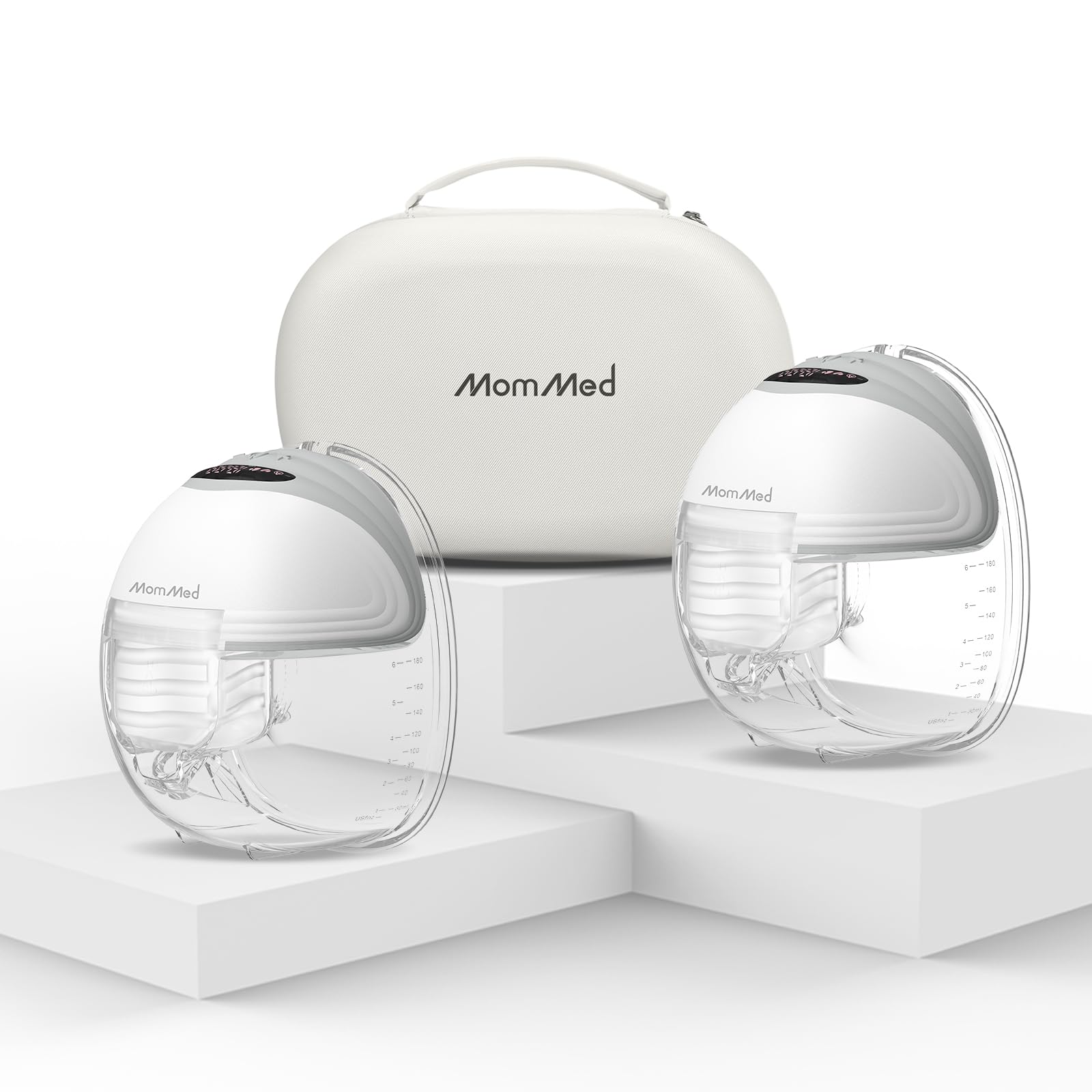
The MomMed S21 offers the most complete wearable kit in this segment, including 6 flange inserts (17mm, 19mm, 21mm pairs), extra duckbill valves, silicone diaphragms, a nipple ruler, cleaning brushes, milk storage bags, and a carrying case — everything needed for day-one pumping without supplemental purchases. The 3 modes (Stimulation, Expression, Auto) paired with 12 vacuum levels allow fine-tuned suction adjustment, though some users note that output is slightly less than home pumps without a dedicated massage mode.
The backflow prevention membrane physically separates milk from the vacuum system, preserving suction performance and reducing leaks. The semi-circular design fits snugly in a bra, and at under a pound per pump, the weight is barely noticeable during wear. The LED screen and physical buttons are easier to operate than touch-sensitive controls, especially in low light.
The sound level is rated under 45 dB — users describe it as frog-like rather than mechanical, which is neither loud nor whisper-quiet. One missing feature is a lid or cover for the collection spout, so the pump must remain upright to avoid spills. For budget-conscious parents who want a comprehensive kit with good suction and multiple flange sizes, the S21 is the best entry-level wearable option.
Why it’s great
- Most complete kit with flange inserts and accessories
- Backflow prevention for hygienic suction
- Lightweight, ergonomic design
Good to know
- No cover for the collection spout
- Output slightly less than plug-in primary pumps
9. Paruu P20 Wearable
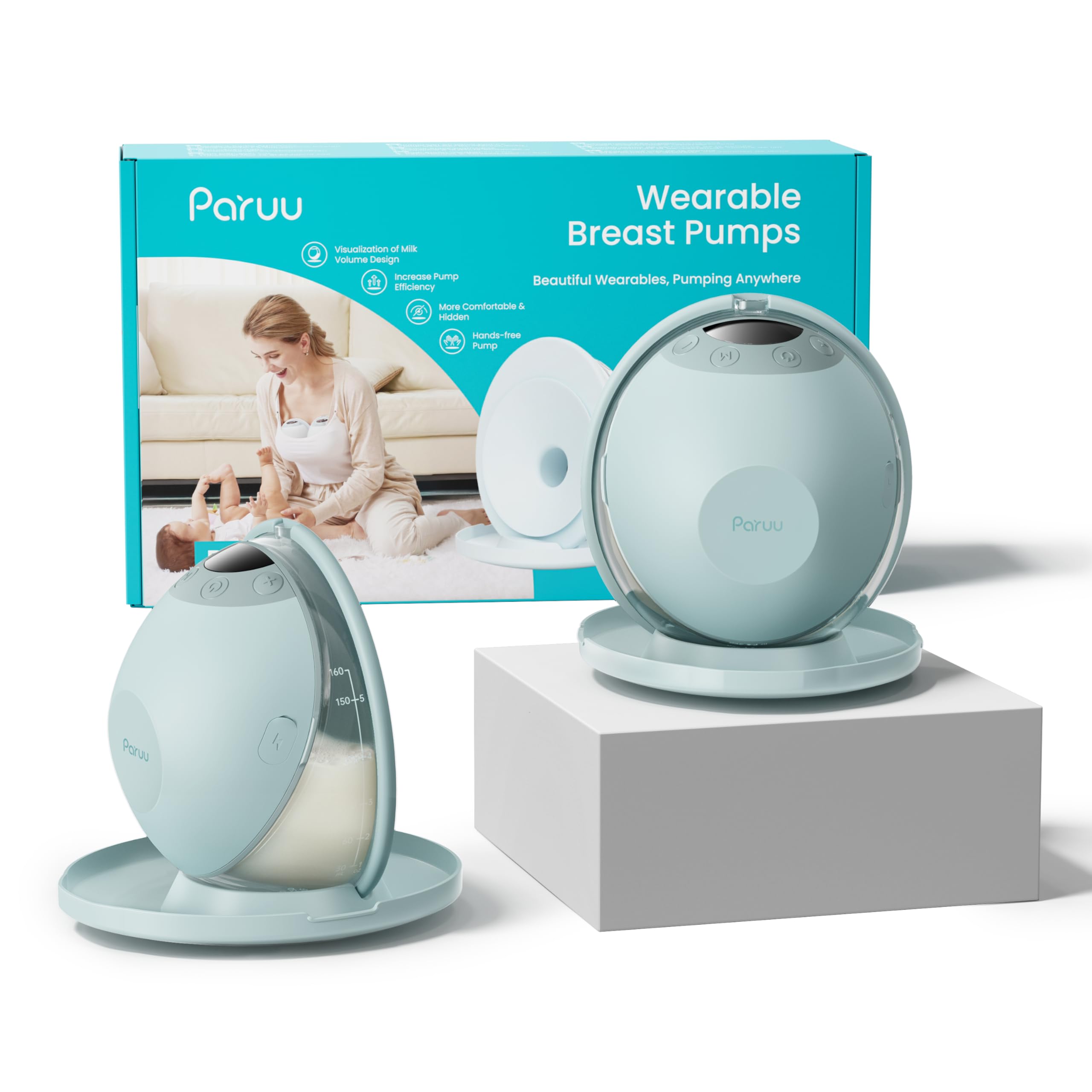
The Paruu P20 delivers surprising suction performance at a very accessible price point, with 4 pumping modes (Stimulation, Expression, Lactation, Traction) and 12 adjustable levels. Users transitioning from a Spectra S2 report that the P20 empties faster and more comfortably — some filling the 6-ounce container in 10 minutes. The double-sealed flange uses food-grade BPA-free silicone and comes in 19mm, 21mm, and 24mm sizes, accommodating a wider range of breast shapes than most budget wearables.
The 1350mAh battery provides up to 180 minutes of runtime (4-5 sessions per charge), and the whisper-quiet motor makes it suitable for pumping in shared spaces. The transparent milk container allows you to check volume without removing the pump, and the LED display shows mode, suction level, and elapsed time. Only 4 parts require washing, which simplifies cleanup significantly compared to traditional flanged pumps.
The primary limitation is capacity — the container holds only 6 ounces, which may require a mid-session swap for oversuppliers. Some users note the lack of a top seal means tilting the pump can cause spills. The silicone parts tend to attract lint, so careful storage is needed. For parents seeking an affordable hands-free pump with strong, customizable suction, the P20 punches well above its tier.
Why it’s great
- Strong suction comparable to Spectra at a budget price
- Three flange sizes included
- Long battery life for hands-free use
Good to know
- Small 6 oz container with no top seal
- Silicone flanges attract lint
FAQ
Is higher mmHg always better for suction strength?
How do I know if my flange size is causing weak suction?
Can a wearable pump provide the same suction as a plug-in hospital pump?
Final Thoughts: The Verdict
For most users, the breast pump for suction winner is the BabyBuddha 2.0 because it combines hospital-grade vacuum strength with true portability and 21 adjustable levels that cover every pumping need. If you want a quiet, rechargeable primary pump with independent cycle and vacuum control, grab the Spectra S1 Plus. And for hands-free pumping with the best suction in the wearable category, nothing beats the Momcozy M6.

Mo Maruf
I created WellFizz to bridge the gap between vague wellness advice and actionable solutions. My mission is simple: to decode the research and give you practical tools you can actually use.
Beyond the data, I am a passionate traveler. I believe that stepping away from the screen to explore new environments is essential for mental clarity and physical vitality.