Our readers keep the lights on and my smoothie glass nicely filled. As an Amazon Associate, I earn from qualifying purchases.
New motherhood brings enough sleepless nights without the added worry of low milk supply. Nursing mothers often turn to lactation teas as a gentle, herbal approach to support their breastfeeding journey, but the sheer number of blends on the shelf can be overwhelming. You need a formula that works, tastes decent enough to drink daily, and uses ingredients backed by tradition or clinical experience.
I’m Mohammad Maruf — the founder and writer behind WellFizz. My research focuses on analyzing formulation science, organic certifications, and real-world consumer feedback for herbal wellness products used during postpartum recovery.
After diving deep into ingredient profiles, steeping instructions, and user reports, I’ve narrowed the field to the top five contenders that deliver on their promise. Finding the right best breastfeeding tea means balancing effective galactagogues with a flavor you actually look forward to sipping.
How To Choose The Right Breastfeeding Tea
Not all lactation teas are created equal. Some rely on a single herb like fenugreek, while others layer multiple galactagogues for a broader effect. Your personal taste tolerance, any known allergies, and your baby’s reaction to certain herbs should guide your choice.
Identify Your Milk Supply Challenge
Some mothers need a steady daily boost to maintain a normal output, while others are recovering from a sudden drop caused by illness, stress, or a blocked duct. For maintenance, a mild blend with fennel and anise works well. For a recovery scenario, look for teas that contain fenugreek, blessed thistle, or shatavari root at higher concentrations.
Check the Ingredient List for Fenugreek
Fenugreek is the most widely studied galactagogue, but it can reduce milk supply in mothers with undiagnosed thyroid issues — particularly those with Hashimoto’s. If you have a known thyroid condition, choose a fenugreek-free formula that relies on fennel, nettle, or alfalfa instead.
Consider Flavor and Steeping Flexibility
You will likely drink this tea multiple times a day for weeks or months. A strong medicinal licorice taste can become unbearable quickly. Chai spice blends or milder herbal infusions are easier to tolerate long-term. Also check whether the tea bags are designed for a second steep — this doubles your servings and improves the overall value.
Quick Comparison
On smaller screens, swipe sideways to see the full table.
| Model | Category | Best For | Key Spec | Amazon |
|---|---|---|---|---|
| Oat Mama Chai Spice | Premium | Rich chai flavor lovers | 14 bags / 28 servings (double steep) | Amazon |
| Traditional Medicinals Mother’s Milk (3 Pack) | Mid-Range | High-volume daily drinkers | 48 bags per box / 144 total | Amazon |
| Traditional Medicinals Mother’s Milk (Single) | Mid-Range | First-time buyers | 48 bags / classic licorice profile | Amazon |
| Mrs. Patel’s Chai Spice | Mid-Range | Fenugreek-sensitive moms | 14 bags / up to 28 cups re-steep | Amazon |
| Nutramother Lactation Support | Budget | Budget-friendly 2-pack value | 40 bags / includes raspberry leaf | Amazon |
In‑Depth Reviews
1. Oat Mama Flavored Microplastics-Free Lactation Tea
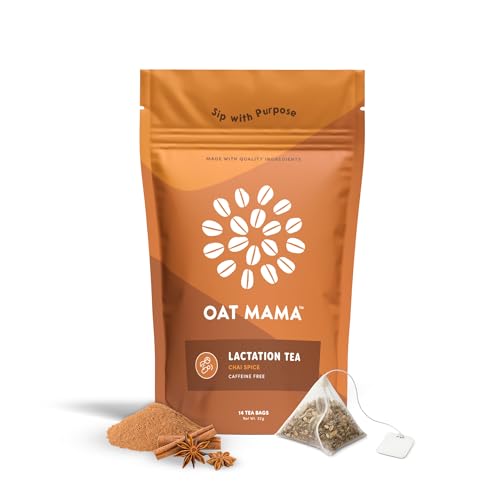
Oat Mama’s Chai Spice tea stands out for mothers who want a flavorful drinking experience without the heavy licorice notes common in many lactation blends. The warm profile of cinnamon, ginger, and decaf black tea makes it one of the most palatable options on the shelf. Each sachet is designed for a second steep, effectively giving you 28 servings from a box of 14.
The blend includes organic fenugreek, fennel, nettle, and ginger — a well-rounded galactagogue lineup. Real user reports show supply increases of 2 to 3 ounces per pumping session within 48 hours, which is faster than many competing teas. The microplastics-free, biodegradable sachets also appeal to eco-conscious mothers.
Keep in mind that this tea does contain fenugreek. A small subset of mothers with thyroid sensitivities reported a temporary supply drop after using it. If you have a known thyroid condition, proceed with caution or choose a fenugreek-free formula instead.
Why it’s great
- Delicious chai flavor without artificial additives
- Each sachet steeps twice for extended use
- Noticeable supply increase reported within 48 hours
Good to know
- Contains fenugreek — not ideal for all thyroid conditions
- Only 14 sachets per box (though double-steep boosts count)
2. Traditional Medicinals Mother’s Milk Tea (3 Pack)
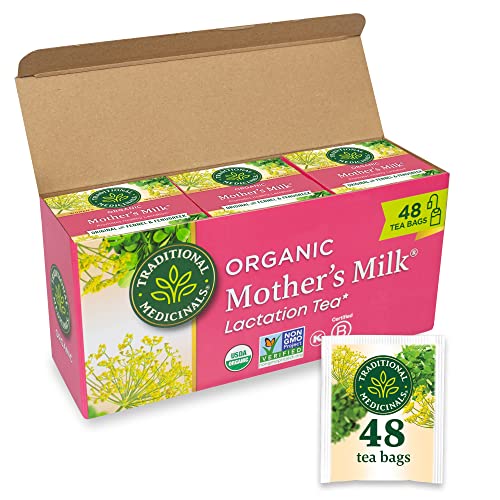
For mothers who plan to drink lactation tea consistently for months, the 3-pack of Traditional Medicinals Mother’s Milk delivers the best volume-per-dollar ratio. With 144 total tea bags, this supply lasts through the critical early breastfeeding period without needing constant reordering. Each box contains the same clinically-tested formula that has been America’s number-one lactation tea for over four decades.
The herbal blend relies on fenugreek, fennel, anise, coriander, and blessed thistle — a traditional European combination passed down through generations. User reviews consistently report significant milk supply recoveries, including one mother who went from 2 oz to over 5 oz per breast after consistent use. The compostable tea bags are also certified organic and non-GMO.
The distinct licorice-like taste is polarizing. Some drinkers find it soothing, while others struggle to finish a cup. Adding honey or a splash of milk helps, but flavor-sensitive mothers may want to try a single box first before committing to the three-pack.
Why it’s great
- 144 bags — exceptional long-term value
- Clinically tested and lactation consultant recommended
- Compostable, organic, non-GMO ingredients
Good to know
- Strong licorice flavor may not suit all palates
- Contains fenugreek, which affects some thyroid profiles
3. Traditional Medicinals Mother’s Milk Tea (Single Box)

The single-box version of Traditional Medicinals Mother’s Milk is the logical entry point for first-time buyers who want to test the formula before committing to bulk. It shares the exact same ingredient profile as the 3-pack — fennel, anise, coriander, fenugreek, and blessed thistle — but at a lower upfront commitment. The 48-bag count still provides a solid two-week supply at the recommended 3 to 4 cups per day.
This is the most recommended lactation tea by lactation consultants in hospital settings. One user reported recovering from mastitis-related supply loss by drinking 5 cups daily, eventually doubling her output. The USDA Organic and Non-GMO Verified certifications add confidence for mothers who prioritize clean ingredients during the postpartum period.
Like the larger pack, the single box carries the same strong licorice taste. If you are unsure about the flavor, this is the safer way to test. Also note that some users experienced mild stomach discomfort or a diuretic effect when drinking more than 3 cups per day.
Why it’s great
- Low-risk way to try the industry-standard formula
- Certified organic, kosher, and caffeine-free
- Proven track record spanning 40+ years
Good to know
- Polarizing black licorice taste
- May cause mild digestive side effects at high intake
4. Mrs. Patel’s Lactation Tea, Chai Spice Blend
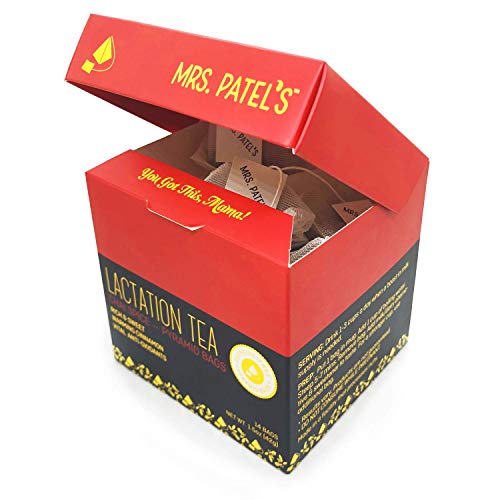
Mrs. Patel’s Lactation Tea is a rare find in the category: a fenugreek-free formula that still delivers strong galactagogue support through dill seeds, alfalfa leaf, and red rooibos tea. This makes it the top choice for mothers with thyroid concerns, galactosemia, or anyone who previously experienced a supply drop from fenugreek-based products. The chai spice blend — cinnamon, clove, and cardamom — is designed to be mixed with milk and a sweetener, mimicking a traditional Indian chai experience.
The tea bags are generous in size and can be reused for 3 to 6 cups each, according to the manufacturer. Some users reported noticing increased let-down within two days of starting the tea. It is completely caffeine-free, gluten-free, dairy-free, and free of artificial preservatives — meeting multiple dietary restrictions in one product.
The biggest drawback is the 14-bag count, which provides a shorter supply compared to larger boxes. At the recommended 1 to 3 cups per day, a box may only last a week. The chai flavor also requires preparation with milk and sweetener to reach its full potential, adding a few extra steps to your routine.
Why it’s great
- Completely fenugreek-free formulation
- Rich chai flavor without caffeine
- Reusable tea bags for extended value
Good to know
- Only 14 bags — shorter supply cycle
- Best flavor requires adding milk and sweetener
5. NUTRAMOTHER Lactation Support Tea (2 Pack)
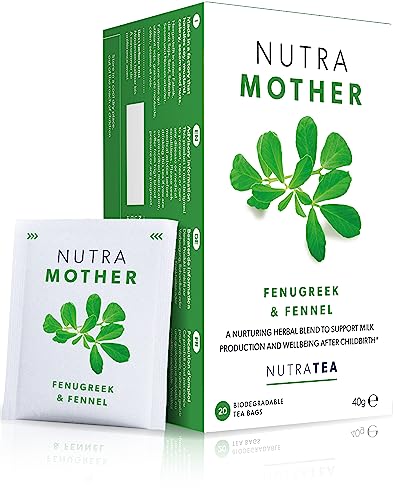
Nutramother’s Lactation Support Tea offers a dual-pack with 40 total enveloped tea bags at an accessible entry point, making it one of the more budget-conscious options in this roundup. The blend features a wider variety of herbs than most competitors: fennel, chamomile, fenugreek, shatavari root, raspberry leaf, caraway, nettle, and blessed thistle. This diversity aims to support both milk production and overall postpartum recovery.
The formula was developed by a team of pharmacists and nutritionists, which adds a layer of professional credibility. The chamomile content also provides a mild calming effect, which can be helpful during stressful late-night nursing sessions. Each tea bag is designed to be reusable for a second steep, extending the effective serving count.
User feedback is mixed on effectiveness. While some mothers reported better results compared to other brands, a notable number of reviewers saw no increase in supply after regular use. The taste is generally described as pleasant and mild, which is a point in its favor. However, the presence of fenugreek means it may not suit all users.
Why it’s great
- Affordable 2-pack entry price
- Wide herbal variety including raspberry leaf and chamomile
- Formulated by pharmacists and nutritionists
Good to know
- Effectiveness varies — some users saw no supply increase
- Contains fenugreek, which may trigger thyroid issues
FAQ
How many cups of breastfeeding tea should I drink per day?
Can breastfeeding tea cause gas or colic in my baby?
Will lactation tea work if I have low supply due to thyroid issues?
Final Thoughts: The Verdict
For most mothers, the best breastfeeding tea winner is the Oat Mama Chai Spice because it combines a genuinely enjoyable flavor with a proven galactagogue blend and the convenience of double-steep sachets. If you prefer a fenugreek-free option that still supports supply, grab the Mrs. Patel’s Chai Spice. And for high-volume daily drinkers who want the best long-term value, nothing beats the Traditional Medicinals Mother’s Milk 3-Pack.

Mo Maruf
I created WellFizz to bridge the gap between vague wellness advice and actionable solutions. My mission is simple: to decode the research and give you practical tools you can actually use.
Beyond the data, I am a passionate traveler. I believe that stepping away from the screen to explore new environments is essential for mental clarity and physical vitality.